Tag Archives: film

Halloween Countdown, Day 4: Bone Tomahawk

Bone Tomahawk (2015)

In 2015 -a year rife with exceptional Westerns – this film sets itself apart. S. Craig Zahler’s directorial debut embraces the mythos of the Wild West, populating a familiar frontier town with weathered characters and casting those archetypes perfectly.

Kurt Russell and Richard Jenkins, in particular, easily inhabit the upright sheriff and eccentric side kick roles, while Patrick Wilson’s committed turn as battered, heroic lead offers an emotional center.

Even the heretofore unexceptional Matthew Fox finds a little wounded humanity in his swagger as Brooder, the fancy-lad sharp shooter who volunteers to help Wilson and posse find his wife, believed to have been nabbed by cannibals.

Cannibals?! Hell yeah!

Zahler effortlessly blends the horror and Western genres, remaining true to both and crafting a film that’s a stellar entry into either category. Bone Tomahawk looks gorgeous and boasts exceptional writing, but more than anything, it offers characters worthy of exploration. There are no one-note victims waiting to be picked off, but instead an assortment of fascinating people and complex relationships all wandering into mystical, bloody danger.

This is not your typical cowboys and Indians film – Zahler is (perhaps too) careful to clarify that. This is more of an evolutionary wonder taking place – kind of a Hills Have Eyes in 1869.

Because the true horror is a long time coming and you’re genuinely invested in the participants in this quest, the payoff is deeply felt. This is a truly satisfying effort, and one that marks a new filmmaker to keep an eye on.

Listen weekly to MaddWolf’s horror podcast FRIGHT CLUB. Do it!

Ain’t That Peculiar?

Miss Peregrine’s Home for Peculiar Children

by Hope Madden

The biggest problem facing Miss Peregrine’s Home for Peculiar Children is that the film is not nearly peculiar enough.

Tim Burton takes on director duties for Ransom Riggs’s popular young adult novel about how special it is to be special. Jake (Asa Butterfield) lost his beloved grandfather (Terence Stamp) mysteriously and visits the orphanage of his childhood looking for closure.

What he finds involves loops in the time space continuum, Burton-esque hotties, creepy twins dressed as scarecrows, and eyeball eating.

It’s impossible to watch this film without comparing it to both the X-Men and Harry Potter series, which means Peregrine has to be Goth enough to set itself apart. You would think, if anybody can Goth up a story, that body is Tim Burton.

Working again with cinematographer Bruno Delbonnell, Burton gives the film a lovely look that creates a nostalgic quality. He’s also made a couple of casting choices that elevate the effort.

Eva Green excels as the titular headmistress, giving the character just enough falcon-like characteristics to make her fascinating.

Samuel L. Jackson – working with some pretty weak dialog – still brims with more swagger than necessary to keep his villainous Baaron interesting.

Butterfield – so tender and wonderful in Scorsese’s 2011 Hugo – falls flat here. So, so flat. His awkward outsider, so weary with the ordinariness of his suburban Florida adolescence, is perhaps too convincingly flattened out by life.

There is a fun Ray Harryhausen-inspired fight sequence in the third act, but by that time you realize that the film has offered so little in the way of interesting visuals or action of any sort that it’s almost jarring.

Not as jarring as all that eyeball eating, though.

On first blush, Miss Peregrine’s Home for Peculiar Children felt like the perfect match of content and director. And Burton could use material that makes him work for it (Big Eyes), rather than just “Tim Buttoning” it (Alice in Wonderland). Maybe the most peculiar thing about the film is that he does neither.

Verdict-2-5-Stars

Oh Baby

Storks

by Cat McAlpine

“Where do babies come from?” Multiple sources, apparently.

Storks have been out of the baby business for a few decades, and Junior is up for a big promotion at CornerStore.com. To prove he’s ready to be the head honcho, he simply has to fire Tulip the Orphan (and human). When Tulip accidentally makes a baby (at the baby factory, of course!) Junior suddenly finds a few more obstacles between himself and his promotion.

The plot becomes increasingly convoluted. The baby is destined for the Gardener family, comprised of two busy parents and one lonely child. There’s a bizarre pigeon character. The talents of Keegan-Michael Key (Alpha Wolf) and Jordan Peele (Beta Wolf) are utterly wasted in a wolf pack that has one joke and runs with it. And runs with it.

To be fair, this is a children’s movie. The children in the audience thought the wolves were hilarious.

Written by Nicholas Stoller and co-Directed with Doug Sweetland, Storks’ greatest strength is its self-referential humor. When Sarah Gardner (Jennifer Aniston) takes out a chimney with one swing of a hammer, she comments to the effect of “Wow. That is… that is not a well-made chimney. I mean, I’m a pretty small woman and that just came right down.”

It’s the talent of Andy Samberg (Junior) that elevates Storks from a middling animated film to something enjoyable. His impeccable comedic timing and improv skills shine through, making Junior complex and a little dark.

It’s hard to tell, with an animated feature, how much comedic timing is in the hands of the voice actors, and how much can be attributed to the animators and sound mixers. But, the general speed of dialogue overall is another defining quirk of Storks. Much of the repartee happens at breakneck speed, which gives the effect of wit, even if wit isn’t present.

Stoller and Sweetland take a stab at diversity that earns a light golf clap at best. In montage scenes babies appear in all colors, but also with an array of unrealistic hair colors (pink, blue, green). All the speaking characters (human), minor or major, are white.

If I had screened this film at home, I probably wouldn’t even raise the issue. Instead I sat in a theatre filled with families and their children infinitely more diverse than those on screen. A little black girl, no more than four, shuffled past me with her father to go to the bathroom, and I wondered “Does she see herself as a background character?”

You can point to Disney’s Home (2015) or The Princess and the Frog (2009) for black lead characters, but two versus a genre isn’t much. You can point to even less for Asian Americans, Indian, Native American etc. The white kids own the industry.

It’s not that an all-white cast is necessarily unrealistic; it’s unnecessary. Only a quarter of the children in the theater were truly represented on screen. In 2016, this makes me very tired.

Parents won’t find Storks hard to watch alongside their children. But, Storks lacks the mastery to rocket into the all-star league with contemporaries like Finding Nemo (2003), Zootopia (2016), or even the same studio’s Lego Movie (2014).

Verdict-3-0-Stars

Suicide Posse

The Magnificent Seven

by Hope Madden

What if women, traumatized veterans, blacks, Asian Americans, American Indians, Mexican Americans and whatever white men we have left with a conscience exerted their inalienable right to govern a country that belongs as much to them as to anyone?

Or, what if Hollywood injected these themes into an old Western and hired fewer white guys playing Mexicans?

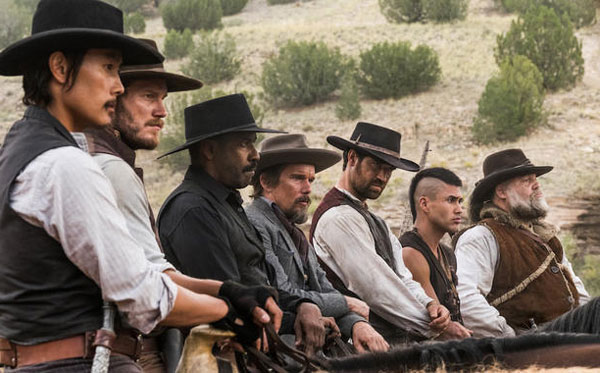
I give you, Antoine Fuqua’s The Magnificent Seven.

Denzel Washington anchors the septet as Sam Chisolm, bounty hunter. Newly widowed Emma Cullen (Haley Bennett) approaches him with a proposition: Rid Rose Creek of its evil despot (Peter Sarsgaard, wearily evil) in return for everything they have to give.

He’s been paid a lot before, but never everything.

So, Chisolm gathers a group of amiable rogues and heads to near-certain doom in the name of justice – like a Suicide Squad that doesn’t suck.

Based on John Sturges’s 1960 adaptation of Kurasawa’s 1954 classic Seven Samurai, Fuqua’s attempt is already three steps removed from originality. More than that, it’s tough to reignite the spark that made a 50+ year old story fun in the first place.

Not that Fuqua doesn’t take some liberties. Riding alongside Chisolm is as diverse an array of gunslingers as you’re likely to find.

Byung-hun Lee’s efficient knife expert, the solitary Comanche (Martin Sensmeier), and Mexican lawbreaker Vasquez (Manuel Garcia-Rulfo) join haunted Confederate Goodnight Robicheaux (Ethan Hawk, voted coolest name), Chris Pratt (playing Chris Pratt) and Vincent D’Onofrio as something else entirely. As Pratt’s Faraday describes him, “That bear was wearing people clothes.”

The film’s multicultural, multi-gendered slant, while appealing, is also jarringly anachronistic. Aside from a handful of good-natured barbs from inside the posse and a bit of stink eye from some of the dodgier locals, there’s nary a racist whisper. In America, circa 1867.

Let’s not even talk about Bennett’s cleavage.

Obvious flaws aside, you can’t argue the cast. D’Onofrio’s a freak (I mean that in the best way), Lee is quietly fascinating, and Denzel has the inarguable gravitas and wicked charm to pull the plan together.

For those of you afraid that Hollywood was about to turn your favorite old Western into an action flick with one liners – I give you…

Seriously, though, Sturgis’s film is more charmingly nostalgic than it is classic – like a toothless Wild Bunch. Fuqua respects the film that inspired his, and works in affection for many of the Westerns that define the genre.

He proves again his capacity to stage action, and the film’s final hour is a mixture of genre odes and glorious choreography as explosions crash, bullets fly and projectiles project.

Which would be great – given the cast, it might even be enough – if Fuqua understood the element that separates Westerns from other genres. It’s not a gatling gun, a saloon or a lonesome street itching for a shoot-out. It’s the haunted heartbeat of the damaged gunslinger. The Magnificent Seven, though fun, is too slick and superficial to find that rhythm.

Verdict-3-0-Stars


You Lookin’ at Me?

Snowden

by Hope Madden

Oliver Stone’s cinematic output has been hit or miss. The hits leave a mark: Platoon, JFK, Salvador. Unfortunately, it’s been mostly misses this millennium.

But any time Stone has a topic that means something, one with government conspiracy and one hyper-serious guy trying to make things right, at least he’s in his wheelhouse.

Snowden offers him exactly that.

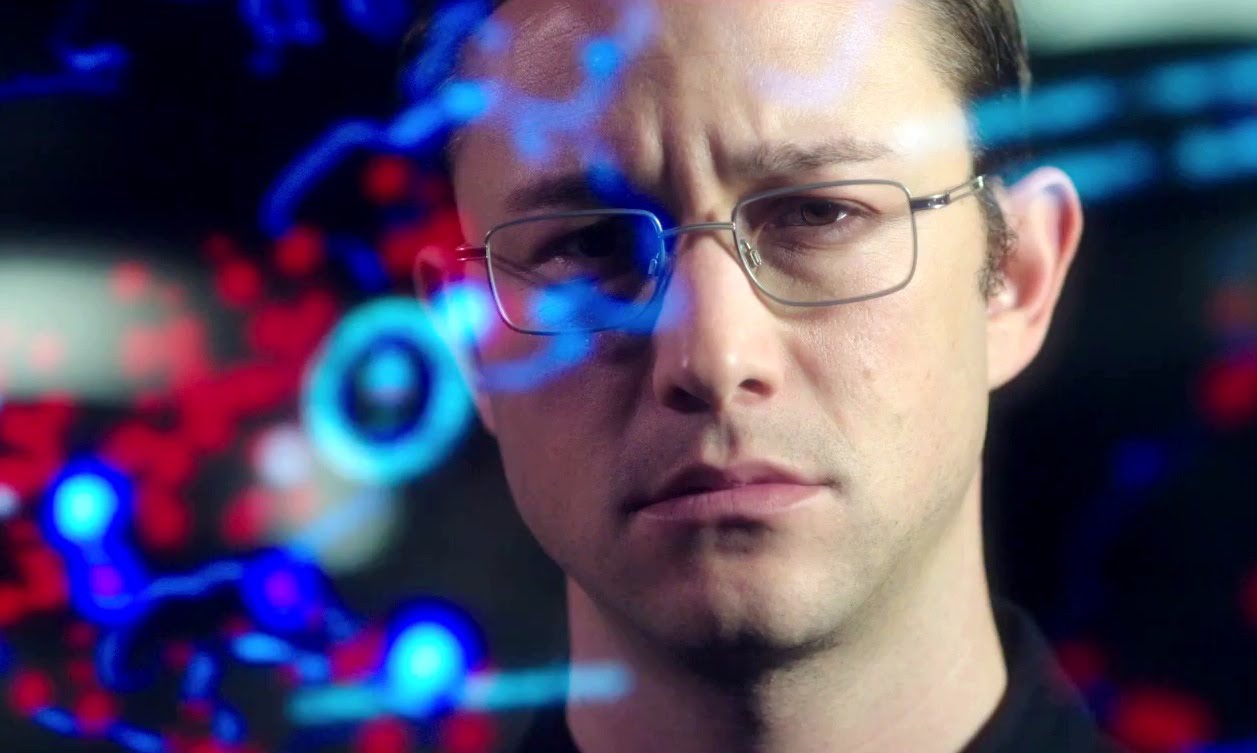
Opening with the clandestine meeting between NSA whistleblower Edward Snowden (Joseph Gordon-Levitt) and the journalists who would make the 2014 documentary Citizenfour (see it if you haven’t), Stone takes us through the harrowing journey that led to that taping.

Gordon-Levitt continues to impress in a performance that is eerily authentic. We see Ed as an optimistic patriot who becomes increasingly more outraged by what he sees and does with his high-security clearance for the CIA.

Interestingly, what the film itself lacks is outrage. Ed Snowden’s personality is very subdued. This no doubt benefitted his escapade, but it does not make for a vivid film.

And while vivid is Stone’s middle name, his attempts to enliven the story too often feel like tricks from an old bag: the mysterious mentor who conveniently shares information just when it’s most provocative; intensely suspicious camera angles; ominous score.

For the most part, though, Stone dials it down this time around, and that’s kind of a shame. Just a touch of the hyperbole and bombast of his usual fare might have benefitted a film that should deeply shock and appall, but does not.

Streamlining would have helped, as well. The 2+ hour running time sometimes feels like 3, often because Stone and his team of writers skim across so much information rather than digging deeply in a single area.

A large supporting cast includes some real gems – Zachary Quinto is especially good. Many of the minor characters, though, are so cartoonishly drawn (Rhys Ifans, in particular) that they distract from what is, in most areas, a reasonably realistic portrait.

There are just enough Stone-isms here to make the film irritating, but not enough to leave a mark. Despite strong performances and directorly panache, Snowden feels unfocused. Worse still, it lacks the gut punch that it should deliver.

Verdict-2-5-Stars

Bridget Jones, Back in Medium-Rare Form

Bridget Jones’s Baby

by Matt Weiner

It’s been over a decade since Bridget Jones last went through an embarrassing series of personal and professional mishaps on the way to learning that opposites attract after all. Anyone expecting a change in formula will be disappointed, but there are worse ways to spend two hours finding Mr. Right (again) than with Jones, thanks in large part to Renée Zellweger.

Zellweger grounds Jones this time around as quirky, confident and—more or less—competent TV news producer. Colin firth returns as the priggish Mark Darcy, and Patrick Dempsey steps into the Hugh Grant point on the love triangle as the charming Jack Qwant. (Metaphor alert: Qwant made a fortune off a dating website but hasn’t found his own perfect match.)

Jones has one-night stands with both men, getting pregnant by one of them and setting off a competition between the suitors to prove their worth as potential fathers—and win Jones’s heart in the process. (A fear of needles rules out the in-utero test that would’ve made for a much briefer film.)

Despite the tension the film wants to set up between Darcy and Qwant, the best running theme for much of the movie is that Jones doesn’t need either of the boobs vying for her. And it’s a credit to the film that the madcap finale turns out some of the movie’s biggest laughs without cheapening everything Jones has done to get to that point.

Bridget Jones stands on her own far more in this film than the previous two, with most of the supporting characters—from best friend Miranda (Sarah Solemani) to Darcy and Qwant—simply along for well-timed banter or convenient plot devices. Two exceptions are Bridget’s father, Colin—filled with a depth of emotion that far exceeds Jim Broadbent’s criminal lack of screen time—and Bridget’s physician, Dr. Rawlings (Emma Thompson). Thompson delivers every line and fixes every stare with the tart awareness that reduces the men in Bridget’s life from masters of the universe to emperors with no clothes.

Bridget Jones’s Baby is directed by Sharon Maguire—who also directed the first Jones film, Bridget Jones’s Diary—and the latest entry is a welcome improvement on 2004’s inane Bridget Jones: The Edge of Reason. But the film has little of the light touch and keen observation that made Bridget Jones’s Diary a refreshing romantic comedy back in 2001.

This latest installment doesn’t break any new ground for romcoms. The satire is easy, toothless and, somehow, already dated. But this marks a comfortable return for Bridget Jones. She’s hard to root against even in bad times. Maybe it’s unfair to grade on a curve, but we’ve seen Jones much worse off than this. It’s hard not to crack a smile when she’s on top.

Verdict-2-5-Stars


Mighty Neighborly

The Good Neighbor

by Hope Madden

Youngsters agitate an old hermit who has a padlocked basement. Things don’t go well.

Yes, this sounds strangely familiar, and comparisons to the far superior Don’t Breathe will haunt Kasra Farahani’s feature debut The Good Neighbor. The two films vary wildly, though, for a number of reasons.

One of those is the pop psychology fueling Good Neighbor. The film’s premise is slight – two high school knuckleheads wire up a neighbor’s house to make it seem haunted, with the goal of observing his behavior and somehow becoming famous. Undergirding the plot, though, are a handful of interesting if underdeveloped themes.

Social media celebrity and the lacking morality that seems to come with it is certainly a thematic influence at work here, although Farahani doesn’t know how to weave it into his story. Ethan (Logan Miller) sees himself as a budding filmmaker and believes this unconscionable tormenting of the elderly as his road to YouTube fame.

His bestie Sean (Keir Gilchrist) is in it for – what, exactly? Science? Hard to say, and when Ethan wants to push things beyond Sean’s comfort zone, Sean’s unclear motive is one reason the film begins to unravel.

James Caan plays grumpy old Harold Grainey, the mean geezer across the road that the boys subject to the “haunting.” His character is primarily viewed from a distance – he’s entirely alone and being watched via surveillance cameras. Still, Caan delivers a skilled and deeply lonesome performance.

Generation gaps, the slippery nature of privacy as well as perception, and “what the hell is wrong with kids these days?” are all concepts toyed with in the film – none of them very successfully.

The problem is not solely the fault of Mark Bianculli and Jeff Richard’s screenplay, although it does begin there. The film doesn’t boast nearly enough jumps to register as scary, and the bend toward drama is too obvious to be effective.

The larger issue, though, is Farahani’s shifting tone. From found footage horror to courtroom drama to melodramatic flashback sequences, the film spins in so many directions you’re never sure what you’re watching.

You should probably just be watching Don’t Breathe.

Verdict-2-5-Stars

Quest Que C’est

I Am Not a Serial Killer

by Hope Madden

To find a serial killer, you have to get inside his head. This is not a new concept in horror movies, thrillers, police procedurals. No, this is a tired conceit.

But Irish filmmaker Billy O’Brien (Isolation) finds a new vision for it with his wry, understated indie I Am Not a Serial Killer.

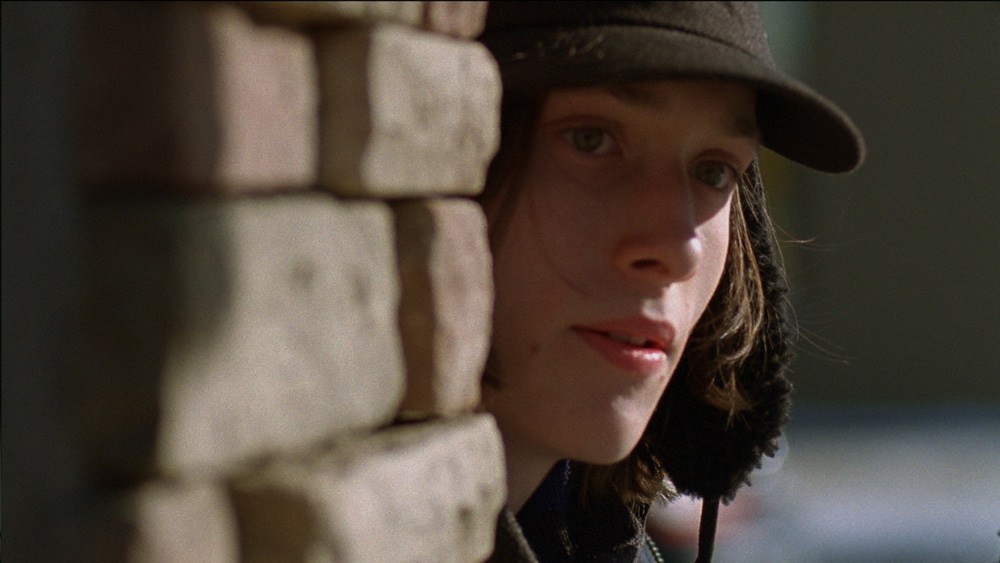
John (Max Records) is an outsider in a small Minnesota town. He works in his mom’s morgue, writes all his school papers on serial killers, and generally creeps out the whole of his high school. His preoccupations have landed him a therapist, the bird enthusiast Dr. Neblin (Karl Geary).

Turns out, John is a budding sociopath – that’s his official diagnosis. A good kid who lacks empathy, may not feel love, and obsesses over death and murder, he follows self-imposed rules and rituals to try to make himself normal and ensure the safety of those around him.

But when townsfolk start turning up in gory pieces, John turns his keen insights on the case.

Though O’Brien’s film may be too quiet an effort to command attention, his coming-of-age approach and indie sensibilities help him turn this outlandish and contrived effort into something touching, humorous and rewarding.

Records, who melted me as young Max in Spike Jonze’s 2009 masterpiece Where the Wild Things Are, serves up an extraordinarily confident, restrained performance. One scene, in particular – when he turns the tables on a bully at the school dance – is outstanding.

His onscreen chemistry with the nice old man across the street – Back to the Future’s Christopher Lloyd – generates thrills enough to offset the movie’s slow pace.

For his part, Lloyd is in turns tender, heartbreaking and terrifying.

The story cleverly inverts the age-old “catch a killer” cliché and toys with your expectations as it does. Robbie Ryan’s grainy cinematography gives the film a throwback looks that fits the image of a depressed Midwest town lost in time.

Bursts of driest humor keep the film engaging, while Records’s performance engenders the kind of empathy from the audience that the character himself could never muster.

It’s an effective twist on the serial killer formula, certainly, not to mention a coming-of-age tale that accepts its unpopular protagonist for who he is rather than how he could be made over to be happier in a way that makes us comfortable.

Verdict-3-0-Stars

Drowning in Sap

The Sea of Trees

by Hope Madden

In 2002, filmmaker Gus Van Sant released one of his more polarizing and thoughtful films. In Gerry, two guys named Gerry (Casey Affleck and Matt Damon) hike ill-prepared into the desert to find themselves fighting for survival.

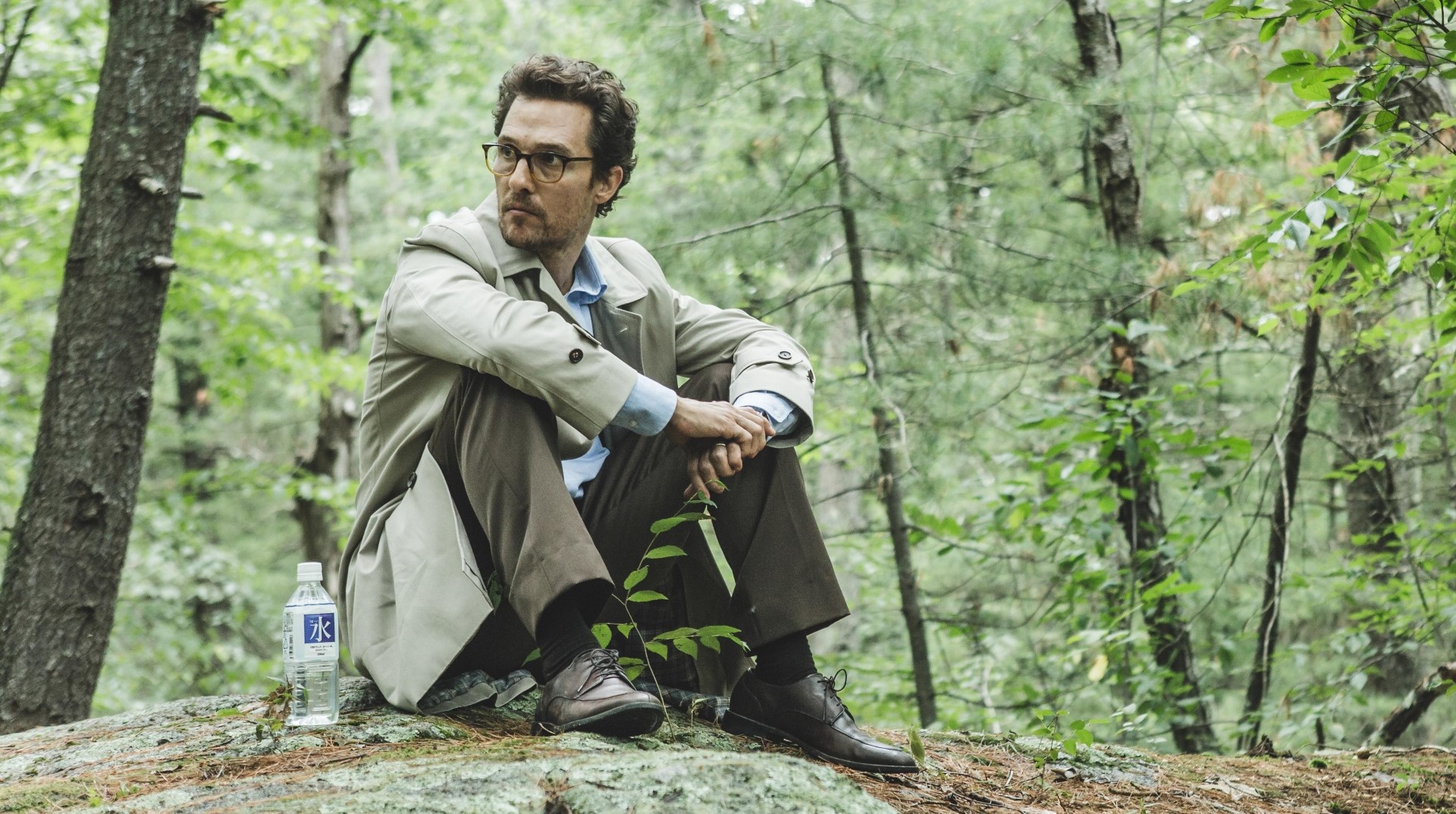
A quick glance at The Sea of Trees suggests that perhaps Van Sant returned to these themes. Matthew McConaughey loses himself in a Japanese forest, befriends another wayward traveler (Ken Watanbe), their treacherous journey offering life lessons aplenty.

Because horror writer Chris Sparling penned The Sea of Trees, I was kind of hoping the film would be a cross between Gerry and The Blair Witch Project.

It is not.

No, it’s an overtly sentimental, culturally patronizing waste of one Oscar winner and two Oscar nominees.

We wander Aokigahara, Japan’s “suicide forest,” with McConaughey’s Arthur Brennan. Brennan’s a scientist, and you know that that means. That’s right – atheist.

Van Sant falls back on the crutch of the flashback to help us understand what this handsome scientist is doing in the suicide forest. It’s in these segments that we meet Naomi Watts’s Joan Brennan and begin to unravel the mystery behind Arthur’s trip into the woods.

Watts suffers most from Sparling’s hackneyed dialog. Her few scenes need to be pivotal and weighty – we know this because of her utterly unrealistic speeches as well as Mason Bates’s condescending score.

Van Sant is no stranger to schmaltz. As great a filmmaker as he has been, sentimentality tripped him up in Promised Land, Finding Forrester and others. His career is peppered with other writers’ projects, many of them with a point to make, and those statement films tend to be Van Sant’s weakest.

Perhaps it’s because, rather than finding his own language for the story via camerawork or score, he relies on an existing style. The Sea of Trees certainly suffers from a heavy handed score. Van Sant also misses opportunities to create a sense of foreboding, claustrophobia, isolation or even redemption with the forest itself, Kasper Tuxen’s photography instead offering irrelevant yet lovely images of windblown treetops.

Trees can definitely be sappy.

Verdict-2-5-Stars

Do You Smell That?

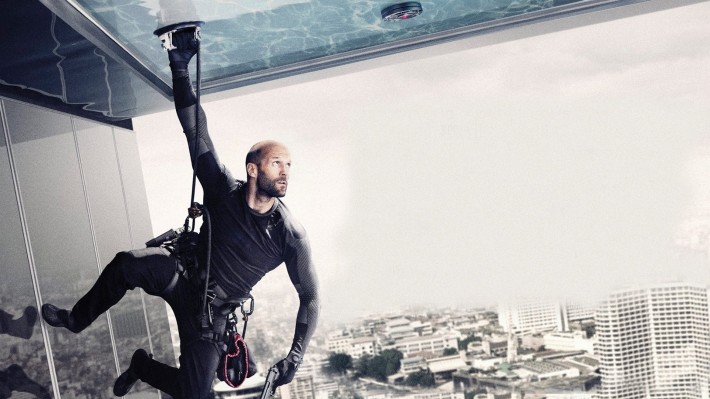
Mechanic: Resurrection

by Hope Madden and George Wolf

Who smells hot trash? Is it a dumpster fire?

No, it’s just the latest Jason Statham movie.

Mechanic: Resurrection revisits the by-the-numbers Statham character Arthur Bishop. Back in 2011, Statham reprised the role first held by Charles Bronson in a middling-to-fair remake of The Mechanic. That film inexplicably merited a sequel that was not direct-to-home-viewing. Why that is confounds us.

Get nervous Gods of Egypt and London has Fallen – Mechanic: Resurrection wants that “worst film of the year” award, and it is not above soiling itself with incompetence to get it.

“WHO SENT YOU??!!”

Bishop faked his own death years back so he could escape his pointless existence as an assassin, but an old enemy has tracked him down. And brought henchmen! And kidnapped master thespian Jessica Alba! Damn this confining shirt!

“WHERE’S CAINE?!!”

Statham removes his shirt no fewer than 8 times in the film’s 99-minute running time. That’s almost once every ten minutes. The man is 49, so good for him, and for that core audience he’s built over a career of shirtless man-on-man action.

“PLAYTIME’S OVER!!”

Alba’s character development is more nuanced. She keeps her shirt on, but it’s always clingy and sometimes…even wet.

Remember how great Statham was in last year’s Spy? His turn as Rick Ford, uber-macho super agent, was hilarious specifically because it was sending up ludicrous movies just like Mechanic: Resurrection.

Bishop criss-crosses the globe with nary a toothbrush, yet at a moment’s notice he has access to countless bomb-making chemicals, ammunition, kick ass scuba equipment and multiple expensive watches. Then, before Bishop has to dive into shark-infested waters, the film is careful to show him applying a shark repellent lotion (patent pending), just to keep it real. Come on, by that point we’re expecting any sharks to have lasers on their heads on a direct order from Dr. Evil.

The sad thing is, this movie could have been saved. Make a few edits, give it a new score, call it Spy 2: Ford Gets His Own Movie, and you’ve got comedy gold. As is, this film is so bad John Travolta is jealous.

Verdict-1-0-Star