Tag Archives: film

The Great Outdoor Fight

Donnybrook

by Matt Weiner

Go into Donnybrook expecting an action movie about bare knuckle fighting and you’re going to be sorely disappointed: there’s more road movie than Rocky. But director Tim Sutton’s dissection of American desperation is out to expose the underbelly of more than just backyard brawling.

Sutton adapts Frank Bill’s novel with unrelenting sparseness. The movie centers on the intertwined lives of Jarhead Earl (Jamie Bell) and Chainsaw and Delia Angus (Frank Grillo and Margaret Qualley) as they pursue the limited versions of the American dream available to them in rural, addiction-ravaged Ohio.

Earl wants to win the Donnybrook, a legendary underground fight whose winnings will allow him to give his family a better life. Delia just wants to sell a bunch of meth so she can escape dead-end life with her abusive brother. And Chainsaw Angus just wants all that meth back that his sister stole. (You know a situation is dire anytime someone steals drugs from a person named Chainsaw.)

Donnybrook is violent but not gratuitous. As the characters’ lives converge on the road to the fight, the flashes of violence that build toward the climax serve mostly as a reminder of the pervasive despair everyone is running away from.

Grillo plays Chainsaw Angus as a relentless force that blows right through anyone and everyone he comes in contact with—men, women and children alike. There’s more than a touch of Coens-meet-McCarthy to Sutton’s adaptation, and not just in Angus’s almost elemental pursuit.

Earl’s milieu echoes the Appalachian noir of Winter’s Bone, but with a contemporary urgency all its own. Unfortunately, the film’s singular devotion to its economically downtrodden message leads to some shortcuts for the characters.

Delia doesn’t get the space to expand beyond her tragic archetype, but the movie is at least an equal opportunity offender when it comes to dispensing with supporting stereotypes: James Badge Dale’s alcoholic cop could be removed entirely and the story wouldn’t miss a beat.

The degree to which Sutton’s languid, dream-like depictions of this world succeed in amounting to a whole greater than their parts will probably come down to how much you think we need another Fight Club-style examination of a narrow (and uniformly white) male anger.

Giving that perspective such lyric treatment is certainly a choice. Even when the blows don’t connect, there’s something to be said for action with ambition.




A Very Merry Unbirthday

Happy Death Day 2U

by Hope Madden

Two years ago, writer/director Christopher Landon’s Happy Death Day managed the unexpected. It took an immediately tiresome premise—Groundhog Day meets Scream—and generated enough audience good will to entertain.

This was mainly thanks to Jessica Rothe, whose performance was funny enough to be simultaneously likable and detestable, and whose character arc mostly felt earned. (Bill Murray’s are big shoes to fill.)

Well, Rothe is back for a second helping of death day cake, as is Landon, who again writes and directs. Can the pair keep the story fresh for a sequel?

Why, no. Thanks for asking.

Where the original was a funny slasher with a SciFi bent, the sequel is a standard Eighties romcom with an occasionally morbid sense of humor. Think Real Genius, only dumber and more tedious.

Or Zapped. Remember Zapped?

Tree (Rothe) believes she’s broken free of her murderous time loop by killing the person who was out to kill her—and learning some hard-won life lessons in the meantime.

She was wrong, though, because the truth is that her boyfriend Carter’s (Israel Broussard) weird roommate Ryan (Phi Vu) has gotten all Timecrimes in the college lab and that’s what caused the loop. In fact, it’s causing another loop into a parallel dimension.

Everyone from the original is back and almost the same as last time (because this is a parallel universe). Any new character who is not white joins Ryan in the lab. Nerds – another sad Eighties theme that won’t stay dead.

Slapstick humor (Oh, this blind French thing is enough to make your brain bleed) and dumbfounding gaps in logic follow. A list of what does not follow: tension, horror, laughter.

Seriously, though, if you haven’t seen Nacho Vigalondo’s 2007 mindbender Timecrimes, you should definitely do that instead of going to HDD2U.

Oh! You know what else is great in that SciFi/time loop/horror neighborhood? The Endless.

The point is, if you are in the mood for some genre bending SciFi fun, you won’t find it here.

I Don’t Want to Go Out—Week of February 11

So many ways to celebrate Valentine’s Day week from the comfort of your couch. Break into that box of chocolates (whether it was a gift or you bought for yourself) and sidle up to one of these Oscar nominees or underseen gems.

Click the film title for the full review.

Shoplifters

The Happy Prince

The Front Runner

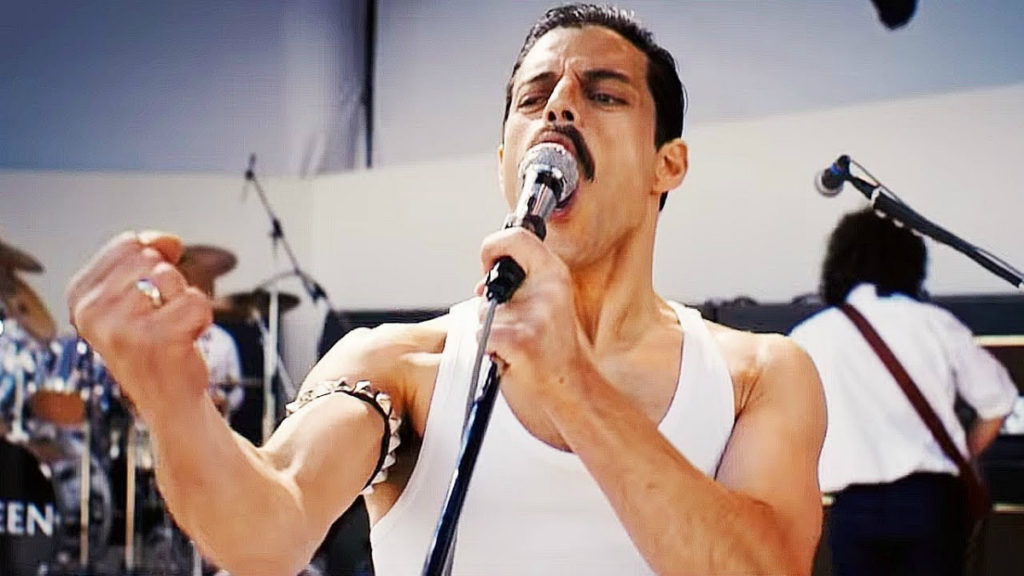
Bohemian Rhapsody

Maria by Callas

Screening Room: Legos, Liam, Bad Seeds and Taraji P.

A bunch of new theatrical and home entertainment releases this week. In theaters we have The Lego Movie 2: The Second Part, Cold Pursuit, What Men Want and Prodigy. We talk through the pros and cons of each, sing a little Everybody’s Awesome, then hit the lobby and home entertainment.

Listen to the podcast HERE.

Brick by Brick

The Lego Movie 2: The Second Part

by Hope Madden

Everything is not awesome.

Don’t tell Emmet (Chris Pratt), though. Try as he might (mainly to please the ever-brooding Lucy/Wildstyle {Elizabeth Banks}), he can’t seem to take on the bleak attitudes of those populating Apocalypseburg.

Wait, didn’t that used to be called Bricksburg? It did, but that was before Dad invited kid sister to share in the Lego fun. Since that day, Emmett and his buds live Fury Road-esque in a smoldering wasteland, forever on the lookout for cute but dangerous aliens from the Sistar System.

When said aliens abscond with all the Master Builders (Lucy, Batman {Will Arnett}, Unkitty {Alison Brie}, MetalBeard {Nick Offerman}, and Benny {Charlie Day}), Emmet will have to find some grit to save his friends.

Returning writers Phil Lord and Christopher Miller update their 2014 tale, this time directed by Mike Mitchell (Trolls), with some pre-adolescent angst that surprisingly mirrors the post-Trump revelation that everything really isn’t awesome.

Out there in the Sistar System, Queen Watevra Wa’Nabi (Tiffany Haddish, a hoot) sings in Disney Villain tones that she is definitely not at all evil. Definitely. Not at all. Meanwhile, she manipulates Batman’s inner narcissist to convince him to marry her in a ceremony Emmet is convinced will bring about Ourmomageddon.

Yes, much of the charm of the original has worn thin. To make up for it, the sequel relies too heavily on pop culture references (a good chunk of the film is about funny, chubby Chris Pratt versus chiseled, hot Chris Pratt and his spaceship full of velociraptors). An abundance of live action plus a clumsy Back to the Future gag fail to entertain as much as they do force the story forward.

Still, Lord and Miller nimbly use the “don’t lose your inner child” theme so popular in family films to cast a side glance at the current bleakening of society. Emmet tries harder and harder to lose his sweetness and optimism in favor of the more masculine stylings of his new friend Rex Dangervest (also Pratt, channeling his Guardians co-star Kurt Russell).

Of course, we all pull for the childlike Emmet to survive, just as the film seems to hope that our own positivity can survive our own Apocalypseville.

Best Served Cold

Cold Pursuit

by Hope Madden

Liam Neeson, everybody.

If we’d ever wondered what fueled Neeson’s on-screen obsession with a character who can turn from perfectly ordinary, even good guy to blindly bloodthirsty avenging devil, now we know. His movies were more fun before, weren’t they?

In Cold Pursuit, Neeson’s ninth riff on the theme since his 2008 career-changer Taken, he takes on mainly white guys (whew!).

Kehoe, Colorado’s most beloved snow plow driver Nels Coxman (Neeson) learns of his son’s heroin overdose death. Not believing his son to have been a junkie, he does some digging, and some retaliatory murdering.

One thing leads to another, the holy bonds between father and son are honored without being explored, Laura Dern (as Mrs. Coxman) vanishes from the film by the end of Act 1, and a rival drug gang complicates the revenge fantasy.

This is director Hans Petter Moland’s reboot of his own 2014 Norwegian thriller, In Order of Disappearance. Both films employ a dark and absurd humor that keep the well-worn material from feeling stale. The weird tone and Moland’s flair for fantastic visuals—not to mention his joy of carnage—keep the film intriguing from start to finish.

A game supporting cast doesn’t hurt. Tom Bateman (listen close and you can hear him say, “holy shit” in The Interview) chews enough scenery to balance Neeson’s quiet brood.

Plenty of peculiar turns and quirky moments between odd characters elevate this one above your garden variety Neeson thriller. It offers a mildly entertaining time—assuming you can get past the actor’s own disturbing relationship with revenge.

The Good News

The Gospel of Eureka

by Rachel Willis

Eureka Springs, Arkansas has long been considered a magical place. In the mid-19th century, its springs were known for their “healing” waters. It’s home to Christ of the Ozarks, a two million pound, 65-feet tall statue of Jesus Christ, as well as The Great Passion Play. The play is the largest-attended outdoor drama in the country and depicts the last days of Christ.

There is also a large LGBTQ population at home in Eureka Springs. With The Gospel of Eureka, directors Michael Palmieri and Donal Mosher explore the city of Eureka Springs and the people who live there.

We meet several people in Mosher and Palmieri’s film, but the most endearing are Lee Keating and Walter Burrell, the owners of Eureka Live Underground, a bar that boasts “the largest beer garden in Eureka Springs”. Both Lee and Walter are devoutly Christian, though they differ in opinion on some of the specifics.

We also spend time with some of the performers in The Great Passion Play. They’re open to sharing their devotion with the audience. We see the great deal of preparation that goes into such a elaborate production.

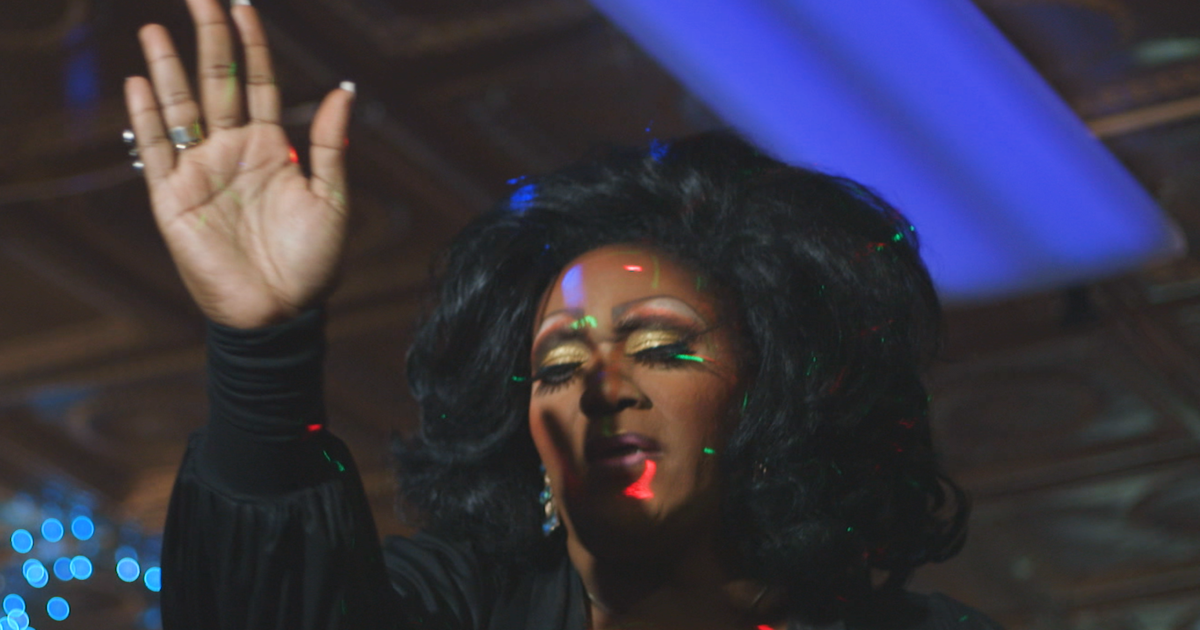
We’re also privy to scenes from The Great Passion Play, but they’re interspersed with moments from a drag show at Eureka Live Underground. Many of the performers incorporate religious songs into their acts. It may seem dichotomous from the outside, but this is what makes Eureka Springs the place it is.

That’s not to say Eureka Springs is a perfect place. The narrator makes sure to include some of the town’s darker history – lynchings, beatings, and murder – but it was also the first city in Arkansas to issue marriage licenses to same-sex couples, and the film itself is anchored around the run up to a vote regarding Non-Discrimination Ordinance 2223. For a city with a deeply ingrained Christian culture, it’s a toss-up as to how the vote will turn out.

With so many aspects to explore, Palmieri and Mosher try to tie it together, but most of the time the film is unmoored. It’s not always clear how pieces fit into the whole story. As a simple portrait of a city, it’s a lovely film. However, if the directors were trying to make a larger point, that goal is wanting.

I Don’t Want to Go Out—Week of February 4

You know what you’ll find out this week? Two movies that should have had a couple of performances worthy of Oscar consideration, a theme of women who will hurt you, and one Oscar nominee that has no business in contention.

Let us help you make your choices.

Click the film title for the full review.

Widows

The Sisters Brothers

Piercing

The Girl in the Spider’s Web

https://www.youtube.com/watch?v=4JshbIplBkc

How the Grinch Stole Christmas

Murky and Absent Danger

An Acceptable Loss

by Brandon Thomas

Morality tale.

That phrase kept popping up in my mind while watching An Acceptable Loss. Unfortunately, the subject of morals mixed with politics was something the film was only concerned with on a surface level.

Libby Lamm (Tika Sumpter) has just started a teaching position at a prestigious Chicago area university. Although she’s excited about this fresh start after leaving a position at the White House, many staff and students are less than enthused with her presence on campus. One of Libby’s pupils (Ben Tavassoli), in particular, is fixated on the new professor and begins tracking her every move around campus and her home. Through a series of flashbacks, we learn about the devastating decision that led Libby out of politics, and into being one of the country’s most hated pariahs.

The most frustrating aspect of An Acceptable Loss is how it sets up a central conflict that could have made for a spellbinding thriller. It instead settles for a Cinemax-level B-movie.

One of the earlier scenes between Libby and her student, Martin, is a tense clash between two people who couldn’t be further apart, and it makes you wish for the movie that might’ve been. Instead, character motivations change on a dime, and that early sense of dread is replaced with a sense of “been there, done that.”

The majority of the cast doesn’t make the material any easier to swallow. Sumpter’s wooden delivery of political jargon is more reminiscent of a freshman PoliSci major than a beltway professional. Tavassol spends the first half of the film brooding at every other character (I honestly expected him to start giving extras the Stink Eye), and the second half doing his best (worst?) Shia Labeouf on cough medicine impression.

Jamie Lee Curtis, in her small role as vice president and president, fares somewhat better. Her natural gravitas lends itself well to being the leader of the free world; unfortunately, the dialogue she’s delivering is almost 100 percent clunky exposition.

It’s unclear what director Joe Chappelle’s (Halloween: The Curse of Michael Myers) original intentions were. Did he envision a taught political thriller in the vain of Three Days of the Condor or was a low-rent Pelican Brief always the plan?

Chappelle’s mishandling of the film’s focus and pacing hobbles the An Acceptable Loss early on and it’s never able to recover.

Maybe this movie was never going to be anything other than cheap Tom Clancy. The promise of that first act, however, hangs over the rest of the film, and in the back of this viewer’s brain, like a giant “What If?”

Ouch

Piercing

by Hope Madden

There’s a lot that shouldn’t be said about Piercing, Nicolas Pesce’s follow up to his glorious 2016 horror, Eyes of My Mother.

Because the film’s tension relies on power exchanges, surprises and averted climaxes, the less you know about how the story progresses, the better.

Suffice it to say that new father Reed (Christopher Abbott), fighting a serious urge to stab his infant with an ice pick, concocts a plan. It involves that ice pick, a “business trip” out of town, and a prostitute (Mia Wasikowska).

The amateur murderer works out the perfect crime, practicing conversations and actions (decorated by Pesce’s remarkable knack for unsettling sound effects), only for the cosmos—or the filmmaker—to wreck those plans.

Abbott’s flat yet sympathetic would-be murderer helps Pesce achieve a peculiar, semi-comic tone, but it’s Wasikowska, playing wildly against type, who carries this film. The two share a mad and maddening chemistry, and even during moments of somewhat forced dialog, their commitment and spark keep you enthralled and guessing.

The film is an exercise in thwarted expectations wrapped up in voyeurism and lurid imagery.

The influences here are dizzying. Ryu Murakami’s source material obviously evokes his own Audition (director Takashi Miike’s classic in power shifting and poor romantic choices). The opening act wades through more modern indie sensibilities, but Pesce quickly overwhelms that flat grit with grindhouse thriller flair before simply succumbing to giallo (Goblin tuneage and all).

This drunken meandering through styles fits the narrative that forever questions the reality or unreality of each situation. Like the cityscape miniatures Pesce uses as the adventure’s out-of-town backdrop, Reed’s whole experience could simply be cool -looking but pretend.

Are those flashbacks or nightmares? Does Reed have a haunted past leaking its way into his present, or is he simply a psychotic hoping to overcome his problem by submitting to it just this once?

Pesce toys with our commitment to Reed’s reality, questionable from the moment his infant halts a crying jag to tell his father, in a demonic voice, “You know what you have to do.”

It’s not a film that will satisfy a lot of viewers, it’s more of a fascinating and forgettable sketch. Still, at under 90 minutes, it’s a weirdly fun little indulgence won’t hurt you. Well, not too much.