Fright Club: Best Western/Horror Movies

Westerns share a lot in common with horror. Both deal in black and white, good and evil, blood. There’s not a lot of true cross over. Sure, you’ve got some brilliant horror that pulls ideas from the Western: Sam Peckinpah’s Straw Dogs, Wes Craven’s The Hills Have Eyes. But that’s not what we’re looking for. We want horses and cowboy hats and shit. And we found them.

Here are the five best Western/horror crossovers.

5. The Burrowers (2008)

Here’s one that bears a resemblance to Bone Tomahawk: someone’s love goes missing, Indians are blamed, a posse heads out in search but finds something more sinister than expected.

Writer/director J.T. Petty laments the barbarism of the white settler and its Cavalry with a bleak and subconsciously gruesome image of the consequences of “progress”.

Burrowers, though, asserts itself as a horror film early and often. It certainly borrows from both genres, balancing themes well by exploring what’s ugliest in Western lore. Horror films tend toward social commentary in a way that Westerns rarely do—indeed, classic Westerns tend to revel in the exact elements of human nature that horror likes to exploit for its blood-curdling nastiness.

Solid performances, especially from veteran character actors Clancy Brown and William Mapother, elevate the film above its monster movie trappings.

4. Ginger Snaps Back: The Beginning (2004)

In 2004, director Grant Harvey offered an origin story for the lycanthropic Fitzgerald sisters (Katharine Isabelle and Emily Perkins reprising their roles). It’s 1815 and Ginger and Bridget find themselves lost in the Canadian wilderness, seeking assistance from a Native American woman and then shelter from a creepy pastor and his flock at a fur trading post.

What’s got the traders so spooked? Werewolves!

They bring the sisters in because they are nicer than the people at The Slaughtered Lamb, but it turns out they’d have been better off leaving G&B to die in the woods.

The movie has a fun, self-consciously anachronistic style to it that allows the Fitzgerald sisters to seem even more like us and like outsiders than they did in the original high school horror show. Dream sequences, practical effects, creepy kids, sisterly love and old fashioned carnage make this one a decent throwback.

3. Dead Birds (2004)

First, we get to liking the rag tag bunch of misfits—deserters from the Confederate army: two brothers (Henry Thomas and Patrick Fugit), two buddies (Michael Shannon and Mark Boone Junior – hell yes!), an escaped slave (Isaiah Washington) and a nurse (Nicki Aycox).

Next, we’re freaked out by the mutant boar and grisly scarecrow in the abandoned plantation where they will hole up with their ill-gotten loot.

What director Alex Turner does best with his supernatural Western is to draw you in with sympathetic characters played well by talented actors. Though the pace is slow—as is often the case with supernatural horror—and the FX are not spectacular, the film has a hypnotic quality and it fills you with dread.

Turner benefits from an empathetic script penned by Simon Barrett, who’d go on to a fruitful partnership with director Adam Wingard (You’re Next, The Guest, Blair Witch). Together with haunting performances, the mind-bender of a story leaves you troubled.

2. Ravenous (1999)

The blackest of comedies, the film travels back to the time of the Mexican/American War to throw us in with a cowardly soldier (Guy Pearce) reassigned to a mountainous California outpost where a weary soul wanders into camp with a tale of the unthinkable – his wagon train fell to bad directions, worse weather, and a guide with a taste for human flesh.

Pearce is great as the protagonist struggling against his own demons, trying to achieve some kind of peace with himself and his own shortcomings, but Robert Carlyle steals this movie.

As the wraithlike Colonel Ives, he makes the perfect devil stand-in. Smooth, compelling and wicked, he offsets Pearce’s tortured soul perfectly. The pair heighten the tensions with some almost-sexual tension, which director Antonia Bird capitalizes on brilliantly.

1. Bone Tomahawk (2015)

In a year rife with exceptional Westerns (Slow West, The Hateful Eight, The Revenant), this film sets itself apart. S. Craig Zahler’s directorial debut embraces the mythos of the Wild West, populating a familiar frontier town with weathered characters, but casting those archetypes perfectly.

Kurt Russell and Richard Jenkins, in particular, easily inhabit the upright sheriff and eccentric side kick roles, while Patrick Wilson’s committed turn as battered heroic lead offers an emotional center.

Zahler effortlessly blends the horror and Western genres, remaining true to both and crafting a film that’s a stellar entry into either category. Bone Tomahawk looks gorgeous and boasts exceptional writing, but more than anything, it offers characters worthy of exploration. There are no one-note victims waiting to be picked off, but instead an assortment of fascinating people and complex relationships all wandering into mystical, bloody danger.

Because the true horror is a long time coming and you’re genuinely invested in the participants in this quest, the payoff is deeply felt. This is a truly satisfying effort, and one that marks a new filmmaker to keep an eye on.

The Screening Room: Master of Disaster

We have one full week to wait until the new Star Wars. What will we do? Well, there are a couple of great movies you can see in the meantime. We talk through The Disaster Artist and Thelma, plus hip you to what’s new in home entertainment.

Listen to the full podcast HERE.

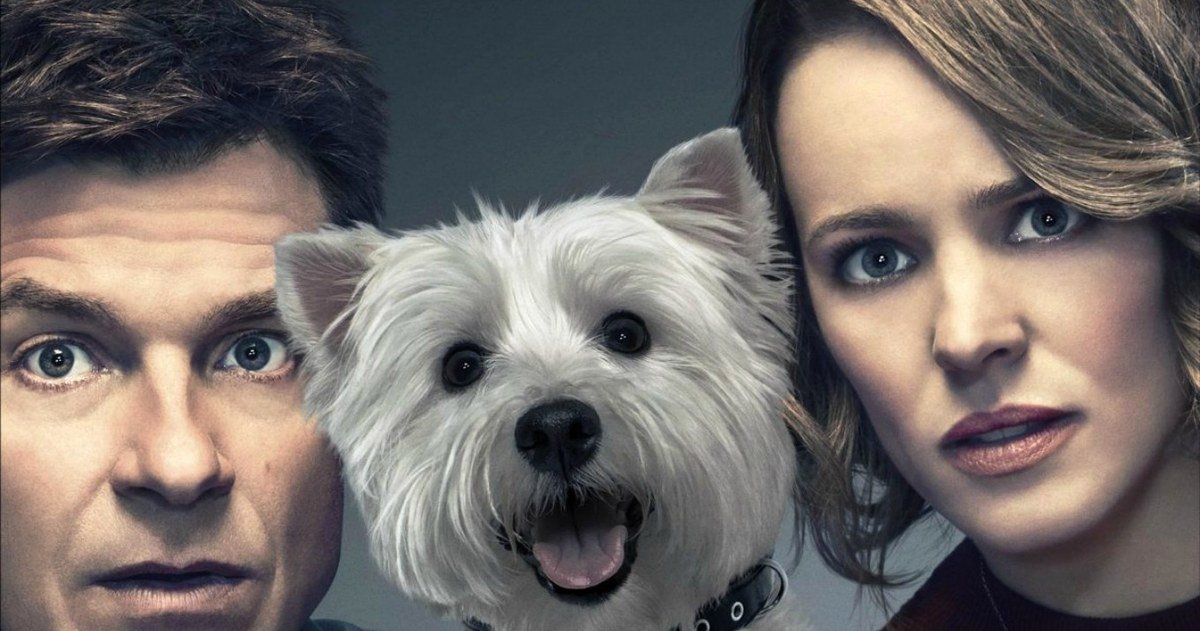
Hi Doggie!

The Disaster Artist

by Hope Madden

There is genuine affection in James Franco’s The Disaster Artist, a behind-the-scenes biopic that gets inside the making of the best bad movie of all time.

Yes, The Room is the best—better than Plan 9 from Outer Space and Trolls 2. They’re in the same league because The Room is what these “classics” are – a simply god-awful movie made with such unpredictable creative vision that you cannot help but be amazed. It’s just that The Room has it in greater abundance.

It’s also a story of Hollywood dreams coming true, as well as a lovely tale of friendship. And, of course, a glimpse at one of the most unusual men in film, Tommy Wiseau.

In 2003, Wiseau released The Room, a film he wrote, produced, directed, financed and starred in. Not particularly well.

Almost fifteen years later, The Room has seen cult adoration the likes few besides Rocky Horror would ever see. Because it is awful. So, so gloriously awful.

Directing his 19th feature (!!), Franco seems to have finally found a subject that suits his sensibilities, filling the screen not with vicious mockery as much as awe.

Jacki Weaver is magnificent as a baffled actor trying to do quality work. Zac Efron also turns in a startlingly solid performance – not because Efron is not usually solid, he is – but because this film doesn’t call for that kind of commitment. And Josh Hutcherson is a hoot in a bad, bad wig.

Franco’s performance as Wiseau is uncanny, and mercifully, his film doesn’t attempt to uncover the mystery behind this genuinely unusual creature. As future bestie (and author of the book on which the film is based) Greg, Dave Franco sets the mood almost immediately.

Recently embarrassed by his own stage fright during an acting class performance, Greg sits mesmerized by Wiseau’s writhing, prop-climbing onstage “Stella!” Where the rest of the class looks away in embarrassment, Greg soaks it in.

It strikes a sweet balance between embarrassment and affection that the film maintains throughout—one that not only allows us to embrace this freakish figure at the center of the film but mirrors the very emotion that has made The Room a lasting cult joy.

If you worry you won’t be able to follow The Disaster Artist without seeing The Room, two things: 1) Franco rolls scenes from both movies side by side to give you context and point out that this movie is no spoof. 2) Go see The Room!

Free Bird

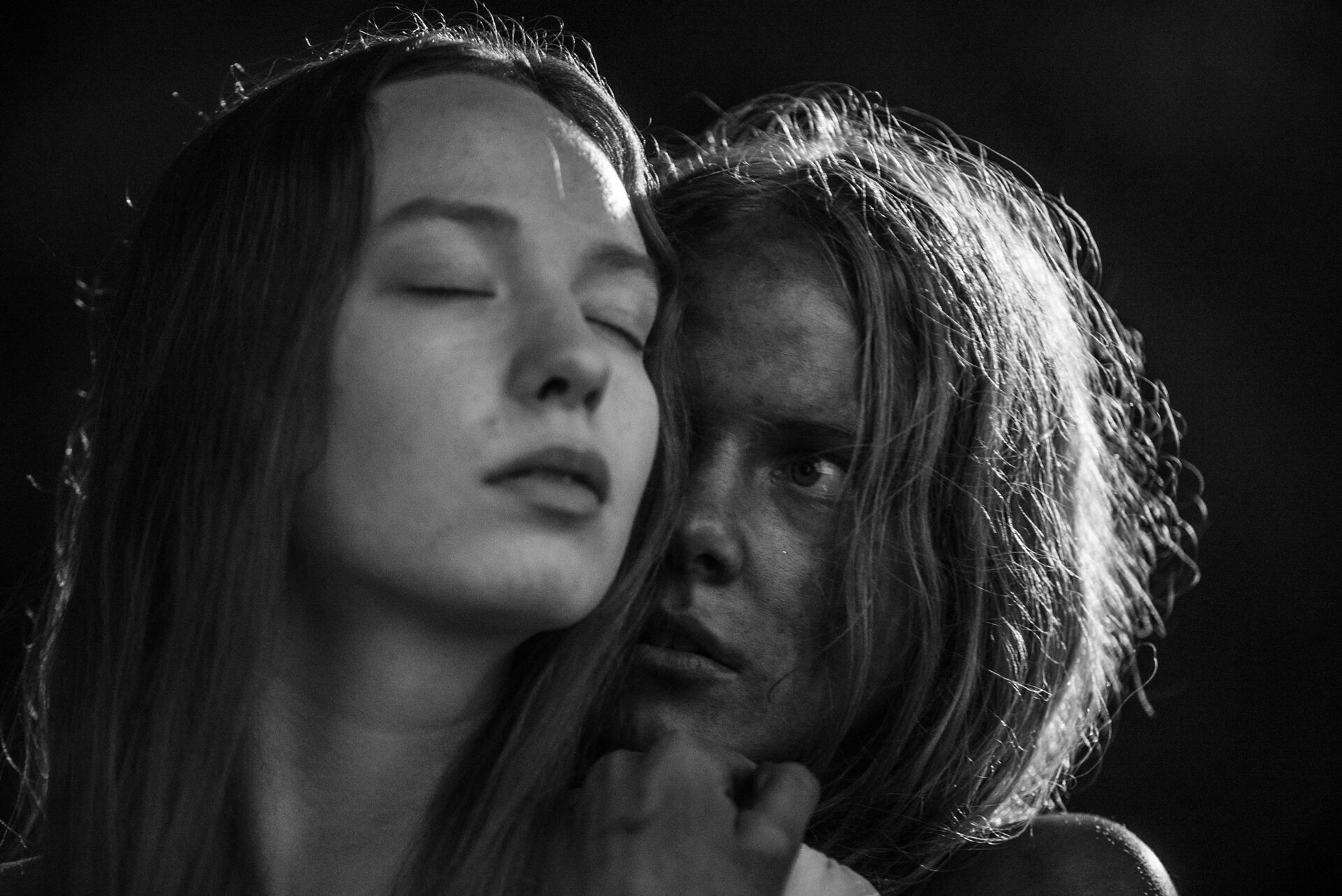
Thelma

by Hope Madden

A surprising, gorgeously filmed prologue creates a mood: a little girl, bundled in a red coat, follows her shotgun-toting father across a frozen pond into the snowy woods. She looks periodically through the ice at the fish moving beneath the ice. In the quiet woods, the two spy a deer. The girl holds her breath, staring silently at the animal while her father prepares to shoot.

The film never again rises to the exquisite, icy tension of its opening scene, but it does work your nerves and keep you guessing. As we follow that little girl, Thelma (Eili Harboe), through the uncomfortable, lonely first weeks of college we gather that her parents are very Christian and very over-protective.

Things could have gone all predictable and preachy from there, but co-writer/director Joachim Trier knows what you’re thinking and he plans to use it against you.

Thelma is a coming-of-age film at its cold, dark heart. The horror here lies in the destructive nature of trying to be something you are not, but here again, nothing in Thelma is as simple or cleanly cut as the beautiful framing and crystal clear camera work suggest.

As familiar as many of the conflicts feel, Trier never lets you forget that something’s not entirely right about Thelma. She seems normal, maybe just sheltered, but that opening scene nags at you.

Like Julia Ducournau’s magnificent coming-of-age horror Raw, Thelma dives into the issues swirling around post-adolescent freedoms and taboos in daring and insightful ways. Trier also fills the screen with metaphorical dangers of indulgence and self-acceptance, although his protagonist’s inner conflicts lead to different results. Where Raw’s horror is corporeal, Thelma’s is psychological.

Thelma takes its time and lets its lead unveil a fully realized, deeply complex character full of contradictions—inconsistencies that make more sense as the mystery unravels. Though the result never terrifies, it offers an unsettling vision of self-discovery that’s simultaneously familiar and unique.

Space Race

by Hope Madden

About three days a week you can find my family glutting ourselves on beans and rice at the Chipotle on the corner of Northwest Boulevard and Fifth Avenue near Grandview, Ohio. Oh, how we love Chipotle. Well, I love it. George indulges me.

Though the food is great, the parking lot is a disaster. It’s like an experiment in Darwinism: kill or be killed. Once we make it through the carnage outside, we eat in—no takeout for us. If we’ve survived the parking lot conquest, we’re not about to turn right around and surrender our prize. And though we know as well as anyone that you take your life in your hands trying to find a space during busier hours, that’s really not an excuse to use one of their two handicap spaces.

Sometimes as we eat we watch out the window and marvel at the number of people who pull into the handicap spot closest to the door and walk in to order. It’s like a revolving door for parking law violators: The minute one pulls out, someone else pulls in.

And then one day we witnessed a magical event, a marvelous comeuppance. A driver with a handicap plate pulled in directly behind the illegally parked car, blocking its exit. Our new hero just shut off the engine and came in to order dinner.

We were hoping for a show. What would the first driver do? Come back in and ask, table by tale, who had illegally parked behind his car that was illegally parked? Or would he just sit and contemplate his actions while he waited for the other driver to leave?

We didn’t get to see the outcome, but the mom in me hoped for the latter.

I do have some empathy for those Chipotle lawbreakers, though. I’ve done it myself. Not intentionally, but, in retrospect, how did I not realize that the space at Metro Fitness was designed for handicap parking? Sure, the paint on the blacktop had faded, but how often is it just a coincidence that the spot closest to the door is always open?

At one point a patron asked me if I realized I was parked in a handicap spot. This was when the illogic of the situation hit me, and I moved my car—and haven’t made the mistake again.

But still, it can be a mistake—unless there’s a big metal sign advertising the handicap space. For instance, not long after the Chipotle incident, we pulled into a BP so George could get air in his tires. Our son Riley and I sat bored in the truck while George went into the convenience store to get the hose turned on.

As he walked past a car parked illegally, he made accusatory eye contact with the passenger.

These handicap-space thieves at BP are particularly objectionable because they can’t possibly be doing it by accident. A metal sign stares right into the windshield. There’s really no missing it. In fact, the sign is so obvious that George—subtle as ever—had no trouble finding it to smack it with his hand as he stared again into the illegally parked car on his way back to the air hose.

At this point, it was on. The passenger jumped out of the car and yelled, “What, because you’re a man you think you’re better than me?”

Yikes. Riley and I rolled the windows down so we wouldn’t miss anything.

“Not at all,” George called over his shoulder as he headed toward our car. “I think I’m better than you because I don’t take up handicapped spaces.”

The scene was awkward, which seemed to bother George and this parking violator not one iota. They traded jabs awhile longer and, eventually, the woman got into the driver’s seat and moved the car to a more appropriate space. Situation resolved, mercifully, until the driver came out.

She looked perplexed at her friend, who got out of the car and explained, “Captain Penis over there made me move the car.”

I swear to God, that’s what she said.

Maybe it was his cape.

They drove off in a peculiar huff, but I was just glad it didn’t come to blows. George would never hit a chick, which means it would have fallen on me to handle the situation. I may have principles, but no traffic issue means enough to me to take a punch.

Bond of Brothers

Last Flag Flying

by George Wolf

“Men make the wars, and wars make the men.”

Last Flag Flying is a loving salute to the enduring nature of honor. Thoughtful and sometimes genuinely moving, it’s also not above getting laughs from three aging veterans trying to buy their very first mobile phones or arguing about the ethnicity of Eminem.

It is 2003, and Larry, aka “Doc,” (Steve Carell) is looking up two old Marine buddies for a very specific purpose. Doc, Sal (Bryan Cranston) and Richard (Laurence Fishburne) all served in Vietnam together, and now Doc needs his friends to help bury his son, who has just been killed in the Iraq War.

Once the men learn that the official story of the boy’s death isn’t exactly the real story, Doc declines a burial at Arlington, deciding to transport the body for a hometown funeral in New Hampshire.

Older gentlemen out for a wacky road trip? Is that what’s going on here?

Those fears are understandable but unwarranted, as director Richard Linklater confidently guides the film with gentle restraint and his usual solid instincts for organic storytelling. Some good-natured humor is framed from the three outstanding main performances, but it never derails the resonance of these characters grappling with the cyclical nature of sacrifice.

Linklater adapts the script with source novelist Darryl Ponicsan, who also wrote the 1970s servicemen-centered flicks Cinderella Liberty and The Last Detail. Last Flag Flying draws many parallels with the latter film, as it is not a stretch to see these characters as the Detail men taking stock of what the years have changed – and what they haven’t.

Though the perfectly-drawn contrasts of the three personalities seem manufactured at times, it matters less thanks to Carell, Cranston and Fishburne, who are never less than a joy to watch. You’ll need tissues handy for the touching final moments, but Last Flag Flying makes the tears, and the trip, worthwhile.

Heart and Soul

BPM (120 Beats Per Minute)

by George Wolf

Transitioning slowly from a sweeping, outrage-fueled political drama to a hushed and intimate personal study, BPM becomes a deeply emotional portrait of hope and love.

It is France in the early 1990s, when Act Up/Paris is becoming increasingly confrontational in their protests, demanding an official AIDS prevention policy from the state, and an end to the indifference of the population.

Early on, director/co-writer Robin Campillo (Eastern Boys) skillfully uses Act Up’s regular meetings to bring us up to speed on procedures and strategies. Through the group’s infighting and organized protests, the film speaks to the often fragile power of activism, especially when some of the activists are dying.

The confusion caused by the AIDS epidemic is heavy in the air, and Campillo effectively pairs it with the desperation of those most personally effected, eventually settling on two in particular.

Sean (Nahuel Perez Biscayart) is HIV-positive and a veteran Act Up member, full of a passion that draws in the shy newcomer Nathan (Arnaud Valois). As the two draw closer, Campillo narrows his focus to the touching, slice-of-life glimpses that lie at the very heart of the cause.

BPM builds an earnest base through faithfully re-creating an era while reinforcing that era’s continued relevance to the present. But the film reveals its purpose through the smaller moments that inspire, reminding us of the courage needed to take a stand, and just what’s at stake if we don’t.

Scrape it Off your Shoes

Sweet Virginia

by Hope Madden

Which is a better death—a bullet, or a broken heart? Aah, the neo-noir, always trodding that lonesome, masculine road.

Director Jamie Dagg’s latest effort, the brooding Sweet Virginia, contemplates many of the same bruised musings in many of the old, familiar ways. But between Benjamin and Paul China’s taut script and an ensemble’s powerful performances, you won’t mind.

Jon Bernthal leads the cast as Sam, former rodeo star and current proprietor of small town motel Sweet Virginia. It’s the kind of place where a drifter (Christopher Abbott) might stay, a high school kid (Odessa Young) might take a part-time job, a new widow (Rosemary DeWitt) might find comfort or a femme fatale (Imogen Poots) might find danger.

Bernthal charms playing against type and spilling over with tenderness. His every moment onscreen is abundant with warmth, a curious choice for a hillbilly noir’s male lead, but it pays off immeasurably.

Abbott is his fascinating opposite. Both dark and imposing, Abbott’s Elwood festers and stews, a pot of simmering violence waiting to bubble over. Like Bernthal, Abbott chooses an approach to his character that is nonstandard and, in both instances, carving such believable and unusual men in such a familiar environment gives Sweet Virginia more staying power than it probably deserves.

DeWitt reminds us again of her skill with a character, embracing Bernie’s brittleness and resilience to craft an authentic presence. More impressive, though, is Poots in an aching performance.

Daggs shows confidence in his script and his performers, siding with atmosphere over exposition and letting scenes breathe. His string-heavy score and fixation with reflections and the spare light cast by a lonely street lamp create a mood that is familiar, yes, but fitting and welcome.

This is Coen territory, and where the Brothers can always find texture in even the most threadbare of material, Daggs’s film feels superficial. It holds your attention and repays you for the effort with a series of finely drawn and beautifully delivered characters, not to mention a script that invests in clever callbacks as well as character.

It’s a gripping film that lacks substance, a well-told reiteration on the same theme.

Hope Madden and George Wolf … get it?