A bunch of new stuff in home entertainment this week, not one of them a dud. We have two of the year’s absolute best, followed by a slew of really solid flicks you may have missed during their brief stints in theaters. Now is the day to rectify! We’ll help you sequence your week’s viewing.
A lot of little gems out in theaters this week. On the podcast, we talk through Searching, Operation Finale, The Little Stranger, Kin and what’s new in home entertainment.
I’m no cook. If it’s not on Chipotle’s menu, I’m not eating it. And yet, I feel like I understand certain things that don’t go together, say Captain Crunch cereal and goat cheese, meatball subs and tuna, ice cream and hair.
That’s kind of the experience to be had when watching Kin.
Advertised as an adolescent SciFi adventure where a ‘tween finds an intergalactic gun and all his problems are solved (nothing tone deaf about that storyline), the film is much more than that. And also much less.
Eli Solinski (Myles Truitt) is an adolescent outsider, missing his mom and trudging through his dad’s chores and disappointment. His older brother Jimmy (Jack Reynor, or as I like to call him, Handsome Seth Rogan) comes home from a 6-year prison stretch, and things go quickly to hell in a handbasket thanks to his old associate, Taylor (James Franco).
Filmmaking brothers Jonathan and Josh Baker start off with traditional angsty teen drama. They quickly warp it into a gritty, mid-budget crime thriller, with a little charm thanks to Franco’s characteristic weirdness: badly cut mullet, unexplained puffy coat, women’s shoes.
But then it turns into a road picture with antics and a sort of tragic take on the cycle of poverty, crime and bad decisions. By this time, we realize that Truitt doesn’t have much hope of establishing a character, as he may, indeed, have no idea what film he’s in.
Reynor fairs slightly better. He’s likable and vulnerable. To pull the role off, he’d also have to be believably corrupted, which is where Reynor falters.
Zoe Kravitz is Milly, the stripper they befriend. Let’s not even get into it.
The strength and honest conflict in the film is really the relationship between the two brothers and the inevitable, depressing conclusion their lives together will lead to.
But, wait. Don’t settle into that just yet, because there’s an over-the-top, high-octane climax headed inexplicably and irreversibly toward you. And remember the whole SciFi nonsense they threw at us in the trailer? Well, it finally finds its resolution in the last five minutes of the film—a plot twist that is so mismatched with the tone of the film leading up to it, it truly feels like a whole other movie just came knocking on the door because it was lost.
Movies that mix music and quirk tend to punch me right in the feels (is a 36-year-old allowed to say “feels”?). Once, Begin Again and Sing Street are a few examples of movies that gave my tear ducts a workout. The only feelings Juliet, Naked conjured in me were boredom, apathy and a dash of frustration.
Annie (Rose Bryne) is stuck in a rut. She lives in her sleepy hometown and works the same job her father did. Her boyfriend, Duncan (Chris O’Dowd), is more interested in a long-disappeared musician than starting a family with her. When a CD demo for Duncan’s favorite musician, Tucker Crowe (Ethan Hawke), shows up at their home, Annie is the first to listen. Her negative reaction to the album, mixed with Duncan’s over-the-top positive one, sets off a chain of events that ends with Crowe himself visiting her in England.
I realized halfway through Juliet, Naked that director Jesse Peretz (Our Idiot Brother) was trying to reinvent the classic rom-com. Instead, it’s more of a Frankenstein’s monster hybrid, as one part indie drama mixed with your classic rom-com clichés makes for strange bedfellows. It’s not to say that these tropes couldn’t exist together – they could – but it would need to be in the hands of a stronger filmmaker.
The cast fares a little bit better. Hawke and Byrne do what they can with a messy script, and they have an undeniable chemistry. The problem – again – lies in that it sometimes feels like the characters are moving between two different films. One moment, Hawke’s character is lamenting his shortcomings as a father, and the next he’s in a hospital bed surrounded by all of his ex-wives/lovers. It’s a scene that wouldn’t feel out of place in a network sitcom.
Byrne is the one saving grace. She’s always been able to lift the material she’s given and it’s no different here. There’s a sweetness to Annie that never feels naïve. She’s a competent, driven woman who just hasn’t allowed herself to go after what she wants in life.
There’s a behind-the-camera pedigree to Juliet, Naked that makes its shortcomings all the more disappointing. It’s based on the book by Nick Hornby (About a Boy, High Fidelity), and produced by Judd Apatow (Bridesmaids, Superbad, Pineapple Express). Apatow has especially shown himself to be adept at producing really funny, thoughtful comedies.
Had Juliet, Naked kept both feet firmly in one genre, I think the film would’ve had something nice to say. Instead, it’s a murky mess of what could have been.
Operation Finale may be an often gripping take on the hunt and capture of elusive Nazi war criminal Adolph Eichmann, but it finds emotional power in the intimate characterizations of two truly gifted actors.
Sir Ben Kingsley is Eichmann, the SS “Head of Jewish Affairs” who lived under a false identity in Argentina until an Israeli Mossad unit tracked him down. Oscar Isaac is Peter Malkin, the Mossad agent who entered into a psychological duel with Eichmann while negotiating his extradition for trial in Israel.
Director Chris Weitz handles well the shifting timelines and changing locales, propping the historical dramatics up with tense staging reminiscent of Argo. And, as he’s not had any recent head injuries, Weitz knows when to stay out of the way and let his two leads do the masterful things they do.
The trouble spots in Operation Finale come mainly from Matthew Orton’s script, which is ironic because many isolated moments are quite effective.
Much of the dialogue is breezy and even funny, which humanizes the supporting characters (with fine work from an ensemble including Melanie Laurent, Haley Lu Richardson and Nick Kroll) but can feel a bit flippant inside such weighty history.
And in weighing that history, Orton’s first feature screenplay aims for meaningful statements on the casualness of evil and the moral ambiguities of war, but settles instead for well meaning generalities that don’t amount to any unique vision.
Kingsley and Isaac (who also earns a producer credit) provide their own. Their scenes together become a richly-drawn cat and mouse game, a face off between personifications of genocide and exterminator. Somehow, they make subject matter this unpleasant a joy to watch unfold, elevating Operation Finale with a moving contrast of soul.
There were a lot of reasons to be excited about The Little Stranger.
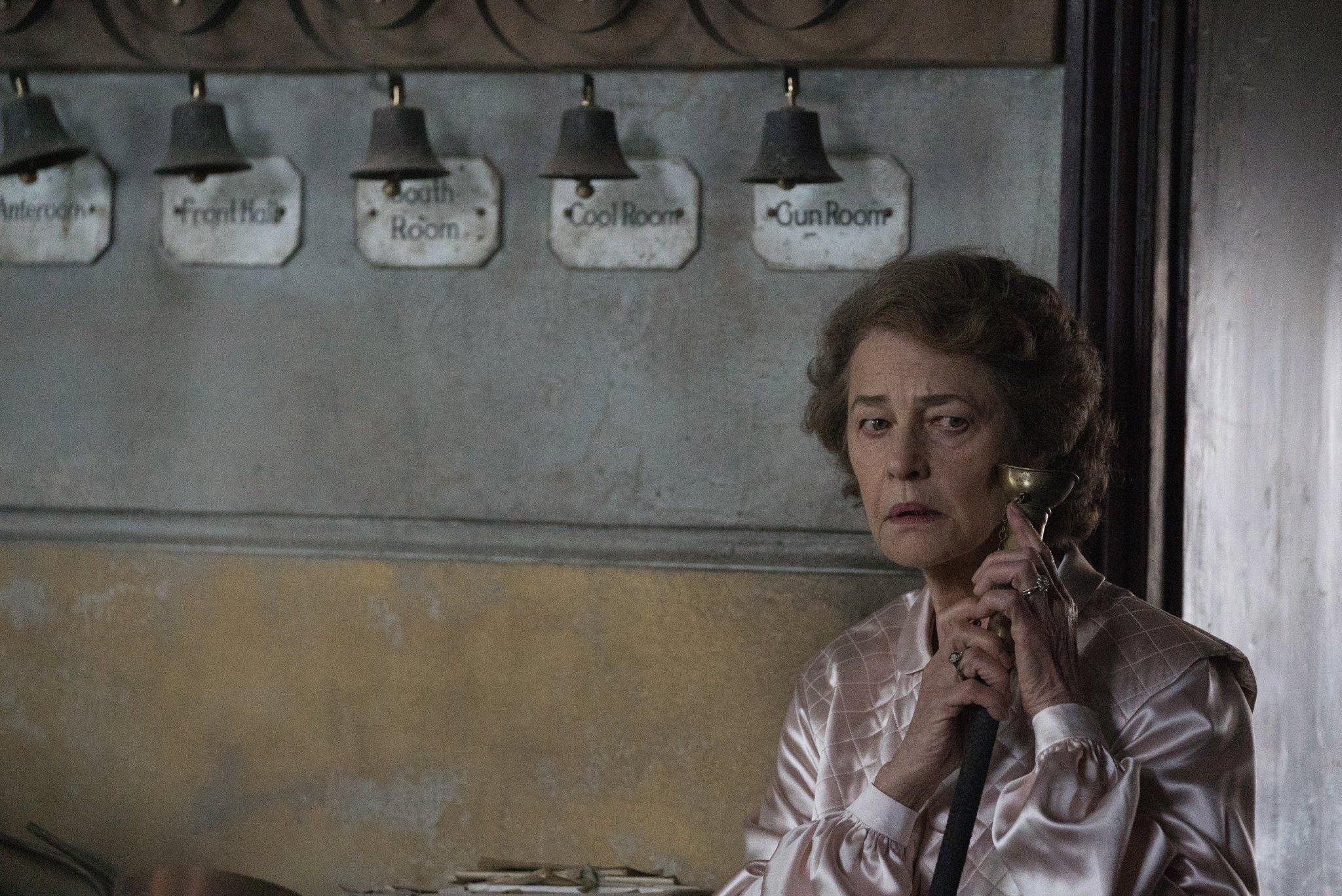
The film is director Lenny Abrahamson’s follow up to his staggeringly wonderful 2015 film Room. It stars three of the most solid character actors you will find (whether you know the names or not): Domhnall Gleeson, Ruth Wilson and Will Poulter.
Who else? Oh, yes, Charlotte Rampling, who’s been a miracle of understated power since the mid-Sixties.
On top of all that, it may (or may not) be a period British ghost story, and who doesn’t dig that?
But something’s gone terribly wrong with The Little Stranger.
It looks stunning. Abrahamson’s camera captures postcard quality images of spooky old mansion quarters, lonesome countrysides, sparse bachelor apartments.
Gleeson’s performance is wonderful: restrained and proper to a degree that suits this particular character. Poulter (who is a marvelous and amazingly versatile actor) is underused, as is Rampling, although she cooly delivers enough decisive lines to make an impression.
Performances, too, are picture-perfect.
Wilson impresses most as Caroline Ayres, the put-upon sister in an old-money family that’s seen its share of heartache. She’s being courted, so to speak, by reserved country doctor Faraday (Gleeson), while she helps to care for her badly injured (inside and out) WWII veteran brother Roddy (Poulter), quietly helping him manage his responsibilities to the estate.
Caroline longs to be free. Longing is maybe the most palpable theme in the film, along with the underlying nod to classism. Unfortunately, by Act 3, you’ll be longing for some action of any kind.
Abrahamson’s film, adapted from Sarah Waters’s novel by screenwriter Lucinda Coxon (The Danish Girl), moves at an iceberg’s pace. Though the bumps, burns and bruises in the night are developed with the proper haunted house atmosphere, the resolution is so underdeveloped and slow in coming that the film cannot help but disappoint.
The reveal makes sense to a degree, and bravo to Abrahamson for expecting audiences to have paid enough attention to earlier dialog that we might fathom the conclusion. At the same time, with too much thought, that reveal can fall apart. So, if you’re not paying attention you will have no idea what just happened. Pay too much attention and the mystery’s resolution will disintegrate on you.
It’s unfortunate because there is an awful lot of talent and aesthetic going to waste here.
Much like early 80s music video directors adjusting to the possibilities afforded by the power of MTV, it’s taken current filmmakers some time to craft nuanced statements on the rise of social media.
But then, we’ve yet to see evidence that ZZ Top’s “Legs” swung an election, so clearly, we’re all still adjusting.
Searching is the latest reminder that for social media-themed movies, at least, things are looking up.
In his debut feature, director/co-writer Aneesh Chaganty crafts a smart, fast-moving internet mystery that plays out on the screens of various platforms. Dropping sly clues among its plot twist head fakes, the film becomes a surprisingly satisfying B-movie potboiler, a terrifically tense race against time that reminds us how tech-entrenched we are without resorting to any heavy-handed judgments.
Busy father David Kim (a perfect John Cho) is annoyed when his 15-year-old daughter Margot (Michelle La) won’t answer his texts or face time requests. Annoyance turns to desperation when it becomes clear Margot is a missing person.
Detective Vick (Debra Messing, effectively understated and against type) is on the case, and as David follows her advice to scour Margot’s online history for clues, we learn along with Dad that Margot had secrets.
Right from a nifty opening montage that serves to bond us with the Kim family while it wistfully reminds us how our own connections to technology have grown, Chaganty establishes a commitment to narrative momentum that rarely lets up. Very little time feels wasted because, natch, there’s no time to waste.
The integrity of the “real-time computer screen” device is richly detailed, organically sound and beautifully constructed, drawing a strange contrast in authenticity with the TV news segments covering Margot’s disappearance.
Did Changanty not bother sweating those details, or is it his nod to “old media” being out of step? I’m guessing the latter.
At least one plot twist seems a bit of a reach, and the final reveal stops just south of Scooby Doo inspired explanation, but Searching has brains and heart enough to rise above.
Though Chaganty assembles the film with the latest in frame wizardry, he surrounds it with familiar thriller elements that bring a subtle throwback feel to the astute look at how we live now.
Ultimately, Searching is a mystery with as much to say about parenting as posting, and a remarkably in-the-moment statement.
It’s like an end-of-summer fire sale this week. So many movies! All available to watch from the couch in unwashed yoga pants and Alf tee shirts. I mean, that’s how we imagine you watching these, but really, wear whatever you want. The important thing is to let us help you decide where to spend your valuable time.
The Harvey Weinstein story is a horror film all its own, but there are echoes of it across the genre. When you are desperate to accomplish something and there are those with power who can manipulate your success, victimization is the likely result in horror. We salute the best films that see Hollywood ambition as death and corruption in the making.
5. The Neon Demon (2016)
“Beauty isn’t everything, it’s the only thing.”
So says an uncredited Alessandro Nivola, a fashion designer waxing philosophic in Nicolas Winding Refn’s (Bronson, Drive) nightmarish The Neon Demon.
Jesse (Elle Fanning) is an underaged modeling hopeful recently relocated to a sketchy motel in Pasadena. Will she be swallowed whole by the darker, more monstrous elements of Hollywood?
Hollywood is a soulless machine that crushes people. The world objectifies women, a toxic reality that poisons everyone it touches. Small town girl gets in trouble following her dreams in Tinseltown. There’s nothing new here. To manufacture something, it’s as though Refn replaces fresh ideas with bizarre imagery.
The film is not without its charms. Like Only God Forgives, the longer you wander through this nightmarish landscape, the more outlandish the dream becomes.
And you know what? Keanu Reeves isn’t bad. Huh!
4. Starry Eyes (2014)
Sarah (Alex Essoe) is an aspiring actress in LA and a bit of a delicate flower. She lives in a complex full of other aspiring actors, but she doesn’t hang out with them or participate in their low budget indie circle – they believe she thinks she’s too good for them. Then she auditions for a part, does some things on camera for the audition she regrets, behaves weirdly in the bathroom, and is invited to meet The Producer.
On the one hand, Starry Eyes offers an obvious plot about selling your soul for success, dressed in a cautionary tale about Hollywood. But the writing/directing team of Kevin Kolsch and Dennis Widmyer are much more sly than that. Yes, the insights they provide about the backbiting lowest rungs of the Hollywood ladder abound, but they are far more compassionate than what you routinely see.
Also fascinating is the clever use of the protagonist Sarah – she begins as our empathetic heroine, our vehicle through the daily degradation of trying to “make it.” But the filmmakers have more in store for her than this, and Essoe uncomfortably peels layer after layer of a character that is never fully what we expect.
Look for outstanding, witchy appearances by genre veteran Maria Olsen, as well as a spot-on Louis Dezseran. They will make you uncomfortable.
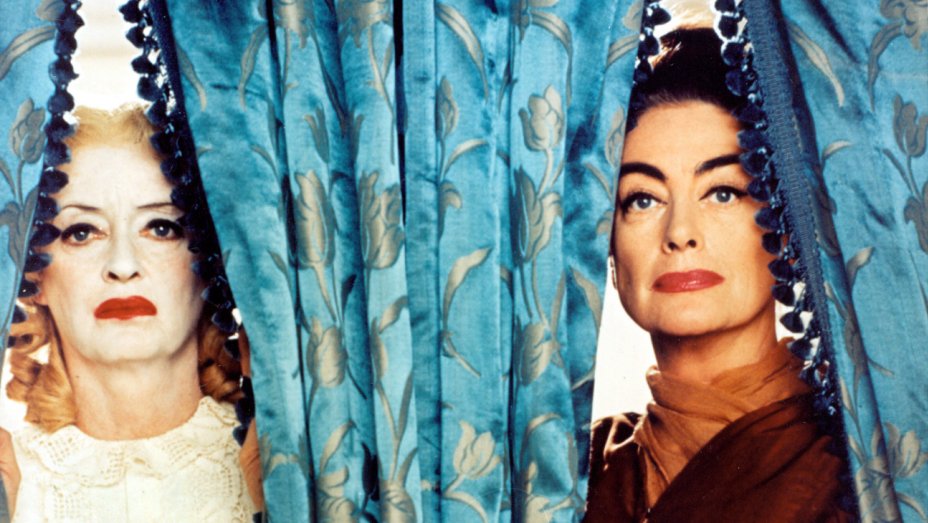
3. What Ever Happened to Baby Jane? (1962)
Bette Davis and Joan Crawford? Yes, please!
The two then-aging (just barely, if we’re honest) starlets played aging starlets who were sisters. One (Davis’s Jane) had been a child star darling. The other (Crawford’s Blanche) didn’t steal the limelight from her sister until both were older, then Blanche was admired for her skill as an adult actress. Meanwhile, Jane descended into alcoholism and madness. She also seemed a bit lax on hygiene.
Blanche winds up wheelchair bound (How? Why? Is Jane to blame?!) and Jane’s envy and insanity get the better of her while they’re alone in their house.
Famously, the two celebrities did not get along on set or off. Whether true or rumor, the performances suggest a deep, authentic and frightening hatred borne of envy that fuels the escalating tension.
Davis is at her unhinged best in a performance that earned her an Oscar nomination. Crawford pales by comparison (as the part requires), but between the hateful chemistry and the story’s sometimes surprising turns, this is a movie that ages well, even if its characters did not.
2. Shadow of the Vampire (2000)
Not Hollywood – Germany. But actors are putting their fate in the wrong hands for the sake of stardom nonetheless.
E. Elias Merhige revisits F. W. Murnau’s masterpiece Nosferatu with smashing results in Shadow of the Vampire. Wickedly funny and just a little catty, ‘Shadow’ entertains with every frame.
This is the fictional tale of the filming of Nosferatu. Egomaniacal artists and vain actors come together to create Murnau’s groundbreaking achievement in nightmarish authenticity. As they make the movie, they discover the obvious: the actor playing Count Orlok, Max Schreck is, in fact, a vampire.
The film is ingenious in the way it’s developed: murder among a pack of paranoid, insecure backstabbers; the mad artistic genius Murnau directing all the while. And it would have been only clever were it not for Willem Dafoe’s perversely brilliant performance as Schreck. There is a goofiness about his Schreck that gives the otherwise deeply horrible character an oddly endearing quality.
Eddie Izzard doesn’t get the credit he deserves, reenacting the wildly upbeat performance of Gustav von Wagenheim so well. The always welcome weirdness of Udo Kier balances the egomaniacal zeal John Malkovich brings to the Murnau character, and together they tease both the idea of method acting and the dangerous choice of completely trusting a director.
https://www.youtube.com/watch?v=uAn5uLNMmjk&t=10s
1. Rosemary’s Baby (1968)
Again, not Hollywood, New York. But how genius is this movie?
Rosemary’s Baby remains a disturbing, elegant, and fascinating tale, and Mia Farrow’s embodiment of defenselessness joins forces with William Fraker’s skillful camerawork to cast a spell.
Working from Ira Levin’s novel, Roman Polanski spins a tale of mid-run actor Guy Woodhouse (John Cassavetes) who sells his wife’s womb for success. Dude!
Like so many of these films, Rosemary’s Baby sees the Faustian dilemma not in terms of carnal or intellectual pursuits, but the desperate drive for stardom. The fact that Guy doesn’t even have to sacrifice anything himself actually makes the evil that much more frustrating and horrifying.
Of course, Mia Farrow’s embodiment of helplessness and Ruth Gordon’s Oscar-winning turn as rouged busybody Minnie Castavet only give the film more and surprising layers. It’s a masterpiece of atmosphere and storytelling.
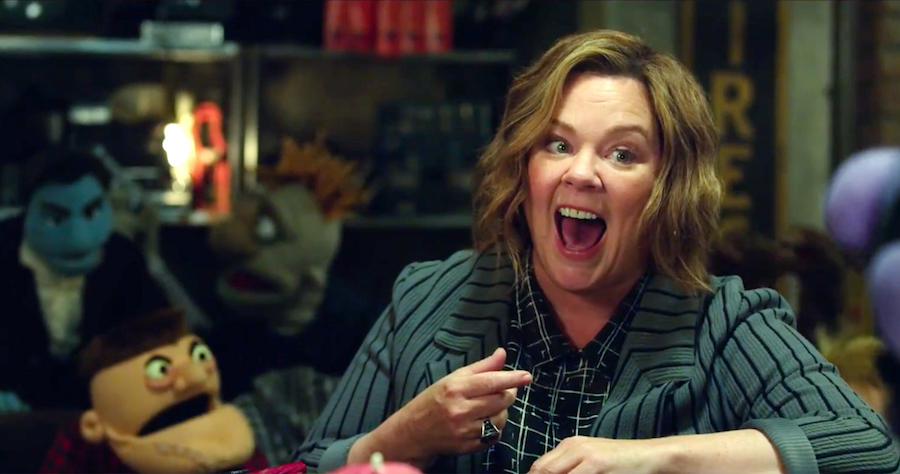
Hey, friends of puppetry! What did we think about the Melissa McCarthy puppetmania that is The Happytime Murders? How about Charlie Hunnam’s Pappilon remake? And did you hear the dish on all those Hollywood celebrities? If not, you clearly haven’t seen Scotty and the Secret History of Hollywood, but we did and we’ll tell you what we thought about those three flicks plus all that’s fit to watch in new home entertainment.