It’s a beautiful day in the living room, what with all these excellent movie choices! Well, not every single one is a winner, but that’s what we’re here for. We’ll help you get it sorted.
I can see where you might believe that these are films in which bad dates occur. While that might be a fine, future podcast and list, the fact is that today we explore the worst horror movies to watch while you are on a date.
While horror movies can sometimes make for excellent date night choices, these, we predict, will turn the date sour. They are also highly likely to douse any romantic sparks. (And if they don’t, your date is a sociopath. Be warned.)
5. Audition (1999)
The prolific director Takashi Miike made more than 70 movies in his first 20 or so years in film. Among the best is Audition, a phenomenally creepy May/December romance gone very, very wrong.
Audition tells the story of a widower convinced by his TV producer friend to hold mock television auditions as a way of finding a suitable new mate. He is repaid for his deception.
Nearly unwatchable and yet too compelling to turn away from, Audition is a remarkable piece of genre filmmaking. The slow moving picture builds anticipation, then dread, then full-on horror.
By the time Audition hits its ghastly conclusion, Miike and his exquisitely terrifying antagonist (Eihi
4. Irreversible (2002)
French filmmaker/provocateur Gaspar Noe does not play well with his audience. Every film, no matter how brilliantly put together or gloriously filmed, is a feat in masochism to watch. Later efforts, like Enter the Void and Climax, spread the misery out for its full running time, but for Irreversible, he gave it to us in two horrifying scenes.
Filmed in reverse chronological order and featuring those two famously brutal sequences, Noe succeeds in both punishing his viewers and reminding them of life’s simple beauty. While the head bashing is tough viewing, the film centers on a rape scene that is all but impossible to watch.
Noe’s general MO is to punish you through sheer duration. The scenes last so long you feel like you cannot endure another minute, and this scene certainly does that. Not shot even momentarily for titillation, and boasting a devastatingly excellent performance from Monica Bellucci, it justifies its own horrific presence. There are other films with necessary and difficult rape scenes – Straw Dogs, I Spit on Your Grave, The Last House on the Left, Henry: Portrait of a Serial Killer – but none is harder to stomach than this.
There’s no denying the intelligence of the script, the aptitude of the director, or the absolute brilliance of Monica Bellucci in an incredibly demanding role.
3. Teeth (2007)
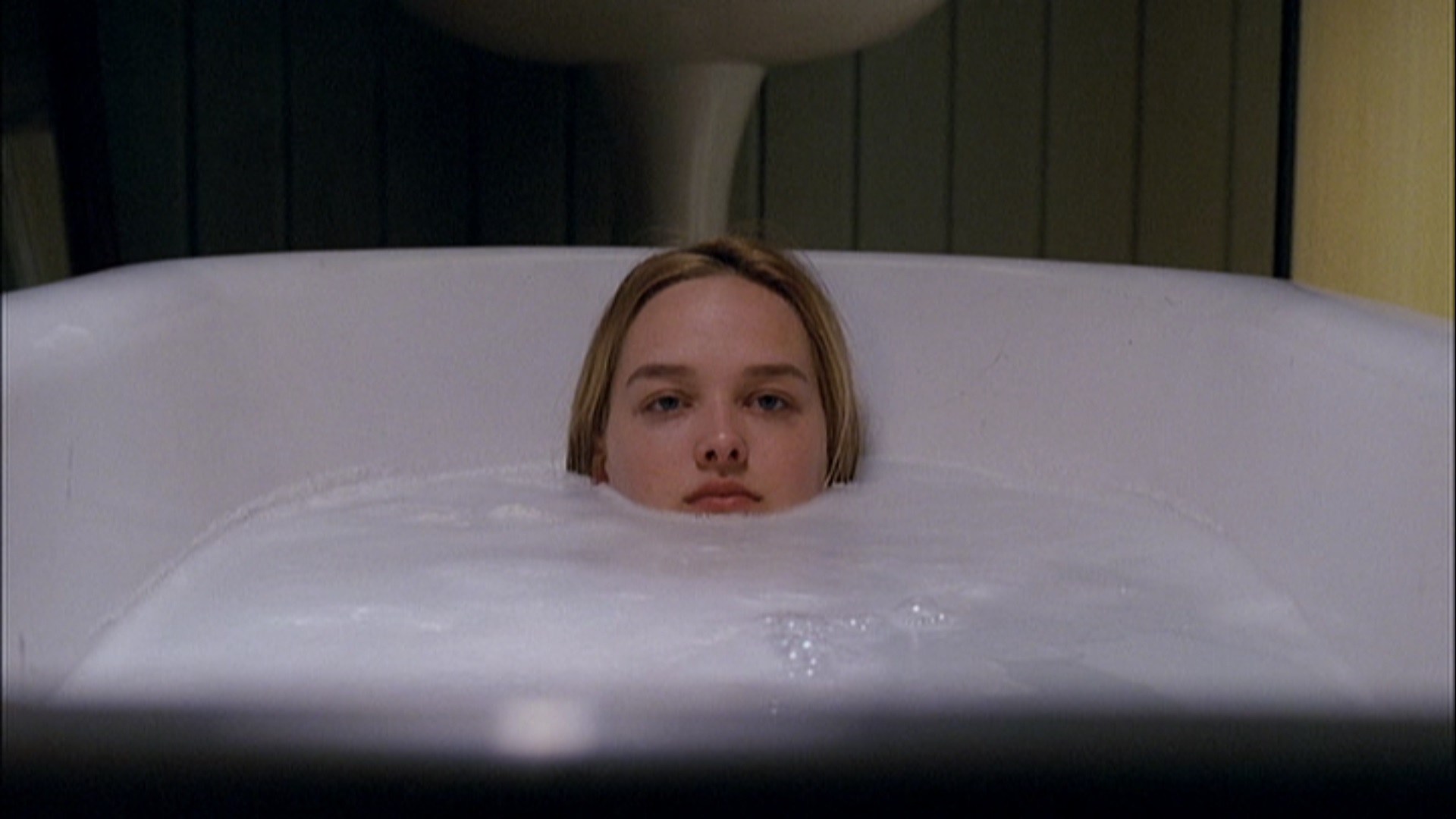
Of all the films built on the hysteria of impending womanhood, few are as specific as Teeth, a film in which a pubescent discovers a sharp set where teeth ought not be. This is a dark comedy and social satire that is uncomfortable to watch no matter your gender, although I imagine it may be a bit rougher on men.
Treading on the dread of coming-of-age and turning male-oriented horror clichés on ear, Teeth uses the metaphor implicit in vagina dentata—a myth originated to bespeak the fear of castration—to craft a parable about the dangers as well as the power of sexual awakening.
Written and directed by artist (and Ohioan!) Roy Lichtenstein’s son Mitchell, Teeth boasts an irreverent if symbol-heavy script with a strong and believable lead performance (Jess Weixler).
Weixler’s evolution from naïveté to shock to guilt to empowerment never ceases to captivate.
https://www.youtube.com/watch?v=J-qd-k0Vg7s
2. Antichrist (2009)
Lars von Trier’s foray into horror follows a couple down a deep and dark rabbit hole of grief. Von Trier’s films have often fixated on punishing viewers and female protagonists alike, but in this film the nameless woman (played fearlessly by Charlotte Gainsbourg) wields most of the punishment – whether upon her mate (Willem Dafoe) or herself.
Consumed by grief, a mother allows her husband—also grieving—to become her psychotherapist as they retreat to their isolated cabin deep in the woods where they will try to overcome the horror of losing their only child.
They won’t succeed.
Like dental scenes, gynecological horror draws a particular reaction. Whether it’s the abuse scene at the beginning of Proxy, nearly any scene in the brilliant French film Inside, or the final feast in Trouble Every Day, scenes of this ilk can be tough to watch. But to watch as Gainsbourg – who’s already inflicted some serious pain on Dafoe’s character – takes the scissors to herself is next to impossible.
https://www.youtube.com/watch?v=w4U5rdi9w-U
1. A Serbian Film (2010)
This is not a movie we would recommend to basically anyone. That’s not to say it’s a bad film – it’s well directed, acted, and written. It’s just that the co-writer/director Srdjan Spasojevic is trying to articulate the soul-deadening effects of surviving the depravity of war.
The title is no coincidence – the film is meant to reflect the reality of a nation so recently involved in among the most horrific, unimaginable acts of war. It’s as if Spasojevic is saying, after all that, what could still shock us?
Milos (Srdjan Todorovic) was a porn star before the war. He’s lured back for one lucrative “acting” effort, but there’s a reason it pays so well.
The entire film is an assault, but there is one scene in this one that catapults it to the top of this list, and you probably already know what that is. Milos (Srdjan Todorovic) finally realizes the depths of his new director’s evil when he sees his latest effort: newborn porn. There is no unseeing this.
Tis the season, and as Valentine’s-aimed romantic dramedies
go, the blandly titled The Photograph could be worse.
Issa Rae (Insecure) leads the cross-generational love story as Mae, NYC museum curator trying to process her grief and an incredibly long letter, both hers now because of her estranged mother Christina’s recent death.
Christina (a solid Chanté Adams), mainly unveiled via flashback,
broke from her own difficult mother as well as the love of her life back in
Louisiana years ago to follow a career as a photographer in New York.
As Mae learns some painfully obvious truths by way of
Christina’s letter, writer/director Stella Meghie (Everything,
Everything) weaves two romances together across time to look at the
wages of a woman’s ambition and the ways we relive our parents’ mistakes.
There’s plenty to like here, and Meghie’s film certainly
looks like a dreamy romance waiting to happen. Scenes are beautifully lit,
gorgeously filmed and romantically scored. You can’t fault the casting, either.
LaKeith Stanfield (Sorry to Bother You) has an easy chemistry with Rae as the journalist interested in Christina’s life, and Meghie surrounds her leads with vibrant supporting characters. Lil Rel Howery, Courtney B. Vance and an underused Kelvin Harrison Jr. all round out the ensemble, adding much needed life.
Rob Morgan (Mudbound, Last Black Man in San Francisco, Just Mercy), wonderful as always, steals his few scenes with a restrained, mournful presence that enriches an insubstantial story. There’s a ragged weariness to his character, one that’s all the more poignant when offset by the buoyancy of Y’lan Noel’s turn as the younger version of the same character.
Meghie has assembled a fine cast, she just doesn’t give them
enough to do. Neither love story gets enough room to grow and Mae’s arc feels
forced and rushed. Because Christina is gone before the cameras role, Meghie
handles Mae’s conflict with her mother exclusively through clunky dialog, and the
usually reliable Rae has trouble conveying any convincing inner turmoil.
For a low stakes romance, The Photograph is a very pretty picture.
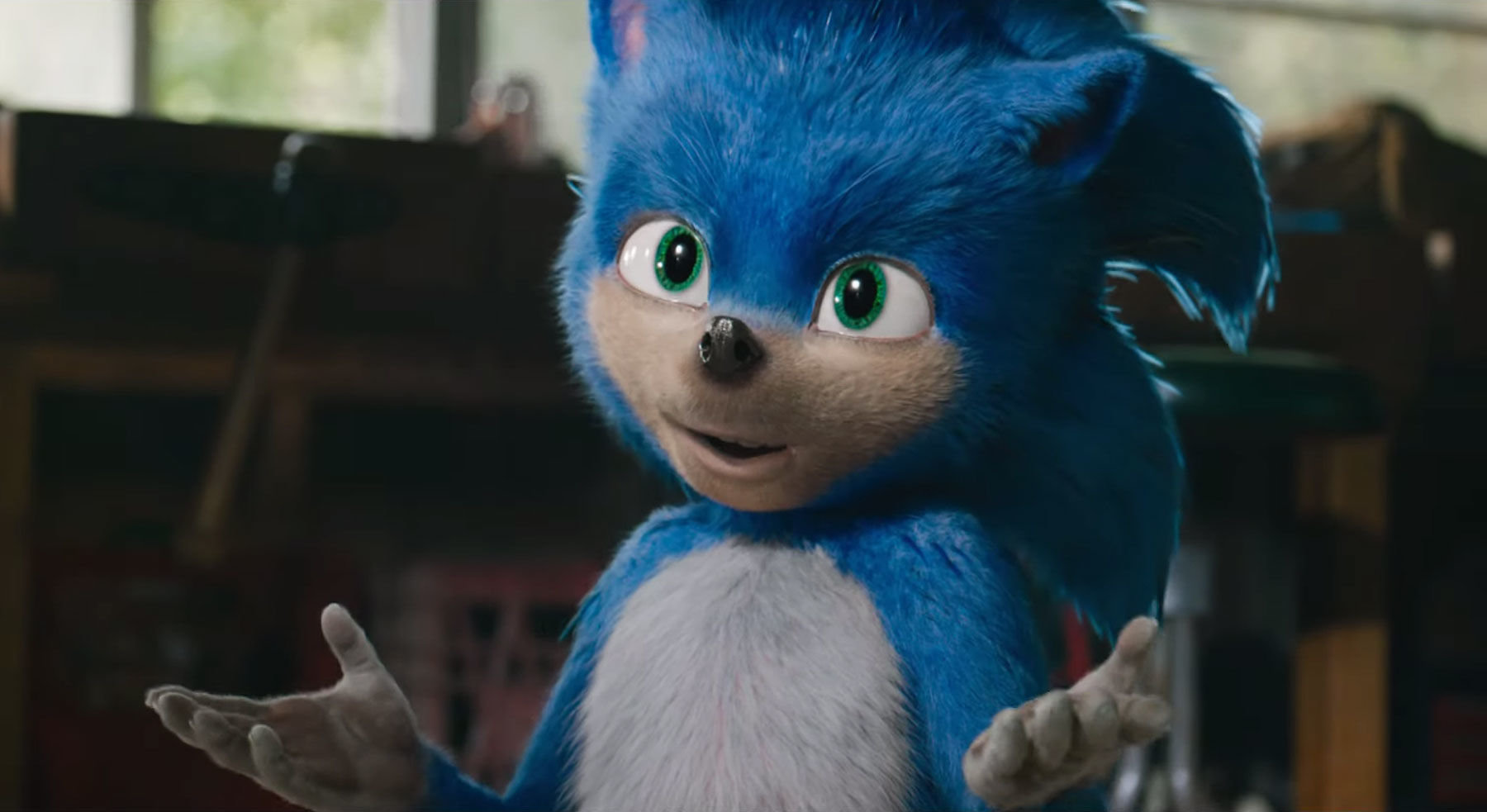
Even before the masses were recoiling in horror at the people/feline hybrids of Cats, the early look of Sonic the Hedgehog caused such a fan uproar that the little blue speedster got a full CGI makeover.
Well, he’s here now for his (otherwise) live action debut, he looks fine, and while his film doesn’t follow in Cats memorably bad paw prints, it never finds a way to be memorable at all.
Anyone who’s followed the Sega video games of the 1990s will feel right at home, as the world-hopping Sonic (voiced by Ben Schwartz) does battle with mad scientist Dr. Robotnik aka “Eggman” (Jim Carrey).
Sonic’s been quite lonely during his uneventful time on Earth, but a helping hand from an aw-shucks small town sheriff (James Marsden) sends them both on a convoluted road trip. Sheriff Tom wants to prove himself a hero, while Sonic just wants a friend.
Cue the strings – no wait! Dr. Eggman and his robot drones are closing in! Muuuahahahaha!
Carrey sets his mugging level on stun, but really, with director Jeff Fowler keeping each actor exaggerated and a script-by-committee committed to over-explanation, it doesn’t seem as comical as it should.
Still, Sonic is harmless enough to land somewhere near the top of the dung heap that is video game film adaptations. It’s got a pop culture gag or two that lands, a mid-credits stinger that shows promise for the next chapter, and a pace that never becomes overly laborious.
So after its rough start with the fanboys, you might say Sonic avoids becoming a real…..CATS-tastrophy.
If you’re a pair of American filmmakers out to remake an exceptional foreign film from the last decade, you gotta pick a side.
Are you gonna put some bankable U.S. stars up front and just add your name to someone else’s originality, or do you have a vision that can make the story your own?
To their credit, co-writers/directors Nat Faxon and Jim Rash choose the latter path for Downhill, their take on Ruben Ostlund’s 2014 stunner, Force Majeure (Turist). Faxon and Rash won an Oscar for their The Descendants screenplay – so the boys can write – but this makeover ultimately lands as a pleasant exercise stripped of the insightful bite.
The catalyst remains the same: a traumatic event changes the way a couple sees each other. Pete (Will Ferrell) and Billie Stanton (Julia Louis-Dreyfus) are on a lavish ski vacation in Austria with their two sons. Eating lunch on the resort’s outdoor porch, the family is terrified when an avalanche appears to be heading right for them.
Bille clutches her children in fear, while Pete grabs his phone and runs.
Turns out it was a planned snow release and everyone’s fine, but the Stanton marriage has been shaken to its core, no matter how hard Pete tries to revise history with another couple (Zach Woods and Zoe Chao).
Faxon and Rash do Americanize the story well, as Billie first looks to blame the resort (“I’m an attorney!”), and Pete, continually wallowing in the loss of his father eight months prior, becomes a personification of rationalized selfishness.
But while Ostlund used the secondary couple as a device to invite us into a near clinical deconstruction of societal assumptions, Faxon and Rash introduce a new “B” story involving an aggressive resort concierge (Amanda Otto) who lives on the wild side. It’s an uneven trade of insight for zany, and can’t move the film from an uneven headspace that’s too serious for comedy but too light for drama.
Downhill does give us the chance to see Will and Julia go head to head, and that is no small treat. Ferrell is a natural as the big awkward goof trying to come to terms with himself, but make no mistake, Julia Louis-Dreyfus is the reason to see this movie.
Billie is confused, hurt and angry, and Louis-Dreyfus sells it all with total authenticity, often with little to no dialog. She finds real depth in terrain that’s often shallow (such as Billie’s flirtations with a younger ski instructor), ultimately offering more proof that, in case you’ve missed the last few decades, JLD is a flat-out treasure.
And much like Billy Ray’s updated Secret in Their Eyes five years ago, Downhill has a humdinger of an ending to deal with. In the original film, Ostlund gave us an organic twist that managed to re-frame all that came before. Faxon and Rash’s take feels a bit like hitting the Ohio slopes after a trip to Vermont.
There are similarities, but the thrill is gone.
If you’ve haven’t seen Force Majeure, Downhill is a perfectly acceptable vehicle for two well-loved stars. If you have, well, see it again.
Phone solicitors are a menace. Political campaigns? Blech. Offers to buy your home “as is” for cash? Get out of here. Timeshare schemes? Block that number.
Oh, and debt collectors? The absolute worst.
What’s that? Debt collectors are the heroes in Buffaloed? Tell me more.
From an early age, Peg Dahl (Zoey Deutch) had money on her mind. After a bad ticket scalping endeavor lands her in the joint, Peg racks up some massive legal fees. With career opportunities slim and her optimism fading, Peg discovers the lucrative world of debt collection. Accompanied by a flimsy moral code and a ragtag group of associates, she sets out to eliminate her debt and make a small fortune along the way.
Within its first few frames, Buffaloed announces that it’s not about to be your standard rags-to-riches tale. There’s a sense of whimsy apparent as director Tanya Wexler (Hysteria) introduces us to this heightened version of Buffalo, New York. Whimsy with an edge, that is.
Buffaloed threatens many times to veer into the familiar. A down-on-their- luck group trying to defy the odds? Yeah, we’ve seen that before!
Not so fast.
A clever script by Brian Sacca doesn’t let these characters off the hook easily. They make mistakes, learn from them, then make even worse ones. The nimbleness of Buffaloed’s kinetic story is one of its greatest assets. Peg is always zigging when she should be zagging.
Deutch has been building a solid resume over the last few years. Her recent turn in Zombieland: Doubletap stole the show from long working veterans like Woody Harrelson, Jesse Eisenberg, and Emma Stone. There’s a crackling energy to her performance as Peg that’s a perfect fit for the character’s chaotic actions.
Equally good is Jai Courtney (Suicide Squad, Terminator Genysis) as Peg’s sleazy and dangerous competitor. Courtney has become an online punching bag over the years for appearing in bad sequels and/or comic book movies. Here, he’s allowed to flex some pretty incredible comedic muscles that don’t involve him interacting with a green screen.
With an offbeat story, and memorably eccentric cast of characters, Buffaloed charms and impresses with the miraculous feat of making debt collectors sympathetic.
Come
As You Are follows three men on a quest to get laid at
a Canadian brothel, La Chateau Paradis, that caters to people like them. Scotty
(Grant Rosenmeyer) is a paraplegic who was “born this way, baby.” Matt (Hayden
Szeto) is an ex-boxer fighting a degenerative disease. Mo (Ravi Patel) is
visually impaired. Collectively, their biggest hindrance is that they all still
live with their mothers.
After one hilarious caper, a cop stops Scotty, Matt, and Mo as they slowly make their way along the shoulder of the highway. He looks at the three men and says:
“My
cousin’s brother-in-law has Down syndrome so…I know.”
Sometimes, this film is about life as a person with disabilities. Mostly, though,Come As You Are is just about life as a person. The natural flow between these perspectives takes a raunchy boy’s trip and turns it into a heartwarming slice of life film about making friends, believing in yourself, and defining exactly what your life is supposed to be.
Come As You Are is the English remake of 2011’s Belgian Hasta la Vista (dir. Geoffrey Enthoven), and while I haven’t seen Enthoven’s original, it’s worth the effort to bring this film to American audiences. Sorry, Bong Joon-ho, I guess we’re still warming up to subtitles.
This 2019 edition is directed by Richard Wong, who has more cinematography credits than directorial. That experience shows in the film’s easy movement between steady and handheld shots. Wong’s vision expertly highlights how monumentally huge small inconveniences can be. At times, Scotty’s confinement to his chair leads to hilarious antics. Other times, it’s a horrific prison. Wong looks at both sides of every coin in a valiant effort to show the bigger picture.
Come As You Are boasts a diverse cast, a good script, and great performances. The best performance is from Rosenmeyer, whose unflinching cynicism and peeks at vulnerability are masterfully done. The other stand-out performance comes from Janeane Garofalo as Scotty’s mother who, for better or worse, cannot shut up.
Szeto and Patel both deliver quieter performances that gracefully grow with their character’s arcs. Patel particularly does a fantastic job of revealing the complexities behind his Coke-bottle glasses.
Some
may find the final awkwardly funny scene misplaced after the narrative has
moved to deeper material. I found it tonally perfect and more human than
abandoning the characters and circumstances we started with.
Come As You Are is bitter, funny, tender, and worth the watch.
Some good stuff to watch at home this week. There’s one racing biopic that’s so much better than it has any right to be, and also two super weird flicks.