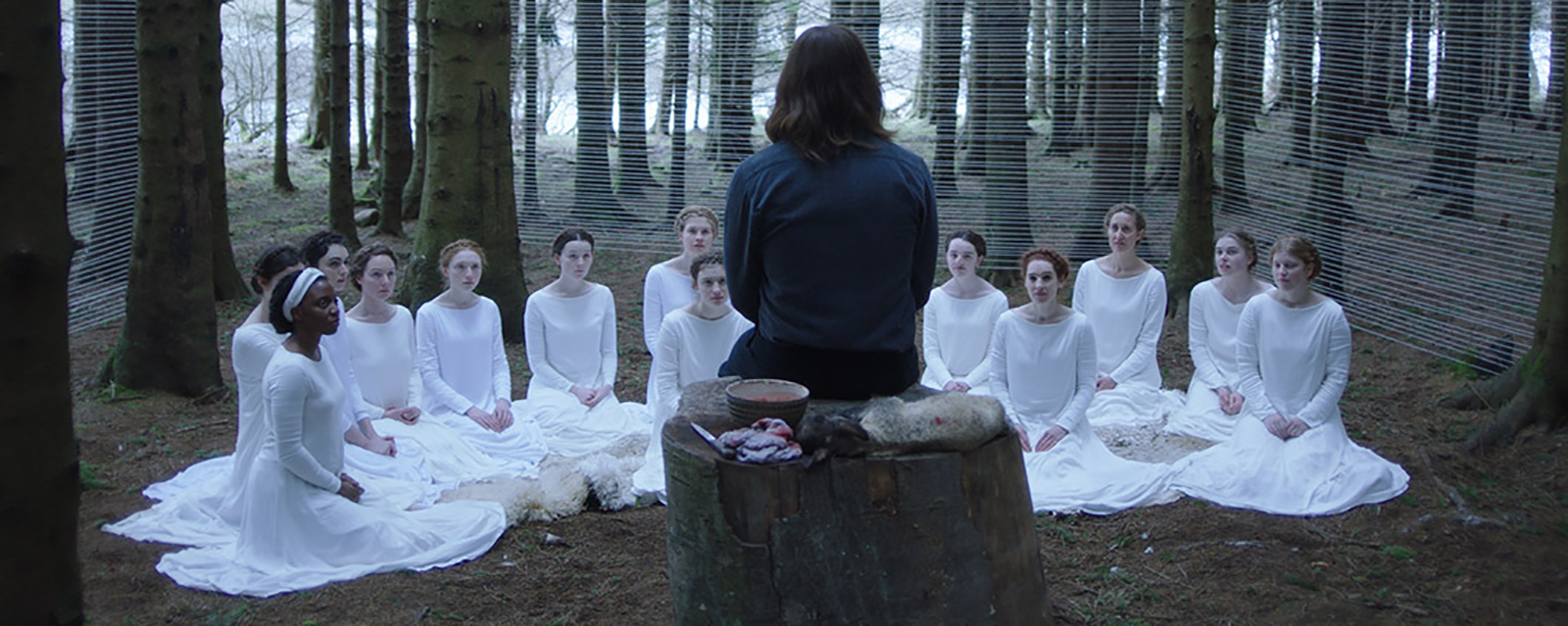
It’s a comforting notion, the idea that we each need to forgive ourselves for the wrongs we’ve done in order to heal and move forward. Everyone deserves to be happy, right?
But is that forgiveness ever really ours to give? Tomaz (a
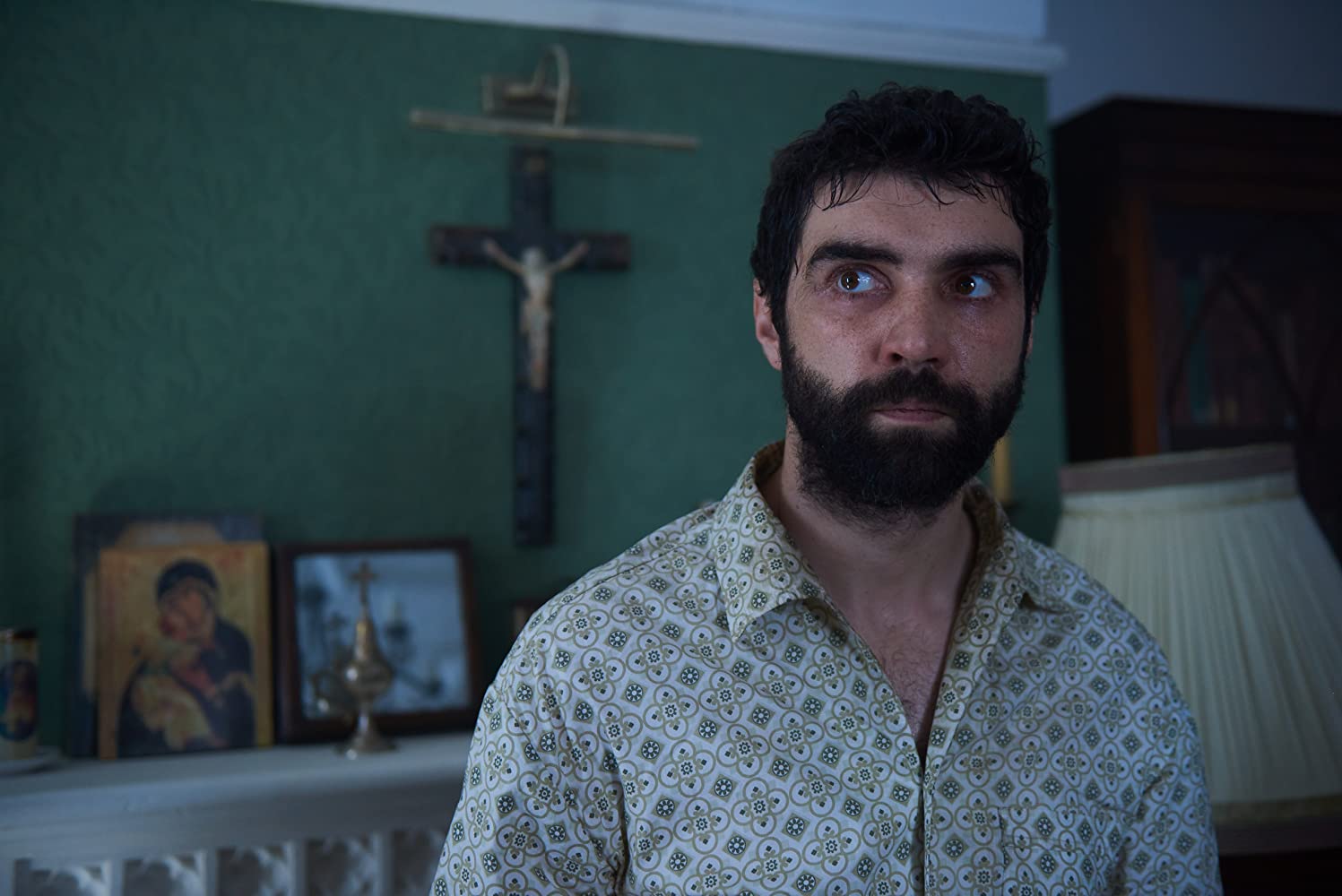
remarkable Alec Secareanu) doesn’t think so.
Making her feature debut as writer/director, Romola Garai
delivers an entrancing horror show concerned with sexual politics, cowardice
and proper punishment.
Tomaz is living a destitute existence as a day laborer in
London, picking up gigs as he can and sheltering at night with others like
him—mainly refugees wordlessly sharing space in an abandoned building. He used to
live in an unnamed but war torn European nation, and his dreams are still
haunted by the experience.
A chance encounter puts Tomaz in the path of Sister Claire
(Imelda Staunton, relishing her small role). She introduces Tomaz to Magda
(Carla Juri, Wetlands),
who needs help with the house that’s falling down around her and her ailing, bedridden
mother.
From there, Garai toys with familiar horror elements—the decrepit
building as metaphor, the horrifying relative hidden away—but you can never
predict Amulet’s secrets.
Juri is hypnotic as the reluctant, wearied, lonesome Magda
and her slow growing chemistry with Tomaz creates a quietly seductive force for
the film. Clearly Tomaz should leave, there is something powerfully unhealthy
happening in this house. But maybe this is his path to happiness? Maybe he can help?
That’s how the film traps you, because Secareanu is terribly
empathetic and because it is his point of view we share. His performance is full
of understated power and, paired with Juri’s resigned sensuality, it holds your
interest.
Garai braids two mysteries together, the one Tomaz is living
and the one he’s keeping from us. That second secret haunts his dreams and,
little by little, he convinces himself that unraveling the mystery in this
house might free him from his past.
The delivery is measured and creepy, and though the final act feels simultaneously tidy and nonsensical, the mysteries themselves—not to mention a trio of excellent performances—more than satisfy.
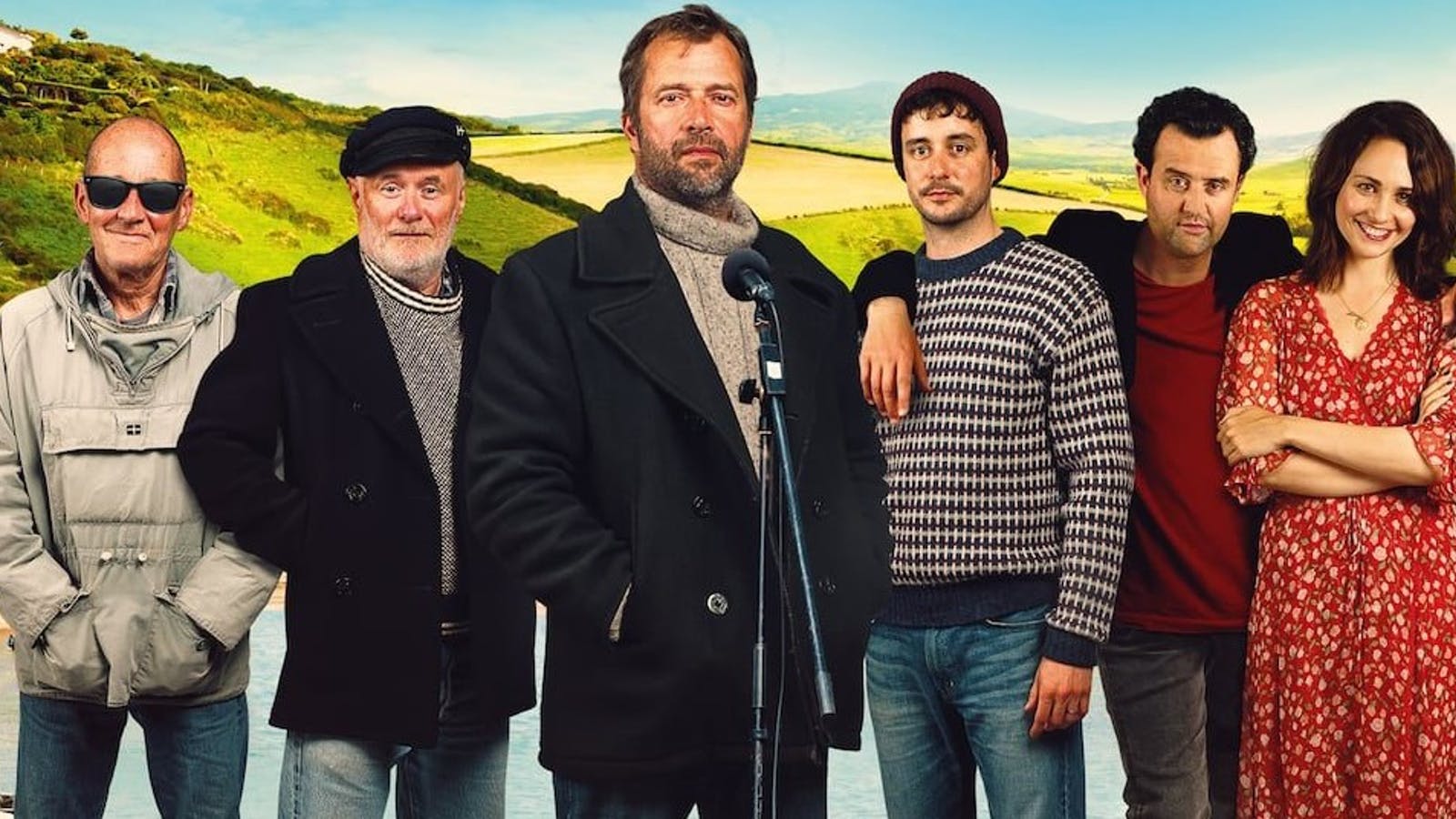
If you’re looking for a low stakes, feel good film to watch with your family, you could do a lot worse than Fisherman’s Friends.
The film is loosely based on the true story of a men’s a capella group consisting of tough-as-nails men of the sea who were eventually signed to Island Records and became a surprising success.
Witnessing the transformation of a group of old men who like to sing traditional music while drunk at a pub on a Friday night into performers with sold out shows is undeniably interesting. The a cappella performances in the film mix the voices of original members and the actors portraying them, and the results are surprising. Even if it’s not your thing, Fisherman’s Friends will remind you that a cappella music can send shivers down anyone’s spine.
Names have been changed and the story is clearly expanded and fictionalized to better suit the arc of a feel good movie. One of the real events left out is the 2013 stage collapse that resulted in the deaths of member Trevor Grills and promotor Paul McMullen. The film is respectfully dedicated to these men and seems to be an attempt to celebrate the good times before the tragedy rather than letting it define the band.
I can’t help thinking that a more honest and candid portrayal may have made for a more engaging film, but the choice to avoid the tricky task of translating such a painful event into cinematic drama is understandable.
In the end, director Chris Foggin succeeds in doing what he sets out to do. The film is a charming story of friendship and ambition—nothing more, nothing less. It follows all the familiar narrative beats, with a sweet but predictable love story thrown in, and plenty of montages that will make more cynical viewers roll their eyes. But honestly, this simply isn’t the film for a cynical viewer.
If you want Ingmar Bergman, go watch The Seventh Seal (it, of course, rules). But if you want to watch something with your extended family and maybe smile a bit, what you have here is some Cornish cinematic comfort food that will do the trick just fine.
A few years back, Gillian Robespierre and Karen Maine
co-wrote Obvious
Child, a whip-smart subversion of rom-com tropes that went on to be our
nation’s first and still best mainstream abortion comedy.
How did it succeed? It lived in a low key, non-sentimental
world and gifted a remarkable comedic talent (Jenny Slate) with an outstanding
character.
Fast forward half a dozen years and Maine has moved on to directing the solo writing effort Yes, God, Yes. But she’s clearly learned from the previous experience, crafting an unsentimental but tender coming-of-age film—a teen sex comedy, if you will—from the female perspective.
And again, she relies on a genuine talent to deliver the
goods.
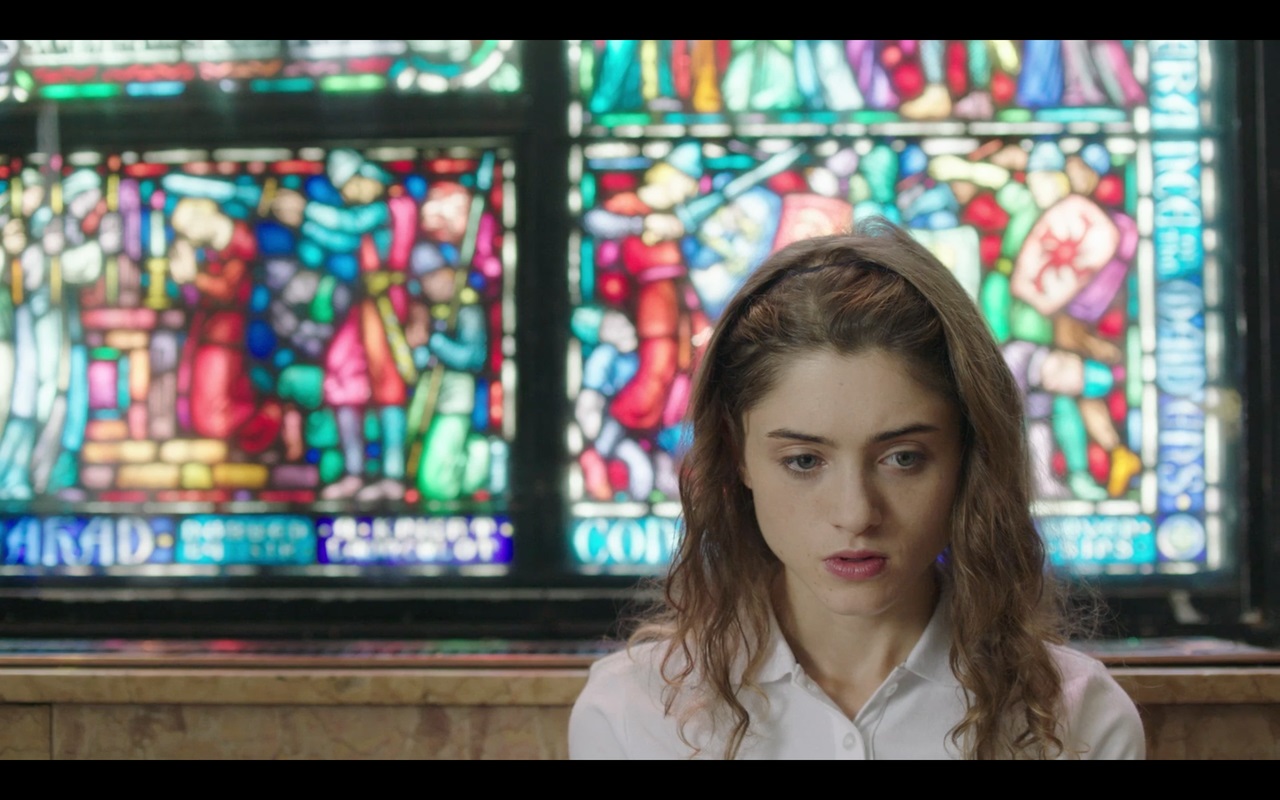
Natalia Dyer (Stranger Things) is Alice, a Catholic
high school junior who has done absolutely nothing (regardless of one
persistent rumor), but still thinks she may be a budding pervert hurtling
toward eternal damnation.
It seems a lot of people may harbor that same suspicion of
Alice.
Alice, like basically everyone in high school, is in for
some awkward times. Dyer is wonderfully expressive, especially in her most
quiet moments. Her understated comedic energy belies a gawky sweetness that
makes Alice easy to root for.
Maine’s script is equally insightful, funny and tender. The
humor rarely gets too crude, although there’s no question of the film’s R
rating. Still, the film never loses its relatively innocent sensibility.
Yes, God, Yes is occasionally hampered by broad stroke depictions and the story ends up feeling fairly slight.
What Maine principally points out, though, is not the
insidious problem of sexual repression festering inside Catholic education
(because that too easy a target). Rather, the filmmaker offers a clear eyed if
forgiving picture of human beings, each one struggling to “figure out their own
shit.”
Honestly, I can think of no lesson more important for a teen to learn (although that bit of advice about protecting your online passwords is solid, too).
Yes, God, Yes will be available on UK Digital Download from 17th August and can be pre-ordered here
Honestly, I’m not digging this title, yet it somehow fits.
For the story of an intellectual giant, Radioactive seems too easy, too cheesy, and a bit dismissive. Similarly, the film itself becomes a sum of often conflicting parts, flirting with greatness while chasing too many bad pitches.
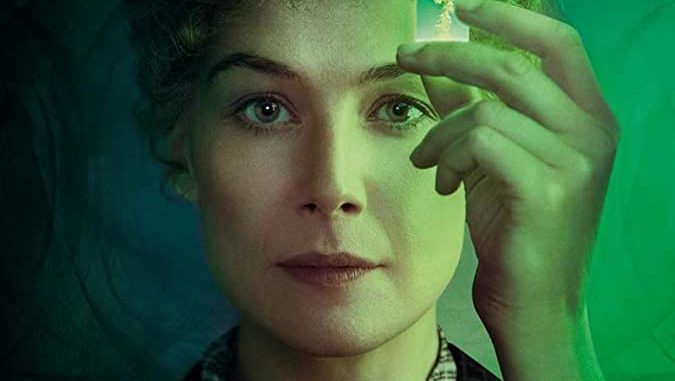
Rosamund Pike stars as Marie Sklodowska Curie, the Warsaw-born scientist who became the first woman to win the Nobel Prize, the first person to win it again and the only person to win it in two different scientific fields. Her groundbreaking work in France with husband Pierre Curie identified two new elements (polonium and radium) and the theory of radioactivity itself, leading to world-changing advancements in medicine and, of course, warfare.
Director Marjane Satrapi (Persepolis, The Voices) seems intent on honoring Curie’s spirit via the most experimental film treatment she can get away with. Animated graphics attempt to illustrate Curie’s theories on atomic movement, while tones are jarringly shifted with futuristic vignettes that glimpse the more devastating consequences of radioactivity.
Too often, Satrapi is hamstrung by screenwriter Jack Thorne’s overly broad and simplified adaptation of Lauren Redniss’s source book, which is itself a work of original art, photographs, graphics and text. Bringing such hybrid energy to the screen demands a unified vision from writer and director, but Satrapi and Thorne seem at odds whenever they try to expand their scope.
Pike is the unifier here, with an instantly engaging and fully formed portrait of a genius understandably ferocious about defending her work from being usurped or dismissed by male colleagues. Pike humanizes Curie with a mix of defiance and insecurity, frank sexuality and a fierce commitment to husband Pierre (Sam Riley, in a thoughtfully understated and effective turn).
The third act addition of Anya-Taylor Joy as the Curie’s eldest daughter Irene (who would also win a Nobel Prize in Chemistry) only cements the film as being most resonant when it is the most personal.
And it can’t go unnoticed that in these science-denying times, Curie’s story is a needed reminder of the importance of pursuing knowledge, of research and researchers.
Curie was one for ages. Radioactive does suffer from scattered elements, but ultimately turns in watchable, satisfying results.
In a remote Indonesian village, a garden of small headstones marks the effectiveness of a Shaman’s curse. Newborn after newborn dies, the one survivor growing to endure a mysterious, painful existence.
Creepy, right?
Shudder’s Impetigore scores some definite points there, which help to offset a narrative often hampered by convenience and confusion.
Maya (Tara Basro) and Dini (Marissa Anita) are best friends trying to make a go of it in the city. With no family to speak of, they scrape by with menial jobs while dreaming of a better future.
Though raised by her aunt, Maya learns of a spacious home left behind by her wealthy parents. Maya could very well lay claim to this valuable property through inheritance, so she and Dini make their way to the remote village, unaware of the curse and their place in it.
Writer/director Joko Anwar (Satan’s Slaves), an Indonesian genre veteran, seems to know he’s got some solid benchmarks here while not worrying too much about the strength of what binds them together.
Dialogue can range from awkward to WTF-worthy, amid a few convenient plot turns and one humdinger of extended curse explanation that strains coherence.
But when Anwar hits his creepy marks, Impetigore can leave one. The atmospheric isolation in the village feels authentic, and once blood begins letting, the tension is well-paced, bolstered with some satisfying visual payoffs.
There will be eyerolls, but if you’re keeping score, also enough frightful eyebrow-raising to make Impetigore a winning dive into twisted family values.
Dave Franco has made a movie. James Franco’s younger, less creepy brother has been a welcome, smiling face in films since his teens. Directing his first feature, he sidesteps the more obvious choice of a comedy – given his background – and instead delivers a tense horror about jealousy, deteriorating relationships, and the dangers of Airbnb.
Dan Stevens stars as Charlie, handsome and successful older
brother of Josh (Jeremy Allen White). As if Josh doesn’t have enough to live up
to, his beloved and brilliant girlfriend Mina (Sheila Vand) is Charlie’s work
partner and the two just really click.
Together Mina and Charlie land a big deal. To celebrate, they and their significant others—Josh, plus Charlie’s wife Michelle (Alison Brie, Franco’s real life wife)—rent a gorgeous, off the grid place for a weekend getaway.
If you’re thinking this is an incredibly common premise
jazzed up with a couple of impressive actors, you are correct. But there’s a
lot to be said for a good cast.
All four convey a lived-in chemistry that gives the
relationship conflicts more resonance. Brie and White, in particular, deliver
believable warmth as big sister-in-law/little brother-in-law. Both are dealing
with some jealousy, each lending support and guidance to the other. Secondary
characters in indie horror are rarely given this kind of opportunity to breathe,
but drawing the audience into these relationships benefits the tensions Franco
is working to create.
Stevens and Vand work wonders as the morally conflicted
central characters. Vand (exquisite in A
Girl Walks Home Alone at Night—see it!) blends righteous indignation with
guilty conscience. This helps her build believable motives for what could, in
lesser hands, feel like conveniently poor decision making.
Liberal guilt, entitlement, questionable morality and
selfishness rarely come packaged as sympathetically as Charlie, but Stevens is
a solid character actor and here he creates a nicely complex character.
Rounding out the small ensemble, the always welcome Toby Huss also finds layers in a character that could easily have been one note.
So, performances are solid and Franco delivers a decent sleight of hand by Act 3. The film feels imbalanced by then, though, as if it wasn’t until the 11th hour that Franco decided this was a horror movie. There’s enough suffering in the final reel to clarify The Rental’s genre, but that doesn’t mean it entirely works.
Written by Geoff Thompson, a survivor of sexual abuse, Retaliation is a loosely autobiographical descent into the pain and violence that can come in the aftermath of trauma. Orlando Bloom steps up to this challenging material with surprising ease.
Any Lord of the
Rings jokes you may want to make will be silenced within the first few
minutes as you see Bloom fully embody the character of Malky. He has been
tormented all his life by the memory of being molested as a child by a local
priest.
Malky is a powder keg
ready to blow, attempting to channel this energy into his construction job,
demolishing dilapidated churches with vengeful satisfaction. Where the film
truly amps up is when he realizes his abuser has returned to preaching in
Malky’s hometown.
What follows almost
feels like Ingmar Bergman making a John Wick film (in a good way, for the most
part). Bloom and the film itself may not perfectly execute every complex
maneuver they attempt, but they often reach heights that are undeniably moving.
Brothers Ludwig and
Paul Shammasian are a competent directing duo, though they make some choices
that threaten to turn the film into an exploitive, bass pulsing thriller that doesn’t
suit the material. In addition, several characters—Malky’s girlfriend Emma
(Jane Montgomery) among them—often feel less like characters and more like plot
tools despite the actors’ best efforts.
In the end, what does
shine through is the writer’s personal story, offering a brooding character
study rather than a simple revenge thriller.
Thompson has stated
on his website that, like Malky, he struggled with a thirst for violence and
revenge. His demons are clearly being exorcised here.
The film’s intense
conclusion, where Malky and his old priest finally cross paths, has been
understandably divisive for audiences. Regardless, the questions this showdown
raises are well worth discussing.
While you will probably never find a Retaliation DVD for sale at a Christian book store, the film’s sentiment seems far from atheistic. It unflinchingly condemns the corruption that can come from organized religion, but also appears to have a strange sort of reverence for the idea of God and biblical teachings. It’s a brutal concoction that makes for a fascinating and unique experience.
You know what, 2020 is just going to be remembered as its own horror story. I mean, filmmakers have a lot of competition if they think they can scare us more than real life right now. Still, we’ve seen a decent batch of horror: Blood Quantum, The Droving, Time Out of Space, The Hunt and more. What more, you ask? Well, we’ll tell you. Here are our favorite horror films of the first half of 2020.
5. The Invisible Man
Instead of the existential ponderings that generally underscore
cinematic Invisible Man retellings,
writer/director Leigh Whannell uses this story to examine sexual politics,
abuse, control and agency.
It’s a laudable aim, but the reason
it works is casting.
Whannell’s script is smart, with much needed
upgrades to the invisibility formula as well as the havoc wrought. But the
success of The Invisible Man is almost
entirely shouldered by Elisabeth Moss, who nails every moment of oppressed
Cecilia Kass’s arc.
At its core, The Invisible Man is an entertaining B-movie horror propped up by contrivance. Whannell’s aim is to give the story new relevance, and thanks to Moss, his aim is true.
4. The Other Lamb
The first step toward freedom is
telling your own story.
Writer
C.S. McMullen and director Malgorzata Szumowska tell this one really well.
Between McMullen’s outrage and the macabre lyricism of Szumowska’s camera, The Other Lamb offers
a dark, angry and satisfying coming-of-age tale.
Selah’s (Raffey Cassity) first period and her commune’s
migration to a new and more isolated Eden offer the tale some structure. Like
many a horror film, The Other Lamb occupies
itself with burgeoning womanhood, the end of innocence. Unlike most others in
the genre, Szumowska’s film depicts this as a time of finding your own power.
The Other Lamb does not simply suggest you question authority. It demands that you do far more than that, and do it for your own good.
3. Gretel & Hansel
Sophia Lillis (IT) narrates and stars as Gretel, the center of this coming of
age story—reasonable, given the change of billing suggested by the film’s
title. The witch may still have a tasty meal on her mind, but this is less a
cautionary tale than it is a metaphor for agency over obligation.
Alice Krige and her cheekbones
strike the perfect mixture of menace and mentorship, while Sammy Leakey’s
little Hansel manages to be both adorable and tiresome, as is required for the
story to work.
Perkins continues to impress with
his talent for visual storytelling and Galo Olivares’s cinematography heightens
the film’s folkloric atmosphere.
There’s no escaping this spell. The whole affair feels like an intriguing dream.
2. The Lodge
Several Fiala and Veronika Franz follow up
their creepy Goodnight Mommy with this “white death” horror that sees a
future stepmom having a tough time getting to know the kids during a weeklong,
snowbound cabin retreat. Riley Keough is riding an impressive run of
performances and her work here is slippery and wonderful. As the unwanted new
member in the family, she’s sympathetic but also brittle.
Jaeden Martell, a kid who has yet
to deliver a less than impressive turn, is the human heartbeat at the center of
the mystery in the cabin. His tenderness gives the film a quiet, pleading
tragedy. Whether he’s comforting his grieving little sister or begging Grace
(Keough) to come in from the snow, his performance aches and you ache with him.
There’s no denying the mounting dread the filmmakers create, and the three central performances are uniquely effective. Thanks to the actors’ commitment and the filmmakers’ skill in atmospheric horror, the movie grips you, makes you cold and uncomfortable, and ends with a memorable slap.
1. Swallow
Putting a relevant twist on the classic
“horrific mother” trope, writer/director Carlo Mirabella-Davis uses the rare
eating disorder pica to anchor his exploration of gender dynamics and, in
particular, control.
Where Mirabella-Davis’s talent for building
tension and framing scenes drive the narrative, it’s Bennett’s performance that
elevates the film. Serving as executive producer as well as star, Haley Bennett
transforms over the course of the film.
When things finally burst, director and star shake off the traditional storytelling, the Yellow Wallpaper or Awakening or even Safe. The filmmaker’s vision and imagery come full circle with a bold conclusion worthy of Bennett’s performance.