Hope & George review this week’s new releases: Practical Magic 2, The Uprising, Runner, The Sun Never Sets, and Hope. PLUS News & Notes from The Schlocketeer Daniel Baldwin!
Hope & George review this week’s new releases: Practical Magic 2, The Uprising, Runner, The Sun Never Sets, and Hope. PLUS News & Notes from The Schlocketeer Daniel Baldwin!
by Hope Madden
What made 1998’s Practical Magic so compelling? It was a beautifully filmed tale of a sad woman traumatized into dimming her light, a sister who shone, trauma be damned, and Aidan Quinn at his most swoon worthy.
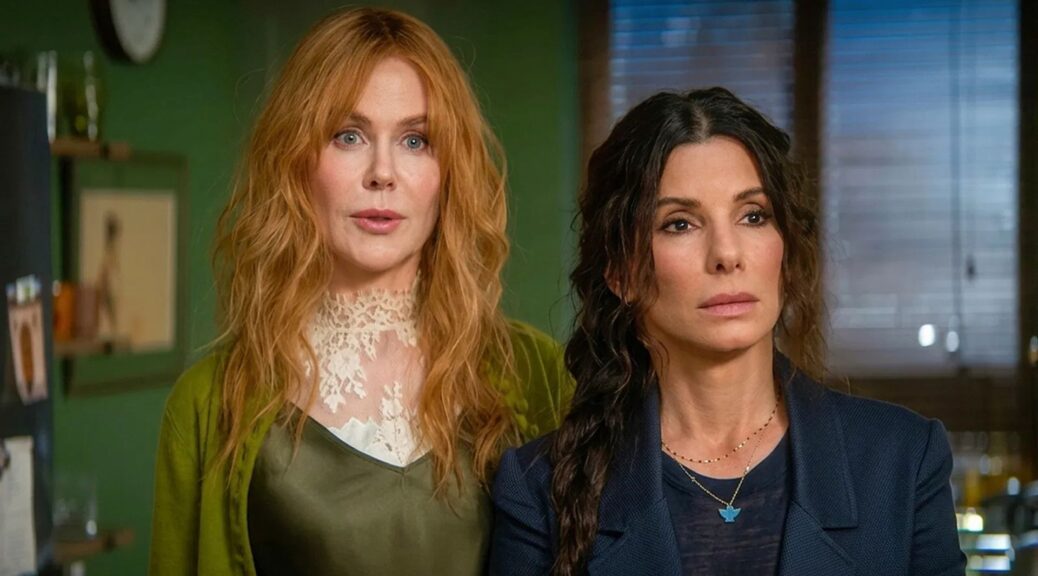
Nearly 30 years later, somehow Sally Owens (Sandra Bullock) is just now having to deal with daughters and their boyfriends. Practical Magic 2 reunites Bullock and Nicole Kidman (she who shone) as witchy sisters who have to navigate the next generation of the Owens curse. (When Owens women fall in love, their lovers are doomed to die horribly.)
Sally’s been hiding her witchiness again, for so long that her daughters have forgotten all about the family power. But now Kylie (Joey King) is in loooooove. And her boy Gideon (Blue Beetle’s Xolo Maridueña) is in danger, so she’s off to England with a black magic book and the goal to break the curse.
Bullock and Kidman, who’s here almost exclusively for comic relief this go-round, make for a fun Odd Couple. Bullock’s low-key comic timing is always sharp, though Kidman seems less sure footed in the comedic role. There are also moments when the pair’s humor feels out of place. They are in search of Sally’s missing and presumed in-peril daughter, after all.
Directed this time by Birdbox’s Susanne Bier, PM2 embraces the beautiful clutter, perfectly mussed long hair, and 90s fashion sensibilities of the original. It’s still a movie meant to showcase Bullock’s beauty, and it does.
The international intrigue feels rushed and telegraphed, and at no point are you unsure of the film’s outcome. And while the first film was split between each sister’s storyline, that made narrative sense because they were the two beloveds who were meant to come together. (Quinn was mainly delightful eye candy.)
The narrative has lost its balance with the two sisters together, one daughter/niece in peril, some aunts back at home. Plus, dudes as witches? Ew.
Great to see Diane Weist and Stockard Channing return, as dear as ever playing the aunties. And though there’s not a scene that stands up to the charm of the original, Practical Magic 2 is fine. It reminds you that sisters are awesome, long hair is too, Cool Whip is delicious, and there’s rarely a bad time for a margarita.

by George Wolf
When all the running is done, Runner ends up caught in a movie limbo that is very 2026. If this has gone direct to streaming, it would rate above average among some less than stellar action romps. But among big screen releases, the latest from Angel Studios feels more like a passable but forgettable reach.
And yes, entertaining in its 97 PG-13 minutes.
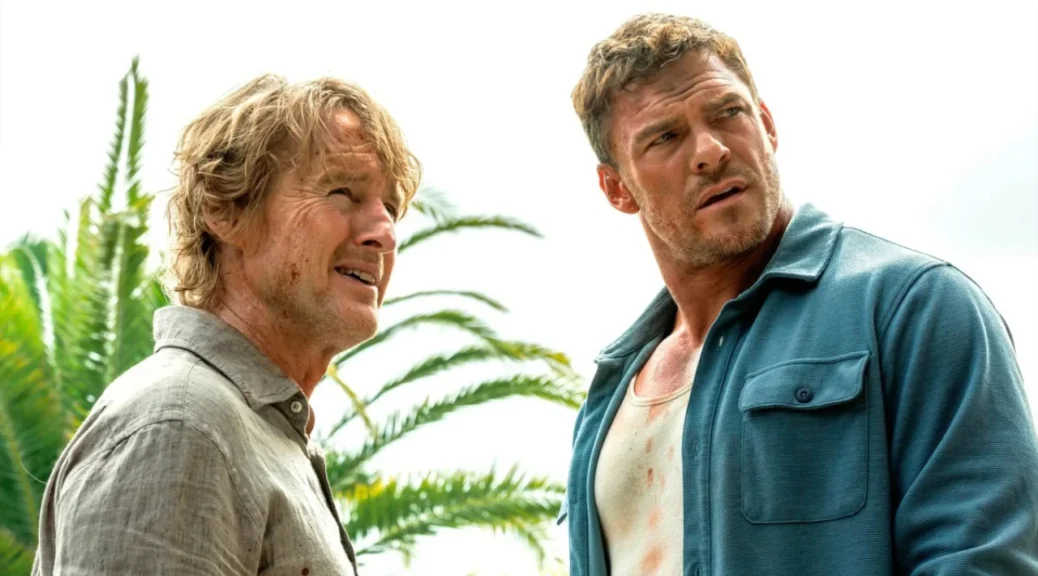
Alan Ritchson stars as Hank Marlowe, a former military badass who “doesn’t hurt people anymore.” He’s a got a haunted past, a one year sobriety chip and a job in Australia as a “runner” who can deliver important packages such as priceless parakeets to various clients and destinations.
So even though he’s not hankerin’ for some action, action finds Hank when Ben Bishop (Owen Wilson) arrives with a very valuable asset. It’s a human liver meant to save the life of a seven year-old girl, and Ben will be serving as chaperone on Hank’s mission of mercy.
The mission get messy when a cartel kingpin (Rodrigo Santoro) comes calling. Turns out the girl and the liver share a rare blood type with the kingpin’s mother, who has a surgeon on standby waiting to perform her own life saving surgery.
As you might guess, Hank’s vow of non-violence gets thrown out the window alongside plenty of henchmen and bad guys.
Director Scott Waugh – a former stuntman – choreographs some decent actions sequences that cater to Ritchson’s size, physicality and understated charisma. Wilson is on auto pilot as the awkwardly enthusiastic comic relief, with the script from Miles Hubley and Tommy White conjuring moments of good natured rapport among some common action comedy beats.
It’s all a bit familiar and silly, and definitely guilty of too many bland, off- brand needle drops. But Ritchson and Wilson make their mismatch work well enough, and the film finds a groove of goofy fun that actually seems respectful of its audience.
So while Runner might be punching above its weight class, Ritchson is the perfect hero to put up the dukes and blow up some stuff while Wilson is quick with a quip. It ain’t quite art, but it’s not another streaming pile of algorithm, either. And if that’ll do, then enjoy.
by Hope Madden
When I learned that Na Hong-jin, the filmmaker behind 2016’s The Wailing and 2008’s The Chaser, was releasing a creature feature this year called Hope, well, I was as on board as a person can be.
The writer/director has an instinct for dumbass heroes, beleaguered and in-over-their-heads, and mysteries that are too big for them to solve. His shot making is breathtaking, often finding an almost obscene beauty in the most disturbing of images. And the humor in his films is so inappropriate given the gravity of the subject that it can’t help but be appealing.
And now a creature feature? We haven’t had a great Korean creature feature since Bong Joon Ho’s 2006 masterpiece The Host. Two decades! And for the first hour or so, Hope delivers a breakneck and breathless bit of horror.
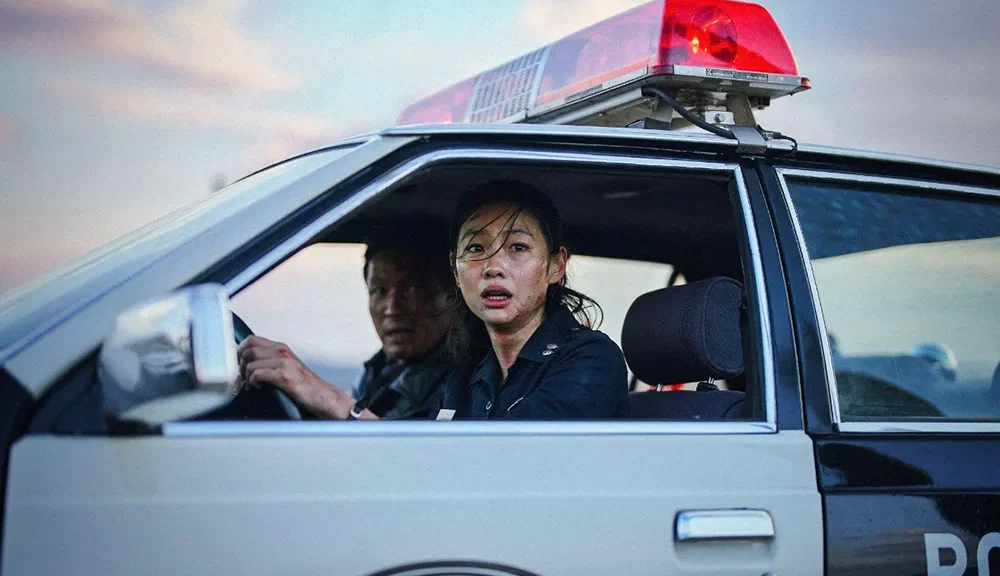
Hwang Jung-min is the police chief of Hope Harbor, a tiny South Korean harbor town in the demilitarized zone just this side of North Korea. Chief carries himself with a little swagger, wears fancy Western boots and shades, and has no idea what to do when some hunters report an ox that looks to have been ripped apart by a tiger.
From that moment of revelation, what Na crafts is the most precise and astonishing chaos. The movement of the camera, what we see and what we do not, what we hear without seeing, the scale and the intimacy and the carnage is magnificent. Unheard of. Deeply amazing.
And within that pandemonium, characters emerge. They are funny, cowardly, fearless, dim-witted—sometimes all of those adjectives at different moments. The chemistry among castmates is fresh and electric, but you know you’re waiting for something more. Depth, a backstory, a twist. You know it’s coming.
With the first good look at the beast, the wheels begin to come off this joy ride. And as Na lets you take a breath between acts, complications pile up, genres switch up, and CGI continues to disappoint.
The actors never do. Zo In-sung is a force of nature in this film, and Hoyeon oscillates between sweetheart and badass depending on the needs of the scene. But their film, this breathtaking creature feature, feels like it’s bled into an entirely other movie. One more ponderous and pretentious and weighed down with CGI.
Hope is an impressive piece of filmmaking no matter its end result, but it’s fully an hour too long and that hour belongs to some separate, other movie, which keeps the movie I loved so much from a satisfying conclusion.
JoAnn Hess, film writer and producer, joins Fright Club to be peppered with questions about how to get a film made!
by George Wolf
Buried deep in the guts of The Sun Never Sets is a movie we’ve seen plenty of times. It’s that amusing, sometimes zany rom-com where two impossibly attractive people slowly find their way to each to other. We know they’ll be together, it’s just a question of how enjoyable the journey will be.
And that can be a perfectly fine, easily forgettable time at the movies.
Joe Swanberg doesn’t make those movies. His stories are lived-in slices of humanity, often filled with easygoing humor, stellar performances and easily relatable characters who must navigate compelling pushes and pulls.
The Sun Never Sets has all of that, and it may be his finest film to date.
Dakota Fanning is simply fantastic as Wendy, a construction worker in Alaska whose two-year relationship with Jack (Jake Johnson, terrific) is suddenly at a serious crossroads. Jack is an older, divorced dad with two kids, and isn’t really interested in adding more wives or children.
He’s worried that Wendy will resent these choices as the years go by, so he insists she take a few months away from him, to “see what’s out there” and decide if she really wants Jack for the long haul.
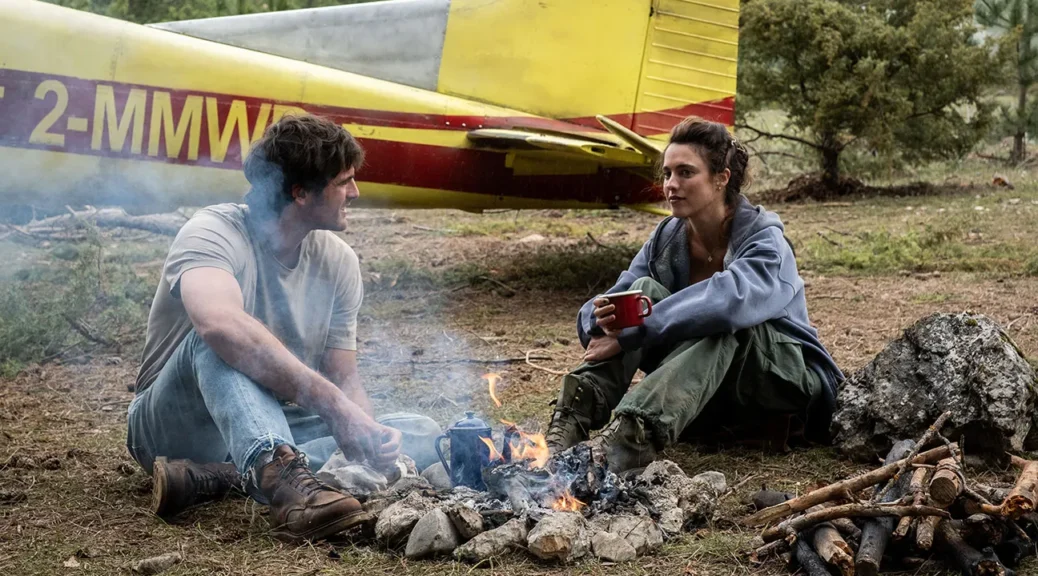
Reluctantly, she takes that break, and ends up meeting her bad boy ex, Chuck (Cory Michael Smith, Saturday Night‘s Chevy Chase) who’s back in town as a charter pilot for tourists. Sparks are reignited.
And suddenly, Jack wants the break to be over. Imagine that.
Swanberg, doing triple duty as writer/director/editor, again sets a casual pace filled with authentic dialog that’s always propelled by a lovely, improvisational feel. The entire ensemble (also featuring Debby Ryan and Karley Sciortino) shines, each actor carving distinctly human characters amid oversized, Alaska-worthy fashions, a robust adult dating climate and the smell of salmon.
The Sun Never Sets is just a warm, funny, frisky delight. It’s a film that makes you feel you just hit town and are instantly accepted into a circle of friends involved in a juicy love triangle. You’ll get a kick out of where they take you, and where Swanberg leaves you.
Because the finale is something you won’t be expecting, even though you’ll leave the theater thinking you should have seen it coming early on.
Either way, you’ll probably be smiling.

Hope & George review this week’s new releases: Coyote vs. Acme, The Dog Stars, It Ends, Buddy, The Whisper Man, Colony, Boorman and the Devil, The Snare, and The Deb.
by Matt Weiner
It took many years and a last-minute safe-for-work title change for Idiots to reach screens. Writer-director Macon Blair, always a welcome presence in front of the camera, has talked openly about the decade-plus and numerous cast changes to get his latest feature made.
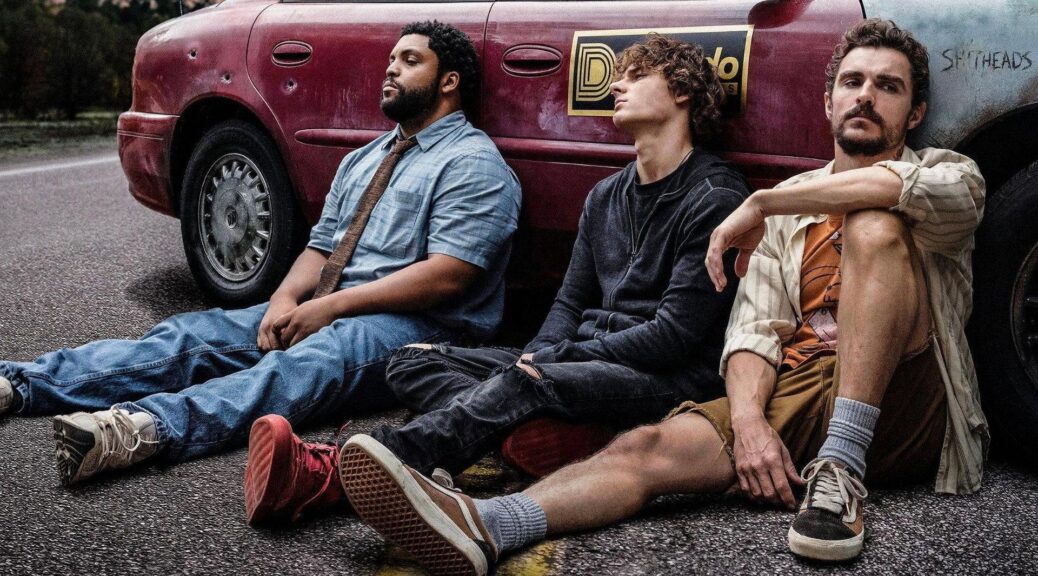
That’s a lot of pressure for an antagonistic road comedy that follows two in-over-their-heads contractors who transport troubled teens to rehab centers. Davis (O’Shea Jackson Jr.) is well-meaning and religious, with a genuine empathy for his passengers. Mark (Dave Franco), on the other hand, seems more likely to be the one in the backseat being escorted.
The pair gives the impression they would be outmatched in the best of circumstances, let alone trying to handle their latest charge. Sheridan Kimberley (Mason Thames) is a sociopathic son of hands-off billionaires eager to get him out of sight, out of mind, and in compliance with the latest legal deal to keep him out of prison.
Sheridan plots to turn Mark and Davis against each other and escape their custody, which sends the pair on a road trip from hell that ends up roping in a vengeful sex worker (Kiernan Shipka), celebrity-worshiping sycophants and a band of Soundcloud-rapping bounty hunters/kidnappers whose incompetence rivals only Mark and Davis.
For a crass hard-R comedy, there’s sadly only one scene that comes close to the gross goo-fest to be had in Blair’s more focused and self-assured Toxic Avenger remake. Idiots does the best it can do with the low budget, but more physical comedy would’ve helped distract from all the implausible character decisions and their incongruent philosophizing.
Idiots counts Danny McBride, Jody Hill and David Gordon Green among its executive producers. Whether or not they played a direct hand in day-to-day production, the comic sensibilities of the HBO mainstays behind shows like Vice Principals and Righteous Gemstones are firmly part of the film’s DNA. Blair’s story takes major tonal swings for a grossout comedy with few redeeming characters. Or any redemption at all. This works for lovable losers like McBride’s Kenny Powers or Seth Rogen and the elder Franco brother in Pineapple Express. It’s a difficult register to pull off across a feature-length comedy, though, and Blair’s uneven script doesn’t pick up the slack consistently enough. Still, though there’s something to be said for a comedy willing to be this nihilistic and … well, idiotic.

by Rachel Willis
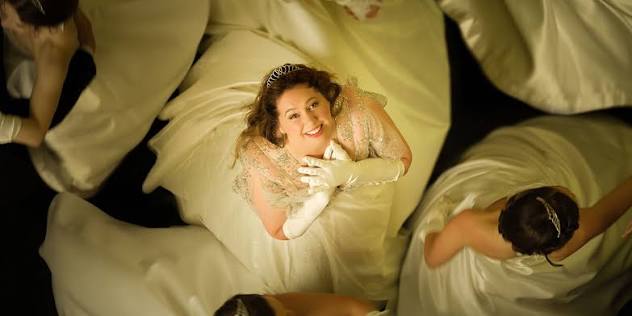
After pulling a feminist-themed stunt at school, Maeve (Charlotte MacInnes) is banned to the bush; more specifically, the small town of Dunburn where her cousin Taylah (Natalie Abbott) lives in Rebel Wilson’s directorial debut, The Deb.
Maeve arrives in town to find all Taylah wants from life is to make a splash at the upcoming debutant event. Nothing is more archaic to Maeve than this spectacle of femininity and purity.
The wants of both girls are relayed through song, and while each song is catchy, they are also uninspired. In fact, none of the songs in the movie stand out nor do any of the choreographed dance numbers that give us time to meet the people of Dunburn. They are unnecessary filler in an otherwise absorbing story.
Dunburn’s resident mean girl Annabelle (Stevie Jean) and her fellow mean girls (The Pixie Cups) are fun in a catty sort of way as they do their best to make Taylah’s life hell.
Rebel Wilson co-stars as Annabell’s mother. Her character is a combination of Amy Poehler’s Mean Girls cool mom, and a stereotypical parent-manager who tries to bully her kid toward superstardom.
As Maeve adjust to life in Dunburn, she harshly judges Taylah and everyone in the bush for their behavior, their quaintness, their dreams and desires. She is as cruel in her own way to Taylah as the Pixie Cups. Though Maeve aspires to feminist equality and the end of the patriarchy, she doesn’t recognize her own role in perpetrating classist and patriarchal beliefs.
But the film isn’t too interested in taking a deep dive into the problems Maeve seeks to address with her stunts and TikTok videos. Instead, the audience is treated to a fun musical that has a simple lesson or two for the mean girls of the world.
by Hope Madden
It’s 1986 in Australia. Three brand new high school graduates plan to spend the night at Penny Lane’s (Bailey Spalding) grandparents’ empty lake house. Their moms drop them off, and the girls sneak a cigarette and pop down to the liquor store. Those crazies!
But Penny’s disturbed cousin Kat (Sophia Wright-Mendelsohn) arrives uninvited with cupcakes so loaded with drugs that Penny passes out. So, Penny’s besties Toni (Tahlee Fereday) and Amy (Alexandra Jensen) throw Kat out.
This seems a fine plan until Kat calls her 40-year-old ex-con boyfriend to pick her up and he shows up with two other felonious pals, all of them with bad intentions.
Writer/director Mia Kate Russell’s feature debut is a weird mix of gritty Ozploitation horror and 80s comedy. The film is at its best when she exhibits her keen instincts for practical gore. Those feet!
But long before things get bloody, the anxiety Russell and her ensemble generate inside the humble little beach house is impressive.
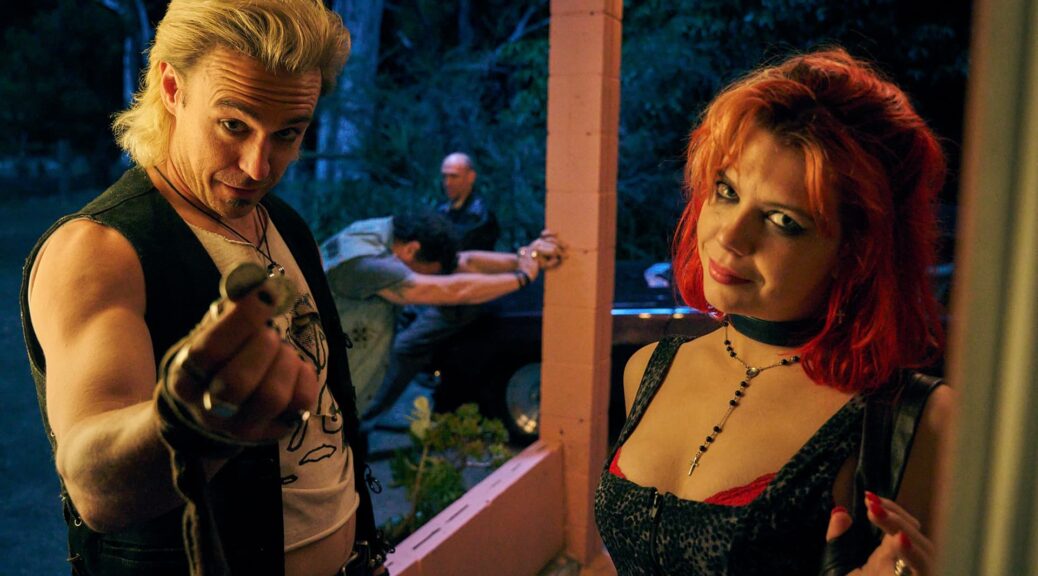
Home invasion horror often delivers a particularly uncomfortable tension, and Russell comes close to Last House on the Left vibes. Ben O’Toole is particularly effective as Angus, a vainglorious low-rent thug delighted to partake in bloody debauchery.
And Penny Lane Is Dead definitely gets bloody. But the violence is of a type that doesn’t fit well with the film’s more broadly brushed humor. The tonal issues are anchored in Wright-Mendelsohn’s character.
The performance itself is very impressive, almost Fairuza Balk a la The Craft at times. Kat, in horror movies actualy made in the 80s, would have been the tragic but cool outsider—Angela from Night of the Demons, Trash from Return of the Living Dead. Sure, she’s chaos walking and her poor decisions bring destruction, but you don’t hate her.
Russell sidesteps that cliché in favor of the unspeakable: the popular girl who looks like a Barbie really is the hero and the messed-up Goth chick really is evil. And for a time, Wright-Mendelsohn (Ben’s daughter) carves out a madness that is deeply unsettling and very impressive.
But Act 3 becomes “pile on the mean girl” and Kat becomes a near-supernatural villain when, honestly, it’s the three men who deserved this level of comeuppance. The vitriol seems misdirected, and paired with a poorly handled sexual assault storyline, Penny Lane Is Dead can’t get out of its own way.
It’s too bad, because there was something here, something unnerving and unwholesome.