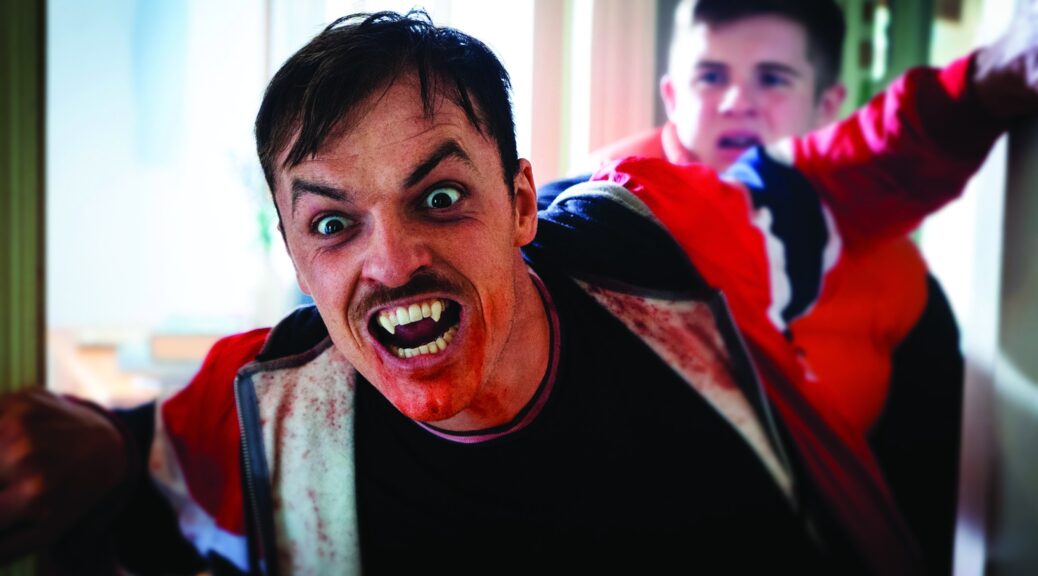
Love Bites

Let the Wrong One In

by George Wolf

First off, someone has earned a victory lap for that title, Let the Wrong One In. It’s perfect. Five words, and we instantly expect this film to be about vampires, and we expect it to be silly.

Done and done.

Writer/director Conor McMahon, the Irish goof behind Stiches and Dead Meat, brings his trademark nuttiness and thick, sometimes caption-worthy brogues to a story of love among the bloodsuckers.

Bachelorette Sheila (Mary Murray) is bitten during her hen party (in Transylvania, no less). Sheila comes home to the Emerald Isle and bites Deco (Eoin Duffy), whose sudden aversion to sunlight and garlic french fries doesn’t go unnoticed by his brother Derek (Jordan Lennon).

“You’re a vampire!”

“What are you insinuating?”

After calling in Dr. Henry (Anthony Head from TV’s Buffy the Vampire Slayer), the boys discover that the doc is also a vampire hunter (and train enthusiast) on the trail of his fiance Sheila and her gang of vamps.

There’s a showdown looming between the living and the undead, with McMahon and crew leaving a blood and guts-splattered trail along the way. The effects are low-rent and cheesy, the gags often obvious but always affable, and the nods to Kubrick and Edgar Wright unmistakable.

And if you’re thinking What We Do in the Shadows, this is a slightly different neighborhood. Let the Wrong One In is more working class, unbridled and often scattershot in its delivery.

But it does end up delivering on the promise of that title, with just enough zany bite to make the lifeless stretches easier to bury.

The Horrors of Garage Entrepreneurship

Madelines

by Christie Robb

Madeline (Brea Grant, Eastsiders) and her husband Owen (Parry Shen, General Hospital) are two independent scientists working on a time travel device in their garage laboratory. Everything seems to be going well. They successfully moved an orange across time and space. They secured investment capital from their backer Rory (Richard Riehle, Office Space/legendary “that guy”). And they are all set to try experimenting on human subjects.

But one night, Madeline starts coding after she’s had a few too many wines and sends herself into the future only to return and find out that, due to a typo in the code, she and Rory can expect a new Madeline to return from the future every day at the same time for 3,600 days. What to do?

It’s a real conundrum.

Directed by Jason Richard Miller (who produced Frozen—no, not the Disney one) and co-written by Brea Grant, the film manages to entertain despite its minuscule cast of three and limited setting. A lot of the credit goes to Grant, who gives individual quirks to the various Madelines that she embodies.

Matt Akers’s 80s-inspired synth score is also a real delight, providing the entire project with a late-night direct-to-syndication guilty pleasure vibe.

It’s not a movie that can stand up to much logical scrutiny, though. And both the horrific and comedic elements could have been dialed up somewhat. But as an experiment, I think the team is on to something.

Flipped Perspectives

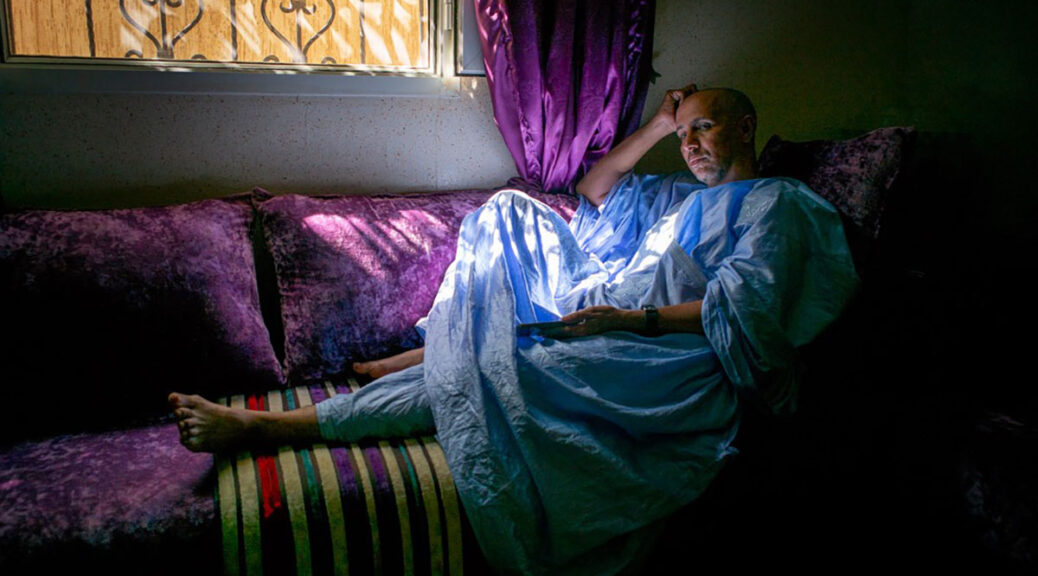
Guantanamo Diary Revisited

by Tori Hanes

“Forgiveness is an act of revenge”.

This line- spoken by director John Goetz- echoes through every action taken by his film’s subject, Mohamedou Ould Slahi.

The center of a well-documented stain on United States history, Slahi was detained at Guantanamo Bay for 14 years without any charges officially brought against him.

In his book Guantanamo Diary (written in 2005, declassified for release in 2012, and the basis for the 2021 film The Mauritanian), Slahi accuses the United States government of extreme torture tactics, which to this day have been denied by special forces connected to his case. In what he considers to be the ultimate act of revenge, Slahi uses Goetz’s documentary to achieve his lofty goal: peacefully reconnect with the men and women involved with his torture in the name of forgiveness.

The documentary gets off to a rocky start. Goetz does not seem dedicated to the backstory that consumes the first half of the piece. Heavy-handed voiceovers spoon-feed us the questions Goetz wants us to be asking, as the film dutifully trudges through Slahi’s complicated past. Ironic, really, since Slahi is clear from his first moments on screen. His intention is exclusively to look toward the future.

Goetz competently introduces the key players: former special forces members connected to Slahi’s case, ranging in importance from a low-level guard to head of the operation. Goetz pushes uncomfortable recounts from each person, eventually finding the meat of his story.

The film becomes a power struggle over control of the narrative. Obviously disturbed by Slahi’s presence in the media, the individuals involved are desperate to clear either their name or their conscience. The story takes a turn from Slahi’s already well-publicized narrative and tackles the mental aftermath inflicted on his torturers.

In a case of trauma begetting trauma, a murky view of these people emerges. Questions surrounding complicity in immoral government sanctions, personal responsibility, and humanity in extremity are posed. Simmering on the backburner of the film, Slahi waits for his ultimate act of revenge.

Once Goetz cracks into the heart of his story, a gritty, complicated spectacle is born. In a narrative that is so seemingly black and white, the gradience of humanity is found.

Fright Club: Closets in Horror

There are few spots on earth that generate more terror than a closet. Maybe the woods, the darkness beneath your bed, but what else? And why? We look into our favorite scary moments in cinematic closets for the latest episode, joined by filmmaker Timothy Troy, who knows a little bit about this topic.

5. Poltergeist (1982)

There are so many moments in Tobe Hooper and Steven Spielberg’s Eighties gem to point to. But the clown alone, or the meat face alone, or any one of those memorable moments alone wouldn’t have made the film the classic it is. It needed that closet.

We’re used to seeing a closet as a small, dark, creepy space but at Cuesta Verde, it’s a gateway to another dimension. One that could suck your little pajama-clad daughter in. One that could belch out a giant beast that will eat your family whole.

4. Halloween (1978)

The scene has been done to death by now, but when John Carpenter and co-writer Debra Hill first put Laurie Strode in that louver doored closet, audiences lost their shit.

Why would she do it? To buy time for the kids to escape because she’s smart and selfless. And then what? She’ll fashion a tool to take down the intruder. The scene cements Strode as the film’s true hero, but waiting in that tiny little space with slats of light and Michael’s breathing was a test of endurance for the audience. One that hundreds of horror movies have ripped off but none has recreated.

3. The Ring (2002)

Who saw that coming? No one, that’s who.

2. Carrie (1976)

Piper Laurie turns in one of the most gloriously villainous mother characters in cinematic history, terrifying and self-righteous. But this is a moment in Carrie White’s life (a luminous Sissy Spacek). Carrie is fighting back.

And you know what that means.

That means the closet.

1. The Conjuring (2013)

We are very rarely fans of the jump scare, but we give it to director James Wan. He is the master.

And yes, it’s technically a bureau rather than a walk-in closet, but man, we jumped.

Wicked Woods

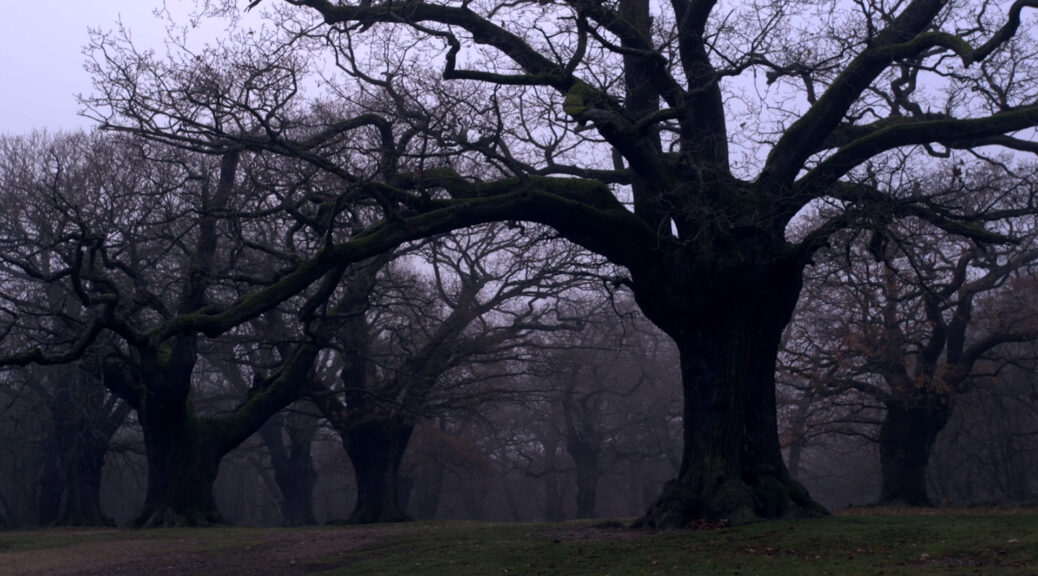
Sideworld: The Haunted Forests of England

by Hope Madden

Jonathan Russell and George Popov have been exploring England’s haunted history for a number of years now. For their first feature collaboration, 2017’s Hex, the co-writers/co-directors took us into the woods for a spell.

In 2020 the pair co-wrote – this time with Popov flying solo behind the camera – a modern exploration of folk horror with The Droving. Once again, the two unveiled a spooky history where primitive behavior meets supernatural forces deep in England’s woods.

The filmmakers’ latest suggests a serious preoccupation at this point. Their documentary Sideworld: The Haunted Forests of England walks us through some of the spectral history that likely influenced their earlier dramatic efforts.

Where Kier-La Janisse’s recent doc Woodlands Dark and Days Bewitched dove into dramatic recreations of folk horror, Popov and Russell dig into the myths that inspired the fiction.

Russell writes, Popov directs and lends vocal talents to the fairly brief excursion into local folklore surrounding three different forests: Epping Forest, Cannock Chase and Wistman’s Wood. Their stories tell of pig beasts and howling dogs, weeping children and witches, tragic lovers and highwaymen.

They don’t stop with musty legend, though. Links to contemporary crime help to bridge the modern with the ancient in a way that sheds light into how tales of hauntings originate.

Though Popov narrates most of the film, he’s joined on occasion by Suzie Frances Garton and William Poulter. The film would have benefitted from more vocal variety, particularly since the filmmakers avoid any kind of talking-head footage. A little commentary from folklorists or experts would also have helped the film deliver a bit more relevance.

You can’t fault the spell Sideworld casts. Richard Suckling, who did such a beautiful job as DP for The Droving, again develops an atmosphere of beauty and dread. His cinematography mesmerizes from the opening moment. Paired with Matthew Laming’s haunting, whispering whistle of a score, the forests of Popov’s exploration easily convince of spectral menace.

https://www.youtube.com/watch?v=lpA-_CrVu8Y

Polar Express

Compartment No. 6

by George Wolf

She’s a Finnish archeology student on the way to study some ancient cave paintings in remote northern Russia. He’s a blue collar Russian just traveling to where the work is. They share tight quarters in Compartment No. 6, a measured and often beguiling look at the mysteries of human connection.

Laura (Seidi Haarla) thought she’d be taking this trip with her girlfriend Irina (Dinara Drukarova). Instead, she’s solo on the train to Murmansk, and her first impression of roommate Ljoha (Yuriy Borisov) is not a good one.

He’s drunk and crude. She’s quiet and introspective. So the air in their little compartment might just get as bleak and cold as the view outside the train’s sterile, fogged up window.

Adapting the source novel by Rosa Liksom, director/co-writer Juho Kuosmanen draws effective contrasts between the two environments, especially when one of them begins to thaw. Buoyed by the two excellent lead performances and moments of dark humor in the script, Kuosmanen leans into the 1990’s setting to evoke a world that seems adrift in time and space.

Last year’s Grand Prix winner at Cannes, the film often feels like a slow journey for us as well, but don’t mistake the unhurried pace for aimlessness. Be patient and take the ride. Compartment No. 6 has a warm fuzzy feeling at the last stop.

In Sickness and in Health

7 Days

by Matt Weiner

We likely have years of pandemic-related movies ahead of us. And while 2022 may seem a bit soon to look back on the early days of Covid-19 (much as this country seems ready to declare mission accomplished no matter what), here’s some good news: You’ll be hard-pressed to watch anything more winsome and heartening than Roshan Sethi’s 7 Days.

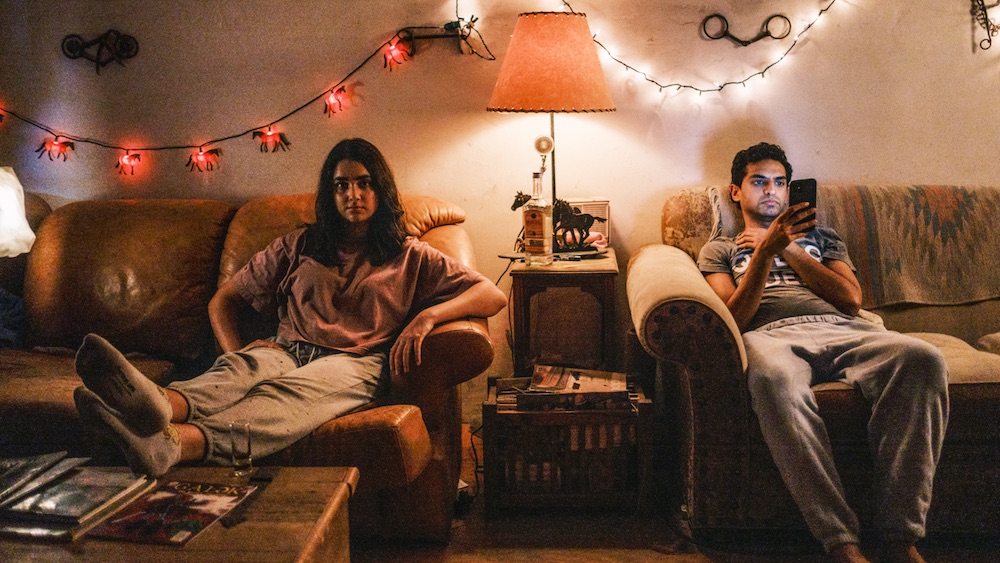
A pre-arranged first date in March 2020 between Ravi (Karan Soni, who also co-wrote the screenplay with Sethi) and Rita (Geraldine Viswanathan) goes for much longer than either one was expecting when Covid grinds the country to a halt. Unable to get back out of town right away, Ravi hunkers down with Rita.

As the world outside Rita’s house falls apart, the two opposites—traditional, marriage-minded Ravi and freewheeling, drinking and partying Rita—slowly get to know each other on a deeper level than their disastrous first meet-up.

Sethi’s romantic comedy might be the first to use shelter in place as a meet cute, but the film earns its medical bona fides. This is Sethi’s feature debut, perhaps because he is also a practicing oncologist who wrote on medical dramas while finishing Harvard Medical School.

The film is set not only in quarantine but almost entirely within the confines of Rita’s house—save the occasional video call for Ravi, who keeps to his arranged dating schedule even with Rita sitting just feet away. So it falls entirely on Viswanathan and Soni to make these people we genuinely want to be trapped with, even as their perfectly opposite foibles drive each other mad.

And sure, their relationship follows the usual romcom course. (No spoilers, but you will get an answer to the question of whether opposites attract.) But both leads bring an impressive level of charm and depth to their roles, with a chemistry that feels natural and earned even within the formula.

Ravi and Rita have more in common than they first think—not just their traditional families urging them to settle down, but also the struggle of forging their own identities and paths in life.

Of course, the shadow of Covid looms over all of their conversations, especially the early days when so much was unknown and a cough could be the harbinger of weeks on a ventilator—or worse. The way the film works these concerns into the third act is inevitable but no less affecting.

Nothing about the phrase “Covid romcom” should play out as well as everything does with 7 Days. For that alone, the movie is a surprising gem. But to also get an incisive look at love and dating, thoughtful cultural commentary and genuine laughs is a pandemic miracle.

Romancing the D

The Lost City

by Hope Madden

A romance novelist who’s really a bit of a hermit becomes a reluctant adventurer looking for legendary jewels in a far-off land, with a roguishly handsome man—part hero, part heartthrob—at her side.

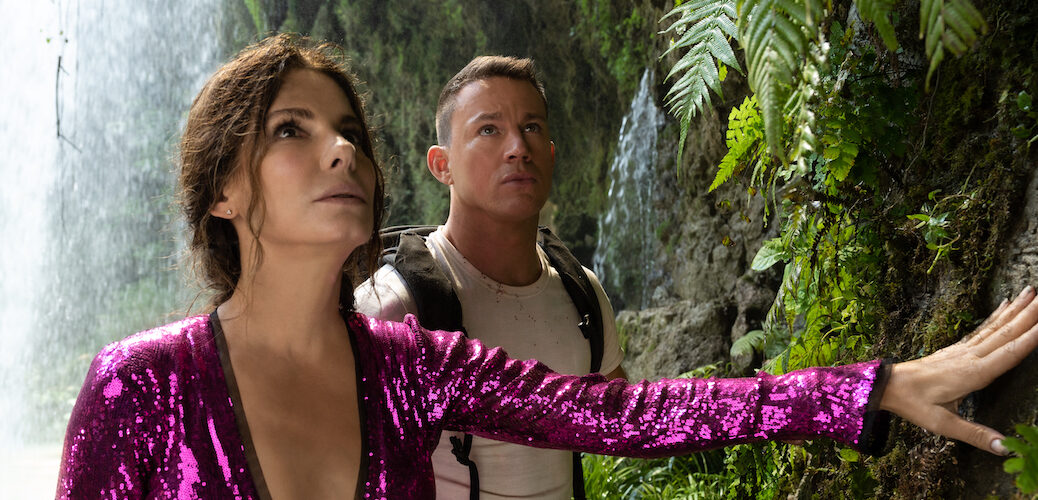
No, it isn’t Romancing the Stone. It isn’t even Jewel of the Nile. Aaron and Adam Nee’s romantic adventure comedy The Lost City offers less adventure, more screwball comedy. And more sequins.

Sandra Bullock is Loretta Sage, whose romance novels are known less for their anthropological mysteries than their hunky hero. That hero has been depicted over many book covers by Alan (Channing Tatum).

Promoting their latest effort, The Lost City of D, Loretta gets nabbed by a wealthy villain (Daniel Radcliffe, playing delightfully against type), who believes she can decipher a map leading to untold riches.

The real gem in this film is Brad Pitt in an extended cameo as the tracker hired to find Loretta. The Oscar winner and veteran leading man is just so much fun when his only goal is to be funny, and in this movie, he’s a riot. (It helps that he gets to deliver the film’s single best line.)

Bullock and Tatum are both solid comic performers, but neither is given much to work with in this odd couple romance. A grieving widow given up on love, Loretta doesn’t offer Bullock a lot of room for hilarity. Instead, she becomes a rather dour anchor for the project.

Tatum’s dunderheaded beefcake is appealing enough, but can’t quite keep the film afloat. A side plot featuring Da-Vine Joy Randolph (Dolemite Is My Name) feels like filler, which this 2-hour film did not need.

There are some chuckles, especially when Pitt’s onscreen. Bullock and Tatum share enough chemistry, deliver physical comedy well enough, and generate enough charm between them to keep the breezy entertainment enjoyable.

The Lost City offers pretty, lightweight fun, not unlike a romance novel.

Queen of the Mountain

Infinite Storm

by George Wolf

Just last month, The Desperate Hour showcased Naomi Watts in an almost one woman show. Infinite Storm adds a few more cast members, and this time Watts isn’t just figuratively carrying a film on her back, she’s literally carrying another human.

Based on the true life adventure that found search and rescue climber Pam Bales trying to descend New Hampshire’s Mt. Washington before a storm hits, the film leans heavily on Watts to make a rescue infinitely more emotional.

On her way down the mountain in Oct. 2010, Bales encountered a lone climber she called “John” (Billy Howle) immobile and unprepared for the bitter cold and biting, 50 mph winds. Risking her own life, Bales’s extensive training was often rebuffed by the uncooperative John as she tried to get them both safely home.

First-time screenwriter Joshua Rollins adapts Ty Gagne’s New Hampshire Union Leader article with added layers of sympathy designed to quicken our emotional attachment. Pam’s chosen to ignore the weather forecast and climb because it’s the anniversary of something traumatic in her life, and climbing “is cheaper than therapy.”

This isn’t a documentary, so bulking up the narrative is a smart play by Rollins and director Malgorzata Szumowska (whose excellent The Other Lamb was woefully underseen). Szumowska employs onscreen digital timekeeping to keep the pressure on, while deftly weaving Pam’s flashbacks into the harrowing, well-crafted set pieces filmed in the Slovenian Alps (cheaper than N.H.). Yes, we do eventually get to the source of Pam’s trauma, but the reveal is just slightly askew from what we’re expecting, which is welcome.

Watts again proves she’s more than capable of handling a film’s heavy lifting. She’s rugged throughout the physicality that’s required, and effortlessly human within the ordeal. Pam may not understand why John is acting the way he is, but her commitment never feels false or convenient.

And even if John is sometimes unresponsive, Watts has someone to talk to this time, helping Pam’s expressed inner thoughts feel more organic.

The common challenge for adventure films like this is to make an individual experience speak in universal terms. Watts pushes Infinite Storm past some by-the-numbers moments for a worthy reflection on struggle and healing.

Not to mention the value of a dry pair of socks.

Hope Madden and George Wolf … get it?