Screening Room: Are You There God? It’s Me, Margaret, Sisu, Big George Foreman, Peter Pan & Wendy, Showing Up and More
by George Wolf
The feature debut from director and co-writer Saim Sadiq unveils an assured and often masterful technician, one able to convey a deep affection for the lives of his meaningful characters.
Joyland is a smart and deeply human drama, a treat for both the eye and the heart.
Haider (Ali Junejo) is the youngest son in a traditional Pakistani family. After a long period of unemployment, he finally lands a job. But while this seems like good news, it signals a seismic shift in his multi-generational family dynamic at home, starting with the family’s decision for Haider’s wife Mumtaz (Rasti Farooq) to give up the salon job she loves so she may stay home and assist with keeping house and children.
Haider will be joining the backup dancers in a Bollywood-style show led by the strong-willed Biba (Alina Khan), a trans woman. The pay is good, but Haider will have to tell his conservative father (Salmaan Peerzada) that he’ll be managing the theatre, not dancing in it, and avoid any mention of the star of the show.
But Haider’s biggest secret is his infatuation with the magnetic Biba, and the relationship that is budding between them.
Sadiq’s camera moves slowly and confidently, filling frames that are frequently static with mesmerizing dances of color, shadow, and light. Just what he does with a decorative light fixture’s effect on the room where Haider and Biba grow closer is a thrilling wonder of shot choreography.
Similarly, Sadiq’s script (co-written with Maggie Briggs) often speaks loudly through the silence of things left unsaid. Haider isn’t the only one here keeping secrets, and the film begins to ache with the longing for lives that seem hopelessly out of reach.
And yet somehow, the gripping conclusion arrives without any of the melodrama you might expect. And when it does, Joyland leaves a mark that also signals the arrival of its visionary and insightful filmmaker.

by Hope Madden and George Wolf
Is there anything in all the world more satisfying than watching Nazis die? Perhaps not.
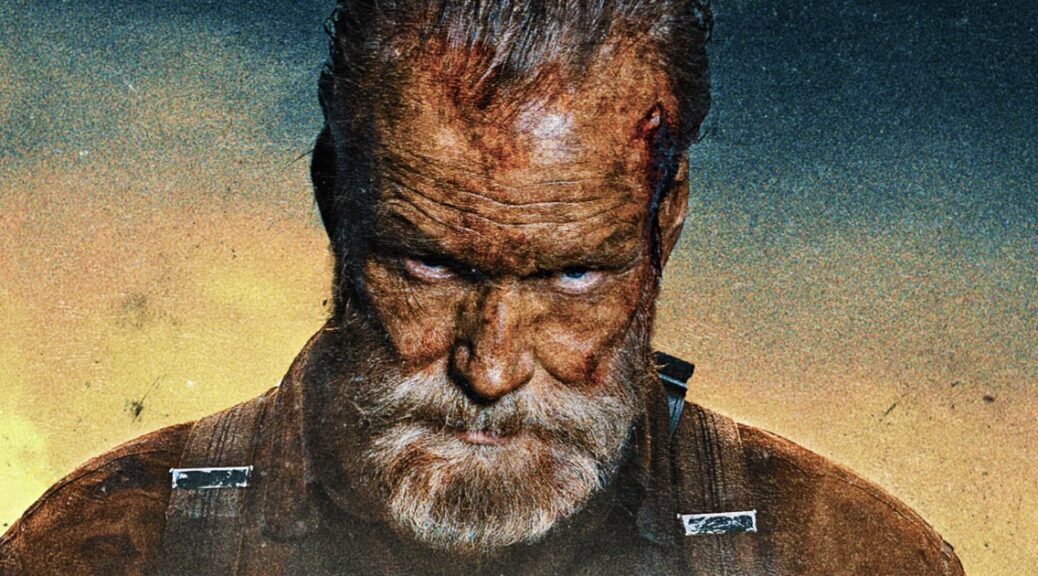
Jalmari Helander, the genius behind 2010’s exceptional holiday horror Rare Exports, squeezes a lovechild from Leone and Peckinpah by way of Tarantino (natch). The result, Sisu, a kind of WWII-era Scandinavian John Wick.
That sounds borrowed, but it doesn’t feel borrowed. It feels stylized but never derivative.
Rare Exports star Jorma Tommila plays Aatami Korpi. Korpi used to be a soldier. He left that – and his reputation as a “one man death squad” – behind, instead roaming Lapland with his dog and his horse in search of peace and gold.
After finding one, the other becomes even more elusive.
The Nazis, their loss imminent, are leaving scorched earth behind as they move across Lapland. Their paths cross Korpi’s. It doesn’t go well for the Nazis.
Helander’s confident vision meshes majestically with the cinematography of Kjell Lagerroos, capturing the lonesome beauty of Lapland in one minute, the next minute bursting with the frenetic energy and viscera of action. The stunt choreography and editing in the dizzying array of carnage-laden set pieces are breathtaking. Knives, guns, fisticuffs, tank fire, regular fire, land mines, a hanging, airplanes – a seemingly endless string of magnificently crafted violent action keeps the pace breathless.
Speaking of breath, there’s an underwater sequence that’s a real gem. And a great deal of Sisu’s success is in the novelty of its action. We’ve seen about 11 hours of John Wick by now. It’s hard to do something new.
But Helander manages. Composers Juri Seppä and Tuomas Wäinölä also assist in lifting the heights of this spectacle, and it becomes as beautiful a celebration of bloodletting as we’ve seen for some time.
And though a final confrontation between Korpi and the ruthless SS Commander tracking him (Aksel Hennie) is never in doubt, it takes on a greater significance thanks to Helander’s clearly-drawn stakes. The Nazi is looking to buy his redemption, while Korpi sees the chance to finally escape his past.
Vengeance? Oh, that’s here, too, for both Korpi and some POWs who smugly warn their German captors of what is coming. They say the Finnish word for what the wandering stranger is does not translate, but that he is no ordinary traveler.
And the film is no ordinary travelogue. Clocking in at just 91 minutes, Sisu is perfectly lean, relentlessly mean, and consistently satisfying at every blood-soaked turn.
There is something scary about hospitals, especially the old, abandoned ones and those creepy, windowless floors! But what about the patients? We take a look – limiting our discussion to actual patients in actual facilities, not involuntary patients in homes, garages and storage units (although that turned out to be quite a list, so maybe later…)
One of a number of underappreciated Aussie horror flicks of the Seventies, Patrick is the first pairing of director Richard Franklin and writer Everett de Roche. The two would make a number of solid genre flicks together, but it was probably the popularity of this film that sparked the Ozploitation craze.
Here, big-eyed Robert Thompson is an unblinking catatonic in a Melbourne hospital. Though nothing’s going on in his body and eyelids (honestly, the fact that he never blinks and no one give him eyedrops might generate more unease than anything else in the movie!), his mind is very busy. Especially now that he’s keen on nurse Kathie (Susan Penhaligon).
Thompson owns the screen, regardless of his state, and effortlessly creates dread. Franklin ups the ante with some elevator claustrophobia and the general tension of being in a hospital. This is a low budget indie and suffers a bit from sprawl, but when Patrick turns his head and scares his new nurse. I still jump.
Nyctophobia, dissociative identity disorder, creepy tapes, an abandoned asylum – the pieces are there for a spooky horror movie. Credit writer/director Brad Anderson for swimming familiar waters and yet managing a fresh, memorable and disturbing film.
Gordon (Peter Mullan) needs some cash – and some sleep. Troubles at home aside, he’s having problems getting his latest assignment completed on time. With just a skeleton crew and an unreasonable turnaround time, Gordon has to remove the asbestos from the long-abandoned Danvers Lunatic Asylum.
He sneaks away a lot to call his wife and listen to these therapy tapes he’s found. Meanwhile, a couple of his guys are bickering over a shared girlfriend, another one’s a pothead, and then there’s Gordon’s sweet, mulleted nephew Jeff (Brendan Sexton III), who’s afraid of the dark.
Atmosphere is everything in this film. Performances are outstanding and Anderson has some seriously scary moments in store. Oh, poor Jeff.
Who wants to see Bruce Campbell play Elvis Presley?! We do.
Director Don Coscarelli (Phantasm) brings Joe R. Lansdale’s short story to the screen to depict the horror and sadness of aging, although its done with such humor that the film is impossible not to love.
Elvis never died, he swapped places with an impersonator who died and ever since then he’s been stuck living someone else’s life. And now he’s in this low-rent old folks home where his only real friend is a guy who believes he’s JFK (Ossie Davis). Obviously, when they realize that the recent spate of patient deaths is due to a mummy sucking the life from people through their assholes, who’d believe these knuckleheads?
The script is great and Coscarelli knows exactly how to make the most of budgetary limitations. The entire cast soars, but Campbell and Davis have such incredible chemistry that the film delivers not just laughs, message, and some scares but genuine tenderness.
Dr. Hal Ragland – the unsettlingly sultry Oliver Reed – is a psychiatrist leading the frontier in psychoplasmics. His patients work through their pent-up rage by turning it into physical manifestations. Some folks’ rage turns into ugly little pustules, for example. Or, for wide-eyed Nola Carveth (Samantha Eggar), rage might turn into bloodthirsty, puffy coated spawn. This is Cronenberg’s reimagining of procreation, and it is characteristically foul.
Cronenberg wrote the film during his own ugly divorce and custody battle. He created a fantasy nightmare rooted firmly in the rage, despair, and the betrayal that comes from watching someone who once loved you turn into someone who seems determined to harm you.
Cronenberg is the king of corporeal horror, and The Brood is among the best of the filmmaker’s early, strictly genre work. Reed and Eggar are both unseemly perfection in their respective roles. Eggar uses her huge eyes to emphasize both her former loveliness and her current dangerous insanity, while Reed is just weird in that patented Oliver Reed way.
You can absolutely never outdo Friedkin’s original masterpiece, but William Peter Blatty – who wrote the novel The Exorcist – takes a nice stab with the third installment.
Who is this secret Patient X? Or, who’s controlling him? Kinderman (played in this film with much gusto by George C. Scott) will live through a nightmare to figure it out. Jason Miller makes a heartbreaking return, but honestly, Blatty has so much fun with the rest of the patients, the film offers constant, weird terror.
by Hope Madden and George Wolf
So, two Robot Chicken writers and the guy who directed The Lego Batman Movie got together and said, I bet they’d let us make a movie if we could get Nic Cage to play Dracula.
I mean, maybe it didn’t go down like that, but it could have and if it did, it worked. They totally made a movie with a very saucy Nic Cage as Dracula. And a saucy Nic Cage is the best Nic Cage.
Through inspired cinematic homages, we’re whooshed through a little backstory. Robert Montague Renfield (Nicholas Hoult – who played Cage’s son in Gore Verbinski’s 2005 dramedy The Weather Man) is an ambitious real estate agent who sells his soul to Dracula. Fast forward 150 years or so and he’s grown weary of the co-dependent relationship.
The blood sucker’s insatiable appetite means that his reluctant manservant is forever finding a new place for them to lay low. Right now, it’s New Orleans, where an angry cop (Awkwafina) is fighting a losing battle with a corrupt city.
But enough about the story. Honestly, if you’re here for the story, you’ve come to the wrong place. Not that co-writers Ryan Ridley and Robert Kirkman do a poor job. They do a fine job of serving Cage opportunities to ham it up, while director Chris McKay wows with Story of Ricky levels of carnage, except here it’s intentionally funny.
And the blood-splatter here is much more accomplished then Ricky, as it’s woven through a spicy gumbo of action set pieces that mix Zombieland and Shaun of the Dead with a dash of Matrix. But as fun as this all often is, the film never fully commits to any of its multiple directions.
There’s at least one bloody toe in waters that send up rom-coms, satirize narcissistic relationships and homage a classic horror character while it’s also modernizing the themes that built him.
But experiencing Count Nicula alone is worth it. Plus, Hoult is perfect as the put-upon sad boy with access to anti-hero superpowers and Awkwafina can wring plenty of humor from simply telling a guy named Kyle to F-off.
Renfield might be bloodier than you expect, but it’s just as much fun as you’re hoping for. Call it bloody good fun.

by George Wolf
“We’ve been used for entertainment for so long, most Americans don’t even question it.”
Imagining the Indian is a documentary with a clear agenda and a specific target audience. It isn’t really interested in preaching to the choir, and it seems to realize there are those on the opposite side who view even broaching the subject as threatening some God-given right to tell others how to feel.
But in the middle, there’s a group that may indeed have never questioned why Native American team names and mascots need to be changed.
Imaging the Indian makes a clear and very convincing case.
In short, “It’s either racist or it’s not.” True enough, but directors Aviva Kempner and Ben West follow that early declaration with multiple historical and uniquely personal perspectives that repeatedly drive the point home.
Like Kempner’s 2019 doc The Spy Behind Home Plate, the approach is far from stylish, but heavy on substantial persuasion, usually from those most directly affected by the demeaning mascots, team names and group cheers.
While veteran sports journalist (and co-producer) Kevin Blackistone finds no shortage of sports fans who dig in their cleats and yell “It’s just a name!,” we see a series of Native Americans who have receipts. And they say it honors nothing but a continued “white fantasy” of a people swept out of the way for hundreds of years.
“I’m so past arguing. This is life and death for us.”
Really? Life or death? Yes, expect more receipts.
Kempner and West also highlight the leadership of Native American activist (and 2014 Medal of Freedom winner) Suzan Shown Harjo, and offer solid rebuttals to the frequent charges of “erasing history” and those misleading polls which seem to suggest Native American support for the controversial mascots.
I’m actually writing this review while a Cleveland Guardian’s game plays in the other room. And while it’s encouraging to note that the Cleveland Indians/Chief Wahoo die-hards are becoming less and less vocal, I know first hand that plenty still proudly resist the name change as some heroic stand against “wokeness.”
But with the Washington football team finally ditching “Redskins” (a name singled out as the most blatantly offensive of all), progress is being made, which is why it may be the most opportune time for Imaging the Indian to get this wider release.
Can a documentary actually be the tipping point for a new conventional wisdom, and a catalyst for permanent change?
Ask Sea World.
by George Wolf
So a suburban L.A. mom named Kristin (Toni Collette) is handpicked to be the new boss of a mafia family in Italy? Man, that’s crazy. How’d that happen?
“They made me an offer I couldn’t refuse.”
It’s actually surprising Kristin doesn’t say that in Mafia Mamma, a film that’s built on exactly that same type of obvious, forced humor.
Kristin has barely had to time to cry about her son leaving for college when she catches her husband Paul (Tim Daisch) in the act with a younger woman. Then, while her head is spinning about the future of her marriage, Kirstin hears from the mysterious Bianca (Monica Belluci).
Turns out Kristin’s estranged grandfather was head of the Balbano crime family, and was just assassinated by the rival Romano clan. But Kristin (maiden name: Balbano) is only told grandpa is dead, and she must come to Italy to settle his affairs.
As Jenny (Sophia Nomvete), the oversexed best friend (c’mon, you knew there’d be an oversexed best friend) implores Kristin to have an “Eat, pray, f@#k” vacation, she’s quickly juggling suave suitors and surprising truths.
Bianca was General for Don Guiseppe Balbano (Alessandro Bressanello), and she’s committed to carrying out the Don’s last order: that Kristin take over the family.
Fish-out-of-water hijinx ensue, with director Catherine Hardwicke weakly juggling the mob tropes amid some well-intentioned but heavy handed reminders about how workplace culture disrespects aging women.
Collette is likable as always, and Belucci is smoldering as always, but the script they’re given can’t rise above the TV backgrounds of the writing team. Convoluted, nonsensical and never more than mildly amusing, Mafia Mamma is about as lively as Luca Brasi.

Bruce Campbell brings Last Fan Standing & Evil Dead 2: Dead by Dawn to Kemba Live! in Columbus, Ohio on April 21 as part of his Bruce-o-Rama! He drops by Fright Club to discuss!
Listen in, and get tickets to the event at promowestlive.com.