Tag Archives: Screen Wolf

Fright Club: Best PG-13 Horror

Who wants to scare your kids? Because there is ample opportunity to do so without breaking any laws. Yes, year after year the cinemas are lousy with God-awful PG-13 horror (Rings, Ouija, Wish Upon, Bye Bye Man) aiming to cash in on the underaged market with jump scares and lazy writing.

But, if you look closely you can find some scary shit. Nightmares in the making. So, we looked closely…

6. The Grudge (2004)

The amazing thing about The Grudge’s PG-13 rating is the remarkable amount of violence in this film. There is a death, dismemberment or supernatural act in very nearly every single scene in the movie.

There’s also the larger, scarier idea of a contagious haunted house. You’re not just in jeopardy when you’re in it. This shit comes home with you.

The Grudge is one of the rare American remakes of J-horror that stands up, partly because the antagonists from the original are involved (Yuya Ozeki as the terrifyingly adorable Toshio and Takako Fuji as the just terrifying Kayako). It’s also a benefit that director Takashi Shimizu (who also wrote and directed the original, Ju-on) is back, and that he keeps the setting in Japan. Plus those creepy-ass sounds!

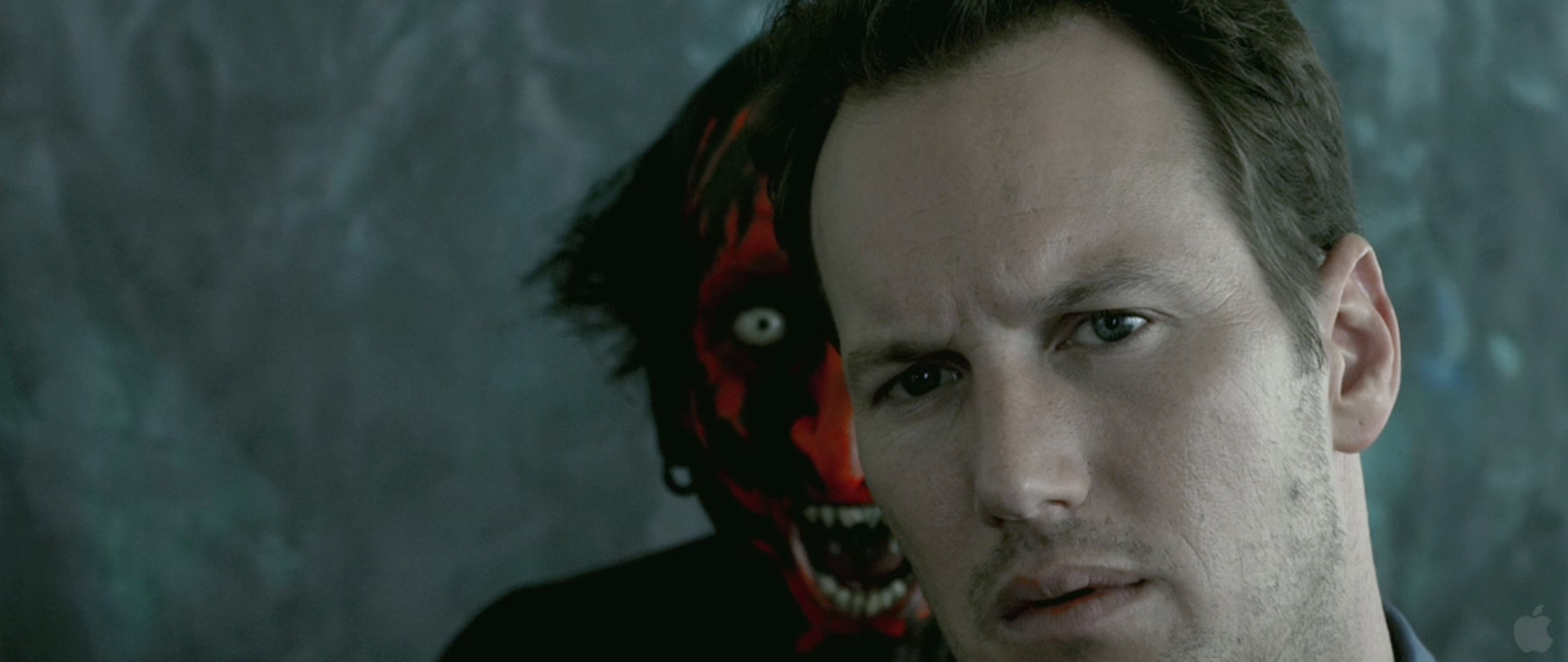
5. Insidious (2010)

Director James Wan and writer Leigh Whannell took a break from each other after a disappointing follow up to their breakout 2004 collaboration Saw (Dead Silence—yeesh). The the pair were back strong in 2010 with a wildly imaginative descent into “the further.”

This is the film where Wan finds his way as a director, and a director of horror in particular. Whannell’s bold story offers plenty of opportunity to work, and the atmosphere, practical effects and clever use of jump scares has become the trademark of the filmmaker.

They are also the elements that help this genuinely frightening effort maintain a PG-13 rating. Man, this guy knows how to milk that rating, doesn’t he? That lady in black, that red-faced guy, the whole organ thing, that kid? Tiptoe through the Tulips?

The pair takes a ghost story premise and does what very few people can do well: shows us what we are afraid of.

4. The Sixth Sense (1999)

Oh, you totally didn’t figure it out. Don’t even start.

A troubled child psychologist (Bruce Willis) treats a young boy (Haley Joel Osment) carrying a terrible burden. The execution—basically, seeing ghosts in every corner of Philadelphia—could have become a bit of a joke, but writer/director M. Night Shyamalan delivers a tense, eerie product.

With his 1999 breakout, Shyamalan painted himself into a corner he found it tough to get out of: the spooky surprise ending. And though this would nearly be his undoing as a filmmaker, it started off brilliantly.

Part of the success of the film depends on the heart-wrenching performances: Toni Collette’s buoyant but terrified mother, Willis’s concerned therapist, and Osment’s tortured little boy. Between Shyamalan’s cleverly spooky script, a slate of strong performances and more than a few genuinely terrifying moments, this is one scary-ass PG-13.

3. The Woman in Black (2012)

Director James Watkins was fresh off his underseen, wickedly frightening Eden Lake. Screenwriter Jane Goldman (working from Susan Hill’s novel) had recently written the films Kick-Ass and X-Men: First Class, both of which are awesome. And star Daniel Radcliffe had done something or other that people remembered…

I’d have been worried that Radcliffe chose another supernatural adventure as his first big, post-Hogwarts adventure were it not for the filmmaking team putting the flick together. Goldman’s witty intelligence and Watkins’s sense of what scares us coalesce beautifully in this eerie little nightmare.

A remake of a beloved if rarely shown BBC film, the big screen version is a spooky blast of a ghost story. It makes savvy use of old haunted house tropes, updating them quite successfully, and its patient pace and slow reveal leads to more of a wallop than you usually find in such a gothic tale. Glimpses, movements, shadows—all are filmed to keep your eyes darting around the screen, your neck craned for a better look. It’s classic haunted house direction and misdirection laced with more modern scares.

Ten points for Gryffindor!

2. The Others (2001)

Co-writer/director Alejandro Amenabar casts a spell that recalls The Innocents in his 2001 ghost story The Others. It’s 1945 on a small isle off Britain, and the brittle mistress of the house (Nicole Kidman) wakes screaming. She has reason to be weary. Her husband has still not returned from the war, her servants have up and vanished, and her two children, Anna and Nicholas, have a deathly photosensitivity: sunlight or bright light could kill them.

What unspools is a beautifully constructed film using slow reveal techniques to upend traditional ghost story tropes, unveiling the mystery in a unique and moving way.

Kidman’s performance is spot-on, and she’s aided by both the youngsters (Alakina Mann and James Bentley). Bentley’s tenderness and Mann’s willfulness, combined with their pasty luster (no sun, you know), heighten the creepiness.

With the help of cinematographer Javier Aguirresarobe and supporting actress Fionnula Flanagan, Amenabar introduces seemingly sinister elements bit by bit. It all amounts to a satisfying twist on the old ghost story tale that leaves you feeling as much a cowdy custard as little Nicholas.

https://www.youtube.com/watch?v=ISch6Fi-q0A

1. The Ring (2002)

Gore Verbinski’s film achieves one of those rare feats, ranking among the scarce Hollywood remakes that surpasses the foreign-born original, Japan’s unique paranormal nightmare Ringu. Verbinski’s film is visually arresting, quietly atmospheric and creepy as hell.

This is basically the story of bad mom/worse journalist Rachel (Naomi Watts) investigating the urban legend of a videotape that kills viewers exactly seven days after viewing.

The tape itself is the key. Had it held images less surreal, less Buñuel, the whole film would have collapsed. But the tape was freaky. And so were the blue-green grimaces on the dead! And that horse thing on the ferry!

And Samara.

From cherubic image of plump-cheeked innocence to a mess of ghastly flesh and disjointed bones climbing out of the well and into your life, the character is brilliantly created.

The Screening Room: Endurance Tests

We air some minor grievances with the Oscar nominations as we talk through the merits of this week’s new releases: Hostiles and Maze Runner: The Death Cure. We also run through new releases in home entertainment and preview next week’s flicks.

Listen to the full podcast HERE.

The Running Dead

Maze Runner: The Death Cure

by George Wolf

As if the YA heroes in The Maze Runner films haven’t been through enough, here come the zombies!

OK, they’re really zombie-like, after catching the “Flare Virus” that is quickly sweeping the dystopian future world of the trilogy’s finale, The Death CureBut some young adults seem immune, and when Minho (Ki Hong Lee) is among those rounded up for research purposes, Thomas (Dylan O’Brien) and the rest of his maze-running friends hatch a rescue plan.

Director Wes Ball is back to finish what he started with the first two MR films, and he flashes a well-developed eye for the composition of an effective action sequence. From the train-robbing prologue through the exploding finale in the “Last City,” the set pieces from Ball (a former visual effects supervisor) hold up. It’s what fills the time between the action, and how long it takes to reach that finale, that makes The Death Cure such a slog.

The themes are familiar and borrowed from any number of similar films, but it feels like there is a taut and tense action thriller buried somewhere beneath the two hour and twenty minute bloat.

While Will Pouter’s return gives the YA ensemble an impressive talent boost, Patricia Clarkson, playing little more than Standing Around Kate Winslet from the Insurgent series, is unnecessarily wasted. The connective drama here lacks the substance for all the mining it’s given, and the emotional depth the film is trying so hard to reach never materializes.

I Don’t Want to Go Out – Week of January 22

There are so many movies being made available for our pajama-wearing asses this week, it’s as if the fates are begging us to be lazy. So let’s do it! We’ll help you decide what to view.

Click the title below for the full review.

The Killing of a Sacred Deer (DVD)

The Final Year

My Entire High School Sinking Into the Sea

Thank You For Your Service

Goodbye Christopher Robin

Jigsaw

The Screening Room: Action and Oscar Contenders

Busy week! Loads covered on this week’s podcast: 12 Strong, Den of Thieves, Phantom Thread, Call Me By Your Name, Mom and Dad, The Road Movie, The Final Year and Mary and the Witch’s Flower, plus a quick look at what’s new in home entertainment.


Listen in HERE.

End the Fed

Den of Thieves

by George Wolf

They’re back, baby! The star and one of the five writers from London Has Fallen are reunited, and it feels…so much better than you are thinking right now.

This time, writer Christian Gudegast also takes the director’s chair for his debut feature, an ambitious mix of Heat and The Town and maybe a few other heist flicks I’ll bring up later.

Gerard Butler is Big Nick, an L.A. County sheriff who’s a very bad lieutenant. Some cops just got killed in an armored car job, and Nick is pretty sure it’s the work of Merriman (Pablo Schreiber).

He’s right, but the big score is still to come: a master plan to rob the L.A. branch of the Federal Reserve. Amid some surprisingly engaging dialog, Gudegast effectively contrasts the good bad guys and the bad bad guys, slowly laying the groundwork for a final confrontation while getaway driver Donnie (O’Shea Jackson, Jr.) openly works both sides.

At 140 minutes, it’s at least half an hour too long, bloated with some futile attempts at character development, and a bit tone deaf on police brutality and some other current events. But there is well-plotted tension, some inventive turns among gaps in logic and an Ocean’s/Logan Lucky inspired wrap-up that will bring a chuckle.


Mission Control

12 Strong

by George Wolf

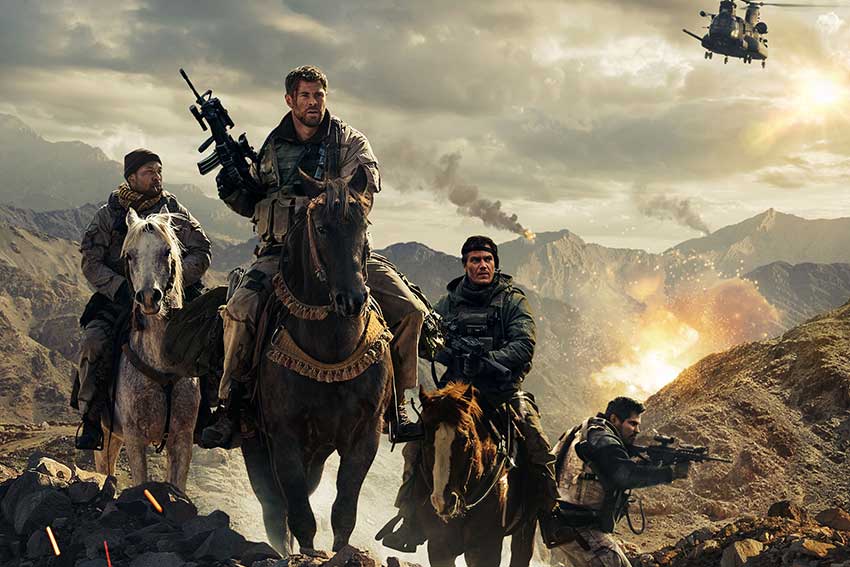
12 Strong tells a tale of extreme courage and heroism carried out by extremely courageous and heroic men. Like many films on a similar path, it sometimes struggles to navigate the overly familiar tropes that come with this territory.

In the weeks immediately after 9/11, the special forces team now known as the “Horse Soldiers” were the first deployed into Afghanistan. A dozen men, led by Captain Mitch Nelson (Chris Hemsworth, charismatic as usual), joined the soldiers under Afghan warlord General Dostum (Navid Negahban) in an attempt to take back a Taliban stronghold.

Director Nicolai Fuglsig, helming just his second feature, teams with experienced screenwriters Ted Tally (Silence of the Lambs) and Peter Craig (The Town) to adapt Doug Stanton’s book with alternating layers of nuance and shallow cliche.

The men are tough, stoic, and bound by the brotherhood of battle. Their women and children back home must stiffen their lips and hold heads high while they long for their husbands and fathers to return. These traits are not weaknesses in the real world, far from it, but incorporating them into a big screen narrative without the essence of checking off obligatory character-building boxes has become a common obstacle that 12 Strong can’t overcome.

But almost every time you’re ready to give up on it, the film rebounds with a surprise. While there’s far too much exposition dialog, with the characters explaining things to the audience rather than talking realistically, there are also quiet moments that resonate. Dostum’s reminder to Nelson that he may already have a life “better than the afterlife” underscores the film’s success in showcasing the effective teamwork and diplomacy that emerged in the mission, despite the culture clash.

The ensemble supporting cast is loaded with strength (Michael Shannon, Michael Pena, William Fichtner, Moonlight‘s Trevante Rhodes), and Fuglsig finds his footing after a by-the-numbers start, rolling out some tense, gritty, and well-plotted battle scenes for a rousing finale.

The Horse Soldiers earned their statue at the 9/11 Memorial site, and 12 Strong is a well-deserved salute. It’s always watchable but also muddled, and too often chooses broad strokes over finer, more memorable points.

The Year of Living Politically

The Final Year

by George Wolf

It may be an often misused phrase, but if you’d like an example of someone literally at a loss for words, you’ll find it in The Final Year.

Ben Rhodes, senior advisor to President Barack Obama, is trying to come to grips with the fact that Donald J. Trump had just become President-Elect of the United States. Rhodes tries several times to process a comment, and cannot.

It’s a striking sequence of an entire administration caught by horrific surprise, one of many indelible moments in director Greg Barker’s compelling look inside the final twelve months of the Obama presidency. Beyond the press conferences and photo ops, the film celebrates the daily grind of governing, and builds an ironic vibrancy from the slow and often frustrating march of persistence.

The goal is Obama’s vision of a “global common humanity,” and as the months wind down, we get close to the key players on his foreign policy team: Secretary of State John Kerry, UN Ambassador Samantha Power, National Security Advisor Susan Rice, and Rhodes.

It’s The West Wing with very real, incredibly high stakes, and from the Iranian nuclear treaty to the Syrian conflict, from the Paris climate accords to Boko Haram, we witness a commitment to progress that might be…steady…”harder to dismantle if we take a different turn.”

Which, of course, we did, a fact that lays bare the anchor in this film that’s as bittersweet as it is inescapable. Government needs people this committed, this intelligent, this qualified, this decent, and right now they seem in damn short supply.

Is Barker selective about what sides of his subjects we’re permitted to see? For sure, as that’s what a director does. But whether your political lean is left or right, the suspicion that Barker’s sitting on video of Obama bragging about sexual assault or calling some country a “shithole” would occur only to the most rabid of Hannitys.

It adds up to a fascinating, fly-on-the-wall account of 2016 that arrives already feeling like a freshly opened time capsule from some faraway yesteryear, a magical time when Presidents might have actually cared about other people.


I Don’t Want to Go Out – Week of January 15

A couple of middling horror movies are available this week in home entertainment. Well, one is middling—nothing amazing, but better than expected. The other is a colossal waste of talent in a jumbled mess of a nonsensical plot. Oof!

Click the film title for the full review.

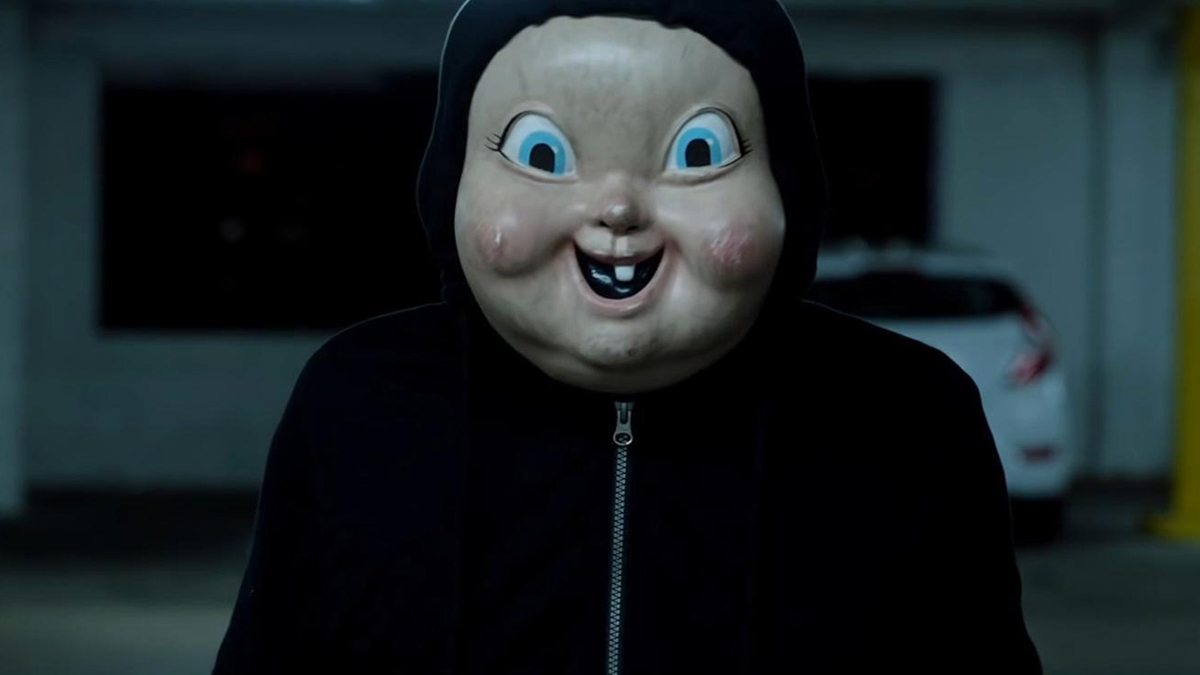
Happy Death Day

The Snowman

Fright Club: Sex + Death

I know what you’re thinking. Sex and death—that could be literally any film in the genre. Aaah, yes, but we’re not talking metaphorically or even loosely connected. Sure, the quickest way onto Michael Meyers’s or Jason Voorhees’s kill list is by having sex, but that’s not immediate enough. Let’s disregard the middle man, lose the pause, and go right to the horror films where sex and death are immediately, gorily and irreversibly linked.

Happy Valentine’s Day, by the way!

5. Killer Condom (1996)

A Troma-distributed splatter/horror/comedy, Killer Condom is an enormous amount of fun. This is a German film—German actors delivering lines in German—but it’s set in NYC. You can tell because of the frequent shots of someone opening a New York Times newspaper machine.

Luigi Mackeroni (Udo Samel) is the grizzled NYC detective who longs for the good old days in Sicily. In German. He’s assigned to a crime scene in a seedy Time Square motel he knows too well, where it appears that women just keep biting off men’s penises.

Or do they?

This film is refreshingly gay, to start with, as nearly every major character in the film is a homosexual. The run-of-the-mill way this is handled is admirable, even when it is used for cheap laughs. (Babette, I’m looking at you).

It’s fun. It’s funny. It’s gory and wrong-headed and entertaining from start to finish. Who’d have guessed?

4. Teeth (2007)

Of all the films built on the hysteria of impending womanhood, few are as specific as Teeth, a film in which a pubescent discovers a sharp set where teeth ought not be. This is a dark comedy and social satire that is uncomfortable to watch no matter your gender, although I imagine it may be a bit rougher on men.

Treading on the dread of coming-of-age and turning male-oriented horror clichés on ear, Teeth uses the metaphor implicit in vagina dentata—a myth originated to bespeak the fear of castration—to craft a parable about the dangers as well as the power of sexual awakening.

Written and directed by artist (and Ohioan!) Roy Lichtenstein’s son Mitchell, Teeth boasts an irreverent if symbol-heavy script with a strong and believable lead performance (Jess Weixler).

Weixler’s evolution from naïveté to shock to guilt to empowerment never ceases to captivate, but the story itself settles for something more conventional and predictable than what the shockingly original first two acts suggest.

3. Trouble Every Day (2001)

Backed by a plaintive, spooky soundtrack by Tindersticks, Clair Denis’s metaphorical erotic horror examines gender roles, sex and hunger. Denis is one of France’s more awarded and appreciated auteurs, so a one-time voyage into horror should not be dismissed.

A newlywed American couple head to Paris, ostensibly to honeymoon, but Shane (Vincent Gallo) is really there to re-establish connection with old colleagues Coré (Béatrice Dalle) and her husband, Léo (Alex Descas). The three scientists once participated in an experiment, and Shane needs to find them.

The film is a startling work of biologic-horror, but its existential riffs on intimacy, dominance and violence—common fare in the genre—are clearer-headed and more disturbing here than in anything else that swims the same murky waters.

https://www.youtube.com/watch?v=oz5VlZc8tC4

2. Raw (2016)

What you’ll find in first-time filmmaker Julia Ducournau’s Raw is a thoughtful coming-of-age tale. And meat.

A college freshman and vegetarian from a meat-free family, Justine (Garance Marillier) objects to the hazing ritual of eating a piece of raw meat. But once she submits to peer pressure and tastes that taboo, her appetite is awakened and it will take more and more dangerous, self-destructive acts to indulge her blood lust.

The film often feels like a cross between Trouble Every Day and Anatomy. The latter, a German film from 2000, follows a prudish med student dealing with carnage and peer pressure. In the former, France’s Claire Denis directs a troubling parable combining sexual desire and cannibalism.

Ducournau has her cagey way with the same themes that populate any coming-of-age story – pressure to conform, peer pressure generally, societal order and sexual hysteria. Here all take on a sly, macabre humor that’s both refreshing and unsettling.

1. It Follows (2014)

It Follows is yet another coming-of-age tale, one that mines a primal terror. Moments after a sexual encounter with a new boyfriend, Jay (Maika Monroe) discovers that she is cursed. He has passed on some kind of entity – a demonic menace that will follow her until it either kills her or she passes it on to someone else the same way she got it.

Yes, it’s the STD or horror movies, but don’t let that dissuade you. Mitchell understands the anxiety of adolescence and he has not simply crafted yet another cautionary tale about premarital sex.

Mitchell has captured that fleeting yet dragging moment between childhood and adulthood and given the lurking dread of that time of life a powerful image. There is something that lies just beyond the innocence of youth. You feel it in every frame and begin to look out for it, walking toward you at a consistent pace, long before the characters have begun to check the periphery themselves.

Mitchell’s provocatively murky subtext is rich with symbolism but never overwhelmed by it. His capacity to draw an audience into this environment, this horror, is impeccable, and the result is a lingering sense of unease that will have you checking the perimeter for a while to come.