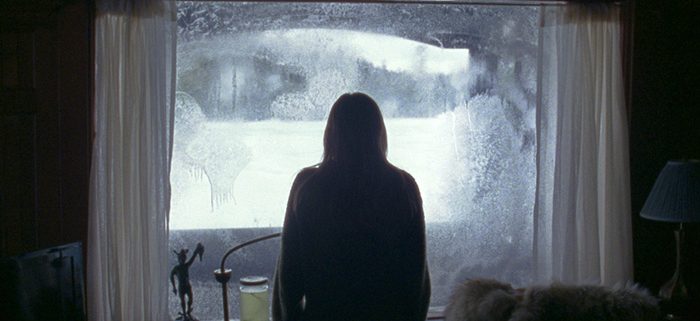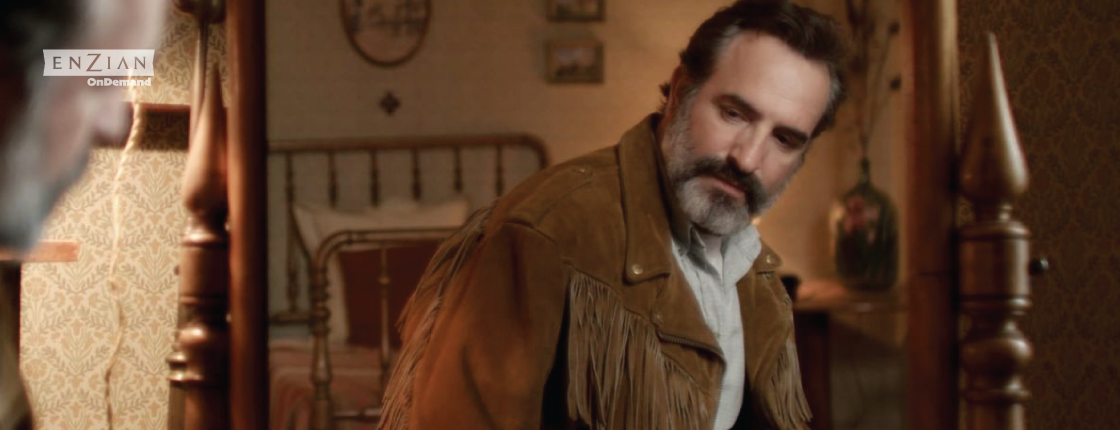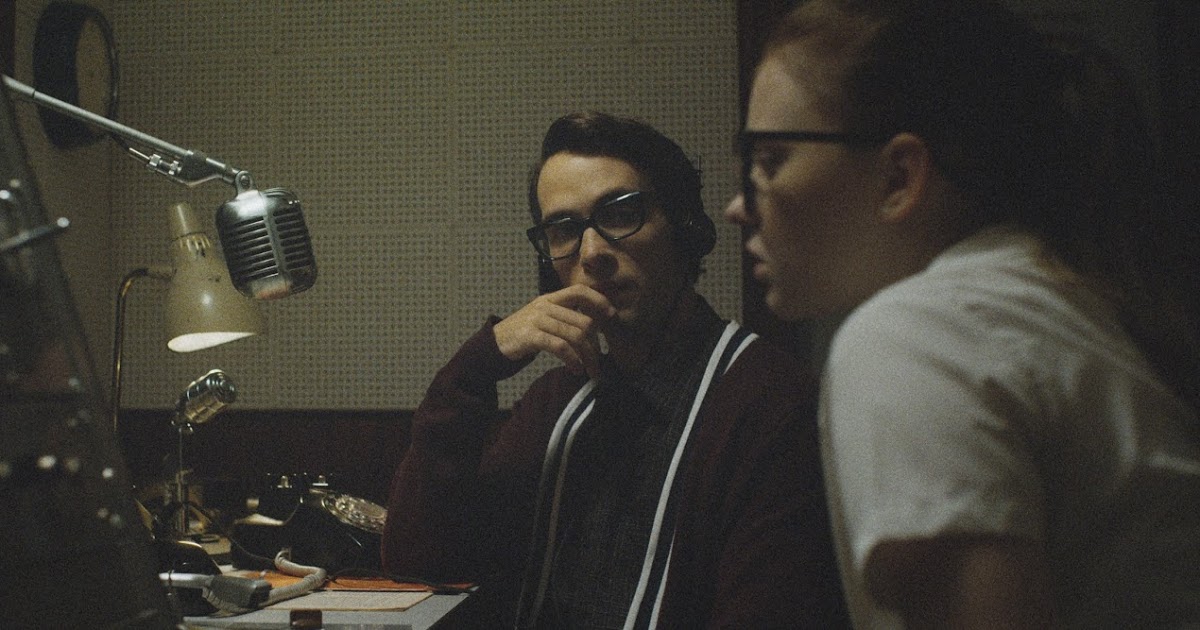
Tag Archives: Screen Wolf

Angels Assemble

Charlie’s Angels

by George Wolf

We’ll know soon enough if there was high demand for a new Charlie’s Angels film. But 16 years after the close of the Drew Barrymore version, Elizabeth Banks apparently thought she could bring the franchise a welcome freshness.

She was right, mostly.

As writer, director and co-star, she’s a Banks of all trades, and just one of the Bosleys assisting a team of Angels. In this Charlie universe, “Bosley” is a rank, not a name, with famous faces such as Patrick Stewart, Djimon Hounsou and even Michael Strahan as some manner of Boz.

But it is Banks’s Bosley that is on the case when Angels Sabina (Kristen Stewart) and Jane (Ella Balinska) must protect Elena (Naomi Scott), a brilliant systems engineer who stands between bad guys and some lethal new technology.

Even with its updated vibe, Banks’s vision seems more in line with the original TV series (12 year-old me was a big fan). Barrymore’s films did bring some charm, but too often treated style as weapon of submission. The feeling this time is more of an easygoing wink-wink, with plenty of callbacks to franchise history and some well-staged battle angel set pieces.

There’s plenty of girl power, too, and while these Angels aren’t first to that party, they fit in quite nicely. They value friendships, they own their sexuality without being sexualized, they’re skilled, strong and always ready to rib each other about awkward flirting or a love of cheese.

Even with the surprises and fake outs it holds, the spy story is a bit too slight to support a full two hours. But, no surprise, it is worth staying for credits that offer plenty of smile-inducing cameos.

Banks deals plenty of hands with Charlie’s Angels, overplaying none but the running time. So while it’s not a laugh riot, it is self-aware and amusing, its action heavy without undue disbelief and it feels like a reboot we needed, whether we realized it or not.


House Painting

The Irishman

by Hope Madden and George Wolf

In 1973, Martin Scorsese gave us Mean Streets, the tale of a fledgeling gangster contemplating the rungs that could lead him to the top of the NYC mafia. The film takes the point of view of the young man looking forward, and it boasts a supernaturally brilliant performance by Robert De Niro, then 30-years-old.

Scorsese’s latest, The Irishman, looks at a gangster’s rise through those same ranks, this time with the eyes of an old man looking back on his life. In another performance that will remind you of his prowess, a 76-year-old De Niro stars.

The 3 ½ hour running time opens patiently enough as Rodrigo Prieto’s camera winds its way through the halls of a nursing home, establishing a pattern. We will be meandering likewise through the life and memories of Frank Sheeran (De Niro), house painter.

“When I was young,” says Sheeran, “I thought house painters painted houses.”

Sheeran’s telling us his tale in much the way the actual Frank Sheeran told writer Charles Brandt (author of Scorsese’s source material) what may or may not have been the truth about his history as a mob hitman (it’s not paint he’s splashing across walls) and his relationship with Jimmy Hoffa (Al Pacino).

Teamed with acclaimed screenwriter Steven Zaillian (Schindler’s List, Moneyball, Gangs of New York), Scorsese’s sly delivery suggests that he’s interested in what might have happened to Hoffa, sure, but he’s more intrigued by memory, regret and revisionism in the cold glare of time. The result is sometimes surprisingly funny, with a wistful, lived-in humor that more than suits the film’s greying perspective.

De Niro’s longtime partnership with Scorsese makes it even easier to view Sheeran as an extension of the director himself, taking stock of his legacy in film.

The decades-spanning narrative could have easily made for a riveting Netflix series instead of one three and a half hour feature, but as the first act blends into the second, the film has you. The grip is subtle but it is more than firm, the epic storytelling and nuanced performances combining for an absorbing experience that takes your mind off the clock.

And what a joy to watch three powerhouses in the ring together.

Joe Pesci, playing against type as Russell Bufalino, the quiet mafia boss who mentors Sheeran, is as good as he’s ever been. Pacino fills Hoffa with an electric mix of dangerous bravado, unapologetic corruption and dogged sincerity. And De Niro, like that aging fighter reclaiming his title, gives The Irishman its deep, introspective soul.

And while the trio of legends is commanding the screen, Scorsese uses a small supporting role to remind us he can still speak softly and hit hard.

As Peggy Sheeran, the elder daughter who has watched her father evolve into the man he is, Anna Paquin is piercing, and almost entirely silent. When Peggy finally speaks, she asks her father a direct question that carries the weight of a lifetime behind it, and serves as the perfect conduit to drive the film to its aching conclusion.

Away from the chatter of Scorsese’s views on superhero movies or the proper role of Netflix, The Irishman stands as a testament to cinematic storytelling, and to how much power four old warhorses can still harness.

I Don’t Want to Go Out – Week of November 11

Tons of movies to fill your “I forgot how cold and crappy fall could be” hours. Some of these movies are great. Some of them are crap. We are here to help you tell the difference.

Click the film title to link to the full review.

The Farewell

Midnight Traveler

The Peanut Butter Falcon

Good Boys

47 Meters Down: Uncaged

https://www.youtube.com/watch?v=AvXjx8SZbv8

Brian Banks

Primal

After the Wedding

Bombs Away

Midway

by George Wolf

After Independence Day, 2012, The Day After Tomorrow and more, the book on Roland Emmerich is fairly easy to read: expect spectacle over storytelling.

Midway is Emmerich’s latest, and that checks out.

A grand production respectfully dedicated to the American and Japanese forces that fought the legendary battle, the film does have heart in all the right places. But too often, it feels more inspired by war movies than the real thing.

Patrick Wilson is Edwin Layton, whose description as “the best intelligence officer I’ve ever known” gives us an early introduction into screenwriter Wes Tooke’s plan for character development.

“I told you she was a firecracker!”

“He’s the most brilliant man I know.”

“Best pilot in the world!”

“Knock off the cowboy b.s.!”

Layton still feels guilty about the intelligence failures of Pearl Harbor, and he pleads with Admiral Nimitz (Woody Harrelson) to trust his prediction of an upcoming Japanese invasion of Midway Island.

Names such as Nimitz and Halsey (Dennis Quaid) may be the only ones familiar to non history buffs, but no matter, none of the characters feel real anyway. They’re just humans who pose nicely while spouting the dialog of actors explaining things to an audience.

So much for the storytelling, now for the spectacle.

It’s pretty damn thrilling.

When the battles are raging, especially in the air, Midway soars. Constructed with precision and clarity, these extended set pieces allow Emmerich to indulge his showy instincts for maximum payoff.

Director John Ford famously filmed on Midway Island while the battle took shape. Emmerich and Tooke don’t ignore that fact, a not so subtle reminder that this is their movie about war, and they’re going big!

And about half the time, that’s not a bad thing.

When it needs to be big, this film is huge, detailed and epic. But when it needs to be small, and make this history breathe again through intimate authenticity of the souls that lived and died in it, Midway just can’t stop flexing.

What’s Up, Doc?

Doctor Sleep

by Hope Madden and George Wolf

The Shining was always going to be a hard act to follow, even for Stephen King.

But as soon as King revisited the horror with Doctor Sleep, the bigger challenge instantly fell to whomever was tasked with bringing it to the screen.

That would be writer/director Mike Flanagan, who’s trying on two pairs of pretty big shoes. His vision will not only be judged next to one of the most iconic horror films of all time, but also by the source author who famously doesn’t like that film.

While Doctor Sleep does often feel as if Flanagan is trying to serve two (or more) masters, it ultimately finds enough common ground to become an effective, if only mildly frightening return trip.

After surviving the attempted redrum, adult Dan Torrence (Ewan McGregor) is struggling to stay clean and sober. He’s quietly earning his chips, and is even enjoying a long distance “shine” relationship with the teenaged Abra (Kyliegh Curran).

But Abra and her unusually advanced gifts have also attracted the attention of Rose the Hat (Rebecca Ferguson, sweetly menacing) and her cult of undead travelers. Similarly gifted, Rose and her band seek out young shiners, feeding on their powers to remain immortal.

Flanagan breaks the spooky spell to dive into terror in a truly unnerving sequence between Ferguson’s gang and a shiny little baseball player (Jacob Tremblay). Effectively gritty and hard to shake, it is the one moment the film fully embraces its horror lineage.

Reportedly, Flanagan had to convince King that it is Kubrick’s version of The Shining that reigns in popular culture (as it should), and that their new film should reflect that. Smart move, as is the choice to hit you early with lookalike actors in those famous roles from 1980.

Is it jarring seeing new faces as young Danny, Wendy, Dick Halloran and more? Yes it is, but as the film unfolds you see Flanagan had little choice but to go that route, and better to get comfy with it by the time Dan is back among the ghosts of the Overlook hotel.

King has made it clear he needed more emotional connection to his characters than Kubrick’s film provided. McGregor helps bridge that gap, finding a childlike quality beneath the ugly, protective layers that have kept Danny Torrence from dealing with a horrific past.

Flanagan (Oculus, Hush, Before I Wake, Gerald’s Game) stumbles most when he relies on awkward (and in some cases, needless) exposition to clarify and articulate answers. Kubrick was stingy in that regard, which was one of The Shining‘s great strengths. Questions are scary, answers seldom are.

Whatever the film’s setbacks and faults, it is good fun getting back to the Overlook and catching the many Shining callbacks (including a cameo from Danny Lloyd, the original Danny Torrence). Flanagan’s vision does suffer by comparison, but how could it not? Give him credit for ignoring that fact and diving in, leaving no question that he’s as eager to see what’s around each corner as we are.

Doctor Sleep can’t match the claustrophobic nature or the vision of cold, creeping dread Kubrick developed. This film often tries too hard to please—not a phrase you’d associate with the 1980 film. The result is a movie that never seems to truly find its own voice.

It’s no masterpiece, but check in and you’ll find a satisfying, generally spooky time.

I Don’t Want to Go Out

Bunches of movies available for couch watching this week, most of them worthy of exactly that. Here is the scoop.

Click the film title for the full reviews.

Scary Stories to Tell in the Dark

The Kitchen

Hobbs & Shaw

Ophelia (DVD)

Paradise Hills

Fright Club Bonus: Elvira!

Who doesn’t love bonus content? Well, hopefully you do because here it is! We had the chance to talk with Elvira, and we dug into the most vital of topics: How cool is Pee-wee, what’s her go-to Halloween costume, and why did she have to call riot police?

Those answers and more in our special bonus Fright Club!

Screening Room: Terminator: Dark Fate, Parasite, Jojo Rabbit, Harriet, Greener Grass, Where’s My Roy Cohn:, Girl on the 3rd Floor

Hello, Old Friends

Terminator: Dark Fate

by George Wolf

I know it’s sounds about as insightful as “feel good movie of the year,” but Dark Fate really is the Terminator sequel we’ve been waiting for. Its fast- paced and thrilling, surprisingly funny, and manages to honor our investment in two classic characters while it carves out a damn fine blueprint for updating a warhorse.

After re-connecting us with T2: Judgment Day via some crazy good de-aging technology that apparently wasn’t shared with Gemini Man, Dark Fate gives us a future savior that must be protected.

She’s Dani (Natalia Reyes from Birds of Passage), a Mexico City factory worker being hunted by the latest and greatest Terminator, the Rev 9 (Gabriel Luna). But Dani has Grace (Tully‘s Mackenzie Davis, terrific), an “augmented” human from the year 2042 to protect her, plus a new friend with a long history of battling Terminators.

With the most badass entrance since Ripley wore the loader, Linda Hamilton is back as Sarah Connor, instantly giving Dark Fate enough juice to send all the sequels without her to a time of wind and ghosts.

But director Tim Miller is just getting started. The action-filled set pieces keep coming, each one surpassing the last and bursting with the stylized energy he brought to Deadpool.

Need to catch your breath? Oh, look it’s Arnold.

We knew he’d be back, but we didn’t expect him as a T-800 model living a quiet family life as “Carl,” and selling high quality draperies at rock-bottom prices. He’s a stone-faced hoot, and when Carl and Sarah get back in their guns blazing, side by side saddles, just try to keep the nostalgic smile off your face.

But even with all this surface level fun, the film’s secret weapon is a script from David S. Goyer, Justin Rhodes and Billy Ray that’s heady enough to wonder if they got an early look at Rambo: Last Blood and thought a 2019 franchise revival that wasn’t offensively tone deaf might be nice. Each character has an arc to anchor it, and while the film is always mindful of how the future can be rewritten, the topical nods to border security and valuing women as more than birthing vessels are unmistakable.

OK, fine, there are a few clunky spots, some lower-grade CGI on the hyper-jumps and an (understandable) overconfidence in how much we want this to work.

But we do, and damn near all of it does, enough to make you hope they won’t be back.