Click HERE and join us in The Screening Room this week to break down Baby Driver, The Beguiled, Despicable Me 3, The House, The Bad Batch and what’s new on home video!
Click HERE and join us in The Screening Room this week to break down Baby Driver, The Beguiled, Despicable Me 3, The House, The Bad Batch and what’s new on home video!
by Hope Madden
Start to finish, the soundtrack-driven heist flick Baby Driver has a bright, infectious charm – and you can dance to it.
It needs to be good, though. The third film in as many years about a mixtape, a rag-tag gang and a dead mom, this movie needs to bring something genuinely mesmerizing.
If there is one thing writer/director Edger Wright knows how to do, it’s propel a film’s action. That’s hardly his only talent, but few excel here quite the way he does. Scene to scene, set piece to set piece, he makes sure your eyes and your ears are aware that things are moving at a quick clip.
Never has this been more true than with Baby Driver.
Wright edits in time with his expertly curated mix tape, creating a rhythm that keeps his lead dancing, his film moving, and his audience engaged.
The beats offer more than a gimmick to ensure the flick dances along – the tunes getaway driver Baby (Ansel Elgort) has buzzing through his ear buds give rhythm to his impressive high speed antics.
Baby is the one constant in the teams Doc (Kevin Spacey) assembles to pull off his jobs. A reluctant participant making good on a debt, Baby keeps his distance from the crew – whether it’s the oily Buddy (Jon Hamm, marvelous as ever), his sketchy girlfriend Darling, (Eiza Gonzales), or the straight-up psycho, Bats (Jamie Foxx – glad to see you in something worthwhile again).
Of course, the tension comes in when Baby tries to leave the robbery biz behind, egged on by feelings for the cute waitress at his favorite diner (Lily James).
If you’ve ever seen a movie, you’ll know that getting out is never easy.
Wright’s agile camera keeps tempo with his killer playlist. Whether back-dropping romance at the laundromat with gorgeous color and tongue-in-cheek visual call-backs, or boogying through back alleys, on-ramps and highways, Baby Driver is as tasty a feast for the eyes as it is the ears.
The game cast never drops a beat, playing characters with the right mix of goofiness and malice to be as fun or as terrifying as they need to be. For all its danceability, Wright’s film offers plenty of tension, too.
Like much of the filmmaker’s work, Baby Driver boasts a contagious pop mentality, intelligent wit and sweet heart.

by Hope Madden
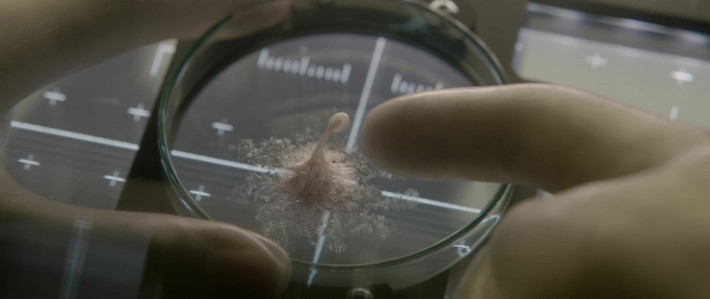
Three years ago, Ana Lily Amirpour dazzled moviegoers with her sleek and imaginative vampire fable A Girl Walks Home Alone at Night.
The film tells of a solitary female figure and the surprising impact of unlikely companionship. Amirpour called the film a “vampire western.”
If you haven’t seen the film (and you should, immediately), but you like the premise, then Amirpour’s follow up The Bad Batch might also appeal to you. It mines a similar vein, although the context is a bit more merciless.
The film’s provocative opening of mostly voiceover under credits introduces the concept of the “bad batch” – unwanteds. Drugs, immigration, petty crime – it’s never clear what this batch has been up to, but we know where they’re going. They’re headed to a quarantined expanse of arid Texas desert no longer considered part of These United States.
Once the images on screen take form, Amirpour creates an atmosphere of dystopian terror that the balance of the film never quite reaches again.
Newest resident Arlen (Suki Waterhouse – very impressive), realizes just how Mad Max this can get moments after gates are locked behind her. In a breathless and brutal piece of cinema, we are introduced to one of two communities thriving in this wasteland.
The Bridge People are hyper-bulked up, ultra-tanned cannibals represented by Miami Man (Jason Momoa). (They may not have access to steroids, but they’re certainly getting a lot of protein.)
The second community of Comfort offers a colorful, almost habitable environment led by charismatic leader The Dream (Keanu Reeves).
With these two communities, Amirpour moves very clearly into metaphorical territory, ideas she underscores nicely with strategic use of the American flag.
One version of America sees the vain, self-centered “winners” literally feeding on the weak. The second may seem more accepting, but it pushes religion, drugs and other “comforts” to encourage passivity.
It’s a clever but unwieldy storyline, and Amirpour has trouble concluding her tale.
She has a great cast, though. Joining Woodhouse, Momoa and Reeves are flashes of Jim Carrey, Giovanni Ribisi, Diego Luna and a host of the freakish and intriguing.
Amirpour has such a facility with creating mood and environment, and though the approach here is different than with her debut, she once again loads the soundtrack and screen with inspired images, sounds and idiosyncrasies.
Her opening sets such a high bar – one she fails to reach again – and her finale feels too conventional for this character and this world. They’re fairly slight criticisms, but with a filmmaker of such amazing talent, they can’t help but be a let-down.

Want to watch something at home? Wow – there’s one thing this week. One. But rest easy – there are like a million things next week, so we’ll just fixate on this one today and then next Tuesday, we’ll have the energy.
Here’s what you can find in new home entertainment. Click the title for a complete review. And as always, please use this information for good, not evil.

by Hope Madden
I did not have high expectations for this one, I’m not going to lie. Though the raunchy trailer offered a couple chuckles, I couldn’t help but think two things.
1) What is Scarlett Johansson doing in a “girls weekend” movie?
2) Isn’t this the same premise as Peter Berg’s 1998 black comedy Very Bad Things?
That first one is tough to answer, but the second is a very loud yes.
ScarJo plays Jess, wholesome politician lured into a bachelorette weekend with her college besties. She’s hoping for a quiet night, but she’s quickly guilted into binge drinking, casual drug use and, of course, a stripper.
Things get dark after that.
Yes, cinematic bachelor/bachelorette party zaniness is beyond tired. Still, there’s reason for hope. This cast, for instance.
Johansson is among the most talented and versatile actors working, as at ease with comedy as she is drama. Zoe Kravitz is strong as well, but the real reason for optimism is the rest of the party.
Kate McKinnon – flat out hilarious and able to steal scenes at will from anybody.
Ilana Glazer (Broad City) – effortlessly wrong-minded and hilarious.
Jillian Bell (Workaholics) – maybe the wrong-mindedest of them all.
The trio delivers, McKinnon in particular. Boasting that crazy-eye thing she does, as well as a ridiculous Aussie accent, her every moment on screen brings with it a “what exactly is she doing” quality that can’t help but infuse even flat scenes with a little electricity.
And there are flat scenes. Lucia Aniello makes her feature directing debut, working from a script she co-wrote with fellow Broad City alum Paul W. Downs (who also co-stars as Jess’s fiancé). Too much feels borrowed and several of the longer bits go nowhere.
But she and DownS are blessed with performers who know what to do with the material. Each creates a distinct and memorable personality. And the whole film has some fun at the expense of the state of Florida’s questionable laws.
There’s nothing new here. Honestly, nothing. But What Aniello and her talented cast do with a variety of set-ups is sometimes inspired and often very funny.
https://www.youtube.com/watch?v=jYkgQuqvaBg
by Hope Madden
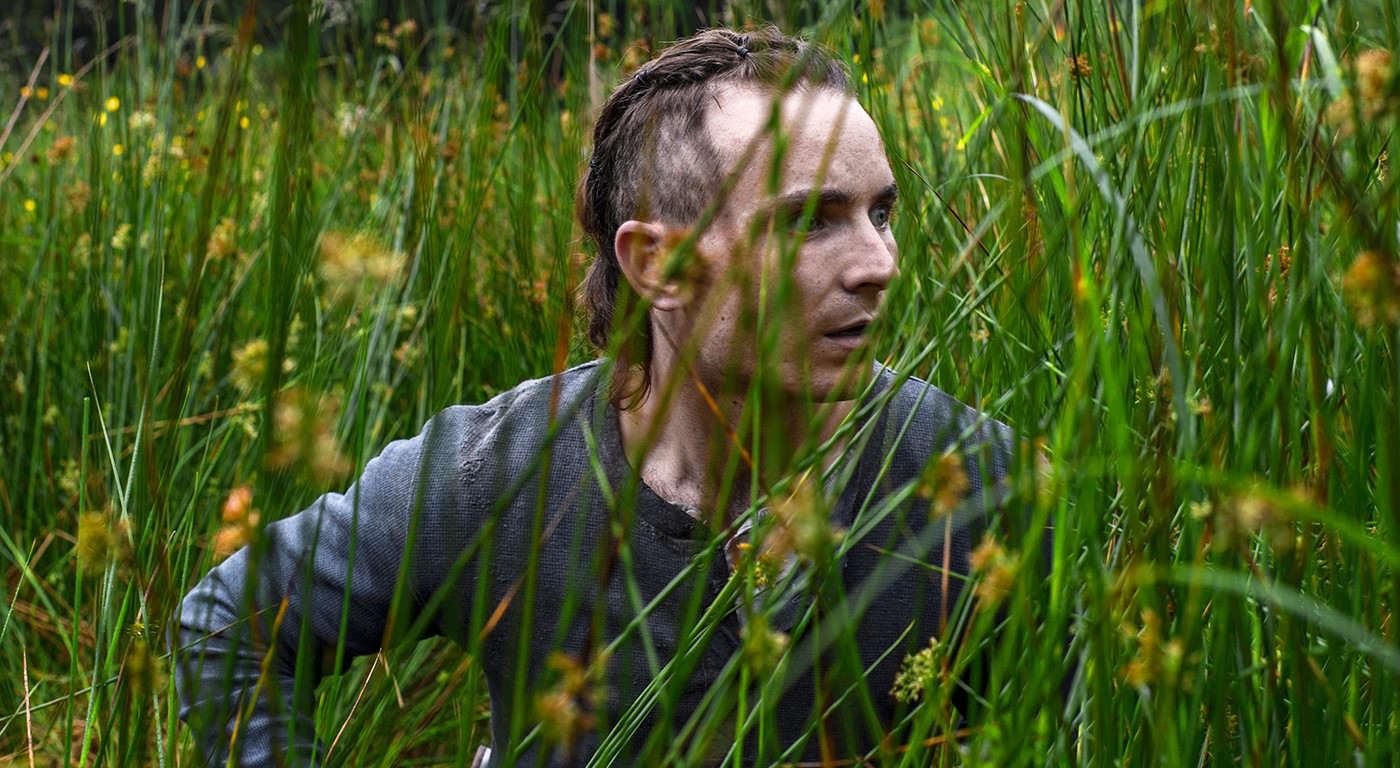
Lean, mean futuristic science fiction that feels unsettlingly like reality, The Survivalist ranks among the best dystopian films in recent memory. And as writer/director Stephen Fingleton creates an utterly plausible and devastatingly grim future, the film marks a first time filmmaker with an awful lot to say.
A solitary figure (Martin McCann – amazing) ekes out an existence in a shack hidden in the woods of Northern Ireland. His small field of crops is fertilized by the bodies of interlopers who happen upon him. He spends his days tending his vegetables and reinforcing his traps, but a haunted past and his own isolation are starting to wear at him.
Enter two hungry women: Kathryn (Olwen Fouere) and her daughter, Milja (Mia Goth).
His first inclination is to do with them what we’ve seen him do with others who come too close to his holdout. But he’s tempted, made an offer for something not necessary for survival. Something he wants more than he needs.
For Milja and her mother, this is still nothing more than survival, which is what puts the three people on different planes of existence. The survivalist (for we never do know his name) has entered the treacherous and vulnerable area of want, and then the even more dangerous ground of hope.
The shifting power and landscape of the relationships is fascinating, made all the more powerful for lack of dialog. Who is in control? The answer varies scene by scene.
The title could stand for any of the three, and this trio of performances consistently impresses.
Fingleton lingers on glances and body language to reinforce the pitiless practicality that has taken the place of civilization. McCann’s silent chemistry with each character offers more insight into his character than pages of dialog could, and he’s matched in his efforts – particularly by Fouere.
The film, like its protagonists, is unapologetically efficient. But Fingleton and his director of photography Damien Elliott occasionally offer a glimpse of the beauty left in this dystopia – a beauty that existed long before and will persist long after man’s involvement.
Together, cast and crew trap you in slow-boil of primal instincts with an explosion the inevitable consequence.
by Hope Madden
One special girl + a solitary, attentive, very cute boy + contrivance that keeps them apart = every single adolescent drama made in the last decade.
Director Stella Meghie can do that math. For Everything, Everything, she works from the YA novel by Nicola Yoon, adapted for the screen by the adequate emotional manipulator J. Mills Goodloe (Best of Me, The Age of Adaline).
The film updates that Boy in a Plastic Bubble TV movie John Travolta made back in the day, here with a perky adolescent girl named Maddy (Amandla Stenberg) whose rare immune deficiency keeps her locked away inside her sterile home.
Then Dreamboat Olly (Nick Robinson) moves in next door.
Meghie and her cast deserve credit because their film has a sweet if utterly artificial charm to it. The handful of fantasy sequences set inside Maddy’s architecture models are appealing, as is the awkward and innocent chemistry between the leads.
Not one human being on earth has ever been this wholesome and adorable, but as YA lit flicks go, it could be much worse.
Tragedy looms darkly over most young adult romances – like a watered down Nicolas Sparks movie. Maddy’s ailment keeps death always in the periphery, but the film zigs when you think it will zag.
Meghie keeps almost everything restrained, which is both the film’s blessing and curse. Too often in movies of this ilk, the drama becomes so soapy as to be intolerable. Maddy’s coming-of-age choices feel more self-empowering than love struck, and her easygoing, forgiving nature keeps the tone just this side of angsty.
Thank you.
On the other hand, when the narrative takes a bizarre – almost diabolical – turn, that laid back approach feels neutered. Real rage is called for. Police intervention. A good slap, anyway.
But Meghie doesn’t indulge our lust for drama, which would be admirable if her film weren’t so bland.

by Hope Madden and George Wolf
“Do you want to serve in heaven or reign in hell?”
That’s just one of the big, existential questions Alien: Covenant has on its mind, though there’s plenty of blood as well, for those who thought Prometheus was a bit too head-trippy.
Director Ridley Scott returns to the helm of the iconic franchise he started, proving the years have done little to erode his skills at crafting tension or delivering visceral thrills.
Covenant picks up roughly ten years after the events of Prometheus, and this many sequels in, its inevitable that the franchise would fall victim to formula: a crew, most of whom we get to know only through intercom banter, lands somewhere, picks up an alien (or several), tries to get it off the ship. Quarantine protocol is rarely followed. (It is there for a reason, people!) Folks die in a most unpleasant way.
When Scott made Alien back in ’79, he made a straight genre flick, working from a script by horror go-to Dan O’Bannon. It gave Scott a career, though he didn’t return to the horror game for more than another two decades.
Meanwhile, the franchise took the action path, devolving eventually into the modern day equivalent of Werewolf Versus the Mummy.
Scott redirected that ship in 2012 when he regained control of the series, throwing off any ugliness in the sequel universe by making a prequel – one less interested in monsters than in gods. Prometheus may have been a mixed bag, but if there’s one thing this franchise delivers, it’s a great synthetic. Hello, Michael Fassbender.
Fassbender returns in Scott’s latest, bloodiest Alien effort, and he’s a lunatic genius. Playing both David, the synthetic from Prometheus, and a newer model named Walter, Fassbender delivers weighty lines with tearful panache, becoming more colorful, layered and interesting than anything else onscreen.
Strange then, that his charismatic performance almost hurts the film.
Why? Because we’re here for the aliens!
Yes, it is tough to keep a good xenomorph fresh for eight episodes, and Scott gives it a shot with new alien forms that wade into Guillermo del Toro territory . But there are too many variations, the incubation and bursting process is too expedited, the sources are too numerous – basically, there’s too much going on here and it’s diluting the terror.
And it is terror Scott is going for. There’s more carnage in Covenant than in Scott’s previous two Alien films combined, but he hasn’t entirely thrown the existential crisis overboard. Suffice it to say that we’re lead to a crossroads where a dying species is “grasping for resurrection.”
Scott wants us to ponder those themes of death and creation while we’re running from bloodthirsty monsters. It’s not always a perfect fit, but Alien: Covenant combats the overreach with enough primal thrills to be satisfying.
by Charlotte Orr
A ten foot tall demon, devil possessed mistresses, and lizard-like aliens. All promise a terrifying movie experience, but does The Dark Tapes succeed?
Vincent Guastani and Michael McQuown’s film is a found-footage anthology documenting “transdimensional entities.” The first couple stories are enjoyable – I’m glad they reserved the better actors for these sections.
The remaining stories, however, couldn’t keep my attention. Unfortunately, the acting quality distracted greatly from their plots.
It’s a good thing there isn’t much to miss out on anyway. The installment “cam girls” has some of the worst acting in the whole film. I have to give the actors some slack though, seeing as they didn’t have much to work with. The script was unbelievably bland and predictable.
Same goes for “Amanda’s Revenge,” which gives little explanation as to what exactly is going on. This would normally be fine as long as enough is given to allow the viewer to run free with their own conclusions, but there just isn’t enough substance to formulate one’s own theories.
Each storyline in this film goes for the unexpected twist at the end, and these two simply fail to surprise.
With that aside, not every short in the anthology is lacking. The complex science behind the “To Catch a Demon” storyline required all my attention, and the eerily convincing demon was able to keep it. Kudos goes to Guastani for special effects and creature design.
The end of “The Hunters and the Hunted” left me pleasantly surprised. Initially my notes read, “not unlike every other ghost hunting film.” Which I subsequently had to cross out after a major twist.
The Dark Tapes proudly states that it’s the found-footage horror movie with the second most awards and nominations, coming in at 61. As a whole, this film failed to be up to par with others in the genre, such as Paranormal Activity.
It certainly was a valiant effort, but they should have focused on those couple storylines with potential and ditched the rest.

by Rachel Willis
When you think of a city, what is the first image that comes to mind? Great buildings rising into the sky or masses of people living, working and playing on the streets and sidewalks?
These two ideas form the diametrically opposing viewpoints of city planning and urban development at the heart of the documentary, Citizen Jane: Battle for the City.
The focus of Matt Tyrnauer’s doc is Jane Jacobs, a writer who studied urban development and the negative effects of urban renewal on formerly vibrant city centers. Her book, The Death and Life of Great American Cities, highlighted the ways the “top-down” approach to urban development ruined cities. Jacobs’s observations were based on her own experiences living in Greenwich Village, and on the large urban planning projects helmed by New York’s city planner, Robert Moses.
Using extensive archival footage, Tyrnauer paints the history of New York’s reconstruction starting at the end of World War II. Coming out of the Great Depression, the leaders of New York were eager to revive the city. For them, Moses was the man to undertake the massive project.
Citizen Jane highlights the detriment Moses’s plans brought to the people living and working in New York. Unfortunately, New York wasn’t the only city affected. Across the United States and the world, Moses’s vision was replicated.
Jacobs believed in a “bottom-up” approach to city development. Rather than taking a macro view, she advocated talking to the people who made up the city’s neighborhoods and using their input to move forward.
The documentary’s many interviews with architects, city planners, and historians back Jacobs’s views. Scenes of empty apartment buildings, desolate streets, and cities dissected by sprawling highways underscore the failure of Moses’s plans. On paper, the cities look vibrant, but in reality, they’re empty shells.
The cinematography blends well with the story Tyrnauer tells. Cities are portrayed as living, breathing ecosystems, emphasizing Jacobs’s writing. It’s clear that Tyrnauer understands the city as Jacobs saw it.
For both, the city isn’t a lifeless collection of buildings; it’s the vibrant heart that beats in the people who live there.