Tag Archives: movies

I Don’t Want to Go Out: Week of August 7

Summer bombs worm their way into the home entertainment market, but so do a couple of intriguing indies. Choose wisely.

Click the title for a full review. And as always, please use this information for good, not evil.

The Transfiguration

The Transfiguration

Verdict-3-5-Stars

The Dinner

Verdict-3-0-Stars

Snatched

Verdict-2-5-Stars

King Arthur: Legend of the Sword

Verdict-2-0-Stars

“It” Looks Good, though, Right?

The Dark Tower

by Hope Madden

So, there’s this tower, see. And it sits at the center of all the parallel worlds of the universe and as long as it stands, it keeps the monsters away. Why? How did it get there? No time!

Anyhoo, an evildoer (Matthew McConaughey) wants to knock it down, let in the monsters and rule it all. But there’s this kid – you know what, let me not summarize what amounts to little more than a summary in the first place. Suffice it to say, The Dark Tower is not very good.

There are a lot of bad Stephen King movies. But even Dreamcatcher, The Night Flier and Sleepwalkers (three of the worst) offered a sort of B-movie charm. The Dark Tower is not even the fun kind of bad. It’s tedious, lumbering and schmaltzy, visually unappealing, narratively embarrassing and a woeful waste of Idris Elba.

McConaughey, on the other hand, makes the most of his time onscreen as Walter – which is a much funnier name for the prince of darkness than Man in Black. As the antagonist, he brandishes a restrained evil and moves with a little swagger, plus there’s that wig. Glorious! Real Shatner – hell, even Travolta-esque.

But McConaughey and Elba – true talents, no doubt – are hamstrung from the beginning by the production’s meat-cleaver-and-band-aid approach to screenwriting.

Nobody is more convinced than I am that Stephen King uses too damn many words. Too damn many! Succinct he will never be. But to believe you can boil his multi-volume, many-thousand-page Dark Tower series into a coherent 90 minutes is just brazen idiocy. No offense to the team of writers working on the adaptation – some of whom have talent; the other one is Akiva Goldsman.

Director Nikolaj Arcel (A Royal Affair– also credited with writing) is zero help, managing to take this Cliff’s Notes version of King’s prose and still produce something bloated and slow.

I remember reviewing the Tom Cruise debacle The Mummy earlier this year and thinking, this isn’t even any fun, it’s just bad. Dark Tower makes The Mummy feel like a rollicking good time.

But, hey, the trailers for It look great, don’t they?

Verdict-1-5-Stars

Still Just a Rat in a Cage

Some Freaks

by Christie Robb

High school, amirite? Setting of so many movies: The Breakfast Club, Heathers, Clueless, Mean Girls… and lately, Some Freaks, written and directed by Ian MacAllister McDonald.

McDonald’s perspective on high school is bleak, lonely. The other kids whisper about you behind your back, when not being physically menacing. The adults are absent. And even your closest friends are kind of douchey, sensing your weak spots and needling them under the guise of jokes.

The action starts with a one-eyed dude named Matt (Thomas Mann), who is stalked by classmates desperate to see what’s under the eyepatch. And maybe capture a photo of the gaping hole to upload to the internet.

He’s partnered up with the new girl, Jill (Lily Mae Harrington), to dissect a fetal pig in biology. Turns out she’s related to his only friend Elmo (Ely Henry), a fast-talking wannabe popular kid who monologues about getting into his jock crush’s gym shorts, but is quick to lash out at anyone but Matt who seems clued into his sexuality.

After school, Matt and Elmo chat while playing video games on Elmo’s couch, sharing some misogynistic fat girl jokes. Then Jill walks in.

She’s living with Elmo’s family for a while. She’s fat – and the clear butt of the jokes. But she just lets it slide. Jill has clearly been putting up with this bullshit for years and has a fairly thick skin when it comes to sexism and body shaming.

With this auspicious beginning, Jill and Matt stumble into the sort of romantic relationship you have when your main reason for being there is to put a temporary patch on the gaping wound of your own loneliness and poor self-esteem.

Jill flies across country to college, but Jill and Matt take their relationship long distance with Jill sending Matt provocative selfies.

After six months, Matt flies out, step one in his plan to move in with Jill permanently. She’s lost 50 pounds, changed her formerly green hair to a sunny blonde, and traded in her punk gear for a more boho vibe. All the photos she’d sent him were taken before her transformation. He hates it.

Unwilling to let Jill change, Matt attempts to regain the status quo. A quo in which Matt was the only man who could find her attractive (besides “elderly degenerates”), and thus, had no competition. No reason to think about how he measures up to other guys.

Contrary to movies like John Hughes’s The Breakfast Club, the coming together of these teenage misfits doesn’t do much to bond them and bolster their self-esteem. Instead, each of the central characters remains isolated with their own damage, even if sometimes physically close. Their very proximity gives them increased ability to wound each other.

The climax of the film, in which each character attends a party that provides a setting for them to confront their greatest insecurities, seems a little contrived. Some characters are underwritten, making their motivations in these moments a bit confusing.

However, the film is well acted. Each member of the cast does a decent job of portraying their character as a mixture of victim and aggressor. Harrington stands out, providing emotional depth behind her wariness and verbal armor, undergoing an impressive physical transformation for the role.

Some Freaks does not provide a cheery John Hughes ending, but may be a more authentic representation of the high school experience for some.

Verdict-3-0-Stars

https://www.youtube.com/watch?v=WFtR28a6Qf8

I Don’t Want to Go Out – Week of August 1

Damn, a lot of stuff is coming out for home enjoyment this week – much of it is not at all enjoyable, though, so there’s that. What should you watch? Let us help you make that call.

Click the title for a full review. And as always, please use this information for good, not evil.

The Lovers

Verdict-4-0-Stars

Colossal

Verdict-3-5-Stars

Wakefield

Verdict-3-0-Stars

Sleight

Verdict-2-5-Stars

The Circle

Verdict-2-5-Stars

Going in Style

Verdict-2-0-Stars

The Ottoman Lieutenant

Verdict-2-0-Stars

Don’t Knock Twice

Verdict-2-0-Stars


Coasting on Good Looks

Valerian and the City of a Thousand Planets

by Hope Madden

There is a pleasantly madcap quality to the environments filmmaker Luc Besson creates. His best work combines that untamed world – whether earthbound and criminal or colorfully intergalactic – with unusual characters performing slickly choreographed action.

His lesser efforts don’t. On that note, meet Valerian and the City of a Thousand Planets.

Based on France’s beloved comic series about a pair of time and space-hopping agents, Besson’s film looks pretty cool.

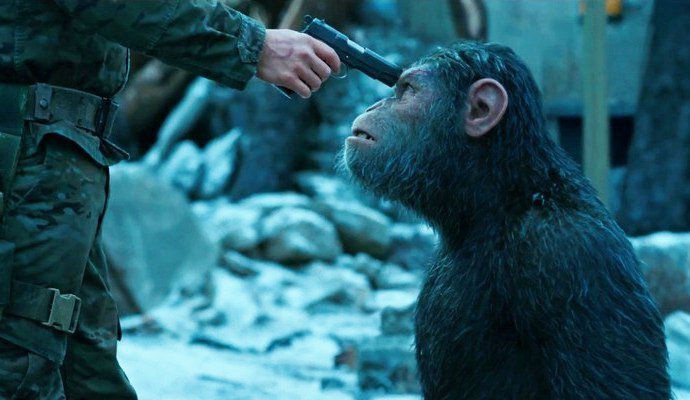
Not as good as Christopher Nolan’s Dunkirk, or Matt Reeves’s War for the Planet of the Apes, or Spider-Man: Homecoming or Baby Driver or about one out of every three movies released so far this summer.

At this point in cinematic history, you have to bring more to the screen than visual flair.

What else you got, Luc?

Because it’s not acting.

Dane DeHaan plays Valerian. Poorly. Wildly miscast as the scoundrel flyboy who might find love with his partner, the often reliable actor cannot make his way through Besson’s stilted, lifeless banter.

DeHaan has a better time of it than Cara Delevingne as Valerian’s strong-willed partner Laureline – perhaps because Delevingne has no discernible talent.

Still, the writing is awful and she’d be in a tough spot even if she did have talent. Just ask Clive Owen. He has talent galore and even he embarrasses himself with this garbage.

To be fair, Valerian is basically a kids’ movie. Except for that extended and utterly needless stripper sequence showcasing Rihanna. But if you cut that out (if only we could – along with at least another 15 minutes, because damn this movie is long!), then you basically have a kids’ movie.

Not a good one. So just don’t set your standards too high. Go in looking for an overly long, addle-brained extra-terrestrial romp that looks great and you’ll be fine.

Unless you really want quality acting. Valerian an’t help you there.

Verdict-2-0-Stars

We Shall Fight on the Beaches

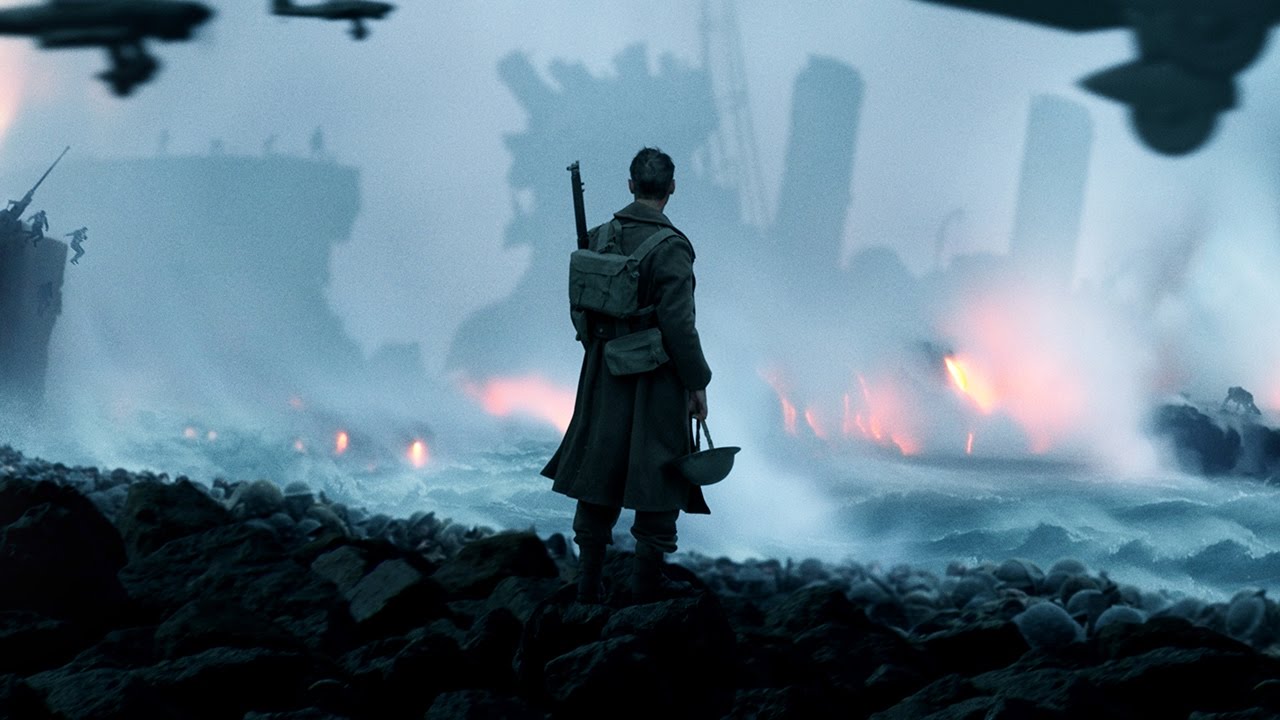
Dunkirk

by Hope Madden

Christopher Nolan, one of the biggest imaginations in film, takes on a WWII epic – the truly amazing evacuation of 400,000 British troops from certain death on the beaches of Dunkirk, France.

Nolan = epic, yes. His career is marked by complicated ideas, phenomenal visual style and inventiveness, ever-increasing running times and head-trippery. So, if you’re prepared for a long, bombastic, serpentine, heady adventure, you are not prepared for Dunkirk.

Though the word epic still fits.

Nolan’s storytelling is simultaneously grand and intimate. To do the story justice, he approaches it from three different perspectives and creates, with a disjointed chronology, a lasting impression of the rescue that a more traditional structure might have missed.

The great Mark Rylance brings in the perspective of the courageous Brits who manned their pleasure boats and headed toward the beleaguered troops to ferry them to safety.

From the air, Tom Hardy and Jack Lowden offer the view (literally and figuratively) of the RAF, undermanned and outgunned, maneuvering to end as much of the carnage as possible while the evac takes place.

And on the ground amongst those desperate for removal is young Tommy (Fionn Whitehead), the actor with the most screen time and quite possibly the fewest lines. He’s the reminder that these soldiers were heroes – flawed, brave, terrified and young.

The cast is appropriately huge, including a surprisingly restrained Kenneth Branagh as well as James D’Arcy, Cillian Murphy, Barry Keoghan, Tom Glynn-Carney and, of course, One Direction’s Harry Styles (who commits himself respectably).

Solid performances abound without a single genuine flaw to point out, but the real star of Dunkirk is Nolan.

Talk about restraint. He dials back the score – Hans Zimmer suggesting the constant tick of a time bomb or the incessant roar of a distant plane engine – to emphasize the urgency and peril, and generating almost unbearable tension.

Visually, Nolan’s scope is breathtaking, oscillating between the gorgeous but terrifying open air of the RAF and the claustrophobic confines of a boat’s hull, with the threat of capsize and a watery grave constant.

What the filmmaker has done with Dunkirk – and has not done with any of his previous efforts, however brilliant or flawed – is create a spare, quick and simple film that is equally epic.

Verdict-4-5-Stars

I Will Choose Free Will

Afterimage

by Hope Madden

Painting in his room, the artist Wladyslaw Strzeminski (Boguslaw Linda) suddenly loses his light as an enormous red banner of Stalin is dropped in front of his building. He opens the window, reaches out with his crutch and tears a hole big enough to let in natural light.

It’s a scene heavy with symbolism as well as dread, and one of many that filmmaker Andrzej Wajda uses to evoke a sense of time, place and struggle. It is not how Afterimage opens, though.

In a painterly scene brimming with life and beauty, Strzeminski meets in a meadow with a group of students from his Academy of Fine Arts in Lodz. The WWI veteran missing one arm and leg tucks his crutches and rolls on his side down the hill, followed merrily by his students. A sunny, living painting – the bright spot is meant to give you a comparison as totalitarian post-war Poland crushes every glint of light in the artist’s life.

Wajda’s lean, focused film limits its scope to the days leading up to Strzeninski’s conflict with Poland’s Ministry of Culture and the deterioration of the artist after. His abstract work and outspoken views on “Socialist Realism” – propaganda disguised as art – are deemed counter to public interest.

What to do with an artist?

Linda’s understated performance grieves for hope – a pervasive feeling throughout the film.

Sharply written, lean and efficient, Afterimage engages with an unadorned vision. What emerges is the picture of systematic bullying aimed at breaking a man’s will.

Strzeminski’s story is not so atypical, and as angry a film as Wajda creates, there is no glory in the artist’s martyrdom. There is simply choice. Afterimge doesn’t deify the man. What it does is more honest.

It not only asks after the imperative of personal and artistic choice. It muddies that conversation intentionally with an accusation about the separation of art and commerce.

And it’s not difficult to find modern echoes in totalitarian catch phrases like, “Unfortunately, we have to educate,” and “Those who don’t work won’t eat.”

That’s a lot to cover in a brief run time, but Afterimage is not just an excellent picture of an artist Poland wanted us to forget. It’s a directorial feat to remind us that Wajda, making his last film before his death at 90, was a storyteller of the highest caliber until the end.

Verdict-4-0-Stars