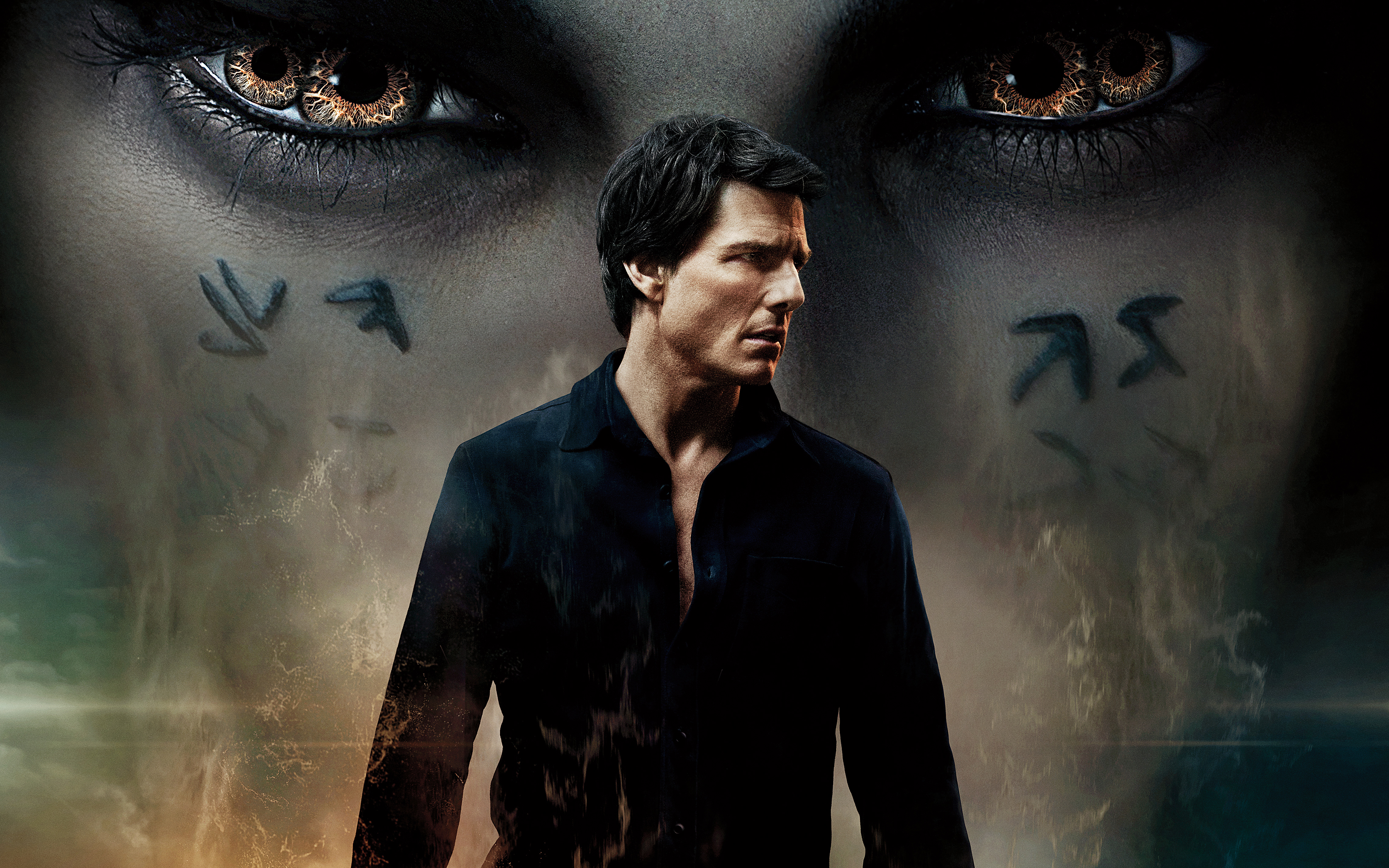
The biggest turd of the summer is finally stinking up homes this week, but there are two truly outstanding indies releasing this week that you should watch instead. Because The Mummy‘s not even “this is so bad I’ll just watch it at home and enjoy it ironically” bad. It’s the bad kind of bad.
So many movies of the brand-spankin’ variety available this week in home viewing. You’ve got your bona fide awesomeness, some better-than-you-think big budget bombs, and one flaming piece of garbage. And more! More! So much, there may be no reason to leave home all week. Except to go see It, of course.
Oh, siblings—our closest friends and the bane of our existence. Horror movies know that, which is why both sibling rivalry and sisterly bonds populate so many worthwhile flicks: Sisters, Excision, Mama, Only Lovers Left Alive, Kiss of the Vampire. Too many to count, really, but that’s exactly what we plan to do: count down the five best.
5. The Lure (2015)
Sisters Gold (Michalina Olszanska) and Silver (Marta Mazurek) are not your typical movie mermaids, and director Agnieszka Smoczynska’s feature debut The Lure is not your typical – well, anything.
The musical fable offers a vivid mix of fairy tale, socio-political commentary, whimsy and throat tearing. But it’s not as bizarre a combination as you might thing.
The Little Mermaid is actually a heartbreaking story. Not Disney’s crustacean song-stravaganza, but Hans Christian Andersen’s bleak meditation on the catastrophic consequences of sacrificing who you are for someone undeserving. It’s a cautionary tale for young girls, really, and Lure writer Robert Bolesto remains true to that theme.
But that’s really too tidy a description for a film that wriggles in disorienting directions every few minutes. There are slyly feminist observations made about objectification, but that’s never the point. Expect other lurid side turns, fetishistic explorations, dissonant musical numbers and a host of other vaguely defined sea creatures to color the fable.
https://www.youtube.com/watch?v=vxhi_3hDUPE
4. Ginger Snaps (2000)
Sisters Ginger and Bridget, outcasts in the wasteland of Canadian suburbia, cling to each other, and reject/loathe high school (a feeling that high school in general returns).
On the evening of Ginger’s first period, she’s bitten by a werewolf. Writer Karen Walton cares not for subtlety: the curse, get it? It turns out, lycanthropy makes for a pretty vivid metaphor for puberty. This turn of events proves especially provocative and appropriate for a film that upends many mainstay female cliches.
Walton’s wickedly humorous script stays in your face with the metaphors, successfully building an entire film on clever turns of phrase, puns, and analogies, stirring up the kind of hysteria that surrounds puberty, sex, reputations, body hair, and one’s own helplessness to these very elements. It’s as insightful a high school horror film as you’ll find, peppered equally with dark humor and gore – kind of A Canadian Werewolf in High School, if you will.
https://www.youtube.com/watch?v=Zoa1A987A_k
3. Raw (2016)
Justine (Garance Marillier, impressive) is off to join her older sister (Ella Rumpf) at veterinary school – the very same school where their parents met. Justine may be a bit sheltered, a bit prudish to settle in immediately, but surely with her sister’s help, she’ll be fine.
Writer/director Julia Ducournau has her cagey way with the same themes that populate any coming-of-age story – pressure to conform, peer pressure generally, societal order and sexual hysteria. Here all take on a sly, macabre humor that’s both refreshing and unsettling.
A vegetarian from a meat-free family, Justine objects to the freshman hazing ritual of eating a piece of raw meat. But once she submits to peer pressure and tastes that taboo, her appetite is awakened and it will take more and more dangerous, self-destructive acts to indulge her blood lust.
In a very obvious way, Raw is a metaphor for what can and often does happen to a sheltered girl when she leaves home for college. But as Ducournau looks at those excesses committed on the cusp of adulthood, she creates opportunities to explore and comment on so many upsetting realities and does so with absolute fidelity to her core metaphor.
2. What Ever Happened to Baby Jane? (1962)
Bette Davis and Joan Crawford? Yes, please!
The two then-aging (just barely, if we’re honest) starlets played aging starlets who were sisters. One (Davis’s Jane) had been a child star darling. The other (Crawford’s Blanche) didn’t steal the limelight from her sister until both were older, then Blanche was admired for her skill as an adult actress. Meanwhile, Jane descended into alcoholism and madness. She also seemed a bit lax on hygiene.
Blanche winds up wheelchair bound (How? Why? Is Jane to blame?!) and Jane’s envy and insanity get the better of her while they’re alone in their house.
Famously, the two celebrities did not get along on set or off. Whether true or rumor, the performances suggest a deep, authentic and frightening hatred borne of envy that fuels the escalating tension.
Davis is at her unhinged best in a performance that earned her an Oscar nomination. Crawford pales by comparison (as the part requires), but between the hateful chemistry and the story’s sometimes surprising turns, this is a movie that ages well, even if its characters did not.
1. A Tale of Two Sisters (2003)
A lurid Korean fairy tale of sorts – replete with dreamy cottage and evil stepmother – Jee-woon Kim’s Tale of Two Sisters is saturated with bold colors and family troubles.
A tight-lipped father returns home with his daughter after her prolonged hospital stay. Her sister has missed her; her stepmother has not. Or so it all would seem, although jealousy, dream sequences, ghosts, a nonlinear time frame, and confused identity keep you from ever fully articulating what is going on. The film takes on an unreliable point of view, subverting expectations and keeping the audience off balance. But that’s just one of the reasons it works.
The director’s use of space, the composition of his frame, the set decoration, and the disturbing and constant anxiety he creates about what’s just beyond the edge of the frame wrings tensions and heightens chills. The composite effect disturbs more then it horrifies, but it stays with you either way.
Tale masters the slow reveal, and the dinner party scene is a pivotal one for that reason. One of the great things about this picture is not the surprise about to be revealed – one you may have guessed by this point, but is nonetheless handled beautifully – but the fact that Tale has something else up its sleeve. And under its table.
With more than 200 films to their credit, there are almost too many directions you can take when whittling down the best in Hammer horror. Ingrid Pitt could have her own countdown, and fans of the sultrier side of Hammer may be disappointed with this countdown. Fans of Terence Fisher should be pleased, though, but there are still many other films in their repertoire worthy of note, which is why Phantom Dark Dave joins us with his own list!
5. The Devil Rides Out (1968)
Terence Fisher directed many—most—of Hammer’s best films. The Devil Rides Out was his last good movie.
We open on Christopher Lee, tall and brooding, his hair slicked back and his goatee dark. He is the picture of Luciferian evil. But he’s the good guy, which is just one of the ways the film toys with you.
Lee is the wealthy, occult-intrigued de Richleau, and he’s trying—God help him!—to save the life of his young friend whose very soul is in the hands of the evil Mocata. (Rocky Horror’s Charles Gray, which, let’s be honest, may be why we love this movie. The man has no neck! It’s just a jump to the left! We digress.)
There’s a black mass followed by a white mass followed by a black mass. What more do you want from a Hammer film?
Well, if you want loads of extreme close-ups of Charles Gray’s evil looking eyes, then you are in luck!
4. Frankenstein Created Woman (1967)
It turns out, we have kind of a thing for Terence Fisher. Did not even know that until we started working on this list.
In this late-life sequel in Hammer’s Frankenstein franchise, the idea of the female equivalent gets upended in sometimes fascinating ways. The film’s prelude, as a little boy sneaks to watch his drunken father’s execution, sets the stage for a surprisingly touching yet moralistically ambiguous film. Hooray!
Yes, Hammer dried this well up, returning to the Frankenstein tale for sequels and re-toolings throughout the sixties and into the seventies. One constant – Cushing – never fails the picture. Committed to his evil doctor – whom he based on the real-life British Dr. Knox he would later portray in earnest in 1960’s Flesh and the Fiends – Cushing excels where the films around him fail.
This time, it’s the human soul (as well, of course, as the idea of the ideal woman) that preoccupies the doctor and the film. It’s a topic that generates surprisingly little traction in the world’s many Frankenstein efforts, and though this one is hardly flawless, it’s still consistently intriguing.
3. Curse of Frankenstein (1957)
Beginning in the late 1950s, Britain’s Hammer studios begin making lurid period horror, banking on the awesome duo of Peter Cushing and Christopher Lee. Their first collaboration was longtime Hammer director Terence Fisher’s take on the Shelley text, Curse of Frankenstein.
All bubbling potions and bunsen burners, Cushing’s laboratory (don’t forget to pronounce that middle ‘o’) is as fine a home to unholy alchemy as any. Jovially laissez-faire in matters of a moral nature, his sinister acts in the name of science are well played.
Cushing’s mad doctor is, at heart, a spoiled child. His behavior is outrageous, repugnant, but fascinating.
Christopher Lee made a fantastic Dracula – all elegance, height and menace. As Frankenstein’s monster, he’s rotty flesh, dead eye and sutures. Nasty! But the film’s real moment of genius was in making the doctor such a nonplussed agent of evil.
2. Curse of the Werewolf (1961)
The great, sultry, unseemly Oliver Reed makes his big screen debut in this one as Leon, the stricken ward of Spanish wealth with a hairy, toothy secret. So, that is awesome, but it is hardly the most interesting thing about this Terence Fisher movie.
Set in 18th Century Spain, the film opens on a cruel nobleman’s imprisonment of a beggar, who rots in a dungeon for decades, his only reminder of humanity the jailer and his lovely mute daughter. Naturally, that daughter is nearly raped by the nobleman, tossed into prison, and subsequently raped by the beggar. The territory is about as dark as Hammer gets, and it raises a lot of questions. Like, why is his offspring a werewolf?
Never explained, but a wealthy man takes pity on the dying girl’s offspring, raises him up and protects him from his own darker self. This is where Oliver Reed shines, because very few actors were ever more convincing when it came to the idea that they had unsettling impulses.
Fisher’s real fascination here is just that duality of man, and with Hammer flourish and Reed’s overacting, he makes a big splash in investigating it.
1. Horror of Dracula (1958)
In 1958, Hammer Films began its long and fabulous love affair with the cloaked one, introducing the irrefutably awesome Christopher Lee as the Count.
Their tale varies a bit from Stoker’s, but the main players are mostly accounted for. Peter Cushing steps in early and often as Van Helsing, bringing his inimitable brand of prissy kick-ass, but it’s Lee who carries the film.
Six foot 5 and sporting that elegant yet sinister baritone, Lee cuts by far the most intimidating figure of the lot as Dracula. Director Terence Fisher (what?!) uses that to the film’s advantage by developing a far more vicious, brutal vampire than what we’d seen previously.
Still, the film is about seduction, though, which gives Lee’s brute force an unseemly thrill. Unlike so many victims in other vampire tales, it’s not just that Melissa Stribling’s Mina is helpless to stop Dracula’s penetration. She’s in league. She wants it.
As a documentary on the horrors of war plays on a TV, the camera pans a drab living room, finding a man asleep upright on a sofa. He wakes to realize he’s wet himself.
He is Isaac. Isaac is a lemon.
The documentary Isaac had slept and peed through provides the context for a story in which one man can so obliviously wallow in self-inflicted misery.
In quick succession, Isaac will dismiss what his (randomly blind) girlfriend Ramona (Judy Greer) has to say before publically humiliating a female student (Gillian Jacobs). Both are too focused on themselves.
Why aren’t they focused on him?
Co-writer Brett Gelman plays Isaac, a send-up of sorts of the self-pitying hero of so many indies.
Director/co-writer Janicza Bravo borrows and rebrands independent film stylizing – from Wes Anderson to Jared Hess to Todd Solondz – to deliver a wry satire of the quirky worlds they create. Her framing, color palette, set design and timing offer spot-on re-renderings of the atmospheres created in a generation of arthouse movies that follow the unraveling lives of misunderstood, entitled outcasts.
Bravo peppers the film with a handful of perfectly discordant scenes: Isaac running up a road with a stroke-impaired old woman in a wheelchair; Isaac awkwardly threatening and then kissing Michael Cera; Isaac and his profoundly dysfunctional family participating merrily in a rendition of the song A Million Matzoh Balls.
Individually, these scenes are amazing. Truly. But they don’t string together to form a cohesive image or a compelling narrative.
Gelman’s intentionally weird and flat performance engages, in a trainwreck sort of way that suits the effort. You believe him. And many – most – of the performances around him are clever, individual and memorable. Their interactions and the story, slight as it is, strain the imagination, though.
Nia Long’s Cleo, for instance, seems included solely to allow for a new series of awkward moments. Long’s performance rings true, from her friendly introduction through her polite if wearied response to Isaac’s racist flirtation.
Her actions, however, defy logic in a way that exposes a narrative weakness you’re less likely to find in the films of Anderson, Hess or Solondz.
Todd Solondz knows what to do with an unlikeable protagonist. You won’t enjoy it, but he will not pull any punches and you will have closure. This is the problem with subverting the work of superior filmmakers – your film invariably suffers by comparison.
Which is not to say that Lemon has nothing to offer. It offers a pantload of intriguing character work and suggests the vision of a worthy director. The script just needed another draft.
The animated film In This Corner of the World contrasts one of the single most destructive acts of war—the United States dropping the atomic bomb on Hiroshima—alongside a decade of daily life for the inhabitants of Hiroshima and the neighboring port city of Kure.
Suzu (Rena Nounen) is a free-spirited young girl with a talent for art that gets reflected in the film’s beautifully drawn seascapes and pre-war countryside. Suzu’s recollections, emotions and eventual tragedies are inextricably tied to the fantastical watercolors that make up the animated film’s palette.
The effect is beautiful—and unsettling. Writer-director Sunao Katabuchi centers a war movie around non-combatants. Loved ones die and faceless air raids bombard Kure. But Katabuchi grounds the Japan’s participation in World War II around Suzu’s family and other townspeople, blending uneventful tedium, Suzu’s vibrant drawings and matter-of-fact catastrophe to convey a routinization of horror that’s far more emotionally devastating than most war movies.
So when Suzu moves from Hiroshima to live with her new husband Shusaku (Yoshimasa Hosoya) and his family, it’s disarmingly easy to keep the effects of war on the periphery—as Suzu herself does. The film allows the escalating seriousness to insert itself into Suzu’s colorful idylls more and more as the date of the fateful bombing nears. But even then, these moments are deftly handled as impressionistic memories from a quiet domestic life: a rationing here, a death there—just more brushstrokes, some thicker than others.
When Suzu’s way of life is permanently shattered, she seems to be one of the last to realize that the life she thought she’d be growing into died long ago at the start of the war. It’s fitting that deeply personal violence is the emotional climax for Suzu. The bombing of Hiroshima and all its horrors are an almost perverse falling action, but Katabuchi’s focus on Suzu keeps things poignant and utterly free of sentimentality.
At times, the film’s languorous advance feels a little too at odds with everything going on outside their corner of the world. When coupled with the loose plot, some stretches veer closer to deadweight than emotional weight. But the editing mostly works, with the war on domestic bliss feeling as meaningful as any battle.
This is war under the influence of Ozu—a quiet but singularly focused attention to the ordinary in extraordinary times.
Not a ton to choose from this week. Basically, you can yell I Am Groot with Guardians of the Galaxy: Volume 2. Or – and we’re not TV people, so if we’re excited about this, it’s really a big deal – Ash Versus Evil Dead, Season 2 is now available. Groovy!
Click the title for a full review. And as always, please use this information for good, not evil.
Click HERE to join us in the Screening Room to break down Logan Lucky, Wind River, The Hitman’s Bodyguard, Brigsby Bear and what’s new in home entertainment!
Click HERE to joins us in the Screening Room to break down Annabelle: Creation, The Glass Castle, Nut Job 2: Nutty by Nature, Killing Ground and what’s new in home entertainment!