Tag Archives: movies

Life Sucks and Then You Die

A Quiet Passion

by Cat McAlpine

Writer/director Terence Davies (The Deep Blue Sea) delivers a film on Emily Dickinson that is visually brilliant (for the most part) and textually weak. Ironic.

The struggle, surely, with writing a historically rooted film is that certain events must happen, in a certain order, and you’re responsible for the connective tissue. Unfortunately, A Quiet Passion doesn’t have much connective tissue, and it is grating as a result.

There are brilliantly tense moments between family members, witty retorts, a blatant rejection of organized religion, and even a saucily smashed dinner plate, but none of these aggressions fester into anything larger. At one point, sister Vinnie (Jennifer Ehle, fantastic) chastises “Now things will be tense for days.” We don’t see any of those days.

Cynthia Nixon (Sex in the City) is perfectly awful as the aging Emily, but in earlier scenes she grins her way through acerbic words with the most bizarre delivery.

This isn’t the film’s only stylistic disparity. Visually, A Quiet Passion is a treat. The lighting is gorgeous, with equal time spent on sunny lawns and in shaded bedrooms. The color is rich too, especially for a film of its type.

But, somewhere near the middle, the narrative encounters the Civil War. In this moment real photographs of the event are shown on screen as voiceovers float in with disconnected commentary on the war. A few of the pictures are oriented horizontally, leaving the rest of the screen black. It looks like, and I hate to say this, at worst a PowerPoint Presentation and at best a History Channel special.

A Quiet Passion has drawn praise as a solidly feminist film. If the latest definition of feminism is a main character who doesn’t marry, I hazard to say we can ask for more. Emily doesn’t seem to put off marriage for art, but rather has little romantic interests to begin with. There’s one failed attempt at adultery, one briefly interested party, but she is never more than bitter. Emily wails that she’s simply too ugly.

No man ever tells her she can’t write. In fact, Emily politely asks her father’s permission if she could please write during the early morning hours while everyone else is still sleeping.

This film is carried by its beautiful cinematography and its smart camera work, but even that leaves something to be desired.

Like Emily Dickenson’s own poetry, with its characteristic dashes, A Quiet Passion is disjointed and a bit difficult to interpret.

Verdict-2-5-Stars

Science and Trickery

Sleight

by Hope Madden

Bo (Jacob Latimore) is the world’s most wholesome drug dealer. And that’s fine, because apparently, dealing drugs in LA mainly means picking up harmless partygoers and throwing some stash to a club manager with a demanding clientele.

But Bo doesn’t want to be a dealer at all. He’s really a magician and a huge science buff who could have gone to college on scholarship (science, not magic). But when his mom died unexpectedly, he needed to take care of his little sister. And that meant making more than you can pull in by entertaining tourists with – literally the most spectacular set of street magic tricks you’ll ever see.

He’d definitely have a show by now – good looking kid like him, performing feats like these? He’d at least be making enough in tips to cover rent.

Just as things take off with a new girlfriend, ol’ drug kingpin Angelo (a seriously miscast Dulé Hill) pushes Bo into more dangerous territory, things escalate, there’s this electromagnet in his arm – wait, what?

Yes, Bo has fitted himself with an electromagnet. It’s a little like that cool glowy thing in Iron Man’s chest, except it’s more like a festering, infected thing in Bo’s shoulder.

Sleight is basically a superhero’s origin story wrapped inside a toothless crime drama bubble-wrapped with magic.

Co-writer/director JD Dillard has his hands full trying to pull that trick off. The pace is too slow for action, the characters too one-dimensional and (aside from this one meat cleaver scene) innocuous for a crime thriller.

And that whole magic thing – well, the movie’s a bit of a mess.

Plot holes, missed opportunities and a toothless approach to conflict leave you wondering whether this could have been – it certainly should have been – a stronger film.

Verdict-2-5-Stars

Free for All

Free Fire

by Hope Madden

The first notes I took, about ten minutes into the screening for Ben Wheatley’s latest Free Fire, read like so: This is a ballsy first act.

Indeed. Co-written with his wife and frequent collaborator Amy Jump, the Seventies crime thriller wastes little time on backstory, context or exposition. None, really.

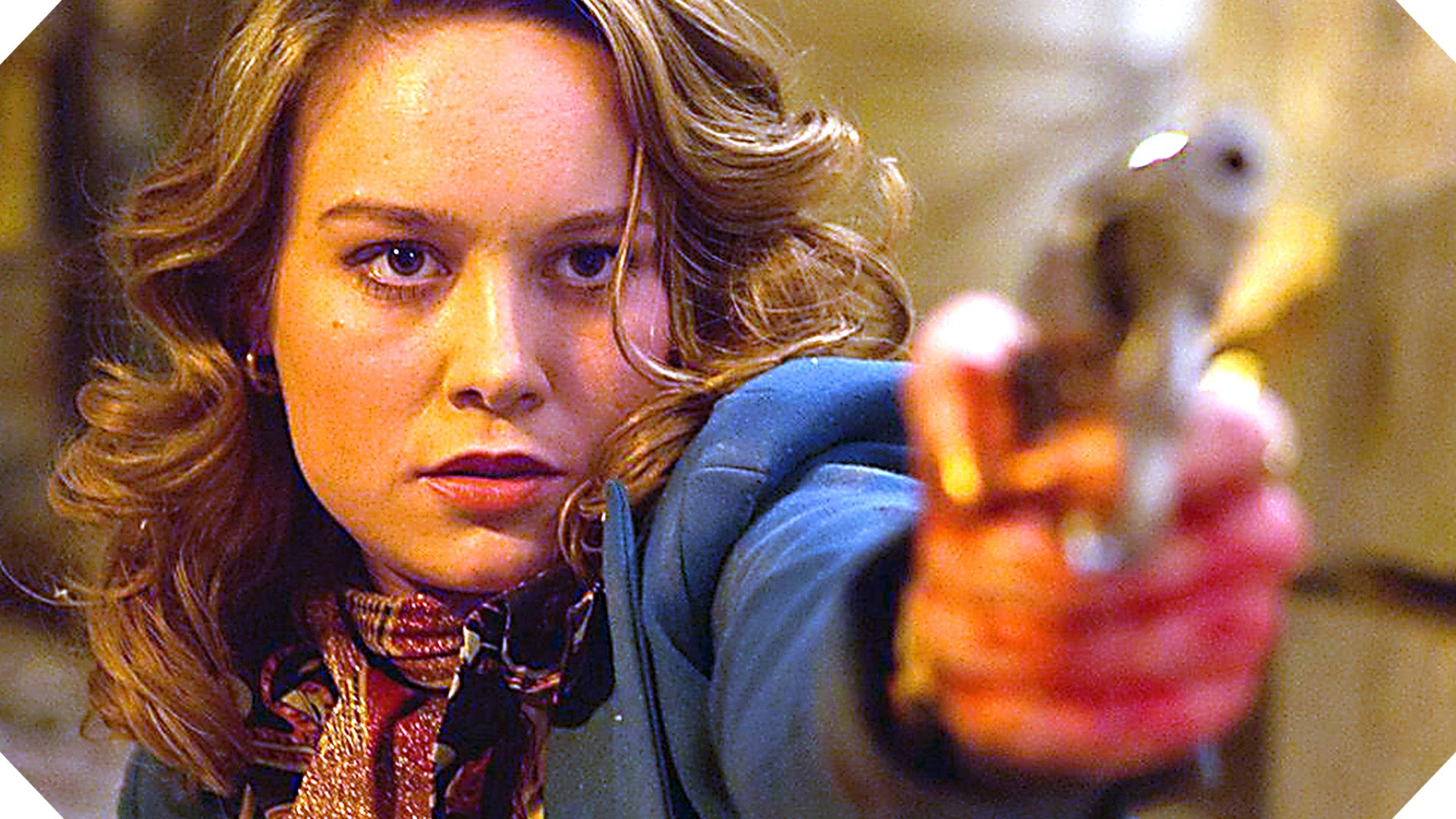
You gather that two Irishmen (Cillian Murphy, Michael Smiley) wait in a warehouse parking lot with their liaison (Brie Larson) to a gun runner. They’re always waiting for their own henchmen, as well as the gunrunner’s liaison (Armie Hammer).

I love Ben Wheatley. In 2011, he and Jump brought forth the utterly brilliant horror show Kill List, and I have waited breathlessly for every collaboration since. Free Fire included.

And while each of Wheatley’s films is decidedly different from each other, Free Fire is very different from most films altogether.

Imagine if the entire 93 minutes of Reservoir Dogs took place in that last act shootout among the pack.

The noteworthy fact about Free Fire is not that it has a ballsy first act, but that the entire film is a third act. With scarcely a word of context, we’re rolled into an empty warehouse just in time for a shootout to begin, and there we will stay until the film concludes.

It’s pretty brilliant, really. Character development happens under fire. Hammer’s “Ord” (yep, that’s his name) brings a lot of laid back comedy. Brie Larson is characteristically spot on, as is the always welcome Cillian Murphy. The two infuse characters and the proceedings with some authentic humanity.

Also working the comedy angle is Sharlto Copley – always reliable for some scenery-chewing, here working those mandibles as a South African imbecile/arms dealer once misdiagnosed as a child genius.

Jump and Wheatley rob the gang meeting of any of the slick romance or brutal gravitas usually bestowed on such events by cinema. There is a barely controlled, very funny, incredibly bloody chaos afoot here, and it is a wild and entertaining sight to behold.

Verdict-3-5-Stars

God Save the Queen

Queen of the Desert

by Hope Madden

How many period romances set against the crumbling of the Ottoman empire must I endure in one month?

Current tally: 2, and Werner Herzog’s Queen of the Desert is the least endurable.

I had been cautiously optimistic about Herzog’s biopic on Gertrude Bell. Nicole Kidman (rarely a bad idea) stars as Bell, a British writer/traveler/scientist/spy who helped shape British policy on the Middle East.

Herzog + Kidman = reason for optimism.

Unfortunately, that math doesn’t really work out.

I’m not going to lie, I had no idea who Gertrude Bell was before I saw this film. Ten seconds on google and I found out that she was an absolutely fascinating human being. It’s crazy. She explored everywhere, climbed everything, learned new languages, informed culture and politics, wrote about all of it, had torrid affairs, never married, and determined the boundaries of modern day Iraq. All in the early 1900s.

That should have been a hell of a movie.

Unfortunately, director Herzog cannot tell this woman’s wildly unconventional story without framing her in the most conventional way possible. She exists exclusively in terms of her relationships – or the absence of a relationship – with men.

We’ll lay that at the foot of Herzog the director, but this God-awful dialog? That’s on Herzog the writer.

Kidman, almost tragic in her earnest commitment to this part, manages to wrestle Herzog’s humorless and hackneyed prose into submission. But Lord, James Franco cannot.

The plotting is no better than the concept or dialog.

Scene after needless scene shows Kidman in the office of one man or another, announcing her plans to do something they don’t need to know about, only to suffer their indignant rebuffs. She responds with obstinate will. Cut to Kidman doing whatever it was those men told her she couldn’t do.

Repeat ad nauseum.

This woman hand-drew the border between Iraq and Jordan – in a time when women couldn’t vote in England. That alone could be unpacked and considered from about 30 different perspectives. There are so many things worth knowing about Gertrude Bell, but all I really learned from Queen of the Desert is that she was, “a woman without her man.”

That’s a real line of dialog. Good God.

Verdict-1-5-Stars

https://www.youtube.com/watch?v=zdGKbxJHPkk

Life: It’s What’s for Dinner

Life

by Matt Weiner

Life comes at you fast. Real fast, when it’s a hyper-intelligent Martian lifeform hell-bent on survival. In Life, a seemingly unstoppable alien terrorizes the isolated crew of a spaceship. Is the plot eerily familiar? You bet. Does the film do enough to merit its obvious Alien comparison? Surprisingly, yes.

Director Daniel Espinosa makes the most of the zero-gravity settings on the International Space Station—first with inspired long takes introducing the cramped passages, and later with the haunting, creative blood spurts that will soon saturate them.

Inhabiting the ISS is a multinational crew who has recovered alien life from Mars. All the diverse archetypes are on board, including a wisecracking specialist (Ryan Reynolds), a world-weary veteran (Jake Gyllenhaal) and a suspiciously reserved biologist (Miranda North). Plus a few more alien appetizers, but this paragraph is already more backstory than most of the crew members receive.

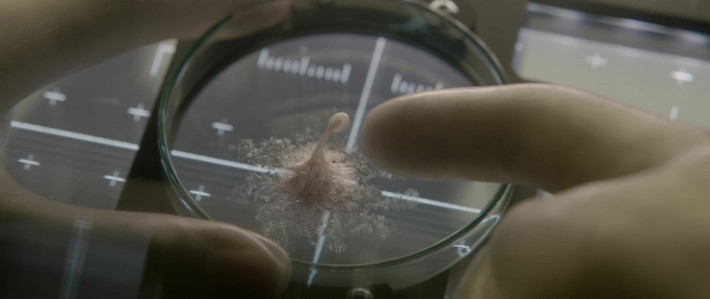
Excitement quickly turns to horror once scientist Hugh Derry (Ariyon Bakare) finds a way to bring the cell to life. The astronauts are no match for “Calvin,” as those blissfully ignorant down on Earth have christened the creature. The more astronauts Calvin feeds on, the bigger it gets until it balloons to a nightmarish love child between an octopus and the Xenomorph.

Life is written by Rhett Reese and Paul Wernick, the team responsible for Zombieland and Deadpool. And the film allows a few—very few—quiet moments to shade in some character depth. But these quasi-philosophical pauses just get in the way of the movie’s strengths.

And the biggest strength Life has going for it is that the film is a whole lot of fun as a dumb thriller. Well, that and a way-too-qualified cast who can add some pathos to the almost methodically expectant death scenes. (Did I mention how nifty those blood spurts are?)

Much like the ISS crew, the film comes dangerously close to running out of gas by the end. The familiar setup wears itself thin, and Calvin has too much CGI aloofness to win our affection like the Alien did.

Overall though, Espinosa mostly succeeds at keeping the action moving. Life trades in the languid dread of its forebear for a breakneck (among other appendages) pace that requires little thought and demands no frame-by-frame viewings. But while this monster might be a bit immature, it packs a vicious punch.

Verdict-3-0-Stars


Ride or Die

CHIPS

by Hope Madden

How many of you remember that, in 70s cop shows, cars blew up all the time?

Without that knowledge, one of two running jokes in CHIPS will make no sense. The other one – well, you’ll understand it, it’s just not funny.

Neither is much of anything else in writer/director/star/seemingly good guy Dax Shepard’s big screen tribute to the cop show of a bygone era.

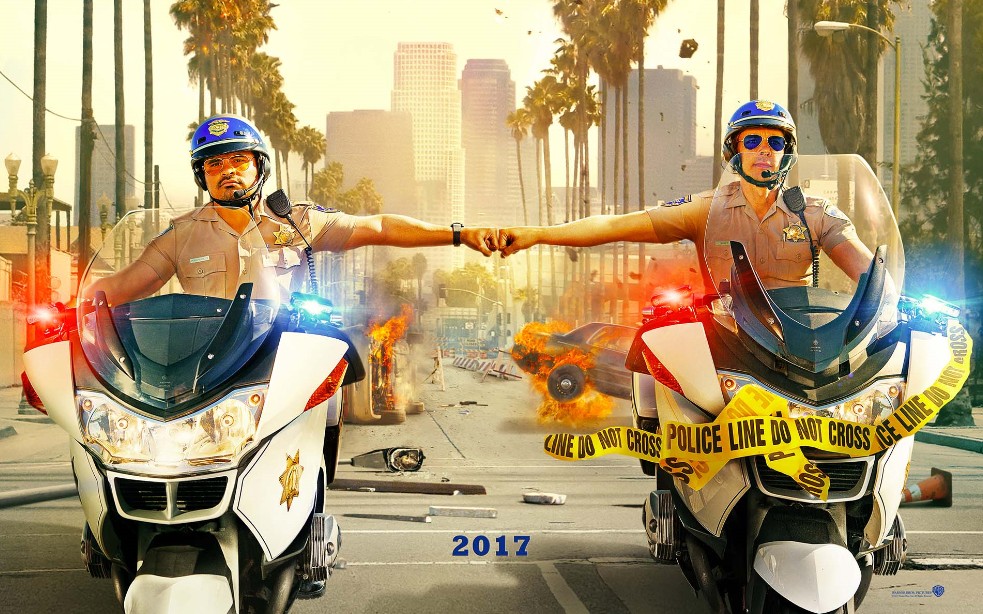
Shepard plays Jon to Michael Peña’s Ponch, and the two have to overcome their intimacy issues and crack some case about dirty cops.

Peña’s a talented actor (and a hard worker – the 41-year-old has 83 acting credits). He’s also versatile, easily handling drama or comedy. What he’s not is a lead.

Neither is Shepard. Both actors are likeable enough, amusing enough, but not compelling enough to keep your interest for 100 minutes.

Shepard’s script doesn’t do them many favors, either. The convoluted story offers opportunities for cool motorcycle tricks, and who needs a reasonable plot for a 70s TV spoof? But the laughs aren’t there, the nostalgia doesn’t work, and the film lacks the self-referential humor and off-handed fondness for the source material that made films like 21 Jump Street so much fun.

Kristin Bell is underused but fun as Jon’s unlikeable ex-wife and Vincent D’Onofrio remains a welcome presence in any film. But the rest of the supporting cast gets little opportunity to make a mark.

It’s hard to hate CHIPS. Like its leads, the film is blandly appealing but seriously in need of something bolder to hold your attention.

Verdict-2-0-Stars

Choose Nostalgia

T2 Trainspotting

by Christie Robb

Choose life. Choose a movie. Choose a sequel, a prequel, a reboot, a franchise. Choose a revival. Choose familiarity. Choose nostalgia.

Watching the sequel to Trainspotting was like watching the new Gilmore Girls—only with more violence and heroin.

Is it social media that makes us feel we need to keep endlessly up to date on everyone? Is living in a chaotic world leading to an increased desire for tidy endings? Is it just the same kind of curiosity that makes folks RSVP to class reunions? Who needs reasons when you’ve got Trainspotting?

T2 takes place 20 years after Mark Renton steals £16,000 of communal drug sale profits from his friends and splits, vowing to live the life of a grown up. He experiences a minor coronary episode on a treadmill, which serves as the catalyst for a midlife crisis. And this crisis doesn’t take him on the path to buy a convertible, or to a hair plug consultation, or make him vow to consume a daily probiotic. Because the plot demands it, Mark is drawn back home to Edinburgh-to a bunch of people who feel that, to some degree or another, he ruined their lives.

In the original movie, Simon “Sickboy” Williamson states his theory of life, “Well, at one point you’ve got it. Then you lose it.” T2 isn’t bad. But it’s not great either. It’s lost some of the magic that the first movie had. But then it’s probably supposed to have.

It’s a movie about middle age, about looking back at who you were in your twenties and assessing what you’ve done or haven’t. Set against the backdrop of a gentrifying Edinburgh, we are presented with a familiar plot. Scenes from the first movie are rehashed. Renton delivers a new “Choose Life” monologue to a bored 20-year-old, which largely pans internet culture, shrilly condemning the choices of a stereotypical member of the younger generation in the same way he condemned the spirit-crushing lifestyle of clichéd older folks 20 years before.

Sometimes key scenes from the old movie are even played as flashbacks or projected on top of an existing new scene. The music too, is recycled. As if the characters stopped listening to anything new at 25.

Sure, it’s delightful to see all the cast members together again (Ewan McGregor, Robert Carlyle, Ewen Bremner and Johnny Lee Miller) under the helm of original Trainspotting director Danny Boyle (who went on to win the Oscar for Slumdog Millionaire). But the enjoyment is not unlike seeing a fading star in concert, or asking for a tour of your childhood home, or meeting up with an old flame for a drink.

It’s nice for a bit, but maybe not quite as good as in the old days.

Verdict-2-5-Stars


Searching for Xenu

My Scientology Movie

by Hope Madden

Another documentary on Scientology? Is that religion really so endlessly fascinating?

Um, yes.

There is just something about this cross-breed of spirituality, celebrity, science and greed that makes Scientology immediately intriguing.

And the backstory: a religion that reads like science fiction, developed (revealed?) by a science fiction writer, believed by many as the true and only possible answer to our deepest questions.

Plus celebrities, secrets and very, very suspicious behavior – it’s just hard to look away, and if a filmmaker can find a novel way of exposing the subject, then why not indulge?

Documentarian Louis Theroux brings his wry curiosity to the project, and the result is an uneven but surprisingly compassionate glimpse.

Theroux has a 20-year career with BBC defined by enmeshing himself with fringe populations from neo-Nazis to the Westboro Baptist Church and others. It is his uncanny charm and low-key curiosity that help him endear himself to his subjects and his audience.

The obstacle to any documentary on Scientology is access. You can’t get in. And there is a limit to the number of speculative outsider-looking-in docs that can be considered worthwhile.

What makes Theroux’s avenue into the story interesting is that he uses his lack of access to gain access, because one of Scientology’s curious customs is to combat any perceived threat of investigation. Paranoia is baked into their business model.

They send people out to follow, film and generally harass folks like Louis.

A good portion of Theroux and director Rob Alter’s doc captures the sound stage recreation of incidents – primarily those alleged abuses that have dogged Scientology leader David Miscavige. Theroux also interviews former church members, including one-time high-ranker Marty Rathburn.

So far, so ordinary.

But Theroux’s aim is to flush out the active Scientologists and document their behavior.

A lot can be gleaned from that behavior, and from Theroux’s more balanced investigation into the former church members who participate in his documentary.

We’re still left with so many aggravating holes that you have to rely more on being entertained than informed. Theroux’s affable persistence and comedic intelligence combine with his empathetic insights to offer enough difference that his look is worth the time.

Verdict-3-0-Stars

Can’t Stand Up for Falling Down

Staying Vertical

by Hope Madden

Alain Guiraudie’s meditation on manhood Staying Vertical hits upon similar themes as his 2013 murder mystery Stranger by the Lake. In other ways, one film is the other’s opposite.

Stranger by the Lake – a serial killer film set on the banks of a French lake used for gay cruising – examined its topic from the inside out. We were surrounded by the suspects, the victims and the scene of the crime. We knew what the leads knew when they knew it, so we participated in each curious choice.

And though Guiraudie once again considers sexuality – sexual expression, repression and identity – he keeps the audience at arm’s length from the exploration.

We wander the French countryside with Léo (Damien Bonnard). Our wide-eyed protagonist is a screenwriter in search of a story. He meanders from one situation to the next, his open curiosity his guide as well as his frequent undoing.

Staying Vertical’s story is as loose and open as Stranger’s was tightly wound. The film is borderline plot free. Leo hikes into the path of shepherd Marie (India Hair), plays with her kids, dodges looks from her father (Raphaël Thiéry – a find!), wanders away and, periodically, back.

His rambling leads him to town, where he tries to connect with a homeless man under a bridge. Then we’re on to a ramshackle house and into the lives of a young man and his ambiguously-defined father figure, into a bizarre plant therapy situation, back to Marie and out again.

Between the loose structure and Bonnard’s guileless performance, Guiraudie creates a fascinatingly male world of disconnection, longing and hope. Léo is – as are we, by extension – an interloper, regardless of his attempts to situate himself.

The filmmaker knows how to arrest your attention despite the meandering nature of the plot. The frank and often jarring sexual imagery (seriously, there’s a scene set to a Pink Floyd riff that will floor you) manages to question preconceived notions in truly fresh ways.

He also shoots scenes through with wry humor, and he captures landscapes (in look and sound) as few if any current filmmaker can.

Guiraudie’s metaphors are frequent and interesting, but never stronger than in the closing scene. Though the crossing storylines don’t always work, the characters that populate this harsh but lovely environment pique your interest as Léo’s journey captures your imagination.

Verdict-4-0-Stars

Young Turks

The Ottoman Lieutenant

by Hope Madden

With an almost offensively naïve – or more likely, revisionist – sense of history surrounding an entirely anachronistic amount of gumption, The Ottoman Lieutenant is the third historical romance to hit theaters in as many weeks.

And the weakest.

The lovely A United Kingdom struggled to find an authentic voice for the true story of Seretse and Ruth Khama’s love. Bitter Harvest, on the other hand, lacked the focus to use its love story to articulate the horrors of war.

Both films made a valiant effort to shine a light on a historical period. The Ottoman Lieutenant separates itself from the pack primarily with its open attempt to rewrite history, to make it more noble, palatable and romantic.

Lillie Rowe (Hera Hilmar) is a young woman of privilege. She’s also an American with a thick Icelandic accent, but no matter. Lillie spurns her stuffy 1914 Philadelphian upbringing in in favor of mission work in Anatolia, thanks to a cardboard-stiff speech given by mission doctor Jude Gresham (Josh Hartnett).

Once there, as Dr. Gresham falls in love with Lillie, she’s busy falling for Lieutenant Ismael Veli (Michiel Huisman) who, luckily, speaks English – as do all Turks in the film, even when they’re talking amongst themselves. How convenient!

Armenians – a population all but wiped from existence one year later – figure minutely in this soft focus clash between Muslims and Christians. But why tell their story just because your film is set in their backyard on the eve of their genocide? The important thing to understand is that, in war, everyone is wrong and only love is right.

That’s the gallingly simple outlook of the nurse with the tousled hair whose cloying voiceover tells us everything and nothing, simultaneously.

Though Joseph Ruben’s direction can never transcend Jeff Stockwell’s historically vacuous screenplay, the film often looks quite lovely. As does Hilmar, which is great as she is never called upon to act. She poses really well, though, and never laughs no matter how precious the dialog. Plus, Lillie has so many great hats!

It’s almost a shame Ben Kingsley shows up when he does because, even saddled as he is with this one-dimensional stereotype of a character, Ben Kingsley can act. His talent only exposes the balance of the cast for the posers (and poseurs) they are.

The Ottoman Lieutenant offers a lot of easily won wisdom and quick solutions – and hats. None of these strike me as items abounding during a time of war, but stark reality is not the goal of the film.

What the point is, I couldn’t tell you.

Verdict-2-0-Stars