Tag Archives: movies

Kingdom Come

A United Kingdom

by Hope Madden

Last year, Jeff Nichols’s Loving quietly observed the bond between Mildred and Richard Loving, a married couple whose union eventually brought down miscegenation laws in the US.

A United Kingdom, Amma Asante’s follow up to her 2013 historical drama Belle, treads similar waters. Like Loving, this is the true story of an interracial marriage with profound social and political impact.

In 1945, London clerk Ruth Williams (Rosamund Pike) married Seretse Khama (David Oyelowo), heir to the throne of Bechuanaland (now Botswana).

Rejected by her family and his, the couple then faced opposition first from Khama’s people, then, more sharply, from the British government working in collusion with apartheid-riddled South Africa.

A United Kingdom teems with beautiful actors, postcard-ready shots, swelling strings and feel good moments.

What Asante’s film lacks is Nichols’s observational style, one that trusts the story and the actors to draw an audience in. Asante too often tells the audience how to feel with a leading score and disruptive camerawork.

The filmmaker and her cast have a lot of ground to cover, and though Asante’s glimpses the budding romance quickly enough to induce whiplash, her instincts are strong when it comes to handling the drier political wheeling and dealing that sought to keep the newlyweds separate.

David Oyelowo’s performance cannot help but conjure memories of his outstanding turn in Ava DuVernay’s 2014’s masterpiece, Selma. As he did in his portrayal of Martin Luther King, Oyelowo gives Khama tremendous presence. He is thoughtful, wise, compelling, charismatic yet human – exactly the kind of person who could lead a nation to democracy.

As Williams, Pike presents a believable mix of self-assuredness and self-doubt. In her hands, Ruth is elegant, humble and in love.

Luckily for Asante and the film, Oyelowo and Pike share so bright an onscreen union they overshadow most of A United Kingdom’s faults. They do seem very comfortably in love. So much so that it is impossible to accept that anyone – let alone three entire governments – felt the need to force the two apart.

While far from perfect, A United Kingdom gives you reason to applaud, to feel good, and to hope. That may be enough.

Verdict-3-0-Stars

Seeds of Love

Bitter Harvest

by Rachel Willis

The love story of Yuri and Natalka is the thread that ties together director George Mendeluk’s Bitter Harvest. Set in Ukraine in the early 1930’s, the Soviet oppression under Stalin (the Holodomor) is the backdrop for their relationship.

As Yuri, Max Irons shines as the artist who’s loved Natalka (Samantha Barks) since they were children. The bulk of the film is his story, as we follow him from the small town of his childhood to Kiev, where he is able to pursue his artistic passions. Though Natalka is primed to join Yuri in Kiev, the influx of Soviets into their country keeps the lovers separated.

Unfortunately, rather than keep the story simple and focus solely on Yuri’s attempts to get home to Natalka, the film tries to take on too much. As if trying to convey the entirety of the horrors inflicted on the Ukrainian people, the audience sees Yuri in a number of far flung locations and situations. What could be a three-hour epic is condensed into less than two hours, so the audience never feels a true connection to any of the characters.

Expository dialogue further removes the viewer from the movie. It’s hard to stay in the moment when characters break out of tense scenes to explain to the audience what’s happening in the greater context. A heavy handed score also does the film a disservice, as it turns moments of tension into melodrama.

Though the story is weakened by these elements, the actors bring heartfelt emotion to their roles. While never given the depth they deserve, they are nonetheless sympathetic. A scene in which a young boy kneels by his mother’s grave is moving because the actor conveys the depth of sorrow the character feels. It also speaks to the larger situation, as many more children will be orphaned by the Holodomor.

If the film could have stayed with the smaller, more personal moments, it would have been a stronger film. Even so, this is a story that needs to be told, and Bitter Harvest is a heartfelt endeavor to share it.

Verdict-3-0-Stars

https://www.youtube.com/watch?v=BpcYA4Xnhhk

Gifted & Talented

The Girl with All the Gifts

by Hope Madden

It is the top of the food chain that has the most reason to fear evolution.

Isn’t that the abiding tension in monster and superhero movie alike? The Girl with All the Gifts explores it thoughtfully and elegantly – for a zombie movie.

In 2010, director Colm McCarthy took an unusually restrained and intimate look at lycanthropy in his underseen Outcast – kind of a werewolf Romeo and Juliet among Irish travelers. This time he mines Mike Carey’s screen adaptation of his own novel with the same quietly insightful bent.

Melanie (startlingly strong newcomer Sennia Nanua) lives out her young life in a cell, then restrained head, hands and feet in a wheelchair as part of ongoing research conducted by Dr. Caldwell (Glenn Close).

Let’s pause. When 6-time Oscar nominee and all around acting badass Glenn Close deems a zombie film worthy of her talent, we should all pay attention.

So, what’s the deal? A horde of “hungries,” each infected with a plant-based virus, has long since overrun the human population. Dr. Caldwell, her researchers and the military are holed up while trying to derive a cure from the next generation, like Melanie – the offspring of those infected during pregnancy.

It is an unsettling premise handled with restraint and realism, bolstered by uniformly admirable performances.

Melanie aside, the characters could be standard fare zombipocalypse cogs: gung ho military guys, driven researcher, tender-hearted woman here to remind us all of the civilization we’re fighting to save.

But expect something surprising and wonderful out of every actor involved – from Paddy Considine as the Sarge with something to learn to Gemma Arterton as Melanie’s beloved teacher to Close, steely and cagey in a underwritten role.

But much of the weight sits on Nanua’s narrow shoulders, and she owns this film. The role requires a level of emotional nimbleness, naiveté edged with survival instinct, and command. She has that and more.

McCarthy showcases his bounty of talent in a film that knows its roots but embraces the natural evolution of the genre. It’s not easy to make a zombie film that says something different.

Girl brims with ideas and nods to films of the past – in many ways, it is the natural extension of the ideas Romero first brought to the screen when he invented the genre in ’68. It definitely picks up where his Day of the Dead left off in ’85, working in nods to 28 Days Later as well as other seminal flicks in the genre.

But what Girl has to say is both surprising and inevitable.

And she says it really, really well.

Verdict-4-0-Stars

Just Another Brick

The Great Wall

by Hope Madden

You’ve seen the trailers for The Great Wall, right?

It looks terrible, doesn’t it?

It’s not.

It’s not good – let’s not get crazy. But I was expecting Warcraft bad – maybe worse – and The Great Wall is a borderline-passable piece of monster-laden eye candy.

Matt Damon plays William, a bow-for-hire who travels with a band of ne’er-do-wells into China seeking the legendary black powder.

Dreams of selling this weapon in the West keeps the Irish…Scottish…what kind of accent is Damon attempting?And why does it only show up in about 25% of the film?

Anyway, William and his mercenary friend Tovar (Pedro Pascal) must eventually surrender to the color-coordinated forces within The Great Wall – who actually have better things to do.

After that, director Yimou Zhang (House of Flying Daggers, Raise the Red Lantern) does what he can to visually wow an audience and draw attention away from the leaden screenplay.

Zhang is a nearly unparalleled visual showman, and though Great Wall never approaches the style of his best efforts, the aesthetic will keep your attention and create wonder. Vivid color and rhythm drive a joyous spectacle of monster carnage once the CGI swarms come calling.

And then we’re back inside, with one-dimensional characters stumbling through obviousness about greed, trust and teamwork.

Zhang takes advantage of 3D as few filmmakers have. The approach rarely serves a larger purpose than to transport and amaze, but those who come to The Great Wall seeking a larger purpose should prepare for crushing disappointment.

The generally strong Damon struggles with more than the accent. Though glib humor enlivens several scenes with Pascal, the deadly serious tone the film takes and the broadly drawn characterizations of the Chinese warriors make chemistry or human drama impossible.

But damn, look at those hills and swirling bodies, the acrobatics of monster mayhem.

It may be that the only thing The Great Wall did right was to swap out director Edward Zwick (associated early in development with the film) for Zhang, because if you weren’t so distracted by how glorious this film looks, it might really be as bad as the trailers made it out to be.

Verdict-2-5-Stars

No Escape

Toni Erdmann

by Christie Robb

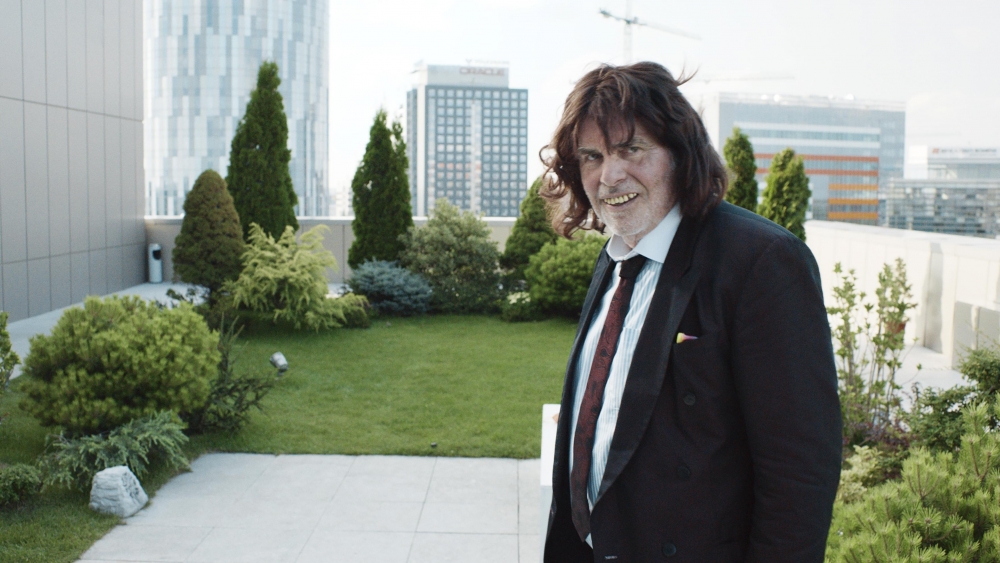
It has already been a rough year. If you are looking for a movie to help you escape the bleakness of the year, Toni Erdmann isn’t exactly going to be it. No space battles, no superheroes, no fantastic beasts. It’s a spare and complicated film about a sad, silly man trying to reconnect with his distant, ambitious daughter.

The daughter, Ines (Sandra Hüller), works for an international consulting firm based in Bucharest. Her job is to compellingly propose outsourcing to oil company management. She shoulders the responsibility of job losses so that executives can sidestep the guilt. Ines doesn’t see much of her family and her father, Winfried (Peter Simonischek), jokes about hiring a substitute daughter to take Ines’s place (at Ines’s expense).

After the death of his beloved elderly dog, Winfried visits Ines, appearing unannounced in the lobby of her office building. Unfortunately, she’s in the midst of a project that may help her make partner. Her dad’s presence and corny jokes (delivered in front of clients) get under Ines’s skin and threaten her advancement.

Failing to reconnect, Winfred agrees to go home. Ines hits a bar to vent to some networking contacts about her horrible weekend. The man next to her at the bar introduces himself. It’s Winfried in a bad wig, with bizarre false teeth, claiming to be “Toni Erdmann”—consultant and life coach. Unwilling to out him (and by extension herself) to her contacts, Ines plays along while Toni inserts himself into her professional life, showing up at her office and at after-hours parties.

Hüller and Simonischek are outstanding, giving utterly believable, finely wrought performances—Hüller in particular. Ines’s carefully crafted professional polish requires that very little of her interior life is visible, and Hüller manages to get a lot across with the twitch of a lip or a downward tilt of the head.

But this is not the heartwarming, wacky father-daughter reconnection movie you might expect. There’s little of the tidy warmth that characterized Thicke’s Growing Pains. But there is a lot more realism. Writer/director Maren Ade’s film is almost three hours long, giving time to contextualize the characters in a way more typical of the new Golden Age of Television. We understand why Ines might be tempted to throw herself out of her apartment window, and we get why Winfried/Toni might not exactly have the answers for why she shouldn’t. But we see how hard he tries.

This is definitely not the movie that delivers on the uncomplicated warm fuzzies. It’s sad and weird, sometimes funny, and thoroughly awkward. But it might inspire you to embrace a loved one, and after this year, a good long bear hug is probably something we could all use.

Verdict-3-5-Stars

Wickity Wack

John Wick: Chapter 2

by Hope Madden

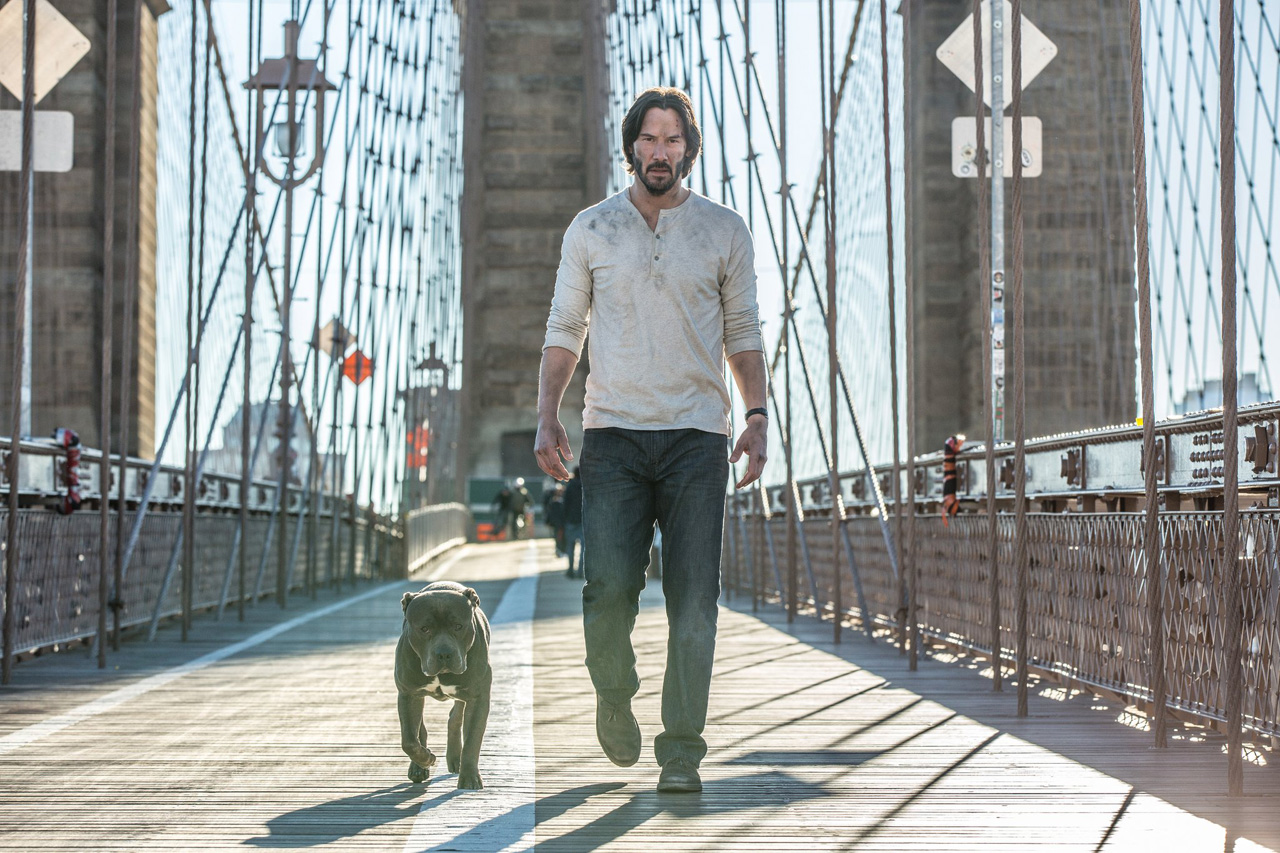
Keanu Reeves is a cyborg. He’s seen human behavior – he just can’t replicate it very believably. It’s a reasonable theory, isn’t it?

But every once in a while he lands on a role where acting like an actual human just doesn’t matter – like the surprise 2014 hit John Wick. If you enjoyed that splashy bit of violence and canine love, you’re likely to appreciate its strangely anticipated sequel, John Wick: Chapter 2.

The Keyser Soze of international hitmen, Wick was brought out of retirement, you’ll remember, when a half-assed Russian mobster stole his dog and his car. And if you could make it through the maudlin, sentimental crap and focus just on that kickass hotel shit, it was a mildly entertaining film despite Reeves’s absence of talent.

Once out of retirement, though, Wick has a tough time getting back out of the biz.

Chapter 2 picks up right where the previous installment ended. Wick, his beloved if unnamed pit by his side, re-buries the gold coins and weapons of his trade. But Santino D’Antonio (Riccardo Scamarcio) requires Wick’s services – and he’s not above doing ill-advised things to acquire his compliance.

Director Chad Stahelski and writer Derek Kolstad return, both improving on their previous effort by streamlining the story, limiting sentimentality and spending more time exploring what was cool the first time – The Continental.

Turns out there’s a mirror hotel in Rome, site of Wick’s new gig. There’s also a high-powered organization of the world’s most influential criminals as well as an armed, underground network masquerading as New York’s homeless.

Basically, 4 out of every 5 people walking the street are trained killers. Who’s paying for all this?

Stahelski ups his game with the action sequences. Wick’s movements are without ego – they are clean and efficient, which is appropriate. And he likes to shoot the knees out, so points for that. Stahelski films with flair – fascinating framing, often beautifully backlit. It’s fun.

Still, there’s the problem of Reeves’s acting. (I’m sure he’s a very nice man.) Stahelski does what he can by pairing his lead with slightly more agile actors to buoy the few scenes with dialog. The always-welcome Ian McShane returns. Peter Serafinowicz and Franco Nero make tangy appearances, along with one co-star who would have been a fun surprise had his face not been splashed all over the trailer.

Sure, there are problems – besides the dialog. Why are the bad guys all such bad shots? Where are all the witnesses? Eye-rolling contrivance follows ludicrous convenience, but these guys brought their shootin’ boots.

It’s not like you don’t know what you’re in for here.

Verdict-3-0-Stars

Abs-olutely Fabulous

The LEGO Batman Movie

by Christie Robb

This year’s spin-off of 2014’s The LEGO Movie centers on Batman—the brooding solitary vigilante with the wonderful toys and the nine-pack abs. We catch up with him doing the usual thing—saving Gotham City from a supervillain. But when he gets home after a long day, who does he have to share his life with? Just a judgey Alfred, Siri, and a microwaved plate full of lobster. Apparently Batman’s greatest fear is intimacy.

The Bat can’t even identify his “bad guy”—breaking Joker’s heart when he decides to “fight around.”

So when Barbara Gordon takes over as police commissioner amid plans to work more collaboratively with Batman, he gets the heebie jeebies. Discovering that he’s accidentally adopted an orphan doesn’t help. Nor does the Joker’s rounding up of all of Gotham’s villains and submitting a group resignation letter.

Faced with demands on his emotional intelligence and without purpose, Batman begins to crack. Sure that Joker is up to something, Batman refuses to work with Gordon and inadvertently places Joker in a position where he can destroy all of Gotham for good.

Only one thing can stop this nefarious plan…teamwork.

LEGO Batman is a PG-rated movie that is probably even more fun for adults than for kiddos. Those responsible for paying the tab will get to enjoy spotting the references to other Batman movies, identifying terrible Batman TV show villains (like the Condiment King), and wondering how the administrative folks at the studio acquired permission for all the outside intellectual property required for the climax.

The movie also has a remarkable depth of voice talent. Will Arnett handles the gravel-voiced protagonist, but Michael Cera steals scenes as the endearingly twee Robin. Not only do we get Rosario Dawson as Gordon, we get Ralph Fiennes as Alfred and Zach Galifianakis as the Joker. But even characters that have minute amounts of screen time get good coverage. Billy Dee Williams, for example, briefly reprises his 1989 role as Harvey Dent.

And, in the end, we learn everything is cool when you’re part of a team.

Verdict-4-0-Stars


Viral Video

Rings

by Hope Madden

Releasing a film without a pre-screening for critics is usually a bad sign. A mid-February studio release is never good.

You know what else isn’t good? Rings.

If you’re wondering whether Samara’s story disappeared with the last VCR, puzzle no longer. Sadly, it did not. Indie hipsters at a garage sale take home some vintage equipment, find an old VHS tape inside and watch it.

If you’ll recall, watching said video of freaky images condemns the viewer to death within a week. The images relate to the accursed life of, in the English language films, a little girl named Samara.

Gore Verbinski’s 2002 The Ring managed to do two remarkable things. One: it surpassed its Japanese-language original (Hideo Nakata’s Ringu) in quality. Two: it was a deeply frightening PG-13 movie.

But Verbinski has talent, as does his cast, most notably 2-time Oscar nominee Naomi Watts.
Rings director F. Javier Gutiérrez is playing without those kind of all-stars.

At this film’s heart is still that Scooby-doo mystery to solve that is the foundation of nearly every ghost story – and Samara’s tale is essentially that. In this episode – which forgets 2005’s The Ring 2 ever existed – two college freshmen do the sleuthing.

The leads are, as far as I can tell, made entirely of wood or wheat toast. Matilda Lutz is Julia the Bland, devoted girlfriend and courageous ghost hunter. Her boyfriend Holt (Alex Roe – yawn) participated in a wild psychological experiment led by his professor Gabriel (Johnny Galecki) – garage sale junkie. That experiment leaves Holt with 7 days to live…and his time is almost up.

The film’s running time isn’t, though. Oh, no. Holt’s fate is revealed and we still have at least 3/4 of the movie to suffer through.

Sadly, the genuinely talented Vincent D’Onofrio gets dragged into this at a certain point, his only real contribution is to remind the audience what acting actually looks like.

Why do I get my hopes up?

Verdict-2-0-Stars

https://www.youtube.com/watch?v=ouwST4IEvJo

The Saddest Lines

Neruda

by Hope Madden

Pablo Larraín is having quite a year. In theaters already with his insightful vision of grief, celebrity and politics, Jackie, the Chilean filmmaker returns with a page from his own nation’s history books – Neruda.

Again eschewing the traditional biopic structure, Neruda drops us into the life of Chile’s most beloved poet and most famous Communist as political tides are changing. Post WWII, Pablo Neruda’s outspoken support of his party puts him on the wrong side of his government.

Though Neruda (Luis Gnecco) became the voice of resistance in Chile and around the world, his own life hardly mirrored the communist principles he championed. A poet, a lover and a man of grand excess, he spoke eloquently of a struggle he refused to live himself.

A fascinating set of conundrums, Neruda is a hard man to pin down cinematically – so Larraín doesn’t exactly try.

When Chile calls for Neruda’s arrest, we follow him underground, as does Inspector Oscar Peluchonneau (Gael García Bernal – scene stealer).

Here is where Larrain, working from Guillermo Calderon’s inventive screenplay, gets a bit experimental to better serve his subject.

From Peluchonneau’s point of view, the film becomes hard-boiled detective pulp, a narrative device that allows Larraín to better explore the line between fact and fiction – and poetry.

The investigator becomes the antagonist in Neruda’s imagined persecution, allowing him the mythical martyrdom and drama he feels a man of his greatness deserves.

Gnecco’s performance hits all the right marks, creating a presence that’s simultaneously admirable, aggravating and disappointingly vain. Fine support from Mercedes Morán as Neruda’s longsuffering wife buoys the performance by articulating the effect he had on those around him.

But the fictional Peluchonneau runs away with the film. García Bernal’s oddball incompetent with his own delusions of grandeur brings color to the film as it transports the audience to a more literary landscape.

The conceit doesn’t always work. It often feels too cute. But there are several scenes where reality and fiction collide without a clear winner – one with Morán and a snowy finale, in particular – that elevate the entire project.

It’s an arresting and lovely near-miss.

Verdict-3-5-Stars

Strangers on a Trainwreck

Julieta

by Hope Madden

Pedro Almodovar brings his two most marked filmmaking styles – the one submerged in the world of women (Volver, for instance), the later of a more Hitchockian note (The Skin I Live In) – and pulls them together in his latest effort, Julieta.

The titular heroine, played at different ages by Emma Suárez and Adriana Ugarte, has a shameful secret – or two. As the film opens, Julieta (Suárez) is packing to leave Madrid for Portugal with her boyfriend, Lorenzo (Darío Grandinetti). But a chance encounter with a childhood friend of her daughter’s convinces Julieta to drop Lorenzo and stay in Madrid, moving instead to the old building where she’d lived for years with her daughter.

We then switch to the story of the younger Julieta (Ugarte), and Almodovar gets all Strangers on a Train with us – even to the point of eventually mentioning the novels of Patricia Highsmith, writer at the core of that Hitchcock classic.

Suárez capably maneuvers Julieta’s emotional landscape. She’s a woman pretending to be fine, keeping her true nature from those around her and attempting to hide it from herself. The performance is haunted, edged with remorse.

Ugarte stumbles, though. It doesn’t help that she and Suárez look so little alike, or that the flashback storyline is designed to be a thriller – an ill-fitting choice for the material.

Almodovar built the screenplay on three inter-connected shorts by Canadian writer Alice Munro, layering her words with an urgent score, suggesting dangerous thrills, and dialog-heavy close ups that feel more like daytime drama.

For all the clashing colors, discordant images and creepy housekeepers, Hitchcock and Munro just don’t fit together well.

Munro’s writing tends to lull you with quite unveilings. Julieta may be Almodovar’s attempt to spice that up by way of homage, score and framing, but it feels like a trick. His direction leads us to believe we’re watching some thriller wrought with dangerous secrets. We are not. This chicanery undercuts the power of Munro’s meditation on guilt while it all but guarantees the dissatisfaction of a misled audience.

The final result, though often gorgeous and compelling, is a bit of thematic chaos that doesn’t work.

Verdict-2-5-Stars