Tag Archives: movies

Moving Violations

The Road Movie

by Hope Madden

This movie is nuts.

Russian documentarian Dmitrii Kalashnikov has gathered dashcam footage and assembled it into something fresh, wild and intriguing.

Dashcams are apparently ubiquitous across Russia and Kalashnikov pulls together a smattering of amazing clips to create an image that’s both universal and deeply Russian. If you worry that you’ll basically be viewing a barrage of YouTube clips, don’t.

This is a thoughtfully made, smartly paced movie—evidence of a filmmaker with style and authority. Kalashnikov creates a fascinating rhythm, expertly flanking longer pieces with thematic montages.

In the lengthier bits we’re privy to the conversation in the car, or maybe the sound of the radio. Both serve to heighten the bat-shit effect of what’s happening onscreen. And while the unbelievably appropriate talk-radio conversation being subtitles onscreen while road rage ensues in front of the windshield is inspired, it’s the often deadpan reactions of drivers that elevate the viewing.

Montages offer bursts of linked images, usually set to a jaunty Russian polka or some other weirdly whimsical piece. Sets of clips focused on natural disasters or animals or pedestrians punctuate the longer drives, allowing Kalashnikov to quicken the pace periodically and maintain an energetic cadence.

The film also has heart. This is not Faces of Death. There is carnage for sure, but don’t expect a grim bloodbath. Kalashnikov is more interested in the amazing, the weird, the insane—comets crashing, bears running in traffic, a guy with an ax.

For all its lunacy, The Road Movie is not a novelty or a trifle. It’s a rock-solid documentary, well-paced and informative. And it is nuts.

The Studio’s Apprentice

Mary and the Witch’s Flower

by Matt Weiner

There’s something about the helpless awkwardness of growing up that guarantees the enduring appeal of magic. Mary and the Witch’s Flower taps into that spirit with appealing grace. And it’s a promising first feature from Studio Ponoc, home to a Studio Ghibli diaspora that formed after the venerable Japanese animation studio announced a production break back in 2014.

When a walk in the woods leads to a chance encounter with special flowers, Mary (voiced by Ruby Barnhill in the English language version) gains temporary magical powers. Her broomstick whisks her away to the magical college Endor, which looks about like if Hogwarts put down stakes in Spirited Away.

Mistaken for a witch and propped up by the magical flowers (apparently the PEDs of the wizarding world), Mary is deemed a prodigy by the excited school faculty. She soon learns she’s not the only one interested in those flowers, and outsider or not it will be up to her to save magic for everyone.

Director Hiromasa Yonebayashi, Ghibli veteran and Oscar nominee for When Marnie Was There, keeps the visual charm turned up throughout the film—a good thing, given that his script (co-written by Riko Sakaguchi and based on a children’s novel by Mary Stewart) lacks the heft of a typical Ghibli film.

For adult viewers, Yonebayashi’s light touch can be a bit too light. Mary, with her wild hair and strong will, is a charming stand-in for kids, but her hero’s journey will be instantly familiar. Endor professors Madam Mumblechook and Doctor Dee (Kate Winslet and Jim Broadbent) exude sinister charm, but the rest of the sparse supporting roles don’t have much to add beyond perfunctory plot points.

These are minor complaints though. And the animation, especially the magical set pieces that test Mary’s mettle, makes up the difference. The film offers up a fully-formed magical world with smart visual economy over exposition (cough Fantastic Beasts cough). Mary’s determination is contagious, and even if her saving the day is inevitable it’s impossible not to feel moved by the choices she makes to get there.

For all the magic that infuses Endor, Doctor Dee was on the right track when he told Mary that electricity is just another form of magic. If Mary and the Witch’s Flower doesn’t always have the preternatural spirit that animates the best of Studio Ghibli, it’s a delightful visual successor even when it’s working a little harder to keep the spark alive.

The Screening Room: A Particular Set of Skills

Heavy hitters this week: Oscar contenders and people who just hit hard. We talk through The Post, The Commuter, Jane and what’s new in home entertainment.

Listen to the podcast HERE.

A Very Rare Sort of Bear

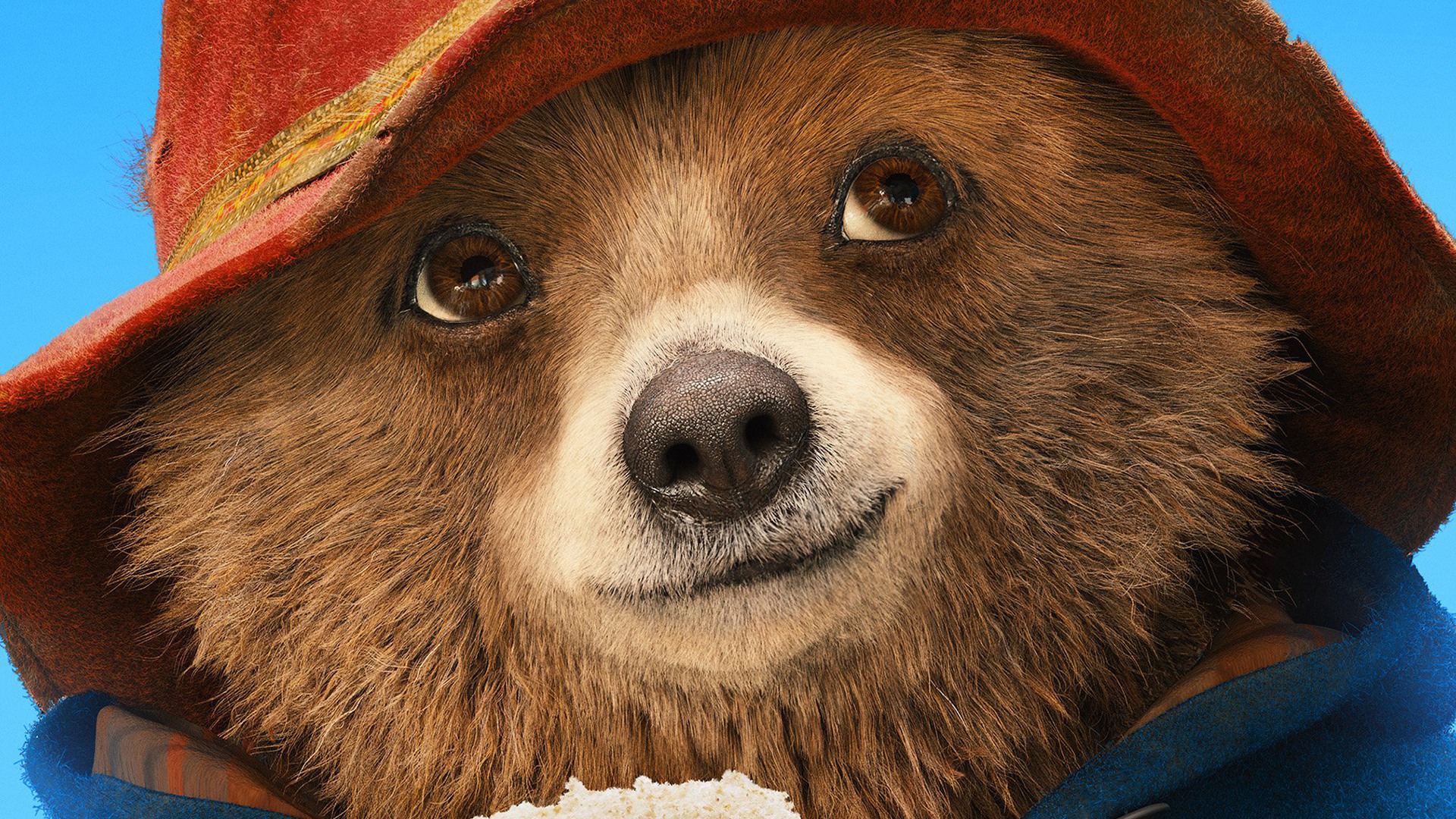
Paddington 2

by Cat McAlpine

Paddington 2 paints a beautiful, pop-up love letter to London. It breaks down something like this:

Wes Anderson aesthetic + Lemony Snicket whimsy + marmalade = Paddington Bear’s latest adventure.

Sure, this is a kid’s movie. The main character is a talking bear. His greatest aspiration is to buy a rare pop-up book of London for his Aunt’s birthday. In most ways, the film is predictable. Almost rote. But there’s some sparkle there, too.

Firstly, the movie is incredibly well lit. Lighting this good has no business in a children’s film’s sequel. And yet there it is. Warm yellow homes, moody shafts of light through window panes, snowy alleyways. That light isn’t wasted either. It illuminates bright, punchy sets and colorful costumes hung on a parade of quirky characters.

The Wes Anderson inspiration shows up in bright green rooms and pastel pink prison uniforms. Director Paul King finds sweetness in even life’s most ordinary moments. Where he cannot find sweetness, in a grimy pipe or a shattered telephone box, he finds curiosity instead, playing with light and camera angles.

Following a pop-up book of London, King makes sure to hit all of London’s beloved landmarks. London is a part of Paddington’s mythology. It’s a magical kingdom full of fun and mystery. King paints the city beautifully.

Secondly, what a cast. Sally Hawkins, fresh off her incredible performance in The Shape of Water, oozes gumption. English favorites parade across the screen: Peter Capaldi, Richard Ayoade, Brendan Gleeson.

None quite as fun, though, as Hugh Grant in his role as an unhinged stage actor. As the baddie, Grant never slips into evil. Nefarious, yes, but never evil. King keeps his film silly, always, but never allows it to be hollow.

For every predictable gag there’s a genuinely funny moment, too. Good children’s films cater to their whole audience, kids and parents. Its important to screen films like these in theatres. I was reminded of this when a character passed out, face down, into a cake. The children in the audience shrieked with delight.

That’s Paddington 2’s final merit. It’s good natured. It has jokes, visual gags, and constant reminders to be kind. Paddington believes in himself, his family, and his friends. Sure, a children’s film about a talking bear isn’t destined to be profound. But it manages to be sweet all the way through, just like marmalade.

Crazy Train

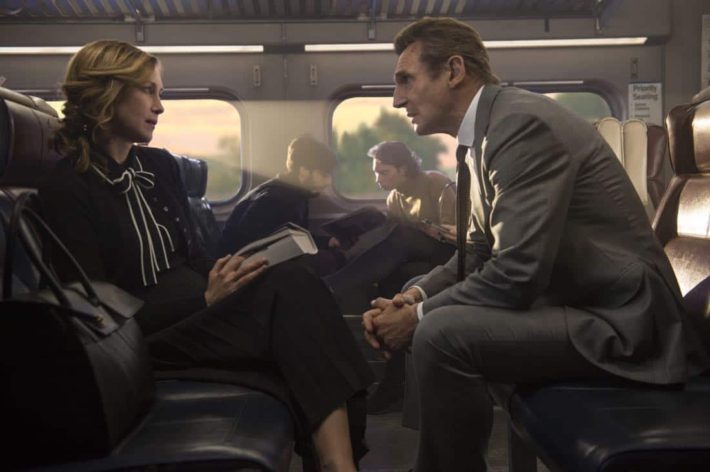
The Commuter

by Hope Madden

In 2014, Jaume Collet-Serra directed Non-Stop, a Liam Neeson thriller that saw the down-on-his-luck Irishman with a particular set of skills trapped on a speeding vehicle with a killer, a mystery, and an outside force looking to pin some wrongdoing on him.

In 2018, Jaume Collet-Serra directed The Commuter. Same movie. Train this time.

This go-round, happily married devoted father Michael MacCauley (Neeson) gets chatted up by the lovely and mysterious Joanna (Vera Farmiga) as he heads home on his nightly commute. She poses a question: would you do one little thing—something you are uniquely qualified to do—if it landed you 100k and you had no idea of the consequences?

Well, it’s not a game and next thing you know he’s dragging his lanky frame up and down the train cars trying to find a mysterious person with a mysterious bag before his family is nabbed or someone else gets killed.

How many times do we have to see this movie? We get it, Neeson is not a man to be messed with. He’s savvy, noble and he can take a punch.

Farmiga’s always a welcome sight, plus Sam Neill and Patrick Wilson contribute as they can. But mainly it’s just you, Neeson and a host of stereotypes trying to test your mystery-solving skills but not your patience.

At its best, The Commuter is a B-movie popcorn-munching ode to the forgotten middle class good guy. At its worst, a boldly predictable waste of talent littered with plot holes and weak CGI.

It’s a Liam Neeson movie. What do you want?

Must Never Be Silent

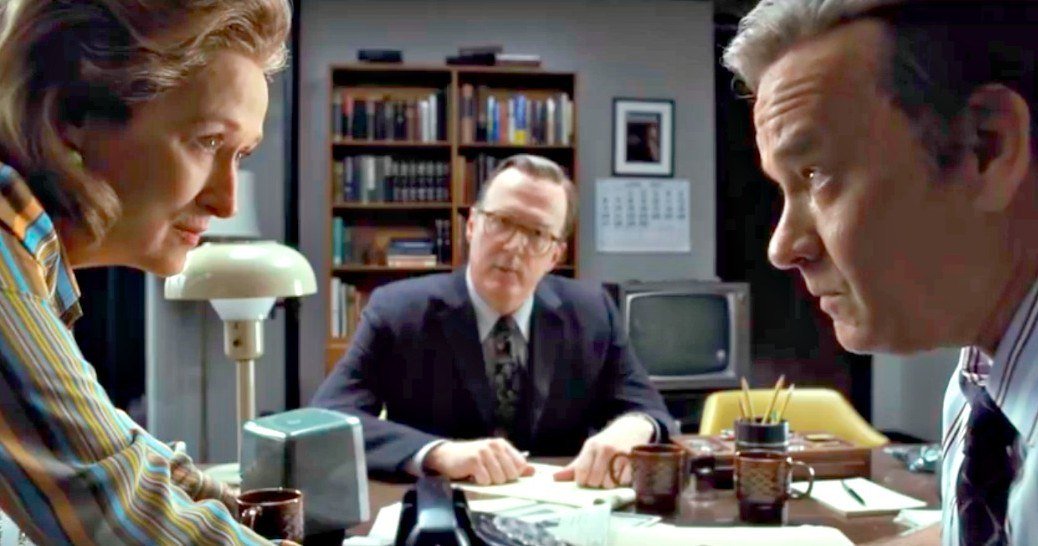
The Post

by Hope Madden

It is Oscar season, people, and we have a big story to tell. Assemble the heavy hitters!

Spielberg – check.

Tom Hanks – check.

Where do you go from there when you’re making the Big Important Film? The one with potential blockbuster legs?

Correct: Meryl Streep.

It is official: The Post has it all, beginning with the almost-too-relevant story of a newspaper casting off its personal associations to hold the government accountable by sharing actual news with citizens of the United States and the world.

“If we live in a world where the government tells us what we can and cannot print,” says Ben Bradlee by way of Tom Hanks, “the Washington Post has already ceased to exist.”

The year is 1971. The New York Times has just published parts of the Pentagon Papers, a decades-long study that proves the government lied for years about what was happening in Vietnam. The Washington Post wants desperately to be seen as one of the big news outlets, so they’re working to publish similar content of their own when Nixon decides it’s in his purview to suppress the freedom of the press.

A timely reminder of the struggle to maintain an informed public, Spielberg’s latest is also a testament to Post publisher Kay Graham (Streep). The film offers an insightful image of her difficult road and her courageous actions.

Like Spotlight, also co-written by Post co-scribe Josh Singer (writing here with Liz Hannah), this story encapsulates a watershed moment in journalism. No, not the struggle for a free press. The introduction of profit into the mix. Part of the film’s tension comes from the fact that the Pentagon Papers became available at the same time that the Post was being made public, which introduces yet another powerful contributor toward determining what is and is not deemed appropriate news: money.

It’s a lot to tackle, but naturally, Spielberg has it all well in hand and he doesn’t limit his spectacular casting to Streep and Hanks. Look for great ensemble performances from Tracy Letts, Bob Odenkirk, Bradley Whitford, Sarah Paulson, Bruce Greenwood and about 30 others.

Spielberg’s passion and polish come together here as an expertly crafted rallying cry. He’s preaching to the choir, but he preaches so well.

I Don’t Want to Go Out – Week of January 8

Nasty weather getting you down? Nothing cheers a body up like a clown! That’s right, It comes home this week, along with some other bits of middling entertainment from 2017. Wouldn’t it all go so well with popcorn? Pop pop pop pop pop…

Click the film title to read the full review.

It

Marshall

The Foreigner

Mark Felt: The Man Who Brought Down the White House

Friend Request

The Screening Room: Ice, Ice Baby

Some Oscar contenders out this week. The Screening Room helps you sort them out: I, Tonya, Molly’s Game, Insidious: The Last Key plus what’s new in home entertainment.

Listen to the podcast HERE.

Don’t Open the Door

Insidious: The Last Key

by Hope Madden

The Insidious franchise—like most horror series—began missing a step about two films in. The fourth installment, Insidious: The Last Key, starts off with promise, though.

Thanks in large part to a heartbreaking performance from Ava Kolker, the newest Insidious opens with a gut punch of an origin story.

By Episode 3, we’d abandoned the core family of the first two films to follow ghost hunters Elise (Lin Shaye), Tucker (Angus Sampson) and Specs (Leigh Whannell, who also writes the series). As this film opens, we glimpse the beginnings of Elise’s gift, the troubles it brings, and the demon she unwittingly released into the world.

Though the minor characters are full-blown clichés, director Adam Robitel (The Taking of Deborah Logan) and his young actors create a compelling opening.

Can Insidious: The Last Key deliver on that promise?

No.

Is it the tedious jump-scare-athon with none of the exquisite delivery we’ve come to expect from James Wan (director of the original Insidious, and producer here)? Is it the mid-film move from spectral thriller to police procedural and back? Is it the creepy attention Elise’s goofball sidekicks pay to her young and pretty nieces?

Or is the problem that the whole cool sequence from the trailer—you know, with Melanie Gaydos and all the ghosts coming out of the jail cells?—is missing from the movie.

Yes—it’s all that and more. The film is a jumbled mess of backstory and personal demons, clichés and uninspired monsters. All of this is shouldered by the veteran Shaye, who is, unfortunately, no lead.

Shaye has proven herself to be a talented character actor in her 40+ years in film, often stealing scenes out from under high-paid leads. (Please see her in Kingpin and There’s Something About Mary, she’s genius.) But she doesn’t have the magnetism to carry a film, and The Last Key feels that much more untethered and pointless for the lack.

Everything runs out of steam at some point. Here’s hoping this franchise has run out of doors to open.

CoFCA Announces Best Films of 2017

The Columbus Film Critics Association (CoFCA) gathered at that weird upstairs room at Ace of Cups last night to formally announce the winners of their 16th annual awards for the best in film of 2017.

Greta Gerwig’s coming of age indie Lady Bird racked up the most awards with a total of four: Best Film, Ensemble, Director (Gerwig) and Supporting Actress (Laurie Metcalf).

Jordan Peele’s Get Out, the second biggest vote-getter for both best film and director, also nabbed two first place nods for Peele, who came away with awards for Breakthrough Artist and Best Original Screenplay.

The Columbus Film Critics Association is collection of print, online and broadcast film critics based in the Columbus area. You can find them at cofca.org.

Complete list of awards:

Best Film
1. Lady Bird
2. Get Out
3. The Shape of Water
4. The Big Sick
5. Blade Runner 2049
6. Three Billboards outside Ebbing, Missouri
7. The Post
8. The Florida Project
9. Dunkirk
10. The Killing of a Sacred Deer

Best Director
Greta Gerwig, Lady Bird

Best Actor
Gary Oldman, Darkest Hour

Best Actress
Sally Hawkins, The Shape of Water

Best Supporting Actor
Willem Dafoe, The Florida Project

Best Supporting Actress
Laurie Metcalf, Lady Bird

Best Ensemble
Lady Bird

Actor of the Year (for an exemplary body of work)
(Tie) Sally Hawkins (Maudie and The Shape of Water) and Tracy Letts (Lady Bird, The Lovers, and The Post)

Breakthrough Film Artist
Jordan Peele, Get Out – (for directing and screenwriting)

Best Cinematography
Roger Deakins, Blade Runner 2049

Best Film Editing
Jonathan Amos and Paul Machliss, Baby Driver

Best Adapted Screenplay
Virgil Williams and Dee Rees, Mudbound

Best Original Screenplay
Jordan Peele, Get Out

Best Score
Alexandre Desplat, The Shape of Water

Best Documentary
Faces Places (Visages, villages)

Best Foreign Language Film
BPM (Beats Per Minute) (120 battements par minute)

Best Animated Film
Coco

Best Overlooked Film
The Meyerowitz Stories (New and Selected)