Tag Archives: movie reviews

Super Eight

Eighth Grade

by Hope Madden

You can’t be brave without being scared.

That is an insightful comment, but when it’s delivered earnestly by a lonely, introverted 13-year-old determined to come out of her shell in the meanest of all worlds—middle school—it is a gut punch.

Who would have thought that the most truthful, painful, lovely, unflinching and adorable tween dramedy in eons would have sprung from the mind of 28-year-old comic Bo Burnham? Or that the first-time feature director could so compassionately and honestly depict the inner life of a cripplingly shy adolescent girl?

But there you have it.

Elsie Fisher’s flawless performance doesn’t hurt.

Fisher (Despicable Me‘s Agnes, “It’s so fluffy!”) is Kayla, and we are with her, immersed in her world, for the last week of the eighth grade. God help us.

In Fisher, Burnham has certainly found the ideal vehicle for his story, but his own skill in putting the pieces together is equally impressive. Burnham’s as keen to the strangulating social anxieties of middle school as he is to the shape-shifting effects of technology.

This is the least self-conscious and most accurate portrayal of the generational impact of social media yet presented, and not just as part of the narrative. He uses social media as a storytelling device, whether the way the screen lights up the isolated face of a lonely teen, or the way the sound of the same girl’s YouTube videos narrate the very advice she wishes she were hearing from somebody.

It’s equal parts heartbreaking and sweet, and it miraculously never hits a false note.

He depicts both the normal that we all must tragically know, of being wildly out of your element even in your own skin, and the new normal that feels beyond bizarre. If your greatest ineptitude is human contact, how much harder to hone that skill when your only practice is in a virtual world?

Mercifully, Eighth Grade is not a cautionary tale about the dehumanizing dangers of an online world. It simply accepts that this is the world in which Kayla lives, depicting it as authentically and insightfully as he does a random lunch with the cool kids at the mall, or an unbearably awkward situation with a boy in a car.

Still, the best scene in the film—one that’s as uplifting as it is genuine—casts aside the glow of the phone for starlight and bonfire as Kayla and her dad, beautifully brought to life by Josh Hamilton, share a moment that will just fucking kill you.

Seriously, Burnham was never a 13-year-old girl nor has he ever been father to one. How the hell did he get all of this so insanely right?

I don’t know, man, but good for him. Good for all of us.

Les Demoiselles d’Avignon!

Jeannette: The Childhood of Joan of Arc

by Cat McAlpine

I do not like the works of Picasso.

I recognize that his paintings changed the course of art forever, and they are done with incredible skill and talent. I just don’t like them. They’re not my jam.

I also did not like Jeannette: The Childhood of Joan of Arc. But art isn’t always about whether you like it or not. And, unfortunately, art is almost never about me.

Jeannette is beautiful, absurd, and a true test of endurance. I’ve read that Bruno Dumont does not cast experienced actors. That much is painfully obvious from a litany of bizarre deliveries, missed high notes, and the ultimate theatre sin: I-don’t-know-what-to-do-with-my-hands thigh slaps.

In harsh contrast to the period, pastoral landscape and costuming is the original soundtrack from avant-garde band Igorrr, full of electric guitar riffs that all sounded the same even twenty minutes in. The accompanying choreography, always including stomping and head banging, is as bizarre as it is uncomfortable.

After the third pitchy prayer to god by doe-eyed Lise Leplat Prudhomme, I stopped asking Jeanette to be a musical. I waited for Jeanette to simply be… whatever it wanted to be.

Hark! Deliverance! Director Dumont hits his bizarre and delightful stride when identical twins Elise and Aline Charles play Madame Gervaise simultaneously. They speak quickly and flatly, alternating between speaking in turn and in unison. “I” they chorus. They chastise Prudhomme’s Jeannette for questioning God. They are the Tweedledee and Tweedledum of eternal suffering.

Later, the Charles sisters appear as floating visions of saints. I realize that Jeanette is unfolding like a Medieval epic poem. Characters call to God, visions appear from nowhere, and the choreography mimics the exaggerated gestures of much older theatrical performances. The longer scenes drag on the more they make insane sense.

Not much happens in Jeannette. A solid 80% of the film is shot from the same angle in the same field. The characters talk in circles about eternal suffering and God’s plan for France. It gets tedious. Boring.

There’s a glimpse into the true absurdity of Dumont’s vision when we finally see into an older Jeanne’s home (played now by a righteous Jeanne Voisin, much better than her young counterpart). Jeanne’s brothers, with no lines, undulate as her father sings their work order for the day. Her uncle (a green but intriguing Nicolas Leclaire, who raps instead of singing) writhes in the corner, throwing in a few dabs for good measure.

The height of lunacy is where Dumont is most brilliant. If anything, his greatest hindrance was not going big enough. Dream on, my dear Dumont. Surely you’re doing something important for the rest of the film world. It’s just not my jam. And that’s okay.

I Don’t Want to Go Out—Week of July 23

Well, if you’ve made it through the bounty that the home entertainment gods bestowed upon us last week and you are looking for just one more movie, well, that’s exactly what you’ve got this week.

Click the film title for the full review.

Ready Player One

The Screening Room: Deuces

Back again? So are some of the same old titles—it’s the week of sequels! We talk through the best and the worst: Mamma Mia! Here We Go Again, The Equalizer 2, Unfriended: Dark Web, plus a couple of original ideas—The Cakemaker and The Night Eats the World. We also run through the best and worst in the boatload of new movies available in home entertainment.

Listen to the full podcast HERE.

Crisis Acting

Ava

by Rachel Willis

A single act of teenage rebellion is the catalyst for a family’s destruction in director Sadaf Foroughi’s feature debut, Ava.

It’s a harmless action that tears apart the family’s fragile peace – Ava (Mahour Jabbari) tells her parents she’ll be studying at her friend, Melody’s, house only to sneak out to meet a boy and win a bet with a few of her classmates. Trying to prove she’s won, she’s late to meet her mother. Because of this, Ava’s mother, Bahar (Bahar Noohian), begins a campaign to weed out any element she deems unsavory from her daughter’s life.

It’s a hard world for a teenage girl. Gossip runs rampant, and it’s not just fellow teenagers spreading rumors, but teachers and parents, too. One mistake can ruin a young woman’s reputation and determine the course of her life. It’s not surprising that Bahar treats her daughter’s single offense with such vehemence. However, when Ava discovers a buried family secret, her rebellion takes on greater significance.

As Ava, Mahour Jabbari is sympathetic and compelling. Her desire for independence is understandable, but her actions are careless. Few of the women in her life show any compassion toward her choices. Only her father (Vahid Aghapoor) stands by her as someone who believes what she says and supports her decisions. However, his support puts him at odds with Bahar, who knows better than her husband how deeply a single mistake can affect a woman’s life.

Both Aghapoor and Noohian are stellar. Each character is confused by their daughter’s choices and her attitude, but how they handle the situation elevates the tension. They turn on each other; a once happy couple becomes another source of stress in Ava’s life.

Unfortunately, some of Foroughi’s stylistic choices are more distracting than beneficial. Blurry images dominate the frame, while the focal point is relegated to a small image in the corner. Arguing characters will be shown from the neck down, their heads cut off at the top of the screen. The commentary Foroughi hopes to achieve, unfortunately, doesn’t really come across.

Ultimately, though, the filmmaker has crafted a compelling, thoughtful portrait of a family in crisis.

A Little Help From a Friend

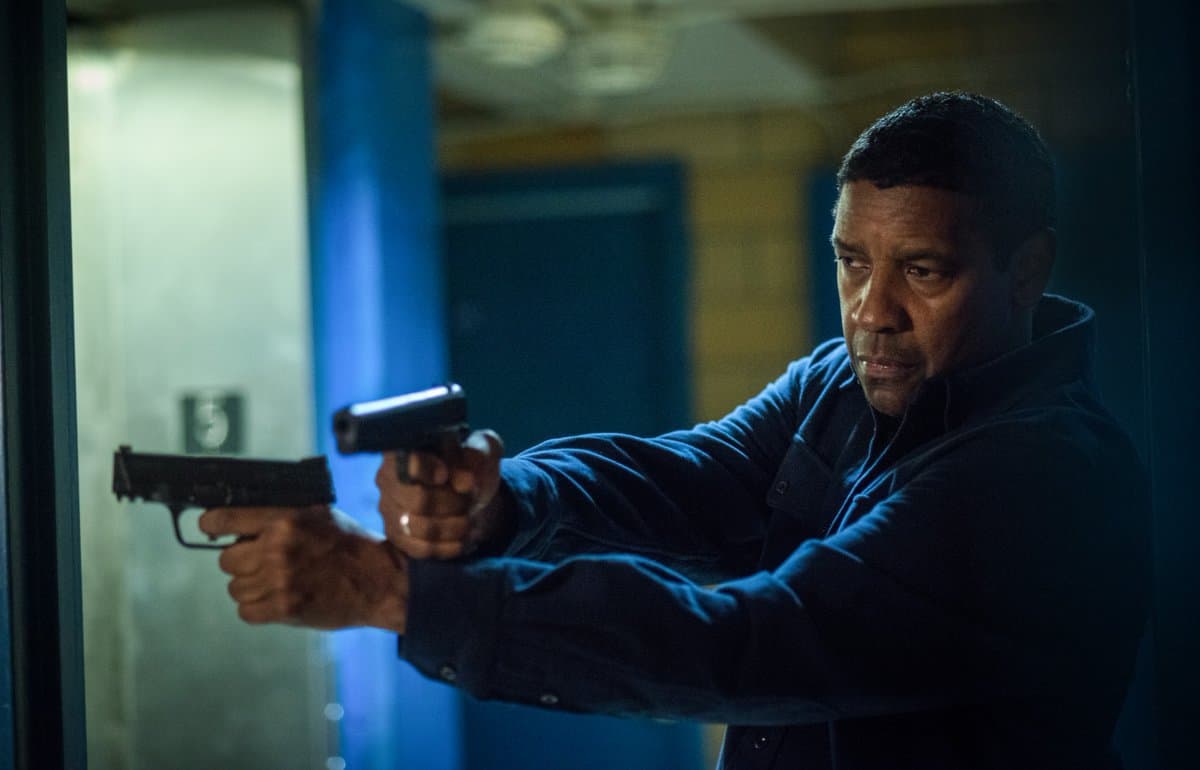
The Equalizer 2

by George Wolf

It still confounds me why John Wick gets more action cred than The Equalizer. Released less a month apart in 2014, Denzel and director Antoine Fuqua bettered Keanu and Chad Stahelski in nearly every respect. But, in fairness John Wick helped inspire Key and Peele’s very funny Keanu so I’ll move on.

JW already dropped its deuce (with part 3 currently in the works), and now The Equalizer 2 gets its director, star and screenwriter (Robert Wenk) back together for a slightly less satisfying dose of the same medicine.

Robert McCall (Denzel) has moved on from that big box hardware store he decimated in part one and settled in as a Lyft driver, making friends around his Boston neighborhood, and enemies when someone wrongs his friends.

E2 lets us see more of that random equalizing, which means more time before we get to the core conflict, but also more helpings of those bad guy beatdowns that bring such primal satisfaction.

Denzel is effortlessly good, which comes as a shock to no one. He digs deeper into the character this time out, maintaining the ticks that outwardly define McCall while sharpening the edges of a mysterious past that is never too far out of reach.

Secrets from that past begin to leave a bloody trail, and after a hit is ordered on his old boss Susan (Melissa Leo), McCall promises to make the guilty pay, his only regret being that he “can’t kill them twice.”

Denzel as a badass is so much cool fun, and he’s clearly the muse for Fuqua’s best work (Training Day, The Magnificent Seven). The stylized violence that so elevated the first film is here as well, but like most of the other elements, in lesser numbers.

The absence of a memorable villain is also felt. Marton Csokas was a great one, and E2 comes nowhere close to matching his simmering intensity. Substantive moral ambiguities are raised in fairly generic fashion, metaphors get a touch too weighty and the running time a bit too excessive.

The Equalizer 2 does offer plenty to like – Denzel, some scenes with unexpected turns,  a surprisingly touching epilogue, Denzel – but little of it can match the style or the vibe of the original.


Like the Beat from a Tambourine

Mamma Mia! Here We Go Again

by Hope Madden

You may be asking yourself, is Mamma Mia! Here We Go Again just 90 minutes of second-rate, b-side Abba songs? All those weird songs that no sensible story about unplanned pregnancy could call for? Songs like Waterloo?

Nope. It is nearly two full hours of it.

Sophie (Amanda Seyfried) wants to open her mother’s crumbling Greek hotel as an upscale island resort. She’s so terribly angsty about it! Will anyone come to the grand opening? Will her mom be proud of her? Can she handle the pressure if her husband’s traveling and two of her three dads can’t make it?

Transition to a simpler time, a time when her mom Donna was young (played by Lily James), bohemian and striking out on her own. She has chutzpah. She has friends who love her. She has great hair.

The majority of the sequel to Phillida Lloyd’s 2008 smash looks back on the romantic voyage that created the three dad business of the first film.

James is a fresh and interesting a young version of the character Meryl Streep brought to life in the original. Likewise, Jessica Keenan Wynn and Alexa Davies make wonderful younger selves for Tanya (Christine Baranski) and Rosie (Julie Walters).

The three dads have young counterparts as well, though only Harry (Colin Firth/Hugh Skinner) lands a memorable characterization. Firth is reliably adorable while Skinner’s socially awkward young man is as embarrassing and earnest as we might have imagined.

Also, Cher.

Expect an awful lot of needless angst and long stretches without humor. Whether present-time or flashback, the film desperately misses the funny friends. Desperately. But when they are onscreen, Here We Go Again cannot help but charm and entertain.

The story is weaker, although there is a reason for that. While the original gift-wrapped an origin story to plumb, the plumbing is slow going when you still have to abide by the Abba songtacular gimmick.

The sequel’s musical numbers rely too heavily on slow tunes and stretch too far to make the odder Abba songs work, but in a way, that is, in fact, the movie’s magic.

Your best bet is to abandon yourself to the sheer ridiculousness of it. There is literally no other way to enjoy it.

I Don’t Want to Go Out—Week of July 16

Damn, there is a lot of good stuff coming home this week! A fair amount of middling stuff and a handful of full-on garbage, too, so your best bet is to let us walk you through your options.

Click the movie title for the full review.

You Were Never Really Here

Disobedience

Isle of Dogs

Super Troopers 2

Traffik

https://www.youtube.com/watch?v=JyHVAe3BDtM

I Feel Pretty

Rampage

Truth or Dare

The Screening Room: Highs and Lows

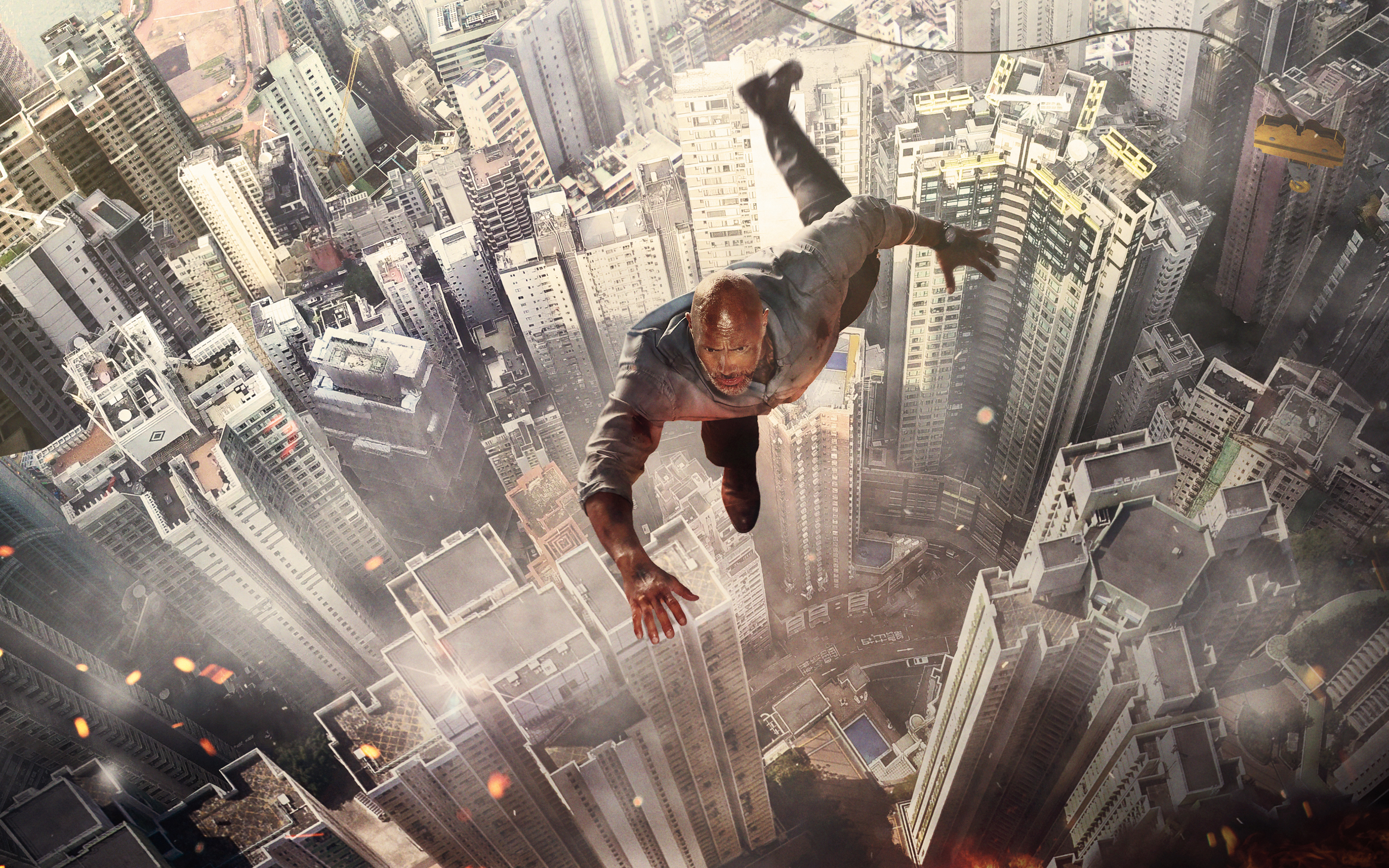
Welcome back to The Screening Room, where we discuss all that’s new and fit to watch in theaters and home entertainment. This week we run through Skyscraper, Sorry to Bother You, Hotel Transylvania 3: Summer Vacation, Leave No Trace and The Devil’s Doorway. We also cover what’s new in home video.

Listen in HERE.