It’s Halloween all over again! Two above-average spookfests and one longshot Oscar contender ensure that just about everything this week in home entertainment is a tasty treat.
A lot of movies, some of them quite surprising, to talk about this week in the screening room: The Upside, Replicas, On the Basis of Sex, A Dog’s Way Home, El Angel and Rust Creek. Plus, we peek at new releases in home entertainment and tease next week’s features.
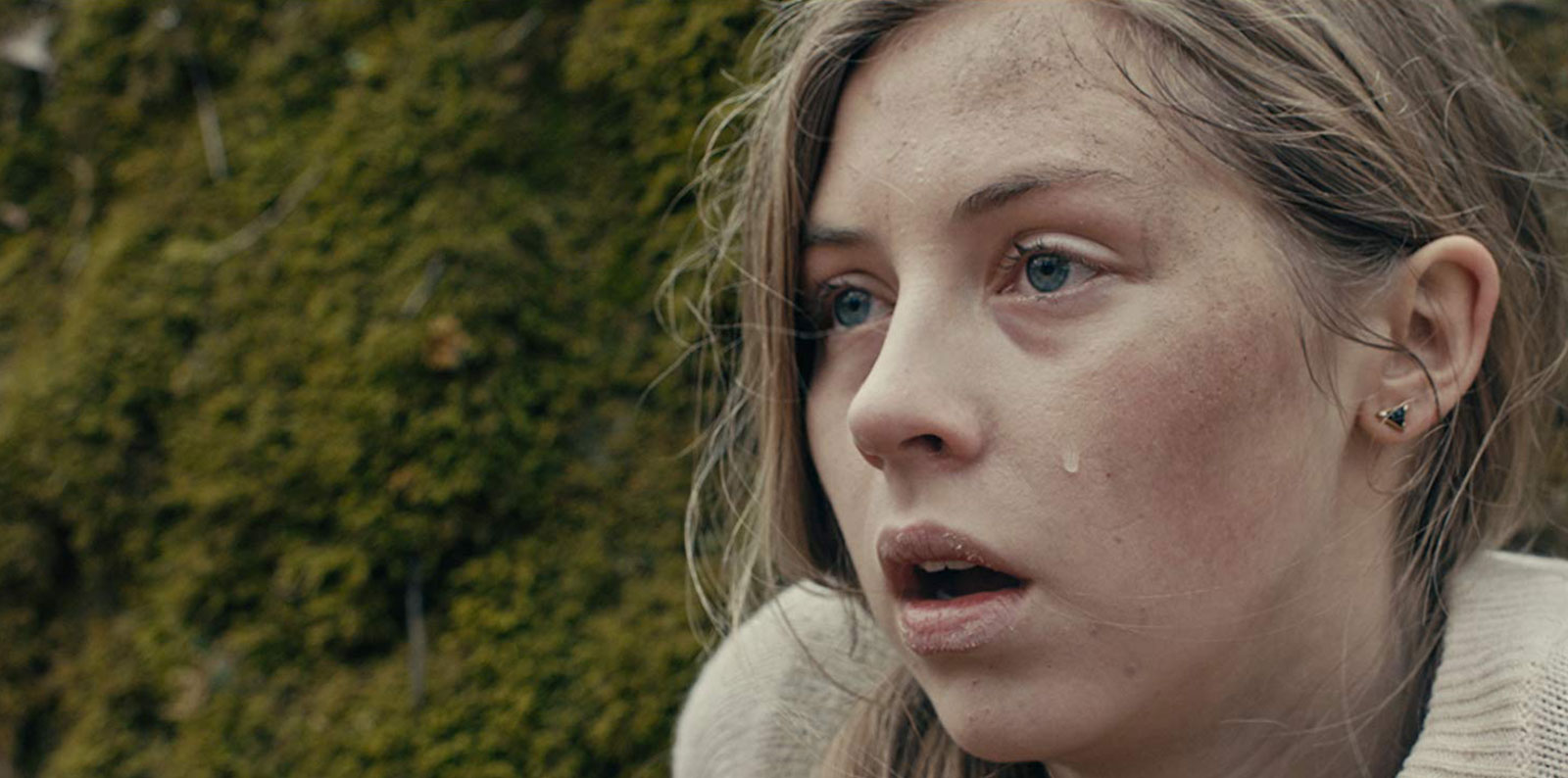
College co-ed (Hermione Corfield) follows her GPS into the backwoods of Kentucky, and hits a dead end before bumping into some less-than-helpful locals: tussle, injury, escape into the woods.
I don’t know how many times you’ve seen that very film, but I have probably seen it twice already this week. (It’s a problem, I know.)
This woman-in-peril pairing with the “city folk lost in the backcountry” formula equals one very tired experience.
The fact that filmmaker Jen McGowan, working from a script by Julie Lipson, offers us a victim/heroine who fights and thinks is not quite enough to save Rust Creek from drowning. But McGowan’s tricky, and she has more surprises packed in her double-wide than you might think.
The film, on its surface, asks us to rethink the victim in a hillbilly thriller. But Rust Creek cuts deeper when it requires that we—and the heroine, for that matter—rethink the hillbilly.
Michelle Lawler’s cinematography sets a potent mood, enveloping the proceedings in an environment that is in turns peaceful and gorgeous or treacherous and brutal, and she does it with natural, almost poetic movement.
This imagery allows the Kentucky woods to become the most vibrant character in the film, although those tree-covered hills are peopled by a few locals worthy of notice—not all, but a few.
Jay Paulson—best known to normal people for his brief stint on Mad Men, best known to my people as the porn-obsessed psychopath in Robert Nathan’s Lucky Bastard—cuts an intriguing, lanky figure as Lowell.
Slyly fascinating from the moment he takes the screen, Paulson shares an uncommon onscreen chemistry with Corfield. The smart, human relationship they build as they bide their time and cook some meth may be reason enough to see Rust Creek.
McGowan doesn’t burst as many clichés as she embraces, unfortunately. Still, the biggest obstacle facing her as she maneuvers her tropes to serve a (hopefully) unexpected purpose is that her protagonist is the least interesting character in the movie. This is not necessarily Corfield’s fault. She does what she can with limited resources. Sawyer is just the fuzziest character, and the one with the least articulated arc.
That means the resolution packs less of a wallop than it should, but certain moments and characters will linger.
The man who can’t feel a thing meets the man who hasn’t cared for anybody but himself. You will not believe what happens next.
Actually, if you’ve seen any inspirational movie about overcoming adversity in the last half century, you will totally believe what happens next. There is one big surprise in The Upside, though, and it’s how committed the leads are to making it way less cynical than it has every right to be.
I’m not sure it’s enough to redeem a film that’s been done dozens of times, but at least it makes this entry highly watchable. For this version, Bryan Cranston and Kevin Hart star as the odd couple from different walks of life who learn valuable lessons from each other in unexpected ways.
After being paralyzed from the neck down and losing his wife to cancer in short succession, billionaire investor Phillip Lacasse (Cranston) has given up on life. A chance encounter with street-smart parolee Dell Scott (Hart) brings a burst of fresh air into Lacasse’s narrow world, and Dell is hired on as a live-in aide.
Lacasse sees potential in Dell and appreciates having someone who treats him as a person, not merely someone to be pitied or ignored. It’s an admirable sentiment, and the chemistry between Cranston and Hart is the most winsome part of the movie. And a good deal more enjoyable than the contrived romantic subplot with Nicole Kidman, who gets to put her real accent to good use but not much else.
Cranston and Hart play off each other so well that it makes you wonder why not put that talent to work with a less hidebound story? The Upside is an adaptation by Neil Burger of the 2011 French film The Intouchables, which was wildly popular despite suffering from the same clichés. The script for the remake by Jon Hartmere manages to make the story a little more subtly endearing than colonial when Lacasse, doing his best platonic Henry Higgins, teaches Dell to appreciate fine art and opera. Just a little.
But banish those nagging doubts from your mind. The Upside pleads to be taken as all text, no subtext. This is, after all, a movie that turns themes, lessons and even symbolism into neatly packaged dialogue. You won’t hear anything new, but a lot of it is genuinely funny and well-delivered.
And who am I to judge the French for shopworn sincerity? They’re not the country that gave an Oscar to Crash.
In his wallet, my friend Jake keeps a picture of an attractive young woman he’s never met, just so he can use it for a bar trick.
It’s a picture clearly taken decades ago, and after a few cold ones, Jake will put the snapshot in someone’s face and challenge them.
“Who is this?!”
Most times they don’t know.
“RUTH BADER GINSBURG!”
That’s just one example of the rock star status RBG has achieved since joining the Supreme Court in 1993. A progressive champion at age 85, her every sniffle draws attention while more serious issues (like the recent surgery that caused her to miss SCOTUS opening arguments for the first time) elicit regular Google searches on her health.
But behind the pop culture status and “Notorious RBG memes” lies a truly heroic life. Already profiled last year in the Oscar-contending documentary RBG, On the Basis of Sex adapts her story for a big screen feature unable to contain its pure fandom.
Biopics on such legendary figures are usually wise to keep the focus tight rather than tackle the entire life story, and OTBOS works best when it digs deep into the first gender discrimination case Ginsburg (Felicity Jones) argued in court: Moritz v. Commissioner of Internal Revenue in 1971.
She presented the case alongside husband Marty (Armie Hammer), giving the film an organic mix of the personal and professional that first-time screenwriter Daniel Stiepelman (who is also RBG’s nephew) uses as his opening to also salute the sweetness of the Ginsburg love story.
It’s an understandable approach by an understandably biased party, but one that leads the film toward a path of hagiography and intermittent schmaltz that director Mimi Leder (Deep Impact, Pay It Forward) is seldom interested in resisting.
Jones carries the film with a terrific lead performance, Hammer delivers his usual fine support, and there’s no question Ginsburg is worthy of a big screen tribute, but this one can’t free itself from the admiring glow RBG basks in today. The sexism she faced is addressed, of course, but in ways that never feel more threatening than annoying flies this Superwoman will easily swat away.
Though its finale scores big, with Jones delivering a stirring closing argument before a cheer-worthy walk up courthouse steps, On the Basis of Sex rests as a film always competent and sincere, but seldom revealing.
Holidays are over, work is already a drag, who wants to just snuggle up and watch a movie? There is one great one available this week. Also one that’s got some promise, even if it derails. Then there’s one that’s frustrating because we really wanted to like it.
Man, I really liked Escape Room back in 1997 when it was called Cube.
Director Adam Robitel, who managed to do something fresh and upsetting with his 2014 feature directorial debut The Taking of Deborah Logan, here contents himself with borrowing … lifting…no, this is downright larceny.
In Vincenzo Natali’s underfunded but groundbreaking Canadian horror, Cube, six strangers—each with unique skills and backgrounds—find themselves trapped in a building and must unravel each room’s puzzle only to escape to the next room/deathtrap.
I don’t know if you’ve seen the trailer for Escape Room, but Robitel and screenwriters Maria Melnik and Bragi F. Schut have certainly seen Cube.
Cripplingly shy brainiac Zoey (Taylor Russell) is one of a handful of random strangers to receive a puzzle box in the shape of a cube. Let’s just assume that’s a nod toward the film’s source material and not a different, terrible rip off of Hellraiser.
By solving the puzzle, Zoey—and, sprinkled all over town, others—win the opportunity to attempt the most elaborate escape room ever constructed.
Actually, the architecture is weirdly familiar.
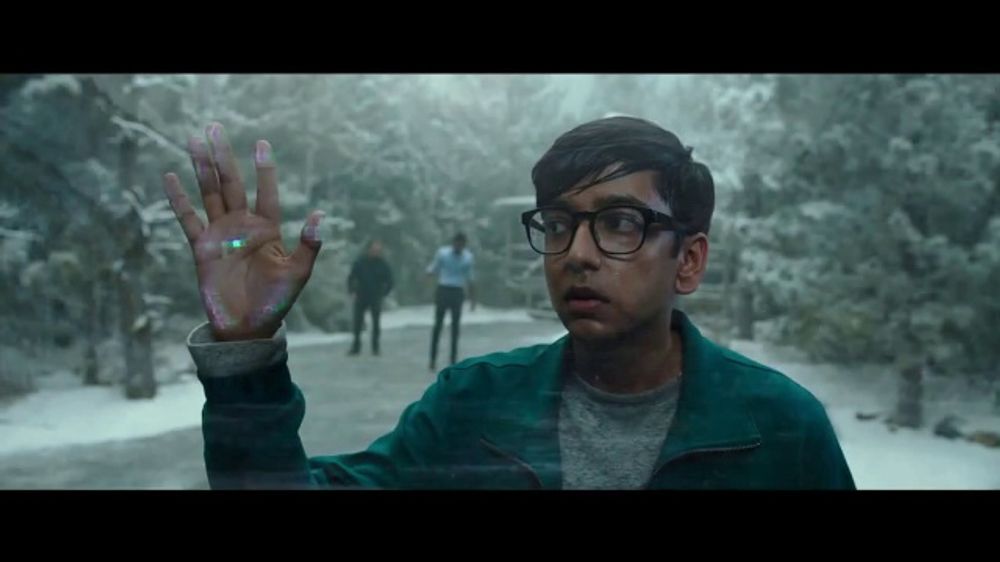
If you can get past the plagiarism and lazy theft–please add Final Destination and Saw to the list of the aggrieved—you will note that Russell and the entire cast performs quite well. Deborah Ann Woll (True Blood) impresses as a bit of a badass, while Nik Dodani endears in a small role and Tyler (Tucker and Dale vs Evil) Labine is adorable, as is almost always the case.
Many of the set pieces are pretty cool, too. One upside-down billiards room bit, in particular, holds your attention. But the game cast and sometimes fun sequences can only overcome the film’s weaknesses for so long.
Even if all these antics are new to you, the film’s predictable climax and disappointing waning moments are bound to leave you feeling that this movie could have been better.
That girl is Liyana, a fictional character brought to life by the children living at Likhaya Lemphilo Lensha, a home for orphans in Swaziland.
During a storytelling workshop at the children’s home, author Gcina Mhlophe guides the boys and girls through exercises that allow them to imagine a collective story. Together, they weave a tale of a young girl facing enormous challenges.
Directors Amanda Kopp and Aaron Kopp focus primarily on five children, Phumlani, Nomcebo, Sibusiso, Mkhuleko and Zweli; their voices are the ones we hear throughout the film. By keeping these five at the center, we’re given a chance to get to know their personalities. Each tells the story in their own way. While the plot is the same, the details are unique to each child.
As the creative narrative unfolds, the audience is given glimpses into the lives of the children at Likhaya Lemphilop Lensha. We learn that many of the details of Liyana’s life reflect the children’s realities. HIV takes both of Liyana’s parents; her twin brothers are kidnapped in the dead of night by three vicious men. But Liyana faces each tragedy with determination; her hope and her fearlessness reflect the inner feeling of the children telling her story.
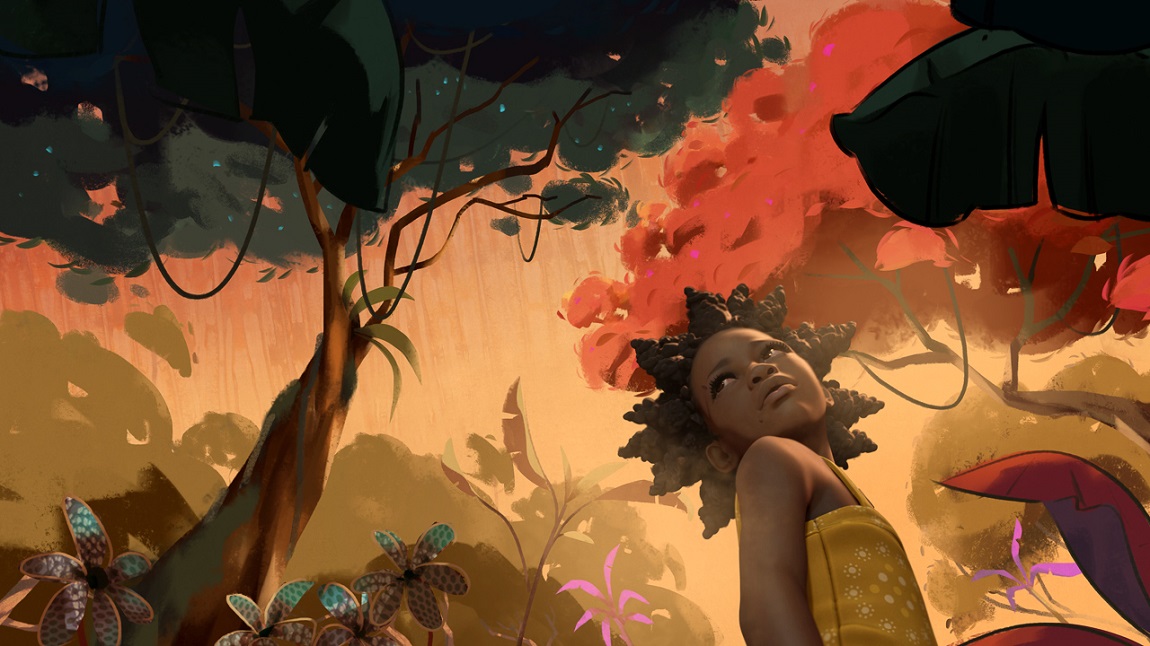
Liyana’s story is brought to life through a combination of the children’s words and gorgeous illustrations that animate the narrative. The film’s strengths lie in this weaving of the day to day realities of life with the vibrant story the children narrate.
The film’s most moving moments are when we’re allowed to spend time with the children. Watching them work in the garden, herd cattle, dance and play games is when the documentary shines. Though the children’s story is wonderful, it might have been a more powerful film if the directors had struck a better balance between fantasy and reality.
However, the indomitable spirit of children is the heart of the film. All of them have faced adversity, sadness and despair, but each has hope and it shines throughout the documentary. Liyana celebrates that wondrous courage.
Writer/director Barry Jenkins follows up his 2016 Oscar-winning masterpiece of a debut, Moonlight, with the ambitious goal of translating the work of a beautifully complex writer to a cinematic narrative. By respecting the material with a stirring commitment to character, If Beale Street Could Talk meets that goal with grace.
Based on the novel by James Baldwin (and the first English-language adaptation of his fiction), the film follows a struggling couple as a means to illustrate the intersecting forms of oppression facing African Americans.
Tish (KiKi Layne in an impressive feature debut) and “Fonny” (Stephan James, from Selma and Race) are a young couple in Harlem who embraces their unexpected pregnancy while struggling to prove Fonny’s innocence in a rape case.
As the surface tension is driven by the potentially dangerous chances Kiki’s mother (Regina King) takes to clear Fonny’s name, smaller, more quiet moments around the neighborhood cement Baldwin’s incisive take on what it means to be black in America.
Baldwin’s writing – a mix of brutal honesty, brilliant clarity and weary outrage – is understandably daunting as a film adaptation. Themes which breathe with life on the page can come to the screen in an awkward rush and land as heavy handed melodrama.
Jenkins, whose early script got the blessing of Baldwin’s estate even before the triumph of Moonlight, brings an elegance to the story which fits comfortably. A poetic camera, authentic characters and tender, fully realized performances—especially from the glorious King—weave together to sing the praises of Baldwin’s prose in hypnotic, and often heartbreaking fashion.
Amid a story of grim realities and American resilience lie bonds of love and family that the film never loses sight of, even in its most sober moments, which may be the most miraculous aspect of If Beale Street Could Talk.
It is a film without illusions, but one that carries the unbowed spirit of its characters on a deeply felt journey that honors its origins.
Was 2018 the lamentable year in horror that some dumbasses suggest? No! There was a wild and impressive range in independent horror and blockbuster stuff, gore and comedy, psychological scares and slashers. It was a really fun year to look back on, as we do today to rank the best in horror the year had to offer. Join us, won’t you?
10. The Ritual
David Bruckner has entertained us with some of the best shorts in horror today, including work from V/H/S, Southbound, and one of our favorites, The Signal. Directing his feature debut in The Ritual, Bruckner takes what feels familiar, roots it in genuine human emotion, takes a wild left turn and delivers the scares.
Five friends decide to mourn a tragedy with a trip together into the woods. Grief is a tricky, personal, often ugly process and as they work through their feelings, their frustration quickly turns to fear as they lose themselves in a foreign forest where danger lurks.
The film works for a number of reasons, but its greatest triumph is in making the woods scary again. That environment has become such a profound cliché in horror that it is almost impossible to make it feel fresh, but there is an authenticity to the performances, the interaction among the characters, and the frustration and fear that grounds the horror. And then there is horror—intriguing, startling, genuinely frightening horror. Yay!
9. Unsane
Sawyer Valentini (Claire Foy—brittle, unlikeable and amazing) is living your worst nightmare. After moving 400 miles to escape her stalker, she begins seeing him everywhere. She visits an insurance-approved therapist in a nearby clinic and quickly finds herself being held involuntarily for 24 hours.
After punching an orderly she mistakes for her stalker, that 24 hours turns into one week. And now she’s convinced that the new orderly George is, in fact, her stalker David (Joshua Leonard—cloying, terrifying perfection).
After laying bare some terrifying facts about our privatized mental health industry, Steven Soderbergh structures this critique with a somewhat traditional is-she-or-isn’t-she-crazy storyline. Anyone who watches much horror will recognize that uneasy line: you may be here against your will, but that doesn’t mean you shouldn’t be here.
And the seasoned director of misdirection knows how to toy with that notion, how to employ Sawyer’s very real damage, touch on her raw nerve of struggling to remain in control of her own life only to have another’s will forced upon her.
He relies on familiar tropes to say something relevant and in doing so creates a tidy, satisfying thriller.
8. Mom and Dad
I brought you into this world, I can take you out of it.
It’s a joke, of course, an idle threat. Right?
Maybe so, but deep down, it does speak to the unspeakable tumult of emotions and desires that come with parenting. Wisely, a humorous tumult is exactly the approach writer/director Brian Taylor brings to his horror comedy Mom and Dad.
Why do you want to see it? Because of the unhinged Nicolas Cage. Not just any Nic Cage—the kind who can convincingly sing the Hokey Pokey while demolishing furniture with a sledge hammer.
7. Overlord
Perhaps you don’t know this, but Nazi zombies have a horror genre unto themselves: Shock Waves, Zombie Lake, Dead Snow, Dead Snow 2, Blood Creek. Well, there’s a new Nazi Zombie Sheriff in town, and he is effing glorious.
Overlord drops us into enemy territory on D-Day. One rag tag group of American soldiers needs to disable the radio tower the Nazis have set up on top of a rural French church, disabling Nazi communications and allowing our guys to land safely.
What’s on the church tower is not so much the problem. It’s what’s in the basement.
A satisfying Good V Evil film that benefits from layers, Overlord reminds us repeatedly that it is possible to retain your humanity, even in the face of inhuman evil.
Plus, Nazi zombies, which is never not awesome!
6. Revenge
The rape-revenge film is a tough one to pull off. Even in the cases where the victim rips bloody vengeance through the bodies of her betrayers, the films are too often titillating. Almost exclusively written and directed by men for a primarily male audience, the comeuppance angle can be so bent by the male gaze that the film feels more like an additional violation.
Well, friends, writer/director Coralie Fargeat changes all that with Revenge, a breathless, visually fascinating, bloody-as-hell vengeance flick that repays the viewer for her endurance. (His, too.)
Fargeat’s grasp of male entitlement and the elements of a rape culture are as sharp as her instincts for visual storytelling. Wildly off-kilter close-ups sandwich gorgeous vistas to create a dreamlike frame for the utterly brutal mess of a film unfolding.
Symbol-heavy but never pretentious or preachy, the film follows a traditional path—she is betrayed, she is underestimated, she repays her assailants for their toxic masculinity. But between Fargeat’s wild aesthetic, four very solid performances, and thoughtful yet visceral storytelling, the film feels break-neck, terrifying and entirely satisfying.
5. Halloween
David Gordon Green’s direct sequel is, above all things, a mash note to the original. Visual odes continually call back to Carpenter, often in ways that allude to an intriguing about-face the film is leading to.
Kills—more numerous and grisly than the first go round—are often handled offscreen, just the wet thud or slice of the deed to enlighten us until the corpse gets a quick showcase. The result is a jumpy, fun, “don’t go in there!” experience reminiscent of the best of the genre.
The film takes it up a notch in its final reel, as tables turn, panic rooms open and cop heads become Jack-o-lanterns. The result is a respectful, fun and creepy experience meant to be shared with a crowd.
4. A Quiet Place
Damn. John Krasinski. That big, tall guy, kind of doughy-faced? Married to Emily Blunt? Dude can direct the shit out of a horror movie.
Krasinski plays the patriarch of a close-knit family trying to survive the post-alien-invasion apocalypse by staying really, really quiet. The beasts use sound to hunt, but the family is prepared. The cast, anchored by Krasinski’s on-and-off-screen wife Emily Blunt is amazing. That you may expect.
What you may not expect is Krasinski’s masterful direction: where and when the camera lingers or cuts away, how often and how much he shows the monsters, when he decides the silence will generate the most dread and when he chooses to let Marco Beltrami’s ominous score do that work for him.
It’s smart in the way it’s written, sly in its direction and spot-on in its ability to pile on the mayhem in the final reel without feeling gimmicky or silly.
3. Mandy
Writer/director Panos Cosmatos’s hallucinogenic fever dream of social, political and pop-culture subtexts layered with good old, blood-soaked revenge, Mandy throws enough visionary strangeness on the screen to dwarf even Nicolas Cage in full freakout mode.
Like Cosmatos’s 2010 debut Beyond the Black Rainbow, Mandy is both formally daring and wildly borrowed. While Black Rainbow, also set in 1983, shines with the antiseptic aesthetic of Cronenberg or Kubrick, Mandy feels more like something snatched from a Dio album cover.
Cosmatos blends ingredients from decades-spanning indie horror into a stew that tastes like nothing else.
Surrender to it.
2. Suspiria
Luca Guadagnino continues to be a master film craftsman. Much as he draped Call Me by Your Name in waves of dreamy romance, here he establishes a consistent mood of nightmarish goth. Macabre visions dart in and out like a video that will kill you in 7 days while sudden, extreme zooms, precise sound design and a vivid score from Thom Yorke help cement the homage to another era.
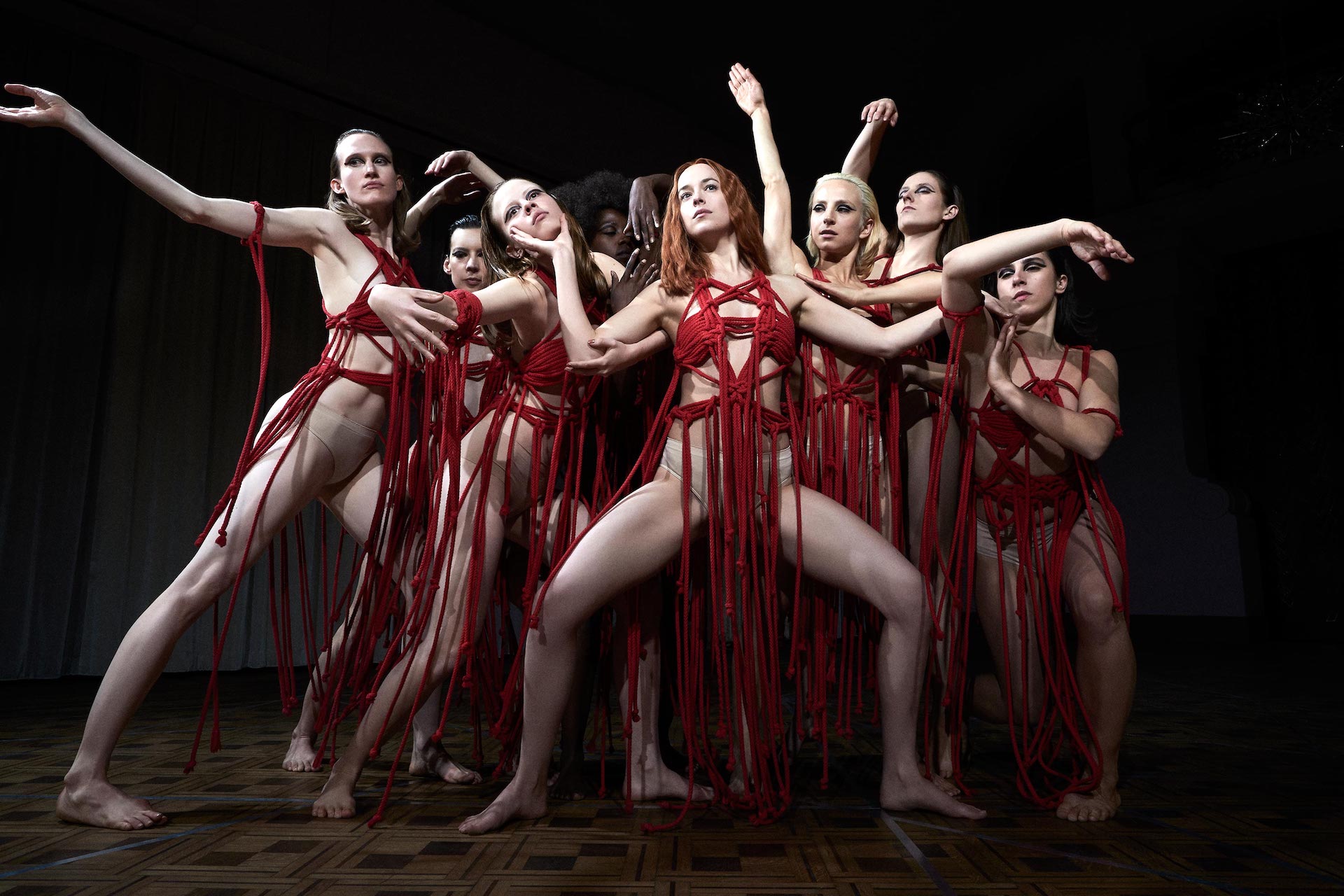
But even when this new Suspiria—a “cover version” of Dario Argento’s 1974 gaillo classic—is tipping its hat, Guadagnino leaves no doubt he is making his own confident statement. The color scheme is intentionally muted, and you’ll find no men in this dance troupe, serving immediate notice that superficialities are not the endgame here.
1. Hereditary
Grief and guilt color every somber, shadowy frame of writer/director Ari Aster’s unbelievably assured feature film debut, Hereditary.
With just a handful of mannerisms, one melodic clucking noise, and a few seemingly throwaway lines, Aster and his magnificent cast quickly establish what will become nuanced, layered human characters, all of them scarred and battered by family.
Art and life imitate each other to macabre degrees while family members strain to behave in the manner that feels human, seems connected, or might be normal. What is said and what stays hidden, what’s festering in the attic and in the unspoken tensions within the family, it’s all part of a horrific atmosphere meticulously crafted to unnerve you.
Aster takes advantage of a remarkably committed cast to explore family dysfunction of the most insidious type. Whether his supernatural twisting and turning amount to metaphor or fact hardly matters with performances this unnerving and visual storytelling this hypnotic.