Tag Archives: Madd at the Movies

A Different Looking Glass

Alice

by Hope Madden

Long after slavery was abolished, Black families were still held against their will in the rural American south, and through lies and isolation were convinced that they belonged — like slaves — to the white families whose land they worked for free.

It was incredibly uncommon, but it was Mae Louise Wall Miller’s life until 1960.

1960!

Miller’s story inspired first-time writer/director Krystin Ver Linden to make Alice, a testament to knowledge, representation, and the power of Pam Grier.

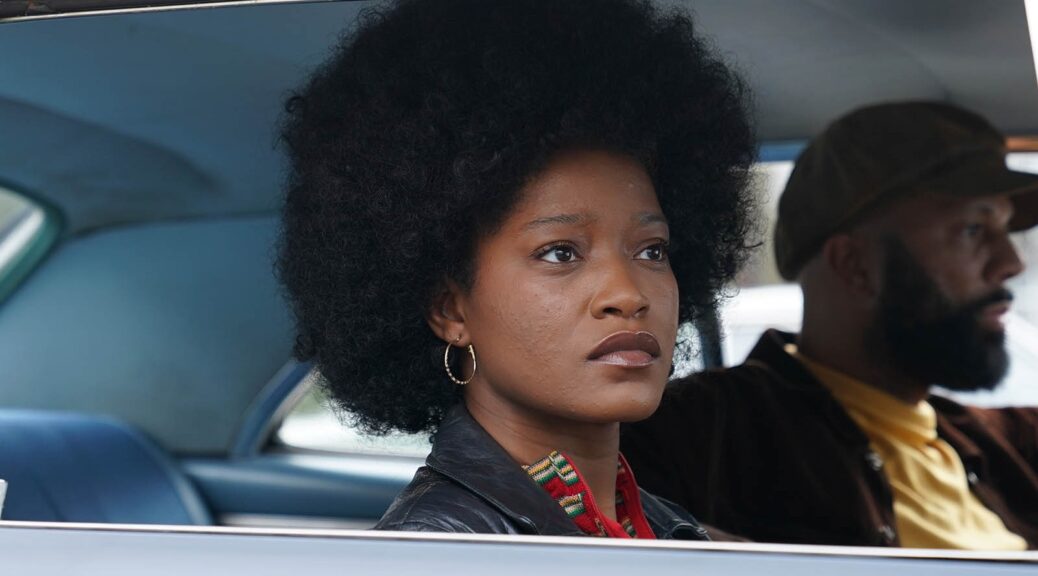
Alice (Keke Palmer, who also produces) has lived her entire life on an isolated Georgia plantation as a “domestic” (code for slave) to Paul Bennett (Johnny Lee Miller). Cruelty, rage and fear finally spur her to run, and she winds up on a highway with no context for the world of 1973.

1973 has very little context to understand Alice, either.

There’s no avoiding comparisons to Gerard Bush and Christopher Renz’s 2020 film Antebellum. Where that uneven Janelle Monáe-led vehicle raged with modern horror, Ver Linden’s film takes a decidedly blaxploitation direction.

Bennet had taught Alice to read, but only so she could read to him for his enjoyment. This one gift is enough to fuel a passion for knowledge. Pair that with the inspiration of Pam Grier in Coffy, plus the encouragement of truck driver and one-time activist Frank (Common) – who nearly ran her down as she escaped to the highway – and Alice is ready to return for her family and some tasty revenge.

Palmer finds a true north for her character, and she never leaves that course. Alice’s grief, pain, confusion, fear, and finally righteous rage are never showy, always authentic. Frank’s arc is a little more superficially drawn, but Common gives the character tenderness that brightens the film.

No psychotic plantation owner will ever live up to the unfathomable evil of Michael Fassbender’s Edwin Epps in 12 Years a Slave. Still, Miller’s brand of cowardly, narcissistic villainy is chilling.

Period detail and visual storytelling are both strengths for Ver Linden and her cinematographer, Alex Disenhof. But the film — this year’s Sundance winner for dramatic feature — has some pacing problems it can’t entirely overcome.

Alice falls into three very distinct acts, none of which move. The story itself is very deliberately built, but the way scenes are stacked offers no sense of momentum or urgency. This meandering quality robs the film’s climax of some of its power. But Alice mainly overcomes this weakness by telling the truth about the power in knowing who you are.

Freshman Blues

Master

by Hope Madden

Filmmaker Mariama Diallo’s episodic and short film work has explored — in comedic and dramatic form — the impact of living within a culture of micro- and not-so-micro-aggression. Her feature debut Master dives deeper, taking themes in more horrific directions.

Regina Hall plays Gail Bishop, the first Black residence hall “master” in the long and storied history of New England’s Ancaster College. In her first year on campus, she’ll meet another newcomer, freshman Jasmine (Zoe Renee), the only Black student in her dorm.

Jasmine has the bad luck of being assigned to the dorm’s spookiest room, where a student haunted by campus’s legendary witch once killed herself. As freshman year progresses, both Jasmine and Gail begin seeing menace around every corner.

Diallo sets up shop at the intersection of racism and misogyny. While her story tells of a history of racism that’s clearly alive and well, the filmmaker’s comment on institutional and historical contempt for women is more sly but ever-present.

The result for this particular position in the crosshairs is a palpable, inescapable sense of loneliness. If there’s one thing Master communicates it’s the isolation and aloneness both Gail and Jasmine face at this institution and, more broadly, in this world. The effect is poignant and sincerely scary.

It’s always great to see Hall at the center of a film. The veteran has provided reliable support, both comedic and dramatic, in films for ages. Her frustrating but sympathetic lead offers the perfect balance to Renee’s vulnerability.

Amber Grey’s turn as confidant Liv Beckman is superbly brittle and narcissistic. Likewise, a sea of white faces (Talia Balsam, Will Hochman, Bruce Altman, D.C. Anderson) hit varying degrees of condescension and hostility to create a drowning pool with little chance of escape.

Diallo struggles at times balancing allegory and horror story. On occasion, genre tropes become too obvious. At other times, the obviousness of political points overtakes cinematic narrative. But the underlying horror of reality ably depicted by Hall and a game cast make sure these minor issues remain minor.

Fright Club: Best Foreign Language Folk Horror

We were so inspired by Kier-La Janisse’s documentary Woodlands Dark and Days Bewitched that we decided to dive into some of the best films her 3+ hour documentary couldn’t spend much time on. In particular, we wanted to highlight some of the greatest folk horror films not in the English language.

We highly recommend Roh (2019, Malaysia), La Llorona (2019, Guatemala), and Luz, The Flower of Evil (2019, Colombia). But here are our five favorites:

5. Viy (Russia) (1967)

Drunken seminarians, farmhouses, witches – Viy sets you up from its opening moments for a classic folk tale. Three seminarians turned out for break get lost in the woods. They ask an old lady to let them sleep in her barn for the night. She’s not an ordinary old lady.

Konstantin Ershov and Georgiy Kropachyov’s silly, spooky yarn tells of class struggle and superstition. Poor Khoma, our bumbling, drunk hero, is screwed no matter what he does. State/religious authority will beat him, the wealthy will beat him, or supernatural evil will harm him in ways he can’t quite picture.

Even though there’s a clear element of silliness in this film, the core image of a man in over his head gives this Russian folk horror a punch.

4. November (Poland) (2017)

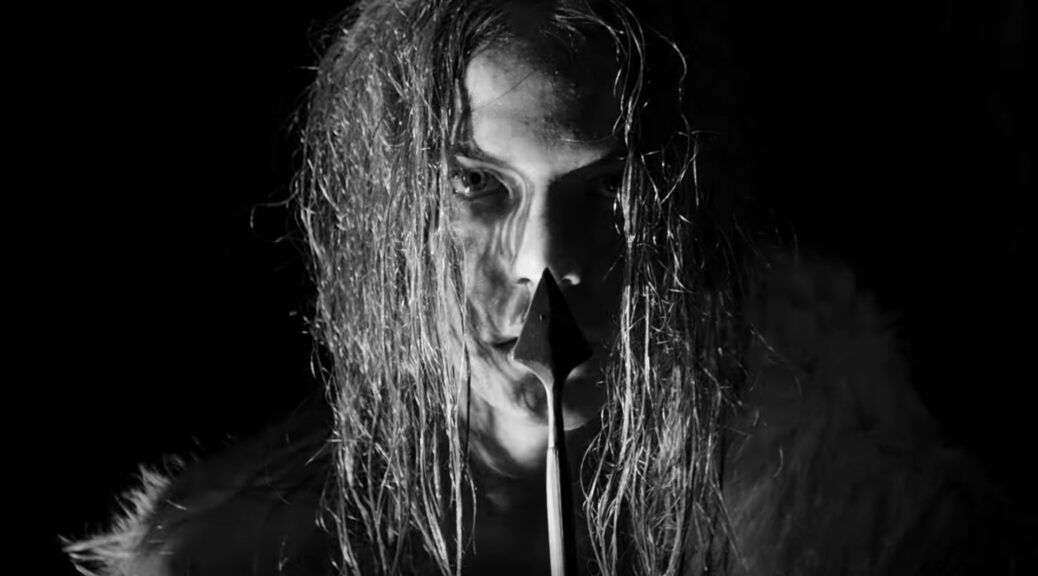
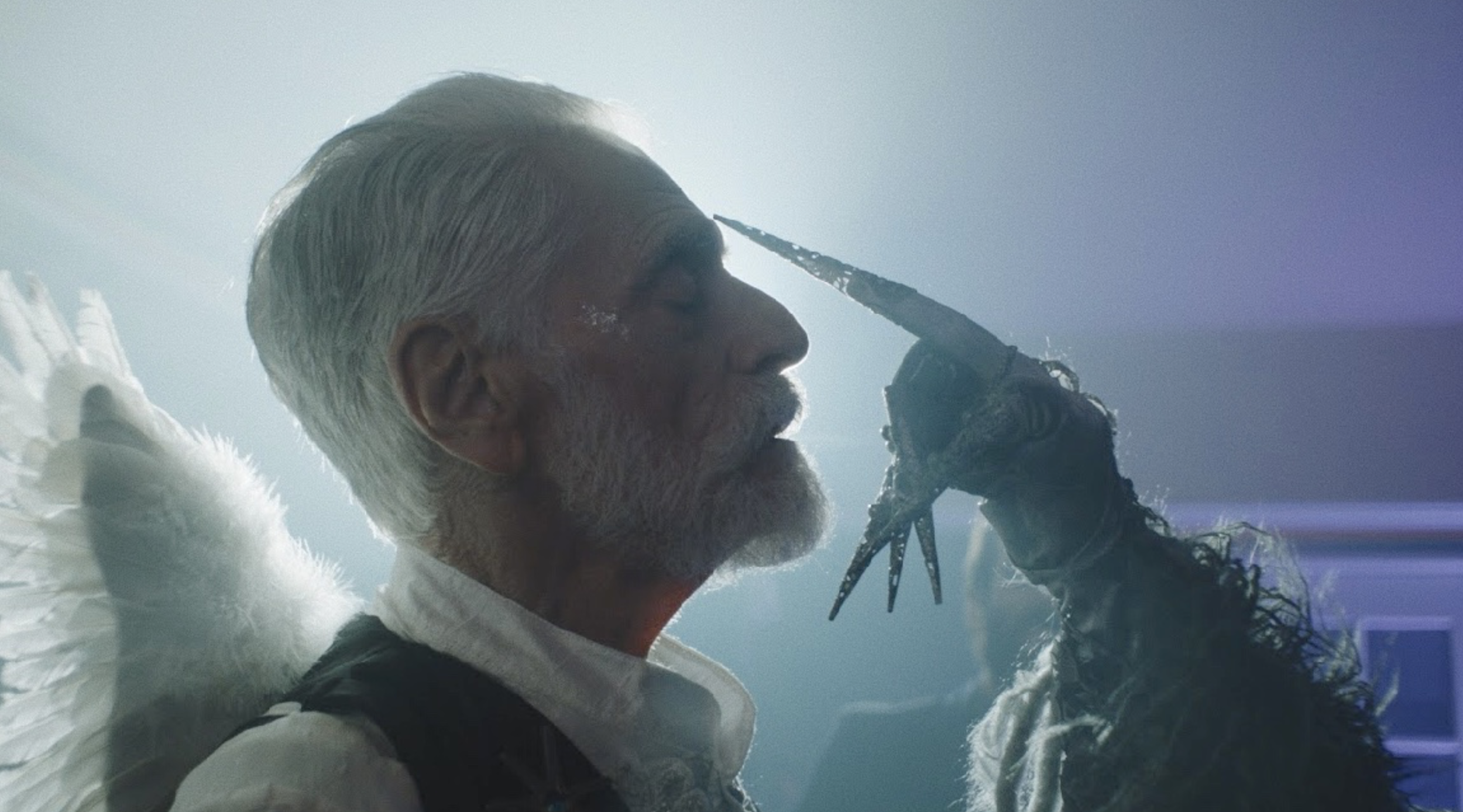
Imagine a world in which Bergman’s Seventh Seal made it with Burton’s Edward Scissorhands and you kinda get a sense of Rainer Sarnet’s November.

At the center of the film lies the unrequited love of two peasants. Liina (Rea Lest) is hopelessly in love with Hans (Jörgen Liik). Hans has the hots for the daughter of the local German baron. Lina and Hans each try to capture the attention of their beloved while communing with ghosts, employing the services of kratts and witches, managing lycanthropy, evading the plague, circumventing arranged marriages, and avoiding starvation during the impending long winter.

The movie is a mishmash of comedy, romance, fantasy, political theory, and philosophy all shot in exquisite black and white. Somehow it comes together, like the kratts, in a way that seems fresh, bizarre, and interesting.

3. Hagazussa (Germany) (2017)

Making a remarkably assured feature debut as director, Lukas Feigelfeld mesmerizes with his German Gothic poetry, Hagazussa: A Heathen’s Curse.

Settled somewhere in the 15th Century Alps, the film shadows lonely, ostracized women struggling against a period where plague, paranoia and superstition reigned.

It would be easy to mistake the story Feigelfeld (who also writes) develops as a take on horror’s common “is she crazy or is there malevolence afoot?” theme. But the filmmaker’s hallucinatory tone and Aleksandra Cwen’s grounded performance allow Hagazussa to straddle that line and perhaps introduce a third option—maybe both are true.

The film lends itself to a reading more lyrical than literal. Feigelfeld’s influences from Murnau to Lynch show themselves in his deliberate pacing and the sheer beauty of his delusional segments. He’s captured this moment in time, this draining and ugly paranoia that caused women such misery, with imagery that is perplexingly beautiful.

2. The Wailing (South Korea) (2016)

“Why are you troubled?” Jesus asked, “And why do doubts arise in your hearts? Look at my hands and my feet. It is I myself. Touch me and see — for a spirit does not have flesh and bones, as you see I have.”

Though the true meaning of this quote won’t take hold until the final act, it presents many questions. Is this film supernatural? Demonic? Or, given the corporeal nature of the quote, is it rooted in the human flesh?

Yes.

That’s what makes the quote so perfect. Writer/director Hong-jin Na meshes everything together in this bucolic horror where superstition and religion blend. The film echoes with misery, as the title suggests. The filmmaker throws every grisly thing at you – zombies, pustules, demonic possession, police procedural, multiple homicides – and yet keeps it all slippery with overt comedy.

1. Lamb (Iceland) (2021)

Among the many remarkable elements buoying the horror fable Lamb is filmmaker Valdimar Jóhannsson’s ability to tell a complete and riveting tale without a single word of exposition. Rather than devoting dialog to explaining to us what it is we are seeing, Jóhannsson relies on impressive visual storytelling instincts.

His cast of three – well, four, I guess — sells the fairy tale. A childless couple working a sheep farm in Iceland find an unusual newborn lamb and take her in as their own child. As is always the way in old school fables, though, there is much magical happiness but a dire recompense soon to come. It is an absolutely gorgeous, entirely unusual and expertly crafted gem of a film. You should see it.

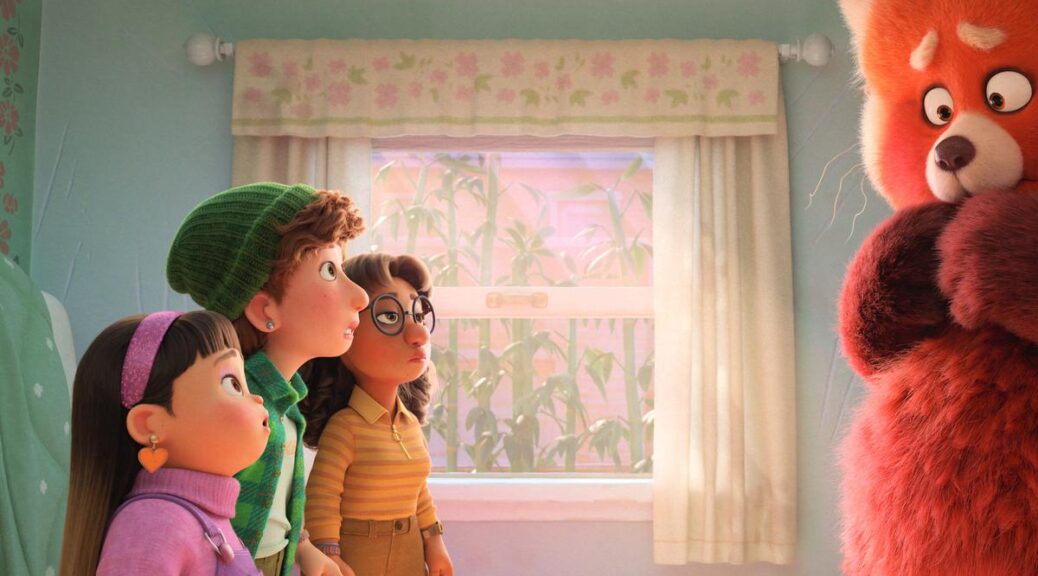
Screening Room: Turning Red, The Adam Project, Fear, The Seed & More

New Moon

Moon Manor

by Tori Hanes

“I’ve always thought it was the dumbest thing… people miss the one party where everybody gets up and says how great they are.”

The debut film for directing pair Machete Bang Bang and Erin Granat, Moon Manor follows the extraordinary life and death of James “Jimmy” Carrozo (played by Carrozo himself).

Centering around his “FUN-eral,” the world orbits Jimmy on his last day alive before taking his life as a final solution to his progressing Alzheimers. Lamenting to bright-eyed reporter Andrew (Lou Taylor Pucci), caretaker Remy (Reshma Gajjar), and death doula Fritti (Debra Wilson), Jimmy recounts his warm and fantastical past in relation to his cold, calculated end.

Thanks to the co-directors’ keen interest in the uncomfortable, the journey takes an unflinching stance toward the absurdity of death. Relishing in disjunct emotions, the directors play between amusing and terrifying drug-inspired hallucinations.

Helming this voyage is Carozzo, with a heroic performance as a man thoroughly finished with life but unsure of death. Carozzo’s semi-autobiographical character subtly asks the audience to consider their own mortality and the morality surrounding it. Through a masterful blend of performance and directing expression, Jimmy’s reality becomes your own.

Within the first few moments, the film leaves no audience member unscathed. However, the interesting perspective gets lost to meandering. Too many tertiary acquaintances are given half-baked plots, which take away from the soul of the story. 

Ultimately, the piece finds its power by exploring the tangled emotions of the characters closest to the impending death. When the directors are able to shed the unnecessary weight, they find the beauty in Jimmy’s story and, in turn, his death. 

The film ends as most human experiences do: messily, with loose ends unevenly tied. But yet, we feel seen. Through the example of one man’s convoluted final journey, sorrow, joy, terror, humor, and absurdity find a place to flourish harmoniously. While you may not feel comfort by the answers Moon Manor offers, you will feel painfully human.

Mojave Monster

The Seed

by Hope Madden

It’s got a little Brian Yuzna, definitely some Larry Cohen, a touch of Eraserhead, and the exact set of Revenge. Plus, sci-fi/horror flick The Seed maintains maybe the single most used premise of the last few years: three friends rent a place to stay and bad things happen.

There’s nothing necessarily wrong with that. A small cast and limited locations are just smart plays for an independent filmmaker working with budget confinements, and there are moments when writer/director Sam Walker transcends such trappings.

Just not many.

Vampy social influencer Diedre (Lucy Martin), her somewhat vapid bestie Heather (Sophie  Vavasseur), and their down-to-earth pal Charlotte (Chelsea Edge) head to a luxurious, isolated spot in the Mojave desert and witness a meteor shower.

It’s gorgeous, but now their phones are on the fritz, which means they can’t call an uber or get in touch with civilization at all. Worst of all, there’s some stinky dead armadillo bear thing oozing all over their pool deck.

There’s no question Walker is a fan of late 80s horror. The social media angle is the only element of The Seed that feels like it wasn’t hatched in 1985, actually. Walker goes for a sharpness in the color that does call Yuzna to mind, and attempts at social satire by way of body  horror link Cohen as well.

Walker just doesn’t seem to know where to go with it all.

Martin does. She elevates tired mean girl dialog and cuts an exceptional narcissistic presence. Both she and Vavasseur find the comedy in the script, and their bickering buddies often entertain.

Edge is the weak link, which is unfortunate because – given the 1980s roots and the wholesome character – she’s telegraphed early to be the film’s hero.

The fact that The Seed is set in the exact house Coralie Fargeat used to gorgeous, bloody extremes in her 2017 treasure Revenge only makes you want to see Walker do more with his location.

So little about this film feels fresh and that retro vibe only carries it so far. The beast itself is sometimes laughable, but not often enough to be fun, which is par for the course with the film. Walker wades into dark comedy/satire territory for the first two acts, then abandons it entirely for a dusty, predictable, humorless finale.

The Darkest Knight

The Batman

by Hope Madden and George Wolf

The question is plenty familiar.

“Who are you?”

But the answer isn’t the one we’re expecting, and it’s an early declaration that there’s a new cape in town.

“I am…vengeance.”

Talk about your dark knights. Director/co-writer Matt Reeves and star Robert Pattinson make Mr. Nolan feel like Mister Rogers in comparison. Anyone looking for the recent superhero giddiness of No Way Home will find none, while comic purists may finally discover the treatment they’ve been clamoring for all along.

For the rest of us, The Batman delivers a defiant, somewhat overstuffed vision, one that embraces darkness of theme and palette while crafting several truly dazzling visual set pieces.

Reeves (Cloverfield, Let Me In, Dawn of and War for the Planet of the Apes) wisely skips the backstory intro, giving us Bruce Wayne (Pattinson) some two years into his “Gotham Project.” Alfred (Andy Serkis) worries about the family finances, while Master Wayne is only interested in feeding his vigilante alter ego.

But while Bruce is watching the city, the mysterious Riddler (Paul Dano, taking the legendarily comic villain in a terrifying new direction) is watching The Batman, leaving personalized messages with each new assassination.

His puzzles draw Batman, Commissioner Gordon (Jeffrey Wright) and a resourceful waitress with hidden talents of her own (Zoë Kravitz as Selina Kyle) deep into the Gotham organized crime scene run by Carmine Falcone (John Tutturo ) and Oswald “The Penguin” Cobblepot (Colin Farrell under some astounding makeup). There is no shortage of characters at play, and Reeves struggles to justify all of them in one film.

At stake are long-held secrets about Gotham that the Riddler wants “brought into the light,” some of which will challenge what you think you know about the birth of the Bat. And that seems only appropriate for a film that challenges expectations of its genre with a narrative more reminiscent of Seven than anything we’ve seen from DC or Marvel.

So dark, and so rainy.

Pattinson’s Emo Batman works well within the structure and aesthetic Reeves develops. He carves out a very different crusader, one more introspective and heartbroken than righteous. This Bruce Wayne views the bat signal as both a call and a warning, and Pattinson is able to effectively keep the tortured soul’s head above self-pitying water.

Dano’s exceptional, Farrell’s fun, and Kravitz develops an intriguing antihero of her own. People talk about Joker’s lineage, but Catwoman is another iconic villain. Eartha Kitt, Julie Newmar, Michelle Pfeiffer and Anne Hathaway have all left their mark, but Kravitz sidesteps broad stroke villainy in favor of something nuanced and human.

But ultimately, what makes this film most interesting is the way Bruce Wayne struggles to justify the consequences that The Batman has had on Gotham, and the surprising side of hero worship. Where is the line separating savior and sinner? And who gets to draw it?

Reeves isn’t the first to pull Batman into these relevant questions, but he raises them with a commitment fierce enough to generate excitement for yet another trilogy. And though there’s no surprise waiting after the credits here, keep an eye out for a villain to be named later.

Fright Club: Skeletons in the Closet 2022

It’s the most wonderful time of the year! Yes, each spring we get to dig around Oscar nominees’ closets to find the bad horror lurking behind those glittery ball gowns. And this year it’s a fine season!

Here are five of our favorite bones from Oscar nominee skeletons.

5. Aunjanue Ellis (Best Supporting Actress, King Richard): The Resident (2011)

Ellis alone is reason to see King Richard. She’s breathtaking. But she hasn’t always had such luck with roles. In Antti Jokinen’s lifeless voyeur horror The Resident, she gets little to do but be the supportive bestie while a slumming Hilary Swank struggles with her new landlord.

Christopher Lee makes an appearance in what might be the only interesting thing about the film – not his performance as much as his presence. This was one of Hammer Studios modern releases, reuniting Lee with the studio that made him (or was it Lee who made the studio?).

Other than that, Jeffrey Dean Morgan misses the mark, Swank degrades herself and Ellis goes underutilized.

4. Ciarán Hinds (Best Supporting Actor, Belfast): The Rite (2011)

Veteran character actor Ciarán Hinds gets his first Oscar nomination this year for Belfast. No stranger to horror, Hinds has starred in the good (The Woman in Black), the bad (Mary Reilly) and the underseen (The Eclipse).

He does what he can to class up Mikael Hafstrom’s pedestrian 2011 possession flick The Rite.

Hoping to help a seminarian find his faith, Hinds’s Father Xavier sends him to learn exorcism from the best: Hanibal Lecter. No, it’s Anthony Hopkins as Father Lucas Trevant, but they know what you’re thinking.

Hopkins hams it up, trying to resuscitate Michael Petroni’s script with as much bombast as he can muster. It doesn’t work. Hinds is wasted, but so too are Rutger Hauer, Alice Braga and Toby Jones.

3. JK Simmons (Best Supporting Actor, Being the Ricardos): The Snowman (2017)

If we were weighing by disappointment, The Snowman would be #1. Tomas Alfredson followed up Let the Right One In and Tinker Tailor Soldier Spy with this Norwegian crime thriller and he packed his cast with heavy hitters: Michael Fassbender, Rebecca Ferguson, Charlotte Gainsbourg, Val Kilmer, Toby Jones, Chloe Sevigny, and 2022 nominee for Best Supporting Actor in Being the Ricardos, JK Simmons.

Why does it feel like there are gaping holes in the plot? Because the film was released, but they didn’t shoot the entire script. Who needs all the pieces to a mystery, anyway?

The actors do what they can, but the source material trades in darkness for misogyny and nonsense. Gainsbourg, Sevigny and Ferguson all play thankless roles while Simmons’s character appears, seems like a bad guy, disappears and never makes a dent in the storyline.

Nonsense.

2. Kirsten Dunst (Best Supporting Actress, The Power of the Dog): The Crow: Salvation (2000)

Sure, we could have gone with fan-favorite Interivew with the Vampire because, after all, it was not very good. Kirsten Dunst, Oscar-nominated this year for The Power of the Dog, was great in it, though.

She’s the best thing bout The Crow: Salvation, too, but that’s not saying a lot.

The third installment sees a surprisingly stacked cast (including Walton Goggins and Fred Ward) conspire to let a scapegoat die for their sins. He comes back as the single blandest Crow ever.

Dunst is the victim’s sister and she does what she can, but the writing is god-awful, the makeup is laughable, the staging, action, set design and direction are all just sad. It made us sad she took the role.

1. Kristen Stewart (Best Actress, Spencer): Twilight: Breaking Dawn – Part 2 (2012)

Before we start, we want to point out that, like her Twilight co-star Robert Pattinson, Kriten Stewart has proven to be a dependable, remarkable talent. She’s shown adaptability and range across a ton of great indie films, some of them very solid genre efforts. We were thrilled to see her nab her first nomination for Spencer.

But before all that, there was Twilight. This series could be the whole podcast. Do you know why? They SUCK. Shiny vegetarian vampires? Mopey, special teens? YA fodder with the most profoundly backwards, disempowering message? Yes to all four films, so which is the worst?

The last one is the worst one because of 1) that creepy baby, 2) the imprinting. The CGI on that fast-growing Renesme is diabolically bad, but not nearly as heinous as the plotline where a grown man chooses an infant for his future spouse and that infant’s parents are good with it. So wrong.