Good looking week this week for those of us too damn lazy to get off the couch. Oscar nominees, great directors, brilliant actors, songs, dances…hard to go wrong.
So, John Krasinski. That big, tall guy, kind of doughy faced? Married to Emily Blunt? Dude can direct the shit out of a horror movie.
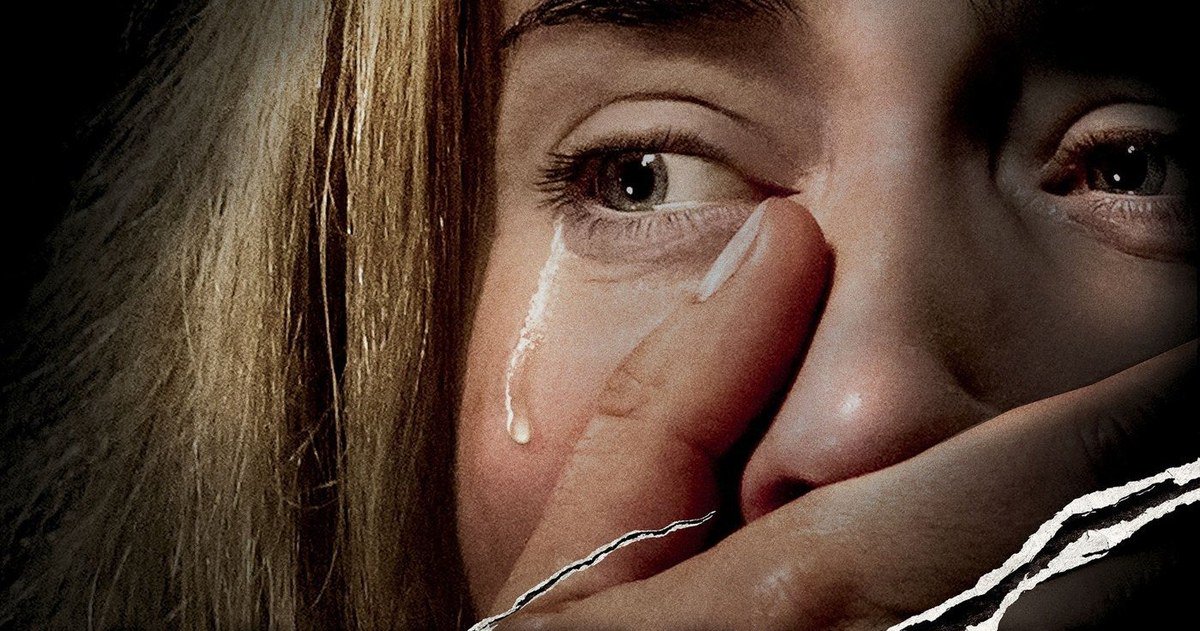
Krasinski co-writes, directs and stars in the smart, nerve-wracking gut-punch of a monster flick, A Quiet Place.
Krasinski plays the patriarch of a close-knit family trying to survive the post-alien-invasion apocalypse by staying really, really quiet. The beasts use sound to hunt, but the family is prepared. They already know sign language because their oldest, played by Millicent Simmonds (Wondertruck) is deaf.
A blessing and a curse, that, since she can’t tell if she makes noise, nor can she tell if a creature comes calling.
Simmonds is wonderful as the conflicted adolescent, her authenticity matched by the tender, terrified performance given by Noah Jupe (Wonder) playing her younger brother.
As their expecting mother, Emily Blunt is magnificent, as is her way. Simultaneously fierce and vulnerable, she’s the family’s center of gravity and the heart of husband (onscreen and off) Krasinski’s film.
But you expect that from Emily Blunt. She’s amazing.
What you may not expect is Krasinski’s masterful direction: where and when the camera lingers or cuts away, how often and how much he shows the monsters, when he decides the silence will generate the most dread and when he chooses to let Marco Beltrami’s ominous score do that work for him.
The script, penned by Krasinski with horror veterans Bryan Woods and Scott Beck, stays one step ahead of your complaints. Just as you think, “Why haven’t they done this?” a clear explanation floats across the screen, either as translated sign language, a prop on a table or a headline in Dad’s gadget-laden basement bunker.
It’s smart in the way it’s written, sly in its direction and spot-on in its ability to pile on the mayhem in the final reel without feeling gimmicky or silly.
And the monsters are kick ass. That’s a big deal.
At its heart lies a sweet sentiment about family, but sentiment does not get in the way of scares. A Quiet Place works your nerves like few films can.
First note in my Isle of Dogs screening notebook: God damn it, I want a dog.
Second note: Wait, Scarlett Johansson and Tilda Swinton are in another film that appropriates Asian culture? Come on!
And that about sums up the conflicting emotions Wes Anderson generates with his latest stop-motion wonder.
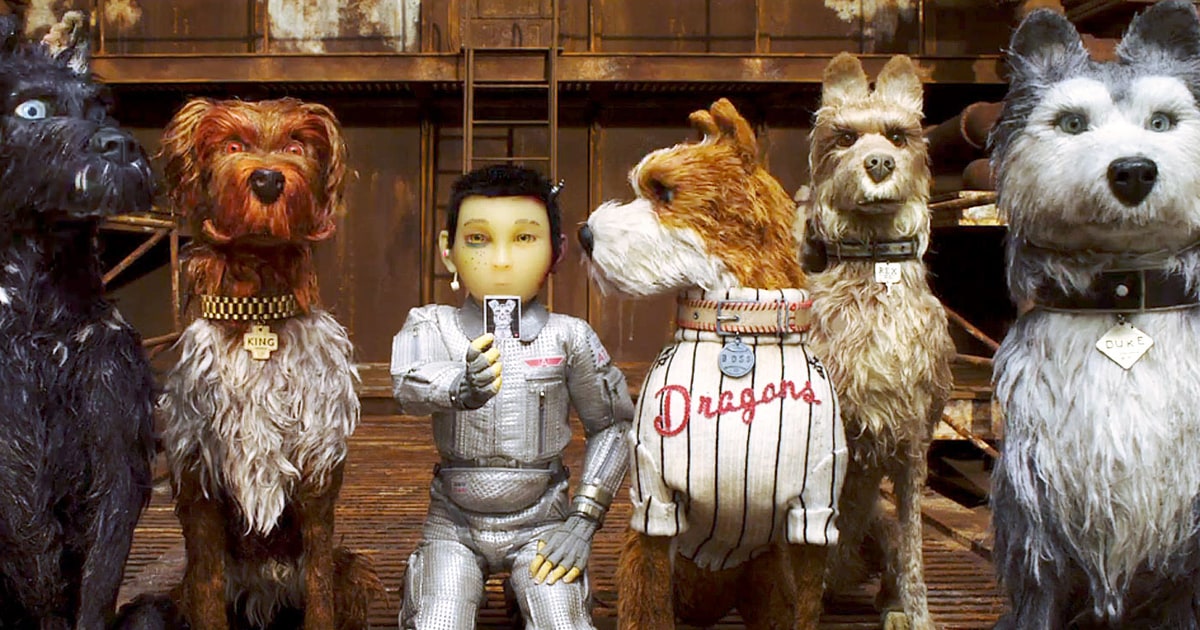
Isle of Dogs is Anderson’s second animated effort, coming nearly a decade after another tactile amazement, 2009’s Fantastic Mr. Fox. A millennia-long feud between the Kobayashis of Megasaki and dogs comes to a head when corrupt Mayor Kobayashi uses a dog flu outbreak to whip up anti-canine sentiment and banish all dogs to Trash Island.
But his orphaned ward Atari (Koyu Rankin) steals a miniature prop plane and crash lands on Trash Island looking for his beloved Spots (Liev Schreiber).
The little pilot is aided in his quest by a scruffy pack including Rex (Edward Norton), Boss (Bill Murray), gossipy Duke (Jeff Goldblum, a riot), King (Bob Balaban), and reluctant helper/lifelong stray, Chief (Bryan Cranston).
Other voice talent as concerned canines: Johansson, Swinton, F. Murray Abraham and Harvey Keitel.
Explained via onscreen script in typically Anderson fashion, dog barks have been translated into English and Japanese remains Japanese unless there’s an electronic, professional or exchange student translator handy. The choice shifts the film’s focus to the dogs (in much the way Peanuts shows remained focused on children by having adults speak in squawks). It also means that moviegoers who speak Japanese are afforded an enviably richer experience.
But for a large number of American audiences, it means that Japanese characters are sidelined and the only human we can understand is the white foreign exchange student, Tracy (Greta Gerwig). From Ohio, no less.
Between an affectionate if uncomfortably disrespectful representation of Japanese culture and Gerwig’s white savior role, Anderson’s privilege is tough to look past here, even with the scruffy and lovable cast.
The animation is beyond spectacular, with deep backdrops and meticulously crafted characters. Atari’s little teeth killed me. The voice talent is impeccable and the story itself a joy, toying with our dictatorial nature, the need to rebel and to submit, and how entirely awesome dogs are.
Set to an affecting taiko drum score with odes to anime, Ishiro Honda, Akira Kurosawa and every other Japanese movie Anderson watched as a kid, the film is clearly an homage to so much of what he loves. His skill remains uniquely his own and nearly unparalleled in modern film.
And Isle of Dogs is a touching, flawlessly crafted animated dream. That probably should have been set in America.
This week’s Screening Room Podcast looks at Spielberg’s latest, Ready Player One, plus Tyler Perry’s Acrimony, Flower and what to look for in this week’s new home entertainment releases.
A few weeks ago we covered Sex and Death. That is, the act of sex leads directly to death. Sex kills you.
This week, as a kind of wrong-headed sibling, we talk with B Movie Bros about Death and Sex. Which is to say, the death part comes first. Either party can be dead, or both can. Reanimated corpses are fine, if that’s your thing. Just as long as at least one participant is dead.
5. Living Doll (1990)
Though few scenes go by that don’t showcase Katie Orgill’s bare breasts, this odd British import is just a sweet romance at its heart. It’s a romance between a young mortician/med student and the corpse of his unrequited love, which doesn’t sound that sweet, I’ll grant you, but between Mark Jax’s delusional naivete and the strangely tender script penned by director George Dugdale with Paul Hart-Wilden and Mark Ezra, the film may openly flirt with necromancy, but it courts true romance.
Why is Christine (Orgill) buried naked? Why does everyone hide their British accents—and so poorly? Why clutter the film with so many atrocious actors? Why is Orgill so bad at holding her breath? Who knows or cares, when Eartha Kitt plays the landlady?
The film is weirdly memorable—equally grotesque and tender-hearted. You can’t exactly look past its snail’s pace or poor acting, but it works on you. There’s not much else like it.
4. The Corpse of Anna Fritz (2015)
Young hospital orderly Pau (Albert Carbo) attends the morgue, where the famous actress Anna Fritz (Alba Ribas) awaits an autopsy come morning. He secretly texts a selfie with the body to two buddies. They show up to see the body.
Soon, three young men are alone with a beautiful, naked, dead woman with absolutely no chance of being interrupted for hours. If you’re a little concerned with where this may lead, well, you should be.
As a comment on rape culture, the film is a pointed and singular horror.
Sort of a cross between 2008’s irredeemable rape fantasy Deadgirl and Tarantino’s brilliant Kill Bill, The Corpse of Anna Fritz will take you places you’d rather not go.
And while contrivances pile up like cadavers in a morgue, each one poking a hole in the credibility of the narrative being built, The Corpse of Anna Fritz has a lot more to offer than you might expect—assuming you stick it out past the first reel.
3. The Neon Demon (2016)
“Beauty isn’t everything, it’s the only thing.”
So says an uncredited Alessandro Nivola, a fashion designer waxing philosophic in Nicolas Winding Refn’s (Bronson, Drive) nightmarish new film The Neon Demon.
The line, of course, is borrowed. Refn tweaks the familiar idea to suit his fluid, perfectly framed, cynical vision.
Jesse (Elle Fanning) is an underaged modeling hopeful recently relocated to a sketchy motel in Pasadena. Will she be swallowed whole by the darker, more monstrous elements of Hollywood?
Or is Ruby (Jena Malone) the godsend of a friend Jesse needs?
Nope. And she’s not to be trusted with the kind of beautiful corpses you might find in an LA mortuary, either.
2. We Are the Flesh (2016)
Are you squeamish?
First-time feature writer/director Emiliano Rocha Minter announces his presence with authority—and a lot of body fluids—in this carnal horror show.
A hellish vision if ever there was one, the film opens on a filthy man with a lot of packing tape. He’s taking different types of nastiness, taping it inside a plastic drum to ferment, and eventually turning it into a drink or a drug. Hard to tell—loud drum banging follows, as well as hallucinations and really, really deep sleep.
During that sleep we meet two siblings, a teenaged brother and sister who’ve stumbled into the abandoned building where the hermit lives.
What happens next? What doesn’t?! Incest, cannibalism, a lot of shared body fluids of every manner, rape, necrophilia—a lot of stuff, none of it pleasant.
Minter has created a fever dream as close to hell as anything we’ve seen since last year’s Turkish nightmare Baskin.
There’s little chance you’ll watch this film in its entirety without diverting your eyes—whether your concern is the problematic sexuality or just the onslaught of viscous secretions, the screen is a slurry of shit you don’t really want to see.
https://www.youtube.com/watch?v=BnTY6q7bt78
1. Dead Alive (1992)
Rated R for “an abundance of outrageous gore,” Dead Alive is everything the young Peter Jackson did well. It’s a bright, silly, outrageously gory bloodbath.
Lionel Cosgrove (Timothy Balme) secretly loves shopkeeper Paquita Maria Sanchez (Diana Penalver).His overbearing sadist of a mother does not take well to her son’s new outside-the-home interests. Mum follows the lovebirds to a date at the zoo, where she’s bitten (pretty hilariously) by a Sumatran rat-monkey (do not mistake this dangerous creature for a rabid Muppet or misshapen lump of clay).
The bite kills her, but not before she can squeeze pus into some soup and wreak general havoc, which is nothing compared to the hell she raises once she comes back from the dead. Soon enough, Lionel has a houseful of reanimated corpses, some of them a bit randy.
Ready Player One may be the most Spielbergian of all Spielberg movies. It’s Spielberg on Spielberg. Meta-Spielberg.
You get the idea.
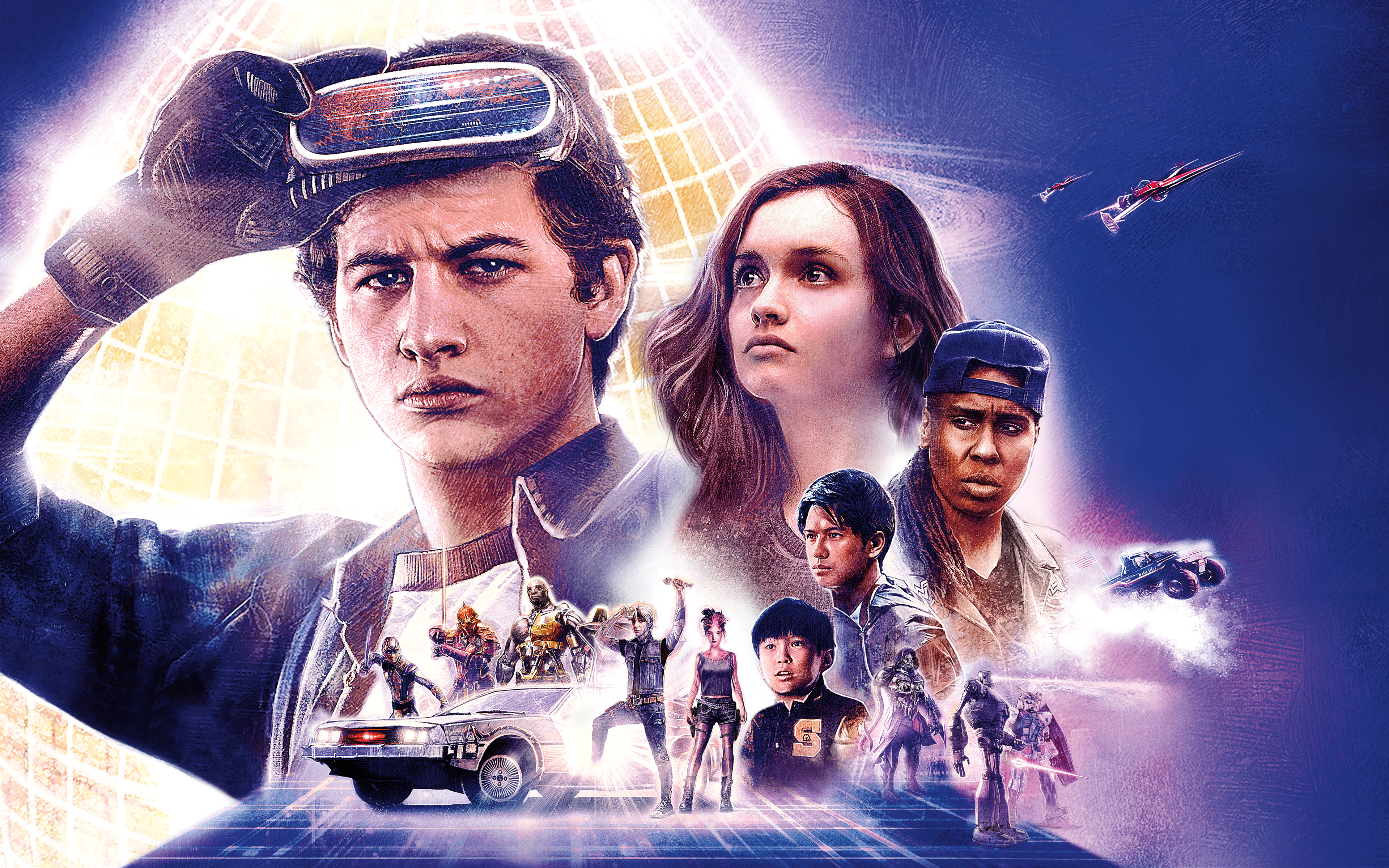
It’s 2045 in Columbus, Ohio and the world is so miserable for so many that they spend all day, every day inside their video games. OASIS is a virtual world where you can play anything against anybody at any time.
The creator of OASIS and every devoted gamer’s hero, James Halliday (Mark Rylance), died several years ago and has built a challenge into the game. The winner will own OASIS (and its trillion in worth) outright.
And that’s it. A ragtag group of nerds (led by Tye Sheridan and Olivia Cooke) must learn to work together so they can defeat the megalomaniacal tech firm run by a guy who doesn’t even like gaming (Ben Mendelsohn).
What? Misfit kids teaming up to learn from a master nerd and beat the suits? Smells like Spielberg!
Ready Player One is a celebration of gamer culture in the same way that The Lego Movie indulged in the sheer joy of building with Legos. It is also an 80s pop culture nerd’s wet dream. You want to see a guy wearing Buckaroo Banzai’s while driving Marty McFly’s DeLorean romance a girl on Tron’s bike or run across a bridge made of the Iron Giant? Done.
Want to know what the Zemeckis Cube does? (Bill and Ted know.)
The entire assortment of John Hughesisms is set to righteous beats from Bruce to Blondie.
And that’s where the film could easily have become fluffy nonsense were it not for the genius move of taking an 80s fanboy icon (Spielberg) and allowing him to simply provide an undiluted version of every nostalgic gimmick he has ever hatched.
Every time he borrows from himself or leans on old tendencies—tendencies he’s been trying to shed since 1985’s The Color Purple—it feels like it’s meant to be.
It’s basically a Spielberg movie inside an ode to Spielberg movies.
Plus, oh my God I want a The Shining video game!
Unfortunately, that’s all it really is. The performances are hammy fun but certainly not revelatory. The story is thin enough that it doesn’t get in the way of all the cool FX and callbacks. You’ve seen it all before, you just haven’t seen it quite this unabashed, with frame after frame nearly bursting with the exuberance of some kid whose parents just demanded he put down that homework, crank up the tunes and start gaming already!
You know a fun way to pass the time during a boring holiday weekend? With Star Wars movies. Lucky for us, the latest drops for home entertainment this week. Piss off your Fox News watching uncle and your most self-indulgent of white male nerd friends with the strong female lead and natural character arc of Star Wars: The Last Jedi.
Join us in the Screening Room this week to talk through the pros and cons of Pacific Rim: Uprising, Unsane, Death of Stalin, Loveless and all that’s new in home entertainment.
Sawyer Valentini (Claire Foy) is living your worst nightmare.
Having recently moved 400 miles from Boston to suburban Pennsylvania to escape her stalker, she begins seeing him everywhere. Shaken and without a support network, she visits an insurance-approved therapist in a nearby clinic.
She’s grateful for the ear, but upon completing her paperwork Sawyer finds that, due to the therapist’s diagnosis that Sawyer is a danger to herself or others, she is held involuntarily for 24 hours.
After punching an orderly she mistakes for her stalker, that 24 hours turns into one week. And now she’s convinced that the new orderly George is, in fact, her stalker David (Joshua Leonard—you know, doomed Josh from The Blair Witch Project!).
There a number of factors hard at work in Unsane‘s brisk 98-minute ride. Director Steven Soderbergh, by way of Jonathan Bernstein and James Greer’s script, lays bare some terrifying facts about our privatized mental health industry.
Seriously and deeply alarming.
He structures this critique with a somewhat traditional is-she-or-isn’t-she-crazy storyline. Anyone who watches much horror will recognize that uneasy line: you may be here against your will, but that doesn’t mean you shouldn’t be here.
And the seasoned director of misdirection knows how to toy with that notion, how to employ Sawyer’s very real damage, touch on her raw nerve of struggling to remain in control of her own life only to have another’s will forced upon her.
Part of the film’s success is Soderbergh’s ability to put you in Sawyer’s headspace, which he does primarily through the use of iPhone 7. He claims to have filmed entirely on these phones, and whether or not that’s true, the shallow, oversaturated aesthetic creates the sense of delusion.
Foy’s performance is refreshingly unpleasant. Sawyer is tough to like, but she’s damaged and savvy in a way that feels authentic.
Leonard’s cloying neediness and bursts of violence match Foy’s formidable if brittle performance and a strong supporting cast including Juno Temple, SNL’s Jay Pharoah, Amy Irving and a spot-on Polly McKie.
Soderbergh relies on familiar tropes to say something relevant and in doing so creates a tidy, satisfying thriller.