Tag Archives: Madd at the Movies

Grave Digger

The Deeper You Dig

by Hope Madden

Micro-budget horror movie The Deeper You Dig is co-written and co-directed by husband and wife John Adams and Toby Poser, who co-star alongside their daughter Zelda Adams. This is a story about an unusual family created by an unusual family.

The film centers on a close if unconventional mother/daughter duo (Poser and Adams the younger). The two make ends meet in a rugged mountain town by taking advantage of townies looking to hear their fortunes. But when her daughter goes missing, Ivy (Poser) reconnects with her long-forgotten abilities to determine what the police can’t.

Poser is particularly impressive, and what may be the most intriguing thing about the way the film is written is how both Ivy and daughter Echo are characterized. No cliché suits these two—each is carved out uniquely, a blend of dissonant ideas that feel authentically human. Their undiscussed but clearly present “outsider” nature only serves to underscore their emotional need for each other, which gives the mystery resonance and adds a little integrity to the supernatural elements as well.

Ivy’s relationship with new-in-town Kurt (John Adams) is even more peculiar—rightly so. Adams the elder delivers a twisty, haunted performance that’s the real heart of the film’s horror. His work is both physical and emotional, with personality changes that never feel forced or showy.

Not every performance is as strong as the central three, and not every beat in the plot works. Certain moments feel pulled from TV melodramas, and the film’s micro-budget is most felt whenever CGI is employed.

But The Deeper You Dig makes an excellent case for seeking out low-budget indies. It’s creepy and satisfying. It explodes clichés, keeps you guessing, and takes advantage of the clear trust among the actors to create an unusual and compelling family dynamic.

Even with its handful of missteps, The Deeper You Dig clearly represents a group of filmmaking talent to keep an eye on.

Killer Tween

Becky

by Hope Madden

Finally, someone truly understands what it’s like to be an incredibly angry adolescent girl.

At the very least, Jonathan Milott and Cary Murnion’s film Becky understands enough to be afraid of her.

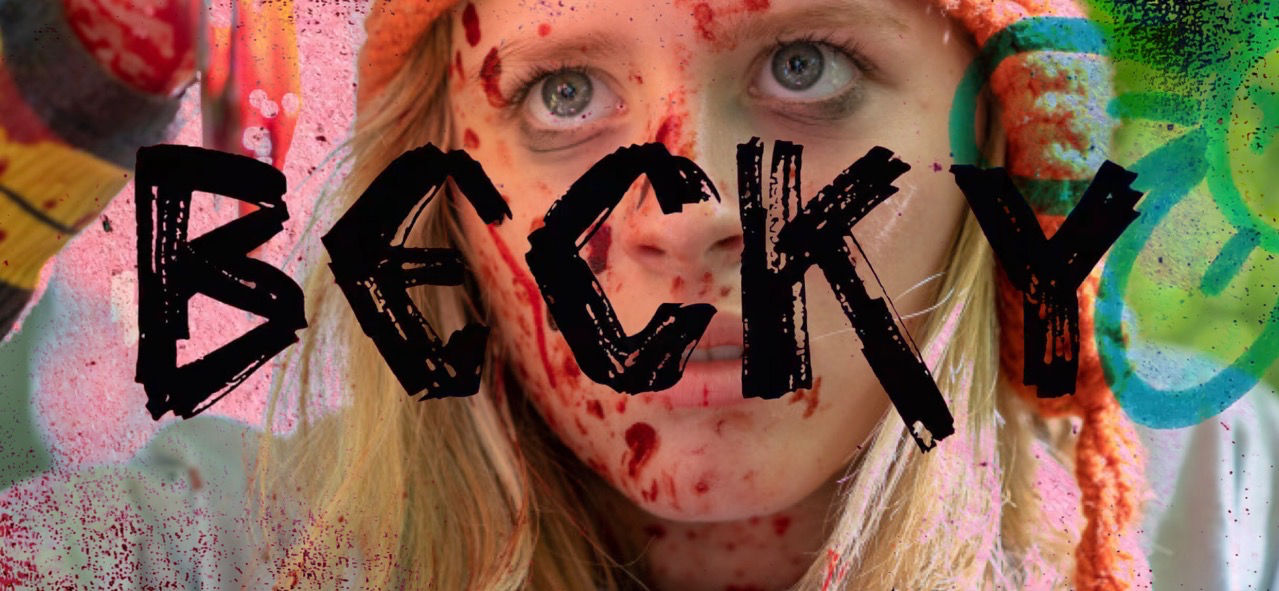
The titular 13-year-old, played with convincing charisma by Lulu Wilson, is a handful for her widowed father (Joel McHale). Still, dad has decided this is the weekend to take Becky for a getaway with his girlfriend (Amanda Brugel), and her 5-year-old (Isaiah Rockcliffe). They head to the old vacation cabin for a big talk.

He soon finds that his 13-year-old may not be the scariest thing on earth.

Or, you know what? Maybe she is.

Kevin James plays against type as a swastika-tatted up inmate, leader of a band of escapees. James may be hoping to catch the same mid-career fire Vince Vaughn has been fanning, mainly portraying the heavy in various indie thrillers. Early scenes play well, James cutting a solemnly menacing figure as he quietly organizes and orchestrates. But as the film wears on it becomes clear the actor can’t manage the sinister energy needed to really make an impression.

I’ll take this over Paul Blart, though.

Robert Maillet’s a lot of fun, though. At 6’10”, the one-time wrestler dwarfs even the gangly McHale. He’s no master thespian, but his arc creates a spectacular punctuation for Becky’s own transformation and his sheer immensity brings a little needed anxiety to the film.

The writing team, which includes Lane and Ruckus Skye of the brilliant and as-of-yet undistributed Devil to Pay (originally titled Reckoning), cheats a little with this script. Backstories, motivations and mysteries—particularly as they articulate the villainous characters—feel less undefined than lazily obscured. Between that and James’s inability to truly sell the viciousness in his character, the family’s jeopardy lacks the intensity it needs for this film to truly impress.

Wilson does not. In her hands, Becky is a fascinating character, and it is with this character that the writing team and directors score the most points. The film is bloody, angry and, even for its fairly formulaic premise, unpredictable.

Man of Your Dreams

Scream, Queen! My Nightmare on Elm Street

by Hope Madden

“It was intended to play as homophobic rather than homoerotic.”

So says David Chaskin, writer of 1985’s A Nightmare on Elm Street 2: Freddy’s Revenge—a film many consider to be the gayest horror movie ever made. Chaskin has long shared the belief that it was the casting of Mark Patton in the lead role, the “final boy,” that pushed the envelope from homophobic to homoerotic.

Chaskin is right.

Thank God for casting.

The mid-Eighties hardly needed another homophobic movie, or another AIDS-terrified horror flick. Did it need the story of an adolescent boy whose homosexual nature emerges as some monstrous id, only to be cured by the love of a good woman? No, but if you just don’t watch the last ten minutes of the film, Nightmare 2 is a bizarre and glorious B-movie coming out party.

Again, thanks to Mark Patton.

Patton is the center of the Shudder documentary Scream, Queen! My Nightmare on Elm Street. He also produces, which means he gives the footage his OK, leading to a film that comes off as self-congratulatory and self-indulgent more often than it should. But there is no denying Patton’s life has been fascinating.

Patton’s a charming, charismatic vehicle for the doc and the insight he offers into burgeoning stardom, closeted Hollywood and the Eighties is riveting. He’d lived quite a life before his first feature lead likely ended his career—but what he survived outside Elm Street was certainly tougher.

So much so that Patton’s particular anxiety about how this film affected him and his career sometimes feels misplaced. But watching how his perception of the “gay controversy” has evolved and what that evolution has allowed him to do within the gay community is delightful.

Of course, equally fascinating for horror fans is the debate as to who did and did not realize how profoundly gay Nightmare 2 was. Patton’s co-stars—Robert Englund (Freddy himself) comes off especially well—each add to the conversation in entertaining ways, though director Jack Sholder should maybe stop talking.

First time filmmakers Roman Chimienti and Tyler Jensen seem unsure of their real aim: to tell Mark’s story, to help Mark find closure, to deconstruct the film’s subtext, to explore its lasting meaning for the LGBTQ community. Because of their meandering focus, Scream, Queen feels longer than it needs to be.

Lucky for the filmmakers, every one of those topics makes for an intriguing investigation, and watching Patton triumphantly recreate his iconic (and likely career-ending) dance scene is sheer joy.  

Watch and Learn

Good documentaries transcend art and commerce by helping us understand who we are, where we came from and where (hopefully) we may be going. These five films prove the necessity and urgency of the #blacklivesmatter movement and help to contextualize our current situation and the need for dramatic change.

Whose Streets? 

Available on Amazon Prime, YouTube, GooglePlay, Vudu, Hulu.

Moving like a living, breathing monument to revolution, Whose Streets? captures a flashpoint in history with gripping vibrancy, as it bursts with an outrage both righteous and palpable. Activists Sabaah Folayan and Damon Davis share directing duties on their film debut, bringing precise, insightful storytelling instincts to the birth of the Black Lives Matter movement. Together, they provide a new and sharp focus to the events surrounding the 2014 killing of 18-year-old Michael Brown by Ferguson, Missouri police officer Darren Wilson.

Cincinnati Goddamn

Available to stream for free from wexarts.org.

Wexner Center’s Paul Hill and filmmaker April Martin’s documentary exposes the similarities between 2014 events in Ferguson, MO surrounding the murder of Michael Brown and events in Cincinnati beginning in 1995 and culminating in riots following the suspicious, police-involved deaths of Roger Owensby in November, 2000 and Timothy Thomas in April, 2001.

The final product delivers an incisive look at the roots and ramifications of systemic racism. The filmmakers speak candidly with bereaved family members and witnesses, weave in crime scene footage and the news coverage of the day, and speak to historians, activists, police and political leaders to paint a picture that becomes jarringly prescient.

13th

Available on Netflix.

Director Ava DuVernay followed her triumphant Selma with an urgent dissection of mass incarceration in the United States. Packed with testimony from those who know, propelled by the force and vision of a director who knows how to tell a story, this is as gripping and necessary a film as you will find. Informative, stirring, and heartbreaking, 13th delivers a lesson that is essential to understanding both the ugly roots of America, and how shamefully deep they remain.

https://www.youtube.com/watch?v=45jBRPjImuw

The Seven Five

Available on Amazon Prime, YouTube, GooglePlay.

If current events haven’t satisfied your appetite for stories of cops behaving badly, take a trip back to the 1980s with The Seven Five. It’s a sobering look at Mike Dowd, the man dubbed “the dirtiest cop in history,” as well as the law enforcement code of silence that still appears shockingly prevalent.

Director Tiller Russell uses footage from Dowd’s 1993 hearing testimony as an effective bookend to current interviews with Dowd and several of his cohorts. The chill that comes from a younger Dowd testifying that a good cop means “being 100 percent behind anything another cop does” only intensifies when you hear one of his old partners recalling the prevailing attitude of their criminal heyday.

Peace Officer

Available on Tubi, Sling TV, Amazon Prime, YouTube, Google Play, Vudu.

How, and why, did we get the point where tactics and weapons of the military are standard issue for police forces across the country?

This film’s strength lies in its nuance, and in its refusal to provide snap judgements. Rather than looking to vilify police officers, the goal here is to understand how the system itself has become untenable, all but guaranteeing continued tragedies.

It’s not a fun conversation, but it’s one that’s long overdue. Peace Officer may speak softly, but it’s hard to imagine an American film that is more urgent.

Want to help?

ACLU OHIO

COLUMBUS FREEDOM FUND

#blacklivesmatter

The Mutineer

The Ghost of Peter Sellers

by Hope Madden

You can’t go home again. You can go to Cyprus again, though, which is what director Peter Medak does in an attempt to come to terms with the project that nearly derailed his blossoming career.

Objectivity be damned!

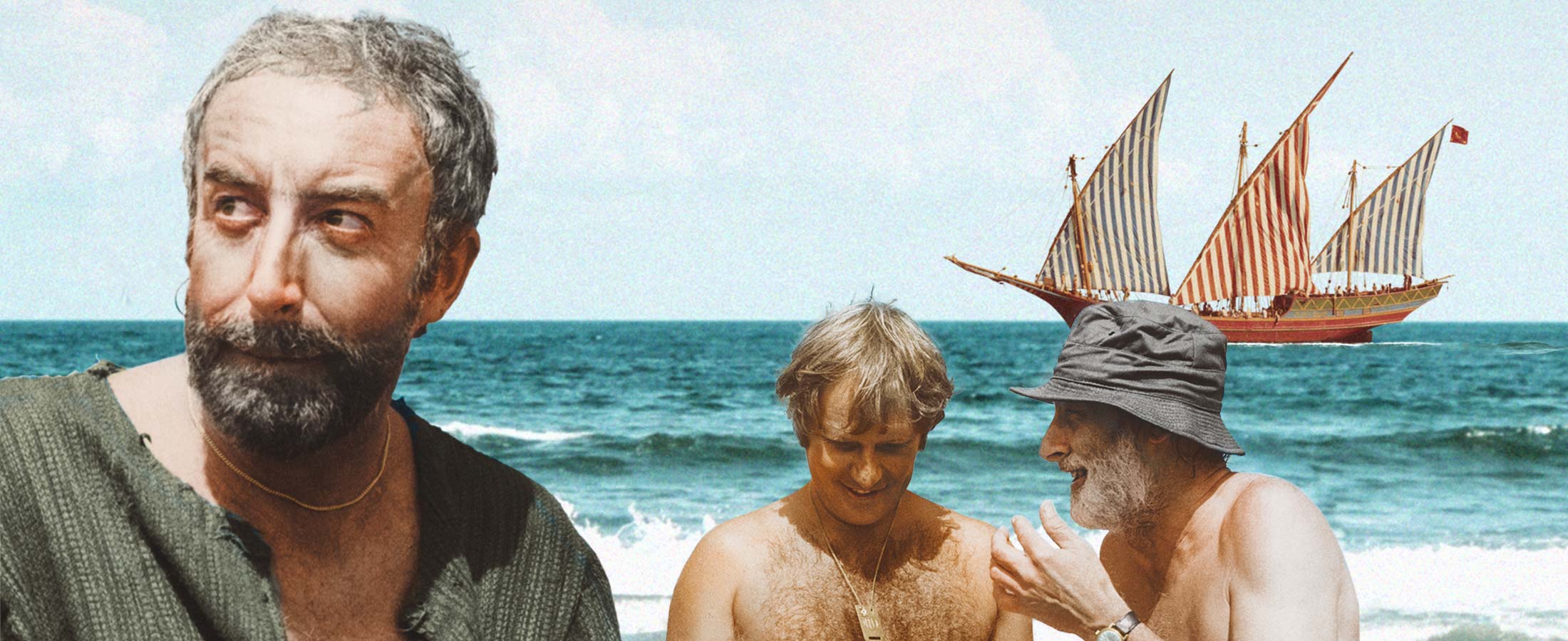
Medak’s documentary The Ghost of Peter Sellers deconstructs the disaster that was his unreleased 1973 pirate comedy Ghost in the Noonday Sun. Medak believes he may be the first director to make such a documentary.

He’s not entirely wrong. Richard Rush directed a doc about the making of his own The Stunt Man – but that was an Oscar-nominated success. And though Terry Gilliam was involved in Lost in La Mancha—a doc outlining the endless disasters that doomed his first attempt to film The Man Who Killed Don Quixote— he was not the director.

Rather, this time the documentary is the filmmaker himself documenting not his successes but his massive, almost career-ending failure. That failure was partly due to incessant weather troubles and other catastrophes—hell, his pirate ship sank the day it arrived in Cyprus.

But according to Medak, those involved in the shoot and those who knew the actor best, the main problem was Peter Sellers.

“It’s not as if any of us didn’t know that Peter was nuts,” remarks the incredibly sage producer John Hayman, nearly 50 years after the fact. “But none of us knew how nuts.”

Medak’s clearly been haunted by the production—and, to a degree, by Sellers—since the shoot wrapped. Riding high at the time on two critical and box office successes (Negatives, The Ruling Class), the in-demand director jumped at the chance to direct the brilliant Sellers, then considered the greatest comedic actor in the world.

But Sellers—possibly, as friends suggest in the film, a man suffering from an undiagnosed mental health condition who was exploited by money hungry moviemakers—would not be the artist Medak hoped he’d be.

Lunatic behavior combined with an outright desire to sink the film turned an already underwhelming script, underfunded production and nightmarish environment into something crippling.

The stories from the set are fascinating, as are moments of commiseration between Medak and directors who’d dealt with Sellers on other films (Casino Royale and the Fiendish Plot of Dr. Fu Manchu). Equally interesting are the sympathetic but knowing, even giggling responses Medak’s tales of woe elicited from Sellers’s family and friends.

“Oh, yes. He definitely did that.”

But too much time spent with director who is also subject turns many scenes into a self-indulgence.

That doesn’t topple The Ghost of Peter Sellers. Medak’s confessional pity party delivers a compelling look at the wrong side of filmmaking as it offers yet another take on Sellers—his genius as well as his demons.

All In

Lucky Grandma

by Hope Madden

It’s hard to watch Lucky Grandma without giving at least a passing thought to Lulu Wang’s 2019 gem The Farewell. This story could not be more different, honestly, but at the heart of both movies is the undeniable force of a nai nai.

In writer/director Sasie Sealy’s tale, Tsai Chin portrays Nai Nai Wong as a dead-eyed hoot. Cigarette dangling, disgusted expression, Nai Nai doesn’t play. Her dismissive stare is priceless. Her confrontational giggle even better.

One routine trip to see her fortune teller/doctor/friend (Yan Xi) convinces her that her luck is changing. She boards a bus, hits a casino and lets it roll.

But luck is not always what you hoped for and the next thing Nai Nai knows, some homely gangsters are after her.

What makes this film the savvy, funny adventure it is results from Sealy’s manipulation of the familiar. The basic story follows many an Underdog Runs Afoul of the Mob stories (Hard 8, Jackie Brown, Millions, True Romance, etc.)

The difference here, obviously, is the underdog.

Like the movie on the whole, the elderly and beloved old grandmother at the center of this mess is simultaneously familiar and alien. Her aches, pains, poverty and the clear patterns of her behaviors suggest something authentic and recognizable. She’s just not a movie grandma—not like any in the movies we’re used to. Her will is as strong as steel, whether her body keeps up or not.

Sealy’s careful not to mock Nai Nai Wong (a good thing, as she would clearly kick a person’s ass). But Chin makes certain this character is not only formidable, but hilarious.

She’s aided by her odd couple sidekick Big Pong (Hsiao-Yuan Ha), a gentle giant of a bodyguard hired in the savviest, old-ladiest of ways. (You know who can spot a bargain? Grandma can.)

Michael Tow also lends a fascinating, unseemly quality to his scenes as creepy gangster henchman Little Handsome.

The emotional grounding for the film never feels forced, which allows the Lucky Grandma to run its course without the predictable sentimentality that crushes most “look how funny this old person is” films. It’s there—the weighty pull of family over self-reliance, of dependence over loneliness—but, like everything else in the film, it respects the character Chin has so meticulously developed.

https://www.youtube.com/watch?v=7XRn6VswMro

I Can’t Go Out – Week of May 18

Just one movie transitioning from its theatrical release to streaming platforms, but if you’re ready to brave Target (or want to add one more thing to your cart), loads of new DVD/BluRay options are out there. Here’s a quick walk through.

Click the film title to link to the complete review.

Buffaloed

Emma (DVD)

Onward

Sonic the Hedgehog (DVD)

Brahms: The Boy II

Rescue Me

Fourteen

by Hope Madden

Mara (Tallie Medel) and Jo (Norma Kuhling) make an odd couple, or so says Mara’s one-time dinner date who remembers the pair of best friends from high school. Mara’s quiet, no-fuss. And Jo?

“She’s cutting.”

In fact, Mara and Jo resemble any number of very real relationships, those that maneuver childhood and the dramatic complexities of adolescence to settle into something adult that may not be sustainable.

Jo is flashy, passionate, needy. Mara is level-headed and supportive. Dan Sallitt’s understated character study Fourteen picks up their relationship somewhere into adulthood and follows it from Mara’s point of view with a detached but caring comment on how life, responsibility and surrender finally look.

Matter-of-fact performances eliminate any hint of melodrama as Fourteen wades through a series of the duo’s scenarios across about a decade. The performers’ delivery and the director’s style undercut any artifice, nearly every scene focused exclusively on a conversation, most of which feel improvisational.  

It offers a loose but relentless progression, a regrettable erosion focused on growing up and growing apart, caring for each other and caring for yourself.

Sallitt rarely focuses squarely on big moments. Jo’s breakdowns and histrionics remain almost entirely off screen, and what we see is Mara’s inevitable response as well as quietly significant moments: the first dinner with a new boyfriend, a trip back home for a timely visit.

The progression of time told in haircuts and apartments is handled more gracefully in Fourteen than what you might expect, but again, Sallitt’s style is not showy. More than the visual backdrop to mark a new era, it’s Medel and Kuhling’s recognizable reacquaintance, first halting then quickly entrenched in familiar patterns: this is who we are.

Medel’s performance, aided by her enormous eyes, is deceptively compelling. As the friend less likely to draw notice (she mentions at one point that, in Jo’s presence, she sometimes feels as if she’s not even there), she’s comfortable in the background. At the same time, Mara is clearly and constantly observing, making a mental note, internally balancing what’s best for Jo versus what’s best for herself.

Kuhling is a bit weaker, her believable amalgamation of tics in early scenes do not translate well to her climactic breakdown, which at times feels like a student actor’s workshop.

It’s a minor flaw, though, in a film that feels quietly courageous in its interest in one of life’s great heartbreaks.