Nobody was written by Derek Kolstad, which should surprise, well, nobody. Kolstad wrote 2014’s John Wick. I assume you’ve seen it: a humble widower is moved to reignite his highly trained assassin’s nature when his dog is in jeopardy.
Kolstad’s next project? Acolyte. What’s that about, I
wonder? According to imdb: When his wife is kidnapped, a simple man reveals
himself to be anything but as he assembles his old crew to rescue her.
Nobody is exactly every other film Kolstad has ever written, and its execution has all the earmarks of director Ilya Naishuller (Hardcore Henry): precise action and a weird song and dance number.
The one and only thing that separates Nobody from
dozens and dozens of expertly crafted, wildly interchangeable “underestimated badass”
films is the utter brilliance of its casting.
And by that, I mean exclusively the perfection of Bob
Odenkirk in this role.
Every beat is the same. The ideal placement of Sixties Soul classics, the meticulously timed car sequences, the underlying daddy issues, and most of all the struggle between the hero’s natural brutality against the unnatural pull of domesticity—all of it second-by-second constructed as you would expect.
Constructed well. Air tight. Shoot out choreography is like ballet—better than anything in Mr. and Mrs. Smith. It’s all interchangeable with every other really well made carbon copy.
But god damn, Bob Odenkirk? I’m not saying he makes this a
comedy, but his timing is comic perfection. His placement at the center of the
film not only sells the “average guy” masquerade better than Liam Neeson ever
could, but it makes his inner struggle and his displays of violence actually
stand out.
Regardless of the fact that you’ve seen this exact movie a
dozen times, you just don’t expect it. It’s great!
He’s great.
Plus Christopher Lloyd?! Yes, please. And Michael Ironside, who is forever welcome in any role. Connie Nielsen, on the other hand, is—characteristic of the genre—grossly wasted as the wife who’d probably love him more if he showed his badass nature more often.
Aleksey Serebryakov also sells the mad Russiah villain pretty well. There are certain scenes—one climactic across-the-table, in particular—where neither lead conveys the gravity of the situation. I’m not asking for Walken/Hopper in True Romance, but this moment is pivotal and needed to feel like it.
Maybe you don’t know who David Wojnarowicz is. Maybe you
have no idea how to pronounce his name. It might be safer to butcher the provocative
late artist’s last name (voy-nah-ROYH-vitch) than to read the title of director
Chris McKim’s documentary aloud—Wojnarowicz: F**k You F*ggot F**ker.
It doesn’t really matter what you call it as long as you see
it.
The film primarily uses Wojnarowicz’s own recordings, photos
and paintings to let him tell his story. A profound influence on New York’s art
scene in the 1980s and into the ‘90s, the multimedia artist’s work delivered among
the earliest and most startling images of queer art in the city.
McKim had a lot to work with. Wojnarowicz made hundreds of
audio cassettes, recording his thoughts in a sometimes wounded monotone. The stream
of conscious monologues often dip into the outright poetic and create a
poignant soundtrack for the life and work on display.
The documentarian does enlist some additional voices,
including friend Fran Lebowitz and frequent collaborator Marion Schemama, but
relies mainly on Wojnarowicz’s own visuals to create the sense of isolation,
alienation and anger that fueled much of his work.
Wojnarowicz and his work, as well as his death, became a
focal point of the mishandled AIDS epidemic that scars the politics and history
of the 1980s.
In much the way Wojnarowicz’s work reflected his hellish
upbringing and time on the streets, McKim’s film contextualizes the artist among
that which he influenced: a city, a movement, a scene, politics, and other
artists.
As is crucial in a doc about a visual artist, the screen is routinely filled to brimming with Wojnarowicz’s creations. Powerful, inflammatory, sexually explicit and unmistakably challenging, the work itself looms large in the documentary as if to ensure that it reaches out to as many as possible who forgot, never knew, or may have been kept from it.
Our son Donovan joins us this episode, so obviously the best idea is to look into horror movie families that make ours look downright wholesome. Check out the boy’s band, NEW PLAGUE RADIO!
6. The Woman (2011)
Forget Pollyanna McIntosh for one minute (if that’s even possible). One of many reasons that Lucky McKee’s powerhouse of horror is so memorable is that McIntosh’s feral cannibal (who must smell awful) is not the scariest person on screen.
There’s something not quite right about Chris Cleese (an unsettlingly cherubic Sean Bridgers), and his family’s uber-wholesomeness is clearly suspect. This becomes evident once Chris hunts down a wild woman, chains her, and invites the family to help him “civilize” her.
It doesn’t go that well for anybody, really, in a film rethinks family.
Well, patriarchy, anyway.
https://www.youtube.com/watch?v=GL50yBcw5wA&t=27s
5. The Texas Chainsaw Massacre (1974)
Poor, unlikeable Franklin Hardesty, his pretty sister Sally, and a few other friends head out to Grampa Hardesty’s final resting place after hearing the news of some Texas cemeteries being grave-robbed. They just want to make sure Grampy’s still resting in peace – an adventure which eventually leads to most of them making a second trip to a cemetery.
But that’s not the family we’re after. The clan that will come to be known as the Sawyers begin humbly enough in Toby Hooper’s original nightmare: a cook, a hitchhiker, a handyman of sorts, and of course, Grandpa.
There are so many moments to recall. Maybe it’s the slamming metal door, or the hanging meat hook, or the now iconic image of the hysterical and blood-soaked Sally Hardesty hugging the back of a pick up truck bed as the vehicle speeds away from Leatherface.
Or maybe it’s dinner, when Hooper really gives us some family context. He uses extreme close up on Sally’s eyeball as she takes in the bickering family lunacy of a dinner table quite unlike any we’d seen before.
4. The Lodge (2019)
It’s Christmas, and regardless of a profound, almost insurmountable family tragedy, one irredeemably oblivious father (Richard Armitage) decides his kids (Jaeden Martell and Lia McHugh) should get to know the woman (Riley Keough) he left their mother for. A week in an isolated mountain cabin during a blizzard should do it.
Dad stays just long enough to make things really uncomfortable, then heads back to town for a few days to work. Surely everybody will be caroling and toasting marshmallows by the time he returns.
What is wrong with this guy?! And it’s not just him. Turns out his kids are pretty seriously messed up as well. But fear not (or fear a lot) because Grace has some profound family dysfunction to fall back on, and pretty soon it’s just a guess as to who’s going to out-dysfunction the other.
3. We Are What We Are (2010)
In a quiet opening sequence, a man dies in a mall. It happens that this is a family patriarch and his passing leaves the desperately poor family in shambles. While their particular quandary veers spectacularly from expectations, there is something primal and authentic about it.
It’s as if a simple relic from a hunter-gatherer population evolved separately but within the larger urban population, and now this little tribe is left without a leader. An internal power struggle begins to determine the member most suited to take over as the head of the household, and therefore, there is some conflict and competition – however reluctant – over who will handle the principal task of the patriarch: that of putting meat on the table.
Jorge Michel Grau’s We Are What We Are is among the finest family dramas or social commentaries of 2010. Blend into that drama some deep perversity, spooky ambiguities and mysteries, deftly handled acting, and a lot of freaky shit and you have hardly the goriest film ever made about cannibals, but perhaps the most relevant.
2. Raw (2016)
Justine (Garance Marillier, impressive) is off to join her older sister (Ella Rumpf) at veterinary school – the very same school where their parents met. Justine may be a bit sheltered, a bit prudish to settle in immediately, but surely with her sister’s help, she’ll be fine.
Writer/director Julia Ducournau has her cagey way with the same themes that populate any coming-of-age story – pressure to conform, peer pressure generally, societal order and sexual hysteria. Here all take on a sly, macabre humor that’s both refreshing and unsettling.
Because what we learn is not just that Justine’s sister will not be a good mentor, or that there is definitely something wrong with Justine. By the blackly hilarious final moments on the screen, we see the big family portrait.
1.Hereditary (2016)
What else?!
With just a handful of mannerisms, one melodic clucking noise, and a few seemingly throwaway lines, Aster and his magnificent cast quickly establish what will become nuanced, layered human characters, all of them scarred and battered by family.
Art and life imitate each other to macabre degrees while family members strain to behave in the manner that feels human, seems connected, or might be normal. What is said and what stays hidden, what’s festering in the attic and in the unspoken tensions within the family, it’s all part of a horrific atmosphere meticulously crafted to unnerve you.
Aster takes advantage of a remarkably committed cast to explore family dysfunction of the most insidious type. Whether his supernatural twisting and turning amount to metaphor or fact hardly matters with performances this unnerving and visual storytelling this hypnotic.
If there is one filmmaker whose movies resist summarization,
it’s Quentin Dupieux. I have tried (Deerskin,
Wrong).
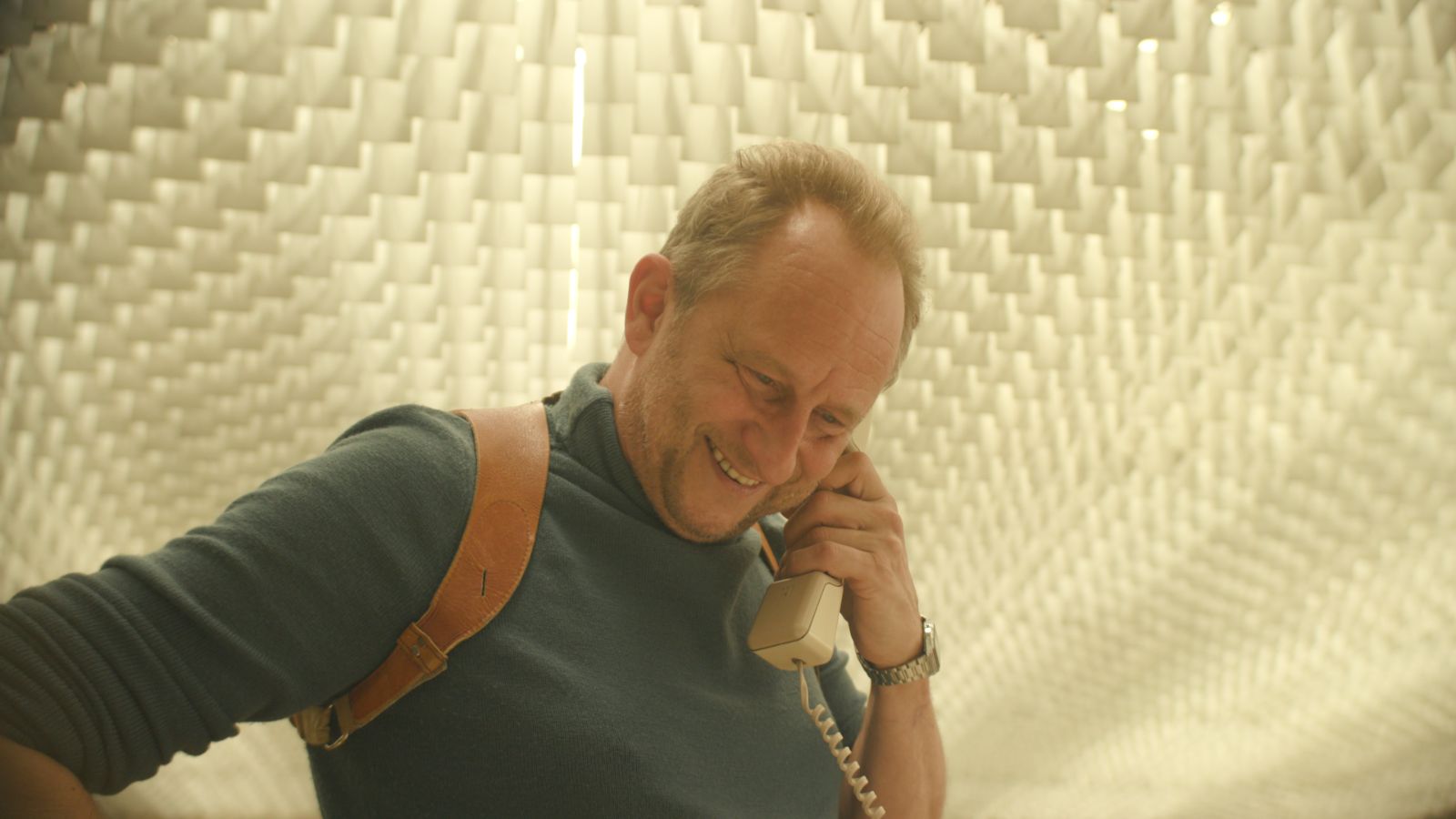
His latest, Keep an Eye Out, takes us on a murder mystery in the most charmingly monotonous of ways. In fact, as Chief Commissioner Buron (Benoît Poelvoorde, Man Bites Dog) questions suspect Fugain (Grégoire Ludig), the officer complains that this is the most boring interrogation he’s ever done.
It’s not just the questioning (Fugain bought bug spray, then ate some potato chips, then accidentally knocked over a planter and broke it…) that’s mind numbing, though. Dupieux situates this aggressively dull conversation in a French police station leeched of color—everything in the room an unflattering shade of putty, except for the bizarre abundance of overhead lights.
It’s often tempting to seek symbolism in Dupieux’s absurd
situations. Many of us are still wrestling with the message in his 2010
breakout, Rubber, about a discarded car tire on a nationwide killing
spree.
Perhaps there’s no hidden meaning. In Keep an Eye Out,
in particular, the filmmaker seems simply to be setting up jokes. As soon as
Philippe (Marc Fraize) arrives on the scene—one eye on the accused, the other missing
and grown over with skin—things take an almost Monty Python level of lunacy. It’s
uncomfortably silly, stupid even.
There’s a freedom to the absurdism of a Dupieux film,
although Keep an Eye Out feels far more superficial even than Deerskin
(a film released prior to but filmed after Keep an Eye Out). Even his
most focused work lacks the cynicism or bite of Yorgos Lanthimos, maybe the
most consistent absurdist working in film today.
Which is not to say a Dupieux film can’t be as enjoyable. In
many ways, they’re easier to enjoy than a Lanthimos film because they’re less
likely to fill you with existential terror.
They’re weird. They’re delightfully unpredictable. They’d grow tiresome, but they’re all so short. (Keep an Eye Out runs barely longer than an hour.)
Authenticity is certainly the main differentiator between
Chad Crawford Kinkle’s latest horror and others of the genre.
It’s been eight years since the filmmaker released his
underseen backwoods gem Jug Face. He once again pits a tenacious female
against the unrelenting pressure of an unholy presence, but Kinkle has a more
personal kind of dread in store with Dementer.
Katie (Katie Groshong), looking for a fresh start, applies for a job at a skills training facility that works with adults who have special needs. She’s hired, working with clients two days a week in the facility, then spending two nights in a group home with three of them.
Katie is especially concerned with Stephanie (Stephanie
Kinkle, the filmmaker’s sister).
Kinkle’s sister is an adult with Down Syndrome, which not
only elevates the reality of the situation but also the tenderness and anxiety
around the character’s safety. You can almost feel the filmmaker’s own personal
dread over his sister’s vulnerability in an untrustworthy world.
Aside from Larry Fessenden, who appears briefly, Groshong is
the only professional actor in the film. Kinkle, working with a skeleton crew,
films in an actual skill center. The majority of the staff and clients
represented in the film are, indeed, staff and clients.
The approach gives the film a verité style often seen in
horror films, rarely if ever seen in a horror film with a main character who
has special needs. Dementer lacks any of the sheen or noble heroism you
often find in films centered around a character with a disability. The realism
adds a level of discomfort, a sense that vulnerable adults who need care could
easily find themselves in a precarious situation.
Dementer also offers an uncomfortably realistic look
at working poverty.
Kinkle mines these anxieties as Groshong begins to see and hear signs that suggest Stephanie may be in real danger. As she races against the clock to save her, Kinkle slyly upends plenty of horror tropes.
It’s an often fascinating deconstruction of a particular
subgenre of horror, an approach that usually benefits from the verité style.
But too much of the loose narrative feels like filler. We watch Katie buckle
her seat belt no fewer than five times.
Unanswered questions can strengthen a film, but Dementer feels underwritten. Still, you get the sense that Kinkle made the best of what he had on hand and told a deeply personal story in the most authentic way he could.
Scooby-Doo is having a moment. The franchise got its
first wide release feature film last year, and the brains of the Mystery, Inc.
outfit, Velma, just nabbed her own spin off show. Why not dig deep and
reintroduce us to other cartoon favorites?
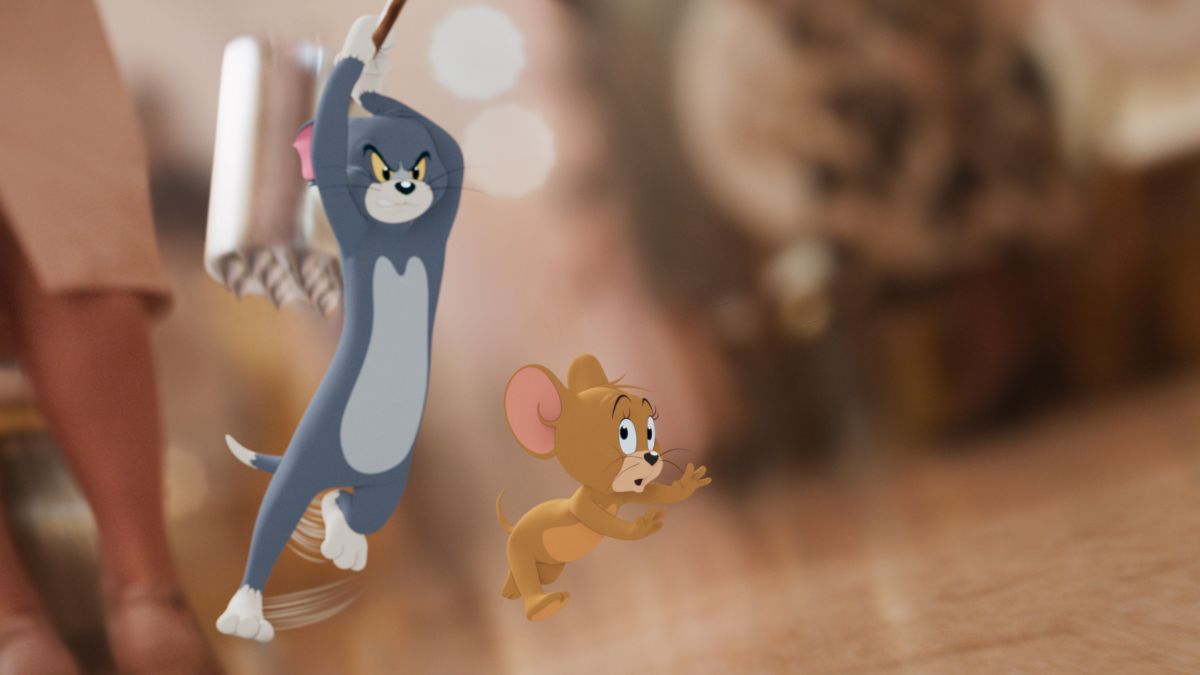
Tom and Jerry make their case for relevance with a
live action/animation hybrid by director Tim Story (Ride Along, Barbershop).
The film sees the squabbling cat and mouse team relocating to New York City,
where Tom hopes (presumably – he doesn’t talk so it’s hard to say definitely)
to become a musician.
Jerry just wants to keep being a jerk.
Is it me, or is Jerry really the villain in this twosome?
They run afoul of Kayla (Chloe Grace Moretz, who needs to
fire her agent because she should definitely be getting better movies than this).
Kayla requires a new job after some insane, hand-drawn cat
knocks her off her bike, ruining her delivery. She cons her way onto a hotel
staff. Now if she can just prove that she is good enough and keep the guests’
(Pallavi Sharda and Colin Jost) wedding-of-the-century on the rails, she’ll be
fine.
Or will there be animated chaos?
Trying to make old school ‘toons fresh and interesting for a
modern audience does not always work. Even Scoob from 2020 was a miss,
but Tom and Jerry’s failure to entertain lands closer to the colossal disappointment
of Garfield (a film so bad Bill Murray apologized for it in a death
scene in an entirely different movie).
The animation sequences are hand drawn, so that’s a great change of pace from the lifeless CGI churned out in films like Earwig and the Witch. Too bad Story doesn’t know how to blend them with live action in a way that feels at all engaging.
T&J is long. The story, by Brigsby Bearwriter Kevin Costello, is over-stuffed and under-enjoyable. He mistakes idiocy for lunacy, busy for kinetic. A lot happens, none of it interesting, none of it funny, all of it surrounded by a bombastic soundtrack. Surprisingly little of the adventure really has to do with the ‘toons, either.
There are long stretches of Kayla learning valuable lessons and Michael Peña affecting some kind of unplaceably bizarre accent.
When your funniest joke is about scooping animated dog poop, no one is enjoying themselves.
For the garden variety movie viewer (myself included), it
can be hard to get comfortable with the idea of spending a bunch of time alone
in a room with a corpse, even if that’s your job.
We always expect to see a figure sit up under that drawn
sheet.
When done well, movies that pick that particular scab can be incredibly effective. Keith Thomas’s The Vigil is one such movie. He leaves us alone in a house with the late Mr. Litvak. But we’re not really alone, are we?
An endlessly tender Dave Davis plays Yakov, who has recently
left the Hasidic Jewish community in Brooklyn. It’s so recent, in fact, that he
goes to a support group of others like himself, all of them in need of some
kind of training to figure out how to live a “normal” life. And as much as
Yakov really does want to distance himself, when his former rabbi approaches
him about Mr. Litvak, well, Yakov just needs the money.
Yakov will serve as Mr. Litvak’s shomer, sitting with the
body for the night to protect Mr. Litvak’s soul until his body can be interred
in the morning. Mrs. Litvak (Lynn Cohen, remarkable as always) doesn’t want him
there.
It’s a straightforward enough premise, something Thomas
executes with plenty of spectral dread. What the basic outline and many of the
jump scares lack in originality, The Vigil makes up for with the underexplored
folklore and customs specific to Orthodox Judaism. The general ideas are common
to the genre, but the specific acts and images are precise and certainly new to
horror cinema.
As Yakov’s night wares dangerously forward, he faces a Mazzik.
But, as is usually the case in films such as these, the real demons Yakov faces
are his own.
Thomas’s screenplay may present that metaphor more bluntly than necessary, and certain scenes are just so obvious (old footage projecting on a wall near a diorama of newspaper clippings and photos). But the compassion the filmmaker has for both Yakov and Mrs. Litvak, combined with the impressive performances from both actors, gives the film a soft spot that heightens the dread and terror.
It’s a solid effort, one that reframes a story you’re used to in a way that gives it more depth and emotional power.
Writer/director Mark P. Nelson is kind of fixated on the social
rifts in America.
His 2018 film Domestics followed the aftermath of an
apocalypse intentionally deployed by a ruling class looking to thin the herd.
The smaller herds only fracture into groups of radicalized, violent maniacs,
though, and even your white bread nuclear family types are threatened.
Which is to say, this filmmaker brings a different
perspective to the inbred cannibal franchise, Wrong Turn.
Yes, big city liberals on a hiking trip run afoul of Virginia
rednecks. But where Nelson varies from the script of the 2003 original is in reimagining
the antagonists.
We know there’s trouble afoot from the opening scene when Matthew Modine drives into the quaint Virginia town looking for his character Scott’s missing daughter (Charlotte Vega). The lovely blonde was last seen here, along with her African American boyfriend, another heterosexual couple, and a gay couple, one of whom is Muslim.
Because apparently not one of these people has ever seen a
horror movie.
The film gets into trouble early by conjuring moments from Tucker
and Dale vs Evil, which is a great movie. It’s an insightful lampooning
of movies just like the one Nelson is trying to make, though.
Nelson’s more successful when he borrows a bit from the
likes of Green Room and The Ritual, although he plants Wrong
Turn’s folkloric barbarism firmly on American soil. This is a film about
America.
If you’re looking for a movie about cannibal families, you
will most definitely be disappointed.
The horror is less unseemly, all of it in support of Nelson’s
image of a divided America. There are some startling moments of gore, and other
more harrowing ideas that suit the picture well.
Nelson takes too long getting to the point, unfortunately. The film runs just under two hours, which is at least 20 minutes too long. A trimmer runtime might have helped the film leave more of a mark. Instead, Wrong Turn is a decent if unremarkable backwoods thriller.
Life imitates art in a film about a struggling photographer,
a young prostitute, and an art world more interested in profit than humanity
(or art).
Choir Girl, writer/director John Fraser’s thriller, sets itself inside and outside the world of art. Eugene (Peter Flaherty) takes old school film photos of what he sees around him in his dicey neighborhood: kids overdosing, violence, prostitution.
The photos, like the movie itself, use pristine black and white to give even the most awful content an artful sheen. One photo, in particular, gets Eugene the attention of an ambitious art magazine editor with big things in mind. In it, an underaged girl (Sarah Timm) stares desperately from the abyss of the darkness around her.
From here Fraser’s film turns quickly to gritty thriller
with overtones of Cronenberg’s masterpiece Eastern Promises and, even
more strikingly, Gerard Johnson’s underseen 2014 thriller Hyena.
The separation and commingling of the two worlds—dangerous
streets and high-end art—offers Fraser opportunities to compare and contrast.
Who is being prostituted, exactly?
It’s not an uncommon critique of the industry of art, but
Fraser’s insights are sincere.
Choir Girl’s success rises and falls with Flaherty’s performance. Eugene needs to be simultaneously sketchy and innocent—not one or the other—even in his own mind. Flaherty pulls off this balancing act with a performance that’s sometimes tender, often nasty, but one that never feels manufactured.
The surrounding performances are not as strong, although
veteran Jillian Murphy brings layers to an important role.
Choir Girl asks ugly questions and gets ugly as it
looks for answers. At times, the story feels dependent on too many contrivances.
Never is that more evident than with the harrowing dramatic climax—a scene that
is inevitable and yet unearned.
Credit to Fraser, the scene itself is not filmed to feel gratuitous. For a scene this lengthy and torturous to truly work, however, every element leading to it needed to justify it. Stronger storytelling would have helped.
It’s a big risk to take, and one that will undoubtedly displease some viewers, but that doesn’t limit the film’s powerful central performance or imaginative execution.