Tag Archives: Madd at the Movies

Dear White People

Hillbilly Elegy

by Hope Madden

I can’t say I’m a big Ron Howard fan. I find his films safe and sentimental. But I’d certainly say they were all competently made.

Until today.

What the hell is going on with Hillbilly Elegy?

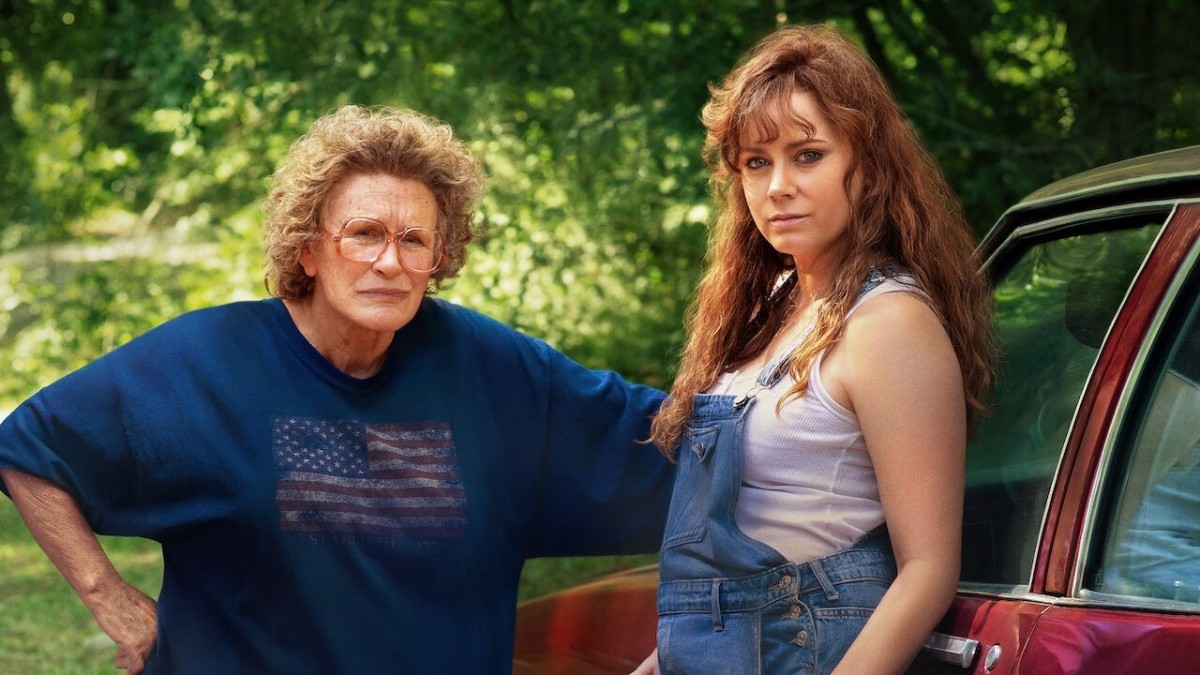
Howard’s adaptation of J.D. Vance’s memoir does boast the one-two punch of perennial Oscar contenders Amy Adams and Glenn Close. Adams plays Vance’s unstable mother, Beverly. It’s less a character than a collection of outbursts, so I can’t even say whether she’s good.

Close, as Vance’s beloved Mamaw, gets more opportunity to carve out an actual character. But like everything else in the film, Mamaw exists in snippets to illustrate the Middletown, Ohio chains J.D. needs to break.

The main story is of law student J.D. (Gabriel Basso) trying to land summer employment at a firm so he can afford Yale next year. His mother overdoses on heroin just days before his interview. Can he get to Ohio, sort that out, and still make it back to Connecticut in time? Or will he be forever waylaid by all the hyperventilating, acid washed jeans, scrunchies and hysterics that populate his flashbacks?

Howard’s characters don’t show us much, but they do tell us a lot of things. J.D. tells us his mother is the smartest person he’s ever met. We never see even a glimpse of that, so we’ll have to take him at his word. He also tells us twice that he will do whatever it takes to make sure his mother gets the help she needs.

That’s supposed to be the heart of the story. Does there come a time when you have to put yourself first? Is it ever wrong to sacrifice yourself for your family?

Too bad Howard, working from a screenplay by Vanessa Taylor, can’t find that heartbeat.

Flashbacks do little to differentiate J.D. (played in youth by Owen Asztalos) from the others who can look forward to a life of “food stamps or jail.”

Never does the film see J.D. as possessing any privileges that may make success easier for him than for his grandmother, mother, or sister (Haley Bennett). Nope. J.D. just worked harder.

The reason Howard’s film seems like it refuses to say anything, which gives it the feel of a poorly pieced together puzzle, is that it says two things simultaneously. 1) Redneck is a term elitists use to make themselves feel superior to perfectly valuable people. 2) If rednecks worked hard enough, they could go to Yale and stop being rednecks.

Bring the Noise

Sound of Metal

by Hope Madden

Riz Ahmed is a guy who can do anything.

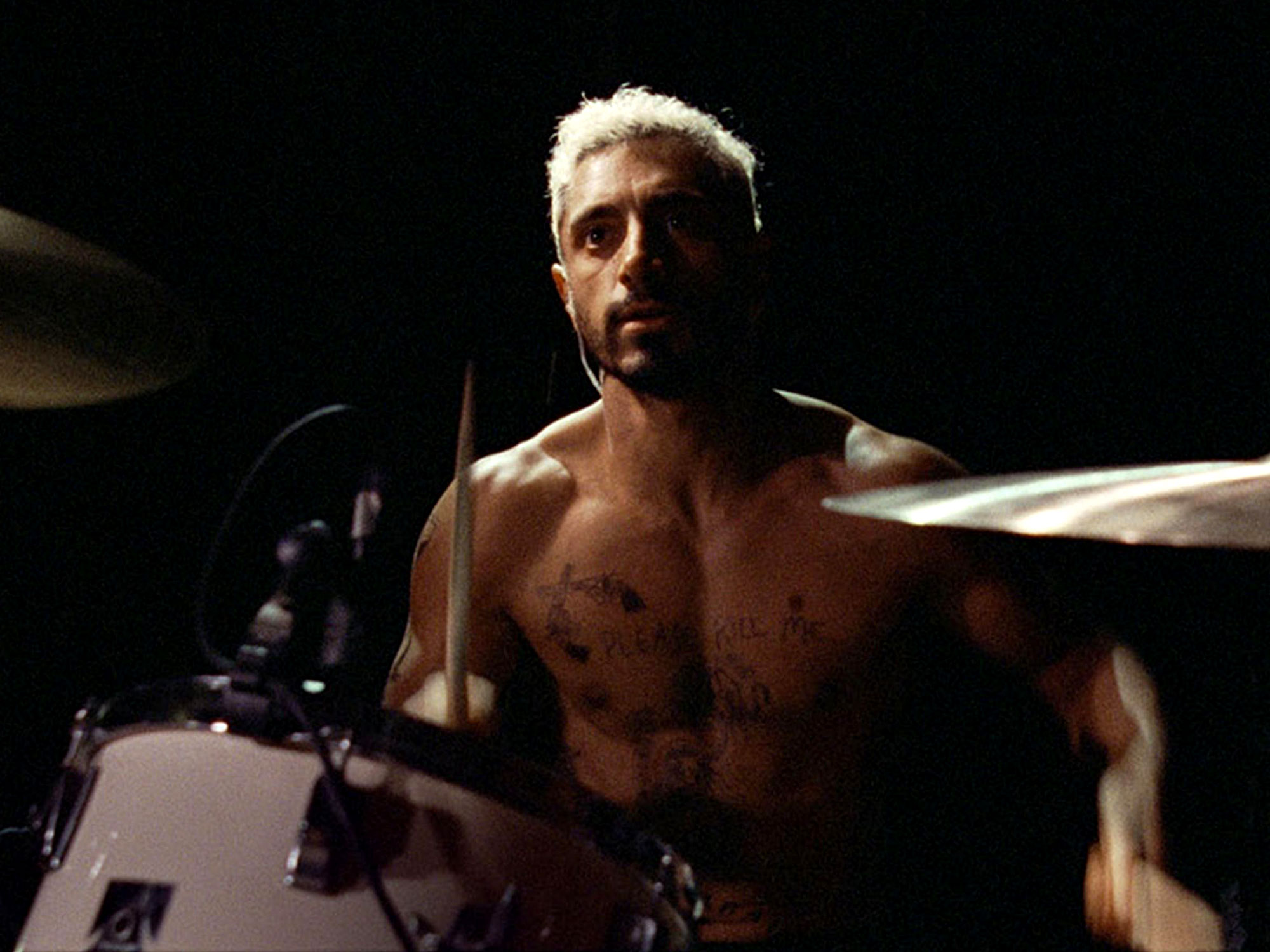
He can be funny (Four Lions), pathetic (Nightcrawler), tragic (Sisters Brothers), villainous (Venom). He’s soon to be Hamlet. But in Sound of Metal, playing a recovering addict heavy metal drummer who’s hearing suddenly deteriorates, he’s more than all of these put together.

Ahmed is Ruben, in a performance that brings this man to life with so many layers and such nuance and power it requires your attention.

Ruben’s traveling the country in an airstream with his girlfriend Lou (the always welcome Olivia Cooke). She sings/wails/screams and plays guitar, he bangs on the drums, and they keep each other safe, sane and sober. This is how they do it, one day at a time.

But Ruben’s sudden deafness is more than he can take and as he spirals out of control, Lou and his sponsor find him a place. It’s secluded, nestled on a big piece of land near a school for the deaf—a spot for recovering addicts who are deaf. No one else.

No Lou.

Even before you begin to appreciate Ahmed’s remarkable performance, you’ll likely notice writer/director Darius Marder’s choices when it comes to sound design.

Also, Sound of Metal is captioned, but not all the time. If Ruben can’t understand what’s being said, neither can you.

The sound design evokes the same sensation: of being in Ruben’s head. What he can’t really hear it, you can’t, either. Marder mimics the humming, echoing, and blurring together of sounds to create an immersive sensation that never feels like a gimmick.

It might, were it not for Ahmed, though. The rest of the cast, most of them non-actors, offer solid support. Cooke is characteristically strong, simultaneously resilient and dependent in a way that feels authentic to the character. The charming and endlessly tender third act arrival of Matthieu Amalric only adds to the emotional heft the film carries.

Sound of Metal is Marder’s first feature. It often benefits from a loose structure, but just as often, this becomes its downfall. There are scenes that amount to little, giving the film a bloated quality. But that’s not enough to defeat it, not nearly. Sound of Metal is a powerful experiment and a star turn for a talented actor.

Paint By Numbers

The Last Vermeer

by Hope Madden

Who doesn’t like a story about swindling Nazis?

There’s something festive in that notion, and Dan Friedkin’s The Last Vermeer does what it can to keep the mood light as one of Holland’s unsung artists is accused of consorting with Nazis to help Goering purchase a painting by Dutch master Vermeer.

The film is set shortly after the end of WWII. Claes Bang, who seems to only make films about art (Burnt Orange Heresy, The Cube), plays Captain Joseph Piller. A former member of the resistance with a strained family life, Piller is part of an operation that finds said Vermeer, Christ and the Adulteress.

The problem with this movie is that Friedkin treats it like a mystery. Mysteries are cool, and the reveal here is certainly interesting, but there very are few clues to follow. And following those few clues are characters far less interesting than Han Van Meegeren, played here with fanciful, libidinous panache by Guy Pearce and someone’s joke of a pair of eyebrows.

Van Meegeren’s crime, if he did collaborate with Nazis to move a masterpiece from Holland’s greatest artist, is a capital one. Not that you’d know that from Pearce’s flashes of eccentricity and decadence. He seems to be enjoying himself. His character—and, indeed, Van Meegeren himself—commands attention.

Too bad Friedkin and his slew of scriptwriters decided to bury the lede. In one of those Hollywood moves, this film chose to sideline its main character—the real life figure who could face a firing squad—in favor of a safe, blandly attractive hero we can all root for.

Yawn.

Worse still is the criminal underuse of The Phantom Thread’s Vicky Krieps as the attractive but honorable assistant.

The Last Vermeer is one of those hopelessly manipulated true histories. It looks good, although nothing about the direction seems inspired. Instead the film delivers a competently made, by-the-numbers historical recreation when it could have been art.

The Holy and the Broken

Dirty God

by Hope Madden

There is an unerring authenticity about the slice of life that is Dirty God. Co-writer/director Sacha Polak sugar coats nothing, wallows nowhere, and dares you to judge Jade (a breathtaking Vicky Knight), regardless of her behavior.

The film opens on Jade, barely out of her teens, as she stares toward the camera, her face partially covered by a clear plastic mask. What you can see is badly scarred. This is her last day in what appears to have been a very long stint in the hospital. The reasons are fairly obvious.

Back at the flat she shares with her own mother and toddler, Jade doesn’t adjust well. Business as usual bumps up against wounds—physical and emotional. No one, Jade included, seems to be dealing with the issue at hand.

What follows is a downward spiral, Jade making one self-destructive decision after another. You’d think that “rock bottom” had been hit when  her ex threw that acid in her face, but the ugly truth is that there was a lot farther Jade had to fall. It isn’t fun to watch, but thanks to Knight’s understated performance and Polak’s unflinching gaze, you never want to look away.

In other hands, this could feel maudlin or worse. But Polak doesn’t fetishize Jade’s suffering. She bears witness, but the overriding tone is of empathy, not sympathy.

The approach is provocative because Jade’s torment is almost inconceivable. Few of us could honestly imagine it. Polak doesn’t soft peddle, and she doesn’t let the viewer off the hook with a pitiable or noble character.

Knight, herself a burn victim, has never acted before. Her performance here, obviously informed by her own experience, is a minor miracle. There’s not a wasted gesture, not an overwrought emotion. The impact of that is jolting.

Dirty God—a film about self-image and the unfair reality of limitations—makes other “coming of age” style films feel like soft drink ads.

Portrait of a Lady of Science

Ammonite

by Hope Madden

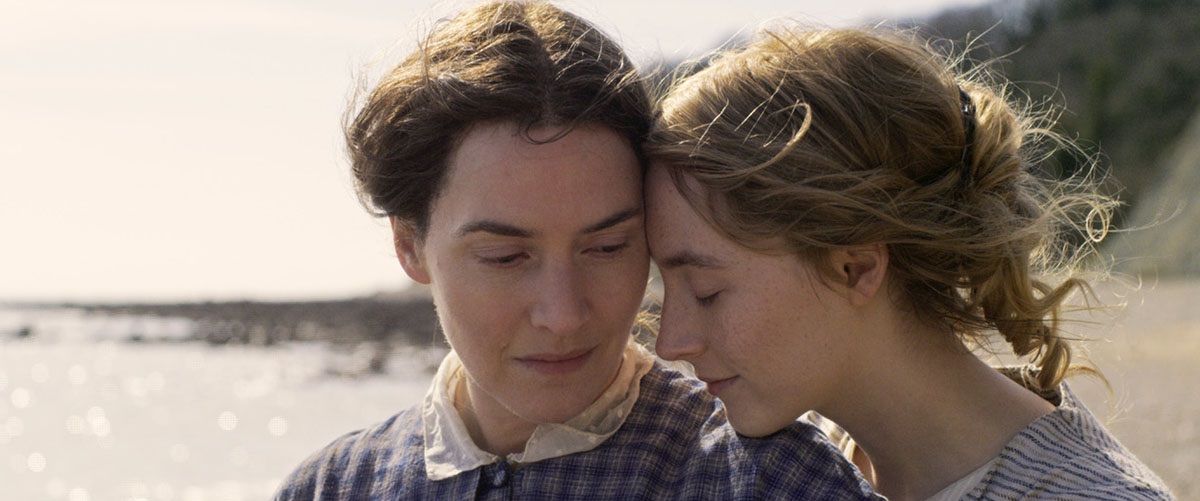
Writer/director Francis Lee’s Ammonite is a beautiful, insightful, lonesome film about European women falling in love in a time when patriarchal society only allowed that to happen because they weren’t paying attention. It boasts beautiful cinematography and two utterly stellar performances.

And it suffers by comparison to Celine Sciamma’s similarly summarized 2019 masterpiece Portrait of a Lady on Fire.

That doesn’t mean it isn’t worth seeing—it absolutely is. Kate Winslet and Saoirse Ronan—simply two of the most talented humans ever to grace a film screen—play, respectively, British paleontologist Mary Anning and the married woman she falls for, Charlotte Murchison.

Anning is, in fact, among the most influential scientists in British history. Being a woman in Victorian England, her work was accepted while she herself was not. There’s an interesting tale to tell right there, but Lee chose that repressive cultural landscape as more of a backdrop, like the forbidding English Channel coast town of Lyme where Anning did her fossil hunting.

There’s no historical evidence that Anning was gay. There’s also no historical evidence that she was not, and filmmakers have told Emily Dickinson’s story dozens of times, only once actually addressing her sexual preference. If it’s OK for them to fictionalize, why not Lee?

The telling gives Winslet opportunity—partly thanks to excellent support from Fiona Shaw, Gemma Jones and Alec Secareanu—to present a woman so ill-used by and out-of-step with the world around her that she sees a miscarriage of justice in every exchange. Winslet is sharp and brooding, superior and insecure. It’s another quietly outstanding performance.

Aglow and lilting, Ronan is all warmth, offering a swoon-worthy counterpoint to Winslet’s chill. But there is something rushed about her attraction, and the deep, risky longing never feels authentic.

The affection, however, feels painfully true, and that’s at the core of a story about limited possibilities. Lee’s no Tarantino, but keep an eye out for bare feet and (less Tarantino-esque) insects. There is something slightly melancholy in these images of freedom and vulnerability that suit the effort.

Lee doesn’t try to answer every question he raises or resolve every conflict he presents. Instead, he brings us into a story of outsiders trying to define their own realities, however limited they may have to be.

Smells Like Teen Spirit

Dating Amber

by Hope Madden

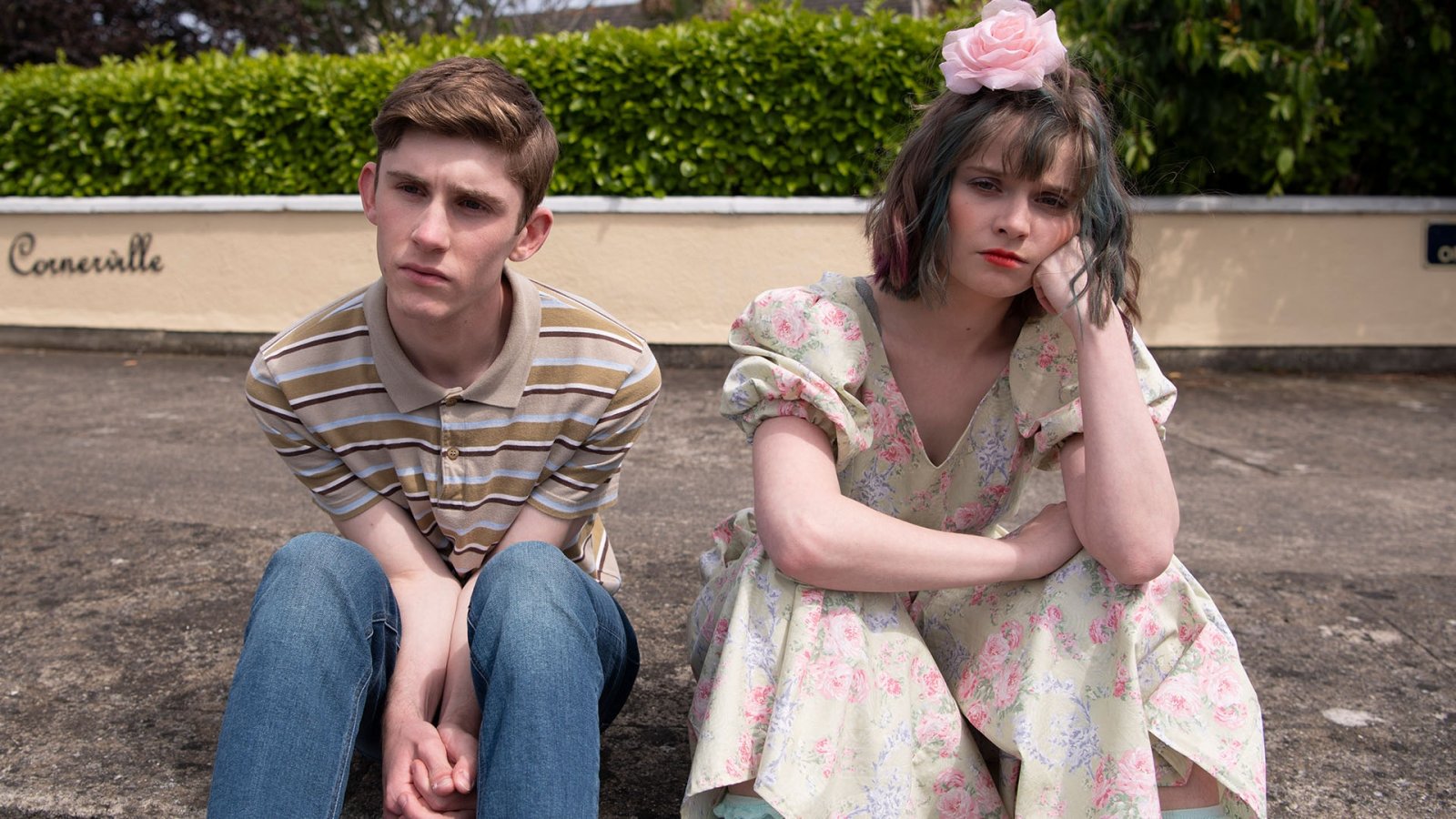
Awkward teens pretend to date each other to sidestep the school bullies, only to find a deep and genuine bond. That sounds pat enough, but writer/director David Freyne (The Cured) and a stunning cast have something far messier and human in mind.

Welcome to County Kildare in the mid Nineties. Divorce is still illegal, homosexuality a curse, the Irish army or the hair salon are the likeliest post-graduation vocations. As Amber (Lola Petticrew) says frequently, “This place will kill you.”

Amber should know. She found her father hanging in the forest near the trailer court where she rents out spots to horny teens, which she does to accrue enough dough to head to London the minute she graduates.

But to survive between now and then, she proposes the “let’s pretend we’re dating” con to Eddie (a remarkable Fionn O’Shea). Because Amber is gay. Gay gay gay. And so is Eddie.

No. No, he definitely is not gay. Not at all. But still…it isn’t a terrible idea.

So begins Freyne’s semi-satirical look at the perils of high school generally and sexual conformity specifically. There are delightful, early, broad-stroke comic moments that simply feel like a cheeky Irish upending of John Hughes tropes.

But that’s not Dating Amber. Not at all. The brightly familiar comedy trappings serve to lull you into a comfortable space so the film can unveil something beautifully untidy and really heartbreaking, something simultaneously devastating and resilient.

Freyne mixes darkness and forgiveness in equal measure. Everyone has their own shit to deal with, and an depressed small town full of frightened people lacking in any real opportunity or choice is bound to take its toll—on the gay kids, on the parents who probably don’t want to be married anymore, on the younger brother who just wants to feel like his family is normal, and on everyone facing graduation and whatever likely dismal future lies ahead.

But mainly, Freyne is interested in how Amber and Eddie contend with things. Luckily, Petticrew and O’Shea share a truly lovely chemistry, creating the kind of bond you long to see for every desperate and lonely teenager.

Their honesty gives every scene an extra punch—of laughter or heartbreak. Coming of age still looks like it seriously sucks, but Dating Amber is a keeper.

Gotta Be the Shoes

Meeting Michael

by Hope Madden and George Wolf

Normally, you’d expect the MVP of any doc about Michael Jordan – especially one featuring some priceless footage of MJ in his prime – to be the man himself. But in Meeting Michael, he’s upstaged by two kids curious about their Dad’s obsession.

Dad is writer/director Adam Kontras. An Ohio native, Kontras was just a youngster himself when he first idolized Jordan and the mid-80s Chicago Bulls. Now, his L.A. attic is bursting with impressive MJ memorabilia, including two special videotapes with some amazing behind-the-scenes footage.

At just 19 years old, Kontras was pulling the overnight shift at a news/talk radio station in Columbus. Through that gig, he scored a press pass for the Bulls game in Cleveland on Nov. 9th, 1995, and brought a camcorder. With both courtside and locker room access, Kontras captured a truly compelling moment in time.

He released some of the footage five years ago as a short film, drawing superlatives in outlets ranging from online blogs to the Washington Post. For the feature length version, Kontras smartly reframes the entire story as one he’s telling his young son and daughter on the day they’re finally allowed to explore his fan cave.

Though Kontras’s storytelling can flirt with self-congratulations, it’s more often laced with a sheepish wonder at what he pulled off, and some endearing self-deprecating humor aimed at his younger self.

As a director, Kontras (Fastest Delorean in the World, Fastest Delorean Part II) exhibits fine instincts for answering the questions raised by his on-court encounter. For example, footage of Jordan finally answering a merciless heckler sparks a natural curiosity about the garishly dressed front row loudmouth, and Kontras delivers. Bypassing this sidebar wouldn’t have wrecked the film, but giving some time to Eddie “the Heckler” Nahra leads to a richer experience.

It’s these details – some personal, some observational – that keep the film from feeling like a short surrounded by filler.

For Jordan and/or NBA fans, Meeting Michael is a must. But by anchoring the story through the sharing of passions – and by using a touching story about shoes to cement a life lesson – it’s a film with more of a purpose than just liking Mike.

Meeting Michael releases 11/9/20 on Amazon. $4.99 to rent, $7.99 to buy.

https://www.youtube.com/watch?v=52Jk72BJPUw

Screening Room: Let Him Go, Jungleland, Mortal, The Dark and the Wicked, Kindred & More

Mummy Dearest

Kindred

by Hope Madden

It’s incredibly hard to make a film that feels fresh. Hell, it’s hard to get a film greenlit unless you can describe it to potential financers as a cross between something they’ve seen and something else they’ve seen. Most hope of originality is squashed early.

Writer/director Joe Marcantonio doesn’t exactly concern himself with originality in his feature debut, Kindred. He hopes a stellar cast and a thick, uneasy atmosphere can make up for some of his film’s predictability. For the most part, that does work.

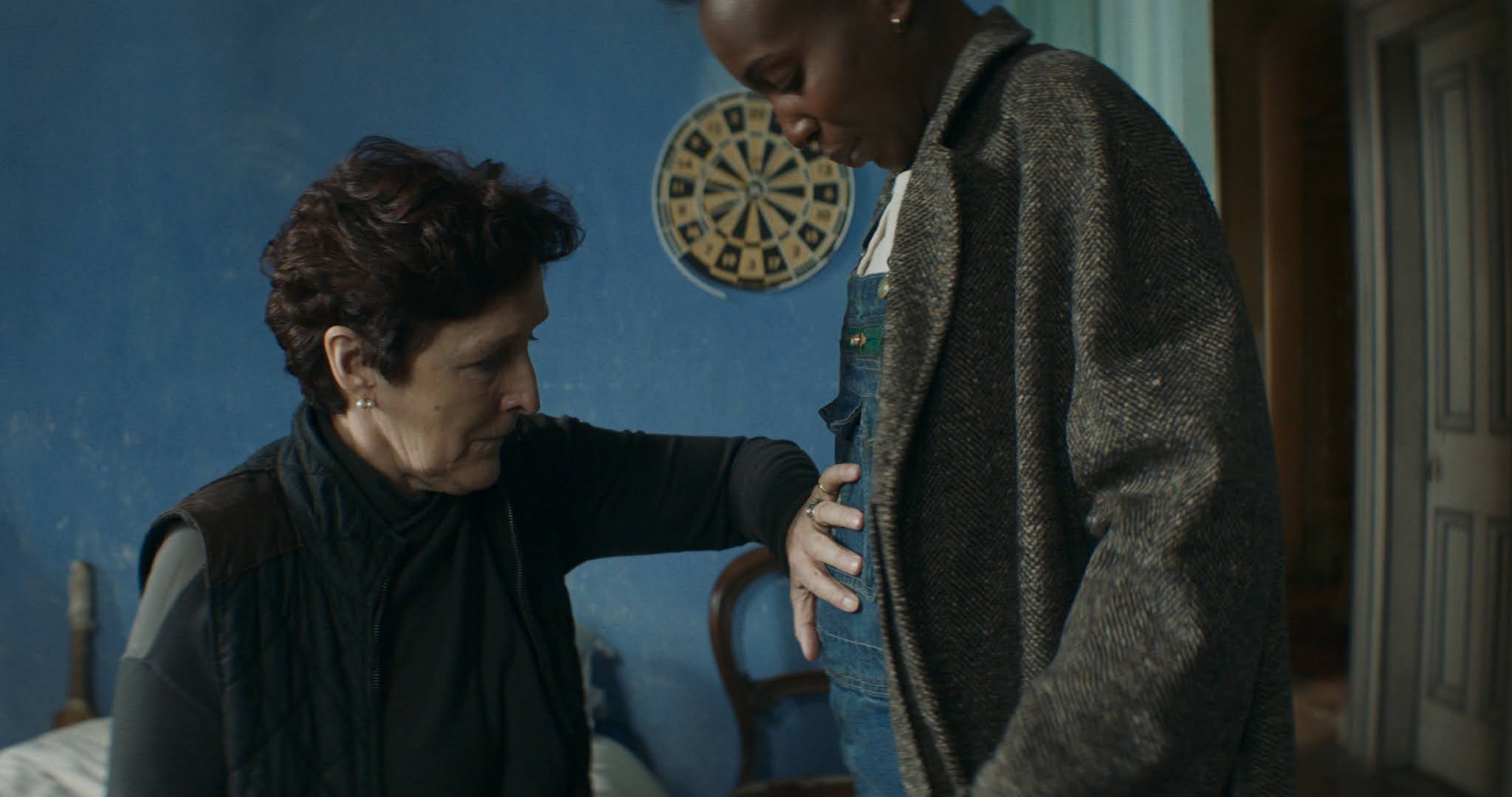
Charlotte (Tamara Lawrance) and her white boyfriend Ben (Edward Holcroft) intend to leave their isolated English village for Australia. Now it’s just telling Mum (Fiona Shaw, as formidable a presence as ever).

The first Sunday lunch with Mum and step-brother Thomas (Jack Lowden) effectively conveys all we need to know about the family dynamics, and Marcantonio tidily establishes a sense of dread that will only deepen as the moments pass until the final credits.

Charlotte, you see, is pregnant, and when Ben dies suddenly, Mum and Thomas offer hospitality that will quickly turn into an inescapable prison.

There are hints early in the film that perhaps Ben is more like his Mum—a bit controlling and manipulative, even if he doesn’t honestly realize it. This sets an intriguing conflict that will obviously balloon once Mum’s in charge.

It’s Rosemary’s Baby meets Get Out. See? Two outstanding movies that you may not want to see watered down into a terribly obvious story, but again, a great atmosphere and several fierce performances will pull you through it.

Shaw’s turn is a magnificent slice of will and bitterness, but it’s Dunkirks Lowden who steals the film. In his hands, Thomas is so eerily sincere that you never know quite what to expect. He’s simultaneously sympathetic, pathetic, and sweetly terrifying.

Lawrance works valiantly against a script that frustrates you with its lazy plotting of constant near-escape and recapture. Worse still is the way Marcantonio ignores his underlying themes of racism—something that could have given the old Gothic style fable of bit of new life.