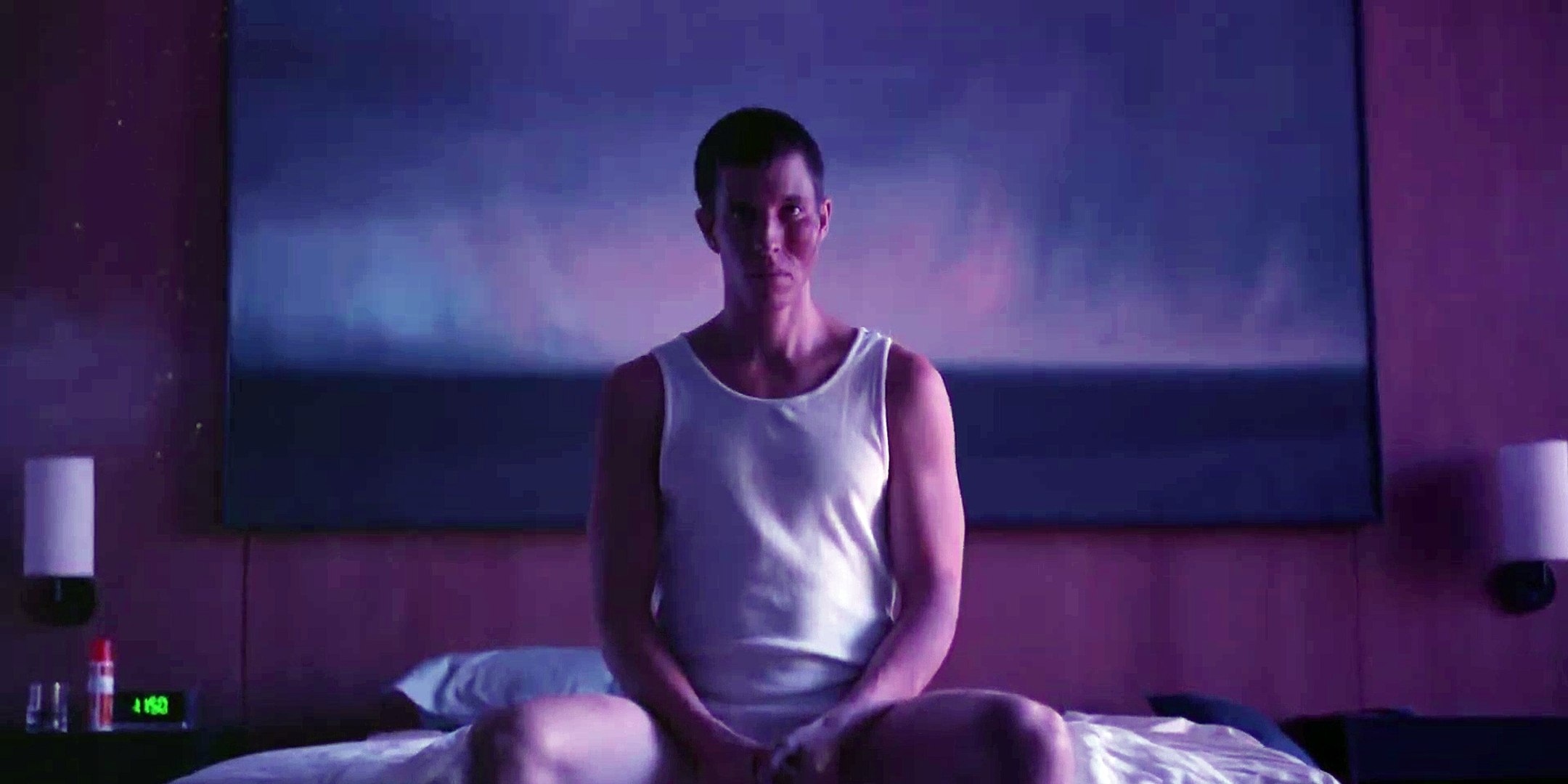
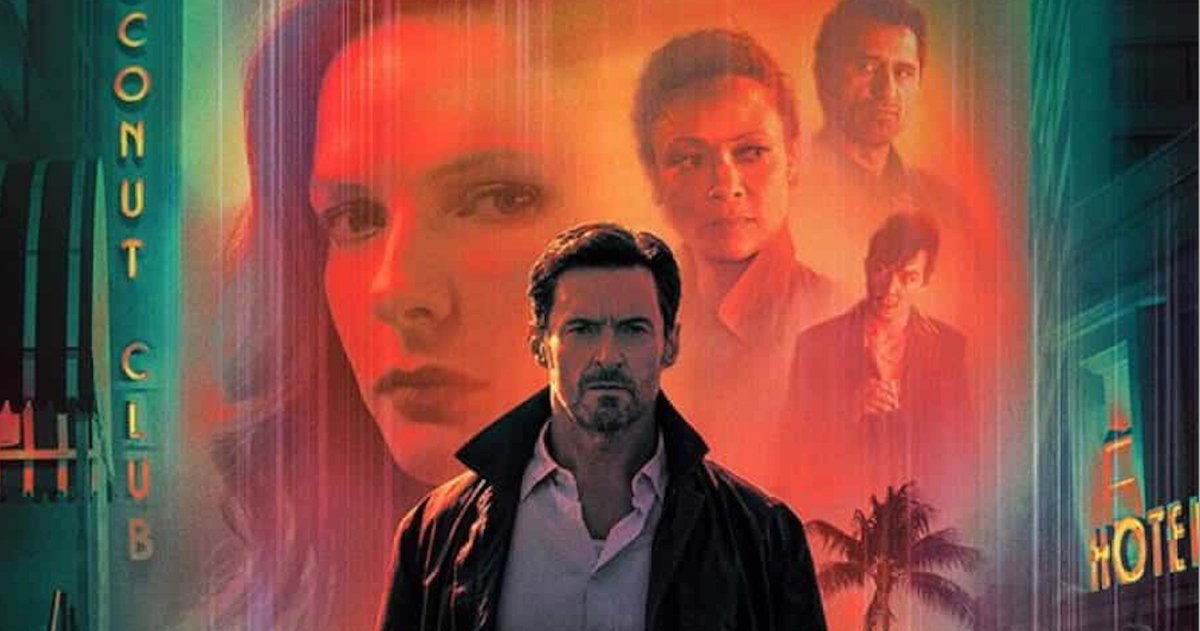
Right from its scientifically precise and profoundly unsettling opening, Filip Jan Rymsza’s Mosquito State is almost unwatchable. The film, about Wall Street analyst Richard Boca (Beau Knapp) and the 2008 financial collapse, takes on an upsetting metaphor.
Richard, brilliant and socially awkward in equal measure,
brings two bodies home with him one evening: the poised and lovely Lena
(Charlotte Vega) and a thirsty mosquito. Thanks to Richard’s intimacy ineptitude,
things don’t go well with Charlotte, but that mosquito gets all she came for.
Though the buzzing of the bloodsuckers that soon breed in Richard’s apartment may suggest those Wall Street parasites whose appetites will soon collapse the market, Rymsza has something less obvious on his mind.
Any underlying themes about benevolence versus predation serve the filmmaker’s somewhat confounding allegory, but his aesthetic is as pointedly horrific as they come. My god, that whining buzz! The sound threatens to overwhelm you as certainly as the insects themselves overwhelm Richard, who becomes utterly submissive, offering his naked body to the unholy swarm.
Rymsza orchestrates a certain ghastly beauty, but first he
has to immerse you in sounds and sights that trigger an automatic, primal revulsion
and need to swat and flee.
Knapp’s performance suggests a bloodless Nicolas Cage as Elephant Man — bloodless not just because he’s made Richard the mosquitos’ feast, but because Knapp drains his character of charisma and flamboyance. Richard’s as unpredictable and difficult to enjoy as the film itself, but that makes him —and Mosquito State — no less distressingly intriguing.
Rymsza’s anticlimactic finale will leave many unsatisfied with his film. But for a wild combination of revulsion and beauty, Mosquito State is worth a look.
For one of those hired assassin thrillers to work, it helps
to have a convincing lead who has chemistry with the bad guy. Martin Campbell’s
The Protégé delivers on both fronts.
And yes, in these films story often takes a backseat to fight choreography, writing rides shotgun to action. This also sounds a lot like Campbell’s latest, although it would be more forgivable if the action stood out enough that you could overlook the shortcomings in story.
Maggie Q is protégé assassin Anna, and while her inner conflict never breaks the surface, Q convinces as she moves bewigged from one set piece to the next. Anna’s mission this time is personal, natch, and her soft spot comes from her mentor, played by Samuel L. Jackson.
How is he? Well, he’s, you know, Sam Jackson. He’s exactly Sam
Jackson. That works in almost every other movie, and it works just as well
here.
But the real shining treasure in The Protégé is Michael
Keaton. His talent, charisma, easy charm and natural good humor elevate every
scene. Luckily, he’s in a lot of them, so he elevates most of the film.
Campbell (Casino Royale) stages capable though uninspired
action sequences. His script, by action veteran Richard Wenk (The Equalizer),
can’t tie character motivation to mystery elements to location or conflict.
Instead, it stitches together ideas from a smattering of other films with
little concern for coherence.
Perhaps this is why Campbell struggles so mightily with tone.
This thing swings back and forth between buddy picture and revenge fantasy,
international espionage thriller and romance. The bit that generally drives a
film like this—you know, when the steely lead finally faces their demons—feels
almost coincidental, leaving it no room to resonate.
The Protégé is not a terrible film. At worst it’s just a waste of your time.
Bella Thorne is the best thing about writer/director Janell
Shirtcliff’s zany thriller Habit. When is that ever a good sign?
Thorne plays Mads, a Jesus-loving Texan transplanted to
Hollywood’s underbelly to be with her two hometown besties Evie (co-writer Libby
Mintz) and Addy (Andreja Pejic). Mads really loves Jesus. Like in an entirely
unwholesome way.
But that’s the least of her problems after Evie’s one night
stand makes off with all the drugs and money the girls are holding for Eric
(Gavin Rossdale).
This movie tries so hard to be Tarantino by way of John
Waters and it fails so absolutely that it gets credit for commitment. What it
lacks is inspiration—Shirtcliff’s odyssey requires that we be shocked by Mads’s
behavior, surprised by the stilted lunacy of her pursuers, and weirdly drawn into
her unseemly world.
The fact that none of it feels especially wild, or that the
pursuers lack originality and panache, takes a backseat to the film’s lacking
cinematic quality. Individual scenes have no structure – they drag, most of
them missing purpose, punchline or punch.
Nothing feels especially taboo, and that’s a problem because
without any real “wild” in these antics, you find yourself paying attention to
the writing or, worse still, the acting. Rossdale has a tough time developing a
character, partly because there’s no telling whether to like or dislike Eric.
Shirtcliff and Mintz have no idea what to do with the real villains, Queenie (Josie Ho) and Tuff (Jamie Hince). The filmmakers dress them up like something out of Pee-wee’s Playhouse, but their villainy is sloppy and suspect.
Habit plays like a film made by people who really liked David Lynch’s Wild at Heart, Tony Scott’s True Romance, and everything John Waters ever made, but had no real idea what they liked about it. The result is a mishmash of borrowed ideas, none of them interesting enough to merit the label subversive.
They’re powerful, beautiful, but not necessarily benevolent. Horror filmmakers have made great use of the heavenly hosts. Sometimes they arrive to protect us. Sometimes they don’t. Here are our five favorite horror films to bring heaven to earth.
5. The Exorcist III (1990)
Yes, this movie made the list based on a single scene. But that scene is so good! Fabio is an angel, wings and all. Patrick Ewing is the angel of death! There’s a quick glimpse of a young Samuel L. Jackson, and George C. Scott chooses a strangely upbeat delivery for the line, “I’m so sorry you were murdered, Thomas. I miss you.”
It’s a dream sequence, a foreboding scene in which Kinderman (Scott) meanders through a holding station between life and afterlife. The piece is weird, a bit gruesome and gorgeous. Its tone and look differ wildly from the rest of the film, but incredible nonetheless.
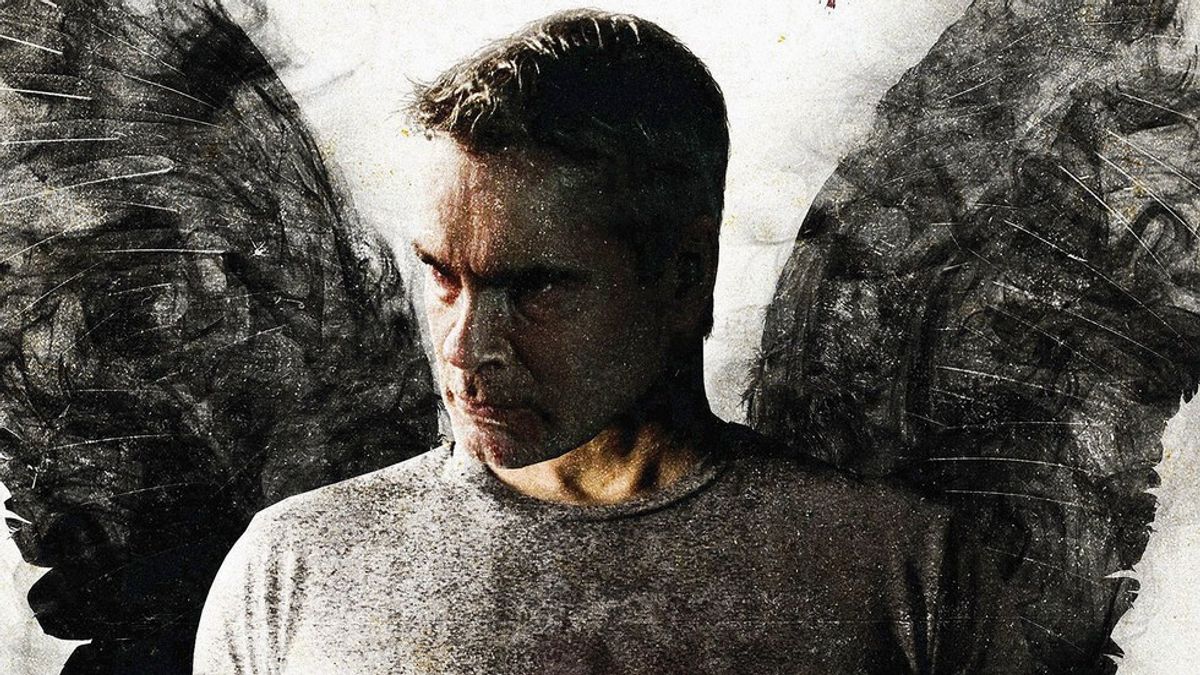
4. He Never Died (2015)
With a funny shuffle step and a blank stare, Henry Rollins announces Jack, anti-hero of the noir/horror mash-up He Never Died, as an odd sort.
Jack, you see, has kind of always been here. The “here” in question at the moment is a dodgy one-bedroom, walking distance from the diner where he eats and the church where he plays bingo. An exciting existence, no doubt, but this mindlessness is disturbed by a series of events: an unexpected visit, a needed ally with an unfortunate bookie run-in, and a possible love connection with a waitress.
From the word go, He Never Died teems with deadpan humor and unexpected irony. Casting Rollins in the lead, for instance, suggests something the film actively avoids: energy. The star never seethes, and even his rare hollers are muted, less full of anger than primal necessity.
3. The Prophecy (1995)
Writer/director Gregory Widen’s fascinating story about a war in heaven over God’s spoiled little meat puppets was a wild, innovative concept with a breathtaking cast: Christopher Walken, Virginia Madsen, Viggo Mortensen, Eric Stoltz, Elias Koteas, Adam Goldberg, Amanda Plummer.
So, is it on Widen that the movie is kind of terrible?
Terrible in an incredibly fun and watchable way, though. Somehow the unusually talent-stacked cast doesn’t feel wasted as much as it does weirdly placed.
There is no question this film belongs to Christopher Walken as the angel Gabriel. (Why are filmmakers so willing to believe Gabe will turn evil?) His natural weirdness and uncanny comic timing make the film more memorable than it deserves to be, but when it comes to sinister, Viggo Mortensen cuts quite a figure as Lucifer. Don’t forget, he was an angel, too.
2. Frailty (2001)
Back in 1980, Bill “We’re toast! Game over!” Paxton directed the short music video Fish Heads. Triumph enough, you say? Correct. But in 2001 he took a stab at directing the quietly disturbing supernatural thriller Frailty, with equally excellent results.
Paxton stars as a widowed, bucolic country dad awakened one night by an angel – or a bright light shining off the angel on top of a trophy on his ramshackle bedroom bookcase. Whichever – he understands now that he and his sons have been called by God to kill demons.
Dread mounts as Paxton drags out the ambiguity over whether this man is insane, and his therefore good-hearted but wrong-headed behavior profoundly damaging his boys. Or could he really be chosen, and his sons likewise marked by God?
Brent Hanley’s sly screenplay evokes such nostalgic familiarity – down to a Dukes of Hazzard reference – and Paxton’s direction makes you feel entirely comfortable in these common surroundings. Then the two of them upend everything – repeatedly – until it’s as if they’ve challenged your expectations, biases, and your own childhood to boot.
1. A Dark Song (2016)
Writer/director Liam Gavin also begins his story by dropping us breathless and drowning in a mother’s grief. Sophia (Catherine Walker) will do anything at all just to hear her 6-year-old son’s voice again. She will readily commit to whatever pain, discomfort or horror required of her by the occultist (Steve Oram) who will perform the ritual to make it happen.
Anything except the forgiveness ritual.
What Gavin and his small but committed cast create is a shattering but wonderful character study. Walker never stoops to sentimentality, which is likely what makes the climax of the film so heartbreaking and wonderful.
Teddy (an exceptional Anthony Bajon) may not be all that
pure in heart, but he’s not such a bad kid. What he is, is a loser. He knows it.
“We’re the village idiots,” he tells the uncle he lives with.
Teddy’s an outsider in his very small French hamlet, a ne’er-do-well who seems harmless enough. He has a job —one he hates. And he has a girlfriend, Rebecca (Christine Gautier) — but how long can that last? Her family can’t stand him, and she’ll graduate at the end of the term. Then what?
Before we can find out, Teddy’s bitten by something in the
woods. Suddenly, by the light of the moon (which seems to forever coincide with
some kind of angry humiliation Teddy faces), he loses consciousness and then
wakes up naked and covered in blood.
Writers/directors/brothers Ludovic and Zoran Boukhera tap
into classic monster movie mythology (and sometimes score, with fun results) to
mine lycanthrope lore for metaphorical purposes.
Which is usually what werewolves are used for in movies,
including the 1941 classic that spawned that poem. Anyone can be cursed, it
seems, and under the right circumstances, anyone can become a monster.
In this case, Teddy represents the marginalized, angry white
male. The havoc he wreaks? Well, it’s not hard to figure out what that
represents. Truth be told, Teddy is almost off-putting in its empathy for the aggrieved
male so disillusioned by disappointments and limitations that he becomes
monstrous.
I suppose that makes Teddy feel a bit transgressive, but
the reason it works is Bajon’s amiably brutish performance. A horror film is
rarely worth its weight in carnage if it can’t engender some empathy, provoke some
tragedy. Thanks to Bajon and a strong ensemble around him, the film makes you
feel something for an enemy you might rather just hate.
It’s not often you get an official Cannes selection on Shudder. I guess that’s one more reason to watch Teddy.
An ode to cautionary tales, this episode points out all the great reasons to just skip the gym. Those muscles aren’t going to do you any good if you are dead—seriously, hideously broken, bloody and dead. We enlist the aid of Rewatch Podcast’s Cory Metcalfe to help us work through the best in workout horror.
5. Final Destination 3 (2006)
Director James Wong returned after missing Episode 2 and picked up right where he left off: fun and horrifying Rube Goldbergs of Death.
A young Mary Elizabeth Winstead stars ad Wendy Christensen, she of the premonition about shoddy workmanship on that roller coaster. Naturally, those she saves are on Death’s list now. These films are not rocket science. A group of people cheats death. One by one, Death comes a callin’.
The fun is seeing how each demise works itself out. And Lewis (played by Texas Battle – that is a name!) gets it good.
4. Happy Birthday to Me (1981)
Director J. Lee Thompson had seen better days (Cape Fear, Guns of Navarone), but this switcheroo slasher boasts a weird vibe that makes it compelling.
It also contains a very early workout death scene. We all knew Greg had to go, and how fitting that this vane elitist got his on a workout bench. If he’d thought for one second just to drop the weights on the ground over his head…but Greg wasn’t exactly known for smarts.
3. Tragedy Girls (2017)
DirectorTyler MacIntyre’s whole approach in this film is pitch-perfect. Stars Brianna Hildebrand and Alexandra Shipp bring these bestie characters to vibrant life and the story around them is whip-smart and funny.
Speaking of funny, Craig Robinson has little more than a cameo, but he brings that Craig Robinson vibe, making this particular workout scene an uncomfortable comedic gem.
2. The Toxic Avenger (1984)
Melvin Junko’s whole life was a workout horror. Put upon and picked on, this little janitor only wanted to get his work done.
The Troma classic—awaiting an unbelievably well cast reboot from director Macon Blair—clearly had to be part of this list. Seeing Toxie finally get revenge on those Tromaville health club bullies.
https://www.youtube.com/watch?v=EFffWBjjqQc
1. Final Destination 5
Director Steven Quale’s prequel may be the best of the Final Destination bunch. The 3D horror takes full advantage of the intricate death sequences—especially the opening bridge set piece. Nice!
It helps that writer Eric Heisserer (Arrival, Birdbox, Lights Out, The Thing remake) knows how to write. The 5th installment feels less like a return to the well and more like an interesting riff on destiny. It also has some great support work from Tony Todd, Courtney B. Vance and David Koechner.
Lutes and mead, chainmail and sorcery—director David Lowery’s
Camelot is just as rockin’ as ever in his trippy coming-of-age style The
Green Knight.
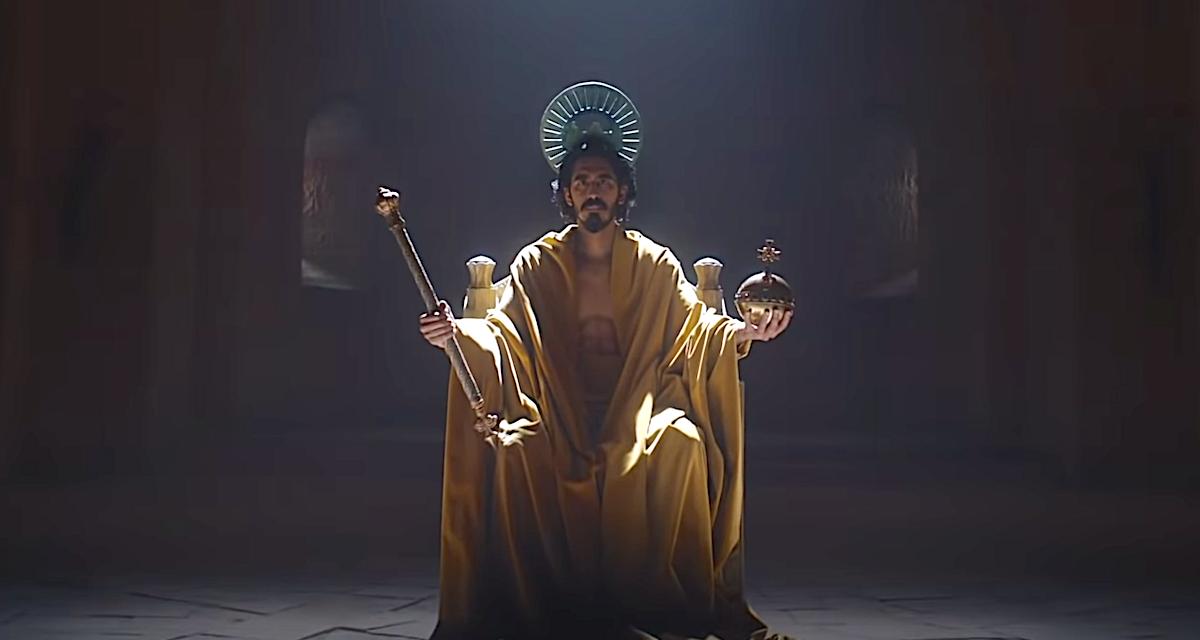
Dev Patel stars as King Arthur’s nephew, Gawain. He’s a bit of a ne’er-do- well and it looks like he’s ne’er going to actually be knighted. But Christmas warms old Arthur’s heart and he asks the boy to take a seat of honor at the round table. When this menacing giant (think Groot, but sinister) drops in for a beheading game, Gawain offers to play so he can keep his uncle’s respect.
The story itself is more than 700 years old. Credit Lowery,
who adapted the old ballad for the screen, with finding fresh intrigue in the
old bones. He’s slippery with symbolism and draws wonderful performances from
the ensemble.
Joel Edgerton is especially fun as The Lord, just one of
many helpers and hindrances Gawain finds on his journey. Barry Keoghan is
likewise wonderful playing a brash, angry scavenger. But Edgerton and Keoghan
are always good. The real surprise here is Patel.
That’s not to say he’s unproven, just that his performances until now tend to rely heavily and falsely on an earnest streak. Gawain does not. Patel doesn’t shy away from or judge the character’s weakness or cowardice. Instead, he uses those very characteristics to make Gawain human.
It’s the kind of compassionate portrayal rarely depicted in
an Arthurian fable, and it ensures that you care enough for the character to
puzzle through his adventures with him. There’s sorcery afoot, and also psychedelic
mushrooms, so who knows what’s really going on?
Here’s where Lowery really excels, though. His visual storytelling has always been his greatest strength as a director and this tale encourages his most fanciful and hypnotic visual style to date. The Green Knight is gorgeous. The color and framing are pure visual poetry. Together with this exceptional ensemble, Lowery’s created a magical realm where you believe anything could happen.