Tag Archives: independent film

Working for the Weekend

Two Days, One Night

by Hope Madden

A woman wakes from a nap due to a phone call. She’s baking for the kids. It seems like a lovely way to spend your afternoon, really, drowsy and surrounded by the smell of baked goods. So why does Sandra (Oscar-nominated Marion Cotillard) sound defensive about the nap and too enthusiastic about the treats with whoever is on the phone?

Because there are layers and layers to the most ordinary of circumstances, a point Two Days, One Night explores so effectively.

Sandra’s co-workers were faced with a vote: each stands to gain a large bonus in return for eliminating one salary – Sandra’s. She has the weekend to convince them to give up their bonus and save her job.

If it sounds contrived, rest assured that writing/directing brothers Jean-Pierre and Luc Dardenne embrace their characteristically naturalistic style to great effect. The films lacks any hint of melodrama, thanks in part to the brothers’ honest style and in greater part to a lead performance utterly absent of artificiality.

Cotillard is a master, and this film is no exception, it’s a highlight. Her gestures, her gaze, her posture, every syllable of dialogue simply convince you this is a woman fighting for her dignity as well as her job. She’s aided by a large, capable cast and buoyed by the Dardennes’ fly-on-the-wall camera work.

The film has larger goals, looking at ideas as concrete as corporate indifference, as amorphous as depression, and as grand as human nature. Grounding all this examination in the intimate and mundane details of one woman’s struggle keeps the film anchored in the reality so precious to the filmmakers.

Two Days, One Night is not as touching as the Dardennes’ Kid with a Bike or as gripping as L’Enfant – two of their finest efforts. It feels more contrived than those films, its craftsmanship more obvious. But Sandra’s challenge and her personal journey are so beautifully articulated that you won’t care. The film is a small, potent wonder.

Verdict-4-0-Stars

Snow and Ice for Your Queue

One of the best films of 2014 releases to DVD and BluRay today, and if you haven’t seen Snowpiercer, you should do so now. Well told, fast paced, and tense, the entire action flick is confined to the claustrophobic innards of a high speed train. It’s a post apocalyptic cautionary tale that boasts savvy writing and wry humor, plus a handful of stand out performances – none better than Tilda Swinton’s. Chris Evans anchors the film, though, proving again that he is more than a pretty face and a nice set of abs.

If you’re looking for another reason to believe in Chris Evans, try 2012’s The Iceman. The gritty biopic tells of mob killer Richard Kuklinski as portrayed by the always phenomenal Michael Shannon. Evans is almost unrecognizable as Kuklinski’s cohort in crime Mr. Freezy, and together the two actors create a strangely sympathetic yet cold image of crime’s underbelly and a criminal’s fractured world.

Uninspired Technophobia

Men, Women & Children

by Hope Madden

Nobody panic. Jason Reitman has just hit a slump, that’s all. Remain calm.

Sure, the writer/director made his feature film debut with Thank You for Smoking (thank you for making that movie!), and only went upward from there (Juno, Up in the Air, and the underappreciated masterpiece Young Adult). He was bound to waffle a little. Scorsese followed Taxi Driver with New York, New York, for Lord’s sake. It happens.

I’ll admit, I was hoping he was done with this misstepping with the laborious romantic bludgeoning Labor Day, but it appears he has one more overwrought drama in him in Men, Women & Children.

This is basically the same film Henry Alex Rubin made two years ago called Disconnect, which followed teens and parents making terrible decisions and living online instead of off.

MW&C is not the exact same movie, but close enough. Reitman, with co-writer Erin Cressida Wilson (Secretary), reworks Chad Kultgen’s novel about teens and parents and their collective obsession with the wired world.

In many ways, the themes plumbed here are universal to the coming of age film, only in the world inside this film, every anxiety is heightened by the disconnect between reality and our virtual worlds. What the film explores in dozens of ways is our ever-growing loss of intimacy.

It’s not an uninteresting point, just a belabored one. Some individual storylines grow so hyperbolic that even this talented cast cannot rein it in. (We are expected to believe that online porn has so warped one 15-year-old boy that he can no longer get an erection naturally. Even with a flesh and blood girl present. Monkeys immediately fly from butts.)

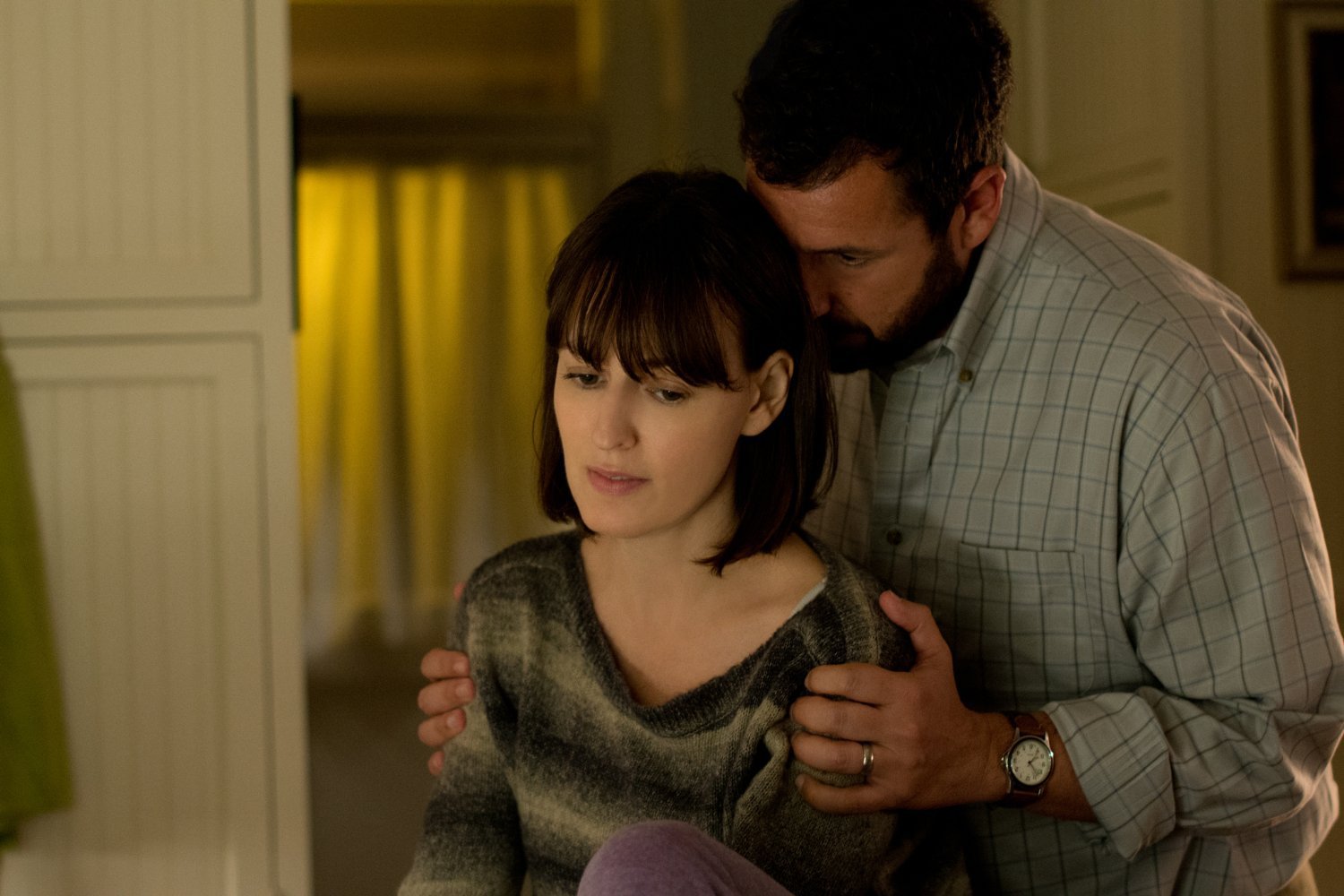
Judy Greer gives a characteristically unusual and nuanced performance, as do many of her cast mates. Plenty of folks will bristle at the idea of Adam Sandler in an ensemble drama, but in fact, Sandler is only worth watching in independent ensemble dramas. (Please see Punch Drunk Love. Seriously, please see it.)

Greer and Sandler are not alone. The cast – teen and adult – is quite solid, but by the second trip to the hospital I had to just give up on the film. The youngsters are either sociopathic loners or suicidal, and if their parents aren’t cartoonishly unaware, they’re tracking them like criminals or pimping their underwear-clad asses online. Can things really be this dire?

Back to business now, Jason. Come on. Something good this time.

Verdict-2-5-Stars

Slacker Turned Oscar Contender


Boyhood

by Hope Madden

With an effort that proves Richard Linklater to be indefinable as an artist even as it feels a natural evolution of his best work, Boyhood is a movie like no other.

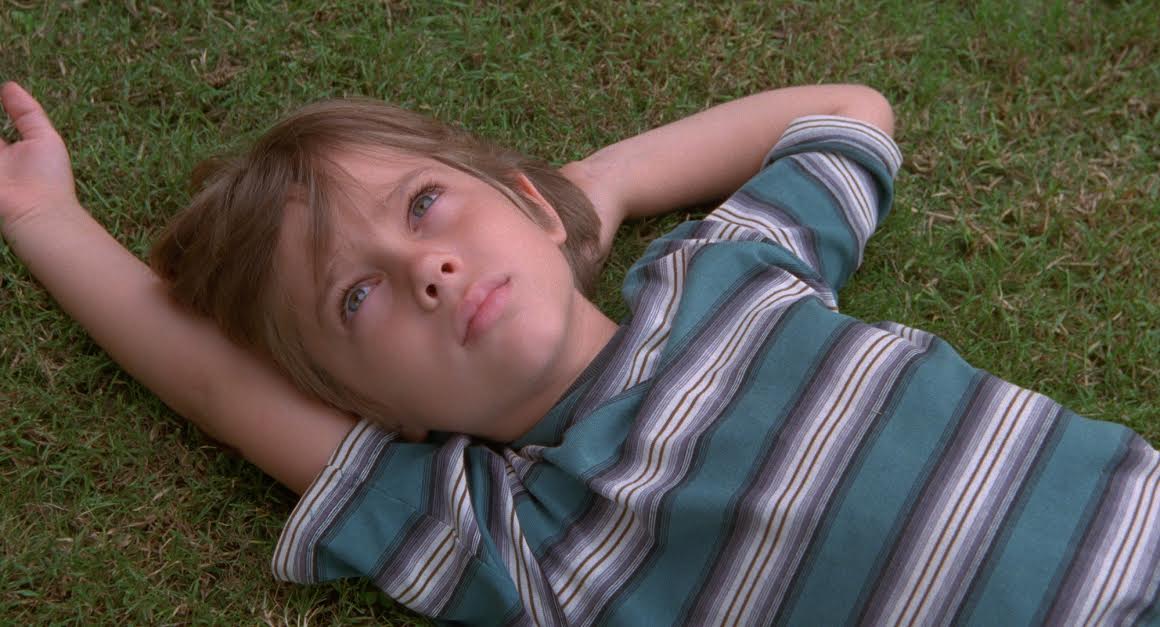
Linklater filmed his low key opus over twelve years, pulling cast and crew back together for a few days each year to check back in on Mason (Ellar Coltrane), his sister Samantha (Lorelei Linklater) and their parents to see how things are hanging.

And that’s it. We participate in every year of Mason’s childhood, from Grade 1 to his freshman year in college. It’s not the big events, either, but the seemingly innocuous moments that, in sum, define a childhood.

Linklater’s genius has always been his generosity and patience with his cast and  his mastery in observing the small event. Many of his films feel as if they are moving of their own accord and he’s simply there to capture it, letting the story unveil its own meaning and truth. The Before series offers obvious examples, but much of his work, from Slacker and Dazed and Confused onward, benefits from a casual observational style.

Never has he allowed this perception to define a film quite as entirely or as eloquently as he does in Boyhood. With the collaborative narrative Linklater sets a tone that is as close to reality as any film has managed. It’s both sweeping and precise, with Linklater’s deceptively loose structure strengthened by his near flawless editing and use of music to transition from one year to the next. He’s the surest bet so far for an Oscar in directing, and his film is the strongest contender yet for best picture.

For his cast, Linklater returned to regular contributor Ethan Hawke, whose performance as Mason’s somewhat flaky father marks the best work the actor’s ever done. Equally wonderful is Patricia Arquette with the meatier role of Mason’s mother, a loving if flawed matriarch. Linklater’s own daughter Lorelei also impresses and absolutely entertains as the boy’s sister.

Importantly, though our primary vehicle through this childhood is Mason, we come to truly know all these characters. None is given short shrift, and each is entirely fascinating in their own right.

But the film succeeds or fails with Coltrane, and Linklater owes a debt to the movie gods for this bit of casting. What a wonderful, fascinating, tender character the young actor carves out of this experience. With nary a false note, he carries us through the unforgettably familiar and authentic moments of insecurity, love, heartbreak, longing and confusion that mark childhood.

It’s a breathtakingly understated and authentic turn, perfect for the only film of its kind.


Verdict-5-0-Stars


Thumb Worthy

Life Itself

by Hope Madden

Whether you loved him or hated him, Roger Ebert was a massive cultural influence – particularly if you happen to be a film critic.

Arguably the most influential movie reviewer of all time, Ebert was also a far more unique and fascinating character than casual readers/viewers might realize. Life Itself, Steve James’s revelatory new documentary, unveils the highly complicated personality behind all those opinions.

Life Itself nearly bursts with intimacy and detail, embracing Ebert’s bawdy youth and epic ego as openly as his medical treatments and serene end. The minutia of Ebert’s life is a surprising thrill to take in, though James feels no compulsion to pretty it up. He asks an old friend at one point whether, deep down, Ebert was really a nice guy.

Yes, he says. But not that nice.

The sparring with his reluctant TV partner Gene Siskel, often taken directly from TV outtakes, is utterly hilarious, but James mines it for more than laughs. We are reminded that Ebert was a populist film critic before there was such a thing, and while we relive some of the highlights of the Pulitzer Prize winner’s eloquence, we also revisit some of his more questionable assessments, (as when he gave Full Metal Jacket a thumbs down, but pointed that digit skyward for Benji the Hunted).

James notes, sometimes hilariously and with absolutely no sugar coat, that Siskel & Ebert’s program was often derided by fellow reviewers as not being film criticism at all – at which time Ebert routinely pointed to his Pulitzer. By taking film criticism to the public, the show had more influence on ticket buying, film production, and the changing paradigm of the medium of film criticism than anyone could have predicted.

James spends a great deal of time with Ebert and his wife Chaz in the hospital during the last couple stays before Ebert’s death, detailing the medical treatments and witnessing more of the drive that motivated this prolific writer his whole life. More importantly, through these visits, as well as emails and excerpts from Ebert’s autobiography, James makes clear that he is not laying his subject naked before us, but that Ebert himself is the willing object of our scrutiny through this film – an act that takes on much power when you consider what the man did for a living.

With James, we wind and careen through Ebert’s personal and professional life and legacy, but the film never loses focus. It touches all the bases, and in the end not only offers a moving image of a life abundantly and uncommonly lived, but honors Ebert’s most enduring, most identifiable, and most tenacious attribute: his voice.

Verdict-4-0-Stars


Bobcat Bigfoot

Willow Creek

by Hope Madden

Remember Bobcat Goldthwait – that screechy, overweight, sweaty comic from the Eighties? Well, in case you missed it, he’s now a film director, and a pretty good one. He’s been flexing that muscle and pushing boundaries since the early Nineties, but in 2011 he proved his mettle with the pitch-black observational comedy God Bless America.

He makes an unusual choice as the follow-up to his artistic high water mark with Willow Creek, a found footage horror that treads incredibly familiar territory.

Though his newest effort certainly boasts occasional humor, it’s no comedy. In fact, it’s basically a streamlined Blair Witch reboot with better actors.

Kelly (Alexie Gilmore) and Jim (Bryce Johnson) are celebrating his birthday with an excursion into the woods to follow the same path as those hearty souls who once tracked Bigfoot. Jim wants to make a little film of their expedition; Kelly wants to humor her boyfriend for his birthday.

The only mildly unique element about this premise is the word Bigfoot, which is so unusual that it suggests a comedy, but the standup veteran is not mining for laughs. Instead, he shows real flair for stoking tensions, expertly building anxieties about isolation while slyly unveiling that slow realization of helplessness.

But it is impossible to shake the feeling that this is just another Blair Witch. Though he improves upon many familiar scenes, they’re still lifted directly from the 1999 granddaddy of found footage horror.

Shouldering a film whose entire storyline depends upon candid, usually in-car footage of just two people tends to be too much for most actors. Indeed, the already very tired found footage style usually crumbles under the lacking improve ability of a handful of adequate actors stuck inside a car trying to make their road trip seem interesting.

But Gilmore and Johnson are surprisingly suited to the task. Their chemistry is quite natural, and therefore their dialog never seems forced. Goldthwait also knows how to make the most of the gorgeous forest scenery as well, showcasing not just the potential smothering terror of the surroundings, but also its true, natural beauty.

The combined effort is effective. Goldwhait has somehow thrown just enough wild cards into the mix that, while every scene feels eerily familiar, you still can’t ever quite predict what’s to come. It’s unnerving, insightful, and strangely fresh considering it’s just the latest in an unending series of films warning us away from the woods.


Verdict-3-0-Stars


Don’t Call It Lip Service

Burt’s Buzz

by Hope Madden

Burt Shavitz does not measure success the way most of us do, but if you like old hippies, bees and golden retrievers, he may have just the movie for you.

That bearded kisser that graces the little tins of Burt’s Bees creams and jellies belongs to Shavitz, and filmmaker Jody Shapiro hopes to get behind those rheumy eyes with his new documentary, Burt’s Buzz. He’s not the only one. His film is littered with folks – Burt’s brother, his caretaker, his marketing contact in Taiwan – who would dearly like to make a personal connection, get to know the real Burt.

It turns out, the man is a bit of a conundrum, a walking contradiction, even – which should come as no surprise from the guy who uses his own ugly mug to hawk beauty balms.

Shapiro’s film is most engaging when it lets itself simply capture the contradictions: the septuagenarian Mainer living without electricity or hot water as he’s greeted by throngs of screaming, bee-costumed fans in a Taiwan airport; the fella too frugal to fix his hot water heater, complaining that the marketing folks didn’t bring Turkish coffee, but regular. But Burt is an eccentric old cuss and, more than anything, he is not what you expect and doesn’t care.

For many, including Shaprio, the film might seem a likely expose on the hostile takeover that forced beekeeper Shavitz from his company in the Nineties, when his then-partner in life and business Roxanne Quimby bought him out, only to later sell the company to Clorox for epic riches. (Yes, the international bleach company owns the earth-friendly Burt’s Bees. This film breathes these little ironies.)

But pity is not appropriate. Shavitz walked away from corporate wealth as a youth when he turned down the chance to run his family business, and walked away from prestige and fame in the Sixties when he quit his successful venture as a photo journalist to move to an abandoned barn in Upstate New York.

It’s hard to tell whether Shapiro is impatient with his subject, or whether he’s afraid the audience will be, but when the filmmaker can just settle down and let the cameras roll, you finally get a feel for who Burt Shavitz is. It’d be too patronizing and myopic to call his a simple life – I haven’t been to Taiwan, I never photographed Malcolm X, I never lost a multimillion dollar company, and none of that seems simple to me.

He isn’t simple, isn’t quaint, and is not likely to be what you expect. Except when he is.

Verdict-3-5-Stars

A Road Trip Like No Other

Locke

by Hope Madden

Give him the chance and Steven Knight will restore your faith in low budget filmmaking. All you need is a well written script, a car, hands free mobile, and Tom Hardy.

Actually, maybe all you really need is Tom Hardy.

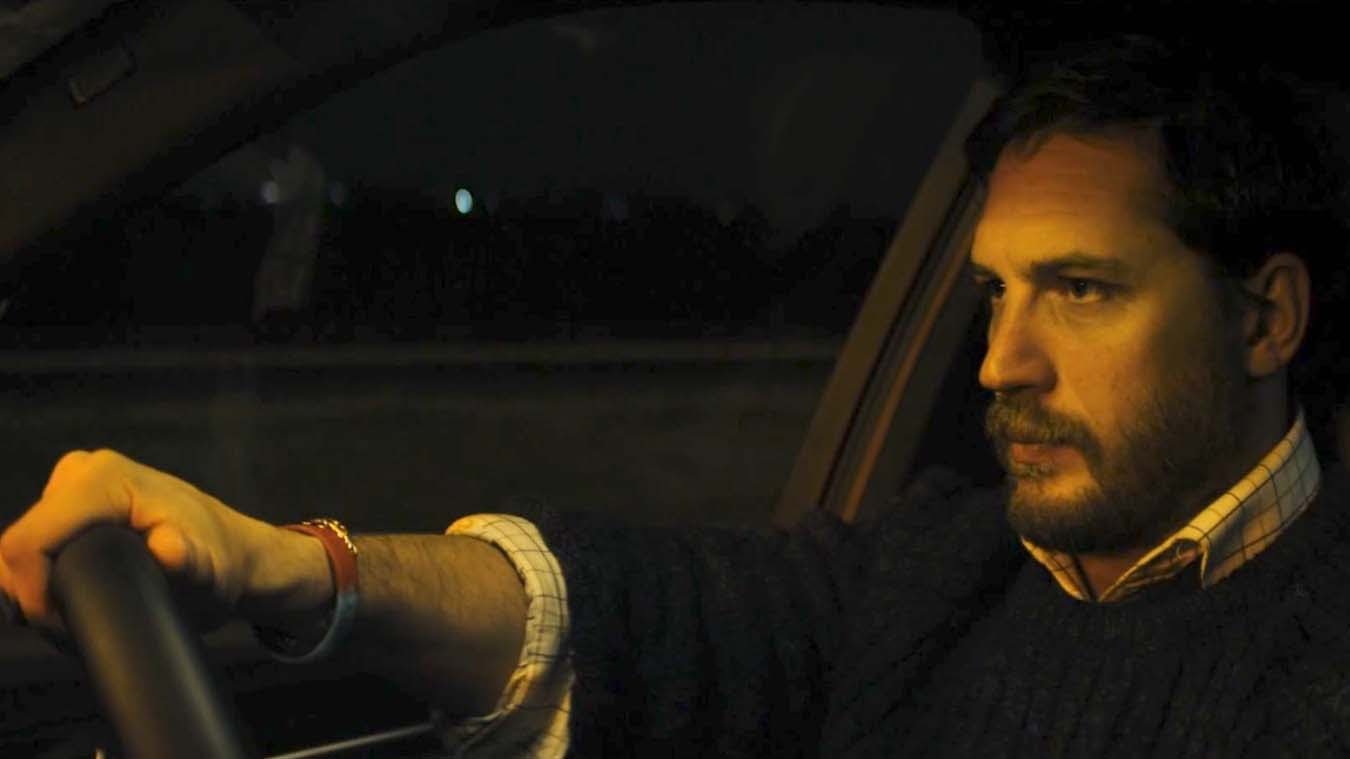
In writer/director Knight’s Locke, Hardy plays Ivan Locke, and he and Knight invite you to spend 85 minutes in the car with him. The entire duration of the film takes place inside that car, alone with Ivan, who handles a crisis at work and a crisis at home simultaneously, all on the phone. Roll credits.

While it may sound boring as hell, please give it a chance, because Tom Hardy – and probably only Tom Hardy – has the natural charisma and bone-deep talent to keep every second of the film riveting.

Lucky Knight’s such a fine writer. Having penned the Cronenberg masterpiece Eastern Promises as well as Stephen Frears’s darkly winning Dirty Pretty Things, Knight’s proven to be a nimble storyteller. Locke offers none of the sinister, international dread that saturates those other efforts. Rather, like the driver of the car himself, we are trapped and yet propelled forward in a story confined to the immediate decisions and potentially disastrous effects spilling at the second.

It doesn’t just give Locke a powerful sense of immediacy. The simplicity of conversation and traffic and moments of silence between calls offer an undiluted image of action and consequence situated in such a familiar setting that it can’t help but feel universal.

Ever the chameleon, always an actor who leaves himself behind and utterly inhabits a character, Hardy’s performance here is nothing short of an education. He reveals more with less than any performer you’ll see this year.

He feeds off the talent of the ensemble – all vocal talent only – and it’s truly like nothing else onscreen. He establishes a character, authentic and whole, and though you are ostensibly trapped with him as he grapples with the collapse of his painstakingly crafted life, you cannot look away.

I can imagine no better antidote to a summer of monsters, mutants, super-this and exploding-that than a film so simple and powerful as Locke.


Verdict-4-0-Stars


The Dreamy Life and Work of Filmmaker David Gordon Green


About seven years into filmmaker David Gordon Green’s career, it seemed like he’d found his niche with lyrical, Southern tales that braid poverty with nature, resilience with melancholy. And then he directed the Seth Rogan/James Franco flick Pineapple Express.

I’m sorry, what?

Yes, DGG shook free from that ultra indie aura and dove into Hollywood comedies, and even TV, directing many episodes of Danny McBride’s hilariously wrong HBO series Eastbound and Down. Lately, though, he’s returning to his cinematic roots, as evidenced by his latest effort, Joe.

The filmmaker returned to the Wexner Center of the Arts in March to screen the film, which opens nationwide this Friday. He took a few minutes to talk with MaddWolf.

MaddWolf: The last time I got to talk to you was just before you screened Snow Angels at the Wexner. Now you’re here with Joe. How does the Wex keep getting so lucky?

David Gordon Green: I’ve got some friends there, and the people there are interested in my work. Plus, I always look forward to creative ways to exhibit my movies, not just the obvious ways. So it’s nice to come out to Columbus, show some Eastbound and Down episodes that I worked on, and then present the movie. I enjoy doing that.

MW: Back then, with Snow Angels, you told me you were interested in doing some big Hollywood type movies. You have done that, as well as TV since then. And then you did Prince Avalanche – a delightful, decidedly non-commercial effort. What drives you artistically?

DGG: It just depends how I wake up in the morning, what my dreams were like the night before. I really do work in a kind of whimsical way. I have a great work ethic and I wake up and start working on things. Just as you turn on the radio and tune to a station that you’re feeling, I kind of turn my work efforts to a specific medium that I’m drawn to at that moment. Then I chip away at things until, at a point, something becomes real.

If I’ve got ten things in development – at least in my brain – some of them formally, some of them informally – at a point, something becomes real, and then I really commit to it and give it all my focus and attention. Sometimes that’s radically different from what I’ve just done because I’ve needed that shift in tone or texture or mood in my life.

MW: That kind of sounds dreamy. Is it the greatest thing ever?

DGG: Pretty ideal, I’d say.

MW: Do you prefer one medium to another?

DGG: They all have their advantages. It’s nice to have resources and commercial possibilities, reach a wide audience. It’s amazing seeing a line around the block for a movie you’ve worked on. It’s awesome to have all the toys in the toy chest that you can play with during production, and everyone gets paid.

Other times, it’s nice to make a personal statement and just worry about you and your immediate collaborators. Or, with the opportunities of television, it’s nice to be able to follow a character over a long period of time with some nontraditional arcs of storytelling. It’s very satisfying.

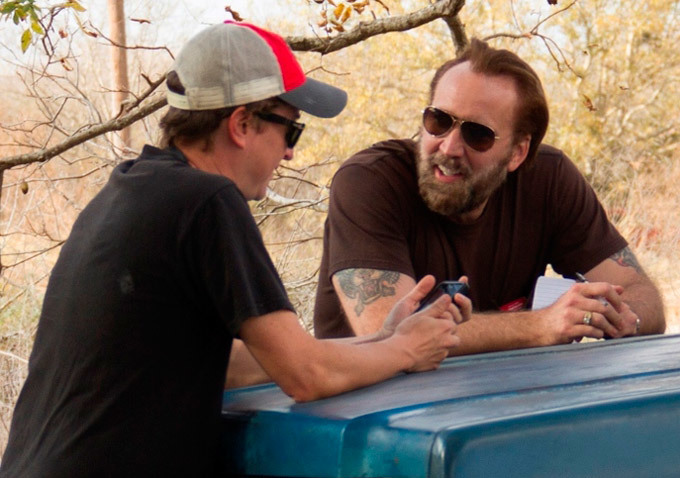
MW: When you set to work on Joe, what made you think of Nicolas Cage?

DGG: When I read the book about 15 years ago, I always imagined Robert Mitchum in his younger days playing the role. When I got serious about making the project, I was trying to think of someone who was a leading man type that was capable of the action and physicality, was capable of the drama and prestige that I was hoping we would shoot for, and also had a sense of humor about him. Cage is the only leading man that has successfully worn all three of those labels as a movie star. He was the first guy I spoke to about it and it was exciting to have him respond to it enthusiastically and immediately.

MW: He has proven in glimpses that he’s among the most talented actors working, but it’s easy to forget that. He’s gotten really strong reviews for his work in this film. What do you think it is about this project or character that brought it out in him?

DGG: He’ll tell you that this role is the closest to who he is of any role he’s ever played. I think it’s that personal investment, that closeness that he had to the role that really brought it to life in a unique way. And as diverse a resume as he has, this is unlike any role he’s ever played.

MW: Tye Sheridan is proving to be an amazing talent. How did he wind up in the project?

DGG: I was a big fan of what he did in Tree of Life. When I saw that, he really popped out at me as the gravity of that movie, the real emotional connection. And then my friend Jeff Nichols was editing Mud and I was helping him out, and we just started talking about it.

Jeff knows the novel Joe really well – Jeff and I worked together as production assistants on a documentary about Larry Brown’s (author of the source novel) life. So he knew Larry, knew I really wanted to find that right young voice, and Tye was coming into the right age. I really liked Tye’s ideas for the characters, and he can improvise really well, which is important to me.

MW: You did not write this one. Gary Hawkins – the documentarian who made the film you mention about Larry Brown – adapted the novel written by Brown. How did this come about? Did the screenplay exist before you were attached?

DGG: I think after Larry passed away, Gary wrote the adaptation as a kind of a tribute to Larry and he sent it to me when it was done. I loved it. I fell in love with it and I thought, well, this is the right time in my life and my career. It’s very ambitious in a lot of ways. I think, for the directorial tools I needed, this was the point I felt confident in it.

I’ve been kicking this around for about four years, I guess.

MW: What was it like filming?

DGG: It was amazing. With someone as seasoned as Nic, and one as young and hungry as Tye, they just complimented each other really well. And then the rest of the cast is mostly nontraditional actors and some street performers and some day laborers that we hired – it was just a fun, eclectic ensemble. We had a really good time. We did go to some really difficult dramatic places, so it’s nice to have people you can trust and have a laugh or a drink with at the end of the day.

MW: What’s next? You going to direct a play?

DGG: I’m just finishing up a movie with Al Pacino and Holly Hunter called Manglehorn. I wrote this with Al in mind, created the character for him. In a lot of ways it was me trying to dig back to some of his early Seventies performances – Panic in Needle Park and Scarecrow – some of the less bravado, more vulnerable roles he’s played. This is 100% Pacino. He’s in every frame, and it was a lovely, wonderful education for me in a lot of ways and inspiration in every way.

MW: Like Cage, Pacino – clearly one of the all time greats – has done some really questionable work over the years. Was it a specific goal for you to put these guys in the position to do great work again?

DGG: Absolutely. They are some of the greatest actors of all time, and rather than trying to rally Channing Tatum or Bradley Cooper to come be in a movie, I thought, let’s find the greats of the greats at a time where they’ll take my phone calls and we’ll go do something that’ll rock the world.


Definitely Likeship

Hateship Loveship

by  Hope Madden

Ohio native Liza Johnson continues her impressive evolution as a filmmaker with her latest independent drama, Hateship Loveship. In it, Johnson balances plot threads and character arcs, giving each just the depth necessary to keep the action moving. Her tale itself just can’t quite keep up.

What’s most interesting about the film is that it announces Kristin Wiig as a dramatic performer. She plays Johanna, an observant but almost invisible creature raised on responsibility, hard work and solitude. She’s hired by the McCauleys to keep house and, ostensibly, keep an eye on the teenaged Sabitha (Hailee Steinfeld). But when Sabitha and her best friend Edith (Sami Gayle – perfectly pitched mean girl) play a cruel prank, things get complicated.

Wiig mostly impresses in her first entirely dramatic role. She carries a lot of screen time and carves out an unusual but believable character. Johanna is a bit of an enigma, but Wiig finds a true center that makes her feel real. It’s a reserved, understated turn, but at times her performance can be blunt when nuance is called for.

Wiig’s blessed and cursed with a talented supporting cast. Blessed in that each actor brings vulnerable authenticity to the role; cursed because her performance feels sometimes less than natural in comparison.

The often underrated Guy Pearce does well with a role that could easily have become clichéd. Because his Ken is so likeable, even when his actions are not, emotions and tensions run uncomfortably high during the film’s most dramatic segments.

Steinfeld, saddled with a smattering of forgettable characters since her standout performance in 2010’s True Grit, finally gets the chance to shine again. She and Gayle articulate the emotional and moral roller coaster that is adolescence without ever feeling trite or predictable.

Nick Nolte also graces the screen as the benevolent curmudgeon, and the film is certainly the better for it.

Mark Poirnier’s screenplay adapts a short from Alice Munro. Their work understands the unpredictable resilience humans sometimes find, and when the focus is on the unraveling of the cruel joke, Johanna’s story is almost unbearably fascinating. But in drawing out the tale to a feature length running time, it begins to feel like a pile up of contrivances.

There’s a lot to like about Hateship Loveship, though, including performances that will help you overlook the flaws.


Verdict-3-5-Stars


http://www.youtube.com/watch?v=BdI8RCyhhYg