Tag Archives: independent film

A Different Kind of Avenger

Felt

by Hope Madden

Few among us have even heard of the film Felt, and those who have are misled. Packaged as a feminist superhero movie about rape culture, this film has less in common with rape/revenge fantasies like I Spit on Your Grave and American Mary and more in common with mumblecore.

This is a peculiar, intimate, meandering meditation on a single person’s struggle with trauma. The fact that Amy (co-writer Amy Everson) works through her problems by creating hyper-masculine costumes that she wears in the woods, accompanied only by her anger and her wooden sword, is really what sets Felt apart from other art films.

Director/co-writer Jason Banker’s camera is intimate and awkward, an ideal combination that mirrors Amy’s state of mind. There’s something uneasy in the quick edits, extreme close ups, and wandering visuals that suggests Amy’s perspective.

Recovering from an unspecified but clearly sexual trauma, Amy slowly deserts the socially accepted course of healing – those steps her friends keep urging her to take – instead filling her room with art that’s equally childish and grotesque, most of it phallic.

But it’s the costumes that seem to help Amy regain some measure of personal power, and the film’s strongest scenes are those in which she explores this empowerment. Whether she and her penis suit are scaling trees, or she wears her exaggerated vagina and breast outfit to upend a sexy photo session, the behavior is unpredictable, fascinating, and sometimes weirdly funny.

The scene with the photographer and new friend Roxanne (Roxanne Lauren Knouse) is a scream, and something truly unlike anything else in film. Roxanne immediately embraces what it is Amy is trying to do, which is why she’s disappointed when Amy does what her other friends see as healthy – gets a new boyfriend.

Kenny (Kentucker Audley) represents a gentle, patient soul willing to wait for Amy, but with trust comes vulnerability. There’s a circuitous nature to the sparse narrative. Traditional relationships find an echo later in the film, the second time with Amy in a position of power, but she is ill prepared to handle the shift.

The film boasts very little dialog, and as a curious onscreen presence, Everson is a master. At times, though, the lines delivered feel too obvious for the film itself, and in the end Everson and Banker fall back on behavior too predictable for the fractured fairy tale they’ve crafted. They do leave you unsettled, though. There’s no big hurrah, no sense of accomplishment, just more of the same maddening nightmare.

Verdict-3-5-Stars

You, Me and Everyone

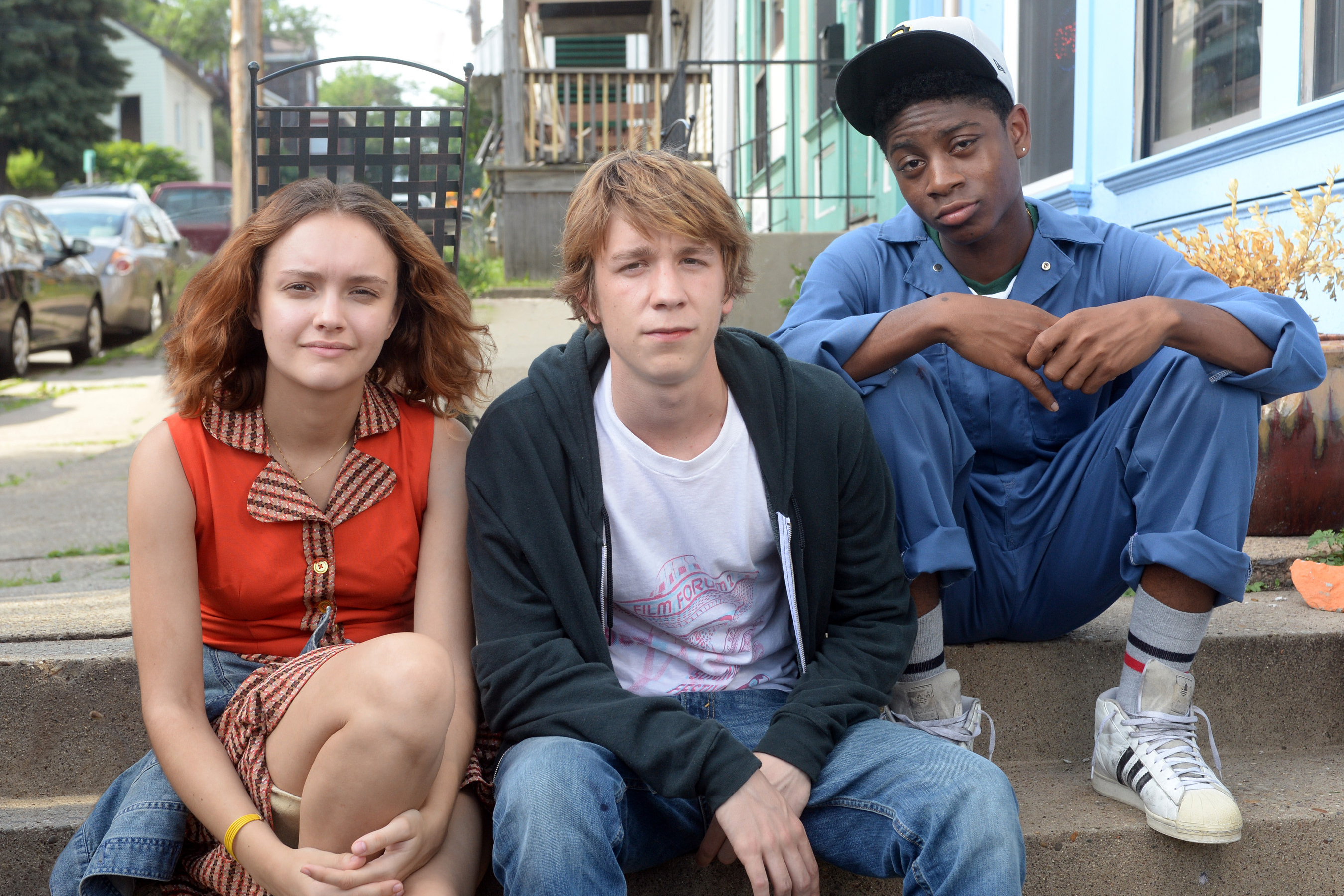
Me and Earl and the Dying Girl

by Hope Madden

Whatever its flaws and familiarities, Me and Earl and the Dying Girl delivers a heartfelt, understated but affecting punch.

The “Me” of the title is Greg (the ageless Thomas Mann), who describes himself as “terminally awkward, with a face like a little groundhog.” Greg treasures the anonymity he’s carved out by being superficially accepted and forgotten by every clique in his school. He and his best friend Earl (RJ Cyler), whom he considers more of a co-worker, hide out at lunch in the history teacher’s office, and make movie parodies (A Sockwork Orange, Pooping Tom) in their spare time.

Then Greg’s mom (Connie Britton) insists that he befriend Rachel (Olivia Cooke), who’s been diagnosed with leukemia.

Yep, it’s a quirky coming-of-age dramedy with cancer overtones. Who’d have thought this would become such a popular concept?

Regardless of the well-worn terrain, the film offers a bright, often unpredictable charm mixed with a wonderfully morbid sense of humor. All performances are solid, especially that of Molly Shannon as the bubbly yet grieving and usually drunk mother.

Director Alfonso Gomez-Rejon cuts a new career path with this indie dramedy, but he and screenwriter Jesse Andrews (adapting his own novel) miss a pretty important point.

No matter who you are or how many friends you had or how many parties you went to, you probably remember your high school self as socially awkward. Nothing fuels a coming-of-age film quite like this idea, when usually the protagonist (and maybe the writer, and nearly every teen in history) is just burdened by narcissism and self-loathing. It’s a small but important distinction, and one that very few coming-of-age tales get right. Getting that tiny point right is the difference between a work of genius like Napoleon Dynamite and a self-congratulatory confection like The Perks of Being a Wallflower.

Me and Earl and the Dying Girl is considerably better than most films that miss that point, but it still misses it. The perfectly likeable protagonist believes himself to be terminally awkward and what he needs is for the one-dimensional (if truly likeable) characters around him to show him he’s actually pretty great. That is, to placate his narcissism while soothing his self-loathing as they gain nothing themselves.

Most of us remember some coming-of-age film from our own adolescence with needless but genuine nostalgia and affection. Me and Earl and the Dying Girl can be that movie – The Breakfast Club or Grease or Mean Girls for this generation. But, like most teens, it can’t quite get past itself to become great.

Verdict-3-0-Stars

Everybody’s Got One

Hungry Hearts

by Hope Madden

New parents can easily panic at the counterintuitive, conflicting, hyperbolic, self-righteous nonsense that purports to be parenting advice. At no time in your life do you feel more of a need to be strong and reliable, and at no time do you see yourself as more of an underprepared moron. It can be terrifying.

Hungry Hearts mines that terror in provocative and insightful ways as it invites us into the crumbling relationship between Mina (Alba Rohrwacher) and Jude (Adam Driver).

Jude and Mina’s tale is told in terms of proximity rather than intimacy. From their remarkable meeting throughout their courtship and marriage, their story is articulated by its confinement, the fragile power struggle almost always shown in corporeal terms: Inside this small space, whose body is controlling whose?

From this perspective, the casting is impeccable, with Driver’s unintimidating lankiness at odds with, and often physically overwhelming, the petite Rohrwacher.

Driver is a master at walking the line between vulnerability and believable insincerity, a skill he puts to impressive use here. Jude seems so harmless, sees himself as harmless, and he certainly doesn’t intend to do anything other than love and respect his family. That’s why he’s so confounded when it all goes south.

It’s a provocative story where Jude’s seemingly small acts of power lead to the need for more concrete acts, although it is Mina’s helplessness in the face of all those small but profound betrayals that created her paranoia in the first place.

Director Severio Costanzo traps you in this insulated world. What looks and feels like an indie drama gives way to the distorted camerawork and intentional score of horror. The tonal shift doesn’t always work, and the third act feels too tidy and conventional for the film itself, but you never lose interest.

What Costanzo has created, and what his small but game cast has almost perfectly animated, is a nuanced, delicate nightmare of helplessness, control and madness with the fate of a 7-month-old in the balance.

Verdict-3-5-Stars

Eye in the Sky

Good Kill

by Hope Madden

In 2013, Jeremy Scahill opened our eyes to the darker side of drone wars with his documentary Dirty Wars. Writer/director Andrew Niccol uses a more understated and intimate road to the same destination with his latest effort, Good Kill.

The film follows Tom Egan (Ethan Hawke), a man who flew 6 tours of duty in Iraq and Afghanistan and is now on his third tour in a Vegas cubical piloting drones. From 7000 miles away he watches, then eliminates Taliban threats. Then he goes home to barbeque.

As a writer, Niccol has a long history of mining similar ideas – the alienating power of surveillance as well as the business of war (The Truman Show, Lord of War). He’s on his game here, depositing points and counterpoints in the mouths of the right characters and watching each character evolve as their duties begin to look more like war crimes.

Niccol made some fine decisions as the director as well, keeping the tone understated and the tensions on low boil. He also slyly parallels the aerial images of the Middle East – dry, brown and dusty with neat rows of damaged houses – with aerials of Vegas. Once you get past the glitz and bombast of the strip, the landscape is eerily similar. Not only does this humanize the targets, but it exposes our own vulnerability.

Hawke, hot off a career-best performance in Boyhood, does a stellar job animating a mostly internal character. His struggle feels honest, and on the rare occasion that Tom articulates an issue, his thoughts are enlightening. “We got no skin in the game. I feel like a coward every day.”

Bruce Greenwood, reliable as always, carries a great deal of the weight in the film without ever taking the spotlight. Meanwhile, the great character actor Peter Coyote lends a smarmy, soulless voice as “Langley,” the CIA contact given control over Egan’s unit.

This is a meticulously written script, one that weighs issues without truly taking sides, and Niccol develops a hushed tension that builds to something powerful.

It’s a finely crafted and engrossing film that looks at the effects of a risk-free war from the eyes of one of the warriors being saved from combat. Without beating you about the head with its message, it’s about a lot more than that, too.

Verdict-3-5-Stars

Doin’ It For Themselves

Girlhood

by Hope Madden

Moments after Girlhood’s perfectly disconcerting opening, you settle into the world of its protagonist, Marieme, but writer/director Celine Sciamma has already told you something very important. You shouldn’t assume anything.

Few, if any, films have been able to do justice to coming of age the way Sciamma’s does. Girlhood is a character study, following Marieme (Karidja Toure) through her days as an adolescent in a deprived Paris project, struggling against each of her equally unappealing life options.

Good girl Marieme sees one important door toward opportunity close. On the same day, she catches the eye of a trio of wilder girls and slowly she finds the joy in extending her adolescence and the power in solidarity and sisterhood.

Sciamma, thanks to a quietly powerful performance from Toure, represents more than just the bittersweet romance and nostalgia generally associated with the coming of age film. Saying goodbye to childhood is rarely as simple and lovely as movies make it out to be, and Sciamma’s interest is in seeing the same transition from an under represented point of view. The fact that this feels so fresh is itself an indictment. For Marieme, her choices are limited along racial, sexual and socioeconomic lines, but Sciamma’s perceptive film is too honest and understated to feel preachy.

Wisely, Sciamma disregards every filmmaking technique we’ve come to expect in a movie about a girl blossoming into womanhood. Her observant style, cast of amateur actors, and her own penetrating storytelling give the proceedings a quiet authenticity.

Like Sciamma’s previous films Tomboy and Water Lillies, Girlhood explores youth in crisis. She never judges her characters, and Toure’s ability to showcase her character’s humility and strength simultaneously ensure the audience’s empathy.

The storyline is necessarily untidy as Marieme takes on and casts off wildly different personas, illuminating the almost heartbreaking courage of youth. Regardless of the choices she makes from among the options limited by discrimination on almost every front, we must root for her fight for a life she can accept.

Verdict-4-0-Stars

When Worlds Collide

Story of My Death

by Hope Madden

Infamous womanizer Giacomo Casanova’s autobiography “Story of My Life” became an irreplaceable documentation of 18th Century Europe. His libertine lifestyle and the age it represents come to an unusual conclusion in the hands of Spanish filmmaker Albert Serra, whose film Story of My Death introduces Casanova to another major European literary figure, Dracula.

Weird, right?

Well, it is certainly unique, as is every frame of Serra’s film. Utterly naturalistic performances, a judgment free approach to the proceedings, a painterly cinematic quality and a very loose narrative structure keep the film feeling simultaneously realistic and surreal.

Casanova (Vincenc Altaio) spends his waning years in his castle penning memoirs, then embarks on an extended journey to more rustic locales in the Carpathian Mountains.

Altaio brings something wonderfully fresh to his turn as Casanova, a performance that’s all sensuality and no smolder, no seduction. Delighted by bodily functions and enamored with every sensuous aspect of daily life, he makes for an unusual hero in a deeply peculiar film.

His Casanova is an overripe figure – something, like his era, just a bit past its spoil date. We spend fully half the film lazing about his castle with him and his coterie, slurping pomegranates (among other things!) and waxing poetic. Serra’s lighting and framing take on a magisterial quality, but all this – the flouncing, the debauchery, the balance of light and dark – develops a more brutal, sinister quality as the film moves to its second half out on the mountainside.

The daintiness of the chateau has no place in this land of the hardy. While Casanova’s behavior back home elicited nonchalance, here in Romania it finds disdain, whispers of condemnation, worries over wickedness.

Why does Casanova meet Dracula (Eliseu Huertas)? Serra’s image is less a monster mash up than a metaphor. By pitting iconic figures of the two eras, the film animates the moment that the age of reason gave way to the Romantic period, when reason took a back seat to darker thinking.

Serra’s film is never quite as simple as that, with every seemingly random and spontaneous scene nonetheless riddled with metaphors and busy with details. From concept to execution, his film is a unique piece of art that will confound and entertain in equal measure.

Verdict-4-0-Stars

Get it Sorted!

Hyena

by Hope Madden

Michael Logan (Peter Ferdinando) makes a lot of arrests. Yes, he plants some evidence, keeps a little off the top for himself, and stuffs more drugs up his nose than most people could fit into the trunk of a car, but that doesn’t make him a bad cop.

Maybe it does, actually, but more to the point, it’s all catching up to Logan right now. The Turk he’d been doing business with is dead, which means he has to start all over again with the brutal Albanians. Meanwhile an internal investigation is mucking everything up.

This grey area where he lives is getting darker all the time. No need to fret. He’ll get it sorted.

The film Hyena’s success is due in part to Peter Ferdinando’s conundrum of a performance. Though the character is likely beyond redemption, Ferdinando keeps you hoping as it seems he may be hoping himself.

This is not the first collaboration between filmmaker Gerard Johnson and star. Their 2009 serial killer flick Tony proved that Johnson can find a new way to tell a familiar story, and their collaborations side by side show Ferdinando’s impressive range.

His inner turmoil is forever on display, and while you want to believe it’s his moral compass finally trying to point north, you’re at least equally convinced he’s just worried about his own skin.

Between the ride along camera and jarringly meticulous sound work, Johnson immerses you in Logan’s spinning, seedy world in a queasying way. His anxious camera makes you feel as sickly, involved and trapped in this sketchy, bloody business as Logan. His synth-heavy score is equal parts debauched party and regret-filled hangover.

Yes, there are many familiar elements: dodgy cops, Albanian crime lords, gritty crime in an urban underbelly. And it’s not really as if Johnson takes a particularly unusual perspective, or that his insight is greater, or that his film offers anything utterly unique. He just tells this particular story better than most.

The provocative ending could not have worked without Ferdinando’s conflicted, enigmatic performance.

Bad decisions and the traps they lay, that’s the bleak and bloody tale of Detective Inspector Michael Logan. His life is spinning wildly out of control and you’re invited to witness it.


Verdict-4-0-Stars


This Queue Might Get Loud

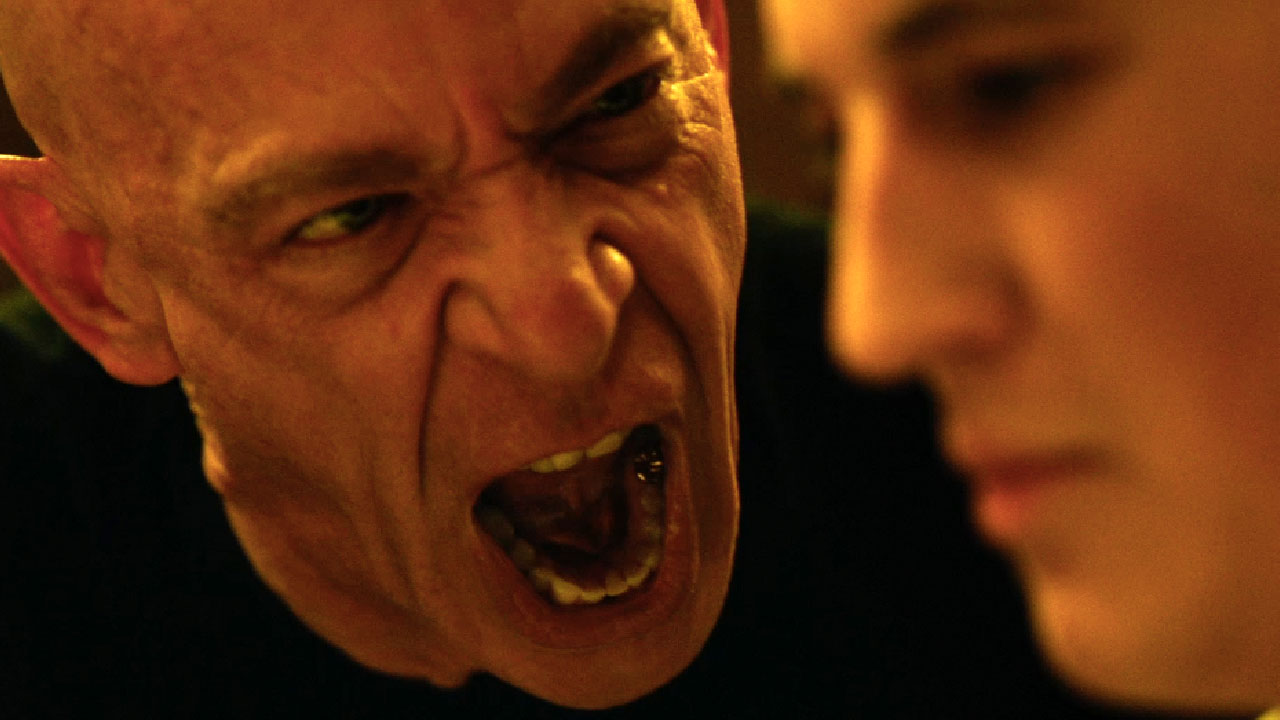
Get it while it’s hot – Oscar winner J.K. Simmons throws a cymbol right in your home! Whiplash releases for home entertainment today, and it’s a film that must be seen. No film this year ratchets tension like this one, as one musician and his mentor go mano y mano in a battle that makes the Hobbit look light-hearted. Brilliantly written, expertly directed, and boasting two excellent performances (not to mention some really great music!), Whiplash is easily one of the best features of 2014.


Not all youngsters endure punishment in the name of their art – and that’s why punk rock is so much better than jazz! We Are the Best! follows three Swedish teens circa 1982 who find an outlet for their artistic and energetic impulses in punk rock. The film bubbles and bursts with the energy, innocence and sweet-natured idiocy of youth. It’s an absolute joy.

Finally Julianne

Still Alice

by Hope Madden

Unless something goes terribly amiss Julianne Moore will finally win an Oscar this year, and that’s simply good news. She probably should have won one for Savage Grace, Magnolia, Boogie Nights, Far From Heaven, Safe and maybe half a dozen other films. Moore is among the most versatile and talented performers of her generation, and Still Alice represents that talent well. Too bad it’s just not that great a film.

Moore plays Alice Howland, a psychology professor at Columbia University who suffers from early onset Alzheimer’s.

Perhaps the best film on Alzheimer’s is Michael Haneke’s brilliant and devastating Amour, a breathtaking journey into one couple’s struggle with the disease. By comparison, Still Alice feels under developed and tidy, particularly as the disease affects the minor characters in the piece. Alec Baldwin, in particular, is hamstrung with an underwritten role as Alice’s husband. Only Kristin Stewart manages to uncover a real character arc as Alice’s daughter, much thanks to an intriguing chemistry with Moore.

The film too often feels like a made for television tragedy, with the only really interesting choice being the decision to make the victim of the disease the point of view character. In Amour as well as Away From Her and other films treading similar ground, our vehicle into the medical tragedy is a loved one. Still Alice wants to give us the first hand sense of what it is like to watch yourself disappear.

It’s a risky choice, but thanks to Moore’s impeccable, understated handling of the role, Still Alice avoids a maudlin, self-congratulatory or sentimental fate. She’s more than up to the challenge.

Moore establishes a character that is more than the irony and heart tugging on the page. Characteristically nuanced and honest, it’s a performance that makes up for many of the weaknesses in the rest of the film.

Moore’s understatement keeps the film from melodrama, but unfortunately, everything else about the movie needed a bit more drama. It’s a superficial tale with contrived bits of tension that end in uninspired resolutions. The lack of insight into the marriage itself is probably the film’s most noticeable failing, but aside from Moore’s ability to show us how the disease ravages a once sharp mind, we don’t get to know Alice – her relationships, her past, her passions – well enough to really understand what she’s losing.


Verdict-2-5-Stars


Dancing with the Past

Match

by Hope Madden

Match opens on a ballet instructor – smilingly supportive yet rigorous, the kind of mentor with a joy for teaching that inspires. He is Tobi, an aging Julliard ballet instructor played with confidence and enthusiasm by the wonderful Patrick Stewart.

Director Stephen Belber adapts his own Broadway play for the screen, and though Frank Langella originated the role on stage, it feels custom made for Stewart.

Tobi craves his solitude, yet he’s agreed to meet with Lisa (Carla Gugino), who, with her husband Mike (Matthew Lillard) in tow, wants to interview Tobi for her dissertation on classical dance choreography.

Like the Richard Linklater film Tape, also penned by Belber from his own stage play, Match is a three-way dialog about the effects of the past. But where Tape was a grim exercise in regret, Match pairs regret with celebration, and the entire effort is buoyed by Stewart’s nervous showman’s energy.

Gugina and Lillard are solid as well, she conveying the depths of tenderness and heartbreak with an expression, and he capably animating his character’s pain and its protective layer of anger. Their chemistry with the lead, particularly in more intimate, one-on-one scenes, packs a punch. But the show belongs to Stewart.

Tobi is a character, not a type, and Stewart so fully inhabits this fascinating, multi-dimensional man that the actor ceases to exist.

Belber’s casting is spot on, and his dialog is sharp and insightful. How could Stewart do anything but soar with such magnificent lines? But the film feels trapped, confined. Belber is rarely able to open up, take advantage of the opportunities cinema offers that the stage cannot. His film feels like a play.

And though the second act, surprisingly fresh and raw as Lisa and Tobi get to know each other, is very strong, the entire effort feels just slightly stale, a bit contrived, and inevitably predictable.

Still, it’s a lovely film about chance, consequences, choice. If nothing else, it’s a magnificent showcase for an underappreciated talent.

Verdict-3-5-Stars