Tag Archives: independent film

What’s Not to Love?

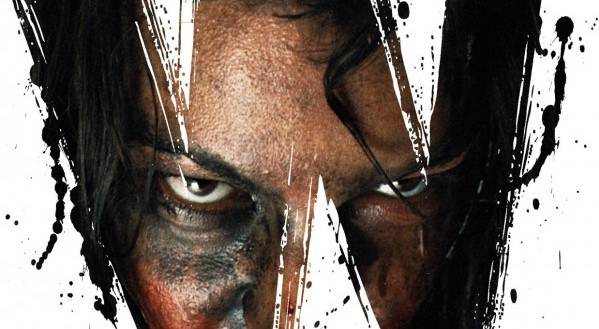
The Hateful Eight

by Hope Madden

“You only need to hang mean bastards, but mean bastards you need to hang.”

Perhaps you haven’t noticed, but 2015 may have been the year of the Western. The brilliant, underseen films Slow West and Bone Tomahawk kicked things off, with the amazing The Revenant just around the corner. But it’s the latest from Quentin Tarantino that solidifies the theme, and something tells me The Hateful Eight won’t be counted in the underseen category.

Though not exactly the soul mate of his 2012 near-masterpiece Django Unchained, H8 is certainly a Civil War-era shooting cousin. Set just after the War Between the States, Tarantino’s latest drops us in a Wyoming blizzard that sees an assortment of sketchy characters hole up inside Minnie’s Haberdashery to wait out the storm.

Throwback stylings, wicked humor, a deliberate pace, and thirst quenching frontier justice mark Tarantino’s eighth picture – a film that intentionally recalls not only the more bombastic Westerns of bygone cinema, but many of QT’s own remarkable films.

Kurt Russell (sporting the same facial hair he wore in Bone Tomahawk) is a bounty hunter escorting the murderous Daisy Domergue (Jennifer Jason Leigh) to hang, but they won’t make that last stage to Red Rock because of this blizzard. Hell, they may never make it to Red Rock at all.

With the genuinely gorgeous wide shots of a blizzard chasing a stage coach through a vast Wyoming countryside, all set to Ennio Morricone’s loudly retro score, H8 opens as a true Western, but it soon settles into something closer to an Agatha Christie-style whodunit. Although I’m not sure Christie ever got quite so bloody.

Minnie’s Haberdashery is populated by a lot of familiar faces. Sam Jackson, who’s never better than when he’s grinning through QT’s dialog, excels in a role that keeps the era’s racial tensions on display. Meanwhile, Mr. Orange Tim Roth does his finest Christoph Waltz impression.

Walton Goggins is especially strong as Rebel renegade Irskin Mannix’s youngest son Chris, but it’s Leigh who steals the film. She’s a hoot in a very physical performance unlike anything she’s delivered in her 30 years in film.

Most of Tarantino’s career has been about re-imagining the films that have come before. With The Hateful Eight, he spends a lot of time rethinking his own work. Much of the film plays like an extended version of the “Stuck in the Middle with You” scene from Reservoir Dogs, reconceived as a bounty hunters’ picnic.

As is often the case, QT breaks cinematic rules left and right. Sometimes these risks pay off, sometimes they don’t, but even at 3+ hours, the film never gives you the chance to get too comfortable.

This is not Tarantino’s most ambitious film and not his most successful, artistically, but it is a riotous and bloody good time.

Verdict-4-0-Stars

https://www.youtube.com/watch?v=gnRbXn4-Yis
Housing Collapse Hilarity

The Big Short

by Hope Madden

Earlier this year, Adam McKay won the Hollywood Film Awards Breakthrough Directing trophy. Adam McKay – director of Anchorman, Talladega Nights, Step Brothers, The Other Guys – broke through just this year? How can that be?

If you think you know Adam McKay, you haven’t seen The Big Short.

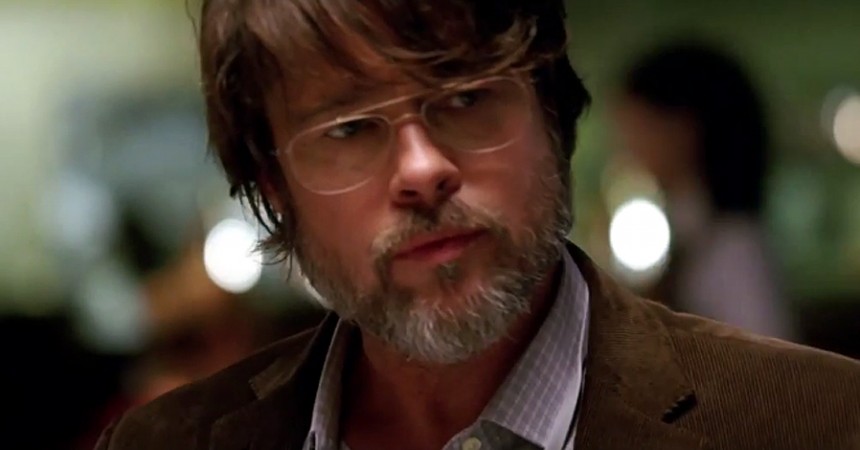
With the help of just about every A-lister in Hollywood – including Brad Pitt, Ryan Gosling, and Christian Bale – he tackles the oft addressed yet rarely entertaining topic of America’s housing collapse. What he seeks to do, in as enjoyable a way as possible, is illuminate the truth of the whole sordid mess. And as his film points out in one of its appropriate screen titles: Truth is like poetry, and most people fucking hate poetry.

McKay cross cuts the stories of four different groups of outsiders who foresaw the housing collapse, learned of the unimaginable corruption that weakened the housing market in the first place, and took advantage.

Obviously McKay is known for comedy, and though this is at its heart a drama, the director’s conspicuous outrage as well as his biting comic sensibilities fuel the film, propelling it in a way that has been lacking in any other movie on the topic.

McKay knows this is dry stuff. He addresses that fact head on, stopping periodically to help you understand key terms and ideas with cut-aways. Margot Robbie sits in a bubble bath to define a term, or Selena Gomez uses black jack as a metaphor to explain another. It’s a cheeky, clever approach, but one that rings with a healthy sense of cynicism. He’s begging: Please, you guys, this is very important stuff! Pay attention! Get pissed!

Christian Bale excels as the socially awkward Dr. Michael Burry, the hedge fund investor who first notices the weakness in the US housing market. It’s not a showy performance, but one whisper-close to comedy. Pitt’s is an understated but needed presence – the film’s conscience, more or less. Meanwhile Steve Carell and Gosling again team up nicely as a couple of driven misfits reluctantly fond of one another.

McKay makes no one a hero – including the film’s heroes – and underscores the entire effort with sympathy for the abused working class victim of the eventual, global financial collapse.

Yes, it’s tough material, and even with McKay’s bag of tricks, he can’t always keep the content both clear and lively. But he makes a valiant attempt, one that proves he is more than just a funny guy. He’s a breakthrough.

Verdict-4-0-Stars

Raising Cain

He Never Died

by Hope Madden

With a funny shuffle step and a blank stare, Henry Rollins announces Jack, anti-hero of the new indie noir/horror mash up He Never Died, as an odd sort.

Jack, you see, has kind of always been here. The here in question at the moment is a dodgy one bedroom, walking distance from the diner where he eats and the church where he plays bingo. An exciting existence, no doubt, but this mindlessness is disturbed by a series of events: an unexpected visit, a needed ally with an unfortunate bookie run in, and a possible love connection with a waitress.

Even if this sounds vaguely familiar, rest assured. This theologically confused but utterly entertaining tale of moral ambiguity, blood thirst, and eternity plays unlike any other film centered on an immortal.

Writer/director Jason Krawczyk’s screenplay drops us in a middling criminal world populated by unimpressive thugs. Jack’s environment is refreshingly and entirely lacking glamour, Krawczyk’s concept uniquely quirky and low key.

From the word go, He Never Died teems with deadpan humor and unexpected irony. Casting Rollins in the lead, for instance, suggests something the film actively avoids: energy. The star never seethes, and even his rare hollers are muted, less full of anger than primal necessity.

Jack’s battle is not with the goons at his door, but with something higher and more confusing to him. This day to day bloodbath he perceives more as a nuisance, although there’s a tale of redemption bobbing just below the surface of all this blood. Krawczyk should be congratulated not only for the light touch he gives this thematic thread, but for the unexpected turns the film takes before embracing it.

Rollins’s performance is strong, offering Jack as a solitary figure who clings to all things mind numbing as a way to pass the time without complication or human interaction. As a survival mechanism, he’s all but forgotten how to behave around humanity, a species he regards without needless sentimentality.

While Rollins is the showcase, the supporting players around him add nice touches of eccentricity (Steven Ogg), resignation (Scott Edgecombe), and energy (Jordan Todosey). Particularly good is Kate Greenhouse as the film’s disgusted, completely frustrated conscience, Cara.

It’s an unusual mix worth checking out. Plus, who hasn’t always wanted to see Henry Rollins eat a man’s larynx?

Verdict-3-5-Stars

Read Hopes Q&A with Henry Rollins HERE.

No Room for Improvement

Room

by Hope Madden

There is something miraculous about Room.

The film drops you into a world you would be hard-pressed to even imagine and finds a story that is both bright and beautiful despite itself. It’s the story of a young woman, held captive inside a shed, and her 5-year-old son, who’s never been outside of “room.”

Never lurid for even a moment, both restrained and urgently raw, the film benefits most from the potentially catastrophic choice to tell the story from the child’s perspective. And here is the miracle of Room: without ever becoming precious or maudlin or syrupy, with nary a single false note or hint of contrivance, the boy’s point of view fills the story with love and wonder. It gives the proceedings a resilience, and lacking that, a film on this subject so authentically told could become almost too much to bear.

Director Lenny Abrahamson (Frank) creates yet another meticulously crafted, lived-in world – a world that should look like nothing we have ever seen or could ever imagine, and yet manages to resonate with beautifully universal touches. He is absolutely blessed with two magnificent leads and one wonderful supporting turn.

The undeniably talented Brie Larson gives a career-defining performance as Ma. On her face she wears the weariness, desperation, and surprising flashes of joy that believably create a character few of us could even imagine. She conjures emotions so tumultuous as to be nearly impossible to create, but does it with rawness that feels almost too real.

Veteran Joan Allen is the normalizing presence, and her characteristically nuanced turn gives the film its needed second act emotional anchor.

Surrounded as he is by exceptional talent, it is young Jacob Tremblay who ensures that the film won’t soon be forgotten. Where did Abrahamson find such a natural performer? Because an awful lot rests on those wee shoulders, and it’s the sincerity in this performance that keeps you utterly, breathlessly riveted every minute, and also bathes an otherwise grim tale in beauty and hope.

There is no other film quite like Room.

Verdict-5-0-Stars

Beware the Faery Folk

The Hallow

by Hope Madden

Visual showman Corin Hardy has a bit of trickery up his sleeve. His directorial debut The Hallow, for all its superficiality and its recycled horror tropes, offers a tightly wound bit of terror in the ancient Irish wood.

Adam (Joseph Mawle) and Clare (Bojana Novakovic) move, infant Finn in tow, from London to the isolated woods of Ireland so Adam can study a tract of forest the government hopes to sell off to privatization. But the woods don’t take kindly to the encroachment and the interlopers will pay for trespassing.

What’s in the woods and why is it so angry?

“An occupied people forced into hiding by fire and iron,” explains a friendly Irish policemen to the Brit couple helping to sell off Erin’s ancient forests.

Openly influenced by Evil Dead, The Shining, The Thing, and Straw Dogs, among others, the film rarely feels stale for all its rehash. Hardy borrows and spit-shines, but the final amalgamation takes on such a faery tale quality that it generally works. (Except for that Necronomicon-esque book – that’s just a rip off.)

Hardy has a real knack for visual storytelling. His inky forests are both suffocating and isolating with a darkness that seeps into every space in Adam and Clare’s lives. He’s created an atmosphere of malevolence, but the film does not rely on atmosphere alone.

Though all the cliché elements are there – a young couple relocates to an isolated wood to be warned off by angry locals with tales of boogeymen – the curve balls Hardy throws will keep you unnerved and guessing.

A lot of the scares require very little visual effect – one early bit where Adam is knocked into the trunk of his car while something claws and bangs at the door toward his screaming infant is particularly nerve wracking. Still, Hardy’s joy and real gift is in the creature feature half of the film.

The magical folk of the Hallow – “faeries, banshees, and baby stealers” – have a look that is unique, appropriately woodsy, and immensely creepy. And just when you think the film’s reached its peak with this back woods monster mash, Hardy takes a sharp turn with a deeply felt emotional plot twist.

The political allegory doesn’t really pan out; Clare, though well performed, is entirely one-dimensional; the mythology of the sludge, while cool, doesn’t clearly fit with the monsters; and why in the hell do the rest of the natives stay?!

That’s a lot to ponder, but Hardy – magician that he is – will keep you so interested with relentless pacing and horror wonder that you won’t even notice.

Verdict-3-5-Stars

Just Breathe

Asthma

by Hope Madden

A bruised, muscular romanticism – a nostalgia for a hipper, more rebellious and gorgeous reality – informs Jake Hoffman’s Asthma.

The beautifully damaged Gus (Benedict Samuel) can’t claim a place in the generic uniformity of the modern world. He longs for the grittier and richer reality he believes came and went before his time. So he steals a Rolls, picks up the girl he admires, and attempts the kind of tragically restless road trip you might find in a Godard film.

All of which would feel precious were it not for erratic but solid performances, and a revelation that unveils Gus as the poseur we knew he was. Surprisingly, Hoffman and Samuel are able to mine that late-film revelation to connect the lead with the ordinary Joe in the audience, and still make his troubles resonate because of the genuine pain in the performance.

For all the film’s showy quirks – Nick Nolte, for instance, is the voice of Gus’s Guardian Angel/Wolfman – Hoffman’s abrupt manner with both camera and soundtrack keep things from feeling frivolous or pretentious.

The slew of peculiar folk Gus meets along his journey nearly chokes any hint of authenticity from Asthma, although the great (and appropriate) Iggy Pop is like a needed and timely punch in the gut to a film just about to topple over with its own quirkiness.

For a hyper-masculine road-type-picture, Asthma boasts a surprisingly nuanced female lead. Yes, Krysten Ritter’s Ruby looks like the typical off-beat beauty, and her character is certainly the right combination of naughty and nice to fit the bill, but Ritter never lets the character off too easy. She makes poor decisions, kicks herself for them, hardens, and moves on – all with a grace that feels of this time and of another.

There’s an addiction theme that threatens to hold the film together, give it purpose and drive, but often feels like the least authentic piece of the movie. Without it, though, Asthma too often comes off as a nostalgic riff on another era’s nostalgic riffs.

Hoffman’s a confident first time filmmaker with a product that is great to look if purposeless – kind of like Gus.

Verdict-3-0-Stars

https://www.youtube.com/watch?v=RHA7Lt_uQPs

Day 29: The Woman

The Woman (2011)

OK, Halloween’s almost here. It’s time to get real. And by that we mean real nasty.

There’s something not quite right about Chris Cleese (an unsettlingly cherubic Sean Bridgers), and his family’s uber-wholesomeness is clearly suspect. This becomes evident once Chris hunts down a feral woman (an awesome Pollyanna McIntosh), chains her, and invites the family to help him “civilize” her.

The film rethinks family – well, patriarchy, anyway. Notorious horror novelist and co-scriptor Jack Ketchum may say things you don’t want to hear, but he says them well. And director Lucky McKee – in his most surefooted film to date – has no qualms about showing you things you don’t want to see. Like most of Ketchum’s work, The Woman is lurid and more than a bit disturbing. Indeed, the advanced screener I watched came in a vomit bag.

Aside from an epically awful performance by Carlee Baker as the nosey teacher, the performances are not just good for the genre, but disturbingly solid. McIntosh never veers from being intimidating, terrifying even when she’s chained. Bridgers has a weird way of taking a Will Ferrell character and imbibing him with the darkest hidden nature. Even young Zach Rand, as the sadist-in-training teen Brian, nails the role perfectly.

Nothing happens in this film by accident – not even the innocent seeming baking of cookies – nor does it ever happen solely to titillate. It’s a dark and disturbing adventure that finds something unsavory in our primal nature and even worse in our quest to civilize. Don’t even ask about what it finds in the dog pen.

Listen weekly to MaddWolf’s horror podcast FRIGHT CLUB. Do it!

This I Could Not Do

Partisan

by Hope Madden

Ariel Kleiman casts a spell with his feature film debut Partisan, an enigmatic effort concerning a tribe of juvenile assassins and their surrogate – and sometimes biological – father, Gregori.

A captivating Vincent Cassel stars as the mentor, guru, and unyielding leader of the group. The film opens on Cassel, ragged and alone, building from hand and refuse what will become a sprawling, hidden fortress. Here he will house and educate a dozen or more children and their world-wearied mothers.

This is a cult, of sorts, and Gregori’s methods are deceptively paternal, but as his eldest and first protégé approaches adolescence, the limits of Gregori’s control begin to appear.

Kleiman’s measured storytelling offers as many questions as answers, enthralling with this alien yet believable scenario. He creates an atmosphere of near-wholesomeness and dubious nurturing that chills you.

Cassel’s performance is both restrained and bursting. Though the French actor has portrayed scads of villains in his impressive career, none are as thoughtfully drawn as Gregori. Cassel plumbs the character for self-delusion, tenacity, faux tenderness, and icy psychosis all at once. Gregori is exactly the charismatic figure who could command from nothing just such a bizarre family.

His chemistry with the young cast is both frightening and lovely – particularly his fragile onscreen bond with Jeremy Chabriel as prepubescent killer Alexander. Chabriel shoulders much of the film’s emotional heft, and he’s able to communicate the especially complicated coming of age facing this character with the skill of an actor twice his age.

Chabriel’s scenes with his mother and baby brother are layered, as the boy grapples with his own youthful – though not exactly innocent – view of the world, family, patriarchy, and devotion.

The unanswered questions, though often provocative, sometimes make the film feel unfinished. Still, Kleiman is a confident storyteller, and even with some missing pieces, he’s composed a taut, chilling, and unique vision of a particularly fraught journey toward adulthood.

Verdict-4-0-Stars

Oh Brother, Where Art Thou?

Goodnight Mommy (Ich seh, Ich seh)

by Hope Madden

There is something eerily beautiful about Severin Fiala and Veronika Franz’s rural Austrian horror Goodnight Mommy (Ich seh, Ich seh).

During one languid summer, twin brothers Lukas and Elias await their mother’s return from the hospital. They spend their time bouncing on a trampoline, floating in a pond, or exploring the fields and woods around the house. But when their mom comes home, bandaged from the cosmetic surgery she underwent, the brothers fear more has changed than just her face.

Franz and Fiala owe a great debt to an older American film, but to name it would be to give far too much away, and the less you know about Goodnight Mommy, the better.

Inside this elegantly filmed environment, where sun dappled fields lead to leafy forests, the filmmakers mine a kind of primal childhood fear. There’s a subtle lack of compassion that works the nerves beautifully, because it’s hard to feel too badly for the boys or for their mother. You don’t wish harm on any of them, but at the same time, their flaws make all three a bit terrifying.

The filmmakers’ graceful storytelling leads you down one path before utterly upending everything you think you know. They never spoon feed you information, depending instead on your astute observation – a refreshing approach in this genre.

Performances by young brothers Lukas and Elias Schwarz compel interest, while Susanne Wuest’s cagey turn as the boys’ mother propels the mystery. It’s a hypnotic, bucolic adventure as visually arresting as it is utterly creepy.

The film is going to go where you don’t expect it to go, even if you expect you’ve uncovered its secrets.


What Are Nouns?

People Places Things

by Hope Madden

I dare you to dislike Jemaine Clement. Just try to – it’s not even possible.

Whether he’s the aspiring pop star of Flight of the Conchords, the sexy vampire of What We Do In the Shadows, or just the voice of the damn horse in those Direct TV ads, he is always memorable, likeable, and hilarious.

In People Places Things, Clement steps out of the shadows and takes on romantic lead responsibilities as newly single graphic novelist Will. Will finds himself lonely and directionless after longtime partner/baby mama Charlie (Stephanie Allynne) leaves him for a monologist named Gary (a very funny Michael Chernus).

Nothing really works out well as Will floats through many failed attempts at living – teaching the graphic novel, mentoring a talented student, dating her mother, spending more time with his (ridiculously adorable) twin daughters, finishing his book, accepting Charlie’s new life and impending marriage.

Filmmaker James Strouse has been writing movies about lost men for a long time, beginning with the under-appreciated Lonesome Jim back in ‘05. People Places Things is his most surefooted script, populated with appealing characters that are nicely realized by Strouse’s strong cast.

Clement can generate chemistry with anyone who walks on screen, which is no doubt part of his charm. This is particularly true with Regina Hall, who shines in a very different kind of comedic role than those she usually takes. The humor is sly and a bit quiet, but wonderful nonetheless.

Allynne succeeds with the most difficult role, delivering a believably neurotic counterpoint to Will, a woman pretending to be sure of herself and her future who is actually exactly as lost as he is.

In a lot of ways, the film serves up a traditionally structured if attractively indie rom-com, but the way the cast – Clement, in particular – underplays the drama and lets the comedy breathe a bit, you don’t feel manipulated. The film is somewhat daringly low-key, relying on a talented cast to unveil the longing and loneliness behind the laughs.

It’s a messy, sweet, funny look at self-discovery and relationships, masquerading as a romantic comedy.

Verdict-3-5-Stars

https://www.youtube.com/watch?v=j_8K2QyI6p4