Tag Archives: independent film

Mighty Neighborly

The Good Neighbor

by Hope Madden

Youngsters agitate an old hermit who has a padlocked basement. Things don’t go well.

Yes, this sounds strangely familiar, and comparisons to the far superior Don’t Breathe will haunt Kasra Farahani’s feature debut The Good Neighbor. The two films vary wildly, though, for a number of reasons.

One of those is the pop psychology fueling Good Neighbor. The film’s premise is slight – two high school knuckleheads wire up a neighbor’s house to make it seem haunted, with the goal of observing his behavior and somehow becoming famous. Undergirding the plot, though, are a handful of interesting if underdeveloped themes.

Social media celebrity and the lacking morality that seems to come with it is certainly a thematic influence at work here, although Farahani doesn’t know how to weave it into his story. Ethan (Logan Miller) sees himself as a budding filmmaker and believes this unconscionable tormenting of the elderly as his road to YouTube fame.

His bestie Sean (Keir Gilchrist) is in it for – what, exactly? Science? Hard to say, and when Ethan wants to push things beyond Sean’s comfort zone, Sean’s unclear motive is one reason the film begins to unravel.

James Caan plays grumpy old Harold Grainey, the mean geezer across the road that the boys subject to the “haunting.” His character is primarily viewed from a distance – he’s entirely alone and being watched via surveillance cameras. Still, Caan delivers a skilled and deeply lonesome performance.

Generation gaps, the slippery nature of privacy as well as perception, and “what the hell is wrong with kids these days?” are all concepts toyed with in the film – none of them very successfully.

The problem is not solely the fault of Mark Bianculli and Jeff Richard’s screenplay, although it does begin there. The film doesn’t boast nearly enough jumps to register as scary, and the bend toward drama is too obvious to be effective.

The larger issue, though, is Farahani’s shifting tone. From found footage horror to courtroom drama to melodramatic flashback sequences, the film spins in so many directions you’re never sure what you’re watching.

You should probably just be watching Don’t Breathe.

Verdict-2-5-Stars

Quest Que C’est

I Am Not a Serial Killer

by Hope Madden

To find a serial killer, you have to get inside his head. This is not a new concept in horror movies, thrillers, police procedurals. No, this is a tired conceit.

But Irish filmmaker Billy O’Brien (Isolation) finds a new vision for it with his wry, understated indie I Am Not a Serial Killer.

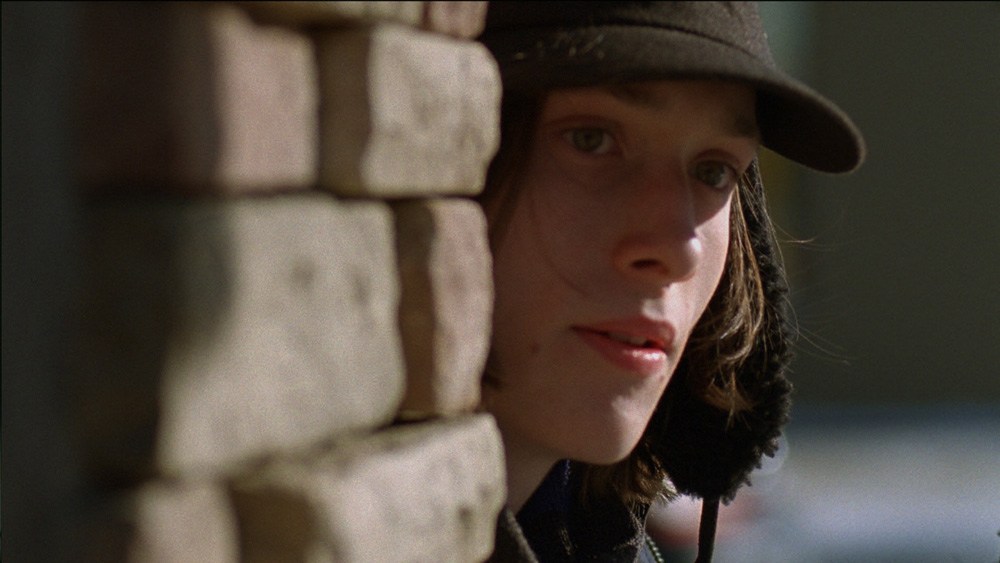
John (Max Records) is an outsider in a small Minnesota town. He works in his mom’s morgue, writes all his school papers on serial killers, and generally creeps out the whole of his high school. His preoccupations have landed him a therapist, the bird enthusiast Dr. Neblin (Karl Geary).

Turns out, John is a budding sociopath – that’s his official diagnosis. A good kid who lacks empathy, may not feel love, and obsesses over death and murder, he follows self-imposed rules and rituals to try to make himself normal and ensure the safety of those around him.

But when townsfolk start turning up in gory pieces, John turns his keen insights on the case.

Though O’Brien’s film may be too quiet an effort to command attention, his coming-of-age approach and indie sensibilities help him turn this outlandish and contrived effort into something touching, humorous and rewarding.

Records, who melted me as young Max in Spike Jonze’s 2009 masterpiece Where the Wild Things Are, serves up an extraordinarily confident, restrained performance. One scene, in particular – when he turns the tables on a bully at the school dance – is outstanding.

His onscreen chemistry with the nice old man across the street – Back to the Future’s Christopher Lloyd – generates thrills enough to offset the movie’s slow pace.

For his part, Lloyd is in turns tender, heartbreaking and terrifying.

The story cleverly inverts the age-old “catch a killer” cliché and toys with your expectations as it does. Robbie Ryan’s grainy cinematography gives the film a throwback looks that fits the image of a depressed Midwest town lost in time.

Bursts of driest humor keep the film engaging, while Records’s performance engenders the kind of empathy from the audience that the character himself could never muster.

It’s an effective twist on the serial killer formula, certainly, not to mention a coming-of-age tale that accepts its unpopular protagonist for who he is rather than how he could be made over to be happier in a way that makes us comfortable.

Verdict-3-0-Stars

Yes, and…

Don’t Think Twice

by Cat McAlpine

The three rules of improv are as follows:

1. Say yes
2. It’s all about the group
3. Don’t think

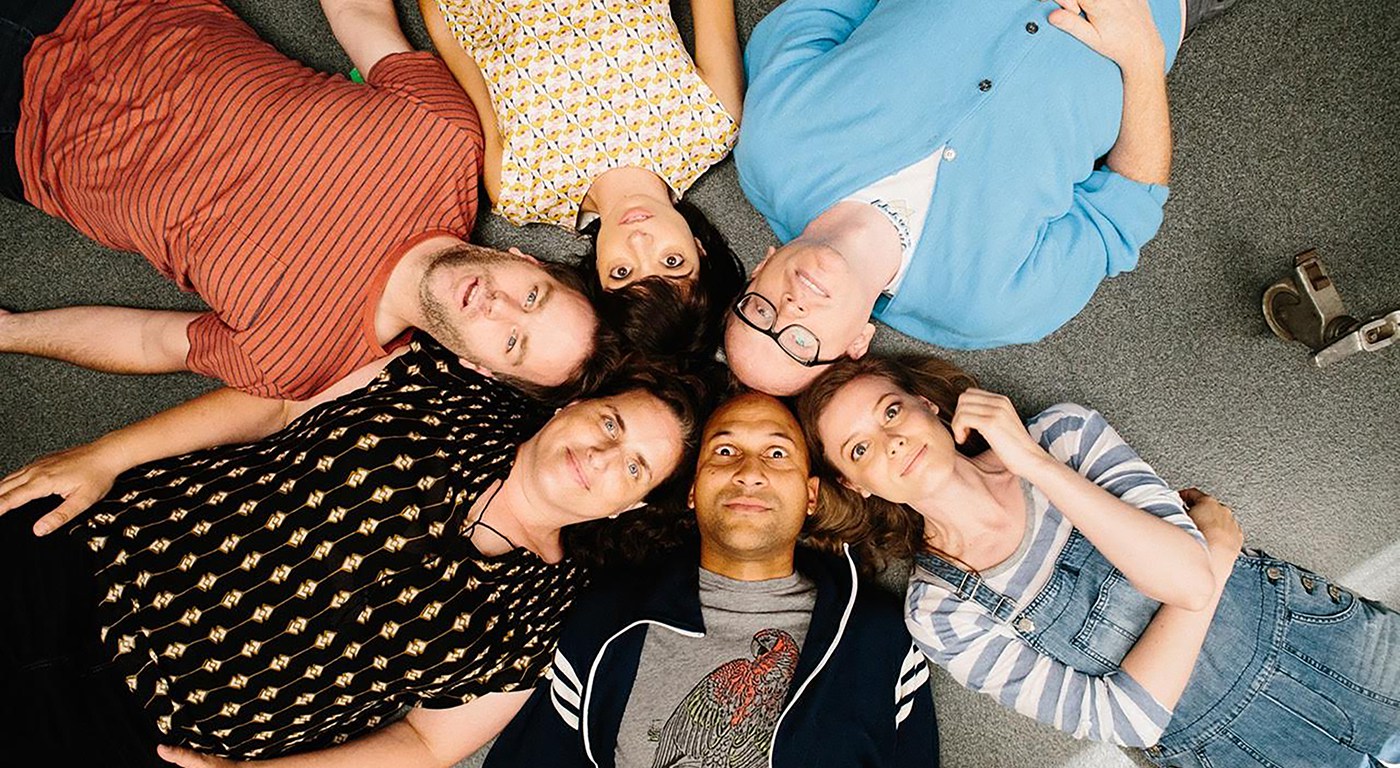
The six members of improv troupe The Commune live, bend, and break these rules on stage and in the green room in Don’t Think Twice. The ensemble dramedy pits the dreams of your 20s against the hard realities of your 30s and asks: When is it okay to be about me?

With the self-awareness of an improv performance, Don’t Think Twice keeps it real and stays grounded. The most recognizable face in the cast, Keegan-Michael Key (Key and Peele), plays Jack, the guy with a real shot at stardom. Samantha (Community’s Gillian Jacobs), has the skill but not the desire while Miles (Mike Birbiglia, who also wrote and directed) refuses to accept that he just doesn’t have what it takes.

Don’t Think Twice is intentional in its choices that way, inviting the audience to arrive with whatever context they can. Birbiglia never lets the drama spiral too low, either, immediately scooping you up again with jokes and laughter. The Commune develops several inside jokes throughout the course of the film, meaning you’re not only in on it, you understand how this sort of family keeps laughing even when life stops being funny.

At the beginning of each Commune show, Samantha asks “Did anyone have a particularly difficult day?” The ironic part, as most actors and improvisers will tell you, is that the best place to work through your own intimate problems is on stage in front of an audience.

We see this mechanism in action quite beautifully throughout this film, as Birbiglia uses the show-inside-a-show format to explore many themes.

His most powerful visual element, for instance, is the staging of chairs. Before each performance starts, the cast chairs are arranged onstage. In prepping for the performance, all the chairs are lined up neatly in a row, and if a performer is missing their chair is removed. The improvisers drag these chairs across the stage as needed throughout their performance, with the point being there is a chair for each of them. This literal setting of the stage underscores the narrative’s emotional current, and becomes a strong indicator of mood. “Hey, we’re about to work through some shit, and here’s exactly what we’re working with.”

Don’t Think Twice is a film that takes an honest look at “making it” from all sides. It challenges the notions of success and fame, and suggests that it’s okay to love doing something even if you never want to be famous for it.

If you’re invited to go see Don’t Think Twice this weekend, reply “Yes, and…”

Verdict-3-5-Stars

Deja Vu

Carnage Park

by Hope Madden

Writer/director Mickey Keating says his newest effort, Carnage Park, owes a debt to Sam Peckinpah and Peter Watkins – and their influence is certainly apparent, right down to the film’s title, cribbed from Watkins’s desert terror Punishment Park. Still, the film itself boils down to a poor man’s Wolf Creek as directed by Quentin Tarantino.

Actually, that sounds a lot better than it is.

It’s the California desert of 1978. Two armed men carrying a bullet wound, bag of cash and hostage flee a small town bank heist. They lose a trail of cops via a hidden, hilly dirt road.

Big mistake.

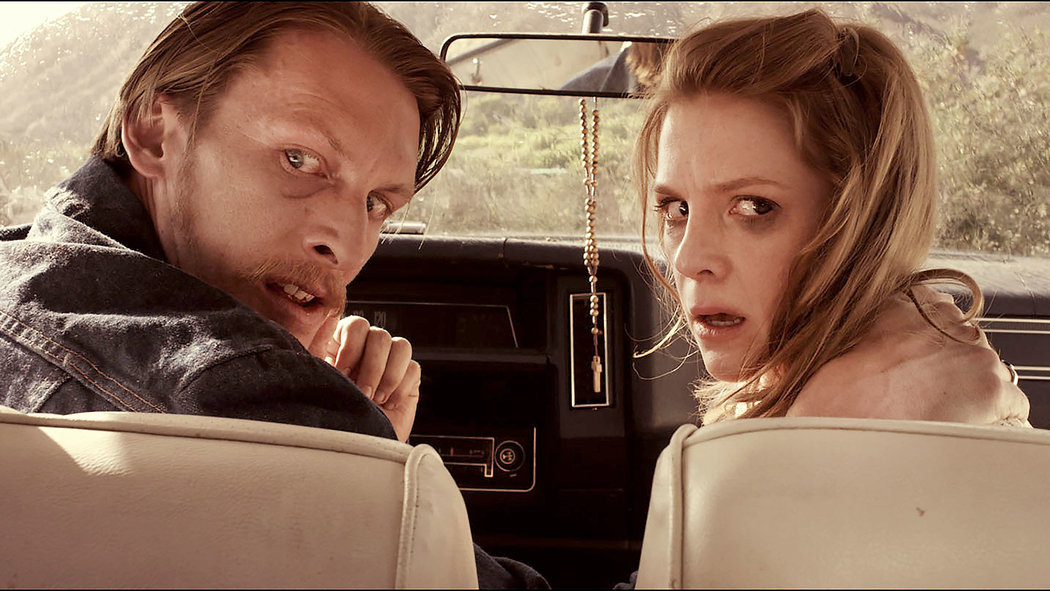
All the swagger, dusty boots and retro Seventies soundtrack in the world can’t shield Scorpion Joe (James Landry Hebert) and farm girl hostage Vivian (Ashley Bell) from the much larger danger they’ve just driven into.

Keating’s amassing quite a list and variety of indie horror films. His style is homage. Where Carnage Park aspires to the gritty look and desperate feel of the road pics of the indie American Seventies, last year’s Darling offered a stylish ode to both Kubrick and Polanski.

This approach need not feel derivative. Let’s be honest, Tarantino’s become among the most lauded and watched filmmakers of his generation by doing the exact same thing. The big difference is that QT’s take on all the cinema that has come before is filtered through his own lunatic genius, the final product becoming uniquely, fantastically his own.

There’s something more workmanlike, less inspired in what Keating does.

That’s not to say Carnage Park is an abject failure. A game cast keeps the film intriguing. Bell is deceptively savvy (aside from a few wildly idiotic mistakes, but let’s be honest, screenwriter Keating is to blame for those). Genre favorite Pat Healy chews some scenery, playing against type as the damaged Vietnam vet cliché, while Larry Fessenden (a regular and welcome contributor to Keating’s canon) shows up for a quick and gory moment or two.

But from the bleached out yellow of the scenery to nearly every set piece, Keating’s habit of lifting from other films takes on the feel of compulsion. Larceny, even: The Hills Have Eyes, Texas Chainsaw Massacre 2, Reservoir Dogs – the list is bloody, hip and endless. And tired.

Keating has proven many strengths in his few years in filmmaking, but it is time for him to develop his own style.

Verdict-2-5-Stars

California Dreaming

The Neon Demon

by Hope Madden

“Beauty isn’t everything, it’s the only thing.”

So says an uncredited Alessandro Nivola, a fashion designer waxing philosophic in Nicolas Winding Refn’s (Bronson, Drive) nightmarish new film The Neon Demon.

The line, of course, is borrowed. Refn tweaks the familiar idea to suit his fluid, perfectly framed, cynical vision.

Jesse (Elle Fanning) is an underaged modeling hopeful recently relocated to a sketchy motel in Pasadena. Will she be swallowed whole by the darker, more monstrous elements of Hollywood?

Refn is as assured a director as you’ll find. Each of his films has its own peculiar and magnificent look and sound that sets it apart and marks the helmsman as someone with a unique vision to share. The Neon Demon looks and sounds great, but it doesn’t look or sound unique. The entire aesthetic, from the shots to the palette to the score, feels like a mash up of Stanley Kubrick and Dario Argento. Interestingly – or boringly, depending on your perspective – the story swims such familiar waters that this borrowed aesthetic feels simultaneously intentional and derivative.

Hollywood is a soulless machine that crushes people. The world objectifies women, a toxic reality that poisons everyone it touches. Small town girl gets in trouble following her dreams in Tinseltown. There’s nothing new here. To manufacture something, it’s as though Refn replaces fresh ideas with bizarre imagery.

It’s tough to make a film about the dehumanizing effect of objectification without objectifying, and even the deeply talented Refn can’t seem to do it.

The film is not without its charms. The Neon Demon is the closest thing to a horror film as anything Refn has delivered, even if it takes 100 minutes or so to get there. Like Only God Forgives, the longer you wander through this nightmarish landscape, the more outlandish the dream becomes. But for all its detractors and laborious weirdness, Only God Forgives felt like a breakneck action thriller compared to the languid, even leaden pace of Neon Demon.

But you know what? Keanu Reeves isn’t bad. Huh!

Verdict-2-5-Stars

Collision Course

From Afar

by Hope Madden

Welcome to the fringes of Caracas, where a life barely lived collides with vibrant and violent passions in From Afar, the confident feature debut from director Lorenzo Vigas.

Veteran Chilean actor Alfredo Castro plays Armando, a solitary figure who stokes what little longing he still has by paying street kids for company.

Castro’s masterful performance mirrors Vigas’s detached style, but there’s more to this character than meets the eye. Vigas, who also wrote, shares only as many details as needed, encouraging the viewer to fill in the missing pieces. Meanwhile, Castro’s resigned, closed-off performance still roils at times with passion that threatens to break through his carefully protected surface.

Vigas’s deliberate use of focus and carefully observational approach keeps the audience at arm’s length, but this remote tone is frequently punctuated by the brute ferocity of young Luis Silva’s performance.

In a blistering screen debut as Elder, the 17-year-old punk who captures Armando’s interest, Silva is a shock to the system. Primal, urgent and impulsive, he bursts through the screen as well as Armando’s emotional walls.

The tension between Armando and Elder and the damage each may be doing to his own life and the other’s cause nerve-wracking tension as the relationship blooms, and yet Silva takes the narrative in directions that are simultaneously inevitable and heartbreakingly surprising.

Though the film sometimes feels overly crafted, and perhaps Vigas allows style to dictate more than it should, there is no denying the lead performances. Committed and natural, sympathetic yet repellant, the two actors unveil characters that are as similar and as dissimilar as people can be.

Vigas understands the power in silence. His film explains very little and yet exposes much – about yearning, class divides, human nature, and survival. He and his remarkable cast invite you into lives you couldn’t possibly know to tell a story with no judgment, and the truth in it is devastating.

Verdict-4-0-Stars

https://www.youtube.com/watch?v=7PsCR8kHqmA


Fangs for the Memories

The Family Fang

by Hope Madden

Don’t you love Jason Bateman? And if not, why not?

His enviable comic timing guarantees his own success in any film, no matter how weak or how strong the material, but films like The Gift and State of Play clarify his underappreciated ability with dramatic roles.

Bateman’s directorial debut in 2013, Bad Words, showcased his capability at the helm, as well – muscles he flexes once more in his darkly comic take on novelist Kevin Wilson’s tale of eccentric, artistic familial dysfunction, The Family Fang.

Bateman plays Baxter Fang. Baxter and his sister Annie (Nicole Kidman) – or Child A and Child B, as their folks call them – were raised by a duo of performance artists. The present-day Mr. and Mrs. Fang are gamely played by Christopher Walken and Maryann Plunkett, with Kathryn Hahn and Jason Butler Harner filling in for flashbacks.

The adult siblings are struggling artists all their own – she a semi-working actor, he an author two years behind schedule on his third novel. It would appear that being the object and subject of their parents’ art throughout childhood has had an adverse effect on the pair as adults.

If you’re worried that you cannot sit through another indie film about the sins of the parents visited on their self-indulgent and/or damaged offspring, fear not.

Adapting Wilson’s text for the screen, David Lindsay-Abaire prunes and pares to offer a wise but tender rendering of the family pathos. But credit Bateman for ably maneuvering tonal shifts with a beautifully understated approach that keeps the film from ever veering into quirkiness or maudlin bitterness.

His cast (himself included) certainly never let him down. Both Plunkett and Hahn offer heartbreaking nuance as they animate the conflicted loyalty of mother/wife/artist Camille Fang. They join a full slate of admirable supporting performances.

Meanwhile Kidman and Bateman create a sweetly believable set of siblings, giving the relationship a lived in and hard won familiarity that feels both refreshing and familiar.

Big surprise, Christopher Walken is the shiniest gem in this treasure chest. At turns jocular and hostile, his narcissistic artist/father is delivered with both authenticity and panache.

A murder mystery of sorts, The Family Fang surprises and engrosses without ever feeling like the sleight of hand that made the Fangs famous.

Occasionally heartbreaking, often curious, cleverly structured and thoughtfully executed, this impressive sophomore directorial effort from Bateman keeps you guessing – at how things will work out for the Fangs, and at what may be next for this impressive filmmaker.

Verdict-3-5-Stars

It’s The Thought That Counts

Love Thy Nature

by Cat McAlpine

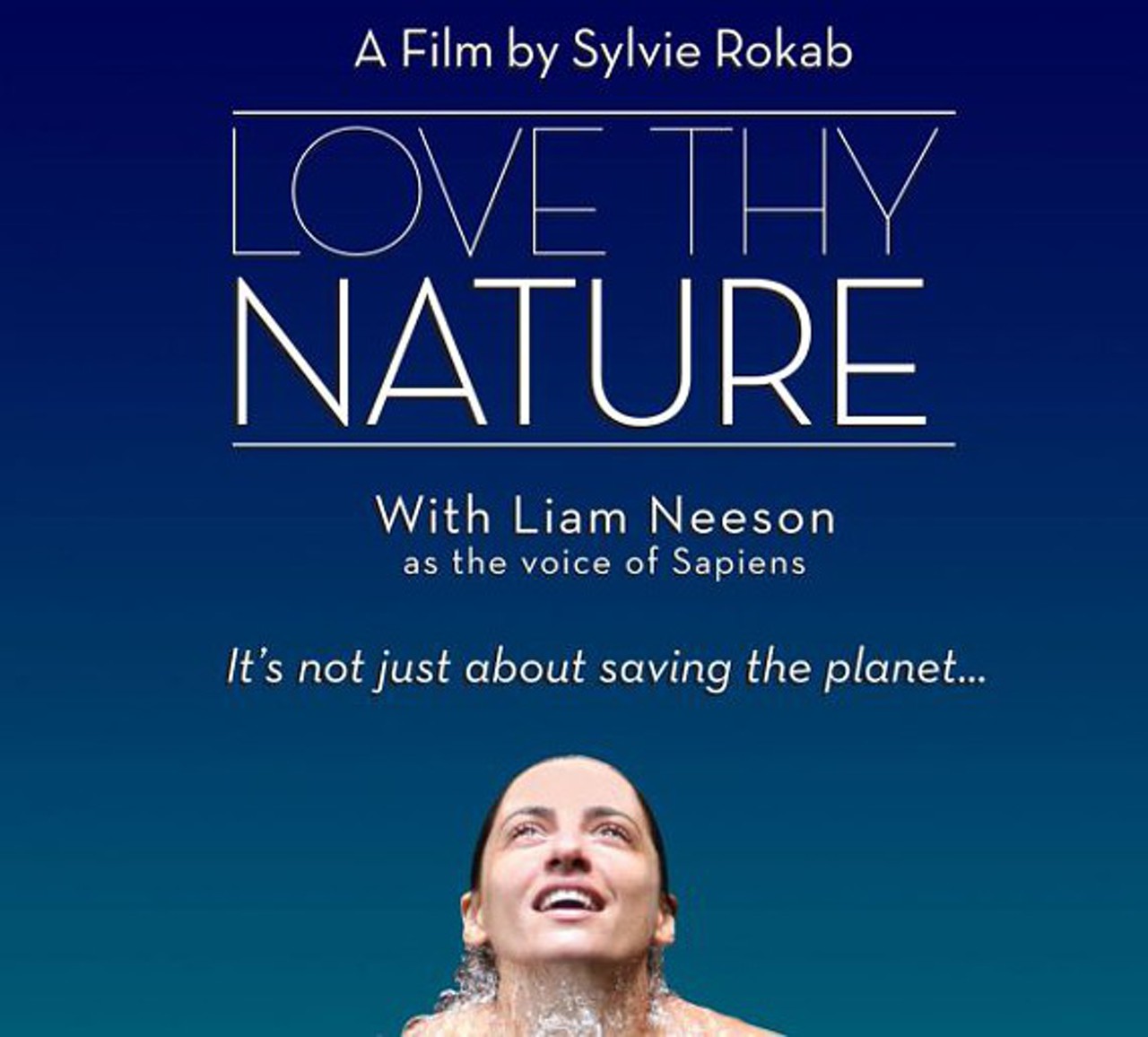
The best way to convince people that caring for the planet is badass is to have a badass tell them so. This is what I was hoping to get from Liam Neeson’s narration of Love Thy Nature. This is not what I got.

Neeson’s involvement is featured heavily in the documentary’s promotions, but his real role is much smaller than that of “narrator.” Neeson voices “sapiens, homo sapiens” – essentially speaking for the human race. The choice to involve the human race as a whole and to engage it, quite literally, in a dialogue is interesting but ultimately not effective. Neeson’s script is heavy handed, ending musing thoughts with sudden reversals like “Or is it?” or “Could I be wrong?”

The film itself proceeds like any shown in a high school science classroom. Picturesque landscape shots cover the basics; rocks, beach, underwater, trees, the savannah. These shots are accompanied by a litany of new age talking heads, cartoonish and often unnecessary animations, and an excessive amount of footage featuring people gazing into the distance.

What’s most perplexing is that the talking heads never seem to say much of merit. The film has good heart, urging that we reconnect with the planet, but when it comes to facts or statistics, an entire cast of scientific professionals has little to offer. One talking head claims that “slathering ourselves with sunblock or covering up actually increases the risk of skin cancer.” There’s no follow up.

Love Thy Nature is segmented by profound quotes about man and nature, displayed on the screen in white lettering on the same hazy forest backdrop each time. The quotes seem to have little purpose other than to be inspirational.

While the film eventually suggests that we can use technology to further our relationship with nature, a bizarre cut early on seems to suggest that children playing video games leads to forest fires.

Eventually, director Sylvie Rokab settles on the idea of biomimicry, an engineering field that focuses on using designs that are naturally occurring. It seems like this is what Love Thy Nature has been building toward, the ultimate reconnection of man and nature. The segment lasts about a minute or two, with few hard facts, and then is over.

Rokab is obviously dedicated to this cause, also co-writing the script and story and leading the Kickstarter that funded the project. It is a noble cause. Sapiens, Homo Sapiens, will find it hard to deny a cry to take better care of both our planet and ourselves. But this Earth Day is better served by skipping the film and going outside.

Verdict-2-0-Stars

https://www.youtube.com/watch?v=TVNFkOBswEI

Love in the Time of Rotary Phones

Colonia

by Cat McAlpine

On the surface, Colonia is a pretty film. The leads are attractive, the period setting lends both nostalgia and an otherworldly quality, and there are some beautiful shots. Despite being based on true and rather horrifying events, however, the film lacks depth.

Florian Gallenberger both directed and co-wrote Colonia, and he seems to shy away from getting too involved with the political details. The story follows two international lovers who find themselves imprisoned at creepy cult camp Colonia Dignidad during the Chilean military coup of 1973. The true events simply serve as a back drop, unfortunately.

Lena (Emma Watson) asks about the crowd holding up her taxi, “Why are they protesting?” Her driver replies vaguely, “Inflation? Food shortages? It is getting very bad now.”

At its open, there is a raw brutality which serves as a painful reminder of what social injustice looked like before the smart phone. Daniel (Daniel Brühl ) is spotted by military police attempting to document their indiscretions with a bulky film camera. This is where both relevancy and homage seem to fade, however. Once Daniel is taken to the colony, the film mostly devolves into a standard thriller featuring an attractive young couple.

Brühl plays Daniel with a sweet subtlety which is not lost in moments of passion or desperation, but rather heightens the reality of his character.

Watson, on the other hand, is wasted as Lena, who lacks both intensity and lines despite immense screen time. There is little to no chemistry between Lena and Daniel, and once they are reunited, they navigate an endless series of near misses with relative ease. There is little doubt that they will survive.

Paul Scäfer (a marvelous Michael Nyqvist) is so mesmerizing and terrifying at the same time, I found myself hoping he’d be in the next scene. He oozes delusion and power. His second in command, Gisela (Richenda Carey) balances positions of power and weakness, and her character becomes more complex as the narrative moves on, a rarity in this film.

Unfortunately, the film does not delve into how Scäfer came to be a god amongst his followers. It also failes to explain exactly how the camp is connected to the military. Lena serves as our eyes for the majority, and we discover along with her. When the film stops being about the camp, it becomes boring and predictable, despite its pacing.

Colonia has beautiful, eerie, and beautifully eerie moments. The cast gives a worthy effort and Emma Watson’s eyebrows look amazing, but none of this star power is enough the raise this film beyond a “meh.” You’re left wondering why a film lacking resolution is two hours long in the first place.

Verdict-2-5-Stars

Dear Diary

The Adderall Diaries

by Hope Madden

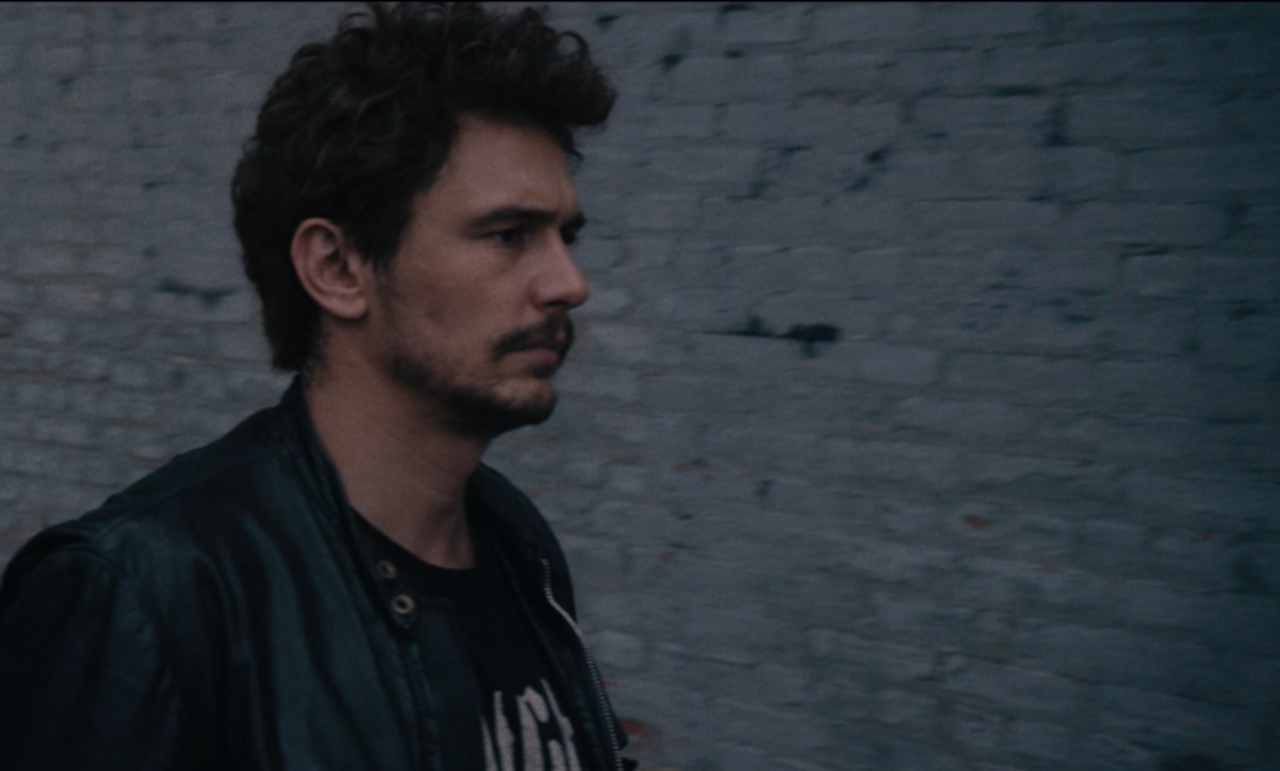
James Franco is nothing if not prolific. The Adderall Diaries was his 8th completed feature slated for release in 2015. He is a frenzy of artistic ambition and he deserves credit for embracing independent filmmaking as well as bigger budget stuff, doling out comedies and dramas in between arty TV bits. But maybe if he slowed down a little, some of the material would be better.

In Adderall Diaries, Franco plays Stephen Elliott, the real-life writer who penned the nonfiction text on which the film is based. As Franco depicts him, Elliott is a self-destructive man-child wallowing in self-pity.

What caused his sour mood? An adolescence of abuse at the hands of a father he pretends is dead (in print and in public, no less). When Dad (Ed Harris) shows up in the flesh at a book reading, Elliott’s cushy world falls to pieces. Combine that with writer’s block and a misdirected interest in a high-profile murder trial, and what can Elliott do but snort, smoke, shoot, and pop every substance he comes into contact with?

There is something interesting buried here about how we use our own memories to justify our behavior, or about how writers are inherently liars, or a bit of both – hard to say because it’s never fleshed out or clearly articulated. But boy, the old ‘downward spiral of the artistic genius’ thing – that is hard to miss.

Though Harris turns in a characteristically strong performances, all other supporting turns are perfunctory at best, which leaves us with little but Franco’s whining protagonist to cling to.

Writer/director Pamela Romanowsky flails about with indie director clichés, creating an overly-filtered world of seediness and confused flashbacks, while her prose cannot deliver the introspection required to make an audience invest in what happens to Elliott.

Subplots go nowhere – the murder trial, in particular, feels as if it should mean something imperative but seems needless and tacked on. Relationships, the writer’s craft, self-examination and anything else the film attempts to tackle are too muddled to stand out. Even Franco’s damaged writer seeking redemption bit is so tired, and the character so unlikeable, that it’s just hard to care about the film’s outcome.

Verdict-2-0-Stars