We are thrilled to be a part of a circle of movie podcasts spending the month of October talking about Universal monster movie sequels. And how lucky are we to have drawn the Bride of Frankenstein?
For our money, not just the best Universal monster sequel but the best Universal monster movie, Bride is a special. So special, she gets her own podcast. No lists, no competition, but to do it justice, we thought a special guest was in order. We are thrilled to have Dino Tripodis join us for the conversation.
The Bride of Frankenstein (1935)
James Whale and Boris Karloff – with tag along make-up man Jack Pierce – returned to Castle Frankenstein for an altogether superior tale of horror. What makes this one a stronger picture is the dark humor and subversive attitude, mostly animated by Frankenstein’s colleague Dr. Pretorius (Ernest Thesiger).
Thesiger’s mad doctor makes for a suitable counterpart to the earnest and contrite Henry Frankenstein (Colin Clive, again), and a sly vehicle for Whale. This fey and peculiar monster-maker handles the most brilliant dialogue the film has to offer, including the iconic toast, “To gods and monsters.”
The sequel casts off the earnestness of the original, presenting a darker film that’s far funnier, often outrageous for its time, with a fuller story. Karloff again combines tenderness and menace, and Elsa Lanchester becomes the greatest goth goddess of all film history as his Bride.
Any sequel to an iconic horror—particularly one that introduced a nightmarish, game changing villain—is bound to disappoint in some fashion because our imagination has attached its own terror to the story and the boogeyman that no one else can match.
Though they certainly tried their best with the Michael Myers franchise, to the tune of seven sequels and two reboots preceding this 40th anniversary comeback, Halloween.
Wisely, director/co-writer David Gordon Green and his writing partners Danny McBride and Jeff Fradley ignore all those other films, creating a universe where only John Carpenter’s 1978 original exists.
Jamie Lee Curtis returns to the star-making role of Laurie Strode, Carpenter’s final girl who has spent the last 40 years struggling to recover from the trauma of that Halloween night by stockpiling guns, booby-trapping her home and alienating her family.
She’s not the only character with a one-track mind. Myers’s attending doc, Dr. Sartain (Haluk Bilginer) thinks of, studies and devotes himself to nothing else but his star patient.
“You’re the new Loomis,” Laurie Strode quips upon meeting him—exactly what we were thinking. And though Bilginer’s performance borders on camp (and not in that respectable way Donald Pleasance had of overacting), his musings articulate the film’s basic principles. After 40 years of obsessing over having failed to achieve their goals—neither killed the other—Laurie Strode and Michael Myers are as connected as they might be if they were still siblings.
See, that came up in 1981’s Halloween II, so no longer canon.
Green’s direct sequel is, above all things, a mash note to the original. Visual odes continually call back to Carpenter, often in ways that allude to an intriguing about face the film is leading to.
Aside from Bilginer and Andi Matichak—unmemorable as Strode’s high school-aged granddaughter, Allyson—the cast is far stronger than what any of the other sequels could boast.
The humor peppered throughout the film, mainly as dialog between characters about to be butchered, too often undermines the tension being built. But Green, whose style refuses to be pinned down, embraces the slasher genre without submitting to it.
Kills—more numerous and grisly than the first go round—are often handled offscreen, just the wet thud or slice of the deed to enlighten us until the corpse gets a quick showcase. The result is a jumpy, fun, “don’t go in there!” experience reminiscent of the best of the genre.
The film takes it up a notch in its final reel, as tables turn, panic rooms open and cop heads become Jack-o-lanterns. The result is a respectful, fun and creepy experience meant to be shared with a crowd.
Horror movies mirror the anxieties of a population. If you look at the best horror in any decade, what made it relevant, what gave it punch, was that it spoke to the anxieties of the society at that point in time.
Case in point: Godzilla. Not long after the end of WWII, a Japanese filmmaker spun a yarn about the end of civilization as a giant kaiju brought about by atomic bombs. You can see how that spoke to folks at the time.
You can also point to one particular film that changed the trajectory of the genre. To use Godzilla as the example again, after that film, you were hard pressed to find a horror film that was not a creature feature.
Here’s our quick primer, decade by decade, on the films that marked the genre, predicted the coming decade’s cinematic output, and articulated the social anxieties of the day.
1914 to 1918 saw the first global war. Germany, France and the US also happened to be the three countries investing the most in film. And while many in the US protested the idea of paying our money to see German films at the time, the most interesting horror was coming from German writers and directors who could feel the ideological changes that would inform not only WWI, but the more horrifying underpinnings of the next generation’s war.
Required viewing:
• Nosferatu (1922)
• Phantom of the Opera (1925)
Era defining film: The Cabinet of Dr. Caligari (1920)
Non-practicing Jewish/German director Robert Weine would eventually escape from Germany and make films in Hungary after the Nazis came to power. His expressionistic presentation in this film, much of it owing to an ingenious way to deal with a limited budget, had a lasting impact on cinema worldwide.
But it was the writers of Caligari – Carl Mayer and Hans Janowitz – who bring the social anxieties into focus. Both were in the military in WWI and both had a profound distrust of power, which influenced this amazing film.
1930s
This was the calm between world wars. Advances in medicine meant that more soldiers came home from WWI than what would have happened in any earlier war. Many of those people were physically disfigured to a degree that we would never have seen before these medical advances.
The films of the 1930s—Universal’s sweet spot—focused almost exclusively on shady Eastern European evil that unleashes disfigured monsters, often sympathetic monsters whose pain and ugliness are no fault of their own, on an unsuspecting population.
It played on audiences fear of the sinister European other, that mysterious presence of evil that they could never hope to fathom. It also picked those scabs of seeing the monstrous in their own home towns.
Era defining film: Frankenstein (1931)
James Whale’s brilliant take on Mary Shelley’s novel looked at Frankenstein’s monster and saw the cruelty humanity was capable of committing. For him, the monster was the central and most interesting figure. Unlike Shelley’s antihero, Whale’s creature was utterly sympathetic, an oversized child unable to control himself, making him simultaneously innocent and dangerous.
Barons and aristocracy, the European setting – the film distrusts scientists and public officials as fools unable to reign in their own ambitions no matter the dire consequences.
https://www.youtube.com/watch?v=McUce_xwxeA
1940s
WWII was in full swing and Americans were looking for escapism. In a way, though, the 40s were more of the same. Still monster movies, mostly based on Universal’s success. RKO began its run with Jacques Tournier/Val Lewton films that- because of smaller budgets – relied on audience audience imagination over pricey make up effects. The success resulted in a change, however temporary, toward smarter, suspenseful films.
But the real enemy was German. While most of the monster movies of the decade saw some kind of shadowy European figure of power or evil, one really exemplifies the era and where it is.
Required viewing:
• Cat People (1942)
• I Walked with a Zombie (1943)
• The Uninvited (1944)
Era defining film: The Wolf Man (1941)
For George Waggner’s 1941 classic, Lon Chaney Jr. plays the big, lovable lummox of an American back in his old stomping grounds—some weird amalgamation of European nations.
In a real sense, this film was the answer to a formula, an alchemy that printed money. The Chaney name, Bela Lugosi co-stars, and we pit a sympathetic beast against some ancient European evil. But it’s much more pointed than it seems. The evil is purely German, gypsies sense it and yet can do nothing but fall victim to it, and it is an evil with the power to turn an otherwise good man—say, your average German man—into a soulless killing machine.
Few eras have earmarked their horror output with social anxiety as thoroughly as the 1950s. The war was cold and it was everywhere.
You were hard pressed to find any horror film in that decade that were not specifically about fear of the Communist and/or atomic threat unless you looked overseas. Those who needed a minute away from the mutant monsters that followed Godzilla to box office gold found it in England’s fledgling horror company, Hammer.
Required viewing:
• Invasion of the Body Snatchers (1956)
• Dracula (1958)
• The Bad Seed (1956)
• Diabolique (1955)
Era defining film: Godzilla (1954)
More than any other film in the genre, Godzilla spoke directly to global anxieties, became a phenomenal success, and changed the face of horror.
As Japan struggled to re-emerge from the 1945 bombings of Hiroshima and Nagasaki, director Ishiro Honda unleashed that dreaded kaiju—followed quickly by a tidal wave of creature features focused on scientists whose ungodly work creates global cataclysm.
Far more pointed and insightful than its American bastardization or any of the sequels or reboots to follow, the 1954 Japanese original mirrored the desperate, helpless impotence of a global population in the face of very real, apocalyptic danger. Sure, that danger breathed fire and came in a rubber suit, but history shows again and again how nature points out the folly of man.
Civil Rights, Vietnam, women’s rights, the pill—the Sixties was a decade that changed an awful lot. And with change comes social anxiety.
A woman’s right to control her own body became front page news with the release of the birth control pill, and worries generated there spilled into horror, the best of these being France’s Eyes Without a Face and Polanski’s Rosemary’s Baby.
The decade saw a slew of other true classics, from The Innocents to Psycho and more, but the effects of the social change – which would become even more pronounced in the cinematic output of the next decade – was articulated best by the bargain basement budget zombie film that changed every single thing.
Required viewing:
• Psycho (1960)
• Eyes Without a Face (1960)
• The Innocents (1961)
• Rosemary’s Baby (1968)
Era defining film: Night of the Living Dead (1968)
Romero’s first zombie film – the first proper zombie film – hit upon cultural anxieties aplenty. The war in Vietnam – televised almost constantly, and for the first time – was reflected in Romero’s onscreen broadcasts of unimaginable horror. He depicts the changing paradigm of the generations in the power struggle going on inside the besieged house.
More than anything, though, Romero hit a nerve with his casting. The filmmaker has long said that African American actor Duane Jones got the part as the lead because he was simply the best actor in the cast. True enough. But his performance as the level headed, proactive, calm-under-pressure alpha male – followed by Romero’s gut-punch of a finale – spoke volumes and is one of the main reasons the film remains as relevant today as it was when it was released.
The rise of independent film in the US in the Seventies led to maybe our greatest era in film. Taxi Driver, The Godfather, One Flew Over the Cuckoo’s Nest, A Clockwork Orange, Apocalypse Now, Chinatown, Mean Streets, Rocky—it’s dizzying to think of the filmmakers who established themselves in that decade with fresh, gritty, realistic, genius films.
Horror benefitted from the same boon in independent filmmaking. Some of what would become the strongest voices of the genre were making their first sounds: David Cronenberg, Stephen King, Wes Craven, Tobe Hooper, among others.
It’s a time when the TV coverage of Vietnam has begun to dull the population’s senses to violence. We saw horror movies that did two things. First, filmmakers came up with a way to wake people up to violence, either with extreme violence or with larger-than-life violence.
The second thing was a sense of pitting evil against the status quo. People were wearying, as the decade waned, of the constant state of flux. They longed for simple, wholesome answers. Sue Snell challenged the status quo by showing kindness to Carrie White, and look what happened. Teenagers rebelled in suburbia by partying and having sex when they were supposed to be babysitting, and Michael Myers appeared to punish their unholy behavior.
The most iconic film of the Seventies—horror or otherwise—saw just one way to contend with modern evils.
Era defining film: The Exorcist 1973
A single mother, a daughter on the verge of puberty and sexual awakening, an opening for evil—much of the grounding concepts of William Friedkin’s masterpiece is simply that the status quo in the Seventies was being challenged and we needed God to come straighten things out again.
The concept that the Catholic Church will save us now seems almost so quaint as to be offensively naïve. But at the time, Friedkin combined this sensibility with an impeccable script, uncompromising direction and breathtaking performances (the film raked in two Oscars and another 8 nominations) to scare the hell out of viewers.
Conservatism, consumption, capitalism—the Eighties had it all. Everything was bigger, splashier, louder. Music videos and their phenomenal influence on teenage buying habits meant movies catered more to a younger audience, partly by ensuring that a short attention span could be kept engaged.
Thanks to the rise of VHS, everybody learned that you could turn a profit more easily with horror – the go-to rental property – than with any other genre of film. They could be made cheaply and they were the most likely to be rented, immediately and repeatedly.
The slasher was king – there were 8 Friday the 13th films in the decade, 4 Halloween films, 5 Nightmares on Elm Street alone. There were also some good movies, but the one that looks the most like the Eighties is one that comes from the era’s most iconic icon, Spielberg
Required viewing:
• The Shining (1980)
• American Werewolf in London (1981)
• The Thing (1981)
• Henry: Portrait of a Serial Killer (1986)
Era defining film: Poltergeist 1982
Tobe Hooper’s love child with Steven Spielberg may not be the best or most important horror film of the Eighties, but it is the most Eighties horror film of the Eighties. In both of Spielberg’s ’82 films, the charade of suburban peace is disrupted by a supernatural presence. In E.T., though, there’s less face tearing.
Part of Poltergeist’s success emerged from pairing universal childhood fears – clowns, thunderstorms, that creepy tree – with the adult terror of helplessness in the face of your own child’s peril.
Splashy effects, excellent casting, Spielberg’s heart and Hooper’s gut combine to create a flick that holds up. Solid performances and the pacing of a blockbuster provide the film a respectable thrill, but Hooper’s disturbing imagination guarantees some lingering jitters.
The Nineties was a fairly calm time, although the angst in the music suggests otherwise. More than anything, the social anxiety of the Nineties was more about rebelling against the conservative, self-centered, larger-than-life Eighties. And without a single, overarching, global worry to inform horror, the output of the decade was a mixed bag.
The decade started off with the best film horror may ever see. The Silence of the Lambs won all 5 major Oscars that year – actor, actress, film, screenplay, director – absolutely unheard of for a horror film. It is a perfect movie, and its success led to more heavyweight directors working with a big budget.
The decade would end with a phenomenon that created its own subgenre: The Blair Witch Project. Takashi Miike’s Audition was one of the burgeoning J-horror genre that would have a huge influence on American horror in the next decade.
But the film that reestablished horror among fans and changed the entire trajectory of the genre was Wes Craven’s Scream.
Required viewing:
Cape Fear 1991
Silence of the Lambs 1991
The Sixth Sense 1999
The Blair Witch Project 1999
Audition 1999
Era defining film: Scream 1996
In its time, Scream resurrected a basically dying genre, using clever meta-analysis and black humor. What you have is a traditional high school, but director Wes Craven’s on the inside looking out and he wants you to know it.
What makes Scream stand apart is the way it critiques horror clichés as it employs them, subverting expectation just when we most rely on it. We spent the next five years or more watching talented TV teens and sitcom stars make the big screen leap to slashers, mostly with weak results, but Scream stands the test of time. It could be the wryly clever writing or the solid performances, but I think it’s the joyous fondness for a genre and its fans that keeps this one fresh.
Here’s where things get nutty. New technologies made filmmaking more affordable and made it easier for US audiences to access foreign films.
What we learned with the insane financial success of the bargain basement Blair Witch Project is that horror turns a profit. Netflix, on-demand viewing, online viewing – all of which was in its infancy in the last decade – meant that these outlets needed content.
In terms of high quality horror, we saw an incredible influx from abroad, mainly visceral foreign horror.Required viewing:
28 Days Later (2002)
Dawn of the Dead (2004)
Wolf Creek (2005)
The Descent (2005)
The Loved Ones (2009)
Let the Right One In (2008)
Era defining film: The Ring (2002)
Gore Verbinski’s film achieves one of those rare feats, ranking among the scarce Hollywood remakes that surpasses the foreign-born original, Japan’s unique paranormal nightmare Ringu. Verbinski’s film is visually arresting, quietly atmospheric and creepy as hell.
The film announced Verbinski as a filmmaker worthy of note, brought Naomi Watts into our consciousness, and unleashed countless (sometimes fun) copycats. We saw more PG-13 horror, more remakes, and so many J-horror remakes.
2010
We’ve settled into a world where you can find dozens of brand new horror films from anywhere on earth at any moment of the day or night via countless channels. This means we benefit from a bounty of possibilities never before seen. In this decade, horror has spawned some of our biggest blockbusters.
Horror is suddenly not only a realistic go-to for studios looking for a blockbuster, it’s also become one of the more highly regarded genres for quality, though-provoking, challenging and brilliant content.
The Babadook deals unapologetically with something we’d honestly never seen in film before. It Follows deals with the changing paradigms of adolescence in a way that was fresh and devastating. Hereditary looks at family dysfunction, The Witch contends with the roots of radicalization.
But the movie we’re proudest to call horror is Get Out. Blockbuster, Oscar winner and a brilliant slice of social commentary made by a filmmaker who clearly loves the genre, it will change the face of the genre.
Required viewing:
The Babadook (2014)
A Girl Walks Home Alone at Night (2014)
It Follows (2014)
The Witch (2015)
Hereditary (2018)
Era defining film: Get Out (2017)
What took so long for a film to manifest the fears of racial inequality as smartly as does Jordan Peele’s Get Out.
Peele writes and directs a mash up of Guess Who’s Coming to Dinner, Rosemary’s Baby and a few other staples that should go unnamed to preserve the fun. Opening with a brilliant prologue that wraps a nice vibe of homage around the cold realities of “walking while black,” Peele uses tension, humor and a few solid frights to call out blatant prejudice, casual racism and cultural appropriation.
Peele is clearly a horror fan, and he gives knowing winks to many genre cliches (the jump scare, the dream) while anchoring his entire film in the upending of the “final girl.” This isn’t a young white coed trying to solve a mystery and save herself, it’s a young man of color, challenging the audience to enjoy the ride but understand why switching these roles in a horror film is a social critique in itself.
Before you worry: no, we have not run out of real topics. It’s just that, every so often we need to indulge a weird little voice that says things like, “Ever noticed how many people die on toilets in horror movies? Wonder what kind of deep-seated fears that explores.”
And there are a LOT of people who die on toilets in horror movies. Michael Myers really likes to freak people out in public restrooms. We know Norman Bates likes to dispatch folks while they’re in the shower, but he is not above preying on someone while they’re just trying to pee. Jason Voorhees and Freddy Krueger have also done it. (The poor guy falls asleep on the toilet. Don’t judge—we’ve all been there.)
Here, however, are the best instances of nature calling you to your death.
5. Scream 2 (1997)
Phil (Omar Epps) just wants to take his girl to a scary movie. Still, he does get up in the middle of it to pee. I’m not saying that’s cause for murder. I’m not saying it’s not, either.
The whole Scream franchise does an excellent job of taking the mundane moments in life and drawing your attention to all the ways in which you are actually vulnerable. This scene plays not only on the vulnerability involved in our social contract to allow others to urinate in peace, but also touches on the ways in which anonymity (by way of the costumes everyone is wearing at the theater) emboldens people. Usually the wrong people. The kind that whisper weirdly from the next stall.
4. Zombieland (2009)
Mike White makes such a great doofus victim, doesn’t he? Here he is, minding his own beeswax, taking a leisurely in a filthy public toilet during the zombiepocalypse…No part of this really sounds wise, does it?
It’s all in keeping with one of Zombieland‘s great gimmicks: the rules. The reason the rules work so well for the film is that each one is actually an excellent piece of advice. Get some cardio, people, because zombies don’t tire out.
And for the love of God, beware of bathrooms.
3. Ghoulies II 1988
Everybody hated Philip Hardin (J. Downing) anyway, didn’t we? He knew. Sure, he claimed that his little monster gravy train, the only reason his dying carnival attracted any customers at all, had nothing to do with all those dead bodies. But, come on.
The nasty little muppety creatures from Luca Bercovici’s surprise 1984 hit (and Gremlins ripoff) have left town. They’ve found a hunting ground better suited to them alongside the carnies at the Satan’s Den attraction.
The film is not good—sequels to sloppy derivatives rarely are. It’s a mixed bag of kills and puppet hijinx. But there is something about a monster in the toilet, man, and it ain’t good.
2. Street Trash (1987)
This iconic Troma film sees the homeless population of a town turn from cheap liquor to cheaper god-knows-what, Tenafly Viper. It’s old, but this is not the kind of wine that ages well. Those who drink it, well, it’s like looking directly at the Ark of the Covenant.
The hobo-melting is honestly the least interesting and least offensive thing happening in this envelope pusher. But there is this one poor bastard who just takes a seat, just wants to rest a bit and enjoy a lovely beverage. The FX are laughable, and yet sort of genius.
1. ABCs of Death: T is for Toilet (2012)
Yes! Every single thing the previous films were trying to capture, all handled here with inspired (and brilliantly hideous) claymation. It’s perfect. It’s sadistic, funny, tender, mean, goofy and pretty clearly Australian.
Hell Fest is not the first film to point out that it would be really dangerous if any of the masked meanies inside a Halloween haunt were, indeed, a murder-happy maniac. It’s not a bad premise, just not a new one.
In keeping with the not-so-fresh theme, this film is a straight-up, unapologetic slasher. Not a nostalgia-seeped, homage-laden satire or meta-commentary. Nope. Hell Fest is an unironic slasher. Six nubile youths drink some shots and head into a situation that should be fun but does, of course, hold the potential for serious danger. But they’re young, they’re immortal, they’re so hot and horny.
Why so much groping, by the way? They aren’t that drunk, they have homes, none of them just got out of prison. That’s the thing about slashers: we’ve seen so, so, so many of them over the years that the cracks in the formula are gaping holes by this point.
Nevertheless, Hell Fest stays its by-the-numbers course. Director Gregory Plotkin (Paranormal Activity: The Ghost Dimension) manages to keep the energy high, even as the story weaves tediously through an amusement park.
The script, penned by a committee of five, doesn’t burden itself with much in the way of backstory or the need for character arc. Of the six, Natalie (Amy Forsyth) is the smartest and least slutty. She is, therefore, the target of our slow-moving, weirdly strong, masked marauder.
Her friends are mainly over-the-top caricatures of humans, but there’s an almost believable camaraderie among them. Forsyth fares best, clumsily flirting with the equally awkward Gavin (Roby Attal) as their overdressed friends drink from flasks and tell us how very excited they are.
While a couple of the attractions are fun, the main problem with Hell Fest is that it is not scary. Not for a minute. Nor is it gory—for a film with an R rating, there’s almost no blood, absolutely no nudity and very few F-bombs. It’s as if they hoped for a PG13 rating, didn’t get one and now they’re stuck with a movie that can’t entertain the wee ones and won’t entertain adults.
They do have Tony Todd, though. When has that ever been a bad idea?
I know, October is basically here and you just want to find some new scary movies to put you in the mood. Dude, seriously, Halloween comes out in two weeks. Just hold your horses.
NIGHTMARES FILM FESTIVAL UNVEILS COMPLETE 2018 PROGRAM
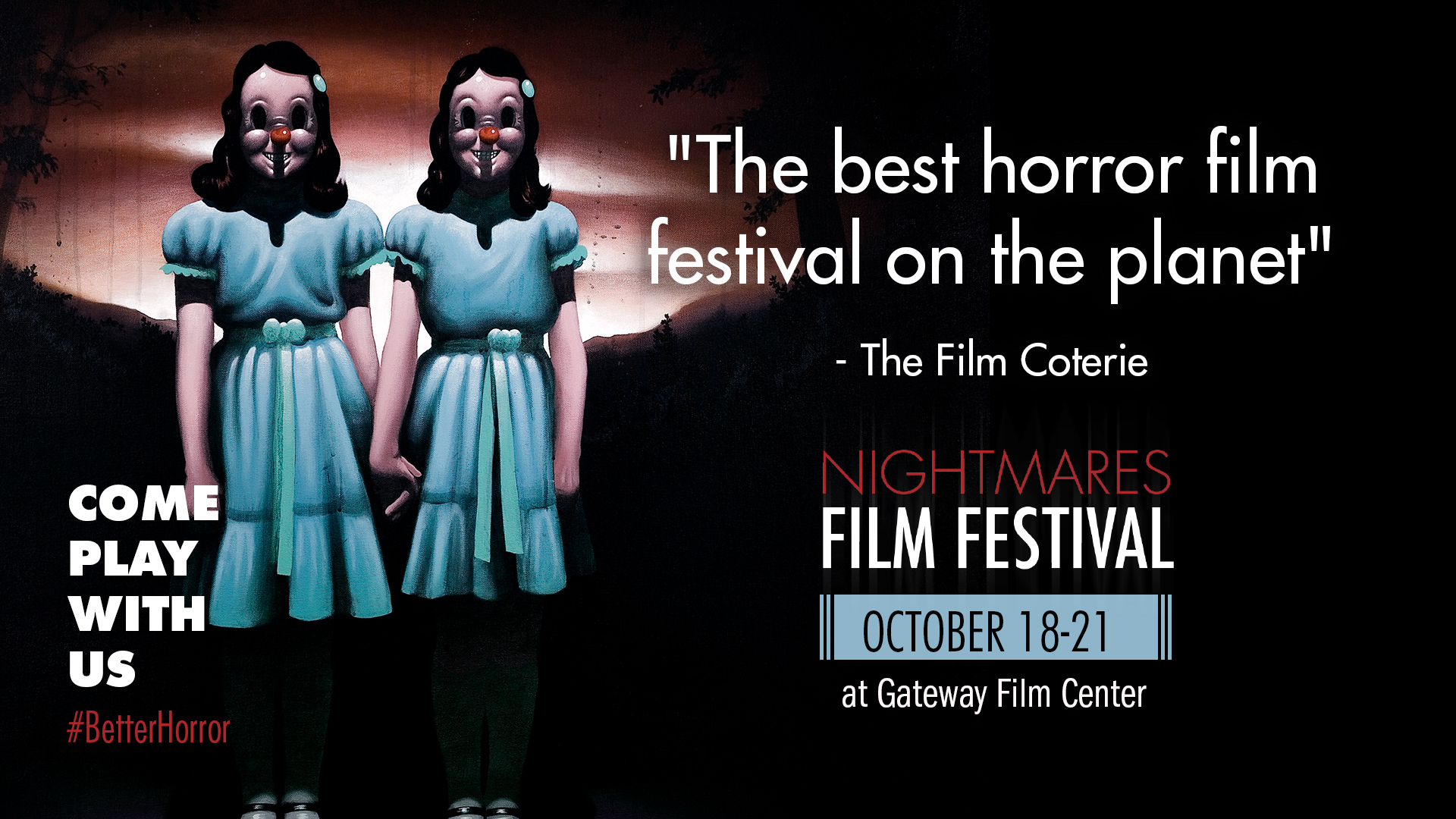
For horror fans, Christmas has come three months early — in the form of the Nightmares Film Festival 2018 program, presenting 24 features and 164 shorts over the four-day event running Oct. 18-21 at Gateway Film Center in Columbus.
True to its “#BetterHorror” motto, the program is jammed top to bottom with a mix of premier genre films from around the globe. Across the 188 films, there are dozens of world and North American premieres, a short accompanied by live in-theater music, projects from genre favorites, a Stephen King block and even a new documentary section.
“We’re on a never-ending, worldwide quest to discover the films that are reshaping the boundaries of horror — bold voices, new visions of terror, films that haunt you,” said co-founder and programmer Jason Tostevin. “That’s how we build every Nightmares, and this may be our best lineup yet.”
The features lineup is stacked with the world premieres of some of horror’s most anticipated new movies, including white-knuckle thriller The Final Interview from Fred Vogel (Toetag Pictures, August Underground); twisted kidnap nightmare The Bad Man from Scott Schirmer (Found, Harvest Lake); ‘80s-style horror anthology Skeletons in the Closet from Tony Wash (The Rake); and paranoia-fueled apocalypse tale Haven’s End from Chris Etheridge (Attack of the Morningside Monster).
North American feature debuts include The Head from the director of ThanksKilling, about a medieval monster hunter; Christmas horror-comedy The Night Sitter; action-horror creature feature Book of Monsters; and mistaken-identity comedy-thriller Kill Ben Lyk.
Horror legend Bill Lustig will open the festival with a brand new 4K restoration of his classic, Maniac. New cult director Jason Trost (The FP) will attend with The FP 2: Beats of Rage.
Nightmares also continues its tradition of presenting one of the top genre shorts programs in the world. This year’s short films include horror, thriller, midnight and horror-comedy blocks playing throughout the festival.
The festival also introduces its Recurring Nightmares section this year, a category that showcases the newest shorts by festival alums.
The fest’s legendary Midnight Mindfuck block also returns. The section, called “one of the most dangerous and challenging programs at any festival” (The Film Coterie), will present Trauma, a harrowing tale grounded in the darkest parts of Chilean history, and La Puta es Ciega (The Whore is Blind), a surreal and violent exploration of the streets of Mexico.
“Every aspect of Nightmares is filtered through the question, what would excite us as fans?,” said co-founder Chris Hamel. “We don’t think there’s a better experience for makers and lovers of horror than the four days of Nightmares Film Festival.”
The 13 finalists in both the Nightmares short and feature screenplay competitions were also announced. The ultimate winner in each competition will be announced at the awards ceremony on Oct. 20.
Nightmares begins Thursday, Oct. 18 at 7 p.m. and runs until Sunday night, Oct. 21. Fans who are ready to make the pilgrimage to Columbus, Ohio will find a limited number of passes still available for the festival at gatewayfilmcenter.org/NFF.
Hope Madden and George Wolf are proud to be among the jury panel for Nightmares Film Festival, one of the top horror film celebrations in the world. It has been the number-one rated genre film festival on submission platform FilmFreeway for 30 consecutive months.
SHORT SCREENPLAY FINALISTS
Boo – Rakefet Abergel
Mourning Meal – Jamal Hodge
Hiking Buddies – Megan Morrison
Living Memory – Stephen Graves
#dead – Derek Stewart
The Burning Dress – Sam Kolesnik
For Good Behavior – Ron Riekki
Air – Dalya Guerin
Invidia – Vanessa Wright
Minotaur – Michael Escobedo
Pancake Skank – Savannah Rodgers
The Callback – Sophie Hood
The Farm – Cate McLennan
FEATURE SCREENPLAY FINALISTS
Patience of Vultures – Greg Sisco
People of Merrit – Adam Pottle
The Shame Game – Greg Sisco
Rise of the Gulon – Matt Wildash
Left Of The Devil – Stephen Anderson
Bartleby Grimm’s Paranormal Elimination Service – Dan Kiely
Kelipot – Seth Nesenholtz
The Coldest Horizon – Jeffrey Howe
Throwback – Rachel Woolley
Resurrection Girl and the Curse of the Wendigo – Nathan Ludwig
Screenwriter Bryce Kass has some interesting thoughts on the case of Lizzie Borden, the American woman suspected in the 1892 ax murders of her father and stepmother. In director Craig William Macneill’s hands, those intriguing ideas receive a proper, historical treatment.
Whether they have merit or not is mainly beside the point.
Lizzie (Chloe Sevigny) was a spinster of 32 when her parents died. She was home at the time, as was the family’s Irish immigrant servant, Bridget Sullivan (Kristen Stewart).
The film does not create a whodunit atmosphere, instead painting a historically realistic picture of some of the details that may have driven Borden to commit the crimes—likelihoods that wouldn’t have been considered in 1892 and have, therefore, rarely been taken into account over the years.
The struggle facing a single woman—economic and otherwise—is handled throughout this film with a desperate grace that elevates most scenes. Sevigny’s wily, lonesome outsider role plays to her strong suit. She shows here, as she did in 2016’s Love & Friendship, a capacity with the delicate language of the entitled.
Kristen Stewart continues to impress, even with a brogue. Yes, she is again morose, conflicted and put-upon, so maybe her range isn’t as strong as I’m suggesting, but she really knows her niche.
The way Macneill and Kass piece together the well-known pieces to this puzzle, this time considering how each may impact and be impacted by the fact that Lizzie was an unmarried woman, is consistently compelling.
Do the filmmakers take their somewhat subversive approach a step further than necessary, moving from honest if overlooked likelihood to vague possibility to “are they doing this just to be lurid”?
They do.
It doesn’t sink the film, though, mainly because Stewart and Sevigny commit to the direction and keep it from feeling exploitive. Plus, it is a fresh and believable take on a very old, oft-told story, so that counts for something.
Nothing scared me as a child the way the story of Hansel and Gretel did. Do you know why? Because it’s fucking scary. But that’s the thing about fairy tales, isn’t it? There was always something—a big, bad wolf or a witch or a wicked stepmother—intended to frighten children. No wonder fairy tales make such rich fodder for horror movies.
Here are our picks for the best fractured fairy tale horror—either those films that reimagine an old fairy tale or those that are clearly inspired by them—recorded live at the Gateway Film Center.
5. Hansel & Gretel (2007)
This is a straightforward reimagining of a classic fairy tale. We’d compare it to Snow White: A Tale of Terror (1997), Deadtime Stories (1986), The Red Shoes (2005) and Tale of Tales (2015).
Director Pil-sung Yim’s reimagining of Grimm’s classic “into the woods” horror upends expectations by putting adults in the vulnerable position and giving children the power.
A young man facing impending fatherhood gets into a car accident next to a deep, dark and mysterious woods. He loses himself and is rescued by a lone little girl with a lantern.
From here, Yim’s sumptuous visuals and eerily joyful tone create the unshakable sensation of a dream—one that looks good but feels awful.
As our protagonist unravels the surreal mystery that’s swallowed him, Yim offers a parable—as fairy tales often do—about the value of children. But don’t let that dissuade you from this seriously weird, visually indulgent gem.
4. Black Swan (2010)
Based on the ballet Swan Lake, which itself is inspired by German folktales The White Duck and The Stolen Veil, Black Swan takes a dark turn.
The potent female counterpoint to Darren Aronofsky’s 2008 gem The Wrestler, Black Swan dances on masochism and self-destruction in pursuit of a masculine ideal.
Natalie Portman won the Oscar for a haunting performance—haunting as much for the physical toll the film appeared to take on the sinewy, hallowed out body as for the mind-bending horror.
Every performance shrieks with the nagging echo of the damage done by this quest to fulfill the unreasonable demands of the male gaze: Barbara Hershey’s plastic and needy mother; Winona Ryder’s picture of self-destruction; Mila Kunis’s dangerous manipulator; Vincent Cassel’s other dangerous manipulator.
The mind-bending descent into madness and death may be the most honest look at ballet we’ve ever seen at the movies.
3. The Lure (2015)
Here’s a great Eastern European take on reimagined Eastern European fairy tales, like Norway’s Thale (2012) and Czech Republic’s Little Otik (2000).
Gold (Michalina Olszanska) and Silver (Marta Mazurek) are not your typical movie mermaids, and director Agnieszka Smoczynska’s feature debut The Lure is not your typical – well, anything.
The musical fable offers a vivid mix of fairy tale, socio-political commentary, whimsy and throat tearing. But it’s not as ill-fitting a combination as you might think.
The Little Mermaid is actually a heartbreaking story. Not Disney’s crustacean song-stravaganza, but Hans Christian Andersen’s bleak meditation on the catastrophic consequences of sacrificing who you are for someone undeserving. It’s a cautionary tale for young girls, really, and Lure writer Robert Bolesto remains true to that theme.
The biggest differences between Bolesto’s story and Andersen’s: 80s synth pop, striptease and teeth. At its heart, The Lure is a story about Poland – its self-determination and identity in the Eighties. That’s where Andersen’s work is so poignantly fitting.
https://www.youtube.com/watch?v=vxhi_3hDUPE
2. Der Samurai (2014)
This film is influenced heavily by fairy tales, especially the concept of the big, bad wolf, as are The Company of Wolves (1984), Big Bad Wolves (2013), and Freeway (1996).
Writer/director Till Kleinert’s atmospheric Der Samurai blends Grimm Brother ideas with Samurai legend to tell a story that borders on the familiar but manages always to surprise.
Jakob, a meek police officer in a remote German berg, has been charged with eliminating the wolf that’s frightening villagers. Moved by compassion or longing, Jakob can’t quite make himself accomplish his. But a chance encounter with a wild-eyed stranger wearing a dress and carrying a samurai sword clarifies that the wolf is probably not the villagers’ – or Jakob’s – biggest problem.
Pit Bukowski cuts a peculiar but creepy figure as the Samurai – kind of a cross between Iggy Pop and Ted Levine. As the cat and mouse game gains momentum, it appears the Samurai is here to upend all of Jakob’s inhibitions by eliminating anyone keeping him from embracing to his primal urges.
Kleinert’s sneaky camera builds tension in every scene, and the film’s magnificent sound design echoes with Jakob’s isolation as well as that of the village itself. And though much of the imagery is connected in a way to familiar fairy tales or horror movies, the understated approach gives it all a naturalism that is unsettling.
1. Pan’s Labyrinth (2006)
Guillermo del Toro’s masterpiece is Influenced visually and logically by fairy tales. It takes us to a fairy tale land but is not set on any existing fairy tale, not unlike Argento’s greatest work, Suspiria (1977), and Jee-woon Kim’s brilliant Tale of Two Sisters (2003).
But honestly, there is nothing on earth quite like Pan’s Labyrinth. A mythical cousin to del Toro’s beautiful 2002 ghost story The Devil’s Backbone, Pan’s Labyrinth follows a terrified, displaced little girl who may be the reincarnation of Princess Moanna, daughter of the King of the Underworld. She must complete three tasks to rejoin her father in her magical realm.
A heartbreaking fantasy about the costs of war, the film boasts amazing performances. Few people play villains—in any language—as well as Sergi Lopez, and Doug Jones inspires terror and wonder in two different roles. But the real star here is del Toro’s imagination, which has never had such a beautiful outlet.
A hallucinogenic fever dream of social, political and pop-culture subtexts layered with good old, blood-soaked revenge, Mandy throws enough visionary strangeness on the screen to dwarf even Nicolas Cage in full freakout mode.
Opening with bits of a Ronald Reagan speech about traditional values and a knock-knock joke about Erik Estrada, director/co-writer Panos Cosmatos drops us in 1983 as Red (Cage) and Mandy (Andrea Riseborough) live a secluded, lazily contented life somewhere in the Pacific Northwest.
That contentment is shattered by a radical religious sect under the spell of Jeremiah (Linus Roache), who takes a liking to Mandy when the group’s van (of course it’s a van!) passes her walking on a country road.
Jeremiah’s followers return to abduct Mandy but only leave Red for dead, a move they won’t live long to regret.
Like Cosmatos’s 2010 debut Beyond the Black Rainbow, Mandy is both formally daring and wildly borrowed. While Black Rainbow, also set in 1983, shines with the antiseptic aesthetic of Cronenberg or Kubrick, Mandy feels more like something snatched from a Dio album cover.
Cosmatos blends ingredients from decades-spanning indie horror into a stew that tastes like nothing else.
Horror of the late 60s and early 70s saw hippies terrorizing good, upright citizens, perpetrating cult-like nastiness. Thanks to Charles Manson, society at large saw the counterculture as an evil presence determined to befoul conventional, Christian wholesomeness.
With Mandy, it’s as if the 70s and 80s have collided, mixing and matching horror tropes and upending all conceivable suppositions. In this case, zealots consumed with only the entitlement of their white, male leader wreak havoc on good, quiet, earth-loving people. The Seventies gave us some amount of progress, civil justice and peace that the Eighties took back under the guise of decency.
The fact that Red wears a 44 on his tee shirt and calls one baddie a “snowflake” shouldn’t be disregarded as coincidence.
But that’s not what you want to know. You want to know this: How bloody is it? And how insane is Nic Cage?
It’s plenty bloody (sometimes comically so), and though Cage is methodically unhinged, what Cosmatos is dealing makes Nic seem damn near understated.
Neither area disappoints, although the dreamlike pace leading up to the violence and the vividly Heavy Metal-esque visuals – including some animation and end credit shot- exacerbates the feeling that you, and quite possibly the characters, are only hallucinating all of this lunacy.
When we were four, my sister and I wandered off at the Toledo zoo. Nuns found us and reunited us—via lost and found? I don’t remember—with the larger Madden clan. And that’s the thing about nuns: they are either entirely wonderful or entirely terrifying. There is no middle ground.
Corin Hardy knows that. With that knowledge, The Hallows director crafts his little part of The Conjuring universe with a history lesson on that scary sister, The Nun.
His film, written by Gary Dauberman (Annabelle, It) from a story by James Wan, takes us back to the 1950s when the Vatican called upon a priest with a specific set of skills. Fr. Burke (Demián Bichir) investigates the suicide of a cloistered nun in remote Romania, bringing along a novitiate nun, Sister Irene (Taissa Farmiga – little sister to Conjuring star Vera).
You think nuns are creepy? Well, they fit right in at crumbling old Romanian abbeys. Hardy and cinematographer Maxime Alexandre make glorious use of the location, and then create richly shadowed castle interiors suitable for Dracula himself.
Hardy throws any number of really eerie visuals onscreen as Farmiga’s novitiate (a nun who hasn’t yet taken her final vows) descends into the demonic labyrinth, while Father Burke fights demons (personal and literal) just outside the gate.
Velvety shadows and jump scares, medieval witchery and the now-quaint idea that the Catholic Church can save us—Hardy balances all these items with nostalgia, humor and a fun dose of Conjuring universe odes.
Farmiga brings enough salt-of-the-earthiness with her innocence to make Sr. Irene relatable. Bichir seems less suited to the role of holy man, but as an investigator who smells something rotten, he works out well.
The real treat is Jonas Bloquet as Frenchie, the French-Canadian transport living in Romania who can carry a torch into catacombs with the best of them. He’s funny, his scenes keeping the film from veering into committing the sin of taking itself too seriously and losing its audience.
Where the film comes up short is in imagination. Mainly, it bears far too strong a resemblance to another Irishman’s Catholic horror, Devil’s Doorway, which follows two priests investigating strange phenomenon at a convent only to find something sinister in the tunnels beneath.
Though Devil’s Doorway lacked the visual flair, budget and humor of The Nun, it sidestepped the nostalgia that casts the Catholic Church in such unvarnished light, so it felt a bit more relevant and less disposable.
Still, with a slight, sometimes silly storyline and an awful lot of atmosphere, Hardy manages an entertaining if forgettable 90 minutes.