Couple of flicks worth your time coming home this week. One you probably saw, one you probably didn’t. Here is the skinny.
Click the film title for the full review.
Vice

Rust Creek
(DVD)

Couple of flicks worth your time coming home this week. One you probably saw, one you probably didn’t. Here is the skinny.
Click the film title for the full review.
(DVD)
by Hope Madden
I am done with the final girl.
You know why? Because it’s a diminishing title.
Laurie Strode, Ellen Ripley and Sidney Prescott were not final girls. They were heroes.
Laurie Strode, Ellen Ripley and Sidney Prescott were the point of view characters for their films, not random females we were surprised to see survive. Had any of these three perished, that would have been the surprise.
The phrase “final girl” suggests that, from a smorgasbord of victims, one female emerges victorious. How does she do it?
1. She is smarter than the rest and outwits the killer.
2. She is more virtuous than the rest, so fate is on her side.
3. She endures pain, grief, terror and hardship and comes out the other side a stronger person.
If those are not the steps in a hero’s quest, I don’t know what are. (No, seriously, I don’t know what the steps are in a hero’s quest. I should probably have looked it up, but still, I feel confident they’re similar.)
The characteristics of the final girl are simply the characteristics of the hero, and her perspective is the audience’s perspective.
She’s the lead.
To disregard this and assume that this would-be victim didn’t die because she holds in her bosom certain character traits is to actually belittle the character. John McClane outwitted terrorists, showed integrity and grit, and endured a ton of hardship in his bare feet. Is he not the hero?
What about Schwarzenegger in Predator? Not a lot of dudes made it out the other side of that one – does that make Arnold the Final Boy?
And how about Captain America? Smart, virtuous, endurance – hell, he’s probably even a virgin.
Are you here to tell me The Cap is not a hero?
So what’s the difference? Why label the badass who sends Pinhead back to hell nothing more than the last girl onscreen? Why does’t she get to be the hero? Hasn’t she proven herself? I’d like to see you try your luck with Pinhead.
I’m overgeneralizing, you think. Are there heroes who do not carry with them these vital characteristics, you wonder.
No. Those damaged, dangerous and layered leads are anti-heroes. Someday when the slutty Goth girl with a heroin jones is the last one standing, then the slasher will finally have its anti-hero. But for now, Jason and Pinhead and Leatherface and Michael Myers and all of them are undone by the hero.
Of course.
by Rachel Willis
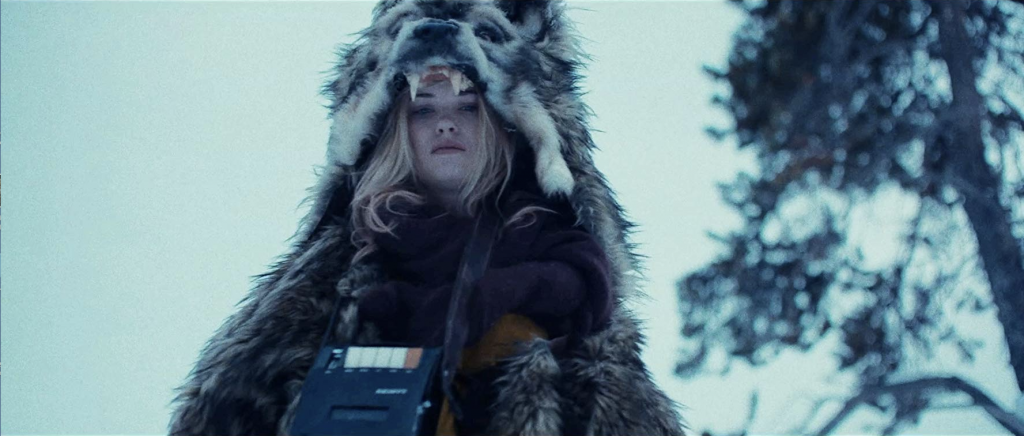
Still reeling from the loss of her friend, Grace, Aubrey (Virginia Gardner) finds herself facing the end of the world in director A.T. White’s film, Starfish.
After breaking into Grace’s apartment in an attempt to connect to her friend, Aubrey hears a walkie-talkie spring to life. The static coming from the device implies someone might be listening, and Aubrey is momentarily compelled to speak to whoever is on the other end. This is our first hint that not all was well in Grace’s life, with more hints coming before the film takes a deep dive into its world-ending scenario.
There’s a mystery involved that’s best not spoiled, and it isn’t always clear what’s real and what’s imagined, but it works well to us engaged, and haunting images feed the increasing unease.
As a metaphor for grief, Starfish is a curious, interesting take. Aubrey moves through the stages of grief while, outside the apartment, the world is falling apart. She spends time in an apathetic cycle, her only companions a box turtle and a couple of jellyfish (who eat desiccated starfish, apparently). Aubrey’s anger manifests in violent ways, and she’s utterly alone with her sorrow.
Gardner does an excellent job conveying the gauntlet of emotions roiling inside her character. Her performance is easily the film’s strongest element.
There are also a number of exciting and tense scares, and the effectively oppressive score amplifies the more terrifying elements. However, where the score is effective at producing tension, the soundtrack doesn’t always fit the mood. Some of the song choices are out of place. While many of them are meant to represent Aubrey and Grace’s friendship, they disrupt the film’s intensity.
The film takes risks. Some of them work, and some of them don’t, but it’s always intriguing to watch something different, something that challenges us to think outside the box on what a movie can be.
by Hope Madden
About a month ago the film The Prodigy came out, and promptly disappeared. Lee Cronin’s Irish horror The Hole in the Ground treads similar territory: a mother looks at her young son and wonders with terror who it is she sees.
Where Prodigy took the path most ludicrous, Cronin mines a parent’s disappointment, grief, loneliness and alienation for more poignant results.
Sara (Seána Kerslake), along with her bib overalls and young son Chris (James Quinn Markey), are finding it a little tough to settle into their new home in a very rural town. Chris misses his dad. Sara is having some life-at-the-crossroads anxiety.
Then a creepy neighbor, a massive sink hole (looks a bit like the sarlacc pit) and Ireland’s incredibly creepy folk music get inside her head and things really fall apart.
I grew up listening to nothing but Irish music. If you don’t think it’s creepy, you aren’t listening properly.
In execution, The Hole in the Ground is less The Prodigy and more of a cross between the masterpiece of maternal grief, The Babadook, and another Irish horror of changelings and woodland spirits, The Hallow. (Plus a surprise third act inspiration I won’t mention for fear of spoilers.)
You look at your child one day and don’t recognize him or her. It’s a natural internal tension and a scab horror movies like to pick. Kids go through phases, your anxiety is reflected in their behavior, and suddenly you don’t really like what you see. You miss the cuter, littler version. Or in this case, you fear that inside your beautiful, sweet son lurks the same abusive monster as his father.
Cronin’s subtext never threatens his story, but instead informs the dread and guilt that pervade every scene. Performances are quite solid and the way folklore – in tale and in song – is woven through the story creates a hypnotic effect.
If you’re a horror fan looking to celebrate the season, here’s a more authentic way to do it than watching Leprechaun for the 15th time.

Love is in the air! God help us, especially those who are throwing themselves into the love game. It’s horrifying, right? Scary, vulnerable, awkward, and really bloody once the power tools come out.
Horror filmmakers know a good subject when they see one. Here are our five favorite films focused on the quest to find and secure love.
Aussie photographer Clare (Teresa Palmer, better than she’s ever been) is looking for some life experience. She backpacks across Europe, landing for a brief stay in Berlin where she hopes to make a human connection. Handsome Berliner Andi (Max Riemelt) offers exactly the kind of mysterious allure she wants and they fall into a night of passion.
What follows is an incredible combination of horror and emotional dysfunction, deftly maneuvered by both cast mates and director Cate Shortland. The mental and emotional olympics Palmer goes through from the beginning of the film to the end showcase her instincts for nuanced and unsentimental performance. Clare is smart, but emotionally open and free with her own vulnerability. The way Palmer inhabits these characteristics is as authentic as it is awkward.
Even more uncomfortable is the shifting relationship, the neediness and resilience, the dependency and independence. It’s honest in a way that is profoundly moving and endlessly uncomfortable. Riemelt matches Palmer’s vulnerability with his own insecurity and emotional about faces. The two together are an unnerving onscreen pairing.
Wes Anderson with a Black Mass fetish and a feminist point of view, Anna Biller wrote/directed/produced/edited/set-designed/costume-designed/music-supervised this seductive sorcery headtrip.
Elaine (Samantha Robinson – demented perfection) needs a change of scenery. Driving her red convertible up the seacoast highway toward a new life in northern California, her troubles – and her mysteriously dead ex-husband – are behind her. Surely, with her smart eyeshades and magic potions, she’ll find true love.
Expect a loose confection of a plot, as Elaine molds herself into the ideal sex toy, winning and then tiring of her trophies. This allows Biller to simultaneously reaffirm and reverse gender roles with appropriately wicked humor.
In 2004, Belgian writer/director Fabrice Du Welz released the exquisite Calvaire, marking himself a unique artist worth watching. Ten years later he revisits the themes of that film – blind passion, bloody obsession, maddening loneliness – with Alleluia. Once again he enlists the help of an actor who clearly understands his vision.
Laurent Lucas plays Michel, a playboy conman who preys upon lonely women, seducing them and taking whatever cash he can get his hands on. That all changes once he makes a mark of Gloria (Lola Duenas).
Du Welz’s close camera and off angles exaggerate Lucas’s teeth, nose and height in ways that flirt with the grotesque. Likewise, the film dwells on Duenas’s bags and creases, heightening the sense of unseemliness surrounding the pair’s passion.
Duenas offers a performance of mad genius, always barely able to control the tantrum, elation, or desire in any situation. Her bursting passions often lead to carnage, but there’s a madcap love story beneath that blood spray that compels not just attention but, in a macabre way, affection. Alleluia is a film busting with desperation, jealousy, and the darkest kind of love.
Writer/director/Tasmanian Sean Byrne upends high school clichés and deftly maneuvers between angsty, gritty drama and neon colored, glittery carnage in a story that borrows from other horror flicks but absolutely tells its own story.
Brent (Xavier Samuel) is dealing with guilt and tragedy in his own way, and his girlfriend Holly tries to be patient with him. Oblivious to all this, Lola (a gloriously wrong-minded Robin McLeavy) asks Brent to the end of school dance. He politely declines, which proves to be probably a poor decision.
Byrne quietly crafts an atmosphere of loss and depression in and around the school without painting the troubles cleanly. This slow reveal pulls the tale together and elevates it above a simple work of outrageous violence.
Inside Lola’s house, the mood is decidedly different. Here, we’re privy to the weirdest, darkest image of a spoiled princess and her daddy. The daddy/daughter bonding over power tool related tasks is – well – I’m not sure touching is the right word for it.
The Loved Ones is a cleverly written, unique piece of filmmaking that benefits from McLeavy’s inspired performance as much as it does its filmmaker’s sly handling of subject matter.
https://www.youtube.com/watch?v=olB5Wrg8Sxc
The prolific director Takashi Miike made more than 70 movies in his first 20 or so years in film. Among the best is Audition, a phenomenally creepy May/December romance gone very, very wrong.
Audition tells the story of a widower convinced by his TV producer friend to hold mock television auditions as a way of finding a suitable new mate. He is repaid for his deception.
Nearly unwatchable and yet too compelling to turn away from, Audition is a remarkable piece of genre filmmaking. The slow moving picture builds anticipation, then dread, then full-on horror.
By the time Audition hits its ghastly conclusion, Miike and his exquisitely terrifying antagonist (Eihi Shina) have wrung the audience dry. She will not be the ideal stepmother.
by Hope Madden
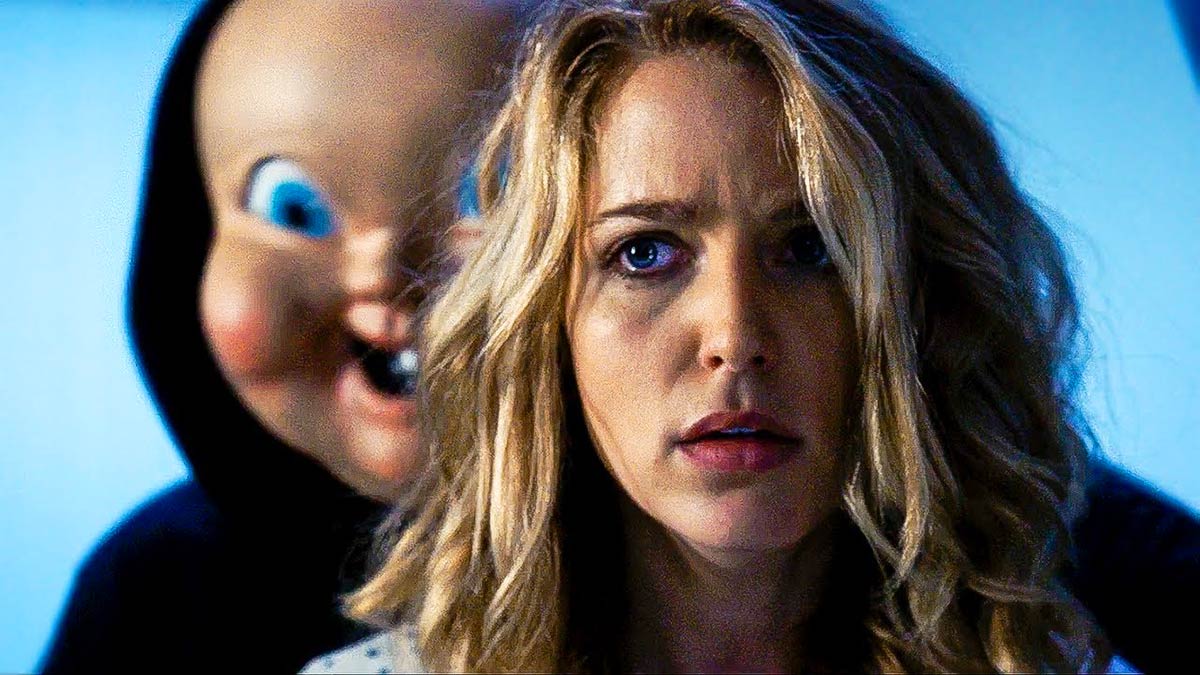
Two years ago, writer/director Christopher Landon’s Happy Death Day managed the unexpected. It took an immediately tiresome premise—Groundhog Day meets Scream—and generated enough audience good will to entertain.
This was mainly thanks to Jessica Rothe, whose performance was funny enough to be simultaneously likable and detestable, and whose character arc mostly felt earned. (Bill Murray’s are big shoes to fill.)
Well, Rothe is back for a second helping of death day cake, as is Landon, who again writes and directs. Can the pair keep the story fresh for a sequel?
Why, no. Thanks for asking.
Where the original was a funny slasher with a SciFi bent, the sequel is a standard Eighties romcom with an occasionally morbid sense of humor. Think Real Genius, only dumber and more tedious.
Or Zapped. Remember Zapped?
Tree (Rothe) believes she’s broken free of her murderous time loop by killing the person who was out to kill her—and learning some hard-won life lessons in the meantime.
She was wrong, though, because the truth is that her boyfriend Carter’s (Israel Broussard) weird roommate Ryan (Phi Vu) has gotten all Timecrimes in the college lab and that’s what caused the loop. In fact, it’s causing another loop into a parallel dimension.
Everyone from the original is back and almost the same as last time (because this is a parallel universe). Any new character who is not white joins Ryan in the lab. Nerds – another sad Eighties theme that won’t stay dead.
Slapstick humor (Oh, this blind French thing is enough to make your brain bleed) and dumbfounding gaps in logic follow. A list of what does not follow: tension, horror, laughter.
Seriously, though, if you haven’t seen Nacho Vigalondo’s 2007 mindbender Timecrimes, you should definitely do that instead of going to HDD2U.
Oh! You know what else is great in that SciFi/time loop/horror neighborhood? The Endless.
The point is, if you are in the mood for some genre bending SciFi fun, you won’t find it here.

by Hope Madden
There’s a lot that shouldn’t be said about Piercing, Nicolas Pesce’s follow up to his glorious 2016 horror, Eyes of My Mother.
Because the film’s tension relies on power exchanges, surprises and averted climaxes, the less you know about how the story progresses, the better.
Suffice it to say that new father Reed (Christopher Abbott), fighting a serious urge to stab his infant with an ice pick, concocts a plan. It involves that ice pick, a “business trip” out of town, and a prostitute (Mia Wasikowska).
The amateur murderer works out the perfect crime, practicing conversations and actions (decorated by Pesce’s remarkable knack for unsettling sound effects), only for the cosmos—or the filmmaker—to wreck those plans.
Abbott’s flat yet sympathetic would-be murderer helps Pesce achieve a peculiar, semi-comic tone, but it’s Wasikowska, playing wildly against type, who carries this film. The two share a mad and maddening chemistry, and even during moments of somewhat forced dialog, their commitment and spark keep you enthralled and guessing.
The film is an exercise in thwarted expectations wrapped up in voyeurism and lurid imagery.
The influences here are dizzying. Ryu Murakami’s source material obviously evokes his own Audition (director Takashi Miike’s classic in power shifting and poor romantic choices). The opening act wades through more modern indie sensibilities, but Pesce quickly overwhelms that flat grit with grindhouse thriller flair before simply succumbing to giallo (Goblin tuneage and all).
This drunken meandering through styles fits the narrative that forever questions the reality or unreality of each situation. Like the cityscape miniatures Pesce uses as the adventure’s out-of-town backdrop, Reed’s whole experience could simply be cool -looking but pretend.
Are those flashbacks or nightmares? Does Reed have a haunted past leaking its way into his present, or is he simply a psychotic hoping to overcome his problem by submitting to it just this once?
Pesce toys with our commitment to Reed’s reality, questionable from the moment his infant halts a crying jag to tell his father, in a demonic voice, “You know what you have to do.”
It’s not a film that will satisfy a lot of viewers, it’s more of a fascinating and forgettable sketch. Still, at under 90 minutes, it’s a weirdly fun little indulgence won’t hurt you. Well, not too much.
It’s that time of year! The Academy celebrates the best work in the industry and we celebrate the early, mainly terrible work of those same nominees. It’s Skeletons in the Closet season, people!
We will let you know up front that, because Sam Rockwell and Bradley Cooper have already been subjects of the program, we will not be discussing Clown House (Rockwell’s feature debut) or Midnight Meat Train (or My Little Eye, for that matter, though Cooper appears in both).
And let us also congratulate nominee Willem Dafoe for managing to make several decent horror films, and garnering his first Oscar nomination for his work in one great one—Shadow of the Vampire.
But enough about good movies. Here are the stinkers.
Dial up the full podcast, co-hosted by Senior Aussie Correspondent (and host of Golden Spiral Media’s Rewatch podcast), Cory Metcalfe.
Viggo Mortensen has been a working actor for more than 30 years, which means bones in that there closet. There was the questionable Psycho remake, and his version of Lucifer in Christopher Walken’s dark angel camp classic Prophesy (featured on the 2018 Skeleton’s episode).
Let’s focus on his place with the inbred cannibal clan the Sawyers in Leatherface: Texas Chainsaw Massacre III. Directed by Jeff Burr (From a Whisper to a Scream, Stepfather II, Puppet Master 4, 5 and Blitzkrieg Massacre), it’s a competently made if inspirationally dry episode.
Viggo plays Tex, and unquestionably outshines all the rest of the talent in the film. He’s sneaky, snaky, sexy, and he loves his mama.
There is something to be said for this oh-so-Eighties adventure. Steve Miner (Friday 13th 2 & 3, H20, Lake Placid) directs from a screenplay by David Twohy (Critters 2, Pitch Black, The Perfect Getaway). The film follows witch Julian Sands 300 years into the future to 1989 USA, where he’s followed by witchhunter Redfern (Oscar nominee Richard E. Grant).
There’s nothing especially interesting about the film, and Lori Singer could not be more annoying in the lead, but both Sands and Grant elevate the material. The two veteran low-budget, crowd-pleasing horror filmmakers know how to give you something.
The flight sequences are too lame—in fact, all the FX promise to make you cringe—and much of the humor dates horrifically. But Grant commits to his character and Sands’s wicked grin makes up for a lot of plot holes.
Boy, there were high hopes for this bloated embarrassment when it came out back in ’96. Director Stephen Frears re-teamed with his Dangerous Liaisons screenwriter and stars John Malkovich and Glenn Close for a retelling of the old Jekyll and Hyde tale.
At the center, a plucky young housemaid named Mary (Julia Roberts).
Roberts’s career had begun its slide by this point, and this movie did not help things because she is just God awful. Oh my word, that accent.
Eight-time Oscar nominee Glenn Close plays Mrs. Farraday, proprietress of a brothel. Boasting gold tooth, smeared lipstick and sneer, Close camps it up with an accent a bit more bizarre even than Roberts’s.
There is so much wrong with this movie—its leaden pace, its inconsistent tone, its sense of self-importance, the fact that we’re supposed to believe no one realizes both guys are Malkovich, the idea of Malkovich in a sexy role, Roberts performance in literally every scene—it’s hard to know where to start.
Maybe just don’t.
As the eco-terror flick from the Seventies opens, a handsome and manly brunette with no facial hair canoes through a swamp. He’s so manly!
Hey wait, that beardless brunette is Sam Elliott!
The manly Picket Smith (Elliott) ends up stranded on the vacation island of a wealthy family led by Ray Milland. He’s a dick. The frogs know it.
We get it, rich people who believe men are meant to rule the world will be the downfall of the planet. (If we didn’t know it in 1972, we know it now.) But couldn’t these scenes be briefer? Couldn’t there be any action at all?
Frogs? Seriously?
Holy cow, this movie is bad.
And we had more than a few to choose from, because Rachel Weisz makes a lot of movies. The Mummy was not good. The Mummy Returns was worse. Constantine—yikes. Even Dream House, which had all the earmarks of a decent flick, chose not to be.
But Death Machine, which showcases the young thespian for maybe 45 seconds, sucks right out loud. Written and directed by Stephen Norrington (Blade, League of Extraordinary Gentlemen), it follows a young executive (Ely Pouget) as she tries to end the evil inventing of a mad genius (Brad Dourif).
Weisz plays Junior Executive, and her scene is the one that doesn’t blow.
Dourif is so wildly miscast as the long haired, heavy metal misfit that you almost overlook the idiocy of every moment of screen time.
Almost.
by Hope Madden
How does one create a Patrick Bateman?
On its surface, Pledge may appear to be little more than a competently made fraternity horror in the tradition of Skulls. It is a cautionary tale about hazing taken to its sadistic (if likely logical) extreme.
But director Daniel Robbins’s latest horror show, from a tight script by co-star Zack Weiner, digs into issues bigger than tribe mentality. Pledge is not just about how far you’d go to belong. It asks about compliance, cowardice, and the cost and definition of success.
Weiner plays Alex. Alex is a college freshman and a nerd. He’s joined by buddies Ethan (Phillip Andre Botello) and Justin (Zachery Byrd), the three forming a trio of losers looking for acceptance. As the day of fraternity pledge party embarrassments wears on, a pretty girl shows up from nowhere and invites the buddies to a different kind of party.
Who can say too “good to be true”? Well, anybody who’s ever seen a movie, but Pledge has some surprises hiding behind those kegs.
The film’s first obvious strength is the cast. Each of the primary trio of actors delivers a believable outcast, and their chemistry feels fresh and honest enough that you never doubt their actions.
In fact, all the performances are quite solid—the good guys occasionally unlikeable, the bad guys sometimes teetering on sympathetic—and the writing is sharp.
Once Robbins has you rooting for his sad sack heroes, the film works well enough as a straightforward exercise in bloodlust and torture. And nasty ass soup.
But where Weiner’s savvy script and Robbins’s sly direction really excel is in digging into this predictable plot (see Hostel, American Werewolf in Paris and any number of other “hot chick invites doofus guys to a party at their own peril” subgenre) to find an ugly picture of American privilege.
Pledge is no masterpiece. It is, however, a tightly packaged, insightful and mean little flick.
Science Fiction and Horror are cousins—creepy, often slimy cousins. Cousins with pustules, often.
There are so many utterly brilliant options to pick through that our omissions are bound to frustrate and upset, but whether your horror comes from the lab, from space or from the space/time continuum, when you watch these five, your neighbors will hear you scream.
Director Dono Siegel was the first filmmaker to bring Jack Finney’s Cold War nightmare to the screen. He wouldn’t be the last, maybe not even the best, but what he did with this eerie alien tale tapped into a societal anxiety and quickly became one of the most influential and terrifying films of its time.
Doc Miles Bennell (Kevin McCarthy) is just home from a short trip when he’s inundated by patients swearing their loved ones are not their loved ones at all. Sure, they look the same and have all the same skills and memories, but there’s no warmth, no passion.
With this, the fear that our very nation could be overtaken by an outside force – Russians, say, for terrifyingly immediate sake of argument – working its way through not by force, but by quietly taking over each and every person in one town, then spreading from town to town to town.
It’s the kind of insidious evil that fuels contagion horror, infestation horror, even demonic horror. But Invasion of the Body Snatchers spoke to a society’s deepest fears and became a touchstone for all SciFi to follow it.
After a couple of interesting, if un-medical films, the great David Cronenberg made a triumphant return to the laboratory of the mad scientist in his most popular film to date.
But it’s not just Cronenberg’s disturbed genius for images and ideas that makes The Fly fly; it’s the performance he draws from Jeff Goldblum.
Goldblum is an absolute gift to this film, so endearing in his pre-Brundlefly nerdiness. He’s the picture’s heartbeat, and it’s more than the fact that we like his character so much. The actor also performs heroically under all those prosthetics.
He and Geena Davis make the perfect pair, with their matching height and mullets, and their onscreen chemistry does give the film a level of human drama traditionally lacking from the Cronenberg canon. Atop that, there’s the transformation scene in the bathroom – the fingernails, the pustules – all classic Cronenberg grotesquerie, and still difficult to watch.
https://www.youtube.com/watch?v=7BzwxJ-M_M0
This one is nutty, and absolutely required viewing for anyone with an interest in space/time continuum conundrums.
Writer/director/co-star Nacho Vigalondo (Colossal) mocks our desire for control and our fear of the doppelganger with a very quick and dirty trip through time. So much can go wrong when you travel just one hour backward. The less you know going in, the better.
An always clever experiment in science fiction, horror and irony, Timecrimes is a spare, unique and wild ride.
John Carpenter’s remake of the 1951 SciFi flick The Thing from Another World concocts a thoroughly spectacular tale of icy isolation, contamination, and mutation.
A beard-tastic cast portrays a team of scientists on expedition in the Arctic who take in a dog. The dog is not a dog, though. Not really. And soon, in an isolated wasteland with barely enough interior room to hold all the facial hair, folks are getting jumpy because there’s no knowing who’s not really himself anymore.
This is an amped up body snatcher movie benefitting from some of Carpenter’s most cinema-fluent and crafty direction: wide shots when we need to see the vastness of the unruly wilds; tight shots to remind us of the close quarters with parasitic death inside.
The story remains taut beginning to end, and there’s rarely any telling just who is and who is not infected by the last reel. You’re as baffled and confined as the scientists.
Director Ridley Scott’s other masterpiece, Alien, traps a crew aboard a rickety, dark, workingman’s spacecraft with the coolest monster perhaps ever.
After a vagina-hand-sucker-monster attaches itself to your face, it gestates inside you, then tears through your innards. Then it grows exponentially, hides a second set of teeth, and bleeds acid. How much cooler could this possibly be?
Compare that to the crew, and the competition seems unreasonably mismatched. The sunken-chested Harry Dean Stanton, the screechy Veronica Cartwright, the sinister Ian Holm, the mustachioed Tom Skerritt, even the mulleted Sigourney Weaver – they all seem doomed before we even get to know them.
Much ado has been made, rightfully so, of the John Hurt Chest Explosion (I loved their early work, before they went commercial). But Scott’s lingering camera leaves unsettling impressions in far simpler ways, starting with the shot of all those eggs.