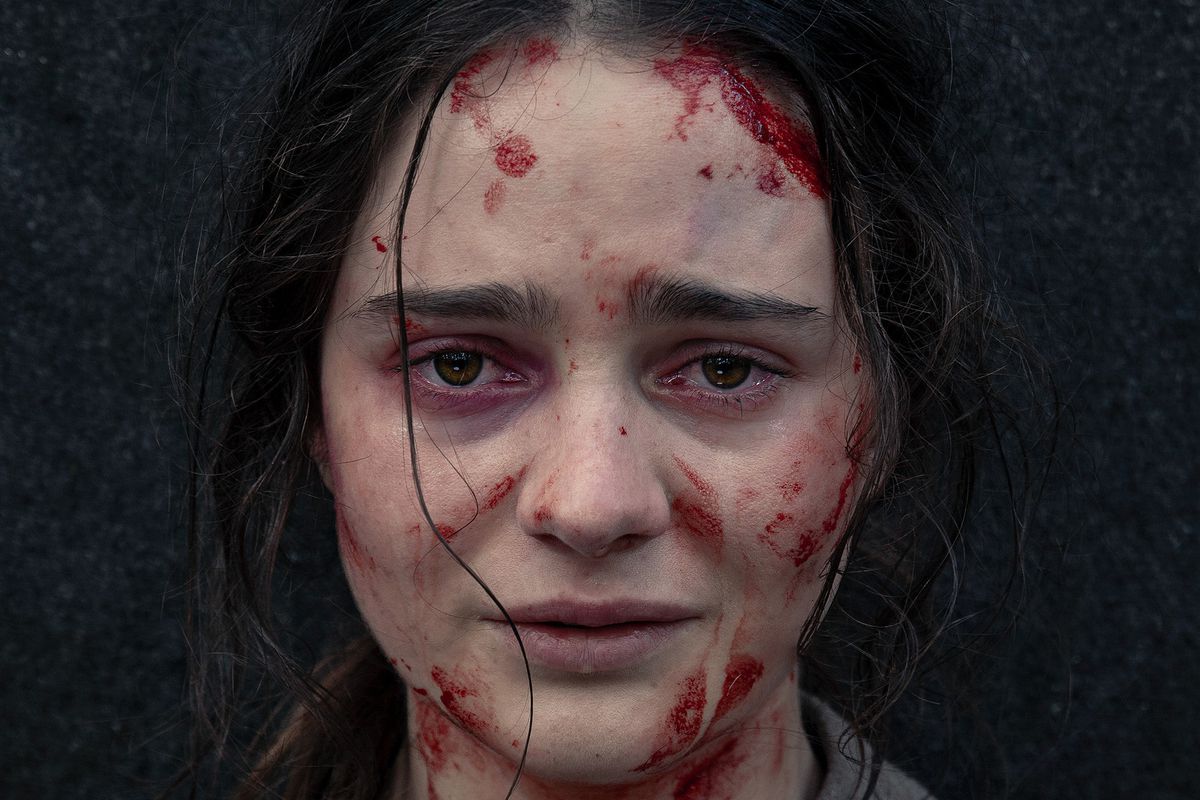
Fast, brave and baffling, Tilman Singer’s experimental demon thriller Luz enters hot, exits quickly and leaves you puzzled. In a good way.
The film begins with a nightmarish vision leeched of color, as battered young cabbie Luz (a letter-perfect Luana Velis) tumbles into a banal police station lobby shouting about how the receptionist wants to live his life. Soon she’s seated in an equally bland hallway, mumbling blasphemies to herself in Spanish as two German police officers—one who doesn’t understand and one who refuses to translate—look on.
Meanwhile, in a dive bar across town…
It makes little sense to summarize the plot because the fairly slight premise unfolds in front of you, offering as many questions as answers. To spoil that seems pointless.
There is something fascinating happening in this film, though, and Singer has no real sense of urgency about clarifying what that is. Seedy, lifeless places become environments where those as baffled as we bear witness—or don’t—to a patient if tenacious courtship of sorts.
It all begins in dehumanizing but fascinating wide angle shots. Slowly, clip by clip, Singer draws us in closer to the diabolical unfolding in our midst. It’s the deconstruction of a possession film, a bare-bones experimental feature that hangs together because of its clever turns, solid performances and Singer’s own technical savvy with sound design.
Running about 70 minutes and boasting no more than 6 speaking roles, Luz is surrealism at its most basic, storytelling at its sparest.
Viscosity! That’s the name of the game today, and it’s a messy, messy game to play.
Today we slip and slide through the sloppiest movies we could find as we count down the most inspired use of body fluids in horror. The whole mess is recorded live at Gateway Film Center, so please listen.
And don’t forget to bring a towel!
5) Don’t Breathe (2016)
Fede Alvarez’s magnificent home invasion horror made this list, beating out the projectile vomit of The Exorcist, the melting bums of Street Trash, the medical what-not of Re-Animator and the viscosity of other films. How did it do it? It was not because of volume.
It’s really just the one scene.
The one with a turkey baster.
The one with the single hair.
Ew.
4) Dead Alive (1992)
The list doesn’t exist without Peter Jackson, let’s be honest. Any old horror director can work with blood. Jackson certainly can. That party scene? The arterial spray poor Lionel Cosgrove causes with his lawnmower is truly a site to behold.
But what Jackson can do with pus and a bowl of custard? Chef’s kiss right there.
3) We Are the Flesh (2016)
Emiliano Rocha Minter loves him some taboos. No one bursts through taboos like him – well, Takashi Miike, maybe.
He also really loves body fluids. We mean all the body fluids. His 2016 social commentary swims them all. All all all.
Taboos and body fluids. Sloppy!
2) Evil Dead (2013)
Peter Jackson’s Dead Alive held the record for most blood in a film – 1000 gallons – until 2013.
It’s a record Sam Raimi’s earlier Evil Dead franchise efforts had once held, but Fede Alvarez (making his second appearance on this list!) drenched all records when he poured out 50,000 gallons of fake blood in a single scene.
Allegedly It Chapter 2 tops that, but I don’t know how you out-soak a torrential downpour of blood.
Gozu (2003)
Who’s not afraid of taboos? Well, the great and prolific Takashi Miike has no fear of body fluids, either. Hell, Ichi the Killer’s title screen is done in semen and one of Audition’s most memorable moments sees a multiple amputee eating his mistress’s vomit.
But with Gozu, Miike’s not holding back: blood, urine, semen, lactation, pus and other discharges I’m not sure how to even categorize. Gozu is an inspired, viscous mess.
Just two features into filmmaker Ari Aster’s genre takeover
and already you can detect a pattern. First, he introduces a near-unfathomable
amount of grief.
Then, he drags you so far inside it you won’t fully emerge for days.
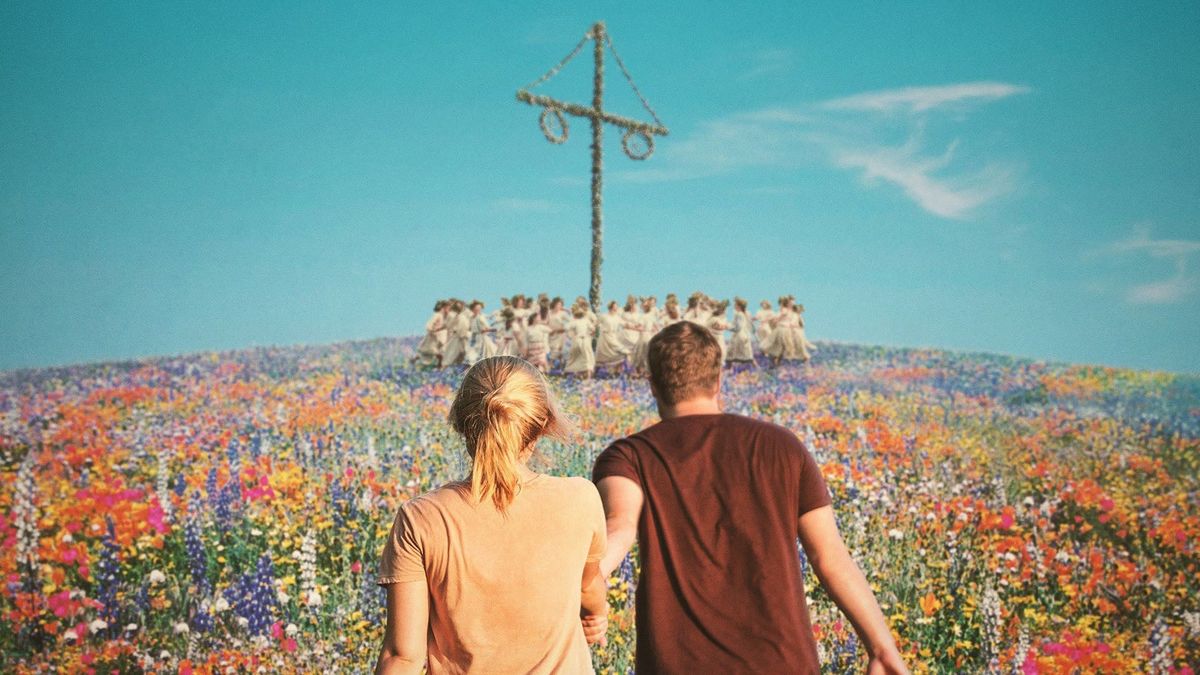
In Midsommar, we are as desperate to claw our way out of this soul-crushing grief as Dani (Florence Pugh). Mainly to avoid being alone, Dani insinuates herself into her anthropology student boyfriend Christian’s (Jack Reynor) trip to rural Sweden with his buds.
Little does she know they are all headed straight for a modern riff on The Wicker Man.
From the trip planning onward, Dani and the crew don’t make a lot of natural decisions. The abundance of drugs and the isolation of their Swedish destination make their choices more believable than they might otherwise be, but in the end, individual characters are not carved deeply or clearly enough to make their arcs resonate as terrifyingly as they might.
There are definite strengths, though—chief among them,
Florence Pugh. The way she articulates Dani’s neediness and strength creates a glue
that holds the story in place, allowing Aster to add spectacular visual and mythological
flourishes.
Will Poulter, as Christian’s friend Mark, is another standout. Equal parts funny and loathsome, Poulter (The Revenant, Detroit) breaks tensions with needed levity but never stoops to becoming the film’s outright comic relief.
Like Hereditary, Midsommar will be polarizing among horror fans -perhaps even more so- for Aster’s confidence in his own long game. Like a Bergman inspired homage to bad breakups, this terror is deeply-rooted in the psyche, always taking less care to scare you than to keep you unsettled and on edge.
Slow, unbroken pans and gruesome detail add bleak depth to the film’s tragic prologue, leaving you open for the constant barrage of unease and disorientation to come. Carefully placed pictures and artwork leave trails of foreshadowing while the casual nature of more overt nods (“there’s a bear”) only add to the mind-fuckery.
And while Aster is hardly shy about this motives – multiple shots through open windows and doors reinforce that – it doesn’t mean they’re any less effective.
The contrast of nurturing sunlight with the darkest of intentions recalls not only Wicker Man but Texas Chainsaw Massacre for its subliminal takeover of the sacred by the profane. Pair this with the way Aster manipulates depth of field, both visual and aural, and scene after scene boasts hallucinatory masterstrokes.
Midsommar is a bold vision and wholly unnerving experience (emphasis on experience)—the kind of filmmaking the genre is lucky to have in its arsenal.
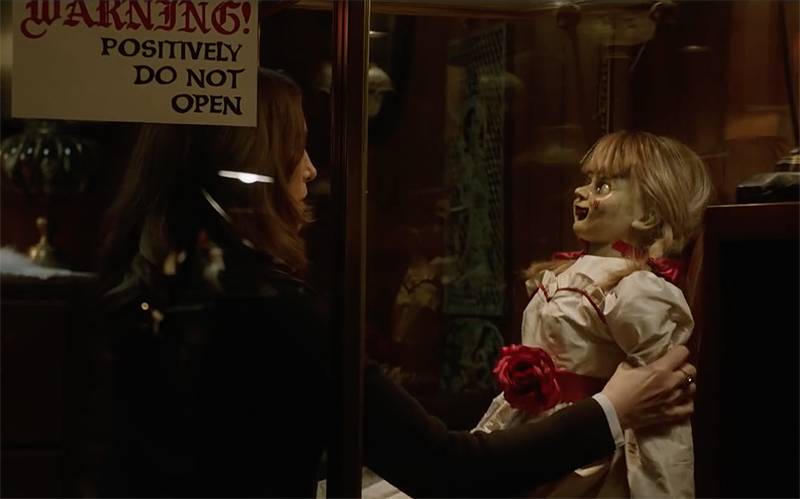
The first conflict, first specter of the Conjuring universe was a hideous, braid-wearing doll haunting hip Seventies roommates. Ever wonder what happened after Lorraine and Ed Warren (Vera Farmiga and Patrick Wilson, respectively) removed the cursed doll Annabelle from the girls’ apartment?
It was a hell of a ride home, I will tell you that.
Truth is, the Annabelle franchise within the larger Conjuring property hasn’t really impressed. John R. Leonetti’s lackluster 2014 “save the baby” horror that gave the doll its own series fell flat. Three years later, David F. Sandberg’s Annabelle: Creation offered an origin story that knew absolutely nothing at all about its own religious setting, yet offered considerably stronger action, scares and gore than its predecessor.
Writer Gary Dauberman, who’s penned every installment (as well as It, which seriously amplifies his credibility), takes on directing duties for the first time with the third film, Annabelle Comes Home.
Again, this one is a little better than the last one.
Dauberman gives us a spooky fun glimpse into the reasons the Warrens kept the doll locked away back in their room of cursed objects. From that first road trip home—which is a blast straight out of Hammer or Michael Jackson’s Thriller—the film is a spooky fun ode to old fashioned horror.
Back at home—the very home where the Warrens illogically keep demonic objects—their daughter Judy (McKenna Grace, really good in this role) is going through some troubles with schoolmates who think her parents are creepy.
Duh.
So, creepy Ed and Lorraine leave town, likely to cast a demon into a Combat Carl they’ll be adding to the back room toybox, leaving little Judy with a cherubic babysitter Mary Ellen (Madison Iseman) and her snoopy bestie, Daniela (Katie Sarife).
What does Daniela touch in the off-limits, demon-filled back room?
“Everything.”
All hell breaks loose, naturally.
Dauberman shows some fun instincts when it comes to isolating characters to make the most of his thrill ride setting. The logic comes and goes with ease, however—once the catalyst kicks in, each scene exists simply to trigger a scare, not to make any narrative sense.
But it is fun, with generous writing that does not ask us to root against any of the kids, and performances that are far superior to the content. Plus a couple of real laughs, mostly thanks to a randomly hilarious pizza delivery guy.
Annabelle Comes Home is no masterpiece and it is definitely a tonal shift from the previous installments, but it’s a mindless PG-13 blast of haunted house summer fun.
You have to give it to the marketing team saddled with Lars Klevberg’s reboot of Child’s Play.
First came the trailers. You couldn’t see the doll, but you
heard that old TV theme song, “People let me tell you ‘bout my best friend! He’s
a warm boy, cuddly toy, my up, my down, my pride and joy…”
Creepy.
And then the posters. You know, still no Chucky doll in the
frame, but a ripped-to-shreds cowboy doll splayed across the ground.
Well, pardner, Sheriff Woody’s got the last laugh because Child’s Play the film is not 1/10th as inspired as its marketing. It’s a tedious time waster uninterested in plumbing any of its possible themes—single parenthood, poverty, loneliness, tech—for terror. Instead it goes for the obvious prey and hopes star power will blind you to its ordinariness.
Discount those straight-to-video installments in the series if you will (and honestly, you probably should), but at least they each tried to do something different. At some point they embraced the ridiculousness of this itty, bitty freckle-faced problem and just ran with it.
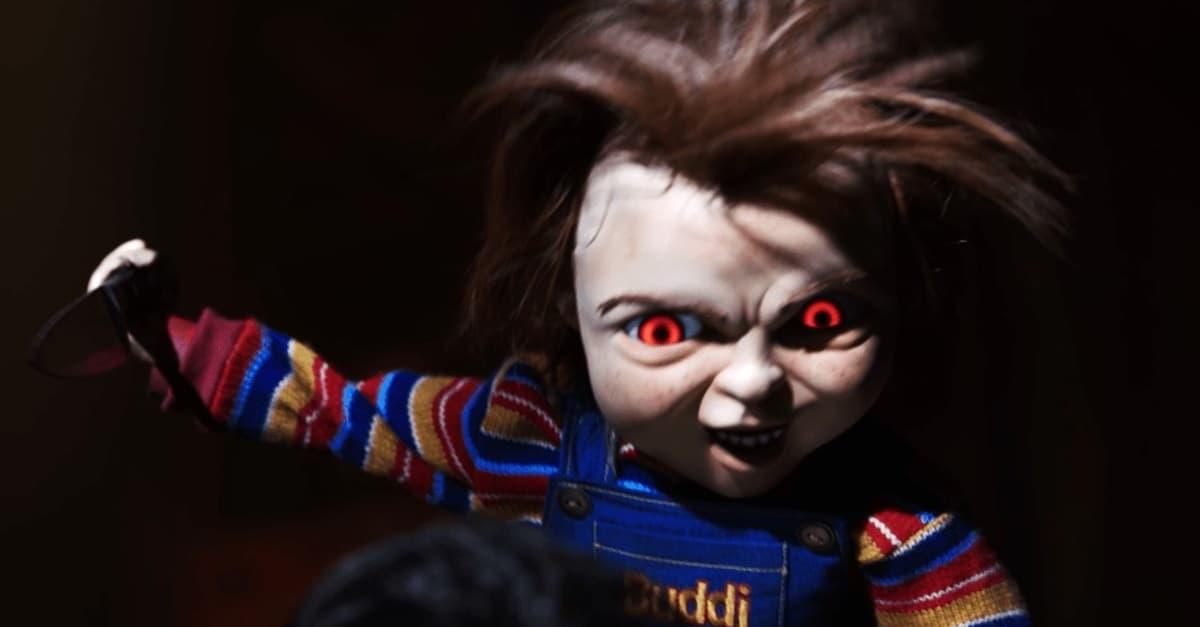
Not this time. Nope, what we have here is one deadly serious and wildly unimaginative reboot. Hell, the doll doesn’t even look good!
And yet, Aubrey Plaza, Brian Tyree Henry and Mark Hamill all signed on to star in what amounts to the 8th Chucky film.
Why?
It’s not the concept. The possessed doll conceit has been updated from the soul of a serial killer to modern technology. Imagine if google home required a super creepy doll in bib overalls to work. Admittedly, there are all sorts of Terminator/Maximum Overdrive/Demon Seed possibilities here, all of which are left entirely unmined.
Instead it’s just a defective AI doll (voiced by Hamill
himself), birthday gift from a department store clerk (Plaza) to her lonely but
clearly too old for the toy son, Andy (Gabriel Bateman, quite good, actually).
They’re all good, especially Henry. Too bad the film doesn’t deserve it. Aside from one kill inspired by Texas Chainsaw Massacre 2 (nice!), and performances that are all better than the material, the new Child’s Play is a pretty tedious affair.
Indie god and native Ohioan Jim Jarmusch made a zombie
movie.
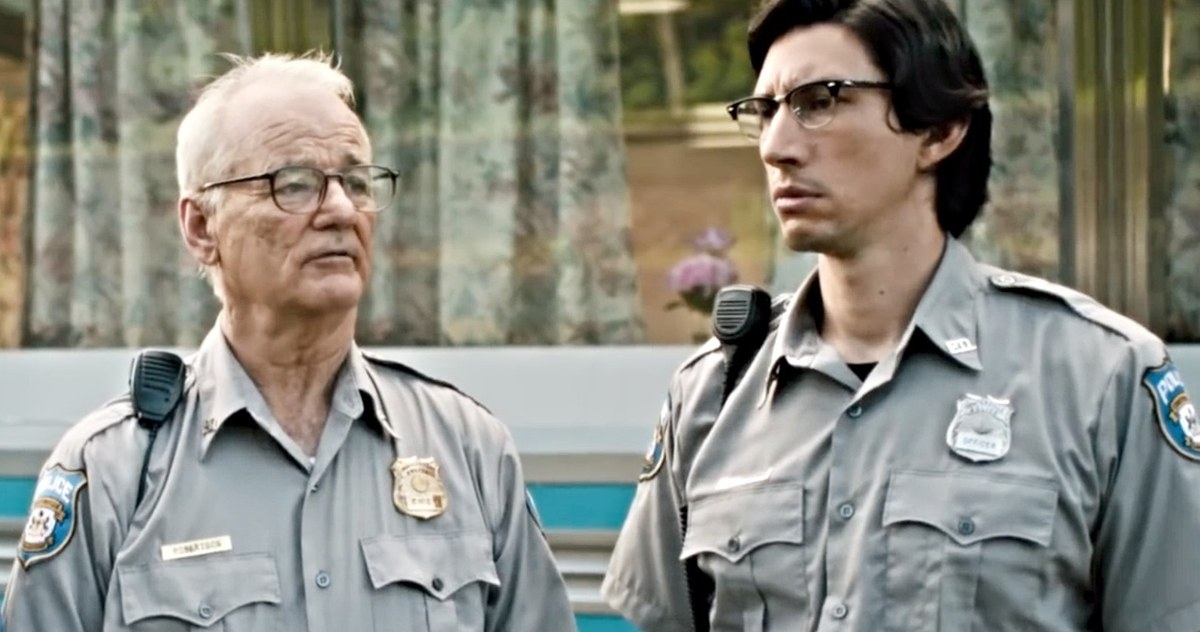
If you don’t know the filmmaker (Down by Law, Ghost Dog, Only Lovers Left Alive, Patersonand so many more jewels), you might only have noticed this cast and wondered what would have drawn Bill Murray, Adam Driver, Tilda Swinton, Chloe Sevigny, Steve Buscemi, Rosie Perez, RZA, Caleb Landry Jones, Danny Glover, Tom Waits, Iggy Pop and Selena Gomez to a zombie movie.
It’s because Jim Jarmusch made it.
Jarmusch is an auteur of peculiar vision, and his latest, The Dead Don’t Die, with its insanely magnificent cast and its remarkably marketable concept, is the first ever in his nearly 30 years behind the camera to receive a national release.
Not everybody is going to love it, but it will attain cult
status faster than any other Jarmusch film, and that’s saying something.
He sets his zombie epidemic in Centerville, Pennsylvania (Romero
territory). It’s a small town with just a trio of local police, a gas station/comic
book store, one motel (run by Larry Fassenden, first-time Jarmusch actor,
longtime horror staple), one diner, and one funeral home, the Ever After.
Newscaster Posie Juarez (Rosie Perez – nice!) informs of the unusual animal behavior, discusses the “polar fracking” issue that’s sent the earth off its rotation, and notes that the recent deaths appear to be caused by a wild animal. Maybe multiple wild animals.
The film never loses its deadpan humor or its sleepy, small town
pace, which is one of its greatest charms. Another is the string of in-jokes
that horror fans will revisit with countless re-viewings.
But let’s be honest, the cast is the thing. Murray and
Driver’s onscreen chemistry is a joy. In fact, Murray’s onscreen chemistry with
everyone—Sevigny, Swinton, Glover, even Carol Kane, who’s dead the entire film—delivers
the tender heart of the movie.
Driver out-deadpans everyone in the film with comedic delivery I honestly did not know he could muster. Landry Jones also shines, as does The Tilda. (Why can’t she be in every movie?)
And as the film moseys toward its finale, which Driver’s Officer Ronnie Paterson believes won’t end well, you realize this is probably not the hardest Jim Jarmusch and crew have ever worked. Not that the revelation diminishes the fun one iota.
Though it’s tempting to see this narrative as some kind of metaphor for our current global political dystopia, in fairness, it’s more of a mildly cynical love letter to horror and populist entertainment.
Mainly, it’s a low-key laugh riot, an in-joke that feels inclusive and the most quotable movie of the year.
Oh my God, you guys. Did you know Tate Taylor directed the new Octavia Spencer horror flick, Ma?
You know, Tate Taylor. Girl on a Train. Get On Up. The effing Help – that Tate Taylor.
No wonder Octavia Spencer is in it, and God bless her for it
because she commits to a role that, in other hands, could have been utterly,
laughably predictable.
In fact, were it not for a breathtakingly better-than-this-material cast, Ma would have devolved quickly into every other “get back at the popular kids – oh, wait, maybe let’s vilify and re-victimize the unpopular instead” horror.
Spencer’s Sue Ann, or Ma, as the kids call her, is just an easy mark for teens wanting alcohol. Yes, she’ll buy it as long as you drink it at her house where she knows you’re safe.
Does she have nefarious motives?
She does.
For her part, the Oscar-winner (for Taylor’s The Help) convinces, drawing both sympathy and fear. She’s joined in small roles by another Oscar winner (an almost jarringly funny Allison Janney) and an Oscar nominee (Juliette Lewis) as well as Luke Evans and a set of talented young actors led by Booksmart’s Diana Silvers.
How on earth did this by-the-numbers outsider/don’t trust the lonely older lady horror flick draw this cast?!
I do not know, because Ma has nothing really new to say, so it relies in its entirety on this cast to entertain. But there are two reasons that this story and this particular cast are actually Ma’s problems.
One is something that still surprises me about horror. On the whole, horror appeals to outcasts. And yet, from Carrie White to the coven in The Craft to Sue Ann in Ma, horror films reestablish the status quo by putting outcasts in their place. Sure, they get that grand few moments of terrorizing the beautiful, popular kids, but things end badly in horror movies for the outcast.
Here’s what troubles me even more about Tate Taylor, and to a degree, Octavia Spencer films. (Note that Spencer executive produced the racially problematic and utterly mediocre Green Book.)
Ma is racially tone deaf. I have no idea why this wealthy Southern white man insists on telling stories exclusively about African Americans, but he truly should not. A story that vilifies the lonely middle aged woman, seeing her as a broken psychotic based on her generally pathetic nature, is misogynistic. When this villain is also the only African American woman in the film, that problem is heightened dramatically.
Don’t get me wrong—I am a fanatical horror fan, and when an Oscar -winner (and multiple nominee) chooses to star, let alone star as the villain (the most important character) in a horror film, I am all in.
Sort of a mash up of Superman and The Bad Seed, Brightburn wonders what would happen if that special little guy you found in the crashed space ship turned out to be a super villain rather than a super hero.
But this comic book-esque origin story plays more like a straight up horror flick than an evolution of Josh Tank’s underappreciated 2012 SciFi gem Chronicle.
Elizabeth Banks stars as Tori, blue collar Kansasian. (Look
it up.) She and homespun farmer husband Kyle (David Denman) always knew the day
would come when they had to explain some things to their “adopted” son Brandon
(Jackson A. Dunn).
While Brightburn echoes Superman in many ways, it’s far more deeply rooted in coming of age horror. It is on Brandon’s 12th birthday that he begins to change. He’s broody, more aggressive—here is where director David Yarovesky (The Hive) and Brian and Mark Gunn (brother and cousin, respectively, of producer James Gunn) abandon SciFi and dive headlong into horror.
And what we find is that, removed of their comic book splash
and super hero protagonists, super villains don’t really make much of an
impression in horror. Yes, Brandon has basically the same qualities as
Superman—heat vision, flight, super strength—and he seems only vulnerable to
his own ship (or perhaps any trace of his home planet?)—but the question is,
would Evil Superman be that much more destructive than an immortal killing
machine who visits you in your dreams? Or a demon from hell? Meh.
That’s is not to take too much away from Brightburn. It’s a fun B-movie with plenty of blood and gore. (It earns its R rating.) Banks is characteristically strong and Dunn does a fine job of moving from sweet boy to flat-affect sociopath.
There are definitely a couple of moments of inspired gore.
Brightburn is a capably made, well-acted piece of semi-schlock horror. It’s also the third film this year to follow a put-upon mother deciding what to do with a son whose grown almost overnight from precious baby boy to burgeoning psychopath.
And while this is a staple in the genre, Brightburn certainly taps an immediate social preoccupation with that moment that toxic masculinity ruins a boy. The film also mines the guilt that fuels insecure parents who had no real role models of their own.
The film doesn’t wind up being as clever a conceit as you might hope—again, Chronicle did it better. It’s not an entire waste of time, either.
Horror has a love/hate relationship with hippies. I suppose most of us do. And while some of the greatest films in the genre were made by Sixties freaks George Romero, Wes Craven, Tobe Hooper and the like, most of the time hippies’ onscreen representation got wrapped up in Manson hysteria.
5. Children Shouldn’t Play with Dead Things (1972)
Full disclosure: George objects to including this film on the list. It’s not good.
But it’s not good in such a good way! Director Bob Clark (Black Christmas, A Christmas Story) and writer/co-star Alan Ormsby seem basically to be taking out their frustrations at being part of the theatrical community.
Ormsby’s Alan is a director, and he drags his troupe of hippie thespians to a lonely island once used to bury the criminally insane. He then insists—if they ever want to work with him again—that his merry band dig up a body and perform a ritual to bring him back to life.
It’s basically theater kids making fun of theater kids. Watching a group of actors being literally eaten alive by their audience is its own stoke of genius, even if the film itself is not.
4. Let’s Scare Jessica to Death (1971)
In this Age of Aquarius riff on J. Sheridan Le Fanu’s vampire novel Carmilla, the unfortunately titled Let’s Scare Jessica to Death follows a somewhat delicate woman through what amounts to either a nervous breakdown or the seduction of a female vampire.
A married couple and their organic farmer friend move into an old, abandoned house on a New England island. They find a vagrant—long haired, pretty, can play an acoustic guitar, natch—and they ask her to stay. Why not?
Deliberately paced and boasting a genuine and sympathetic performance by lead Zohra Lampert, the film’s a slow burn, a hallucinogenic smalltown horror. The creepy townies, the spooky cemetery girl, and the moody cinematography blend with Lampert’s committed performance to make this one a dusty little gem.
3. I Drink Your Blood (1970)
David Durston’s grindhouse classic (in which no one drinks anyone’s blood, regardless of what this lying trailer tells you) marks that great divide in hippie horror: those made by and about hippies and those made by opportunists seizing upon a population’s terrified fascination with the Manson Family murders.
I Drink Your Blood is the latter. We open on a group of hippie Satan worshippers who turn out to be gang rapists. They descend on a little town almost empty of inhabitants—the menfolk all having moved to live and work in the nearby mining camp. That leaves just that scrappy family working in the bakery.
But once young, vindictive Pete injects the baker’s meat pies with rabid dog blood, them no goodnicks might learn some manners.
Actually, that’s the last thing they’ll do.
This is an extremely violent film, not very well made and certainly not well acted. It has a punch, though, and several scenes are provocative enough to warrant its inclusion on this list.
2. Mandy (2018)
A hallucinogenic fever dream of social, political and pop-culture subtexts layered with good old, blood-soaked revenge, Mandy throws enough visionary strangeness on the screen to dwarf even Nicolas Cage in full freakout mode.
Red (Cage) and Mandy (Andrea Riseborough) live a secluded, lazily contented life somewhere in the Pacific Northwest.
That contentment is shattered by a radical religious sect under the spell of Jeremiah (Linus Roache), who takes a liking to Mandy when the group’s van (of course it’s a van!) passes her walking on a country road.
Horror of the late 60s and early 70s saw hippies terrorizing good, upright citizens, perpetrating cult-like nastiness. Thanks to Charles Manson, society at large saw the counterculture as an evil presence determined to befoul conventional, Christian wholesomeness.
With Mandy, it’s as if the 70s and 80s have collided, mixing and matching horror tropes and upending all conceivable suppositions. In this case, zealots consumed with only the entitlement of their white, male leader wreak havoc on good, quiet, earth-loving people. The Seventies gave us some amount of progress, civil justice and peace that the Eighties took back under the guise of decency.
1.The Texas Chainsaw Massacre (1974)
Hippie pals pile into a van and head to Texas to double check that Grammy and Gamps still rest in peace, what with these rumors of grave robbing. Along the way they talk astrology, smoke some weed, pick up a hitchhiker–it’s all in a day’s journey for a hippie.
That hitchhiker thing goes sideways. In fact, the whole trip feels like a bad idea by the time pretty Sally Hardesty and her friends make a second trip to the cemetery. Well, what’s left of them.
Jordan Peele is not the only one preoccupied with The Twilight Zone. First time filmmaker Josh Lobo obviously has a soft spot for one of their episodes.
Don’t look into which one, though. In fact, don’t even watch the trailer for Lobo’s indie horror I Trapped the Devil, because not knowing the outcome is half the fun.
Lobo takes us along on a Christmas visit with family. You
know, those awkward gatherings where maybe your brother is a paranoid
schizophrenic who keeps a man captive in his basement.
Or, maybe your brother’s right and that man is really Satan.
But let’s be honest. It’s probably the former.
As Steve (Scott Poythress) tries to convince brother Matt
(AJ Bowen) and sister-in-law Karen (Susan Burke) that it’s really the latter,
Lobo hovers over issues of family dysfunction, grief, and the evil in the world.
He pulls none of those strings in a way that is particularly satisfying, but he
is onto something.
The film’s narrative offers a nice subversion of horror’s
standard “is she crazy or is there evil in the house” trope. Historically, the
genre relies on some kind of common assumption about feminine hysteria to drive
a tension that asks the audience to wonder whether we are witnessing a mental
breakdown or whether the protagonist’s feminine intuition has led her to pick
up on something malevolent.
I Trapped the Devil overturns those gender assumptions and grounds the tension in something more scientifically intriguing. Is Steve a violently disturbed man with a captive in his basement, or has he, indeed, trapped Satan?
We the audience are supposed to be weighing our options. How
realistic is it that his family is kicking around the options? Not very.
Committed performances from the trio help develop a sympathetic mood. Still, Lobo struggles—as does his cast—to get reasonably from Point: There’s a Guy Locked in a Closet Downstairs to Point: No, Let’s Not Phone the Authorities Just Yet.
He also leaves too many unexplored ideas on the table: the maddening
grief, the weird images on the staticky TV, how Steve got the guy down his
basement in the first place.
A little ambiguity can lend to atmosphere. This much tends
to feel more like lazy screenwriting.
There are flashes of real terror now and again, though, and the mystery of the man in the closet remains a tense one to the seriously creepy closing image. Lobo’s horror instincts are sound, and even though his knack for fleshing out details is lacking, his movie’s a pretty solid scare.