Tag Archives: horror

The Hills Are Alive

Hagazussa: A Heathen’s Curse

by Hope Madden

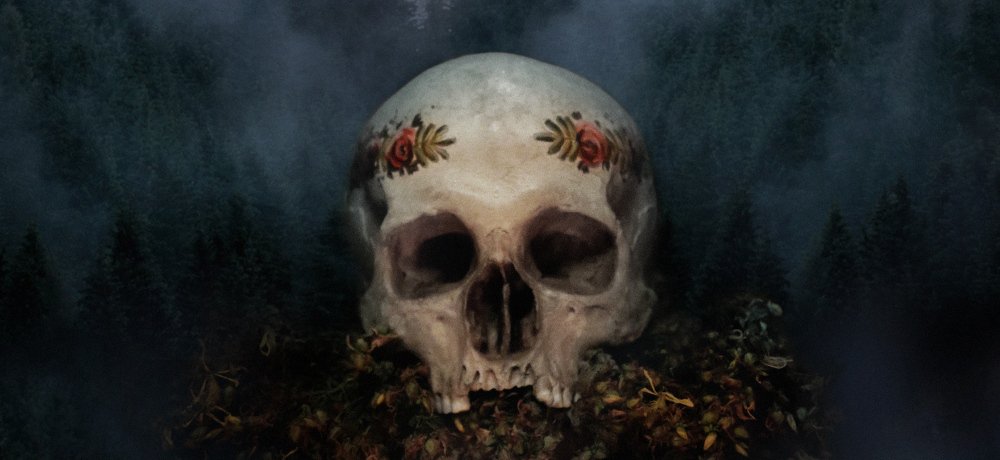
Making a remarkably assured feature debut as director, Lukas Feigelfeld mesmerizes with his German Gothic poetry, Hagazussa: A Heathen’s Curse.

Settled somewhere in the 15th Century Alps, the film shadows lonely, ostracized women struggling against a period where plague, paranoia and superstition reigned.

Young Albrun (Celina Peter) and her mother (Claudia Martini) make their way back to their isolated cabin before darkness falls. With a minimum of dialog and a maximum of atmosphere, Feigelfeld quickly establishes the dangerous isolation facing mother and daughter.

It’s an episode that will haunt Albrun well into adulthood, where she (Aleksandra Cwen) is now the single mother, still an outsider, still isolated from the village.

It would be easy to mistake the story Feigelfeld (who also writes) develops as a take on horror’s common “is she crazy or is there malevolence afoot?” theme. But the filmmaker’s hallucinatory tone and Cwen’s grounded performance allow Hagazussa to straddle that line and perhaps introduce a third option—maybe both are true.

Isolation, shunning and bullying lead to one tragedy upon the next. The village and its priest having deemed Albrun a witch, the line that defines the reality of the situation and the spiritual ugliness blur for both Albrun and the audience.

The film lends itself to a reading more lyrical than literal. Feigelfeld’s influences from Murnau to Lynch show themselves in his deliberate pacing and the sheer beauty of his delusional segments. One goat milking episode, in particular, is both startlingly erotic and disturbingly articulate of Albrun’s state of mind.

MMD’s ominous score strengthens the film’s overall sense of hypnotic menace, echoing sounds we’re not sure will frighten or comfort this mysterious woman at the center of the film.

Albrun’s is a tragic story and Feigelfeld crafts it with a believable loneliness that bends toward madness. He’s captured this moment in time, this draining and ugly paranoia that caused women such misery, with imagery that is perplexingly beautiful.

He’s cast a spell and you should submit.

Sometimes, Reboots Are Better

Pet Sematary

by Hope Madden

There is a lot of love out there for Mary Lambert’s 1989 hit Pet Sematary.

Why, again? Was it the wooden lead performances? The adorably sinister villain? Massive Headwound Harry? Come on—there was a lot wrong with that movie and only two things were really right: The Ramones and Zelda.

Zelda was creepy AF.

Fear not! Directors Kevin Kölsch and Dennis Widmyer (Starry Eyes) were obviously also affected by Zelda because she (Alyssa Levine) delivers again. On all other items, the directing duo improve.

Except The Ramones, but they are here in spirit.

Jason Clarke leads things as Louis, big city doc transplanted to quiet, rural Maine. Apparently he and his family—Rachel (Amy Seimetz), Ellie (Jeté Laurence), Gage (Hugo and Lucas Lavoie) and Church the Cat—didn’t ask a lot of questions about that 80-acre lot they bought. Lotta nasty stuff out back.

John Lithgow takes over for the tough to replace Fred Gwynne and his over-the-top Mainer accent. Lithgow’s more subdued Grumpy Old Man neighbor falls victim again to the pull of that “sour ground” out back when his beloved little Ellie’s cat gets hit by one of those semis speeding down the nearby road.

The film really tests your ability to suspend disbelief, but it also layers a lot of history and creepiness in tidy fashion. The superior performances alone make the reboot a stronger film, although familiarity means it has to try a little harder to actually scare you.

One help is a change screenwriters Matt Greenberg and Jeff Buhler make to the story. It’s a big alteration and not everyone will be thrilled, but it limits the laughability once things turn ugly. The film also lessons spiritual guide Pascow’s (Obssa Ahmed) screen time and gives his presence a spookier, less comedic feel. There’s a new ending, too—meaner and more of a gut punch. Nice.

The movie looks good, and Clarke (playing a grieving father for the second time this weekend, after his WWII drama The Aftermath) anchors the events with a thoughtful, believable performance that helps Pet Sematary overcome some of its more nonsensical moments.

It is not a classic, but it delivers the goods.

I still missed The Ramones.

Whispers and Wails

The Wind

by Hope Madden

There are not enough horror westerns. And why not? The whole Wild West thing feels like a terrifying, isolated, dangerous adventure—especially for women.

Director Emma Tammi’s first narrative feature, The Wind, pulls together all those ideas and more into an absorbing little nightmare.

Lizzy and Isaac Macklin (Caitlin Gerard and Ashley Zukerman, respectively) are relieved to see smoke coming from a distant chimney. The only other cabin for miles has been empty a long while, and the prairie does get lonesome.

But companionship and burden go hand in hand for Lizzy, and company won’t chase away all the demons plaguing this harsh land.

Working from a spare script by Teresa Sutherland, Tammi develops a wonderfully spooky descent into madness. Throughout Lizzy’s isolation, Tammi swaps images onscreen from present moment reality to weeks earlier, to months earlier, to a present-day hallucination or specter and back again. The looping time frame and repetitive imagery turn in on themselves to create a dizzying effect that echoes Lizzy’s headspace.

Gerard spends nearly as much screen time alone as she does with co-stars, and her turn is haunting. There’s nothing showy in this performance, Gerard slyly betraying one emotion at a time through the character’s well-rehearsed stoicism and reserve.

It’s a feat of imagination and execution for both Gerard and Tammi, turning this small production—only five principle actors and two sets—into a hypnotic ordeal. Tammi’s confident pacing and Gerard’s masterful performance ensure a gripping trip through a merciless slice of prairie life.

Finished with Final Girls

by Hope Madden

I am done with the final girl.

You know why? Because it’s a diminishing title.

Laurie Strode, Ellen Ripley and Sidney Prescott were not final girls. They were heroes.

Laurie Strode, Ellen Ripley and Sidney Prescott were the point of view characters for their films, not random females we were surprised to see survive. Had any of these three perished, that would have been the surprise.

The phrase “final girl” suggests that, from a smorgasbord of victims, one female emerges victorious. How does she do it?

1. She is smarter than the rest and outwits the killer.
2. She is more virtuous than the rest, so fate is on her side.
3. She endures pain, grief, terror and hardship and comes out the other side a stronger person.

If those are not the steps in a hero’s quest, I don’t know what are. (No, seriously, I don’t know what the steps are in a hero’s quest. I should probably have looked it up, but still, I feel confident they’re similar.)

The characteristics of the final girl are simply the characteristics of the hero, and her perspective is the audience’s perspective.

She’s the lead.

To disregard this and assume that this would-be victim didn’t die because she holds in her bosom certain character traits is to actually belittle the character. John McClane outwitted terrorists, showed integrity and grit, and endured a ton of hardship in his bare feet. Is he not the hero?

What about Schwarzenegger in Predator? Not a lot of dudes made it out the other side of that one – does that make Arnold the Final Boy?

And how about Captain America? Smart, virtuous, endurance – hell, he’s probably even a virgin.

Are you here to tell me The Cap is not a hero?

So what’s the difference? Why label the badass who sends Pinhead back to hell nothing more than the last girl onscreen? Why does’t she get to be the hero? Hasn’t she proven herself? I’d like to see you try your luck with Pinhead.

I’m overgeneralizing, you think. Are there heroes who do not carry with them these vital characteristics, you wonder.

No. Those damaged, dangerous and layered leads are anti-heroes. Someday when the slutty Goth girl with a heroin jones is the last one standing, then the slasher will finally have its anti-hero. But for now, Jason and Pinhead and Leatherface and Michael Myers and all of them are undone by the hero.

Of course.

Starry Eyes

Starfish

by Rachel Willis

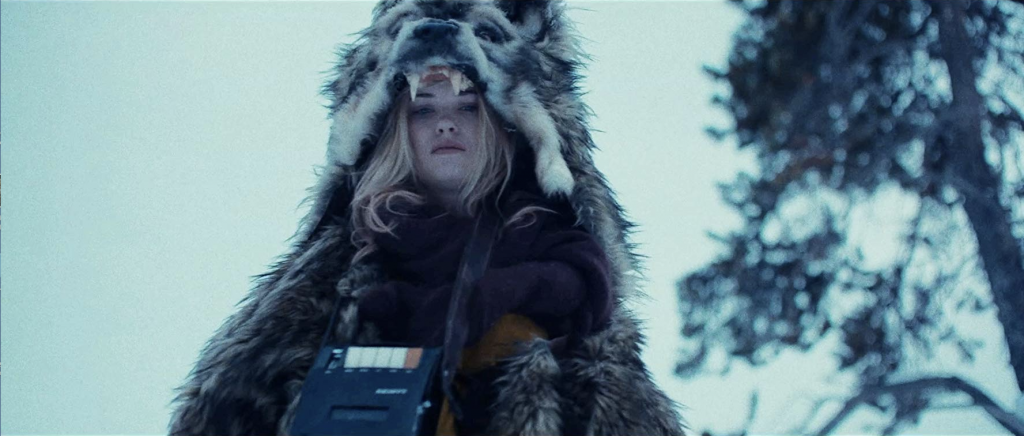
Still reeling from the loss of her friend, Grace, Aubrey (Virginia Gardner) finds herself facing the end of the world in director A.T. White’s film, Starfish.

After breaking into Grace’s apartment in an attempt to connect to her friend, Aubrey hears a walkie-talkie spring to life. The static coming from the device implies someone might be listening, and Aubrey is momentarily compelled to speak to whoever is on the other end. This is our first hint that not all was well in Grace’s life, with more hints coming before the film takes a deep dive into its world-ending scenario.

There’s a mystery involved that’s best not spoiled, and it isn’t always clear what’s real and what’s imagined, but it works well to us engaged, and haunting images feed the increasing unease.

As a metaphor for grief, Starfish is a curious, interesting take. Aubrey moves through the stages of grief while, outside the apartment, the world is falling apart. She spends time in an apathetic cycle, her only companions a box turtle and a couple of jellyfish (who eat desiccated starfish, apparently). Aubrey’s anger manifests in violent ways, and she’s utterly alone with her sorrow.

Gardner does an excellent job conveying the gauntlet of emotions roiling inside her character. Her performance is easily the film’s strongest element.

There are also a number of exciting and tense scares, and the effectively oppressive score amplifies the more terrifying elements. However, where the score is effective at producing tension, the soundtrack doesn’t always fit the mood. Some of the song choices are out of place. While many of them are meant to represent Aubrey and Grace’s friendship, they disrupt the film’s intensity.

The film takes risks. Some of them work, and some of them don’t, but it’s always intriguing to watch something different, something that challenges us to think outside the box on what a movie can be.

Swallowed Whole

The Hole in the Ground

by Hope Madden

About a month ago the film The Prodigy came out, and promptly disappeared. Lee Cronin’s Irish horror The Hole in the Ground treads similar territory: a mother looks at her young son and wonders with terror who it is she sees.

Where Prodigy took the path most ludicrous, Cronin mines a parent’s disappointment, grief, loneliness and alienation for more poignant results.

Sara (Seána Kerslake), along with her bib overalls and young son Chris (James Quinn Markey), are finding it a little tough to settle into their new home in a very rural town. Chris misses his dad. Sara is having some life-at-the-crossroads anxiety.

Then a creepy neighbor, a massive sink hole (looks a bit like the sarlacc pit) and Ireland’s incredibly creepy folk music get inside her head and things really fall apart.

I grew up listening to nothing but Irish music. If you don’t think it’s creepy, you aren’t listening properly.

In execution, The Hole in the Ground is less The Prodigy and more of a cross between the masterpiece of maternal grief, The Babadook, and another Irish horror of changelings and woodland spirits, The Hallow. (Plus a surprise third act inspiration I won’t mention for fear of spoilers.)

You look at your child one day and don’t recognize him or her. It’s a natural internal tension and a scab horror movies like to pick. Kids go through phases, your anxiety is reflected in their behavior, and suddenly you don’t really like what you see. You miss the cuter, littler version. Or in this case, you fear that inside your beautiful, sweet son lurks the same abusive monster as his father.

Cronin’s subtext never threatens his story, but instead informs the dread and guilt that pervade every scene. Performances are quite solid and the way folklore – in tale and in song – is woven through the story creates a hypnotic effect.

If you’re a horror fan looking to celebrate the season, here’s a more authentic way to do it than watching Leprechaun for the 15th time.

Fright Club: Looking for Love

Love is in the air! God help us, especially those who are throwing themselves into the love game. It’s horrifying, right? Scary, vulnerable, awkward, and really bloody once the power tools come out.

Horror filmmakers know a good subject when they see one. Here are our five favorite films focused on the quest to find and secure love.

5. Berlin Syndrome

Aussie photographer Clare (Teresa Palmer, better than she’s ever been) is looking for some life experience. She backpacks across Europe, landing for a brief stay in Berlin where she hopes to make a human connection. Handsome Berliner Andi (Max Riemelt) offers exactly the kind of mysterious allure she wants and they fall into a night of passion.

What follows is an incredible combination of horror and emotional dysfunction, deftly maneuvered by both cast mates and director Cate Shortland. The mental and emotional olympics Palmer goes through from the beginning of the film to the end showcase her instincts for nuanced and unsentimental performance. Clare is smart, but emotionally open and free with her own vulnerability. The way Palmer inhabits these characteristics is as authentic as it is awkward.

Even more uncomfortable is the shifting relationship, the neediness and resilience, the dependency and independence. It’s honest in a way that is profoundly moving and endlessly uncomfortable. Riemelt matches Palmer’s vulnerability with his own insecurity and emotional about faces. The two together are an unnerving onscreen pairing.

4. The Love Witch

Wes Anderson with a Black Mass fetish and a feminist point of view, Anna Biller wrote/directed/produced/edited/set-designed/costume-designed/music-supervised this seductive sorcery headtrip.

Elaine (Samantha Robinson – demented perfection) needs a change of scenery. Driving her red convertible up the seacoast highway toward a new life in northern California, her troubles – and her mysteriously dead ex-husband – are behind her. Surely, with her smart eyeshades and magic potions, she’ll find true love.

Expect a loose confection of a plot, as Elaine molds herself into the ideal sex toy, winning and then tiring of her trophies. This allows Biller to simultaneously reaffirm and reverse gender roles with appropriately wicked humor.

3. Alleluia (2014)

In 2004, Belgian writer/director Fabrice Du Welz released the exquisite Calvaire, marking himself a unique artist worth watching. Ten years later he revisits the themes of that film – blind passion, bloody obsession, maddening loneliness – with Alleluia. Once again he enlists the help of an actor who clearly understands his vision.

Laurent Lucas plays Michel, a playboy conman who preys upon lonely women, seducing them and taking whatever cash he can get his hands on. That all changes once he makes a mark of Gloria (Lola Duenas).

Du Welz’s close camera and off angles exaggerate Lucas’s teeth, nose and height in ways that flirt with the grotesque. Likewise, the film dwells on Duenas’s bags and creases, heightening the sense of unseemliness surrounding the pair’s passion.

Duenas offers a performance of mad genius, always barely able to control the tantrum, elation, or desire in any situation. Her bursting passions often lead to carnage, but there’s a madcap love story beneath that blood spray that compels not just attention but, in a macabre way, affection. Alleluia is a film busting with desperation, jealousy, and the darkest kind of love.

2. The Loved Ones (2009)

Writer/director/Tasmanian Sean Byrne upends high school clichés and deftly maneuvers between angsty, gritty drama and neon colored, glittery carnage in a story that borrows from other horror flicks but absolutely tells its own story.

Brent (Xavier Samuel) is dealing with guilt and tragedy in his own way, and his girlfriend Holly tries to be patient with him. Oblivious to all this, Lola (a gloriously wrong-minded Robin McLeavy) asks Brent to the end of school dance. He politely declines, which proves to be probably a poor decision.

Byrne quietly crafts an atmosphere of loss and depression in and around the school without painting the troubles cleanly. This slow reveal pulls the tale together and elevates it above a simple work of outrageous violence.

Inside Lola’s house, the mood is decidedly different. Here, we’re privy to the weirdest, darkest image of a spoiled princess and her daddy. The daddy/daughter bonding over power tool related tasks is – well – I’m not sure touching is the right word for it.

The Loved Ones is a cleverly written, unique piece of filmmaking that benefits from McLeavy’s inspired performance as much as it does its filmmaker’s sly handling of subject matter.

https://www.youtube.com/watch?v=olB5Wrg8Sxc

1. Audition (1999)

The prolific director Takashi Miike made more than 70 movies in his first 20 or so years in film. Among the best is Audition, a phenomenally creepy May/December romance gone very, very wrong.

Audition tells the story of a widower convinced by his TV producer friend to hold mock television auditions as a way of finding a suitable new mate. He is repaid for his deception.

Nearly unwatchable and yet too compelling to turn away from, Audition is a remarkable piece of genre filmmaking. The slow moving picture builds anticipation, then dread, then full-on horror.

By the time Audition hits its ghastly conclusion, Miike and his exquisitely terrifying antagonist (Eihi Shina) have wrung the audience dry. She will not be the ideal stepmother.

A Very Merry Unbirthday

Happy Death Day 2U

by Hope Madden

Two years ago, writer/director Christopher Landon’s Happy Death Day managed the unexpected. It took an immediately tiresome premise—Groundhog Day meets Scream—and generated enough audience good will to entertain.

This was mainly thanks to Jessica Rothe, whose performance was funny enough to be simultaneously likable and detestable, and whose character arc mostly felt earned. (Bill Murray’s are big shoes to fill.)

Well, Rothe is back for a second helping of death day cake, as is Landon, who again writes and directs. Can the pair keep the story fresh for a sequel?

Why, no. Thanks for asking.

Where the original was a funny slasher with a SciFi bent, the sequel is a standard Eighties romcom with an occasionally morbid sense of humor. Think Real Genius, only dumber and more tedious.

Or Zapped. Remember Zapped?

Tree (Rothe) believes she’s broken free of her murderous time loop by killing the person who was out to kill her—and learning some hard-won life lessons in the meantime.

She was wrong, though, because the truth is that her boyfriend Carter’s (Israel Broussard) weird roommate Ryan (Phi Vu) has gotten all Timecrimes in the college lab and that’s what caused the loop. In fact, it’s causing another loop into a parallel dimension.

Everyone from the original is back and almost the same as last time (because this is a parallel universe). Any new character who is not white joins Ryan in the lab. Nerds – another sad Eighties theme that won’t stay dead.

Slapstick humor (Oh, this blind French thing is enough to make your brain bleed) and dumbfounding gaps in logic follow. A list of what does not follow: tension, horror, laughter.

Seriously, though, if you haven’t seen Nacho Vigalondo’s 2007 mindbender Timecrimes, you should definitely do that instead of going to HDD2U.

Oh! You know what else is great in that SciFi/time loop/horror neighborhood? The Endless.

The point is, if you are in the mood for some genre bending SciFi fun, you won’t find it here.

Ouch

Piercing

by Hope Madden

There’s a lot that shouldn’t be said about Piercing, Nicolas Pesce’s follow up to his glorious 2016 horror, Eyes of My Mother.

Because the film’s tension relies on power exchanges, surprises and averted climaxes, the less you know about how the story progresses, the better.

Suffice it to say that new father Reed (Christopher Abbott), fighting a serious urge to stab his infant with an ice pick, concocts a plan. It involves that ice pick, a “business trip” out of town, and a prostitute (Mia Wasikowska).

The amateur murderer works out the perfect crime, practicing conversations and actions (decorated by Pesce’s remarkable knack for unsettling sound effects), only for the cosmos—or the filmmaker—to wreck those plans.

Abbott’s flat yet sympathetic would-be murderer helps Pesce achieve a peculiar, semi-comic tone, but it’s Wasikowska, playing wildly against type, who carries this film. The two share a mad and maddening chemistry, and even during moments of somewhat forced dialog, their commitment and spark keep you enthralled and guessing.

The film is an exercise in thwarted expectations wrapped up in voyeurism and lurid imagery.

The influences here are dizzying. Ryu Murakami’s source material obviously evokes his own Audition (director Takashi Miike’s classic in power shifting and poor romantic choices). The opening act wades through more modern indie sensibilities, but Pesce quickly overwhelms that flat grit with grindhouse thriller flair before simply succumbing to giallo (Goblin tuneage and all).

This drunken meandering through styles fits the narrative that forever questions the reality or unreality of each situation. Like the cityscape miniatures Pesce uses as the adventure’s out-of-town backdrop, Reed’s whole experience could simply be cool -looking but pretend.

Are those flashbacks or nightmares? Does Reed have a haunted past leaking its way into his present, or is he simply a psychotic hoping to overcome his problem by submitting to it just this once?

Pesce toys with our commitment to Reed’s reality, questionable from the moment his infant halts a crying jag to tell his father, in a demonic voice, “You know what you have to do.”

It’s not a film that will satisfy a lot of viewers, it’s more of a fascinating and forgettable sketch. Still, at under 90 minutes, it’s a weirdly fun little indulgence won’t hurt you. Well, not too much.