Tag Archives: Steve Buscemi

Eight Million and One

The Only Living Pickpocket in New York

by George Wolf

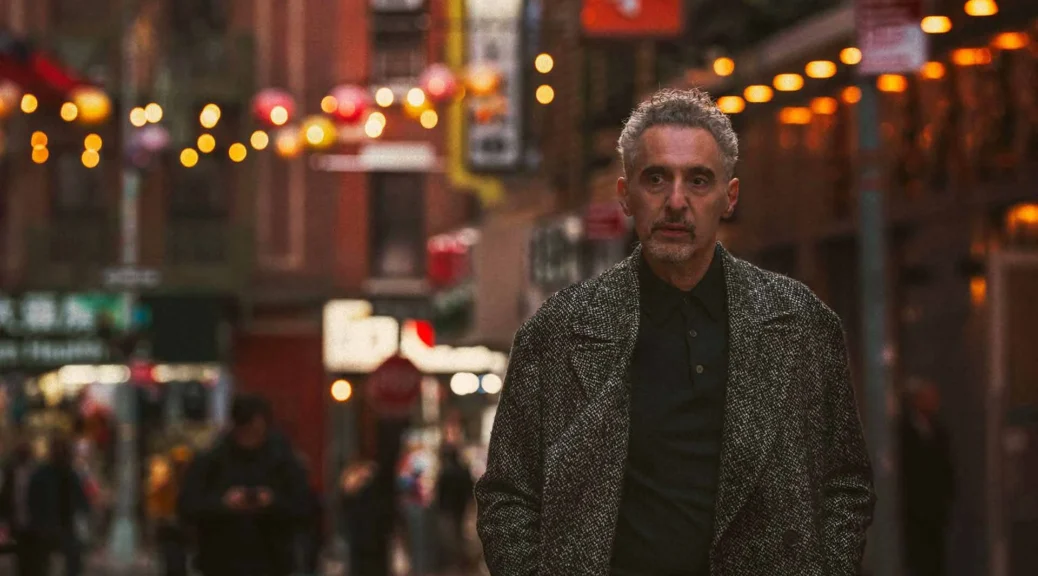
If you remember that seventies disco chestnut “Native New Yorker,” you’ll get an extra kick out of the first few minutes of The Last Pickpocket in New York, a delightful mash note to the Big Apple and a wonderfully engaging vehicle for John Turturro.

Turturro’s Harry cues up the vinyl and dances for his wife, Rosie (Karina Arroyave), who is bedridden and catatonic. He cares for her sweetly, showing a tender side that seems at odds with his chosen profession as a pickpocket.

Harry is quite good at his job, taking cash from wallets and fencing watches and other valuables at his buddy Ben’s (Steve Buscemi) corner pawnshop. Even a kindred spirit detective (Giancarlo Esposito) does Harry a solid now and then. But after snatching a duffle bag from the car of a young dumbass named Dylan (Will Price), Harry’s analog ways catch up to him.

Dumbass Dylan is part of a local crime family, and there was something very valuable in the bag that Harry threw away moments after pocketing a fat wad of cash he found inside. Easily tracking Harry down from city surveillance cameras, Dylan and his crew let Harry know that his wife’s wellbeing depends on the return of what he tossed aside.

Harry is still a bit haunted by some other things he’s left behind in life, and Turturro clearly relishes the chance to dig into the character. Yes, we’ve seen an aging man grapple with regret and possible redemption countless times now, but Turturro finds an identity, and a humanity in Harry that gets under our skin and captivates in every frame. He make us root for Harry despite some things we learn on his quest through the boroughs, and writer/director Noah Segan (Blood Relatives, Scare Package) adds a layer of caper for extra fun.

Segan’s first non-horror feature casts his native NYC as Turturro’s leading lady, and the city’s pulse is evident throughout every subway ride, diner visit and needle drop. Even minor characters are shaped through organic, lived in dialog, and by Act Three, Segan’s skill at reframing the familiar is on full display, along with a chemistry-filled cameo from a recent Oscar winner.

And speaking of…expect to hear Turturro’s name plenty this award season. He deserves it. Even if Harry’s story is number eight million and one in the naked city, The Only Living Pickpocket in New York makes it worth sharing.

Let’s Do Some Living After We Die

Wild Horse Nine

by Hope Madden

A lot of filmmakers make killers and mobsters the heroes of their films. Few do it with the nuance, humanity, moral irreverence, and fascinating political backdrop as writer/director Martin McDonagh.

Whether it’s a pissed off mother and the racist cop she accidentally blew up, a suddenly fractured set of besties, or a couple of hitmen, an unlikely friendship tends to be the anchor to McDonagh’s features. And roiling in the background you’ll usually find a culture in crisis.

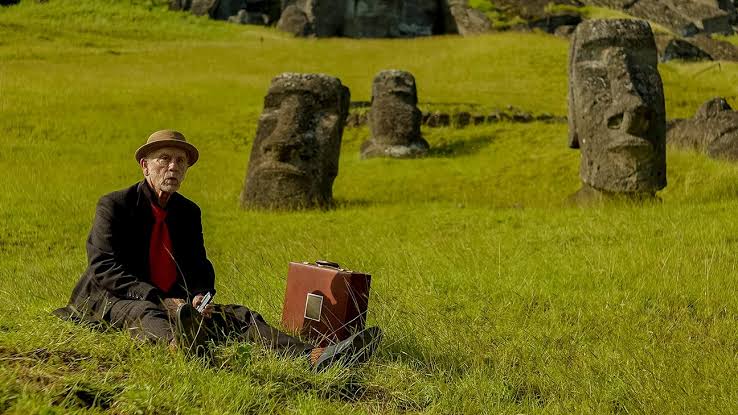
For Wild Horse Nine, that culture is Chile circa 1973, and that odd couple is Chris (John Malkovich) and Lee (Sam Rockwell), CIA agents sent to destabilize the Chilean government in preparation of a coup d’état.

The pair head to Easter Island for a week away, but Chris’s increasingly “no shits to give” behavior has their boss MJ (Steve Buscemi) steamed, Chris in danger, and Lee caught in a winless situation.

The detailed time stamp and historical fascination—sometimes coy, but bitingly serious—informs every scene. The dialog drips with cynical humor inspired by the CIA, and McDonagh’s casting ensures the comedy also bites. Parker Posey, with just a couple of scenes, leaves a riotous impression.

Likewise, in a drily, wearily irritated performance, Buscemi carves out yet another masterful supporting performance.

As expected, it’s the bromance at the center that matters most, and Rockwell and Malkovich have never been better. Rockwell, at first blush, seems to be playing a riff on a favorite: a little dumber than he should be, funny, flippant, easy to hang out with, liable to dance. But simmering inside that delightful character is a heartbroken friend doing his best to do right by his buddy.

Malkovich, the buddy, has maybe never been better. His arc is surprising from beginning to end, but there’s something fully honest in the way Chris grapples with morality, regret, faith, dinosaurs. The performance is sometimes playful but in an existential, almost melancholy way. And the unexpected tenderness between Chris and Lee is deeply moving.

So, another triumph of F bombs, murder, politics, and friendship and a film you need to find time to see.

Don’t You (Forget About Mom)

Don’t Say Good Luck

by Hope Madden

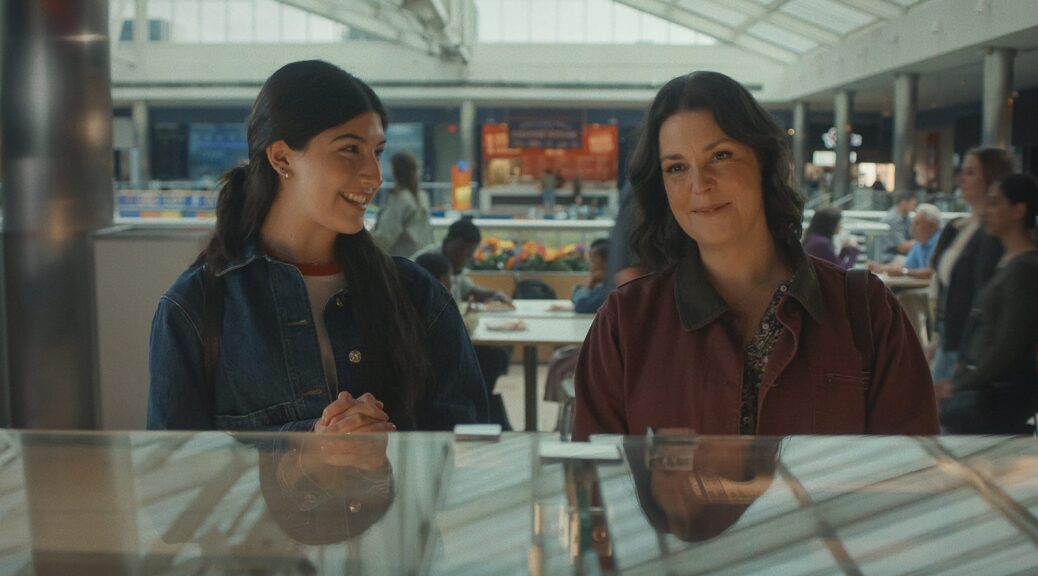
There is a sweet, delightfully messy coming-of-age film at the heart of director Julia Hart’s Don’t Say Good Luck.

As high school sophomore Sophie (Sunny Sandler) nervously auditions for the school musical, navigating friendship and crush and theatrical nerves, her relationship with her mom takes a hit. What’s refreshing about Don’t Say Good Luck is that each of Sophie’s high school sources of angst takes a back seat to her issues with her mom, rather than vice versa.

In your average John Hughes film, troubles at home are the backdrop for our plucky teen hero. Hart, who co-wrote the script with Laura Hankin and Jordan Horowitz, reframes priorities. The film is about Sophie and her mom (Melanie Lynskey).

Hart goes so far as to soften the villainous stereotypes Hughes trained us to expect. By rounding out the more minor characters and refocusing attention away from high school angst and toward family relationships, Don’t Say Good Luck abandons the age-old trope that teens are on their own, their parents just don’t understand.

It’s nice. Beyond that, it’s often moving.

Lynskey is characteristically wonderful, and she and Max Greenfield present a very natural, endearing, weary bond as parents going through something tragic. The chaos of their lives—a busy high schooler, twin boys, a deli they co-own where they both work—feels lived in.

Add, in minor supporting roles, the great Bebe Neuwirth and Steve Buscemi, and you’re looking at an impressive ensemble, ostensibly there to buoy Sandler, whose father and mother (Adam and Jackie Sandler) produce.

Sunny Sandler does a fine job in the spotlight. She’s fine, like her sister Sadie Sandler was fine in Roommates. She’s probably not strong enough to anchor this film, but she doesn’t sink it, either.

Still, there’s a refreshing untidiness about Don’t Say Good Luck that keeps you off kilter and helps the climax hit harder. The film lacks cynicism, believes teenage girls do dumb things but are not dumb people, and sees depth where other films choose not to. It’s an enjoyable high school dramedy, and one that acknowledges its audience’s humanity.

Serkis Circus

Animal Farm

by George Wolf

You may have questions going into the newly realized Animal Farm. And it’s a good bet you’ll have more coming out.

Who is this for exactly? What’s with these changes? Did someone think Orwell didn’t get the point across? And just…why?

For his part, director Andy Serkis has addressed some of these concerns in the weeks leading up to the film’s release. Serkis has stressed that he worked closely with Orwell’s estate, striving to update the classic tale with modern themes and a nod toward understanding “the contradictions within its author.”

That is an ambitious goal, to say the least, and one that Serkis, screenwriter Nicholas Stoller and a star-studded voice cast can’t completely bring to market.

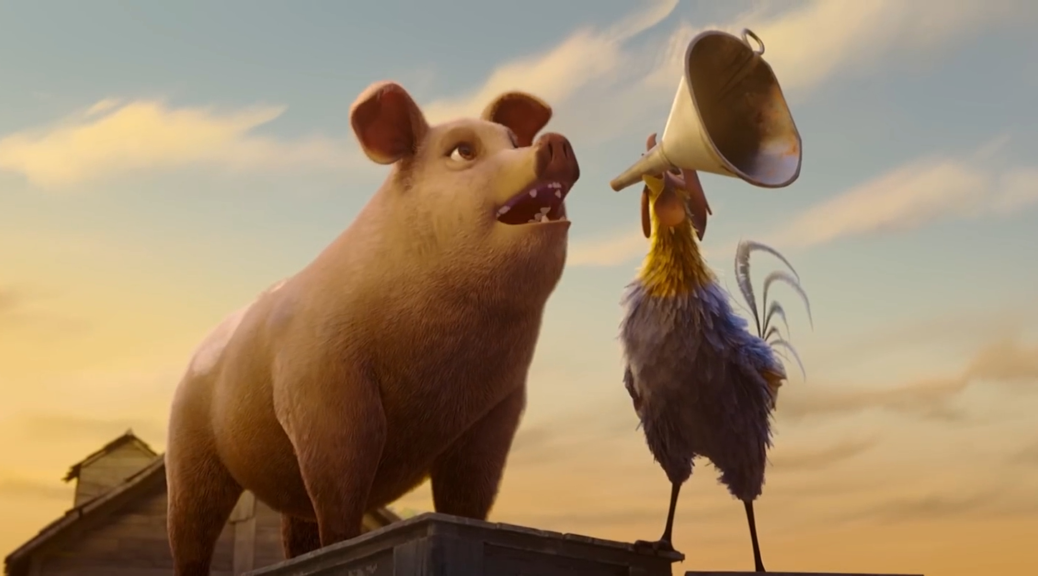
The first major adjustment is adding the character of Lucky (voiced by Gatan Matarazzo), a young pig that serves as a moral compass for younger viewers. Lucky is easily influenced by boss hog Napoleon (Seth Rogen) as the farm rules of equality and fairness are twisted and broken.

Lucky is key to Napoleon’s plan of exploitation, and to making hard working animals like Boxer (Woody Harrelson) believe Napoleon has their best interests at heart. So why is he cozying up to the cyber truck driving tycoon Frieda Pilkington (Glenn Close) and Mr. Whymper the banker (Steve Buscemi)?

Well, some animals are more equal than others. That’s always been the rule!

The fart jokes and obvious humor are a bit jarring for such cherished material, but make it clear Serkis is aiming to give younger audiences a primer in Orwell’s belief that absolute power corrupts absolutely. It’s best to keep that in mind when the movie delivers a new, hope-filled ending that’s a few pastures away from Orwell’s bleak reveal.

To adults who revere that original cautionary tale, much of this overhaul may feel like a blasphemous Chicken Run rebellion. These animals have to decide for themselves that they’ve been hoodwinked, don’t they? So isn’t Lucky’s hand-holding a bit contradictory? And as well meaning as this might be, why risk diluting the power of Orwell that will come when the kids are old enough to grasp it?

After a series of examples both pro and anti-capitalism, the end credits montage cements the message that the enemies are the absolutely corrupt of any ilk. And history has shown they can be overcome.

Some of it works, yes. But honestly, it’s just impossible to come at it with the fresh eyes and clear heads of the ones it appears to be meant for. Do I respect what this Serkis circus is trying to do? Yes.

Do I wish he did it with an original story not named Animal Farm?

Also yes.

Ghouls

The Dead Don’t Die

by Hope Madden

Indie god and native Ohioan Jim Jarmusch made a zombie movie.

If you don’t know the filmmaker (Down by Law, Ghost Dog, Only Lovers Left Alive, Paterson and so many more jewels), you might only have noticed this cast and wondered what would have drawn Bill Murray, Adam Driver, Tilda Swinton, Chloe Sevigny, Steve Buscemi, Rosie Perez, RZA, Caleb Landry Jones, Danny Glover, Tom Waits, Iggy Pop and Selena Gomez to a zombie movie.

It’s because Jim Jarmusch made it.

Jarmusch is an auteur of peculiar vision, and his latest, The Dead Don’t Die, with its insanely magnificent cast and its remarkably marketable concept, is the first ever in his nearly 30 years behind the camera to receive a national release.

Not everybody is going to love it, but it will attain cult status faster than any other Jarmusch film, and that’s saying something.

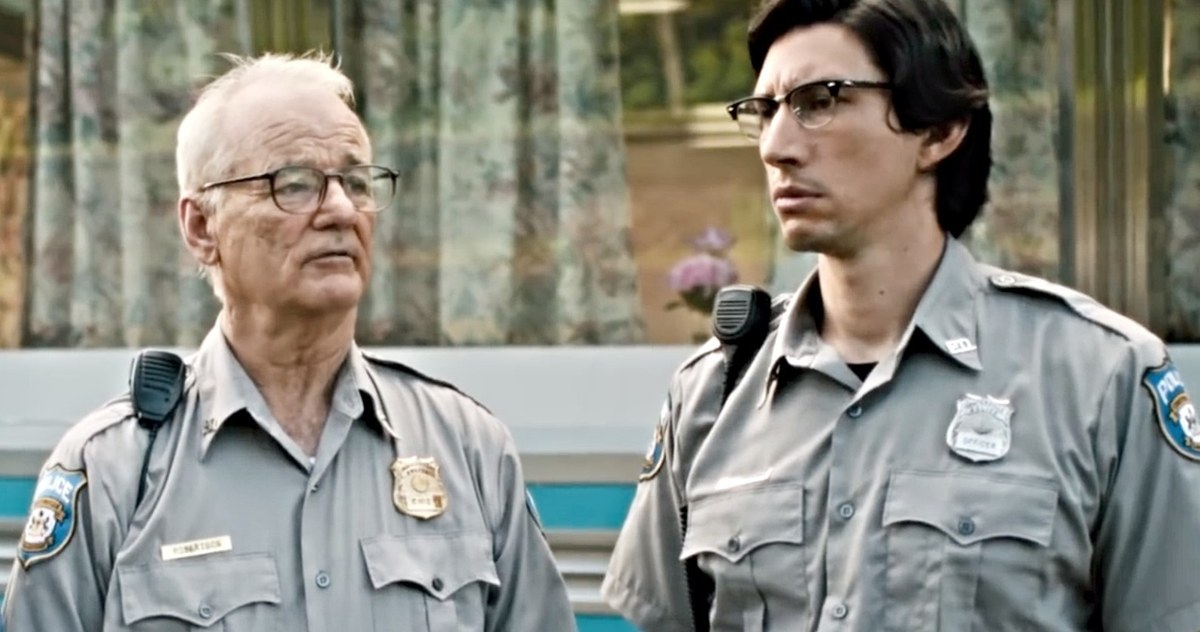
He sets his zombie epidemic in Centerville, Pennsylvania (Romero territory). It’s a small town with just a trio of local police, a gas station/comic book store, one motel (run by Larry Fassenden, first-time Jarmusch actor, longtime horror staple), one diner, and one funeral home, the Ever After.

Newscaster Posie Juarez (Rosie Perez – nice!) informs of the unusual animal behavior, discusses the “polar fracking” issue that’s sent the earth off its rotation, and notes that the recent deaths appear to be caused by a wild animal. Maybe multiple wild animals.

The film never loses its deadpan humor or its sleepy, small town pace, which is one of its greatest charms. Another is the string of in-jokes that horror fans will revisit with countless re-viewings.

But let’s be honest, the cast is the thing. Murray and Driver’s onscreen chemistry is a joy. In fact, Murray’s onscreen chemistry with everyone—Sevigny, Swinton, Glover, even Carol Kane, who’s dead the entire film—delivers the tender heart of the movie.

Driver out-deadpans everyone in the film with comedic delivery I honestly did not know he could muster. Landry Jones also shines, as does The Tilda. (Why can’t she be in every movie?)

And as the film moseys toward its finale, which Driver’s Officer Ronnie Paterson believes won’t end well, you realize this is probably not the hardest Jim Jarmusch and crew have ever worked. Not that the revelation diminishes the fun one iota.

Though it’s tempting to see this narrative as some kind of metaphor for our current global political dystopia, in fairness, it’s more of a mildly cynical love letter to horror and populist entertainment.

Mainly, it’s a low-key laugh riot, an in-joke that feels inclusive and the most quotable movie of the year.

Dead Body Politic

The Death of Stalin

by George Wolf

Opening with a madcap “musical emergency” and closing with a blood-stained political coup, The Death of Stalin infuses its factual base with coal back humor of the most delicious and absurd variety.

The film cements director/co-writer Armando Iannucci (Veep, In the Loop) as a premier satirist, as it plays so giddily with history while constantly poking you with a timeliness that should be shocking but sadly is not.

So many feels are here, none better than the sheer joy of watching this film unfold.

It is Moscow in the 1950s and we meet Josef Stalin and his ruling committee, with nary an actor even attempting a Russian accent. Those British and American dialects set a wonderfully off-kilter vibe.

Iannucci has a confident grip on his vision, and the impeccable cast to see it through,

Who else would play Nikita Khrushchev but Steve Busemi? Then there’s Jeffrey Tambor and Simon Russell Beale as committee members jockeying for power after Stalin’s death, Andrea Riseborough and Rupert Friend as Stalin’s manically desperate kids, and Jason Isaacs arriving late to nearly steal the whole show as the uber-manly head of the Russian army.

As enemies lists are updated (“new list!”) and constant assassinations whirl, the hilarious barbs keep coming in dizzying succession, each delivered with bullseye precision by lead actors and walk-ons alike. Monty Python vet Michael Palin is a fitting face in the ensemble, with Iannucci structuring a few bits (like Buscemi and Tambor trying to slyly switch places at Stalin’s funeral-classic) that recall some of the finest Python zaniness.

It all flows so fast and furiously funny, it’s easy to forget how hard it is to pull off such effective satire. We end up laughing through a dark and brutal time in history, while Iannuci speaks truth to those currently in power with a sharp and savage brand of mockery.

Stalin is still dead.

Long live The Death of Stalin!