Tag Archives: Invasion of the Body Snatchers

Fright Club: Body Swap Horror

The idea of someone walking around in your skin, of losing control of who you are, of becoming who knows what while who knows who cozies up inside your life – well, it’s a thought that has kept horror filmmakers up night. Thank goodness for us!

Here’s a look at our favorite body swap horror movies, recorded live at Gateway Film Center!

5. The Stepford Wives (1975)

Ira Levin’s novel left a scar and filmmaker Bryan Forbes and star Katherine Ross pick that scab to deliver a satirical thriller that is still surprisingly unsettling. What both the novel and the film understand is a genuine fear that the person you love, whose faults you accept and who you plan to age and die with, has no interest in what’s inside you at all. You – the actual you – mean nothing at all.

It’s the idea of trophy wife taken to a diabolical extreme (as even the outright trophy wife isn’t long to last, what with the inevitability of aging and all). The term Stepford Wife worked its way into the lexicon, and there’s a clear pot boiler, B-movie feel to this film, but it still leaves a mark.

4. The Faculty (1998)

The film exaggerates (one hopes) the social order of a typical Ohio high school to propose that it wouldn’t be so terrible if all the teachers and most of the students died violently, or at least underwent such a horrific trauma that a revision of the social order became appealing. 

Indeed, in this film, conformity equals a communicable disease. Adults aren’t to be trusted; high school is a sadistic machine grinding us into sausage; outcasts are the only true individuals and, therefore, the only people worth saving. Director Robert Rodriguez pulls the thing off with panache, all the while exploring the terrifying truth that we subject our children to a very real and reinforced helplessness every school day.

Interestingly, the infected teachers and students don’t turn into superficial, Stepford-style versions of themselves. For the most part, they indeed become better, stronger, more self-actualized (ironically enough) versions, which is interestingly creepy. It’s as if humanity – at least the version of it we find in a typical American high school – really isn’t worth saving.

3. Invasion of the Body Snatchers (1978)

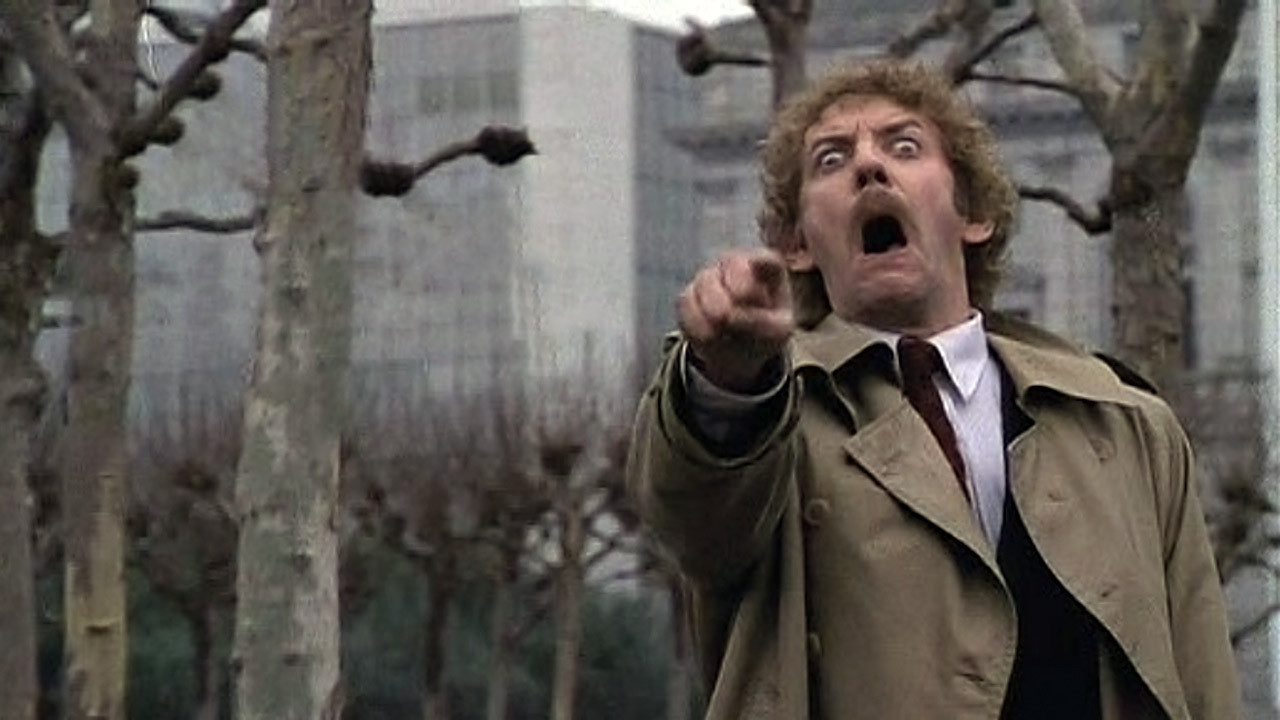
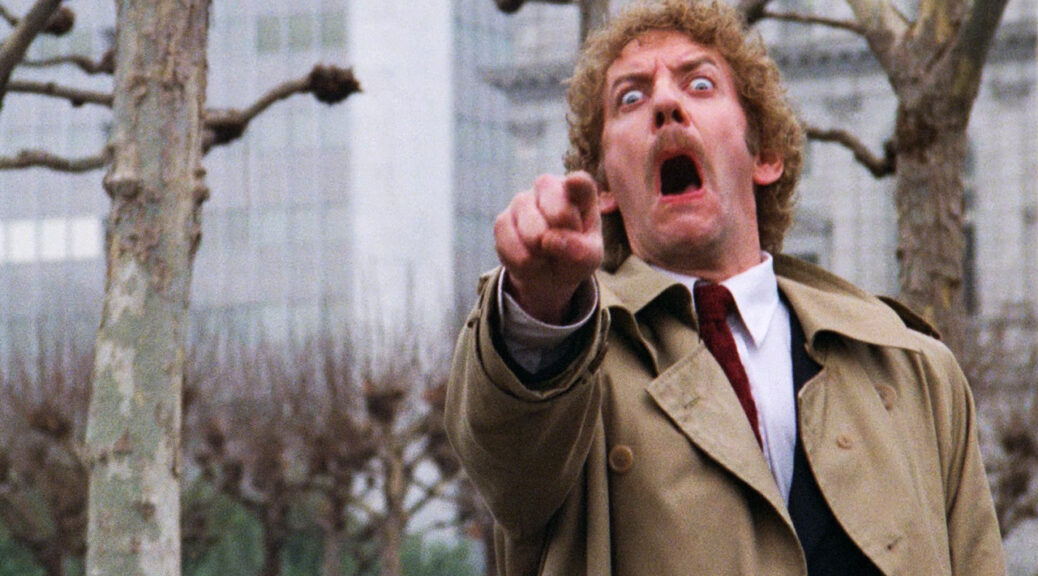
Yes, we love the original. But we’re giving the remake the nod. Philip Kaufman’s Invasion of the Body Snatchers creates an oppressive, delirious atmosphere that will not let you go. San Francisco health department workers originally believe some friends are becoming paranoid, sensing a non-existent distance in their loved ones, but soon realize that an alien species is replacing human beings with replicas – exact duplicates, except for the lack of emotion.

The sound and visual effects are especially magnificent when compared to other films of the era, but they age well and give the film a gritty realism that feels unsettling against the fantasy storyline.

The cast is weirdly perfect – the unflappable Donald Sutherland, the naturally emotionless Leonard Nimoy, the effortlessly weird Jeff Goldblum, and Nancy Cartwright, who screams so well when aliens show themselves.

2. Possessor (2020)

Brandon Cronenberg’s created a gorgeous techno world, its lulling disorientation punctuated by some of the most visceral horror to make it to the screen in 2020. There is something admirably confident about showing your influences this brazenly.

Credit Cronenberg, too, for the forethought to cast the two leads as females (Jennifer Jason Leigh playing the remarkable Andrea Riseborough’s boss). The theme of the film, if driven by males, would have been passe and obvious. With females, though, it’s not only more relevant and vital, but more of a gut punch when the time comes to cash the check.

Possessor is a meditation on identity, sometimes very obviously so, but the underlying message takes that concept and stabs you in your still-beating heart with it.

1.Get Out (2017)

Opening with a brilliant prologue that wraps a nice vibe of homage around the cold realities of “walking while black,” writer/director Jordan Peele uses tension, humor and a few solid frights to call out blatant prejudice, casual racism and cultural appropriation.

When white Rose (Alison Williams) takes her black boyfriend Chris (Daniel Kaluuya) home to meet the fam, she assures him race will not be a problem. How can she be sure? Because her Dad (Bradley Whitford) would have voted for Obama’s third term “if he could.” It’s the first of many B.S. alerts for Peele, and they only get more satisfying.

Rose’s family is overly polite at first, but then mom Missy (Catherine Keener) starts acting evasive and brother Jeremy (Caleb Landry Jones) gets a bit threatening, while the gardener and the maid (both black – whaaat?) appear straight outta Stepford.

Peele is clearly a horror fan, and he gives knowing winks to many genre cliches (the jump scare, the dream) while anchoring his entire film in the upending of the “final girl.” This isn’t a young white coed trying to solve a mystery and save herself, it’s a young man of color, challenging the audience to enjoy the ride but understand why switching these roles in a horror film is a social critique in itself.

Fright Club: Best SciFi Horror

Science Fiction and Horror are cousins—creepy, often slimy cousins. Cousins with pustules, often.

There are so many utterly brilliant options to pick through that our omissions are bound to frustrate and upset, but whether your horror comes from the lab, from space or from the space/time continuum, when you watch these five, your neighbors will hear you scream.

5. Invasion of the Body Snatchers (1956)

Director Dono Siegel was the first filmmaker to bring Jack Finney’s Cold War nightmare to the screen. He wouldn’t be the last, maybe not even the best, but what he did with this eerie alien tale tapped into a societal anxiety and quickly became one of the most influential and terrifying films of its time.

Doc Miles Bennell (Kevin McCarthy) is just home from a short trip when he’s inundated by patients swearing their loved ones are not their loved ones at all. Sure, they look the same and have all the same skills and memories, but there’s no warmth, no passion.

With this, the fear that our very nation could be overtaken by an outside force – Russians, say, for terrifyingly immediate sake of argument – working its way through not by force, but by quietly taking over each and every person in one town, then spreading from town to town to town.

It’s the kind of insidious evil that fuels contagion horror, infestation horror, even demonic horror. But Invasion of the Body Snatchers spoke to a society’s deepest fears and became a touchstone for all SciFi to follow it.

4. The Fly (1986)

After a couple of interesting, if un-medical films, the great David Cronenberg made a triumphant return to the laboratory of the mad scientist in his most popular film to date.

But it’s not just Cronenberg’s disturbed genius for images and ideas that makes The Fly fly; it’s the performance he draws from Jeff Goldblum.

Goldblum is an absolute gift to this film, so endearing in his pre-Brundlefly nerdiness. He’s the picture’s heartbeat, and it’s more than the fact that we like his character so much. The actor also performs heroically under all those prosthetics.

He and Geena Davis make the perfect pair, with their matching height and mullets, and their onscreen chemistry does give the film a level of human drama traditionally lacking from the Cronenberg canon. Atop that, there’s the transformation scene in the bathroom – the fingernails, the pustules – all classic Cronenberg grotesquerie, and still difficult to watch.

https://www.youtube.com/watch?v=7BzwxJ-M_M0

3. Timecrimes (2007)

This one is nutty, and absolutely required viewing for anyone with an interest in space/time continuum conundrums.

Writer/director/co-star Nacho Vigalondo (Colossal) mocks our desire for control and our fear of the doppelganger with a very quick and dirty trip through time. So much can go wrong when you travel just one hour backward. The less you know going in, the better.

An always clever experiment in science fiction, horror and irony, Timecrimes is a spare, unique and wild ride.

2. The Thing (1982)

John Carpenter’s remake of the 1951 SciFi flick The Thing from Another World concocts a thoroughly spectacular tale of icy isolation, contamination, and mutation.

A beard-tastic cast portrays a team of scientists on expedition in the Arctic who take in a dog. The dog is not a dog, though. Not really. And soon, in an isolated wasteland with barely enough interior room to hold all the facial hair, folks are getting jumpy because there’s no knowing who’s not really himself anymore.

This is an amped up body snatcher movie benefitting from some of Carpenter’s most cinema-fluent and crafty direction: wide shots when we need to see the vastness of the unruly wilds; tight shots to remind us of the close quarters with parasitic death inside.

The story remains taut beginning to end, and there’s rarely any telling just who is and who is not infected by the last reel. You’re as baffled and confined as the scientists.

1. Alien (1979)

Director Ridley Scott’s other masterpiece, Alien, traps a crew aboard a rickety, dark, workingman’s spacecraft with the coolest monster perhaps ever.

After a vagina-hand-sucker-monster attaches itself to your face, it gestates inside you, then tears through your innards. Then it grows exponentially, hides a second set of teeth, and bleeds acid. How much cooler could this possibly be?

Compare that to the crew, and the competition seems unreasonably mismatched. The sunken-chested Harry Dean Stanton, the screechy Veronica Cartwright, the sinister Ian Holm, the mustachioed Tom Skerritt, even the mulleted Sigourney Weaver – they all seem doomed before we even get to know them.

Much ado has been made, rightfully so, of the John Hurt Chest Explosion (I loved their early work, before they went commercial). But Scott’s lingering camera leaves unsettling impressions in far simpler ways, starting with the shot of all those eggs.


Fright Club: Best Horror of the 1950s

When we first started this podcast, one hundred thirtysomething episodes ago, we devoted specific shows to the best horror movies by the decade. We started with the Sixties, but we got called on that at one point by a listener who wanted to know what we thought were the best horror movies of the Fifties.

We have finally responded to that (hopefully) very patient listener, and enlisted the help of our old friend Phantom Dark Dave. Together, we wander through the cold war movies that scared a generation.

5. Godzilla (1954)

Is Godzilla the best film on this list? No. But, more than any other film in the genre, it spoke directly to global anxieties, became a phenomenal success, and changed the face of horror.

As Japan struggled to re-emerge from the 1945 bombings of Hiroshima and Nagasaki, director Ishiro Honda unleashed that dreaded kaiju—followed quickly by a tidal wave of creature features focused on scientists whose ungodly work creates global cataclysm.

Far more pointed and insightful than its American bastardization or any of the sequels or reboots to follow, the 1954 Japanese original mirrored the desperate, helpless impotence of a global population in the face of very real, apocalyptic danger. Sure, that danger breathed fire and came in a rubber suit, but history shows again and again how nature points out the folly of man.

4. Invasion of the Body Snatchers (1956)

Director Dono Siegel was the first filmmaker to bring Jack Finney’s Cold War nightmare to the screen. He wouldn’t be the last, maybe not even the best, but what he did with this eerie alien tale tapped into a societal anxiety and quickly became one of the most influential and terrifying films of its time.

Doc Miles Bennell (Kevin McCarthy) is just home from a short trip when he’s inundated by patients swearing their loved ones are not their loved ones at all. Sure, they look the same and have all the same skills and memories, but there’s no warmth, no passion.

With this, the fear that our very nation could be overtaken by an outside force – Russians, say, for terrifyingly immediate sake of argument – working its way through not by force, but by quietly taking over each and every person in one town, then spreading from town to town to town.

It’s the kind of insidious evil that fuels contagion horror, infestation horror, even demonic horror. But Invasion of the Body Snatchers spoke to a society’s deepest fears and became a touchstone for all SciFi to follow it.

3. Dracula (Horror of Dracula) (1958)

In 1958, Hammer Films began its long and fabulous love affair with the cloaked one, introducing the irrefutably awesome Christopher Lee as the Count.

Their tale varies a bit from Stoker’s, but the main players are mostly accounted for. Peter Cushing steps in early and often as Van Helsing, bringing his inimitable brand of prissy kick-ass, but it’s Lee who carries the film.

Six foot 5 and sporting that elegant yet sinister baritone, Lee cuts by far the most intimidating figure of the lot as Dracula. Director Terence Fisher (what?!) uses that to the film’s advantage by developing a far more vicious, brutal vampire than what we’d seen previously.

Still, the film is about seduction, though, which gives Lee’s brute force an unseemly thrill. Unlike so many victims in other vampire tales, it’s not just that Melissa Stribling’s Mina is helpless to stop Dracula’s penetration. She’s in league. She wants it.

Ribald stuff for 1958!

2. The Bad Seed (1956)

The minute delicate Christine’s (Nancy Kelly) husband leaves for his 4-week assignment in DC, their way-too-perfect daughter begins to betray some scary behavior. The creepy handyman Leroy (Henry Jones) has her figured out – he knows she’s not as perfect as she pretends.

You may be tempted to abandon the film in its first reel, feeling as if you know where the it’s going. You’ll be right, but there are two big reasons to stick it out. One is that Bad Seed did it first, and did it well, considering the conservative cinematic limitations of the Fifties.

Second, because director Mervyn LeRoy’s approach – not a single vile act appears onscreen – gives the picture an air of restraint and dignity while employing the perversity of individual imaginations to ramp up the creepiness.

Enough can’t be said about Patty McCormack. There’s surprising nuance in her manipulations, and the Oscar-nominated 9-year-old handles the role with both grace and menace.

1. Diabolique (1955)

Pierre Boileau’s novel was such hot property that even Alfred Hitchcock pined to make it into a film. But Henri-Georges Clouzot got hold if it first. His psychological thriller with horror-ific undertones is crafty, spooky, jumpy and wonderful.

And it wouldn’t work if it weren’t for the weirdly lived-in relationship among Nicole (Simone Signoret) – a hard-edged boarding school teacher – and the married couple that runs the school. Christina (Vera Clouzot) is a fragile heiress; her husband Michel (Paul Meurisse) is the abusive, blowhard school headmaster. Michel and Nicole are sleeping together, Christine knows, both women are friends, both realize he’s a bastard. Wonder if there’s something they can do about it.

What unravels is a mystery with a supernatural flavor that never fails to surprise and entrance. All the performances are wonderful, the black and white cinematography creates a spectral atmosphere, and that bathtub scene can still make you jump.


Fright Club: Best Alien Horror Movies

Aliens tend to be very scary. Whether they’re sucking blood from some unsuspecting, love struck plant store employee or leaving crop circles out behind Mel Gibson’s barn, unleashing slugs who share group consciousness or luring us into a fearsome carnival to learn the true meaning of “scary clown,” aliens are tough to trust. Just like Mulder says, and indeed, it was the fresh new look at The X-Files that inspired this week’s count down: the scariest alien movies.

Listen to the full podcast HERE.

5. The Mist (2007)

Frank Darabont really loves him some Stephen King, having adapted and directed the writer’s work almost exclusively for the duration of his career. While The Shawshank Redemption may be Darabont’s most fondly remembered effort, The Mist is an underappreciated creature feature.

David Drayton (Thomas Jane) and his young son head to town for some groceries. Meanwhile, a tear in the space/time continuum opens a doorway to alien monsters. So he, his boy, and a dozen or so other shoppers are all trapped inside this glass-fronted store just waiting for rescue or death.

Marcia Gay Harden is characteristically brilliant as the religious zealot who turns survival inside the store into something less likely than survival out with the monsters, but the whole cast offers surprisingly restrained and emotional turns.

The FX look good, too, and the film itself is best seen in via the black and white version. Regardless, it’s the provocative ending that guarantees this one will sear itself into your memory.

4. Slither (2006)

Writer/director James Gunn took the best parts of B-movie Night of the Creeps and Cronenberg’s They Came from Within, mashing the pieces into the exquisitely funny, gross and terrifying Slither.

Cutie pie Starla (Elizabeth Banks) is having some marital problems. Her husband Grant (the great horror actor Michael Rooker) is at the epicenter of an alien invasion. Smalltown sheriff Bill Pardy (every nerd girls’ imaginary boyfriend Nathan Fillion) tries to set things straight as a giant mucous ball, a balloonlike womb-woman, a squid monster, projectile vomit, zombies, and loads and loads of slugs keep the action really hopping.

Consistently funny, cleverly written, well-paced, tense and scary and gross – Slither has it all. Watch it. Do it!

3. Invasion of the Body Snatchers (1978)

Among the best remakes of all time, Philip Kaufman’s Invasion of the Body Snatchers creates an oppressive, delirious atmosphere that will not let you go. San Francisco health department workers originally believe some friends are becoming paranoid, sensing a non-existent distance in their loved ones, but soon realize that an alien species is replacing human beings with replicas – exact duplicates, except for the lack of emotion.

The sound and visual effects are especially magnificent when compared to other films of the era, but they age well and give the film a gritty realism that feels unsettling against the fantasy storyline.

The cast is weirdly perfect – the unflappable Donald Sutherland, the naturally emotionless Leonard Nimoy, the effortlessly weird Jeff Goldblum, and Nancy Cartwright, who screams so well when aliens show themselves.

2. The Thing (1982)

John Carpenter’s remake of the 1951 SciFi flick The Thing from Another World is both reverent and barrier-breaking, limiting the original’s Cold War paranoia, and concocting a thoroughly spectacular tale of icy isolation, contamination, and mutation.

A beard-tastic cast portrays a team of scientists on expedition in the Arctic who take in a dog. The dog is not a dog, though. Not really. And soon, in an isolated wasteland with barely enough interior room to hold all the facial hair, folks are getting jumpy because there’s no knowing who’s not really himself anymore.

This is an amped up body snatcher movie benefitting from some of Carpenter’s most cinema-fluent and crafty direction: wide shots when we need to see the vastness of the unruly wilds; tight shots to remind us of the close quarters with parasitic death inside.

The story remains taut beginning to end, and there’s rarely any telling just who is and who is not infected by the last reel. You’re as baffled and confined as the scientists.

https://www.youtube.com/watch?v=F7t-919Ec9U

1. Alien (1979)

After a vagina-hand-sucker-monster attaches itself to your face, it gestates inside you, then tears through your innards. Then it grows exponentially, hides a second set of teeth, and bleeds acid. How much cooler could this possibly be?

Compare that to the crew, and the competition seems unreasonably mismatched. The sunken-chested Harry Dean Stanton, the screechy Veronica Cartwright, the sinister Ian Holm, the mustachioed Tom Skerritt, even the mulleted Sigourney Weaver – they all seem doomed before we even get to know them.

Director Ridley Scott handled the film perfectly, emphasizing the tin can quality of the futuristic vessel. These people are simply not safe – they probably were in danger before bringing the afflicted John Hurt back on board. It’s dark in there, decaying and nasty – just like some moldy old mansion. The trick here is that these people- unlike the inhabitants of a haunted house – truly cannot go anywhere. Where would they go? They’re in space.
Much ado has been made, rightfully so, of the John Hurt Chest Explosion (we loved their early work, before they went commercial). But Scott’s lingering camera leaves unsettling impressions in far simpler ways, starting with the shot of all those eggs.