Tag Archives: Hope Madden

Stranger than Fiction

Honey Boy

by Hope Madden

“The only thing my father gave me that was of any value was pain, and you want to take that away?”

In other hands, that line could be the beginning and end of a movie, a maudlin attempt to summarize a life of abuse.

In other hands, Honey Boy could have gone really, really wrong.

It did not.

Ostensibly the strung together memories of a damaged movie star committed to rehab, the script tells of the insidious relationship between child star Otis (Noah Jupe as the semi-autobiographical avatar for Shia LaBeouf) and his ne’er do well father (LaBeouf, basically playing his own father).

Are we watching LaBeouf work through his own issues with this remarkable act of empathy, or is this, too, just an act? Or is Honey Boy itself a blurring of the line between sincerity and performance? To director Alma Har’el’s credit, Honey Boy does not shy away from that question. In fact, at every turn it embraces it. Just don’t expect an answer.

Har’el weaves between past and present. Modern day (2005) Otis (Lucas Hedges) stomps, blusters and bullies his way through court-appointed confinement where certain triggers send the film back to 1995. There, mainly in a dodgy motel with prostitutes for neighbors, young Otis and his dad struggle.

Hedges and Jupe make for eerily strong choices to play the two younger versions of LaBeouf, each an actor of such remarkable range and talent that super stardom seems inevitable. Hedges’s turn brims with contempt and vulnerability, while Jupe seems to recognize the limits of his own character’s understanding. His performance is heartbreaking.

The showier work comes from LaBeouf, who delivers a truly compassionate if not entirely forgiving performance. Your dad can be a hard guy to understand. If this entire film is simply LaBeouf’s attempt to do that, we’re lucky we get to participate.

LaBeouf’s work as a child actor—his turn as Stanley Yelnats in the utterly charming Holes, for instance—solidified his standing as a talent. His mainly mediocre choices and flat performances in his young adulthood made his off-screen antics more worthy of comment. And though his personal life may not have steadied much (his last arrest was just two years ago), his 2019 cinematic output (including the endlessly delightful The Peanut Butter Falcon) is easily the most impressive of his career.

The feat here is not just the performance, but the script.

In other hands, Honey Boy is another look at the ugly familial dysfunction that both propels and destroys young actors. Instead, through mundane details, we’re offered an unsettling and candid character study and a finely written family tragedy.

I Don’t Want to Go Out – Week of November 25

Well, a lot of options for your time off this holiday. Too bad none of these movies are very good.

Click the film title to link to the full review.

Official Secrets

Where’d You Go, Bernadette


Don’t Let Go

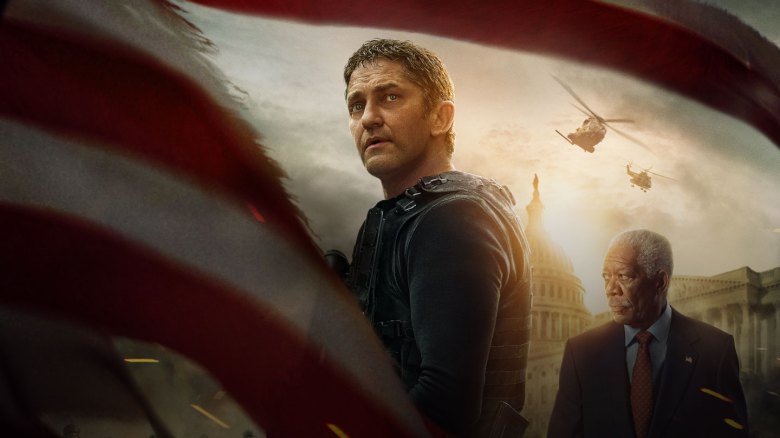
Angel Has Fallen

Mary

Parasites

Knives Out

by Hope Madden

It’s interesting that three of the most deliciously watchable films of 2019 exist to question the societal value of the rich. Earlier this year, the action-comedy bloodbath Ready or Not pitted one regular schmo in a bridal gown against a mansionful of one-percenters looking to end her life.

Too bloody for you? How about Joon-ho Bong’s masterpiece of social commentary, Parasite? Who, exactly, is it living off the blood of others?

Rian Johnson follows this path with the hoot and a half that is Knives Out.

If you only know Johnson for his brilliant fanboy agitator The Last Jedi, you should give yourself the gift of every other movie he’s ever made, Looper and Brick, in particular. This guy is an idiosyncratic storyteller, one who balances style and substance to create memorable worlds you aren’t ready to leave when the credits roll.

Knives Out is his own Agatha Christie-style take on the general uselessness of the 1%. And it is a riot.

Christopher Plummer is Harlan Thromby, the recently and mysteriously deceased mystery novelist whose family is in a pickle. Though they believe their gregarious patriarch offed himself, the notion seems unlikely however clear the death scene seems to make it.

Renowned gentleman detective Benoit Blanc (that’s a name!), played by a priceless Daniel Craig, joins two police detectives (LaKeith Stanfield and Johnson go-to goof Noah Segan) to dig into the affair.

As little as possible should be said about the plot, as it is a whodunnit, but at the very least it’s appropriate to acknowledge this cast.

The spoiled and entitled are played by Jamie Lee Curtis, Don Johnson, Jaeden Martell (from It), Toni Collette as well as Michael Shannon and Chris Evans and their sweaters. Each finds a memorable character and each clearly has an excellent time doing so.

Credit also Ana de Armas as Marta, the homecare nurse and anchor for the story. De Armas has previously been cast primarily for her looks (Blade Runner 2049, War Dogs, Knock Knock), but proves here that she can lead a film, even a film with this strong an ensemble. Her Marta is wholesome but funny, gullible but smart. Her chemistry with Craig is enough to generate some interest in their next collaboration. (Well, that and the writing.)

Johnson proves that you can poke fun without abandoning compassion. More than that, he reminds us that, as a writer, he’s shooting on all cylinders: wry, clever, meticulously crafted, socially aware and tons of fun.

Screening Room: Beautiful Day in the Neighborhood, Frozen 2, 21 Bridges & More

Do You Remember Me?

Frankie

by Hope Madden

A loosely structured day-in-the-life, writer/director Ira Sachs’s Frankie drops in on a family vacation in lovely Sintra, Portugal.

It’s a posh event, no doubt, but the idyllic setting contrasts with the emotions roiling beneath the surface of the film. That is best depicted by cinematographer Rui Pocas, who captures the distance, the awkward directionlessness, and the isolation.

Pocas’s camera catches the meandering spirit of the film as it winds its way through the streets of this historic, mist-enshrouded city, catching up here and there with the different members of the party. Each arrives at the behest of family matriarch, Frankie (Isabelle Huppert), and her doting second husband, Jimmy (Brendan Gleeson).

Intersecting stories involve Frankie’s ex-husband Michel (Pascal Greggory) and their grown son Paul (Jeremie Renier); her step-daughter Sylvia (Vivette Robinson) and her family; and a close friend (Marisa Tomei) who’s surprised everyone by bringing along a boyfriend (Greg Kinnear).

The tiny yet formidable Huppert perfectly embodies her character, frail but decidedly in control. In fact, the size difference between the great Huppert and the also great Gleeson is in gorgeously inverted proportion to their stubborn resolve.

Gleeson is all gentle, heartbroken support while Huppert’s performance is removed stoicism, which makes her fleeting moments of vulnerability all the more human. Seeing these remarkable veteran talents and their love story is more than reason enough to experience this film.

Sachs’s greying narrative, while never pushy, feels determined to expose our personal desires to check off boxes and maintain the illusion of control. Frankie manipulates events to find solace in the idea that there are final solutions, or that a person may continue to be needed and useful, even present for our loved ones after we’re gone.

But life is untidy, and fittingly, so is Frankie.

Good Neighbors

A Beautiful Day in the Neighborhood

by Hope Madden

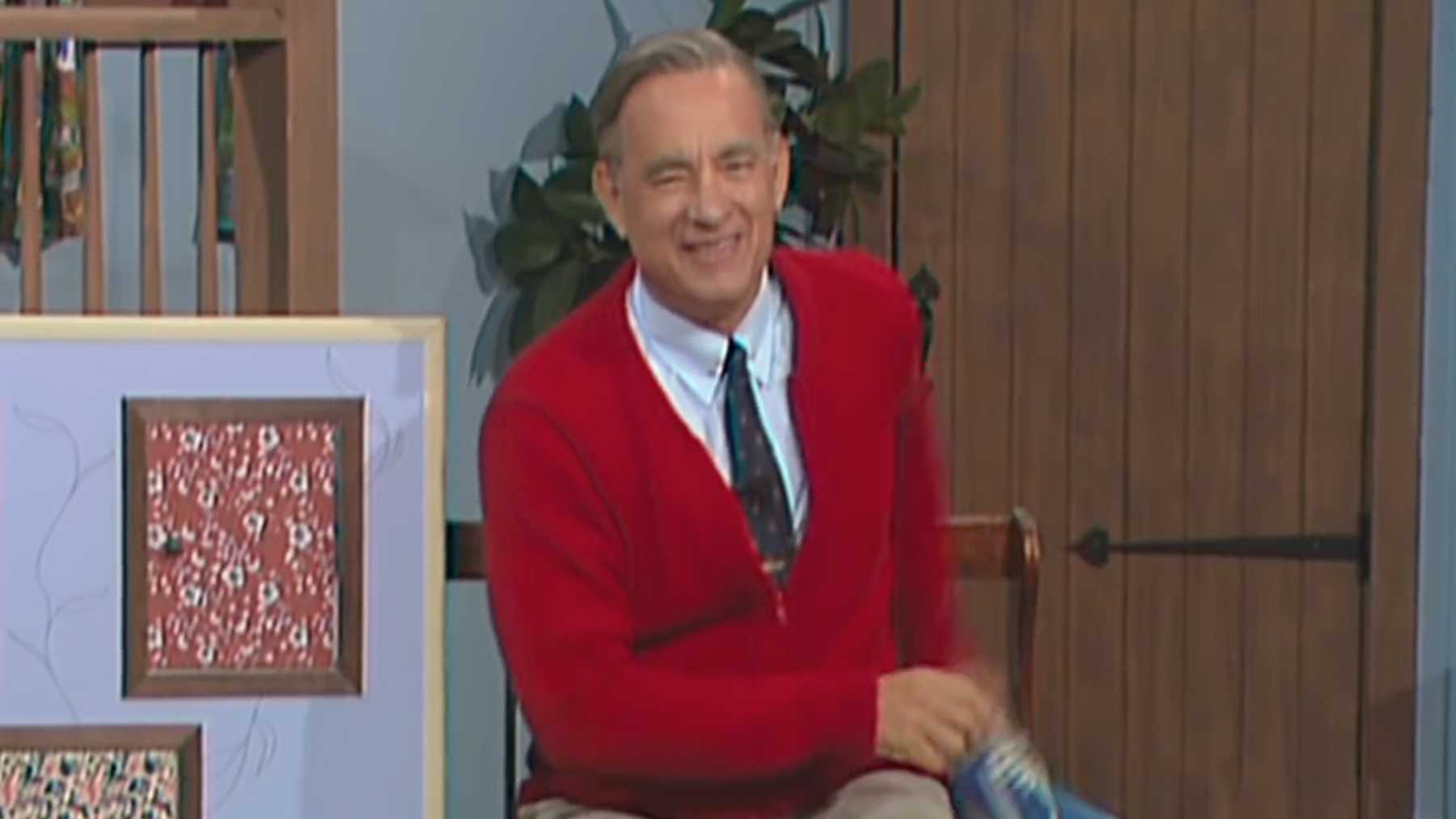
My God, I love Fred Rogers.

I didn’t watch the show as a kid, preferring Under Dog, Scooby Doo and other dog-related animation. But the last time I cried, not from sadness but from gratitude and longing, was during Morgan Neville’s beautiful 2018 documentary, Won’t You Be My Neighbor?

I sobbed. In public.

When news reached the world that Mr. Rogers was due for a biopic, surely each of us realized in our own separate ways that Tom Hanks was A) perfect, and B) going to make us sob all over again.

No way that was just me.

Hanks doesn’t love Fred Rogers as much as he entirely accepts him, and that’s the magic of this performance. While the rest of us may look on Rogers and his deep, genuine and implausible goodness with suspicion or awe, it’s nearly impossible to accept him as one of us. Hanks does. He doesn’t plumb for human frailty, he takes Fred Rogers on Fred Rogers’s terms, and that’s why Tom Hanks has two Oscars already. His performance here is unerring, eerily so.

Truth be told, though, A Beautiful Day in the Neighborhood is not really Fred’s story. Rather, Mr. Rogers is the transformative catalyst for cynical NY magazine writer Lloyd Vogel. Vogel is played by Matthew Rhys and loosely based on real-life journalist Tom Junod, whose Esquire article is the inspiration for the film.

Director Marielle Heller (Can You Ever Forgive Me?) structures the film much like an episode from Mr. Rogers Neighborhood, and that almost-surreal-but-not quality serves to underscore the absurdity of the situation as Lloyd sees it: Who is this guy? Is this really what he’s like?

That healthy skepticism and Rogers’s ability to break it down creates the thrust of the film, but it’s also a window for the audience to question, accept and then celebrate this lovely man.

With two films in two years, the late children’s programming icon is having quite a moment. It’s hard to be sad about that.

I Don’t Want to Go Out – Week of November 18

Not bad little week in home entertainment whether you’re looking for some joyfully earnest Bruce, some joyously earnest Dora, or a gorgeous and strangely seductive Polish romance. You’re not looking for one of those things? Oh, we think you are.

Click the movie title to link to the full review.

Blinded by the Light

Dora and the Lost City of Gold

Cold War (DVD)

Fright Club: Travel Abroad Horror

There is something terrifying about being in a strange land, especially if the language is not your own. There are so many great horror flicks that take advantage of that sense of isolation and confusion that we needed a second list of stuff that didn’t make the final cut but that you should check out anyway: And Soon the Darkness (1970), Road Games (2015), Transsiberian (2008), Hostel (2005) and Hostel: Part II (2007), The Human Centipede: First Sequence (2009) and, in particular, the double shot of Spanish horror Who Can Kill a Child? (1976) and its 2012 remake, Come Out and Play.

What’s better? Here you go:

5. Suspiria (1977)

Italian director Dario Argento is in the business of colorfully dispatching nubile young women. In Suspiria, his strongest film, American ballerina Suzy Bannion (Jessica Harper) moves to Germany to join a dance academy, but the other dancers are catty and the school is staffed with freaks. Plus, women keep disappearing and dying.

As Suzy undertakes an investigation of sorts, she discovers that the school is a front for a coven of witches. But Argento’s best film isn’t known for its plot, it’s become famous because of the visually disturbing and weirdly gorgeous imagery. Suspiria is a twisted fairy tale of sorts, saturating every image with detail and deep colors, oversized arches and doorways that dwarf the actors. Even the bizarre dubbing Argento favored in his earlier films works to feed the film’s effectively surreal quality.

4. Ils (Them) (2006)

Brisk, effective and terrifying, Them is among the most impressive horror flicks to rely on the savagery of adolescent boredom as its central conceit.

Writers/directors David Moreau and Xavier Palud offer a lean, unapologetic, tightly conceived thriller that never lets up.

Set in Romania, Them follows Lucas and Clementine, a young couple still moving into the big rattling old house where they’ll stay while they’re working abroad. It will be a shorter trip than they’d originally planned.

What the film offers in 77 minutes is relentless suspense. I’m not sure what else you want.

Creepy noises, hooded figures, sadistic children and the chaos that entails – Them sets up a fresh and mean cat and mouse game that pulls you in immediately and leaves you unsettled.

3. An American Werewolf in London (1981)

Director John Landis blends horror, humor and a little romance with cutting edge (at the time) special effects to tell the tale of a handsome American tourist David (David Naughton) doomed to turn into a Pepper – I mean a werewolf – at the next full moon.

Two American college kids (Naughton and Griffin Dunne), riding in the back of a pickup full of sheep, backpacking across the moors, talk about girls and look for a place to duck out of the rain.

Aah, a pub – The Slaughtered Lamb – that’ll do!

The scene in the pub is awesome, as is the scene that follows, where the boys are stalked across the foggy moors. Creepy foreboding leading to real terror, this first act grabs you and the stage is set for a sly and scary escapade. The wolf looks cool, the sound design is fantastically horrifying, and Landis’s brightly subversive humor has never had a better showcase.

2. The Descent (2005)

A bunch of buddies head to the States for a spelunking adventure.

Writer/director Neil Marshall begins his film with an emotionally jolting shock, quickly followed by some awfully unsettling cave crawling and squeezing and generally hyperventilating, before turning dizzyingly panicky before snapping a bone right in two.

And then we find out there are monsters.

Long before the first drop of blood is drawn by the monsters – which are surprisingly well conceived and tremendously creepy – the audience has already been wrung out emotionally.

The grislier the film gets, the more primal the tone becomes, eventually taking on a tenor as much like a war movie as a horror film. This is not surprising from the director that unleashed Dog Soldiers – a gory, fun werewolf adventure. But Marshall’s second attempt is far scarier.
For full-on horror, this is one hell of a monster movie.

1. Midsommar (2019)

In Midsommar, we are as desperate to claw our way out of this soul-crushing grief as Dani (Florence Pugh). Mainly to avoid being alone, Dani insinuates herself into her anthropology student boyfriend Christian’s (Jack Reynor) trip to rural Sweden with his buds.

Little does she know they are all headed straight for a modern riff on The Wicker Man.

Like a Bergman inspired homage to bad breakups, this terror is deeply-rooted in the psyche, always taking less care to scare you than to keep you unsettled and on edge.

She Is the Warrior

The Warrior Queen of Jhansi

by Hope Madden

My genuine thanks to first time writer/director Swati Bhise for bringing to my attention the Indian freedom fighter and queen, Rani Lakshmibai. The woman was an absolute badass.

Lakshmibai (Devika Bhise, Swati’s daughter) reigned over the Indian state of Jhansi during the mid 1850s, a time of British rule. In 1857, she took part in a rebellion aimed at freedom from the colonial oppressors.

When I say took part, I mean she wielded swords on horseback, united an otherwise divided smattering of armies and generally kicked all manner of ass.

She was most impressive.

She deserved a better movie.

Bhise’s approach to this wildly untraditional tale is far too traditional, too restrained, and too afraid to dig into any of the characters, including the lead. More cripplingly, the film is basically a chamber piece until the third act.

That could work if what we saw was the backbiting and usurping that may have gone on behind closed doors—British or Indian—as a woman took charge. Or if it was strategy and brainstorming that we observed, or if stirring speeches bore witness to the ruler’s inner conflict and motivational charisma.

Instead we get a blandly sanitized soap opera, the warrior queen discussing hair care with her female soldiers as frequently as military tactics. Throughout, Bhise’s direction feels amateurish, every scene stagnating as it drowns in costumes and unconvincing sets.

Dialog fills in for character development, but we also see a lot of the queen sitting silently and thinking. The Warrior Queen of Jhansi depicts lot of pondering, a lot of costumes, very little action.

“I am no stranger to battle,” Rani Lakshmibai tells whoever might listen, but it’s news to us because we haven’t seen her do anything besides think, talk and change her clothes. Worse still is the single scene of battle practice, where she readies her female forces, not one of whom can convincingly handle a sword.

The British side of things fares little better, although a smug Rupert Everett  as Sir Hugh Rose and Nathaniel Parker as blowhard Sir Robert Hamilton do inject some life into the proceedings. Everett is the only actor in the entire cast asked to find multiple layers in his character. It’s just two layers, really, but they are a welcome change.

It is a magnificent feat, no doubt, that the story of a 1850s Indian warrior queen has made its way to the American big screen (there are two Indian films, one classic and a second released this year). I wish it was a better movie.

House Painting

The Irishman

by Hope Madden and George Wolf

In 1973, Martin Scorsese gave us Mean Streets, the tale of a fledgeling gangster contemplating the rungs that could lead him to the top of the NYC mafia. The film takes the point of view of the young man looking forward, and it boasts a supernaturally brilliant performance by Robert De Niro, then 30-years-old.

Scorsese’s latest, The Irishman, looks at a gangster’s rise through those same ranks, this time with the eyes of an old man looking back on his life. In another performance that will remind you of his prowess, a 76-year-old De Niro stars.

The 3 ½ hour running time opens patiently enough as Rodrigo Prieto’s camera winds its way through the halls of a nursing home, establishing a pattern. We will be meandering likewise through the life and memories of Frank Sheeran (De Niro), house painter.

“When I was young,” says Sheeran, “I thought house painters painted houses.”

Sheeran’s telling us his tale in much the way the actual Frank Sheeran told writer Charles Brandt (author of Scorsese’s source material) what may or may not have been the truth about his history as a mob hitman (it’s not paint he’s splashing across walls) and his relationship with Jimmy Hoffa (Al Pacino).

Teamed with acclaimed screenwriter Steven Zaillian (Schindler’s List, Moneyball, Gangs of New York), Scorsese’s sly delivery suggests that he’s interested in what might have happened to Hoffa, sure, but he’s more intrigued by memory, regret and revisionism in the cold glare of time. The result is sometimes surprisingly funny, with a wistful, lived-in humor that more than suits the film’s greying perspective.

De Niro’s longtime partnership with Scorsese makes it even easier to view Sheeran as an extension of the director himself, taking stock of his legacy in film.

The decades-spanning narrative could have easily made for a riveting Netflix series instead of one three and a half hour feature, but as the first act blends into the second, the film has you. The grip is subtle but it is more than firm, the epic storytelling and nuanced performances combining for an absorbing experience that takes your mind off the clock.

And what a joy to watch three powerhouses in the ring together.

Joe Pesci, playing against type as Russell Bufalino, the quiet mafia boss who mentors Sheeran, is as good as he’s ever been. Pacino fills Hoffa with an electric mix of dangerous bravado, unapologetic corruption and dogged sincerity. And De Niro, like that aging fighter reclaiming his title, gives The Irishman its deep, introspective soul.

And while the trio of legends is commanding the screen, Scorsese uses a small supporting role to remind us he can still speak softly and hit hard.

As Peggy Sheeran, the elder daughter who has watched her father evolve into the man he is, Anna Paquin is piercing, and almost entirely silent. When Peggy finally speaks, she asks her father a direct question that carries the weight of a lifetime behind it, and serves as the perfect conduit to drive the film to its aching conclusion.

Away from the chatter of Scorsese’s views on superhero movies or the proper role of Netflix, The Irishman stands as a testament to cinematic storytelling, and to how much power four old warhorses can still harness.