Director Andrea Dorfman and her frequent collaborator, writer Jennifer Deyell, are quietly establishing a pattern. They are preoccupied by the fact that people are preoccupied with a woman’s relationship status.
They’ve certainly put a fine point on that with their latest,
Spinster.
A sort of anti-romantic comedy, the film opens as a voiceover gushes through the most romantic, fairy tale meeting ever. Pan to Gaby (Chelsea Peretti, Brooklyn Nine-Nine), the caterer listening to the bride-to-be with overt cynicism, possibly a little contempt, definitely mockery.
Gaby is 39 today and before the day is over, her boyfriend
will break up with her, her married friend’s buddies will demean her
childlessness, her dad will disappoint her (and she him), and her brother will
forget it’s her birthday but rope her into babysitting.
That is to say, the stage is set for Gaby to actually take
stock of her life and address what’s really causing her existential grief.
(Hint: it’s not a boyfriend.)
Peretti is so comfortable in this character that she creates
believability even when situations and the ensemble around her lack
authenticity. Dorfman’s film has an episodic, even sit-com feel to it. She
pieces together moments of Gaby’s life with a more “and then this happened, and
then this happened” approach than with an outright narrative.
On occasion, this works. Peretti’s one-on-one chemistry is
often enough to elevate individual scenes. Her deadpan delivery is ideal for Deyell’s
slyly clever script, which refuses to preach, preferring to resignedly point
out certain frustrating realities.
Though the execution lacks polish, Spinster makes up for most of that with Peretti’s cynical charm and its own quiet determination to subvert its chosen genre.
Who’s the greatest American poet? Maya Angelou? Sherman
Alexie? Walt Whitman? I will argue that it’s Charles Bukowski.
He really only wrote for about 24 years, but he has nearly
70 books in print: novels, collections of short fiction, and poems. My God, the
poems.
If you are also a
fan, documentarian Matteo Borgardt has a film for you.
You Never Had It: An Evening with Bukowski shares a rediscovered interview from 1981. Italian reporter Silvia Bizio visits the writer in his San Pedro home and they talk for about an hour. It’s very low key, and honestly, not a great deal is covered or discovered in terms of the interview itself.
But.
If you’ve ever just wanted to sit in Bukowski’s living room as wine bottle after wine bottle empties, as ash trays fill, as Max the cat finds a good position on Linda Lee’s lap—friends, this is indispensable viewing.
’81 was a big year for him. Bukowski’s about halfway through
his seminal novel Ham on Rye, he’s recently returned from the European
trip documented in his nonfiction text Shakespeare Never Did This, and
that trip/book’s photographer Michael Montfort makes himself at home on the
floor near the ash tray on the end table.
It’s all very low key as people drink and smoke and Bukowski
talks. He doesn’t wax philosophical, doesn’t argue too much, doesn’t make
proclamations or yell or curse. He doesn’t really even tell any stories, but he
does read a few poems (good ones!).
This is hardly the first documentary on Charles Bukowski. (In fact, Taylor Hackford directed the first, 1973’s Bukowski.) But as a general (and quite lovely) rule, previous docs focused on his raucous readings. If you want to hear Bukowski read, there are at least five full length docs that will let you do that.
It’s far rarer to spend some time with the writer at home.
Perhaps because she is drinking herself or perhaps because
the writer is in a cagey mood, Bizio never really finds a good footing for
questions and answers, although humanity and Bukowski’s low opinion of it
offers the slightest hint of a theme for the proceedings. The tour of the house
goes badly, and back-and-forth about sex in his writing uncovers little.
If that sounds negative, it shouldn’t. The whole scene is like a page from one of his books: things not going as well as he’d hoped, the fault likely his own, but at least there’s wine. The more wine, the worse it will go, but there you have it.
You Never Had It will not entertain everyone equally, but it will thrill a handful of people and you know who you are.
We want to thank Cati Glidewell, also know as The Blonde in Front, for joining us to talk through some of the best blond(e)s in horror. There’s a lot of names here, but I think we may have proved that—with a few really bloody exceptions—blondes do seem to have more fun in these movies.
The Dudes
6. Francis Dollarhyde (Tom Noonan), Manhunter (1986)
Tom Noonan’s entire career is defined by a mixture of tenderness and menace. It begins with his unusual physical appearance, including his almost colorless locks, and ends with performances that realize everything broken and horrifying about a character—especially Francis Dollarhyde. The terrifying chemistry between Dollarhyde and a blind Joan Allen’s is heartbreaking perfection.
5. Mark Lewis (Carl Boehm), Peeping Tom (1960)
Like Norman Bates across the pond, England’s Mark Lewis (Carl Boehm) is an innocent. Boehm’s blank stare, his frightened mouse reflexes, his blond locks all contribute to a character so tender you can’t help but root for him—although it would be great if he’d stop murdering women.
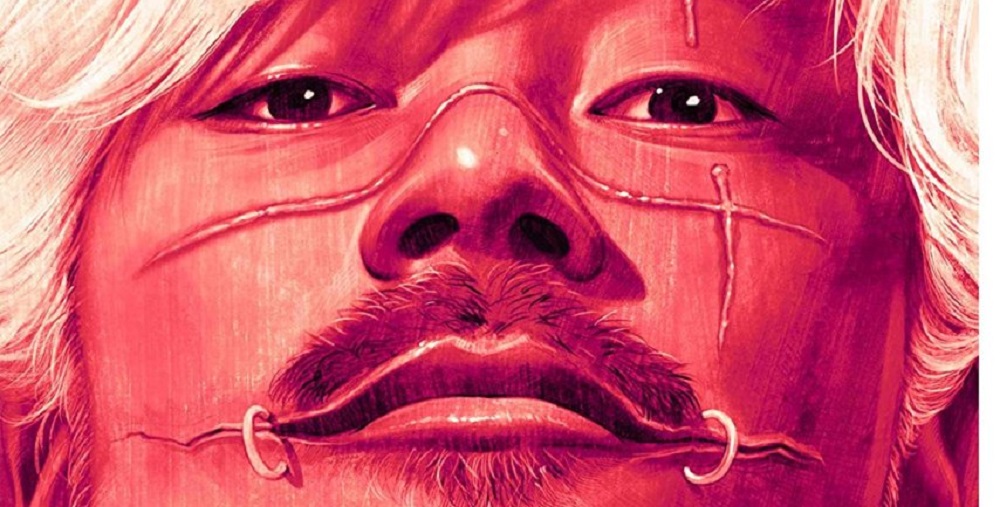
4. Kakihara (Tadanobu Asano), Ichi the Killer (2001)
A bleach blond in a Japanese film will automatically draw the eye, but Kakihara’s not just here to catch your attention. Genius filmmaker Takashi Miike and Tadanobu Asano created this badass to upend your expectations. He’s the baddie, right? And man-child Ichi is the innocent? Or is Miike toying with you?
3. Gage (Miko Hughs), Pet Sematary (1989)
Get the Kleenex ready because the ridiculously cute Mike Hughs has a date with a semi. A toddler when he filmed this movie, Hughs really turns in a remarkable performance, whether he’s tugging your heart strings or slicing through Fred Gwynne’s Achilles tendon.
2. David (Keiffer Sutherland), The Lost Boys (1987)
Hubba hubba. The rock star duds. The homoerotic relationship with Jason Patrick. The mullett! Keiffer Sutherland’s bad boy David was so cool you couldn’t help wanting to hang out with him. Eating maggots seems like a small price to pay, really. Nobody said the cool kids’ table would be tasty.
1. John Ryder (Rutger Hauer), The Hitcher (1986)
There are those with a thing for bad boys, and then there are those with a thing for Rutger Hauer. He’s not a bad boy—he’s not even in the same zip code. His John Ryder will make you feel all kinds of weird things because he’s not your garden variety dangerous character. What he will do to you, to that nice family in the station wagon, to your new girlfriend, is more awful than anything you can think of.
The Women
6. Chris Hargeson (Nancy Allen), Carrie (1976)
When De Palma launched the ultimate in mean girl cinema, Nancy Allen delivered the ultimate mean girl. Chris Hargeson’s bloodthirsty princess energy has to convey something horrifying if she is to properly offset what poor Carrie White has to content with at home. Luckily for us (not so much for Carrie), she does.
5. Tomasin (Anya Taylor Joy), The Witch (2015)
Watching The Witch, you realize that writer/director Robert Eggers chose everything: every sound, every image, every color. And while Tomasin’s family looked like gaunt, hard working, colorless cogs in God’s wilderness wheel, Thomasin did not. Even as we open on Anya Taylor Joy, confessing her sins and begging forgiveness, she is lit from within. A beacon. It’s just that her light has caught the wrong kind of attention.
4. Casey (Drew Barrymore), Scream (1996)
The genius Wes Craven and his producer Drew Barrymore pulled an incredible and soon-to-be endlessly copied sleight of hand with Casey—the spunky female played by the biggest star in the cast. With this character, Craven introduces the meta-movie-commentary that defines this film while simultaneously upending our own unconscious investment in those tropes by killing Casey off in Act 1.
3. Carol (Catherine Deneuve), Repulsion (1965)
We went back and forth. Would it be Deneuve as gorgeous seductress Miriam in Tony Scott’s 1983 vampire film The Hunger, or innocent driven to madness Carol in Polanski’s Repulsion? (He does know how to torture innocent young women, doesn’t he?) Deneuve’s performance in Repulsion is so compelling and difficult—playing primarily alone for about half the film—that it won out, but either way, she’s a blonde to be reckoned with.
2. Pamela Voorhees (Betsy Palmer), Friday the 13th (1980)
The OG Karen (to steal a phrase from this episode’s co-host The Blonde in Front), Pamela Voorhees has a plan and she’s sticking to it. This funny business among the camp counselors needs to be addressed, corrected. Enough is enough. Betsy Palmer’s performance is spot-on, so comforting and in control before it goes completely batshit. Jason may get all the love, but Mrs. Voorhees took care of business first.
1. Carrie White (Sissy Spacek), Carrie (1976)
Like his idol Hitchcock, Brian De Palma had a thing about blondes—what that fair hair represented, what it could mean. For De Palma, it might be the bombshell of Angie Dickson’s character in Dressed to Kill, or the innocence of Carrie White. Of course, Sissy Spacek’s Oscar nominated performance in the film was what really sold this sheltered, shell-shocked little lamb, but you can’t deny she had that look.
Dave Franco has made a movie. James Franco’s younger, less creepy brother has been a welcome, smiling face in films since his teens. Directing his first feature, he sidesteps the more obvious choice of a comedy – given his background – and instead delivers a tense horror about jealousy, deteriorating relationships, and the dangers of Airbnb.
Dan Stevens stars as Charlie, handsome and successful older
brother of Josh (Jeremy Allen White). As if Josh doesn’t have enough to live up
to, his beloved and brilliant girlfriend Mina (Sheila Vand) is Charlie’s work
partner and the two just really click.
Together Mina and Charlie land a big deal. To celebrate, they and their significant others—Josh, plus Charlie’s wife Michelle (Alison Brie, Franco’s real life wife)—rent a gorgeous, off the grid place for a weekend getaway.
If you’re thinking this is an incredibly common premise
jazzed up with a couple of impressive actors, you are correct. But there’s a
lot to be said for a good cast.
All four convey a lived-in chemistry that gives the
relationship conflicts more resonance. Brie and White, in particular, deliver
believable warmth as big sister-in-law/little brother-in-law. Both are dealing
with some jealousy, each lending support and guidance to the other. Secondary
characters in indie horror are rarely given this kind of opportunity to breathe,
but drawing the audience into these relationships benefits the tensions Franco
is working to create.
Stevens and Vand work wonders as the morally conflicted
central characters. Vand (exquisite in A
Girl Walks Home Alone at Night—see it!) blends righteous indignation with
guilty conscience. This helps her build believable motives for what could, in
lesser hands, feel like conveniently poor decision making.
Liberal guilt, entitlement, questionable morality and
selfishness rarely come packaged as sympathetically as Charlie, but Stevens is
a solid character actor and here he creates a nicely complex character.
Rounding out the small ensemble, the always welcome Toby Huss also finds layers in a character that could easily have been one note.
So, performances are solid and Franco delivers a decent sleight of hand by Act 3. The film feels imbalanced by then, though, as if it wasn’t until the 11th hour that Franco decided this was a horror movie. There’s enough suffering in the final reel to clarify The Rental’s genre, but that doesn’t mean it entirely works.
You know what, 2020 is just going to be remembered as its own horror story. I mean, filmmakers have a lot of competition if they think they can scare us more than real life right now. Still, we’ve seen a decent batch of horror: Blood Quantum, The Droving, Time Out of Space, The Hunt and more. What more, you ask? Well, we’ll tell you. Here are our favorite horror films of the first half of 2020.
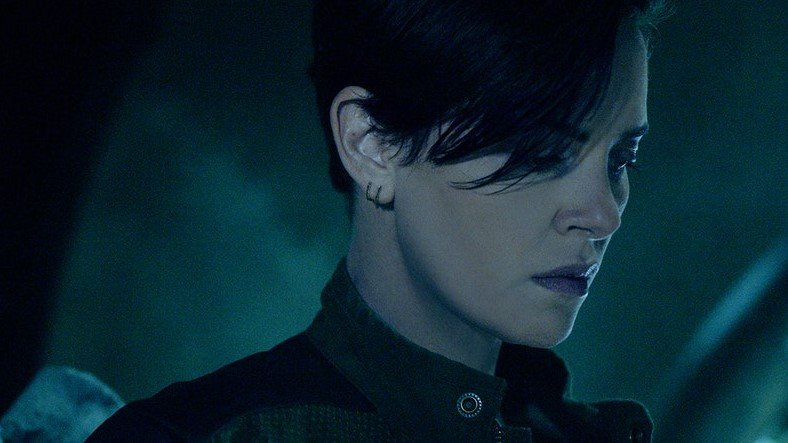
5. The Invisible Man
Instead of the existential ponderings that generally underscore
cinematic Invisible Man retellings,
writer/director Leigh Whannell uses this story to examine sexual politics,
abuse, control and agency.
It’s a laudable aim, but the reason
it works is casting.
Whannell’s script is smart, with much needed
upgrades to the invisibility formula as well as the havoc wrought. But the
success of The Invisible Man is almost
entirely shouldered by Elisabeth Moss, who nails every moment of oppressed
Cecilia Kass’s arc.
At its core, The Invisible Man is an entertaining B-movie horror propped up by contrivance. Whannell’s aim is to give the story new relevance, and thanks to Moss, his aim is true.
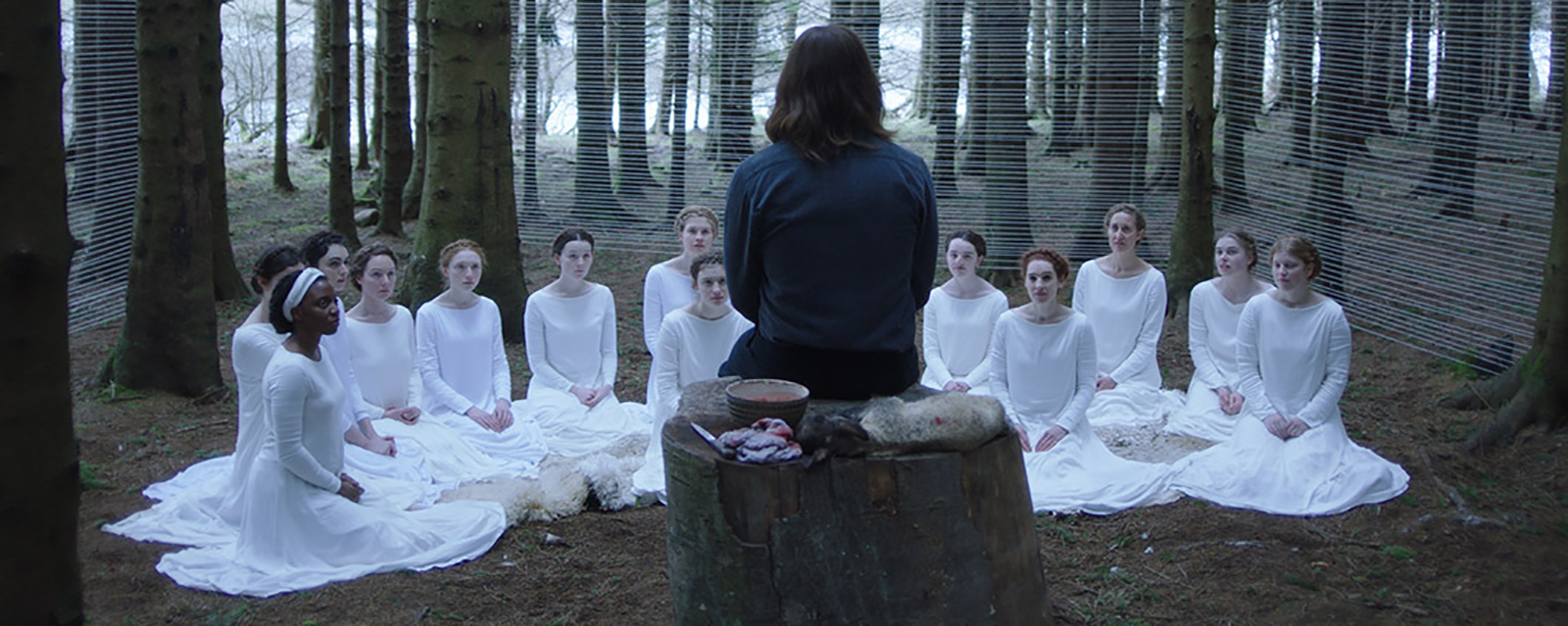
4. The Other Lamb
The first step toward freedom is
telling your own story.
Writer
C.S. McMullen and director Malgorzata Szumowska tell this one really well.
Between McMullen’s outrage and the macabre lyricism of Szumowska’s camera, The Other Lamb offers
a dark, angry and satisfying coming-of-age tale.
Selah’s (Raffey Cassity) first period and her commune’s
migration to a new and more isolated Eden offer the tale some structure. Like
many a horror film, The Other Lamb occupies
itself with burgeoning womanhood, the end of innocence. Unlike most others in
the genre, Szumowska’s film depicts this as a time of finding your own power.
The Other Lamb does not simply suggest you question authority. It demands that you do far more than that, and do it for your own good.
3. Gretel & Hansel
Sophia Lillis (IT) narrates and stars as Gretel, the center of this coming of
age story—reasonable, given the change of billing suggested by the film’s
title. The witch may still have a tasty meal on her mind, but this is less a
cautionary tale than it is a metaphor for agency over obligation.
Alice Krige and her cheekbones
strike the perfect mixture of menace and mentorship, while Sammy Leakey’s
little Hansel manages to be both adorable and tiresome, as is required for the
story to work.
Perkins continues to impress with
his talent for visual storytelling and Galo Olivares’s cinematography heightens
the film’s folkloric atmosphere.
There’s no escaping this spell. The whole affair feels like an intriguing dream.
2. The Lodge
Several Fiala and Veronika Franz follow up
their creepy Goodnight Mommy with this “white death” horror that sees a
future stepmom having a tough time getting to know the kids during a weeklong,
snowbound cabin retreat. Riley Keough is riding an impressive run of
performances and her work here is slippery and wonderful. As the unwanted new
member in the family, she’s sympathetic but also brittle.
Jaeden Martell, a kid who has yet
to deliver a less than impressive turn, is the human heartbeat at the center of
the mystery in the cabin. His tenderness gives the film a quiet, pleading
tragedy. Whether he’s comforting his grieving little sister or begging Grace
(Keough) to come in from the snow, his performance aches and you ache with him.
There’s no denying the mounting dread the filmmakers create, and the three central performances are uniquely effective. Thanks to the actors’ commitment and the filmmakers’ skill in atmospheric horror, the movie grips you, makes you cold and uncomfortable, and ends with a memorable slap.
1. Swallow
Putting a relevant twist on the classic
“horrific mother” trope, writer/director Carlo Mirabella-Davis uses the rare
eating disorder pica to anchor his exploration of gender dynamics and, in
particular, control.
Where Mirabella-Davis’s talent for building
tension and framing scenes drive the narrative, it’s Bennett’s performance that
elevates the film. Serving as executive producer as well as star, Haley Bennett
transforms over the course of the film.
When things finally burst, director and star shake off the traditional storytelling, the Yellow Wallpaper or Awakening or even Safe. The filmmaker’s vision and imagery come full circle with a bold conclusion worthy of Bennett’s performance.
Kelly Reichardt films tell a story, but not in the
traditional Hollywood sense. She draws you into an alien environment, unveils universal
humanity and shows you something about yourself, about us. There’s usually a story
buried in there somewhere. In this case, it’s about two outsiders in 19th
Century Oregon who find friendship.
And a cow.
Cookie (John Magaro) is a gentle soul, not properly built
for the fur trade. (You saw The
Revenant, right?) He’s a baker at heart, not that he gets to do much
baking on a trapping expedition with hungry, volatile, hunt-weary men.
He holds no value for these men, and has nothing in common with them. But somehow he sees a kinship with the naked Chinese man he stumbles upon as he forages for mushrooms in the woods.
It’s sweet and sad the way Cookie and King-Lu (Orion Lee)
fall into a relationship. King-Lu has ambitions. He opens Cookie’s eyes to
opportunities he’d never had the courage to consider. Through these characters
Reichardt demonstrates how fragile, lovely and heartbreaking hope can be.
Working again with regular collaborator Jonathan Raymond,
whose novel the two adapted, Reichardt keeps you pulling for her heroes. The
narrative lulls you with understated conversations and observations while the meticulously
captured natural beauty onscreen beguiles. Within that, we see the potential of
a young country through the eyes of Americans determining the dream.
Reichardt explores loneliness in all her films, the sense
that we are each simply and inevitably alone, though we struggle against it
regardless. This exploration isn’t hurried. It breathes. She emphasizes the longing
for connection in every quiet moment with her characteristic use of lighting,
the way she frames nature and the naturalistic performances she draws from Lee
and Magaro.
William Tyler’s lonesome score offers something both
mournful and tender, which is fitting. Although these men’s very existence in
this place testifies to hardy ambition, Reichardt lingers on moments of gentle
camaraderie.
When Kelly Reichardt tells a story, she breaks your heart. She does it slowly and quietly, but it’s broken nonetheless.
Here’s the thing about horror movies in 2020: they have to one up 2020. This year itself is such a horror show, it’s hard for cinema to keep up.
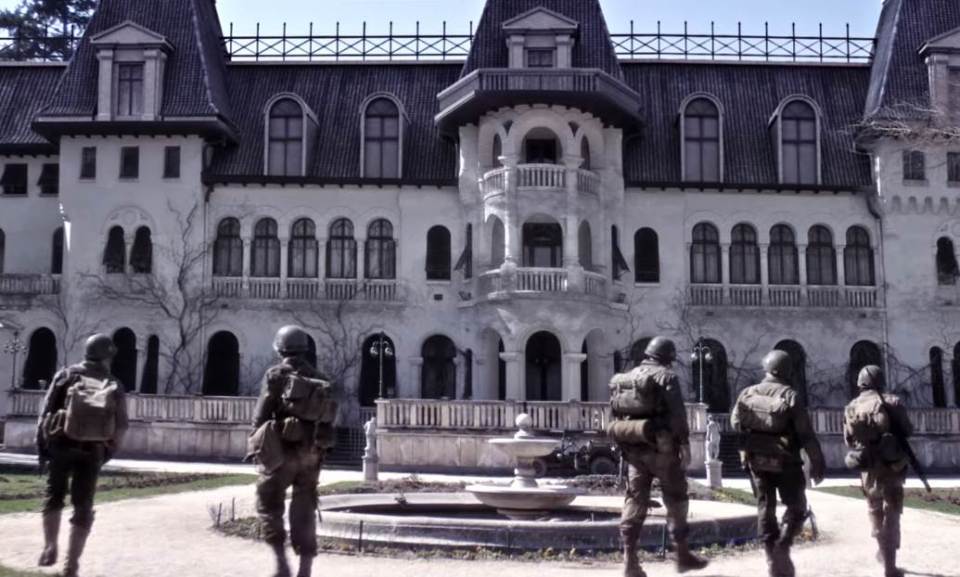
Writer/director Eric Bress (The Butterfly Effect) does what he can with the supernatural war tale, Ghosts of War.
Five WWII soldiers are ordered to hold tight in a French mansion circa 1944. It’s an isolated estate, once a Nazi stronghold. Terrible things happened there, and even though the surroundings suggest luxury, the mission may be the most dangerous the platoon has ever faced.
It reminds me of that time earlier this year when COVID trapped a Bolivian orchestra inside a haunted German castle surrounded by wolves.
So the film has that to compete with. Of course, the other
thing Ghosts of War has going against it is the surprisingly engaging
and unfortunately underseen Overlord, a
WWII horror show that drops us alongside a handful of soldiers into war torn
France just in time to find zombies.
Very little is more fun than Nazi zombies.
But Bress isn’t interested in zombies. Instead, he explores
the madness that weighs on men who’ve done the unthinkable by trapping them in
a situation where they must face their demons.
Kyle Gallner delivers an appropriately haunted performance
as one of the soldiers—each of whom Bress characterizes with quick, shorthand
ideas: the nut job (Gallner), the smartypants (Pitch Perfect’s Skylar
Astin), the hero (Theo Rossi), the big talker (Alan Ritchson), the leader who’s
in over his head (Brenton Thwaites).
Gallner and Astin are the only cast members given the
opportunity to differentiate themselves from the pack as the platoon stumbles
upon evidence of the haunting. Bress and his ensemble stumble here, rarely
developing any real dread, infrequently even delivering the jumps their quick
cut scares attempt.
Ghosts of War makes an effort to say something meaningful.
That message is waylaid by confused second act plotting and a third act reveal
that feels far more lurid and opportunistic than it does resonant or haunting.
Bress tries to take advantage of the audience’s preconceived notions in order to subvert expectations, but he doesn’t have as much to say as he thinks.
Many a film has used a building—a haunted house, for
instance—to represent the mental state of a character. From Shirley Jackson to
Stephen King to Daniel Kehlmann, writers have lured us into perfectly lovely structures
only to hold us inside, our ugly thoughts manifesting as danger, our madness
creating a labyrinthine, Escher-esque trap.
Such is the case for Relic, a compassionate but clear-eyed look at a different type of hereditary horror.
Edna (Robyn Nevin) has been missing for at least three days.
Her daughter Kay (Emily Mortimer) and her granddaughter Sam (Bella Heathcote)
move into Edna’s place to keep an eye out for her while local police
investigate.
And then, there she is, and it’s entirely likely she never
even left the house.
Well, that can’t be—unless there’s something seriously weird
about this house.
Co-writer/director Natalie Erika James keeps her metaphor right at the surface of the film. That keeps Relic from ever truly terrifying, honestly. There’s no simultaneous pull that something supernatural is afoot. But the sense of dread takes on a whole new tenor, and the film’s horror is honest as it hits on an emotional level.
Nevin does an admirable job with Edna, creating a fully dimensional
character, one who’s tough enough that when she becomes vulnerable, it comes as
a jolt.
Mortimer and Heathcote strike a believable love/disappointment/blame
balance and the emotional tug of war among the three women rings sadly true.
There’s not a lot of depth to this story. Relic isn’t hiding its themes—there are no subplots or red herrings, and the a-ha moments that allow Sam and Kay to piece together the mystery of Gram’s troubles feel almost perfunctory.
But James doesn’t shy away from the ugliness, guilt, anger or grief that fuel relationships tied up in this particularly painful genealogical horror. With its evocative analogy, Relic shows us what we are really afraid of, and it isn’t ghosts.