Tag Archives: Jeremy Allen White

A Helluva Drug

The Social Reckoning

by Hope Madden & George Wolf

Back in 2010—aah, that innocent time—writer Aaron Sorkin (with writer Ben Mezrich) took us behind the curtain to witness the weaselly, insecure, creepy underpinning of the social media revolution.

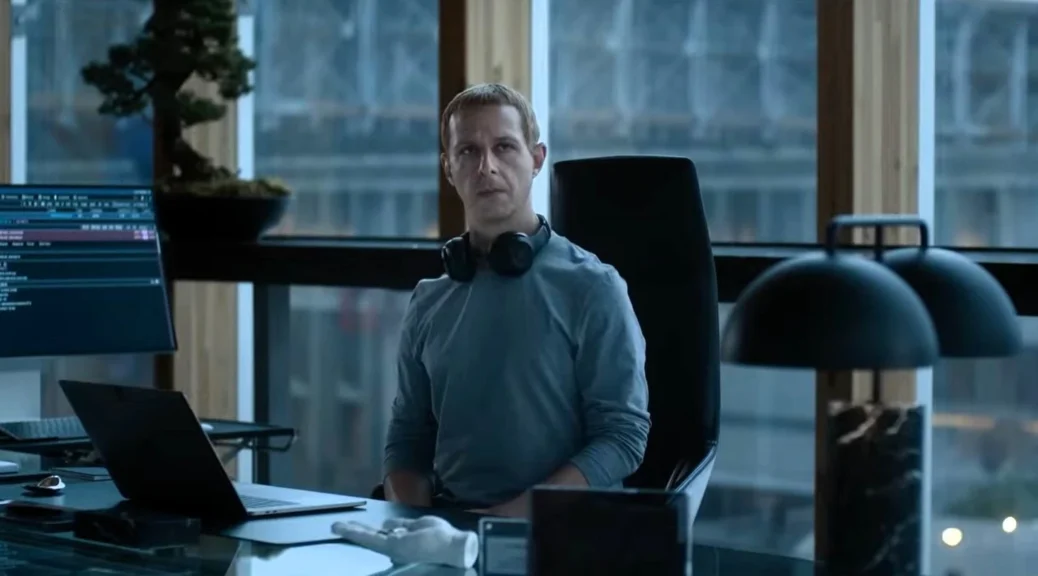
With The Social Reckoning, writer/director Sorkin checks back in on Mark Zuckerberg (Jeremy Strong) to see how his social network was doing between 2018 – 2021. A less innocent time for all involved.

But “Zuck” is not the main character. This is the story of whistleblower Frances Haugen (Mikey Madison), a Facebook engineer who loves her job on the Civic Integrity team and believes in the mission to connect people. But she can no longer live with Facebook and Zuckerberg’s intentional misuse of research to amplify profits while knowingly damaging users’ mental health, public safety, and democracy itself.

If The Social Network was a warning, The Social Reckoning is less an “I told you so” than a “holy shit!”

Haugen slowly learns to trust Wall Street Journal investigative journalist Jeff Horwitz (Jeremy Allen White) with what she knows, hoping he can expose the corporate malfeasance, and her dream job can go back to being dreamy.

Sorkin’s films work best when he’s dealing with hyper intelligent characters, and that’s certainly the case here.  His spectacular cast, including Betty Gilpin, Wunmi Mosaku, Billy Magnussen, and Bill Burr, is on point in every scene. The banter between the analog Horwitz and the tech-intensive Haugen is often delightful, bringing a low-key levity to the otherwise very high-key script.

The film’s pace juggles timelines efficiently, allowing Sorkin to make a sly juxtaposition of two viruses and use a data scientist’s “dumbed down” explanations to an old school journalist as the perfectly organic vehicle for bringing us all into their circle of trust. The Oscar-winning Madison is terrific, revealing hurt and disillusion as Haugen’s belief that social media reveals the best of us is crushed by the realization that her employer is knowingly manufacturing our worst.

White becomes a wonderful counterpoint, a more world-weary soul careful to protect his prized source while patiently encouraging her instincts to expose what she knows.

And Jeremy Strong turns in yet another award-worthy supporting turn as a real person. He takes the cutthroat glimpses of Zuck we saw from Jesse Eisenberg and molds them into a cold and detached tycoon, eager to proclaim his devotion to the “public square” while quietly giving bigger bullhorns to the town criers that are most profitable.

Anyone with a social feed knows that anger is a helluva drug, and when the company line fears blowback more than incitement, fires get stoked early and often.

Scenes with Zuck conferring in a lair with investors prove there are still spots where Sorkin can’t resist the urge to overstate the obvious and push one preachy beat too hard. But, man, then he’ll unleash a string of intelligent, well-stated and completely engaging points, counterpoints and rebuttals (often between Strong and Burr in the film’s most fiery moments) that right the ship right quick.

Even if you haven’t followed the story of Haugen, Horwitz and the Pulitzer Prize-winning Facebook Files, The Social Reckoning probably won’t surprise you with how obscene this all has become. But it might help you reconsider your own algorithms, and it will definitely remind you of the type of courage and integrity that still defines the best of us.

I mean, really, how many of us still think that social media was a good idea?

Say Hello to My Little Friend

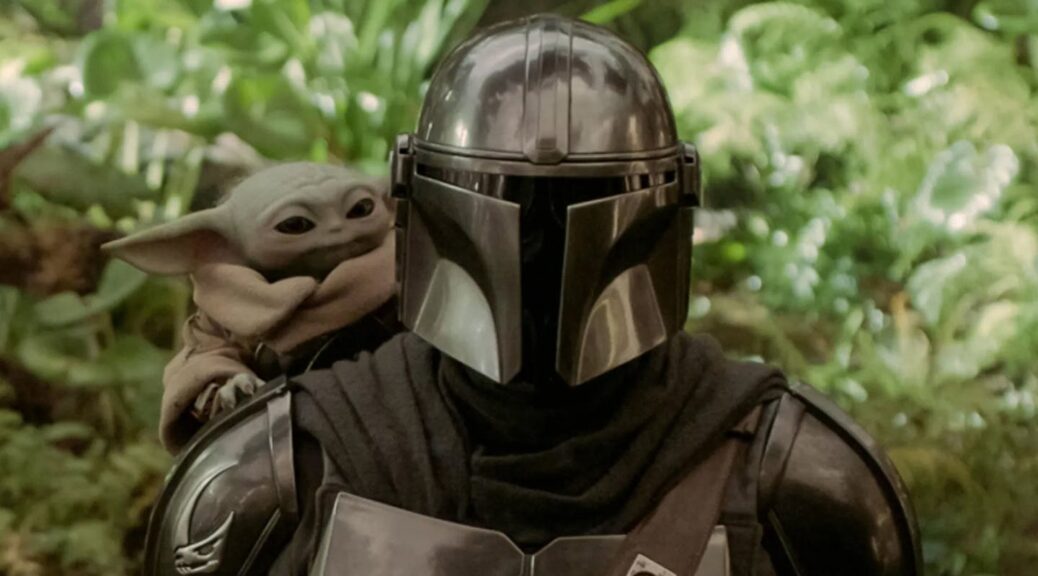
Star Wars: The Mandalorian and Grogu

by Hope Madden

Star Wars has been around for nearly a half century. We’ve seen films, sequels, prequels, TV series, books, animation, Legos, and one epically weird Christmas special. But we haven’t seen a feature film since 2019, and we’ve never seen a feature film based on a TV show. Until now, with Jon Favreau’s Star Wars: The Mandalorian and Grogu.

Much is still the same. Bad guys still have terrible aim, faulty weapons, and super cool monsters. Good guys have decent aim, reliable weapons but unreliable transportation, and cute and friendly beasties.

The film picks up where Season 3 left off as a sort of replacement for Season 4. And that’s kind of how it feels—not like an epic adventure, more like an extended episode. The X Files movie of the Star Wars franchise.

Mando (Pedro Pascal) and Grogu agree to save Rotta the Hutt (voiced by Jeremy Allen White) from a gladiator-style imprisonment in return for information from his aunt and uncle, “The Twins.”

Naturally, it involves star fights, surprise monster battles, a barroom brawl, and dirty dealings. But no matter the odds, the Mandalorian is noble and Grogu is cute. The CGI, though? Sketchy.

Mando’s co-pilot Zeb Orrelios (Steve Blum) looks bad, especially his face. There is one gorgeously rendered dragon snake thing, but otherwise, most of the monsters are under articulated. The action, whether hand-to-hand or in the air, feels uninspired.

There is a long break in the live-action action that’s pretty great. First, we travel with Grogu and the Anzellans—gripey little mechanics who make baby Yoda look big. And later, Grogu has an episode all his own. Both sequences let the film breathe and let the audience spend some quality time with the character we probably came for.

Otherwise, the story is capably written and told. The score is adequate and the cinematography is OK. There are questions. Why does actor Jonny Coyne go by his actual name in this movie? And why is it so sexy to hear Sigourney Weaver (as Colonel Ward) say: “Going in weapons hot”?

But narratively, no. They cover everything. And it’s fine. It’s sometimes really fun, often super cute, frequently amusing, and easily the most forgettable film in the whole Star Wars galaxy.

Putting on a Brave Babyface

The Iron Claw

by Matt Weiner

For the Von Erich professional wrestling family, success in the ring—starting in the freewheeling territory days and continuing into the present—has existed uneasily alongside the “family curse.”

Writer/director Sean Durkin (Martha Marcy May Marlene and The Nest) brings together his lifelong love of wrestling with a keen ability to heighten psychological tension to the breaking point and then see what fills the void that comes after that break.

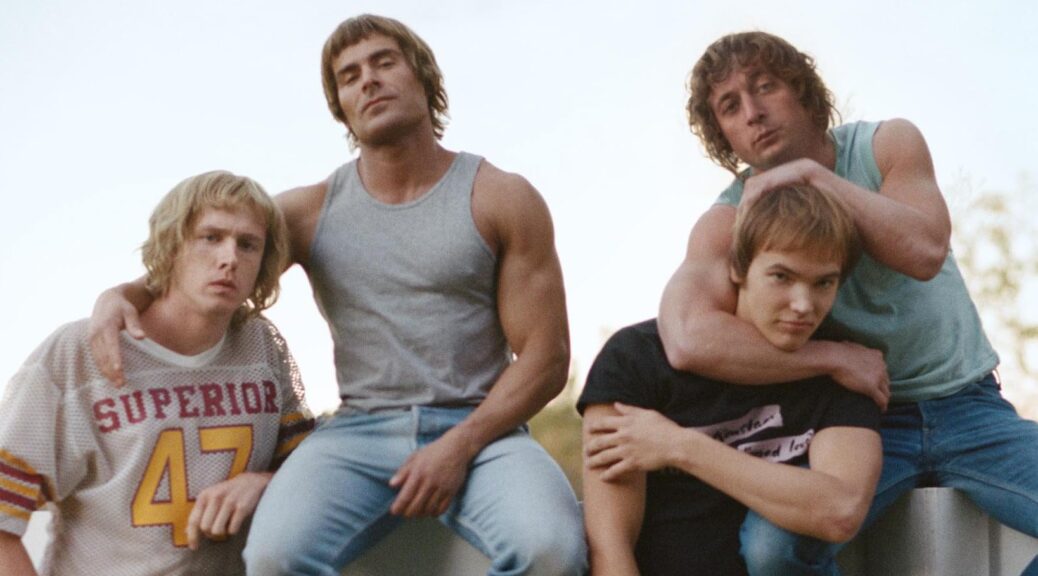
The Iron Claw charts these harrowing ups and downs starting with family patriarch Fritz (Holt McCallany), whose overbearing presence dominates every aspect of his children’s lives. The athletic Von Erich children unquestioningly glide into the path Fritz lays out for them, the family business of wrestling.

The series of events that ultimately spin out of this fateful choice gives rise to the legend of the curse, which the brothers deal with in their own (mostly taciturn) ways. Kevin (Zac Efron) is the genial audience stand-in, who wants nothing more than to please his father and have fun in and out of the ring with his brothers.

This includes the charismatic David (Harris Dickinson), golden boy Kerry (Jeremy Allen White) and the sensitive aspiring artist Mike (Stanley Simons). Fritz and the boys are given varying degrees of personality and dialogue that at times sacrifices depth for quick characterizations.

But with so much biopic ground to cover, Durkin narrows in on Kevin as the one bearing witness to all the inexplicable tragedy. It’s a difficult role to serve, and Efron delivers a commanding performance. As the family’s Job-like suffering grinds down his stoicism and filial loyalty, he remains tethered to hope and the possibility of a different life thanks to his stalwart wife Pam (Lily James, matching Efron with a vibrant performance that elevates her otherwise dutiful lines).

The result is a mesmerizing sports movie with more echoes of Malick than Aronofksy. Call it a curse or call it bad luck, but Durkin’s deft handling of these events turns public tragedy into a searing meditation on familial bonds and the limits of a certain type of masculinity.

Blinded by Science

Fingernails

by Hope Madden

Nearly a decade ago, Yorgos Lanthimos delivered the most scathingly, cynically hilarious look at the human desire to quantify love, test it, find safety in it. And if not, be turned into a delicious crustacean.

Cristos Nikou’s delivery is more romantic, but his central theme is similar. Love is unquantifiable.

In a non-specifically retro time period with wall phones and a lot of 80s and some 90s jams but computers that look to be from the time of the dinosaur, one company has perfected a test to determine whether two people are in love. This test, it was hoped, would end divorce, end loneliness, end unhappiness. But most couples test negative, so it’s actually only created a loneliness crisis.

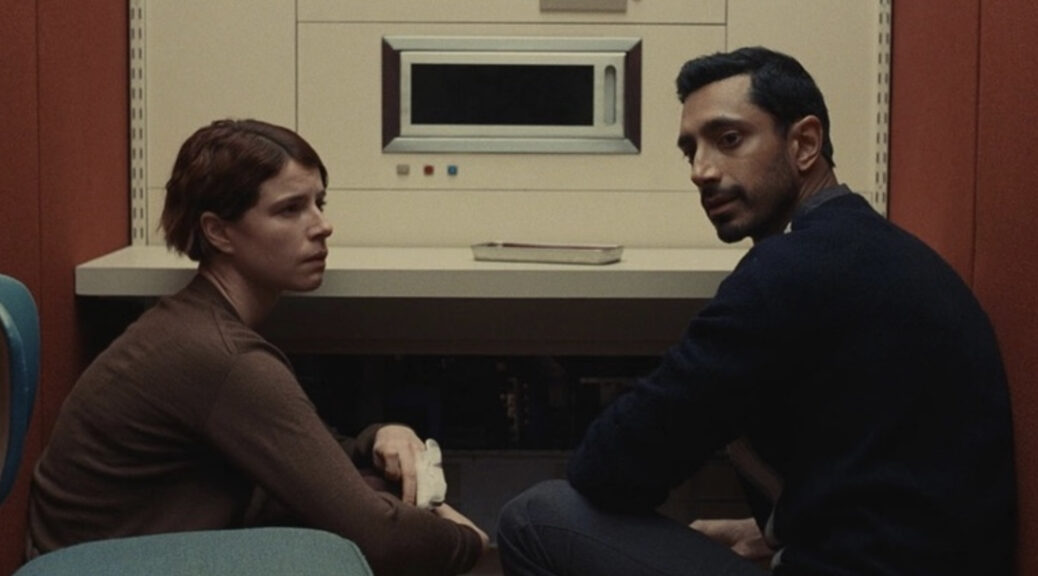
Anna (Jessie Buckley) and Ryan (Jeremy Allen White) are among the lucky ones. They tested positive some time back, and have fallen into a safe and predictable routine. And yet…

Anna takes a job at the very institute where the test is conducted, working alongside Amir (Riz Ahmed). That right there is the reason to see Fingernails.

Buckley’s a tremendous talent. Few actors so accurately, achingly portray yearning quite as she does. That conflict plays across Anna’s face in a raw performance matched by Ahmed’s. The Oscar winner shares electric chemistry with Buckley, which compels interest in a story that, while delightfully told, lacks a bit of depth.

White, in a smaller role, delivers as well. You can’t root for him, but neither can you root against him. He feels human, and complicating the emotion within a romantic film is never a bad idea.

Nikou’s elegant direction slides and dances from scene to scene, evoking melancholy one moment then swooning the next. It’s so beautifully shot that the occasional obvious moment – lingering on one toothbrush, holding on a reaction shot – stands out.

The trajectory is rarely in doubt and the film leaves much to mine when it comes to its premise. But whatever the weaknesses of Fingernails, Ahmed and Buckley and their thrilling rapport more than overcome.

Home Away from Home

The Rental

by Hope Madden

Dave Franco has made a movie. James Franco’s younger, less creepy brother has been a welcome, smiling face in films since his teens. Directing his first feature, he sidesteps the more obvious choice of a comedy – given his background – and instead delivers a tense horror about jealousy, deteriorating relationships, and the dangers of Airbnb.

Dan Stevens stars as Charlie, handsome and successful older brother of Josh (Jeremy Allen White). As if Josh doesn’t have enough to live up to, his beloved and brilliant girlfriend Mina (Sheila Vand) is Charlie’s work partner and the two just really click.

Together Mina and Charlie land a big deal. To celebrate, they and their significant others—Josh, plus Charlie’s wife Michelle (Alison Brie, Franco’s real life wife)—rent a gorgeous, off the grid place for a weekend getaway.

If you’re thinking this is an incredibly common premise jazzed up with a couple of impressive actors, you are correct. But there’s a lot to be said for a good cast.

All four convey a lived-in chemistry that gives the relationship conflicts more resonance. Brie and White, in particular, deliver believable warmth as big sister-in-law/little brother-in-law. Both are dealing with some jealousy, each lending support and guidance to the other. Secondary characters in indie horror are rarely given this kind of opportunity to breathe, but drawing the audience into these relationships benefits the tensions Franco is working to create.

Stevens and Vand work wonders as the morally conflicted central characters. Vand (exquisite in A Girl Walks Home Alone at Night—see it!) blends righteous indignation with guilty conscience. This helps her build believable motives for what could, in lesser hands, feel like conveniently poor decision making.

Liberal guilt, entitlement, questionable morality and selfishness rarely come packaged as sympathetically as Charlie, but Stevens is a solid character actor and here he creates a nicely complex character.

Rounding out the small ensemble, the always welcome Toby Huss also finds layers in a character that could easily have been one note.

So, performances are solid and Franco delivers a decent sleight of hand by Act 3. The film feels imbalanced by then, though, as if it wasn’t until  the 11th hour that Franco decided this was a horror movie. There’s enough suffering in the final reel to clarify The Rental’s genre, but that doesn’t mean it entirely works.