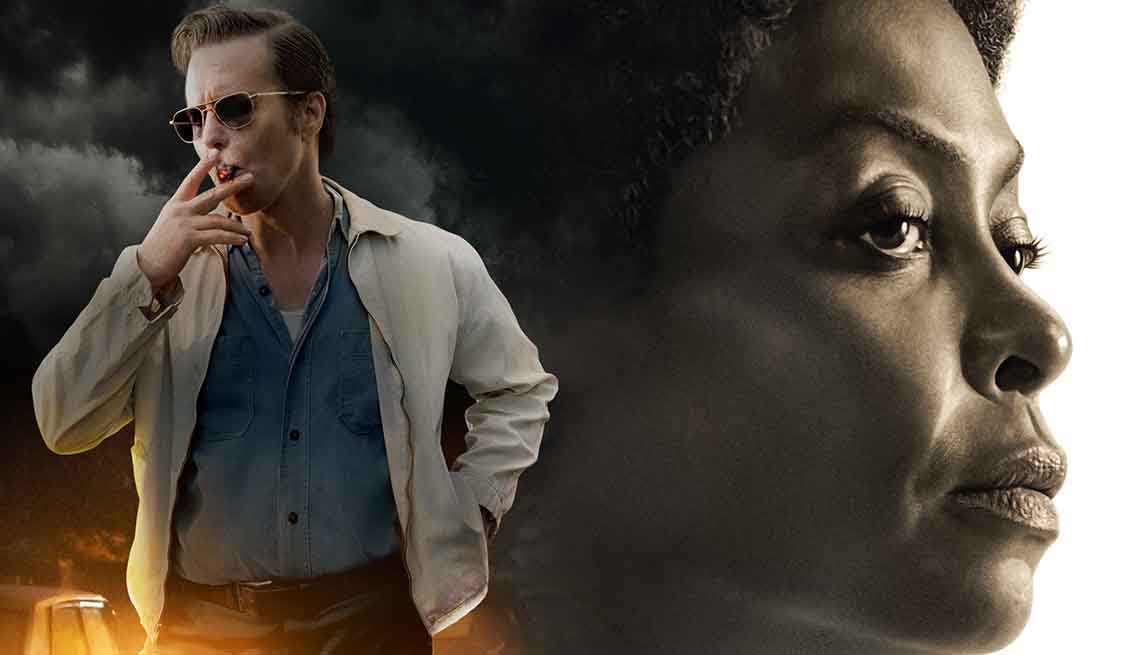
Another week of less than perfect options, although a couple of these are worth a look.
Click the film title for the full review.
Best of Enemies

Ophelia
The Public

Another week of less than perfect options, although a couple of these are worth a look.
Click the film title for the full review.
In today’s podcast, George considers doing the whole show with a fake British accent and Hope says no. Also, we cover Yesterday, Annabelle Comes Home, Ophelia and Echo in the Canyon, plus all that’s new in home entertainment.
Listen to the full podcast HERE.
Moviegoers in toyland this week as we run down Toy Story 4, Child’s Play, Anna, The Spy Behind Home Plate and all that’s new and exciting in home entertainment.
Listen to the full podcast HERE.
Big week! So many movies! Some of them are even great. This week we break down Men in Black: International, Shaft, Late Night, The Dead Don’t Die, Halston plus everything worth your time in home entertainment.
Listen to the full podcast HERE.
by Brandon Thomas
Kenneth Branagh and William Shakespeare have become synonymous with one another in the world of cinema. As a director, Branagh has made five of The Bard’s plays into movies, and in many of them, he’s joined the cast. It’s fitting that Branagh finally ends up playing Shakespeare himself in All is True.
In 1613, Shakespeare’s beloved Globe Theatre burned to the ground. Left without a homebase to stage his momentous plays, William Shakespeare returned to his country home. There, he’s “greeted” by the wife (the always amazing Judy Dench) and daughters he left behind while making his name in London. Away from the stage, Shakespeare struggles to come to terms with the legacy he’s created. The loss of a child haunts him, and the inadequacy instilled in him through his father bubbles to the surface and forces the famous playwright to face a life of personal mistakes.
Shakespeare was known for having his distinct tragedies (MacBeth, Othello) and comedies (Much Ado About Nothing, As You Like It). The beauty of All Is True is how well Branagh intertwines both genres. The tragedy of losing a child never threatens to overwhelm the film nor do some of the “sillier” elements, such as the fascination a neighbor’s dog finds in William. The balance in tone doesn’t come easy, but it certainly keeps the film interesting.
There’s a casualness to All Is True that is very inviting. It’s a film that’s never in a hurry, but also doesn’t overstay its welcome. Scenes are allowed to breathe in a way that feels like you’re watching an intimate stage play—the epitome of this being a breathtaking scene between Branagh and Sir Ian McKellen. It’s a scene that consists mostly of tight close-ups, set in one location, and it’s riveting.
It’s no surprise that Branagh nails his portrayal. His William Shakespeare is a man that understands his legacy even if he hasn’t completely come to terms with it. Without his work, he’s a man that’s chasing happiness—a happiness he’s never been able to find as a husband or father.
By humanizing the world’s most famous playwright, All Is True tries to move past the legend of William Shakespeare and comment on the inner workings of the man himself.

Not the strongest week in theaters, sad to say. This week we break down Dark Phoenix, Secret Life of Pets 2, All Is True, The Tomorrow Man and all that’s fit to watch in home entertainment.
Listen to the full podcast HERE.
by Hope Madden
Sort of a mash up of Superman and The Bad Seed, Brightburn wonders what would happen if that special little guy you found in the crashed space ship turned out to be a super villain rather than a super hero.
But this comic book-esque origin story plays more like a straight up horror flick than an evolution of Josh Tank’s underappreciated 2012 SciFi gem Chronicle.
Elizabeth Banks stars as Tori, blue collar Kansasian. (Look it up.) She and homespun farmer husband Kyle (David Denman) always knew the day would come when they had to explain some things to their “adopted” son Brandon (Jackson A. Dunn).
While Brightburn echoes Superman in many ways, it’s far more deeply rooted in coming of age horror. It is on Brandon’s 12th birthday that he begins to change. He’s broody, more aggressive—here is where director David Yarovesky (The Hive) and Brian and Mark Gunn (brother and cousin, respectively, of producer James Gunn) abandon SciFi and dive headlong into horror.
And what we find is that, removed of their comic book splash and super hero protagonists, super villains don’t really make much of an impression in horror. Yes, Brandon has basically the same qualities as Superman—heat vision, flight, super strength—and he seems only vulnerable to his own ship (or perhaps any trace of his home planet?)—but the question is, would Evil Superman be that much more destructive than an immortal killing machine who visits you in your dreams? Or a demon from hell? Meh.
That’s is not to take too much away from Brightburn. It’s a fun B-movie with plenty of blood and gore. (It earns its R rating.) Banks is characteristically strong and Dunn does a fine job of moving from sweet boy to flat-affect sociopath.
There are definitely a couple of moments of inspired gore.
Brightburn is a capably made, well-acted piece of semi-schlock horror. It’s also the third film this year to follow a put-upon mother deciding what to do with a son whose grown almost overnight from precious baby boy to burgeoning psychopath.
And while this is a staple in the genre, Brightburn certainly taps an immediate social preoccupation with that moment that toxic masculinity ruins a boy. The film also mines the guilt that fuels insecure parents who had no real role models of their own.
The film doesn’t wind up being as clever a conceit as you might hope—again, Chronicle did it better. It’s not an entire waste of time, either.
by Rachel Willis
When Írisz Leiter (an intense and captivating Juli Jakab) returns to Budapest after a long absence, she seeks employment as a milliner in a hat store bearing her name. We learn quickly the store was her parents’, who died when she was two. The current owner, Oszkár Brill, refuses to give her a job and is evasive as to his reasons why. He tells her she can stay in town the night but then must leave.
From there, the tension quickly builds. Family secrets are revealed, and determined to learn more, Írisz refuses to depart as commanded.
With a combination of fearlessness and stupidity, Írisz throws herself into more and more dangerous situations seeking answers to questions we’re never quite sure of. Everyone Írisz meets evades her inquiries. She’s met with increasing resistance and resentment as she digs into her family’s history. As she follows sketchy leads, we’re taken deeper and deeper into the tumultuous world of Budapest in 1913.
There is much happening in director László Nemes historical drama, an ambitious follow up to his Oscar-winning debut, Son of Saul. There is a great deal to absorb as we follow Írisz. She’s our eyes in this world, and much of the time, she’s as off balance as the audience. Keeping the focus tightly bound to one character isn’t a bad way to orient an audience, but it can be problematic when we’re given too much information. It forces you to keep up, but not everyone will be up to the challenge of unraveling the mystery while puzzling over the surrounding details.
Visually, the audience is treated to a stunning film. The cinematography keeps us close to Írisz. Chaotic scenes lose focus, genuine terror is fed through her character’s reactions and facial expressions, crowded streets become oppressive. Darkness envelops much of the most horrific action, and it feeds the growing unease as Írisz’s journey follows unpredictable paths.
We’re never quite sure where the film will take us, but it’s a compelling journey. We’re kept on our toes, answers aren’t easily found, and it’s not always clear what we’re learning as each new answer appears. When we think we’ve unraveled the mystery, new information comes to unmoor us.
It’s an absorbing, unnerving film.

Bunches of movies out this week in home entertainment, and a couple of them are quite amazing. Here’s the whole run down.
Click the film title for the full review.


Woah – loads and loads of new movies out this week. Some of them good, some bad, all discussed on the podcast.
Listen HERE.


