Tag Archives: entertainment

Forgotten Warriors

Devotion

by George Wolf

Both the title and the trailer hint at a formulaic, button-pushing war movie. Heck, seeing Glen Powell back in a cockpit might have Top Gun: Maverick fans hoping for a slice of Hangman’s family backstory.

Happily, neither pans out. Devotion does offer some thrilling air maneuvers, but reaches even greater heights with an inspiring, true-life account of two friends in a “forgotten war.”

Director J.D. Dillard (Sleight)and screenwriters Jake Crane and Jonathan Stewart bring hard truths and humanity to their adaptation of Adam Makos’s book detailing the bond between airmen on the eve of the Korean War.

Ensign Jesse Brown (Jonathan Majors) is the Navy’s first African American aviator. Lt. Tom Hudner (Powell), the “new guy,” is assigned to be his wingman. When Squadron 32 gets airborne, Dillard and cinematographer Erik Messerschmidt deliver the gripping goods. But away from the runway, two sterling performances and an understated script enable the film to bypass most of the usual cliches for an effective look at struggle, sacrifice and the need for true allies in the fight for equality.

Majors is so good, delivering his best work since The Last Black Man in San Francisco. His commanding physical presence comes easily, but the way Majors conveys the soul-deep pain beneath Jesse’s strong silence is never less than moving.

Powell is an impressive wingman here, as well, as a man of privilege who can’t ignore the contradictions between Jesse’s service and the treatment he so often endures.

So come for the aerial dogfights, you won’t be disappointed. But Devotion also serves up something special on the ground, and that’s worth saluting.

Over the Hills And Far Way

Strange World

by Hope Madden and George Wolf

So, one of the main characters here looks exactly like John Krasinski, but is voiced by Jake Gyllenhaal?

Strange World, indeed, but that’s just an amusing footnote in Disney’s latest animated feature, an enjoyable family adventure with a straightforward message and commitment to inclusion.

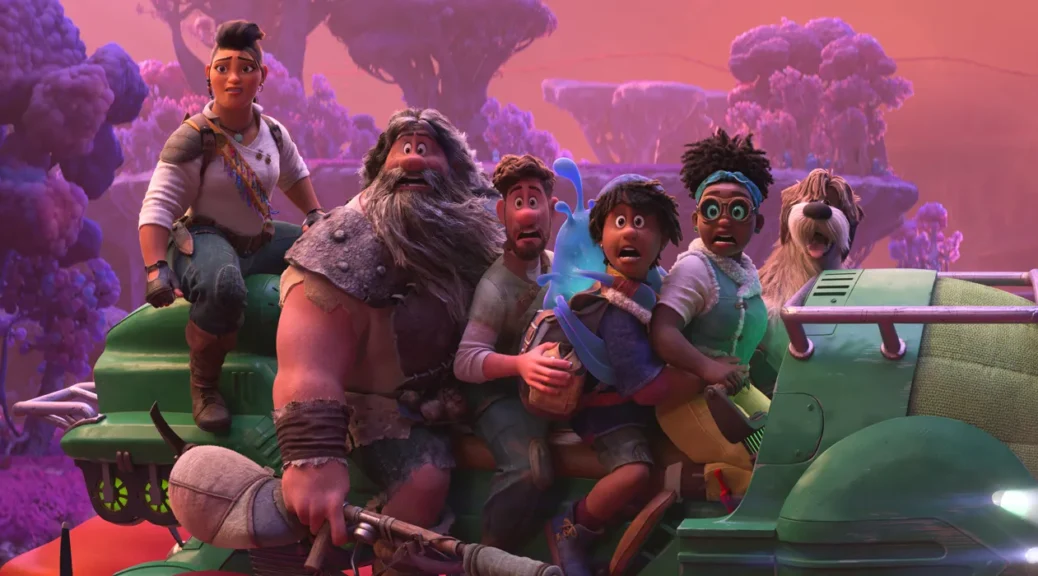
Jake is the voice of Searcher Clade, a contented farmer still dealing with the ghost of his famous father, Jaeger (Dennis Quaid). Twenty-five years ago, Jaeger vanished during the family’s quest to discover what lies beyond the mountains of Avalonia. But while Jaeger was lost on the expedition, Searcher brought back a vital new resource for his homeland: the Pando plant.

Pando now provides the energy that drives almost everything in Avalonia, which is all fine until the crops show signs of a serious infection. Putting aside a vow not to follow his father’s adventuring path, Searcher, his wife Meridian (Gabrielle Union), their son Ethan (Jaboukie Young-White) and their three-legged dog join President Mal (Lucy Liu) on a mission to cure the Pando plant and preserve their comfortable way of life.

Writer Qui Nguyen (Raya and the Last Dragon) joins his co-director Don Hall (Raya, Moana, Big Hero 6) to craft an ecological allegory seemingly inspired by the union of a role-playing board game and one of those cute posters you pass while waiting in the lines at Disney World.

The animation itself is stunning, whether snowy peaks, verdant village or trippy, drippy otherworld. Strange World lives up to its title, delivering a visual feast.

But there’s more on Nguyen’s mind than eye candy. His story offers a world where generations do not have to be defined by what they always believed was right, where masculinity has no concrete quality but is a term owned by the individual. More importantly, this Strange World is one where creature comfort is not more important than survival.

Often the film feels like it’s trying too hard to correct the stereotypes nourished by generations of children’s entertainment. But there’s a kindness and a sense of forgiveness throughout the movie that does make you yearn for a world like this one.

Drive-By

Lamborghini: The Man Behind the Legend

by George Wolf

The name “Lamborghini” probably brings to mind some beautiful, expensive cars that go very fast. In fact, they can reach speeds that are recommended only for the most skillful drivers.

That’s very much like the approach of Lamborghini: The Man Behind the Legend, writer/director Bobby Moresco’s drive-by telling of Ferruccio Lamborghini’s rise from the vineyards to the showrooms and the race tracks.

It is great to watch Frank Grillo dig into the lead role, though. He’s been a mainstay of action films for years, but here Grillo gets the chance to move beyond a reliance on brawn for a performance that shines with passion and charisma. He’s easily the best part of the film.

It’s also nice to see Oscar-winner Mira Sorvino as Ferrucchio’s loving-but-frustrated wife, Annita. But Moresco (who won his own Oscar for co-writing Crash with Paul Haggis) is simply content to check off the boxes of Ferrucchio’s journey, never giving any of them the depth or consideration required to resonate.

Moresco frames the biography around a late-night drag race between Lamborghini and rival Enzo Ferrari (Gabriel Byrne in a glorified cameo once pegged for Alec Baldwin). As the men trade steely glares and steady gear-shifting, Moresco quickly moves the flashbacks through Ferrucchio’s return from war, the launch of the company, personal and professional strife, success, and the constant drive for perfection.

The rush to get a car ready for the 1964 Geneva auto show instantly recalls James Mangold’s Ford v Ferrari, which is not a comparison that works in Lamborghini‘s favor. While Mangold wisely chose to limit his film’s scope so we could become invested in the lives and the details of a particular mission, Moresco is just reciting all these things that happened in a famous man’s life and hoping we might care as much as he does.

That’s rarely a winning formula. The film’s constant lack of authenticity undercuts any attempt to deconstruct Ferruchio’s need for recognition as more than a poor farmer, and Lamborghini: The Man Behind the Legend just can’t deliver the horses, or the power.

Into the Void

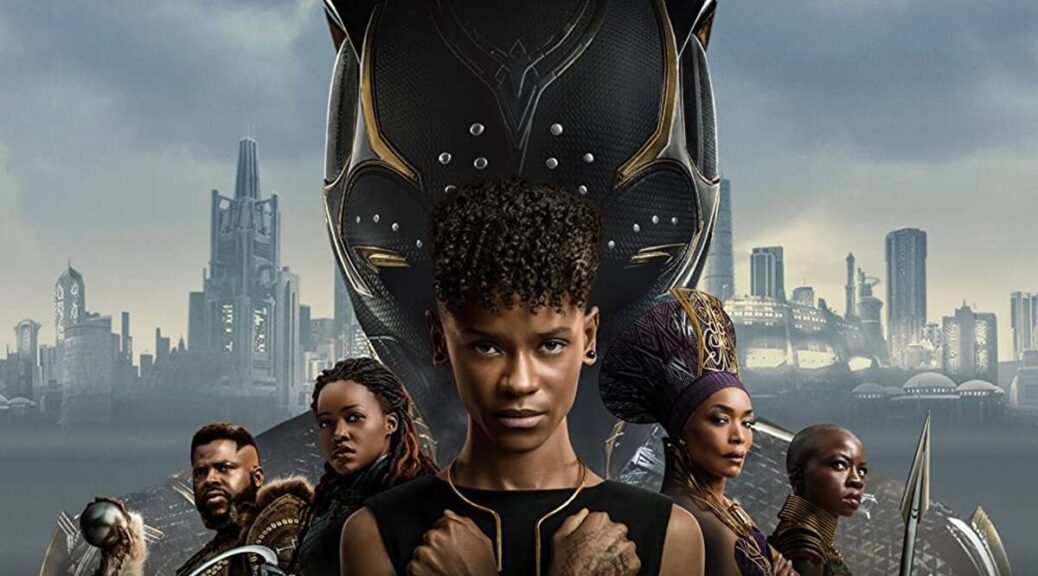
Black Panther: Wakanda Forever

by Hope Madden and George Wolf

The shocking news of Chadwick Boseman’s death brought plenty of feelings. One of them was curiosity about the future. How would the Black Panther franchise – newly launched via Marvel’s most impressive feature – move forward?

Wakanda Forever does it with respect, love and reverence, in a worthy second effort that’s anchored by loss, grief and perseverance.

One year after King T’Challa’s death, Princess Shuri (Letitia Wright) is wondering if the idea of a “Black Panther” is outdated and Queen Ramonda (Angela Bassett) is facing increased pressure to share vibranium with other world powers.

The world powers, of course, aren’t just asking. And their efforts to take are aided by a new device that can detect vibranium in the environment, which brings the powerful “Feathered Serpent God” Namor (Tenoch Huerta from The Forever Purge and Sin Nombre) out of hiding.

Vibranium is also the resource vital to his undersea world of Talukan. Namor views the detection device as a threat to his nation and demands that Ramonda and Shuri turn over the scientist responsible. If they do not, Wakanda will have a formidable new enemy.

Hannah Beachler’s production design rivals that of her Oscar-winning work in Ryan Coogler’s 2018 original. Wakanda itself is as stunning and fully realized as ever, while Namor’s undersea realm becomes a lush waterworld that puts Aquaman to shame.

But after the defiant, often furious adventure of Black Panther, the most striking aspect of Wakanda Forever is the way it embraces the void left by the loss of both T’Challa and Boseman.

Coogler, writing again with Joe Robert Cole, delivers a more contemplative film this time around. Characters wrestle with loss and power, tradition and progress, rage and mercy. The depth of the script allows Basset and Lupita Nyong’o to really shine, while Winston Duke steals many scenes with a meatier, more layered take on M’Baku.

There is room for action aplenty, equally impressive whether massive seafaring attacks or intimate one-on-one battles (much thanks to the forever badass Danai Gurira).

The introduction of young M.I.T. phenom Riri (Dominique Thorne) is a well-intentioned mirror to Shuri’s technical genius, but the thread ultimately lands as a bit light and superfluous next to the complexities being pondered here. Still, Coogler’s skill with both emotion and spectacle never allows the two-and-a-half hour plus running time to feel bloated, and the film soars highest when the rush to war plays out against a backdrop of immense, intimate grief.

Have the tissues handy for the mid-credits coda. It’s a touching toast to an absent friend, and it cements Wakanda Forever‘s beautiful commitment to looking forward with cherished memories intact.

Door Dash

Something in the Dirt

by George Wolf

Five films in, have Justin Benson and Aaron Moorhead cornered the market on low-fi sci-fi nerd horror?

It’s a niche, but the directors/actors (both) and writer (Benson) carved it out well with Resolution, Spring, The Endless, and Synchronic. Something in the Dirt continues the winning streak, landing as an offbeat mindbender with even more of their wry humor.

Benson and Moorhead are also back to taking the lead roles. Levi (Benson) has just moved into a new apartment in L.A., where he meets neighbor John (Moorhead). The two hit it off well, especially after they witness some possible supernatural activity in Levi’s new place.

What else can they do but get some cosmic proof on camera, and then ride a paranormal wave to fame and fortune?

But as an apartment doorway begins to resemble a portal to some twilighty zone place, the two men start to learn things about each other – and about their surroundings – that plant a seed of suspicion. The addition of interview footage from after the spectral adventure creates a quasi-documentary (even mockumentary) feel.

Things did not go accordingly to plan, which only piques our interest in finding out why.

A spare number of players in (mainly) one building recalls Resolution, Benson and Moorhead’s stellar debut. But the ten years since then have seen a worldwide pandemic and the rise of conspiracy-laden rabbit holes, and Something in the Dirt shows the guys revisiting the past with the benefit of their own hindsight.

What has made us so susceptible to exploiting and to being exploited, and to eagerly delight in ignorance and foolishness?

The mix of paranoia, nervous excitement and deadpan silliness is the vibe these guys revel in – as writers, directors and actors. 2019’s Synchronic brought a bigger budget and bigger name stars but felt a bit like an ill-fitting suit.

Here, the scale is smaller but the film breathes easier, as if Benson and Moorhead felt free to scratch the creative itches that make them unique. Something in the Dirt digs into all of them, digging up something ready to be filed under “low-budget nerdy sci-fi horror satire.”

Catchy!

Dead Air

On the Line

by George Wolf

About halfway through On the Line, Mel Gibson stops the film’s traffic with a gem of self-awareness.

“What kind of B grade movie bullshit is this?”

Well, “B” grade might be generous, but more of that wink-wink vibe would have been helpful.

Mel is Elvis Cooney, host of an overnight radio talk show in L.A. On one fateful night, a caller reveals that he has broken into Elvis’s home and taken his wife and child hostage. To save their lives, Elvis will have to own up to a few past misdeeds, then play some survival games while trying to piece together clues to the caller’s identity.

Writer/director Romuald Boulanger has a surprise or two in mind, but everything from the film’s forced dialog to the telegraphed shot selection and generic staging screams unsurprising TV drama. Mel and co-star Kevin Dillon ham it up good, while the rest of the ensemble mostly seems self-conscious.

I’ve been lucky enough to work in radio for over thirty years, but there’s no point in nitpicking over the biz details. The bigger problem is that On the Line is a half-hearted mashup of 2 or 3 better films that I won’t mention for fear of spoilers.

But when Elvis’s call screener (Alia Seror-O’Neill) makes a crack about sex with a man his age, you remember the B-movie line and realize this might have been idiotic fun if it just didn’t take itself so seriously.

Now here’s some Supertramp.

https://www.youtube.com/watch?v=3O99GK6wQfM

Found in Translation

Decision to Leave

by George Wolf

“Congrats, it’s a murder case!”

Or maybe more than one. But does detective Jang Hae-joon (Park Hae-il, Memories of Murder and The Host) really want to bring the killer to justice?

Decision to Leave (Heojil kyolshim) unveils a playful, seductive mystery of longing and obsession, masterfully layered and gorgeously framed by acclaimed director and co-writer Park Chan-wook (Oldboy, The Handmaiden, Thirst).

Jang is an insomniac, often plagued by memories of unsolved cases and so driven by his work that he keeps a separate residence closer to the precinct, only seeing his wife on weekends.

The distance between them becomes greater once Jang meets the mysterious Song Seo-rae (Tang Wei from Lust, Caution), a smoldering beauty who doesn’t seem very sorry that her husband is dead. His fall from a mountaintop appears to be a suicide, but Jang is compelled to dig deeper.

Song is quick to point out that she is Chinese, and conversing in Korean can leave her confused in translation. But is this just a ploy so Jang will underestimate her, or is she truly the sympathetic victim she claims to be?

Both Wei and Hae-il are wonderful, wrapping themselves around the delicious dialog and intertwining threads of murder and romance in totally engaging fashion. We hang on the hushed potential of the relationship along with each character, and their choices often alternate between compelling, confounding, and darkly funny.

As the time setting shifts ahead to when Song has remarried and yet another twist is introduced, the narrative air becomes even thicker with neo-noir style. Park (Best Director at Cannes this year) and cinematographer Kim Ji-young create a sumptuous visual palette, full of modern innovation and classic homages in equal measure.

It is a truly intoxicating atmosphere that rarely lets up, and a perfect compliment to the yearning that erodes boundaries between detective and suspect. Decision to Leave attack those barriers with tantalizing precision, leaving a breathless trail of crime and passion that is guaranteed to linger.

Bittersweet Symphony

Tár

by Hope Madden and George Wolf

During production of writer/director Todd Field’s terrific 2001 feature debut In the Bedroom, Harvey Weinstein reportedly made life so miserable, Field considered leaving the movie business altogether. He did return in 2006 with the equally impressive Little Children, but Field has been quiet since then.

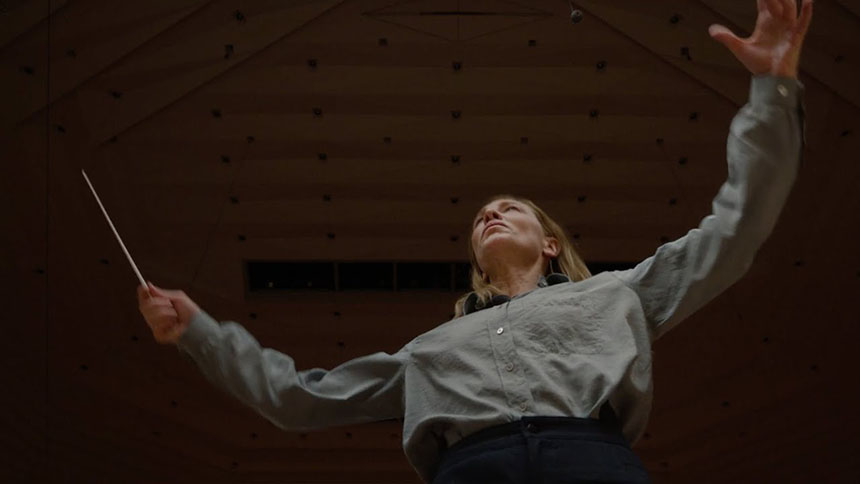
All these years later, it’s not hard to imagine the Weinstein experience as an inspiration for Tár, a searing character study of art, arrogance, obsession and power that’s propelled by the towering presence of (surprised face) Cate Blanchett.

She is Lydia Tár, the first female music director of the Berlin orchestra. A nicely organic interview introduction runs down Lydia’s impressive resume, immediately cementing the character as one of the greatest living composer-conductors in the world.

And, as is her way, Blanchett (who prepped by learning several instruments and studying conducting) needs mere moments to define Lydia with sharp, unforgettable edges.

Tár is a control master who will converse and condescend with excess pleasantries, all the while keeping antenna up for anyone in her orbit who might contradict her careful plotting. And Field’s use of precise sound design and only diagetic music is a brilliant way to reinforce the maestro’s level of influence on everything around her.

Lydia is in rehearsals for a triumphant performance of Mahler’s 5th symphony, and also has a new book prepping for release. So while there’s much going on professionally, it’s the detailed, yet unassuming way Field narrows his focus to Lydia’s personal cruelty that brings the film to such a resonant point.

She humiliates a young student for daring to question a status quo power structure, takes advantage of her dutiful assistant’s (Noémie Merlant from the exquisite Portrait of a Lady on Fire) ambitions, works to remove an Assistant Conductor (Julian Glover) who dares to criticize, and is routinely dismissive of her wife (Nina Hoss).

The way Lydia handles a child bullying her young daughter is our first glimpse at true sociopathic tendencies, but Field – with moments of both sly humor and biting sarcasm – gradually unveils a familiar culture of predatory behavior.

To say the portrayal is perfection feels almost dismissive or perfunctory considering Blanchett’s mastery of her own art, but maybe that’s why this role stands apart. Maybe it’s her own experience, so unlike nearly anyone else’s, that shapes the organic and human performance. You want to feel for Lydia, or at least recognize how a genius with power begins to believe they are entitled to something. Or someone.

It’s in moments when Lydia dismisses ideas of gender inequality or coyly celebrates the history of patriarchy in her own profession that Field and Blanchett best expose the insidious nature of power. The storytelling is striking in its intimacy, gripping in its universal scope.

Tár is a showcase for two maestros working at the top of their game.

Bravo.

Unjustified

Halloween Ends

by Hope Madden and George Wolf

In 2018, director David Gordon Green and writer Danny McBride did the almost unthinkable, something often tried but rarely accomplished. They made a good Halloween movie. Three years later they did what a lot of people have done. They made a bad sequel.

But the second film in a trilogy is tricky business. The origin story is out of the way and you can’t kill the villain – everyone already knows a third installment is coming. Some filmmakers thrive in that middle space, but most tread water until the big climax.

Well, that big climax is here. Laurie Strode (Jamie Lee Curtis) and Michael Myers (James Jude Courtney) face off in the final piece of Greene’s trilogy, Halloween Ends.

The bad second installment was better.

Rohan Campbell is Corey, a misunderstood outcast with tousled hair, bee stung lips and a motorcycle. The Strode women take a shine to him, Laure introducing him to granddaughter Allyson (Andi Matichak). But Haddonfield is pretty tough on Autumn romance, and this story is too rushed to resonate, too dull to be truly angsty.

Green has made some really good movies: George Washington, All the Real Girls, Undertow, Snow Angels, Pineapple Express, Joe, Halloween. One of the most impressive things about that list is the way it crosses genres like there is no border from one to the next. His first episode in the series was a mash note to the original. He wisely ignored all the other sequels and reboots and just brought us a clear vision for an Act 2.

Then, in lieu of a cohesive story, Green caves to some desire to pepper a sequel with odes and easter eggs in honor of all the franchise installments. He and co-writers McBride, Chris Bernier and Paul Brad Logan pick up an idea hinted at in two earlier episodes across the full constellation of films. An honest to god original thought would have been better.

It’s a sidetrack that some longtime fans might embrace, but the execution is littered with missteps. The new relationships do not feel authentic, much of the internal logic is questionable, and forget about scary, the film is too tired to even develop effective tension. There aren’t even any good kills.

We do get the final Laurie v Michael showdown that the title promises, which is a welcome return to giving the legendary Curtis some opportunity for badassery. But while Green & company manage a couple late-stage surprises, this is ultimately a disappointing end, with the highest of hopes limping to the finish for only lukewarm satisfaction.

Blood, Sweat and Fears

Stars at Noon

by George Wolf

Just this past summer, Claire Denis explored psychosexual politics with the moving Both Sides of the Blade. Now, she has sex, lies and global politics on her mind, as Stars at Noon examines sweaty intimacies and slippery alliances.

Adapting Denis Johnson’s novel with co-writers Andrew Litvack and Léa Mysius, Denis keeps the Central American setting but shifts the timeline from 1984 to nearly present day. The threat of COVID-19 adds a relatable layer of suspicion to every interaction, in a part of the world where suspicious minds are easy to find.

Margaret Qualley is sensational as Trish, a young woman staying in a low-rent Nicaraguan hotel while working plenty of angles. There isn’t much to back up her claim to be a journalist (despite a late night call to magazine editor John C. Reilly in a wild cameo), and other details about her life are kept brief and ambiguous.

Trish seems to benefit from at least a couple friends in high places, while new friend Daniel (Joe Alwyn delivering some perfectly smoldering mysteriousness) could benefit from at least one person he can trust.

Daniel says he’s in town from London as an oil company consultant, but Trish is quick to let him know he’s become “a person of interest” with some powerful locals.

But how can this silly American girl know what’s what?

Qualley crafts Trish’s disarming persona beautifully, with a performance that shows a new depth to her talent. While the film’s dialog is often precise and enticing, Qualley makes sure Trish’s non-verbal ques do plenty of talking as well. That gives authenticity to Daniel’s seduction, and the dangerous complications that arise when another mysterious stranger (Benny Safdie) makes Trish a tempting offer.

The humidity of the region feels palpable, laying down a subtle air of oppression that pairs nicely with the more surface level dirty dealings while another wonderful score from Denis favorite Tindersticks works its magic.

Denis is in no rush here, and the narrative can meander through some awkward juggling of tones. But the journey of these characters and their moral posturing is always engaging, and Stars at Noon serves a hypnotic cocktail of intrigue mixed with lust, feminine power and cutthroat colonialism.