Plumbing Psyches, Having Tea

The Ghoul

by Hope Madden

The Ghoul opens on a crime scene. One detective leads another through the facts of the crime, which appear simple enough until you work in the bit about the victims walking toward the perpetrator even after being repeatedly shot.

Are we watching a cop drama, supernatural thriller or meditation on mental illness? Actor turned writer/director Gareth Tunley keeps you guessing.

As Chris (Tom Meeten), working with criminal profiler Kathleen (Alice Lowe), goes undercover to investigate a therapist who may be hiding a lead, Tunley’s story takes a series of mysterious turns.

In his feature debut behind the camera, Tunley’s instincts for leading and misleading pay off. His film moves quite slowly, wandering into fascinating territory now and again as it forever turns itself inside and out.

To say much more about the plot would rob it of its curious power, but the writing, in particular, deserves attention for accomplishing something few scripts manage.

An agile, believable lead performance helps.

Meeten’s quiet, often heartbreaking turn grounds the film, while Rufus Jones and Geoffrey McGivern, as patient and psychologist, respectively, offset the quiet with bright bursts of energy.

Tunley offers two equally viable interpretations for his film, echoing events and phrases to create a structure that mirrors the mystery unfolding. Reminiscent at times of memorable (if underseen) indies Tony, Locke and They Look Like People, The Ghoul still manages to tell its own peculiar and poignant story.

Verdict-3-0-Stars

May the Bear Be With You

Brigsby Bear

by George Wolf

When does our grip on the past get in the way of our future?

Why is it so difficult to accept some people as they are?

And who would expect some doofuses from SNL to be doing such serious pondering?

Okay, “doofuses” is a bit harsh, but when you see Andy Samberg’s Lonely Island Productions in the opening credits, you don’t expect the thoughtful nuance that Brigsby Bear delivers.

SNL vet Kyle Mooney stars as James, a twenty-something man living in a secluded compound in the Utah desert with his parents (Mark Hamill, Jane Adams). Except they’re not his parents.

From the time James was a small boy, they’ve been his captors, and he’s been the sole audience for all the strange episodes of Brigsby Bear.

When he’s reunited with his real parents (Matt Walsh, Michaela Watkins), James’s acclimation is hampered by a persistent obsession with Brigsby, the only TV show he has ever known.

Anxious for new Brigsby adventures, James gets a load of all the new technology available to him, and suddenly making his very own Brigsby movie seems like it would be, as his new friends say, “dope shit, dude.”

It’s a setup that could easily have gone off the rails with the goofiness of a throwaway sketch, but director Dave McCary’s feature debut gradually wins you over with its abundance of warm sincerity. James is certainly a curiosity, but the film never wields him as a vehicle for cheap manipulation.

Mooney, who also co-wrote the script, delivers a surprisingly touching performance, and he makes James’s world a tender, inviting place that erases any urges for pity with an uncompromising sense of wonder.

Hamill leads the fine supporting ensemble with a turn that of course benefits from his long history as an icon of fandom. But again, the undercurrent is always one of respect for the lives touched rather than a mockery of the fanaticism, personified by a local cop (a stellar Greg Kinnear) who joins the Brigsby production in a role fairly close to a certain Jedi master.

Sure, there’s ridiculousness to be found in Brigsby Bear, but there’s way too much heart to call it “guilty.”

Just call it a pleasure.

Verdict-3-5-Stars


Throwing Stones

The Glass Castle

by Hope Madden

I was excited about the screen adaptation of Jeannette Walls’s memoir The Glass Castle. Hers is a well-told, often jaw-dropping story of a most unusual family. Her telling is neither sentimental nor leading; she is both clear-eyed and forgiving of an upbringing that is eccentric at best, criminally negligent at worst.

Clearly destined for big screen treatment, the adaptation appeared to fall into the right hands considering the director – Destin Daniel Cretton, of the underseen gem Short Term 12 – and the cast.

Oscar winner and fellow Short Term 12 alum Brie Larson takes lead responsibilities as the adult Walls, while her parents are played by the always wonderful Woody Harrelson and Naomi Watts.

That’s a pedigree right there. So what went wrong?

A lot – and the release date was the first clue.

August tends to be a dumping ground. If it didn’t have “summer blockbuster” written on it and it’s not likely to bait Oscar voters, it comes out now.

Presumably, Glass Castle was originally conceived as Oscar bait, and the performances are wonderful, to be sure. It’s really Cretton, along with Andrew Lanham, who adapted Walls’s text, who fell down on this one.

With Cretton, Lanham co-wrote the 2017 screen adaptation of The Shack, an inspirational drama in which a grieving man receives a letter, and then a visit, from God. And that may be all you need to know.

Between Lanham’s refocusing of the story, Cretton’s manipulative use of slow-mo and the emotionally leading score, Walls’s remarkably balanced portrait of wanderlust, addiction and damage is utterly lost.

In its place, you’ll find cheap sentimentality.

The volatile and life-shaping relationship between Walls and her mother is discarded almost outright and Watts is left basically sidelined while a more cinema-friendly arc is developed between father and daughter.

Harrelson has far more to work with, but the root of his troubling quest for freedom is pushed aside in favor of wise-yet-innocent monologues and general zaniness.

Do yourself a favor and grab the book instead.

Verdict-2-5-Stars

Nuttin, Honey

The Nut Job 2: Nutty by Nature

by George Wolf

Nut Job 2 is here, which immediately raises a question.

Was there a Nut Job 1?

There was, in 2014, and despite being completely forgettable it raked in enough cash to warrant a sequel. Plus, there’s a third installment already on the docket whether the franchise deserves it or not.

It doesn’t, as Nutty by Nature offers another uninspired, completely forgettable adventure that can’t find the depth to render its political themes effective.

We catch up with Surly the squirrel (voiced by Will Arnett) and his rodent friends living large off the forgotten inventory of the now-abandoned nut shop from the first film. Andi the squirrel (Katherine Heigl) thinks they all are getting too fat and lazy, but when a corrupt mayor (Bobby Moynihan) levels their habitat to build a theme park, the gang must work together to provide a successful…ahem…resistance.

Despite a couple scene-stealing moments from Maya Rudolph (Precious the Pug) and Jackie Chan (Mr. Feng, the Weapon of Mouse Destruction), director/co-writer Cal Brunker (Escape from Planet Earth) offers precious little in the way of personality, humor or resonance. Music sequences cranked up to dialogue-obscuring volumes are no help.

Just last year, Zootopia set the bar for socially conscious animation very, very high. While it’s commendable that Nut Job 2 has similar ambitions, the result will be appreciated only by the youngest viewers who just like watching the silly animals.

Verdict-2-0-Stars

Hello, Dolly

Annabelle: Creation

by Hope Madden

There are a lot of things James Wan’s 2013 hit The Conjuring got right. Leaning toward practical effects over CGI, casting high-quality talent, and digging into an allegedly true story – all good choices that, matched with his eye for framing and skill with mounting dread, led to a chilling and memorable flick.

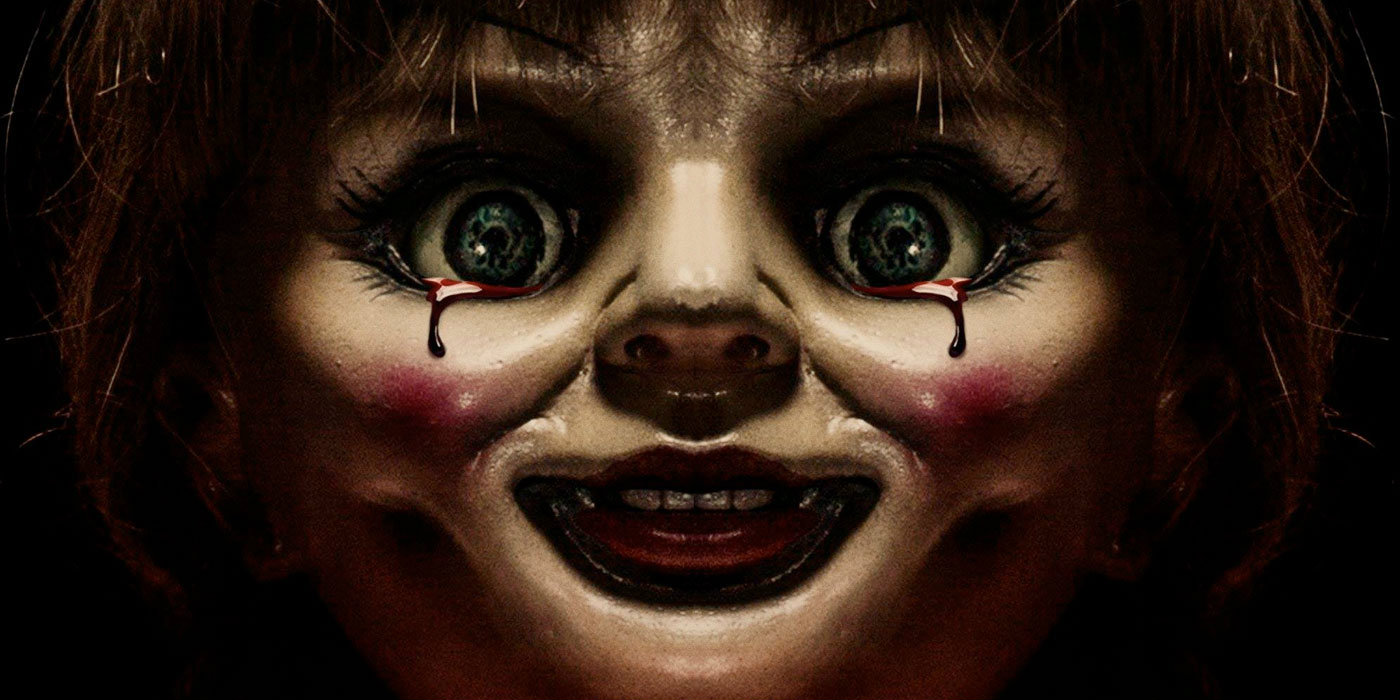
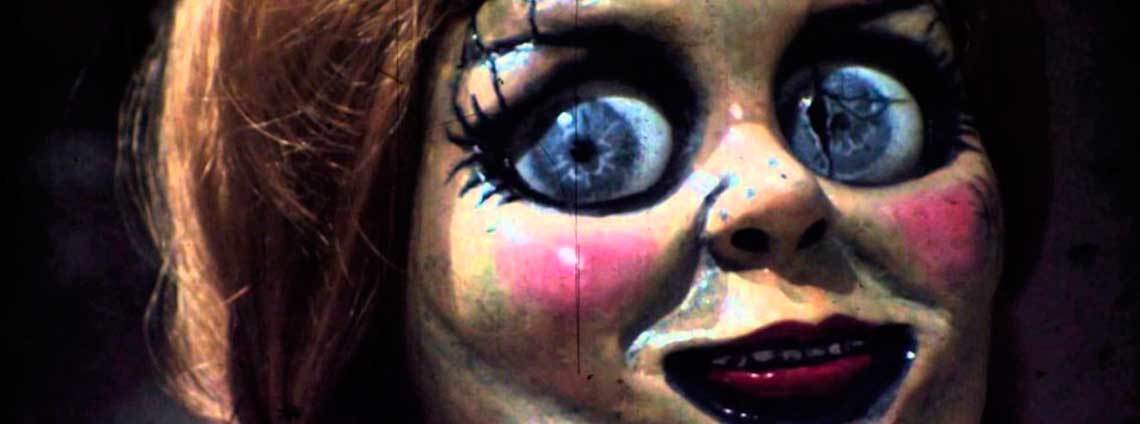
There’s also a creepy doll, the element that seems to be driving this unexpected franchise and the only item from the original film that made the leap to Annabelle: Creation.

You remember her – she terrorized a young family, and later a pair of nursing students before being locked in a glass case in that creepy room at Ed and Lorraine Warren’s house.

But did you ever wonder what kind of demonic hijinks created her in the first place? Or do you just find yourself in the mood to watch orphans being persecuted? Either way, may I introduce you to Annabelle: Creation?

Director David F. Sandberg (Lights Out) does what he does best, relying on good, old-fashioned jump scares. If that’s your bag – and you don’t get side tracked with nit-picky things like how utterly ignorant writer Gary Dauberman is of actual Catholicism (so maybe he shouldn’t have chosen a Catholic orphanage!) – then this film may be for you.

Years after a doll maker and his wife lose their precious daughter, they accidentally conjure up a demon to live in the single ugliest doll any toy maker has ever seen fit to make.

Bad choice.

Worse choice? Inviting those orphans to move in.

Welp, empty-headed horror it is. And there is something to be said for that in a mid-August slump. This is the sequel to a weak film, itself a sequel of sorts to the kind of movie that felt like a one-off.

It seems unlikely a franchise was the expectation back when Conjuring hit screens in ’13. Since then, filmmakers have scrambled to cobble together a universe of supernatural spookiness to spin off and connect. (Look closely at the picture from Sister Charlotte’s convent – any of those nuns look familiar?)

Sandberg offers little in the way of originality. (He’s clearly a pretty big fan of Wan’s Insidious.) But there are jumps aplenty and a couple of very freaky images in the third act.

Because if you can’t have a creepy nun, may as well make due with a disfigured mother and a scarecrow.

Verdict-3-0-Stars

Camping in Australia – Just, No

Killing Ground

by Hope Madden

Australian campers find trouble in what amounts to Eden Lake meets Wolf Creek.

If you missed either of those two deeply troubling horror classics, you should watch them now. Right now, seriously.

Great, right? Terrifying, eh? Makes you kind of want to see what writer/director Damien Power has in store with his feature film debut, Killing Ground.

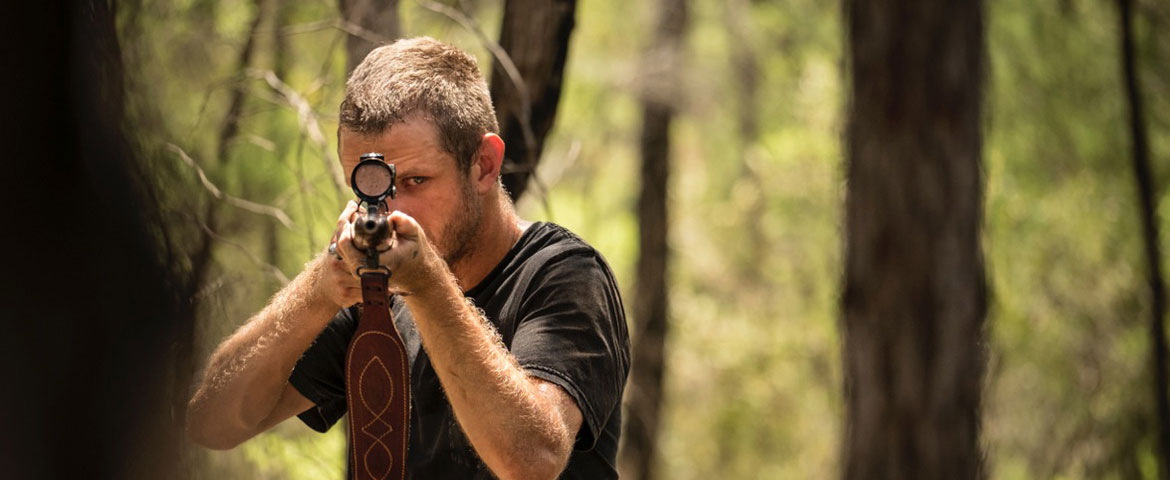
He starts off predictably enough: Sam (Harriet Dyer) and her boyfriend Ian (Ian Meadows) are headed to an out-of-the-way campsite Ian remembers from his childhood. They stop for directions, are warned off by a creepy Aussie with a barking pit bull, go anyway.

Right.

They arrive and are disappointed to see that they’ll be sharing the site with another group – based on the parked SUV and the pitched tent. But where are these other campers?

Though Power doesn’t explore a lot of new ground with this campsite horror flick, his approach is so authentic and spare that it breaks free of cinematic hyperbole and leaves you seriously wondering why in the hell anybody camps – anywhere, but especially in Australia.

His narrative builds tension by cross-cutting between the tale of the camping couple and the story of the family whose vacant tent begins to really worry Sam and Ian come nightfall.

From The Babadook to Wyrmwood to The Loved Ones, Australia’s horror output has been outstanding in recent years. Earlier this year, newcomer Ben Young rocked cinemas with his low-budget Aussie horror Hounds of Love.

Killing Ground isn’t quite ready to join those ranks, mainly because, at its core, it’s an unremarkable story – although a few clever twists and choices keep it fresh enough.

The tale is well told and beautifully performed. Aaron Pendersen and Aaron Glenane, in particular, craft believable, dimensional, terrifying characters.

A satisfying power struggle and the provocative use of ambiguities that refuse to offer a tidy ending help the film hang around after credits role.

Seriously, though, why do people camp?

Verdict-3-0-Stars

I Don’t Want to Go Out: Week of August 7

Summer bombs worm their way into the home entertainment market, but so do a couple of intriguing indies. Choose wisely.

Click the title for a full review. And as always, please use this information for good, not evil.

The Transfiguration

The Transfiguration

Verdict-3-5-Stars

The Dinner

Verdict-3-0-Stars

Snatched

Verdict-2-5-Stars

King Arthur: Legend of the Sword

Verdict-2-0-Stars

Satanism Happens. (No it doesn’t.)

When my son was about 8, our eye doctor retired and we inherited a newer, better version. The new eye doctor was explaining some of the specifics of Riley’s condition to him, and mentioned that he had astigmatism. To which Riley naturally replied, “And how is that related to stigmata?”

Perplexed and maybe a little frightened, our ophthalmologist looked to me.

I explained to the boy:

“Well, there’s a lot less blood.”

Why was my 8-year-old already familiar with the term stigmata – the spontaneous appearance of wounds corresponding to the wounds of the crucifixion? Well, why isn’t yours?

I myself was trained in the gorier aspects of the Catholic faith when I was very young, so why not my boy? Though I doubt I could provide the appropriate tutelage on the darker edges of Catholicism that I’d received from Sister Cleofa.

Sister Cleofa was my first grade teacher. Back in those days, twins were separated in school to encourage individual development, so my sister Joy was across the hall in Sr. Angela’s class.

Ah, Sr. Angela’s – the envy of all Sr. Cleofa’s pupils. Sr. Angela was youngish. She wore the more lightweight habit, sometimes in a jaunty pale blue. She played acoustic guitar. She smiled routinely.

Sister Cleofa, she was not.

No, my teacher wore the full black garb, boasted heavy facial hair, and never smiled once. (I promise you I could not vouch for the fact that she had teeth at all, though I would predict fangs.)

And while the 6-year-olds across the hall drew pictures of angels and learned folk gospel tunes, we studied the Stations of the Cross.

If you’re unfamiliar, these are the pivotal steps of Christ’s condemnation, death, and – if you’re brave enough to make it through the tale of innocent blood and carnage without sobbing so loudly you drown out that final station – resurrection.

My mustachioed teacher terrified us all. Catholicism had been utterly run of the mill for me up until then: my dad worked for the Catholic church and my mother was deeply devoted in an unadorned, tight lipped way. We gave up meat during lent. We genuflected as we entered pews. We made the sign of the cross with holy water. We never missed Mass.

Even when we went on vacation, my dad may not have been able to find a public restroom, but by God he’d find a Catholic church.

But Sr. Cleofa’s obstinate devotion to the darkest, ugliest, most purple robed and mysterious elements of the religion began to fester in my young mind. And though Satan was never studied outright, he always seemed present in her teaching, hiding just beyond all that blood, misery and fear. Maybe that’s why the great devil worship scare of ’88 felt so natural, obvious even.

What great devil worship scare of ’88, you ask?

You probably didn’t know what stigmata meant, either.

Let me introduce you to my hometown sheriff, Dale Griffis. In the Eighties, Griffis was considered an expert in Satanism. I swear this is true. Look it up.

He claimed that the rural counties of Ohio were home to dozens of covens, and that ritualistic human sacrifice was commonplace out among our heartland corn rows.

A lot of people think the Necronomicon is a pretend anti-bible used in movies like Evil Dead, but Griffis claimed to own a copy.

He witnessed on all the talk shows – Geraldo, in particular. He even appeared on 20/20 at least once. Naturally, this suggested to us in Tiffin that our hometown and its outlying agriculture was the hotbed of Satan.

And there was proof!

Rossford, Ohio’s telephone exchange is 666 – I swear to God!

The streets in the town of Gallipolis take the form of sixes, and townsfolk chase outlanders to the town center for sacrifice. (This is unverified, but so obvious if you know anyone from Gallipolis, which you probably do not.)

Plus, our town founder was killed as he camped in what would one day be called Hedges Boyer Park. He was skinned alive, his bones all that was left of him, because he’d disturbed a coven.

(Note: This may not be true. My brother-in-law Brett told this story to my sister and me at bedtime one night. This makes him a likely liar, and an undeniably poor babysitter.)

OK, maybe we were looking for evidence where none existed, but we were only following Griffis’s lead.

His tales of rural demons were eventually uncovered as an overripe paranoid frenzy. For a truly horrific example of the damage done, though, Griffis was the prosecution’s “expert on the occult” in the trial of the West Memphis Three – you remember, those teenage boys wrongly convicted of child murder?

The court ruled they were Satanists, based largely on expert witness testimony, but would later find that they’d been wrongfully imprisoned for 18+ years based on superstition, ignorance and poor police work.

Between Griffis’s stories and Cleofa’s grim teachings, I’m lucky all I have to show for their influence is a keen interest in horror films and a son with unusual questions about vocabulary.

I’m lucky I didn’t end up with repressed memory syndrome or some other lasting stigma.

Now, how again is that related to stigmata?


Thanks to James Garze for the kick ass illustration!
Hope Madden and George Wolf … get it?