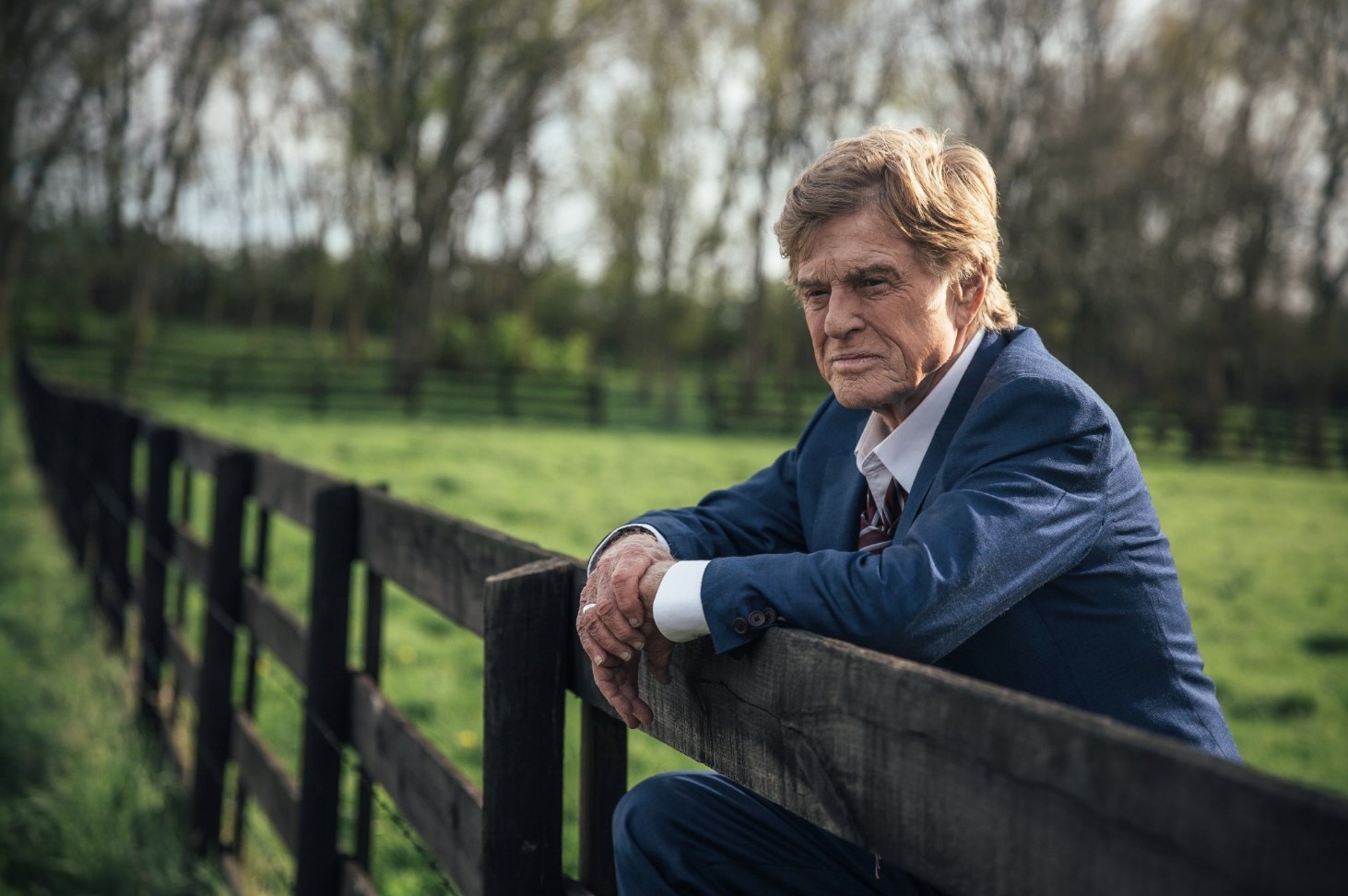
Even if this doesn’t end up being Robert Redford’s final film as an actor, it’s understandable why he’d be tempted to make it his swan song.
Redford’s decades-long status as a screen icon has always leaned more on charm than range, and The Old Man & the Gun wears that strategy like a favorite pair of broken-in boots.
Director/co-writer David Lowery adapts a magazine article on a likable rogue named Forest Tucker, who broke out of San Quentin at the age of 70 and earned his folk hero status with a string of brazen bank robberies.
Tucker (Redford, natch) plots the heists with his grey-haired gang of two (Danny Glover, Tom Waits) and flirts with the farm-living Jewel (Sissy Spacek) while lawman John Hunt (Casey Affleck) is on his tail.
And the old scalawag couldn’t be happier while doing it.
The story is light and whimsical, but thanks to the veteran actors and the slyly understated direction, it’s got a frisky heart that won’t quit. Watching Redford and Spacek together is a joy in itself, as Jewel’s bemused-but-curious reaction to her new suitor only brings more twinkles to his eye. Then there’s Affleck easily filling Hunt with the perfect strain of frustration-laced respect, and Waits delivering some deliciously dry one-liners.
But it’s Lowery who may be the real wonder here. After Ain’t Them Bodies Saints, Pete’s Dragon and A Ghost Story, he again shows unique storytelling instincts no matter what tonal gears he’s shifting. This film is a satisfied mosey, one that serves as a sunset ride for a Hollywood legend while letting the exploits of a charming bandit reinforce the value of just loving what you do.
For Tucker, it was robbing banks. For Redford, it was being an iconic leading man.
One of everything this week in home entertainment, from the best you will find in 2018 through a couple of hotel-related adventures to a towering inferno adventure. You can choose from exquisite to dumb fun, from family to noir. Who can take that kind of pressure? Don’t stress! We will walk you through it.
Horror movies mirror the anxieties of a population. If you look at the best horror in any decade, what made it relevant, what gave it punch, was that it spoke to the anxieties of the society at that point in time.
Case in point: Godzilla. Not long after the end of WWII, a Japanese filmmaker spun a yarn about the end of civilization as a giant kaiju brought about by atomic bombs. You can see how that spoke to folks at the time.
You can also point to one particular film that changed the trajectory of the genre. To use Godzilla as the example again, after that film, you were hard pressed to find a horror film that was not a creature feature.
Here’s our quick primer, decade by decade, on the films that marked the genre, predicted the coming decade’s cinematic output, and articulated the social anxieties of the day.
1914 to 1918 saw the first global war. Germany, France and the US also happened to be the three countries investing the most in film. And while many in the US protested the idea of paying our money to see German films at the time, the most interesting horror was coming from German writers and directors who could feel the ideological changes that would inform not only WWI, but the more horrifying underpinnings of the next generation’s war.
Required viewing:
• Nosferatu (1922)
• Phantom of the Opera (1925)
Era defining film: The Cabinet of Dr. Caligari (1920)
Non-practicing Jewish/German director Robert Weine would eventually escape from Germany and make films in Hungary after the Nazis came to power. His expressionistic presentation in this film, much of it owing to an ingenious way to deal with a limited budget, had a lasting impact on cinema worldwide.
But it was the writers of Caligari – Carl Mayer and Hans Janowitz – who bring the social anxieties into focus. Both were in the military in WWI and both had a profound distrust of power, which influenced this amazing film.
1930s
This was the calm between world wars. Advances in medicine meant that more soldiers came home from WWI than what would have happened in any earlier war. Many of those people were physically disfigured to a degree that we would never have seen before these medical advances.
The films of the 1930s—Universal’s sweet spot—focused almost exclusively on shady Eastern European evil that unleashes disfigured monsters, often sympathetic monsters whose pain and ugliness are no fault of their own, on an unsuspecting population.
It played on audiences fear of the sinister European other, that mysterious presence of evil that they could never hope to fathom. It also picked those scabs of seeing the monstrous in their own home towns.
Era defining film: Frankenstein (1931)
James Whale’s brilliant take on Mary Shelley’s novel looked at Frankenstein’s monster and saw the cruelty humanity was capable of committing. For him, the monster was the central and most interesting figure. Unlike Shelley’s antihero, Whale’s creature was utterly sympathetic, an oversized child unable to control himself, making him simultaneously innocent and dangerous.
Barons and aristocracy, the European setting – the film distrusts scientists and public officials as fools unable to reign in their own ambitions no matter the dire consequences.
https://www.youtube.com/watch?v=McUce_xwxeA
1940s
WWII was in full swing and Americans were looking for escapism. In a way, though, the 40s were more of the same. Still monster movies, mostly based on Universal’s success. RKO began its run with Jacques Tournier/Val Lewton films that- because of smaller budgets – relied on audience audience imagination over pricey make up effects. The success resulted in a change, however temporary, toward smarter, suspenseful films.
But the real enemy was German. While most of the monster movies of the decade saw some kind of shadowy European figure of power or evil, one really exemplifies the era and where it is.
Required viewing:
• Cat People (1942)
• I Walked with a Zombie (1943)
• The Uninvited (1944)
Era defining film: The Wolf Man (1941)
For George Waggner’s 1941 classic, Lon Chaney Jr. plays the big, lovable lummox of an American back in his old stomping grounds—some weird amalgamation of European nations.
In a real sense, this film was the answer to a formula, an alchemy that printed money. The Chaney name, Bela Lugosi co-stars, and we pit a sympathetic beast against some ancient European evil. But it’s much more pointed than it seems. The evil is purely German, gypsies sense it and yet can do nothing but fall victim to it, and it is an evil with the power to turn an otherwise good man—say, your average German man—into a soulless killing machine.
Few eras have earmarked their horror output with social anxiety as thoroughly as the 1950s. The war was cold and it was everywhere.
You were hard pressed to find any horror film in that decade that were not specifically about fear of the Communist and/or atomic threat unless you looked overseas. Those who needed a minute away from the mutant monsters that followed Godzilla to box office gold found it in England’s fledgling horror company, Hammer.
Required viewing:
• Invasion of the Body Snatchers (1956)
• Dracula (1958)
• The Bad Seed (1956)
• Diabolique (1955)
Era defining film: Godzilla (1954)
More than any other film in the genre, Godzilla spoke directly to global anxieties, became a phenomenal success, and changed the face of horror.
As Japan struggled to re-emerge from the 1945 bombings of Hiroshima and Nagasaki, director Ishiro Honda unleashed that dreaded kaiju—followed quickly by a tidal wave of creature features focused on scientists whose ungodly work creates global cataclysm.
Far more pointed and insightful than its American bastardization or any of the sequels or reboots to follow, the 1954 Japanese original mirrored the desperate, helpless impotence of a global population in the face of very real, apocalyptic danger. Sure, that danger breathed fire and came in a rubber suit, but history shows again and again how nature points out the folly of man.
Civil Rights, Vietnam, women’s rights, the pill—the Sixties was a decade that changed an awful lot. And with change comes social anxiety.
A woman’s right to control her own body became front page news with the release of the birth control pill, and worries generated there spilled into horror, the best of these being France’s Eyes Without a Face and Polanski’s Rosemary’s Baby.
The decade saw a slew of other true classics, from The Innocents to Psycho and more, but the effects of the social change – which would become even more pronounced in the cinematic output of the next decade – was articulated best by the bargain basement budget zombie film that changed every single thing.
Required viewing:
• Psycho (1960)
• Eyes Without a Face (1960)
• The Innocents (1961)
• Rosemary’s Baby (1968)
Era defining film: Night of the Living Dead (1968)
Romero’s first zombie film – the first proper zombie film – hit upon cultural anxieties aplenty. The war in Vietnam – televised almost constantly, and for the first time – was reflected in Romero’s onscreen broadcasts of unimaginable horror. He depicts the changing paradigm of the generations in the power struggle going on inside the besieged house.
More than anything, though, Romero hit a nerve with his casting. The filmmaker has long said that African American actor Duane Jones got the part as the lead because he was simply the best actor in the cast. True enough. But his performance as the level headed, proactive, calm-under-pressure alpha male – followed by Romero’s gut-punch of a finale – spoke volumes and is one of the main reasons the film remains as relevant today as it was when it was released.
The rise of independent film in the US in the Seventies led to maybe our greatest era in film. Taxi Driver, The Godfather, One Flew Over the Cuckoo’s Nest, A Clockwork Orange, Apocalypse Now, Chinatown, Mean Streets, Rocky—it’s dizzying to think of the filmmakers who established themselves in that decade with fresh, gritty, realistic, genius films.
Horror benefitted from the same boon in independent filmmaking. Some of what would become the strongest voices of the genre were making their first sounds: David Cronenberg, Stephen King, Wes Craven, Tobe Hooper, among others.
It’s a time when the TV coverage of Vietnam has begun to dull the population’s senses to violence. We saw horror movies that did two things. First, filmmakers came up with a way to wake people up to violence, either with extreme violence or with larger-than-life violence.
The second thing was a sense of pitting evil against the status quo. People were wearying, as the decade waned, of the constant state of flux. They longed for simple, wholesome answers. Sue Snell challenged the status quo by showing kindness to Carrie White, and look what happened. Teenagers rebelled in suburbia by partying and having sex when they were supposed to be babysitting, and Michael Myers appeared to punish their unholy behavior.
The most iconic film of the Seventies—horror or otherwise—saw just one way to contend with modern evils.
Era defining film: The Exorcist 1973
A single mother, a daughter on the verge of puberty and sexual awakening, an opening for evil—much of the grounding concepts of William Friedkin’s masterpiece is simply that the status quo in the Seventies was being challenged and we needed God to come straighten things out again.
The concept that the Catholic Church will save us now seems almost so quaint as to be offensively naïve. But at the time, Friedkin combined this sensibility with an impeccable script, uncompromising direction and breathtaking performances (the film raked in two Oscars and another 8 nominations) to scare the hell out of viewers.
Conservatism, consumption, capitalism—the Eighties had it all. Everything was bigger, splashier, louder. Music videos and their phenomenal influence on teenage buying habits meant movies catered more to a younger audience, partly by ensuring that a short attention span could be kept engaged.
Thanks to the rise of VHS, everybody learned that you could turn a profit more easily with horror – the go-to rental property – than with any other genre of film. They could be made cheaply and they were the most likely to be rented, immediately and repeatedly.
The slasher was king – there were 8 Friday the 13th films in the decade, 4 Halloween films, 5 Nightmares on Elm Street alone. There were also some good movies, but the one that looks the most like the Eighties is one that comes from the era’s most iconic icon, Spielberg
Required viewing:
• The Shining (1980)
• American Werewolf in London (1981)
• The Thing (1981)
• Henry: Portrait of a Serial Killer (1986)
Era defining film: Poltergeist 1982
Tobe Hooper’s love child with Steven Spielberg may not be the best or most important horror film of the Eighties, but it is the most Eighties horror film of the Eighties. In both of Spielberg’s ’82 films, the charade of suburban peace is disrupted by a supernatural presence. In E.T., though, there’s less face tearing.
Part of Poltergeist’s success emerged from pairing universal childhood fears – clowns, thunderstorms, that creepy tree – with the adult terror of helplessness in the face of your own child’s peril.
Splashy effects, excellent casting, Spielberg’s heart and Hooper’s gut combine to create a flick that holds up. Solid performances and the pacing of a blockbuster provide the film a respectable thrill, but Hooper’s disturbing imagination guarantees some lingering jitters.
The Nineties was a fairly calm time, although the angst in the music suggests otherwise. More than anything, the social anxiety of the Nineties was more about rebelling against the conservative, self-centered, larger-than-life Eighties. And without a single, overarching, global worry to inform horror, the output of the decade was a mixed bag.
The decade started off with the best film horror may ever see. The Silence of the Lambs won all 5 major Oscars that year – actor, actress, film, screenplay, director – absolutely unheard of for a horror film. It is a perfect movie, and its success led to more heavyweight directors working with a big budget.
The decade would end with a phenomenon that created its own subgenre: The Blair Witch Project. Takashi Miike’s Audition was one of the burgeoning J-horror genre that would have a huge influence on American horror in the next decade.
But the film that reestablished horror among fans and changed the entire trajectory of the genre was Wes Craven’s Scream.
Required viewing:
Cape Fear 1991
Silence of the Lambs 1991
The Sixth Sense 1999
The Blair Witch Project 1999
Audition 1999
Era defining film: Scream 1996
In its time, Scream resurrected a basically dying genre, using clever meta-analysis and black humor. What you have is a traditional high school, but director Wes Craven’s on the inside looking out and he wants you to know it.
What makes Scream stand apart is the way it critiques horror clichés as it employs them, subverting expectation just when we most rely on it. We spent the next five years or more watching talented TV teens and sitcom stars make the big screen leap to slashers, mostly with weak results, but Scream stands the test of time. It could be the wryly clever writing or the solid performances, but I think it’s the joyous fondness for a genre and its fans that keeps this one fresh.
Here’s where things get nutty. New technologies made filmmaking more affordable and made it easier for US audiences to access foreign films.
What we learned with the insane financial success of the bargain basement Blair Witch Project is that horror turns a profit. Netflix, on-demand viewing, online viewing – all of which was in its infancy in the last decade – meant that these outlets needed content.
In terms of high quality horror, we saw an incredible influx from abroad, mainly visceral foreign horror.Required viewing:
28 Days Later (2002)
Dawn of the Dead (2004)
Wolf Creek (2005)
The Descent (2005)
The Loved Ones (2009)
Let the Right One In (2008)
Era defining film: The Ring (2002)
Gore Verbinski’s film achieves one of those rare feats, ranking among the scarce Hollywood remakes that surpasses the foreign-born original, Japan’s unique paranormal nightmare Ringu. Verbinski’s film is visually arresting, quietly atmospheric and creepy as hell.
The film announced Verbinski as a filmmaker worthy of note, brought Naomi Watts into our consciousness, and unleashed countless (sometimes fun) copycats. We saw more PG-13 horror, more remakes, and so many J-horror remakes.
2010
We’ve settled into a world where you can find dozens of brand new horror films from anywhere on earth at any moment of the day or night via countless channels. This means we benefit from a bounty of possibilities never before seen. In this decade, horror has spawned some of our biggest blockbusters.
Horror is suddenly not only a realistic go-to for studios looking for a blockbuster, it’s also become one of the more highly regarded genres for quality, though-provoking, challenging and brilliant content.
The Babadook deals unapologetically with something we’d honestly never seen in film before. It Follows deals with the changing paradigms of adolescence in a way that was fresh and devastating. Hereditary looks at family dysfunction, The Witch contends with the roots of radicalization.
But the movie we’re proudest to call horror is Get Out. Blockbuster, Oscar winner and a brilliant slice of social commentary made by a filmmaker who clearly loves the genre, it will change the face of the genre.
Required viewing:
The Babadook (2014)
A Girl Walks Home Alone at Night (2014)
It Follows (2014)
The Witch (2015)
Hereditary (2018)
Era defining film: Get Out (2017)
What took so long for a film to manifest the fears of racial inequality as smartly as does Jordan Peele’s Get Out.
Peele writes and directs a mash up of Guess Who’s Coming to Dinner, Rosemary’s Baby and a few other staples that should go unnamed to preserve the fun. Opening with a brilliant prologue that wraps a nice vibe of homage around the cold realities of “walking while black,” Peele uses tension, humor and a few solid frights to call out blatant prejudice, casual racism and cultural appropriation.
Peele is clearly a horror fan, and he gives knowing winks to many genre cliches (the jump scare, the dream) while anchoring his entire film in the upending of the “final girl.” This isn’t a young white coed trying to solve a mystery and save herself, it’s a young man of color, challenging the audience to enjoy the ride but understand why switching these roles in a horror film is a social critique in itself.
Hey, it’s October! The big money winners start rolling out this week. The season kicks off with the first real Oscar contender. Is A Star Is Born as good as the hype? Yes! We also have the next big comic book movie, Tom Hardy’s Venom. Is it as bad as they’re saying? No!
Plus, we share a rundown on all that’s new in home entertainment.
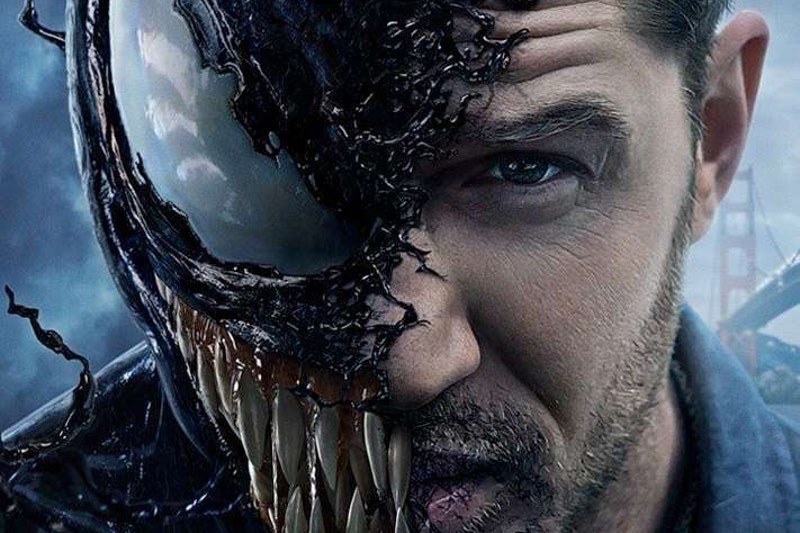
We don’t need another superhero. That’s what the Venom trailers told us, and it’s pretty true.
So, what Venom had to offer—an antihero, a Jekyll/Hyde thing starring a brilliant actor who excels with complex, dark roles—felt like a great change of pace.
Tom Hardy was the ideal choice for the dual role of Eddie Brock, semi-doofus reporter, and Venom, flesh-eating alien symbiote. This should have worked, partly because Hardy knows how to mine villains for their humanity, and watching him wrestle with the good v evil duality never ceases to be impressive.
What Venom suffers from more than anything is the expectations set by a Marvel release. Don’t be mistaken, were this the DC universe it would be the second best comic book film released since Christopher Nolan cast Hardy as a super villain.
But it is, indeed, Marvel. (If you forget, Stan Lee shows up to remind you.) And for that reason, regardless of the fact that Venom boasts superior acting, FX, story arc, action choreography and writing than anything DC has done this century besides Wonder Woman, its regrettably traditional execution makes it feel a bit stale. Because it is Marvel.
A characteristically committed Hardy elevates scenes, indulging a far more humorous tone than what we’ve seen lately from the versatile actor. Riz Ahmed (Nightcrawler, Four Lions) is a solid choice to play Eddie/Venom’s nemesis. Never campy or over-the-top, Ahmed evokes a type of lifelong genius who cannot be persuaded that his ideas are at odds with the ideals he alleges to support.
Michelle Williams is uncharacteristically flat, and the balance of the cast is mainly forgettable, but the real problem with the film rests on uninspired direction.
Ruben Fleischer showed a flair for action, colorful theatrics and humor with his 2009 breakout Zombieland, but the joy of carnage and camaraderie that infected that flick is sadly missing here.
Zombieland was aided immeasurably by writers Rhett Reese and Paul Wernick, whose irrepressible irreverence made the Deadpool films such a riot. It’s a tone sorely lacking in this screenplay, penned by a team of four whose output includes a Fifty Shades film, Kangaroo Jack and Fleischer’s abysmal 2013 mob flick, Gangster Squad.
Venom is not a bad movie. It’s fun, competently made entertainment.
Emotional, entitled, white men seem omnipresent these days. They’re on the news. They’re on social media. They’re on the big screen. At least with the biopic Colette, they are confined to an historical period safely a century behind us.
Colette gives us the origin story of French novelist Sidonie-Gabrielle Colette (Keira Knightley), a Madonna-like figure of the early 1900s who emerged from a small provincial village to become the toast of Paris, reinventing herself over the years as a novelist, mime, actress and journalist.
She wrote frankly about women’s independence, sexuality and aging. She sparked a riot at the Moulin Rouge in 1907 when she performed a lesbian love scene in a pantomime. She was nominated for the Nobel Prize in Literature in 1948. She wrote the book Gigi, which was adapted for the stage where she personally selected a then-unknown Audrey Hepburn for the leading role in 1951. The book then became an MGM musical that won nine Academy Awards in 1958 (including Best Picture). When she died, Colette was the first woman in France to be given a state funeral.
But before all that, Colette married a bully named Willy (Dominic West). Over a decade her senior, Willy was a popular writer who put out music reviews, stories and novels. Quite a bit were written by other people in a factory system where Willy provided the brand, but others produced the work. He compelled his wife to join the team, asking her to mine her childhood experiences so he could publish them under his name. Once the Claudine books became popular, he would lock Colette in a room until he was satisfied she had written enough.
The movie tells the story of Colette’s time with Willy and traces an arc from her awkward introduction into Paris salon society to an eventual break with the abusive hack and first steps toward an independent life.
Knightly is masterful inhabiting the multifaceted Colette, using her eyes to hint at the hurt she’s experiencing while wielding a bold bravado as a shield in her constant verbal fencing matches with her husband. West presents as a believable blowhard—initially charming, then volatile, narcissistic, abusive, and ultimately self-pitying, sniveling and weak.
Given the breadth of Colette’s life and its many acts, it makes sense that director Wash Westmoreland would focus on a distinct part of it. However, because of his desire to give screen time to so many of the big Personalities of the Belle Époque and to keep the focus squarely on the time period of the Colette/Willy relationship, the movie seems simultaneously thinly-sketched and agonizingly long. With so much of the movie involving Colette being shit on, the movie verges on indignity porn. How much can this woman take, before she snaps?
But when she snaps…it’s so good. Oscar-bait good.
Given this week, I’d have vastly preferred it if more of the movie had focused on the glorious and adventurous life Colette led after she dumped Willy and struck out on her own. But, even so, it’s a story of liberation and the claiming of a woman’s power. Something that’s needed.
A few weeks ago, for homework, I revisited the 3 previous versions of A Star Is Born. A friend later asked me which one was best.
I have a different answer now.
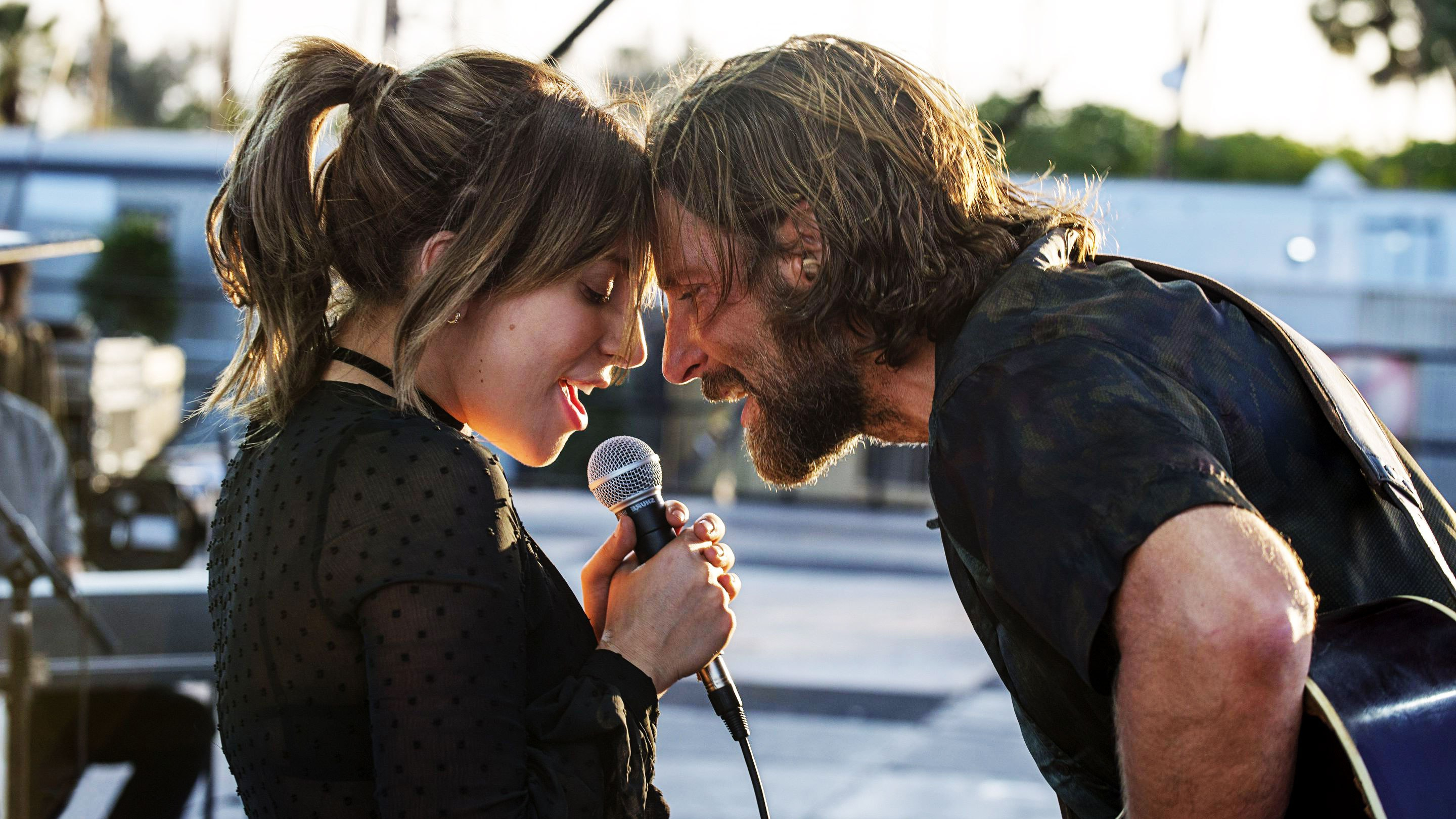
Director/co-writer/co-star Bradley Cooper brings a new depth of storytelling to the warhorse, with a greater commitment to character and the blazing star power of Lady Gaga.
Cooper is Jackson Maine, a booze-swilling, pill-popping rock star who wanders into a random bar post-gig and catches Ally (Gaga) belting out “La Vie en Rose.” Jack’s entranced, and begins coaxing Ally to sing her own songs instead of covers. Everyone’s got a talent, he tells her, the real gift is having something to say.
Each previous film version represented its era well, but with the rock music setting and several recognizable homages, it’s clear Cooper has a fondness for the Streisand/Kristofferson take from ’76. His new vision carries a raw authenticity that eclipses them all.
The battered star’s instant infatuation with the young talent has never felt more understandable, the undeniable chemistry between Cooper and Gaga fueling the feeling that in Ally, Jack sees a better version of himself.
Cooper, with a lower-range speaking voice and the musical talent from nearly 2 years of tutelage, is every bit the weathered rocker, on a misplaced search for redemption. Watch him when Jack is not the focus of a scene to see a character become complete.
But then, another outstanding acting performance from Bradley Cooper is not a surprise. His remarkably instinctual directing debut here, though, must now place him among the premier talents in film.
Nearly every scene, from stadium rock concert to intimate conversation, is framed for maximum impact. His camera can be stylish but not showy, with seamless scene transitions fueling a forward momentum that will not let the film drag.
The melodramatic story has been stripped of pretense and buoyed by more layers of humanity, and not just between the two leads. Jack’s brother (Sam Elliot), his boyhood friend (Dave Chappelle) and Ally’s father (Andrew Dice Clay) emerge as important characters despite limited screen time.
And then there’s Gaga.
The voice is, well, it’s a force of nature, and the songs (some co-written with Cooper) are memorable. But if a star already shining can be born, welcome Gaga the movie star. She is electric, taking Ally from wide-eyed stage fright to SNL headliner with both tenderness and ferocity, giving this character the strength and nuance she has never had before.
This film has talent everywhere, but it also has stirring things to say about love and sacrifice, about art and commerce, ambition and fame.
I’ll say this: A Star is Born is among the very best of the year.
Big week, people. Huge new flicks in theaters, awesome array of choices in home entertainment. Looking for horror? Independent gems that flew sadly under the radar while they were in theaters? Mildly disappointing blockbusters? We have them all! Here’s the skinny:
Before you worry: no, we have not run out of real topics. It’s just that, every so often we need to indulge a weird little voice that says things like, “Ever noticed how many people die on toilets in horror movies? Wonder what kind of deep-seated fears that explores.”
And there are a LOT of people who die on toilets in horror movies. Michael Myers really likes to freak people out in public restrooms. We know Norman Bates likes to dispatch folks while they’re in the shower, but he is not above preying on someone while they’re just trying to pee. Jason Voorhees and Freddy Krueger have also done it. (The poor guy falls asleep on the toilet. Don’t judge—we’ve all been there.)
Here, however, are the best instances of nature calling you to your death.
5. Scream 2 (1997)
Phil (Omar Epps) just wants to take his girl to a scary movie. Still, he does get up in the middle of it to pee. I’m not saying that’s cause for murder. I’m not saying it’s not, either.
The whole Scream franchise does an excellent job of taking the mundane moments in life and drawing your attention to all the ways in which you are actually vulnerable. This scene plays not only on the vulnerability involved in our social contract to allow others to urinate in peace, but also touches on the ways in which anonymity (by way of the costumes everyone is wearing at the theater) emboldens people. Usually the wrong people. The kind that whisper weirdly from the next stall.
4. Zombieland (2009)
Mike White makes such a great doofus victim, doesn’t he? Here he is, minding his own beeswax, taking a leisurely in a filthy public toilet during the zombiepocalypse…No part of this really sounds wise, does it?
It’s all in keeping with one of Zombieland‘s great gimmicks: the rules. The reason the rules work so well for the film is that each one is actually an excellent piece of advice. Get some cardio, people, because zombies don’t tire out.
And for the love of God, beware of bathrooms.
3. Ghoulies II 1988
Everybody hated Philip Hardin (J. Downing) anyway, didn’t we? He knew. Sure, he claimed that his little monster gravy train, the only reason his dying carnival attracted any customers at all, had nothing to do with all those dead bodies. But, come on.
The nasty little muppety creatures from Luca Bercovici’s surprise 1984 hit (and Gremlins ripoff) have left town. They’ve found a hunting ground better suited to them alongside the carnies at the Satan’s Den attraction.
The film is not good—sequels to sloppy derivatives rarely are. It’s a mixed bag of kills and puppet hijinx. But there is something about a monster in the toilet, man, and it ain’t good.
2. Street Trash (1987)
This iconic Troma film sees the homeless population of a town turn from cheap liquor to cheaper god-knows-what, Tenafly Viper. It’s old, but this is not the kind of wine that ages well. Those who drink it, well, it’s like looking directly at the Ark of the Covenant.
The hobo-melting is honestly the least interesting and least offensive thing happening in this envelope pusher. But there is this one poor bastard who just takes a seat, just wants to rest a bit and enjoy a lovely beverage. The FX are laughable, and yet sort of genius.
1. ABCs of Death: T is for Toilet (2012)
Yes! Every single thing the previous films were trying to capture, all handled here with inspired (and brilliantly hideous) claymation. It’s perfect. It’s sadistic, funny, tender, mean, goofy and pretty clearly Australian.
Thirty effing years. That’s insane. The Simpsons has become such a faded and well-worn thread in our cultural tapestry that it’s easy to forget how important it is. You could make the case, and many have, that it has featured the most consistently excellent writing in the history of series television.
And of course, any discussion of the show brings instant debate, from hipster-inspired cries of long-lost relevance to the nearly impossible attempt to rank the best episodes.
Okay, we won’t try to rank them, but we can come up with our 10 favorite episodes…
The Itchy & Scratchy & Poochie Show 1997
Homer joins the voice cast of Itchy & Scratchy, and what follows is not only hilarious, but a spot-on skewering of media pandering.
Quote: “My name’s Poochie-D and I rock the telly, I’m half Joe Camel and a third Fonzerelli. I’m the kung-fu hippie from gangsta city, I’m a rappin’ surfer…you the fool I pity.”
Homer at the Bat 1992
Monty Burns assembles a star-studded group of Major Leaguers for the company softball team. Extra points for Terry Cashman re-recording his “Talkin’ Baseball” to memorable effect.
Quote” “Not once, not twice, but thrice!”
Simpson and Delilah 1990
A new wonder drug gives Homer a full head of hair and he begins to climb the corporate ladder, with a big help from his new secretary Karl (a terrific Harvey Fierstein).
Quote: “You are nature’s greatest miracle! Say it!”
The Shinning (from Treehouse of Horror V) 1995
The Simpsons take on Kubrick’s classic horror film and the results are perfect, right down to the picture of the tartan-clad lass hanging above Groundskeeper Willie’s bed.
Quote: “No TV and no beer make Homer something something..”
Kamp Krusty 1992
When Bart and Lisa are away at Kamp Krusty, Homer and Marge are enjoying an ideal life..until Kent Brockman’s special report clues them into the erupting camper rebellion .
Quote: (Kamp counselors preparing a toast) “Gentlemen, to evil!”
Mr. Plow 1992
Homer finds great success as snowplow operator “Mr. Plow”, only to face stiff competition from Barney as the new “Plow King.”
Quote: “Are you tired of having your hands cut off by snowblowers?”
Homer to the Max 1999
After the TV show Police Cops uses the name “Homer Simpson” for a fat, stupid detective, Homer changes his name. Taking inspiration from a hair dryer, he becomes to “Max Power” and begins getting new-found respect…so much so that he changes Marge’s name to “Hootie McBoob.” Classic.
Quote: “Max Power doesn’t snuggle, Marge, you just strap on and feel the G’s!”
Cape Feare 1993
A triumphant return for Sideshow Bob (Kelsey Grammar), as he resumes his quest to kill Bart. The Simpsons enter the witness protection program as “The Thompsons,” and a flawless parody of Cape Fear takes shape.
Quote: “I think he’s talking to you”
Two Dozen and One Greyhounds 1995
Bart and Lisa discover Mr. Burns’ plan to use the fur from a litter of Greyhound puppies for his wardrobe, which leads to Burns singing “See My Vest,” one of the nest songs in the entire series.
Quote: “They all look like little Rory Calhouns!”
Colonel Homer 1992
Reflecting the country music boom that was exploding at the time, Homer becomes the manager to struggling country singer Lurleen Lumpkin (Beverly D’Angelo). An endlessly quoteable (and singable) episode.
Quote: “As much as I hate that man right now, you gotta love that suit”
Honorable Mention: RV Salesman in The Call of the Simpsons 1990
A satire of the Bigfoot TV specials of the time, this episode isn’t one of the best, but it contains one of our favorite segments ever seen on the show: Albert Brooks as Bob the RV salesman.
Quote: Homer, applying for credit: “Is that a good siren, am I approved?”
Bob: “You ever known a siren to be good?”
Okay, we’re going to stop now before our top 10 list becomes a top 50…which episodes did we miss?