Dance Macabre

Suspiria

by George Wolf

Seventies horror has had a damn good month.

Just weeks after David Gordon Green gave 1978’s Halloween the sequel it deserved, director Luca Guadagnino re-imagines 1977’s giallo classic Suspiria as a gorgeous rumination on the horror of being haunted by echoes of your past.

Wait, wasn’t the original about witches?

It still is, more than ever. Guadagnino and screenwriter David Kajganich (True Story, A Bigger Splash, the upcoming Pet Sematary remake) remove the guesswork about the dance academy coven in favor of a narrative much more layered, meaningful and bloody.

The building blocks remain the same. It is 1977 in “a divided Berlin,” when American Susie Bannion (Dakota Johnson, nicely moving the character from naivete to complexity) arrives for an audition with a world-renowned dance company run by Madame Blanc (Tilda Swinton, mesmerizing). Susie impresses immediately, and is soon given the lead in the company’s next production.

This “cover version” (The Tilda’s phrase, and valid) of Argento’s original lifts the veil on the academy elders early, via the diaries of Patricia (Chloe Moretz), a dancer who has fled the troupe in fear. While whispers paint Patricia as a radical member of the anti-fascist Red Army Faction, she tells psychotherapist Dr. Josef Kiemperer (also The Tilda, under impressive makeup) wild tales of witches and their shocking plans.

Guadagnino continues to be a master film craftsman. Much as he draped Call Me by Your Name in waves of dreamy romance, here he establishes a consistent mood of nightmarish goth. Macabre visions dart in and out like a video that will kill you in 7 days while sudden, extreme zooms, precise sound design and a vivid score from Thom Yorke help cement the homage to another era.

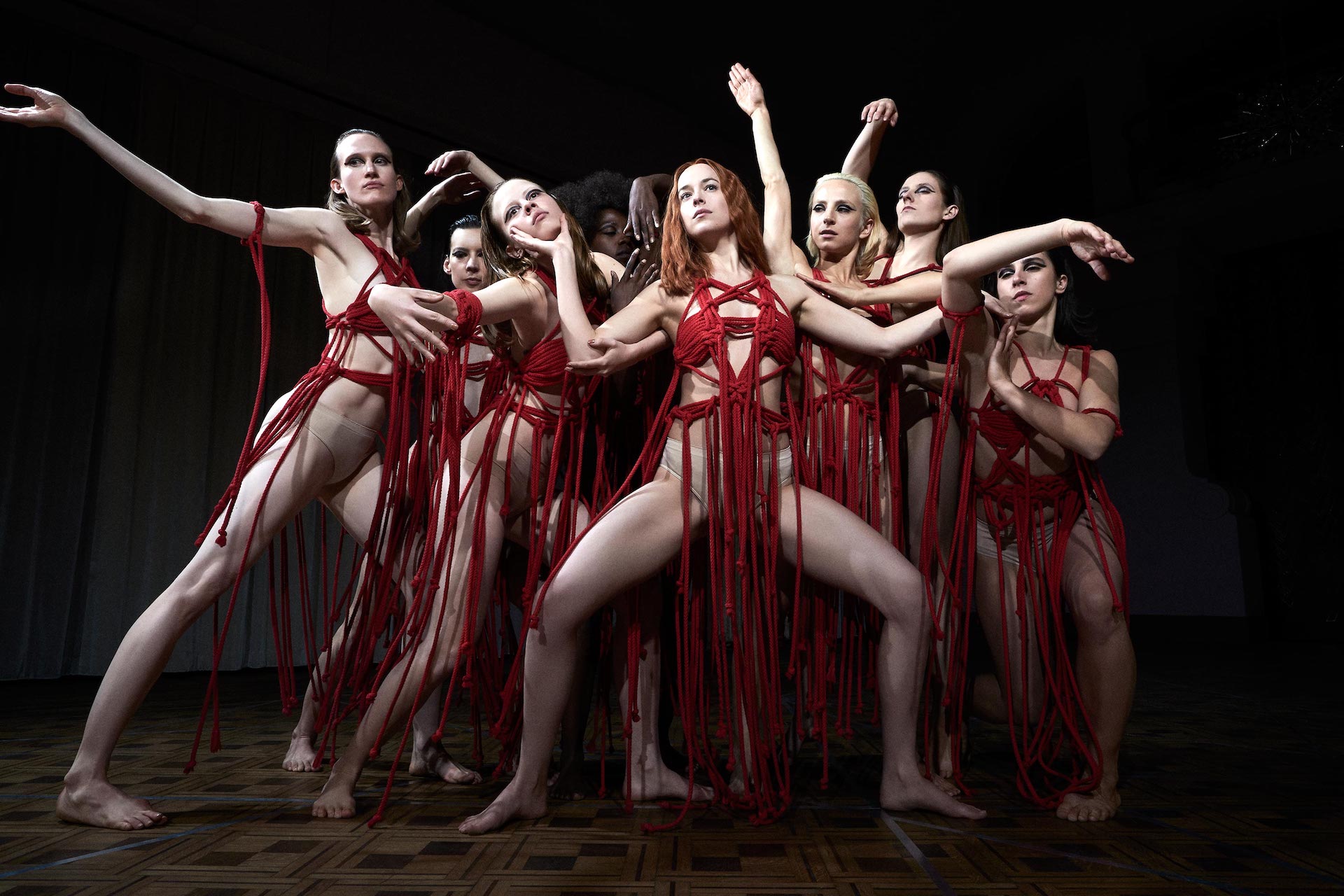
But even when this new Suspiria is tipping its hat, Guadagnino leaves no doubt he is making his own confident statement. The color scheme is intentionally muted, and you’ll find no men in this dance troupe, serving immediate notice that superficialities are not the endgame here.

Guadagnino’s stated goal of “de-victimizing” women in this film shows early and often. They move in strong solidarity both onstage and off, dancing with a hypnotic power capable of deadly results. In fact, most of the male characters here are mere playthings under the spell of powerful women, which takes a deliciously ironic swipe at witch lore as it creates a compelling bookend to what’s going on away from the dance academy.

Dr. Kiemperer, still searching for his wife missing since the end of WWII, becomes a personal illustration of Germany’s struggle with its Nazi legacy. When paired with Patricia’s rumored involvement in the “German Autumn” uprising of ’77, we get two important pillars of an epilogue that, admittedly, some may find a head-scratching overreach.

But after the finale that precedes that epilogue, the bigger problem may be breath-catching. A glorious celebration of the grotesque, it explodes into a cathartic mix of Ken Russell’s The Devils and GOT‘s Red Wedding that more than affirms the film’s intense, obsessive build. Guadagnino has thrown so much at us, he knows we deserve a payoff and damn, he delivers one.

It cements a vision of Suspiria that’s as ambitious and it is uncompromising, one that explores different definitions of horror while ultimately delivering more outright shocks and shivers than Argento ever attempted. Who knew a silly witch story could support so much mind-fuckery?

His name is Luca.



Everything Except Temptation

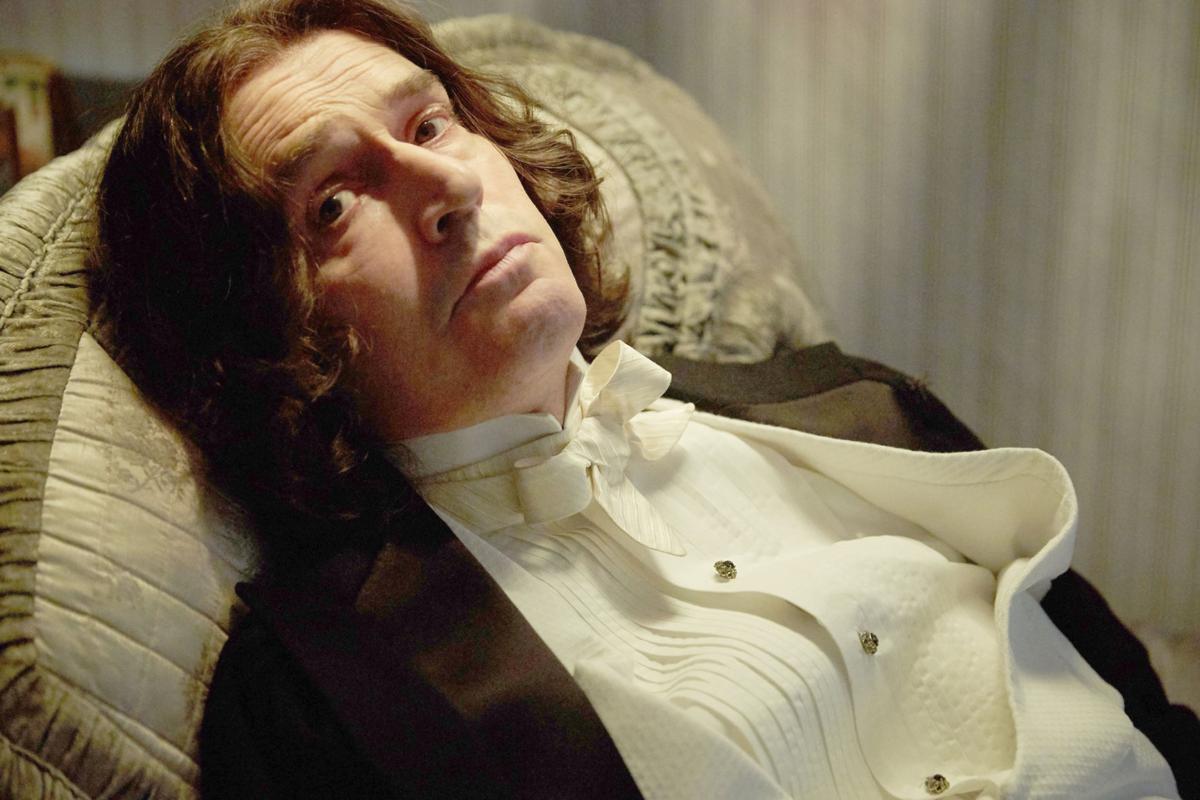
The Happy Prince

by Hope Madden

“Why does one run toward ruin? Why does it hold such fascination?”

Oscar Wilde, by way of writer/star Rupert Everett, wonders these potent lines partway through The Happy Prince, director Everett’s biopic of the infamous decadent/undeniable genius.

Everett’s tale flashes backward and forward but mainly focuses on the period between Wilde’s 1897 release from prison and his death in 1900. A rather bleak time in a very rich and colorful life, but Everett’s execution never forgets the heights, and his performance is haunted with the fall.

Upon his release, Wilde finds support with sometime lover and literary agent Robert Ross (Edwin Thomas) and writer/friend Reginald Turner (Colin Firth – delightful, especially when his character is not the focus of a scene). But Wilde cannot or will not deny his desire for Alfred “Bosie” Douglas (Colin Morgan).

It is a perfect vehicle for a film that lays bare this particular genius and that rumination on running toward ruin. Only a few years earlier, Wilde’s ego required recompense from his lover’s father, who’d libeled him. Wilde’s suit, however, only uncovered his own then-illegal dalliances and instead of recompense he found himself facing hard labor.

And yet, even with emotional support from his friends and financial support from his wife jeopardized by the decision, Wilde joyously takes Bosie back and the two travel to Naples to misbehave.

Everett’s film more than forgives Wilde’s wildness, though it doesn’t go so far as to fully admire it. His lead performance is colored by an understanding of the difference between living lustily when you have everything, and when all that you once had is forever out of reach.

As a writer and director, Everett tries too hard to use Wilde’s short story The Happy Prince to create a running metaphor, perhaps suggesting that Wilde’s end, like the story’s, reaches transcendence. It’s a tough sell, passing off the short’s image of voluntary self-sacrifice as analogous to Wilde’s fall from grace.

Otherwise, though, the first-time filmmaker delivers a vision edged with the melancholy of a brilliant mind never again able to see the world as bountiful and beautiful. It’s as touching as it is resonant, and nothing in The Happy Prince articulates this tragedy as beautifully as Everett’s performance.

It’s a performance simultaneously full of life and of death. You see the enormous loss, but more than that, the deflating ugliness of this world etched on Everett’s face, echoing in his every gesture.

Everett’s instincts behind the camera come as a nice surprise. With more than 70 acting credits to judge by—many of them quite fine, some even awards contenders—the real surprise is that he had this performance in him.

I Don’t Want to Go Out—Week of October 30

Look at all these movies! What do you want, cartoons? Drama? Indie rom com? Horror? Unhinged Nic Cage? You know you want unhinged Nic Cage, and lucky for you, he’s here! We’ll shed some insight on what else is worth a look.

Click the film title to read the full review.

Mandy (DVD)

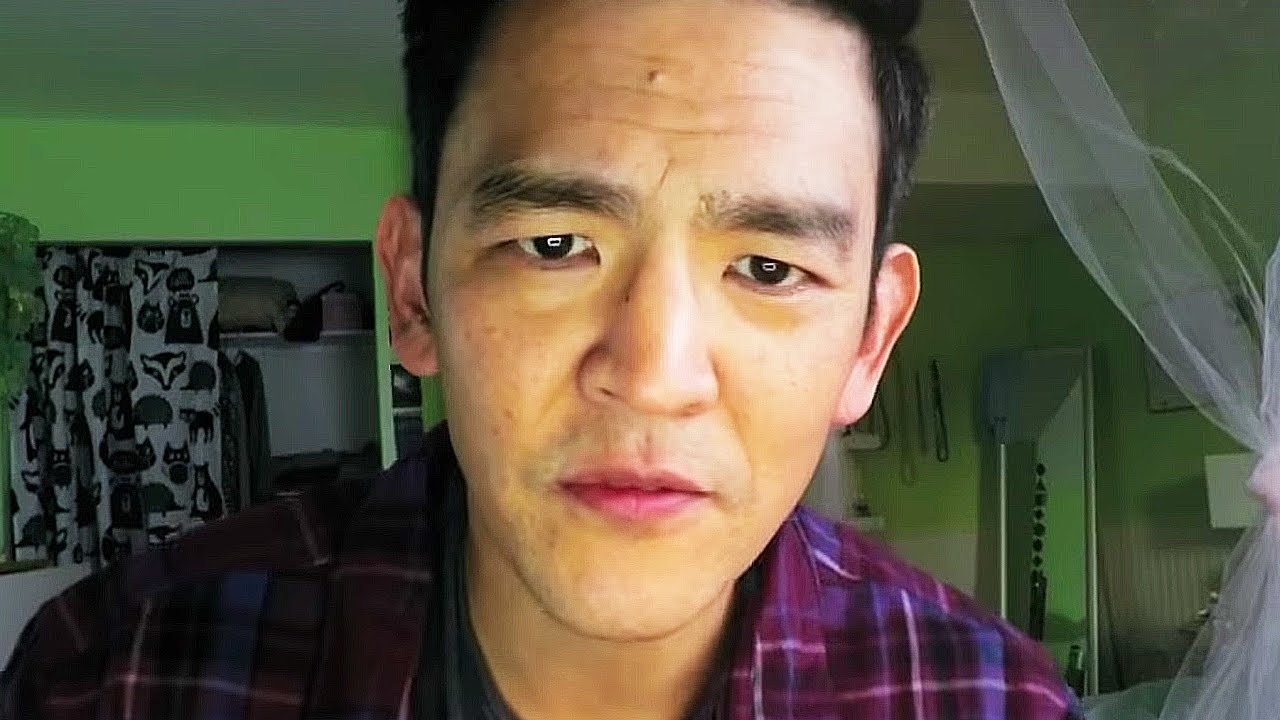
Searching

The Dark

The Spy Who Dumped Me

Juliet, Naked

The Darkest Minds

Slender Man

Teen Titans Go! To the Movies

Fright Club: Bride of Frankenstein

We are thrilled to be a part of a circle of movie podcasts spending the month of October talking about Universal monster movie sequels. And how lucky are we to have drawn the Bride of Frankenstein?

For our money, not just the best Universal monster sequel but the best Universal monster movie, Bride is a special. So special, she gets her own podcast. No lists, no competition, but to do it justice, we thought a special guest was in order. We are thrilled to have Dino Tripodis join us for the conversation.

The Bride of Frankenstein (1935)

James Whale and Boris Karloff – with tag along make-up man Jack Pierce – returned to Castle Frankenstein for an altogether superior tale of horror. What makes this one a stronger picture is the dark humor and subversive attitude, mostly animated by Frankenstein’s colleague Dr. Pretorius (Ernest Thesiger).

Thesiger’s mad doctor makes for a suitable counterpart to the earnest and contrite Henry Frankenstein (Colin Clive, again), and a sly vehicle for Whale. This fey and peculiar monster-maker handles the most brilliant dialogue the film has to offer, including the iconic toast, “To gods and monsters.”

The sequel casts off the earnestness of the original, presenting a darker film that’s far funnier, often outrageous for its time, with a fuller story. Karloff again combines tenderness and menace, and Elsa Lanchester becomes the greatest goth goddess of all film history as his Bride.

Screening Room Podcast: Big Air, Deep Water

We talk through Gerard Butler’s place in cinematic history, Jonah Hill’s place as a filmmaker, and Alex Honnold’s place as a crazy person as we break down Hunter Killer, Mid90s and Free Solo. We also run through the best and worst in new home entertainment.

Listen to the full podcast HERE.

Gerard Has the Con

Hunter Killer

by Hope Madden

On a scale from Gerard Butler to 10, how bad is Hunter Killer?

It’s not London Has Fallen bad. Or Gods of Egypt bad. It’s not Geostorm bad, but what is, really?

But is it any good?

Well, no. Don’t get loony. I’m just saying, it could be worse. You know, because Gerard Butler stars.

That doesn’t make him the worst actor in history. It’s just that he’s not especially talented and he makes impressively awful films. And yet, the king of January inexplicably gets a prime October release with this one, playing Captain Joe Glass.

He’s not an Annapolis guy, but that doesn’t mean he can’t successfully lead his first crew through Arctic waters to save the President of Russia from a botched coups attempt.

If you’re worried about subtitles—well, you’re clearly not familiar with the work of Mr. Butler. No, fortunately the Russians only speak Russian when it doesn’t matter if we understand what they say. The moment the dialog is important they switch (sometimes mid-scene) to English. How lucky is that?

I’m sure we’d never be able to follow this plot otherwise. It’s not like every scene is telegraphed in advanced.

Director Donovan Marsh’s film is not unwatchable. It’s shallowly packaged derivative entertainment, boasting passable water scenes and hand-to-hand action choreography that’s entirely adequate. It’s the drama that will make you wince.

There are three primary focal points. Firstly, the drama back in DC, where level heads try to outmaneuver war mongers. Gary Oldman plays a monger.

Everybody follows up their Oscar with garbage. Don’t fret for Gary.

Common plays one of those level heads. This is literally Common’s third film in three weeks. The prior two—The Hate U Give and All About Nina—were both very good. Nobody bats 1000.

The second dramatic focus takes place on the ground—thank God, because honestly, without the small military unit landing covertly on Russian soil with their drones, swagger and witty banter, this movie would never leave a confined area and you would feel even more trapped by it.

The highest drama is, of course, hundreds of feet underwater with noble everyman Cap. Glass. You know what he has? A level head.

Just not, you know, a ton of talent.

Board in the U.S.A.

Mid90s

by George Wolf

More than just a time stamp, Mid90s emerges as a completely engaging verite-styled slice of place and person, a clear-eyed and visionary filmmaking debut for writer/director Jonah Hill.

While not strictly autobiographical, the film is Hill’s rewind button back to the Los Angeles skateboarding culture so omnipresent during his own coming of age.

13 year-old Stevie (Sunny Suljic) watches a tight knit group of skaters in his neighborhood, envious of the camaraderie missing from his life at home with an angry 18 year-old brother (Lucas Hedges – impressive yet again) and a self- absorbed 36 year-old mom (Katherine Waterson).

Stevie hangs around the skate shop until the boys slowly welcome him with a brand new name: “Sunburn.” With that, Ray (Na-kel Smith), “Fuckshit” (Olan Prenatt), “Fourth Grade” (Ryder McLaughlin) and Ruben (Gio Galicia) become Stevie’s new family, instantly giving him the sense of belonging and male role models he is craving.

Though the film does feel like a labor of love for Hill, it’s not draped in undue nostalgia, but rather a gritty sense of realism resting comfortably between 1995’s “Kids” and Bing Liu’s current skateboarding doc “Minding the Gap.”

The group of skaters moves like an animal pack, and Suljic (Killing of a Sacred Deer, House with a Clock in Its Walls) perfectly captures the attentive innocence behind a young boy grasping at masculinity.

The group of actors in Stevie’s skater family boast little screen experience but are long on authenticity. Smith and Prenatt especially impress as Ray and Fuckshit, two lifelong friends slowly moving in different directions. When Ray quickly and gently admonishes Stevie’s behavior, it is a touching moment that rings with genuine concern borne from experience.

Hill treats his characters with equal trust, presenting their lives without judgement, apology or condescension. He’s equally confident is his mechanics, crafting the film with abrupt cuts, a fluid camera and alternating blasts of sound and silence that help define the mood of longing masked by bravado.

An often funny, sometimes startling and endlessly human film, Mid90s is a blast from the past that points to a bright filmmaking future for Jonah Hill.

I Don’t Want to Go Out—Week of October 22

One of the year’s boldest films and certainly among its most impressive directorial debuts makes its way to your home this week. Also, a lackluster sequel. Not that we’d judge you depending upon your choice.

Click the film title for the full review.

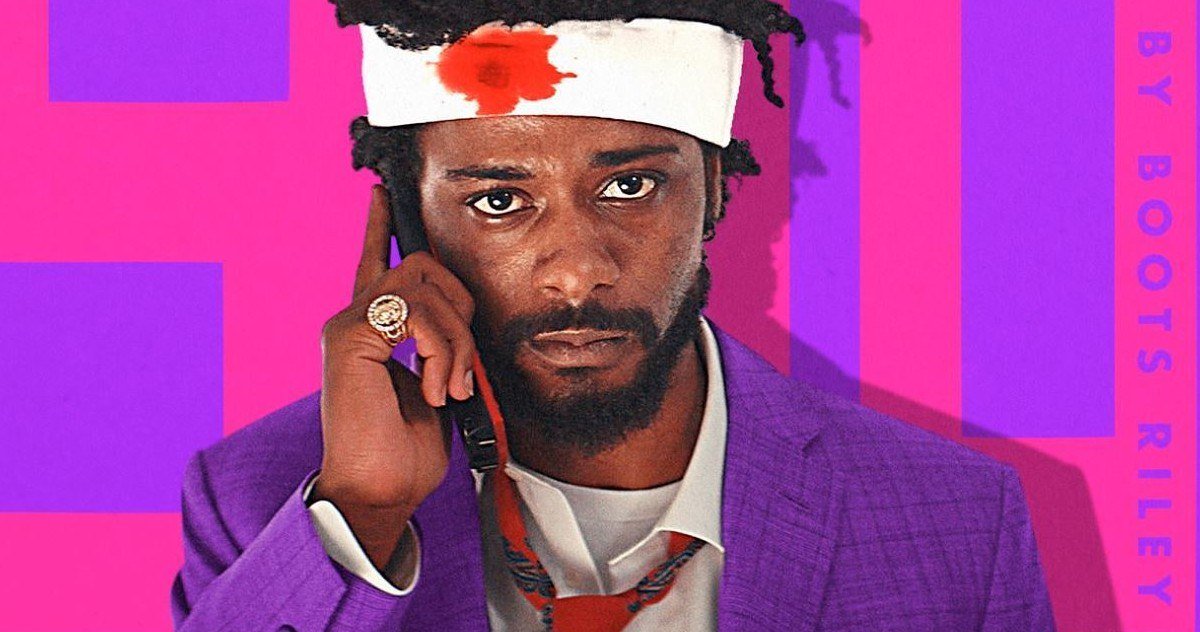
Sorry to Bother You

Mamma Mia! Here We Go Again!

Screening Room: Old Tricks, New Treats

The Screening Room breaks down the new Halloween, talks through The Oath and the new YA The Hate U Give. Plus, we’ll run through what’s worth watching in new home entertainment releases.

Listen to the full podcast HERE.

No Weapon, No Weakness

The Hate U Give

by George Wolf

The Hate U Give becomes one of the year’s better films not because it elevates an oft-maligned genre (though that fresh air blast certainly doesn’t hurt), but instead for how it wraps troubling, vital societal issues around an absorbing family drama.

Adapted from the best selling Young Adult novel by Angie Thomas, the film slaps you with reality right from the opening, when a commanding father (Russell Hornsby) is giving his young children “the talk” – not about sex, but about how to survive when they are pulled over by the police. You may see this as either familiar or eyebrow-raising, and that is precisely the point.

Like so many YA dramas, THUG is anchored by a special young girl. Here, she’s Starr Carter (Amandla Stenberg), but Starr’s specialness isn’t a device that panders, it’s one that is intelligently used to illustrate two very different Americas.

She lives in a Georgia “hood” with her family, but attends a private Catholic school in the ‘burbs, and not, as her mother (Regina Hall) says, “because she needs to learn how to pray.”

On the ride home after a weekend party in her neighborhood, Starr becomes the only witness to the fatal police shooting of her childhood friend Khalil (Detroit‘s Algee Smith). She’s reluctant to come forward for a variety of reasons (all logical), and as the pressure builds from different sides, reactions to the killing bring the contrasts between Starr’s two worlds into clear, illuminating focus.

Director George Tillman, Jr. (Notorious) and screenwriter Audrey Wells (who sadly passed away just weeks ago) craft a thoughtful balance as the narrative progresses, cutting deeper via an impressive restraint that holds until the final few minutes hit a more tidy, didactic vein.

But when this film works, which is most of the time, it works wonderfully. Through Starr’s eyes (and yes, narration) we navigate heady terrain: white privilege, systemic oppression, Black Lives Matter, all lives matter, victim blaming, mass incarceration, cultural appropriation and liberal guilt. And Stenberg, leading a strong ensemble which also includes Anthony Mackie, Issa Rae and Common, rises to the material after some cookie-cutter YA fare (The Darkest Minds, Everything, Everything) with her best performance to date, moving Starr believably through grief, confusion, anger, defiance and hard decisions.

It’s character development that respects both the character and the audience. And in trusting that YA audience with some bitter pills, The Hate U Give becomes a required dose for the rest of us.

Hope Madden and George Wolf … get it?