Screening Room: Project Power, Sputnik, Boys State, Bay of Silence, Creem, Represent
by George Wolf
You know those films that make you think, “Man, I bet this was a great book”?
The Bay of Silence is one of those. It has the intrigue, the mystery and the performances to hold your attention, but it feels as if something’s missing. Something like several pages, or even a chapter or two from Lisa St. Aubin de Terán’s 1986 novel.
Design firm exec Will (Claes Bang) and photographer Rosalind (Olga Kurylenko) are enjoying an idyllic getaway in Italy, where Will pops the question with a pull tab (don’t worry, he’s good for a real ring). An opening prologue gives us a glimpse of some trauma in Rosalind’s youth, but it seems like Will, Rosalind and her 8 year-old twin daughters can look forward to happiness as a blended family.
Months later, a very pregnant Rosalind falls from a balcony. Though baby Amedeo is delivered healthy, Rosalind has changed. She’s convinced that she actually delivered another set of twins, and that everyone involved (including Will) is in on the deception.
Ros returns to her photography and her erratic behavior continues, until Will returns home to find his wife, the children, and their nanny (Shalisha James-Davis) all gone.
Will turns to Rosalind’s mother (Alice Krige) and manager/former stepfather Milton (Bryan Cox) for answers, but the mystery of Rosalind’s past, present and future only deepens.
Are we dialing M for madness of murderousness? Director Paula van Der Oest (Oscar nominee for 2001’s Zus & Zo) nails a Hitchcock vibe in spots, but the adapted screenplay from Caroline Goodall – or an editing hachet job order from the studio – leaves too many dangling threads for a completely satisfying payoff.
Rosalind’s fascination with twins is just one of the questions nurtured and then forgotten, apparently in service of a quicker trip to the resolution which is telegraphed pretty early on.
The cast is uniformly splendid (especially Cox, natch) and the locales ooze sophistication. But while The Bay of Silence qualifies as perfectly acceptable adult fare, you can’t help wishing it would have said a little more.

by Hope Madden
For low-key, throwback sci-fi horror, Sputnik is a fine time.
A Russian film, Sputnik takes us back to Soviet Union circa 1983 in all its concrete walls, dirty snow and drab greys. Comrade Tatyana Klimova (a formidable Oksana Akinshina) is brought to a secret military facility to consult on a strange case: Cosmonaut Konstantin Veshnyakov (Pyotr Fyodorov) has partial amnesia and can’t fully explain his mission’s failure.
First of all, I love that these guys always call each other by their entire first and last names, usually with the prefix Comrade. It requires that they get right to the point, otherwise conversations would become just too long.
Little details like these, along with a convincingly oppressive set design and performances of understated perfection, convey the repressive, even terrifying conditions of the time. It’s a fascinating atmosphere to evoke when introducing something as wondrous and horrific as the film’s little monster.
That’s right, Cosmonaut Konstantin Veshnyakov did not return from space alone, but separating the Soviet hero from the alien visitor is proving very difficult.
Part Venom, part Alien and all manner of Russian, the film pulls in images and ideas that feel familiar—sometimes too familiar—but the execution maintains your interest.
Akinshina’s stoic and unimpressed doctor is at the center of a film concerned with heroism and adaptability. Comrade Tatyana Klimova carries with her an unerring and unemotional sense of what’s right, which is often at odds with the sense of purpose that drives this mission. It’s a solid emotional center for the film, but let’s be honest, who wants to see a monster movie unless there’s a cool monster?
There is! Director Egor Abramenko, working with FX and puppetry, creates something almost del Toro-esque. All phalanges, tail and teeth where teeth ought not be, the creature’s creepy design scores Sputnik plenty of points.
As true to the period as the subdued tone feels, it also robs the movie of a sense of urgency. But Abramenko weaves in elements of an indie drama that work better than they should to round out this picture of Soviet heroes and monsters.

by Hope Madden
Documentarian Scott Crawford has an interest in location-specific counter culture. His 2014 doc Salad Days recounted a decade of unsurpassed DIY punk rock transforming the underground of Washington, DC.
Now he turns his attention to Detroit.
Creem: America’s Only Rock ‘n’ Roll MagazIne documents the inner dysfunction and outward impact of the Motor City’s “screw you” to the rock establishment. (Lookin’ at you, Rolling Stone.)
Launched in 1969 by Detroit head shop entrepreneur Barry Kramer, the magazine immediately defined itself among rock mags as the most personal, most irreverent, least sophisticated and most vital. Like the decaying, even dangerous city it represented, Creem Magazine existed outside the mainstream.
Boasting a litany of groundbreaking rock writers and more women on the editorial and writing staff than nearly any other magazine at the time, the magazine pushed boundaries. It didn’t just cover punk rock, it was punk rock. And like punk rock (or Detroit, for that matter), it was basically doomed.
Crawford’s gift is in establishing the period, time stamping the singular moment in rock history he wants to unveil. Archival footage and behind the scenes photos illustrate the hard core, nearly derelict quality of the working conditions. Kramer’s commitment was almost blind, and the untested staff—many of whom would reveal themselves to be rock writing geniuses—attacked their assignments with equal self-destructive passion.
We hear directly from many of them: Dave Marsh, Cameron Crowe, Jaan Uhelzski (who co-writes the film). We also hear from the rock stars that were covered (Alice Cooper, Gene Simmons, a very testy Joan Jett), as well as those modern day musicians whose young minds were warped by Creem’s pages (Michael Stipe, Kirk Hammett, Chad Smith).
The film’s production design does justice to its source material. Scott Gordon’s animated sequences are an inspired avenue into reenactments. Between the cartoons, stories, photos and excerpts of his writing, a provocative image of Lester Bangs emerges. And who could be more fitting to provide all the movie’s original music than MC5’s Wayne Kramer?
The film, produced by publisher Barry Kramer’s son JJ, is absolutely a mash note to rock’s most rebellious rag. For many it will be a lesson on the significance of Detroit, even after Motown, in the evolution of American music. More than anything, though, Crawford’s film is a testament to the legacy of America’s Only Rock ‘n’ Roll Magazine.

by Rachel Willis
I am about as unplugged as one can be in this hyper-connected world. I have zero social media profiles and visit around five websites regularly (this one included). Considering my lack of presence online, I may as well not exist.
At least, according to Kurt Kunkle (Joe Keery, Stranger Things).
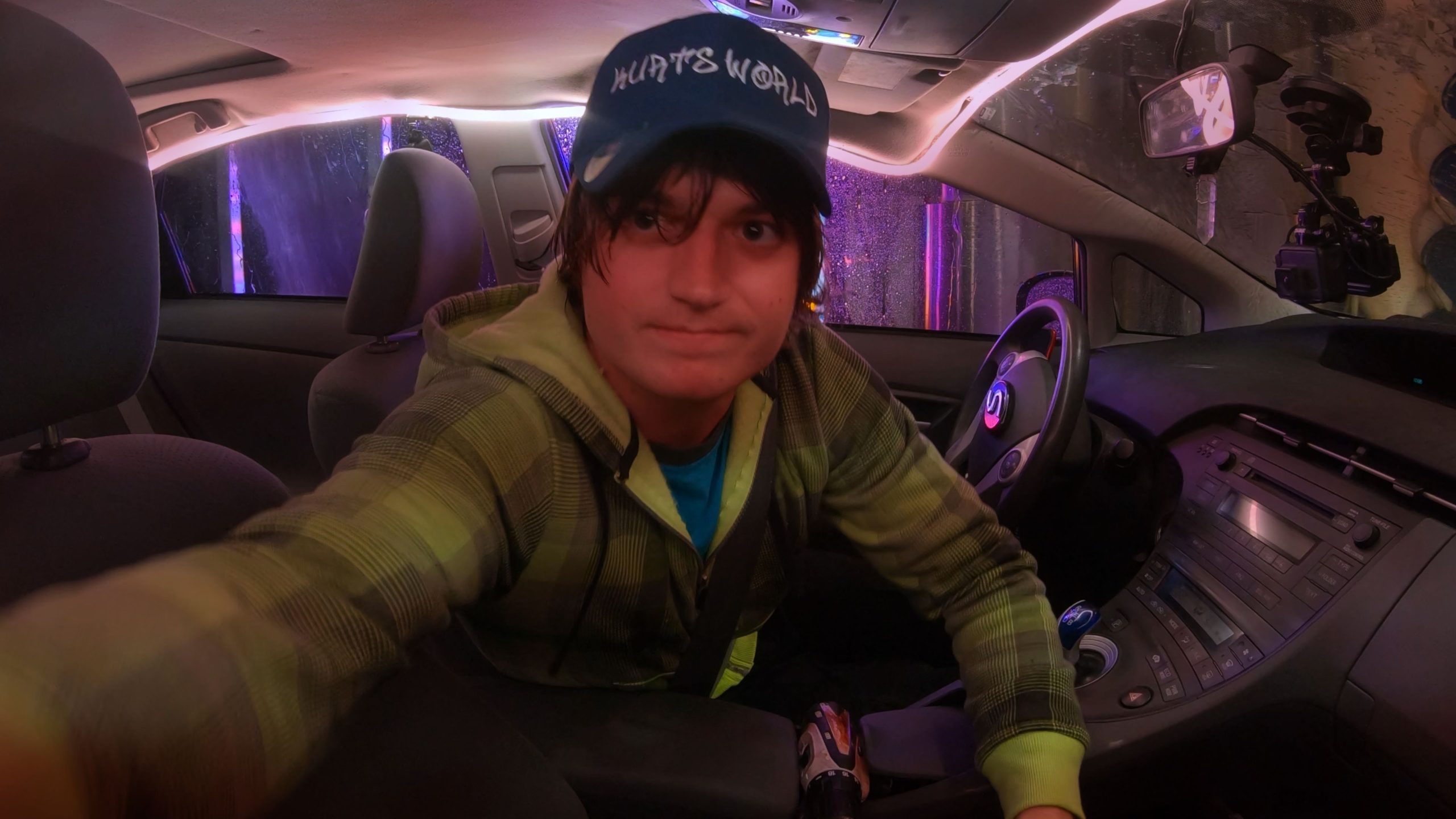
Kurt is the wannabe viral sensation at the center of director Eugene Kotlyarenko’s latest film, Spree. Deciding to live stream his evening as a driver for the ride-share company, Spree, Kurt – star of @KurtsWorld96 – has a lesson to share and knows this is his ticket to fame in the digital world.
Kotlyarenko, co-writing with Gene McHugh, wants to deliver a comedic observation of the effects of the digital world on the real one. It’s not a bad idea. It’s too bad the movie isn’t funny nor especially profound.
There are multiple cameras on Kurt throughout the movie – phone camera, dash cam, window cam, security cam, body cam – at times, the cinematography piles on the footage, using split screens to show us multiple views. A running commentary is sometimes seen at the bottom of one or two of the screens. This lets us know that everyone in cyberspace viewing Kurt’s night – which involves several crimes – thinks it’s staged. Occasionally, someone chimes in wondering if it’s real, but for the most part, they can’t discern fact from fiction.
It’s exhausting. Aside from one, blink-and-you’ll-miss-it shot that I couldn’t account for, every scene is delivered through a handheld or portable device. Watching the movie, it’s hard to imagine anyone consumes anything this way. If this is the way of the world, our attention spans will surely dwindle closer and closer to that of a goldfish (if they haven’t already).
The movie’s only plus is Sasheer Zamata (The Last O.G., Saturday Night Live). Her character, Jessie Adams, runs across Kurt early in his night and is everything he wants to be. Zameer delivers the right amount of comedy in a few spots that, had the movie matched her efforts, might have helped its appeal.
While the attempt at commentary on the larger culture does not go unnoticed, as one of Kurt’s followers says to him of his attempts to go viral, it’s “boring and awkward.”
Same goes for Spree.

by George Wolf
A prestigious art critic (Claes Bang) with a mysterious new fling (Elizabeth Debicki) is hired by an uber wealthy dealer (Mick Jagger) to get his hands on a work from a reclusive master (Donald Sutherland).
Things slowly unravel.
With The Burnt Orange Heresy, director Giuseppe Capotondi and writer Scott B. Smith adapt Charles Willeford’s novel into a stylish thriller that casts a cynical eye on art, criticism, privilege and honesty.
The writing is playfully seductive and the cast is a joy, setting a delicious hook that keeps you guessing, at least for a while. And while the finale struggles with consistency, the final shot sends an undeniable message.
The truth can be a harsh mistress.
by Hope Madden
There’s a real thread of forgiveness, consequences and redemption in current horror. It fuels Romola Garai’s Amulet, Jayo Bustamante’s La Llorona, and now, Limbo, the cheeky neo noir from writer/director/producer Mark H. Young.
Jimmy (Lew Temple) looks like a pretty cut-and-dried case to Balthazar (Lucian Charles Collier). He shot a grandmother (Veronica Cartwright) in the head robbing a pawn shop, caught a bullet in the back and now he’s here, facing judgment. But why has the man upstairs deemed Jimmy worthy of his own defense angel (Scottie Thompson)?
Must be something big. Even the other guy’s getting in on the deal. Both sides are weirdly interested in the outcome of this one case.
Young (Feral) has a knack for efficient, low budget horror. His work is not inspired, but it definitely makes the most of its budget. And in this case, you also have to hand it to him for casting.
Besides the always-welcome Temple and the great-to-see Cartwright, Limbo brings in familiar faces Richard Riehel (jump! to conclusions guy from Office Space), and James Purefoy as Lucifer.
Lauryn Canny (Darlin’) delivers the strongest performance as a prostitute back in real life that may or may not prove Jimmy’s worthiness of forgiveness, but everyone’s fun. Purefoy, who relishes these campy roles, chooses a hillbilly accent for Satan. Odd.
Odder still is whatever accent Collier is attempting, but that hardly sinks the film. It’s a goofy fantasy and just about anything flies.
The circular logic isn’t as tight as Young may think it is, but again, Limbo provides serviceable fun. No scares and not a ton of laughs—indeed, where Young is hoping to land on the horror-comedy spectrum is a bit muddy—but thanks mainly to a game cast, Limbo is still a pretty good time.
by Hope Madden
So much for going Hollywood.
Prolific Norwegian filmmaker Hans Petter Moland follows up his first foray into blockbuster territory—a Liam Neeson-fronted English language remake of his own vengeance thriller Cold Pursuit—with the decidedly non-blockbuster, specifically Norwegian drama Out Stealing Horses.
This pensive and utterly gorgeous film sifts through time to land on the moment that irreversibly alters the course of a life.
In this case, it’s Trond’s life. It’s winter of ‘99—almost the millennium—and the aging Trond (Stellan Skarsgård) is just settling into hermithood. Though he’s been in Sweden for years, the death of his wife in a car accident (he was at the wheel) convinced him to cross the river back to his childhood home of Norway to sit quietly and think.
And then he meets his neighbor, who inadvertently stirs up memories and gives Trond’s meditation new direction.
Moland adapts Petterson’s beloved novel, streamlining until what’s left is an extremely intimate tale only mildly hampered by the tiresome flashback structure. Moland only hints at the novel’s historical context, instead developing a sense of fearful awe in the face of life, the small moments that determine an individual’s trajectory, and the insistent longing to imagine what could have been.
The technical mastery at work in this film—from sound design to lighting, from Rasmus Videbæk’s gorgeous cinematography to Kaspar Kaee’s unerring score—adds power to Moland’s every meditative moment. In perfect harmony with the team, Moland effortlessly evokes the senses throughout this sometimes Malick-esque photo album of the summer that everything changed.
Moland and team create the glimmering, lush and gorgeous memories Trond relives—too gorgeous to be exact, but exactly as gorgeous as needed to be memory.
Out Stealing Horses can’t quite make the current-day footage ache or resonate quite so clearly. The events adult Trond deals with feel artificial, a forced structure. But that doesn’t rob the film of its magic.
by George Wolf
Made It Italy is a romantic comedy that follows a veteran artist and his estranged adult son still struggling over the devastating loss of their wife and mother. The chance to restore an old house in Tuscany brings with it the chance for some relationship mending.
With the casting of Liam Neeson and his real life son Micheál Richardson in the leads, writer/director James D’Arcy isn’t shy about introducing life to art.
Richardson adopted his maternal surname two years ago to honor the memory of his mother Miranda Richardson, who passed away in 2009 after a tragic ski accident. Even during the film’s most familiar beats, this family history adds a constant, beneficial layer of feeling.
Son Jack Foster manages a British art gallery owned by the family of his soon-to-be ex wife. They’re selling and he’s desperate to buy, enough to call up his estranged dad Robert with a plan to raise the cash by selling their old Italian villa.
As you probably guessed by the words “Italian” and “villa,” the place is surrounded by incredibly picturesque beauty. A visit by a blunt real estate agent (Lindsay Duncan, always a pleasure) assures them she could find a buyer, but only after a major facelift.
Dad isn’t happy, but agrees to help, setting up construction montages and meals in town where Jack meets lovely restauranteur Natalia (Valeria Bilello).
D’Arcy, a veteran actor at the helm of his first feature, isn’t breaking any new ground here, just making the surroundings feel plenty comfortable. The comedy is rarely more than droll and amusing, but aside from the cartoonishly misplaced rich couple sizing up the place, it carries a simple charm.
The surroundings are gorgeous, the tidy ending is never in doubt, and the real life family ties provide unspoken warmth. It will no doubt remind you of places you’ve already been, but the soft edges and lived-in appeal of Made In Italy feel like a weathered welcome mat.