Director Andrea Dorfman and her frequent collaborator, writer Jennifer Deyell, are quietly establishing a pattern. They are preoccupied by the fact that people are preoccupied with a woman’s relationship status.
They’ve certainly put a fine point on that with their latest,
Spinster.
A sort of anti-romantic comedy, the film opens as a voiceover gushes through the most romantic, fairy tale meeting ever. Pan to Gaby (Chelsea Peretti, Brooklyn Nine-Nine), the caterer listening to the bride-to-be with overt cynicism, possibly a little contempt, definitely mockery.
Gaby is 39 today and before the day is over, her boyfriend
will break up with her, her married friend’s buddies will demean her
childlessness, her dad will disappoint her (and she him), and her brother will
forget it’s her birthday but rope her into babysitting.
That is to say, the stage is set for Gaby to actually take
stock of her life and address what’s really causing her existential grief.
(Hint: it’s not a boyfriend.)
Peretti is so comfortable in this character that she creates
believability even when situations and the ensemble around her lack
authenticity. Dorfman’s film has an episodic, even sit-com feel to it. She
pieces together moments of Gaby’s life with a more “and then this happened, and
then this happened” approach than with an outright narrative.
On occasion, this works. Peretti’s one-on-one chemistry is
often enough to elevate individual scenes. Her deadpan delivery is ideal for Deyell’s
slyly clever script, which refuses to preach, preferring to resignedly point
out certain frustrating realities.
Though the execution lacks polish, Spinster makes up for most of that with Peretti’s cynical charm and its own quiet determination to subvert its chosen genre.
Who’s the greatest American poet? Maya Angelou? Sherman
Alexie? Walt Whitman? I will argue that it’s Charles Bukowski.
He really only wrote for about 24 years, but he has nearly
70 books in print: novels, collections of short fiction, and poems. My God, the
poems.
If you are also a
fan, documentarian Matteo Borgardt has a film for you.
You Never Had It: An Evening with Bukowski shares a rediscovered interview from 1981. Italian reporter Silvia Bizio visits the writer in his San Pedro home and they talk for about an hour. It’s very low key, and honestly, not a great deal is covered or discovered in terms of the interview itself.
But.
If you’ve ever just wanted to sit in Bukowski’s living room as wine bottle after wine bottle empties, as ash trays fill, as Max the cat finds a good position on Linda Lee’s lap—friends, this is indispensable viewing.
’81 was a big year for him. Bukowski’s about halfway through
his seminal novel Ham on Rye, he’s recently returned from the European
trip documented in his nonfiction text Shakespeare Never Did This, and
that trip/book’s photographer Michael Montfort makes himself at home on the
floor near the ash tray on the end table.
It’s all very low key as people drink and smoke and Bukowski
talks. He doesn’t wax philosophical, doesn’t argue too much, doesn’t make
proclamations or yell or curse. He doesn’t really even tell any stories, but he
does read a few poems (good ones!).
This is hardly the first documentary on Charles Bukowski. (In fact, Taylor Hackford directed the first, 1973’s Bukowski.) But as a general (and quite lovely) rule, previous docs focused on his raucous readings. If you want to hear Bukowski read, there are at least five full length docs that will let you do that.
It’s far rarer to spend some time with the writer at home.
Perhaps because she is drinking herself or perhaps because
the writer is in a cagey mood, Bizio never really finds a good footing for
questions and answers, although humanity and Bukowski’s low opinion of it
offers the slightest hint of a theme for the proceedings. The tour of the house
goes badly, and back-and-forth about sex in his writing uncovers little.
If that sounds negative, it shouldn’t. The whole scene is like a page from one of his books: things not going as well as he’d hoped, the fault likely his own, but at least there’s wine. The more wine, the worse it will go, but there you have it.
You Never Had It will not entertain everyone equally, but it will thrill a handful of people and you know who you are.
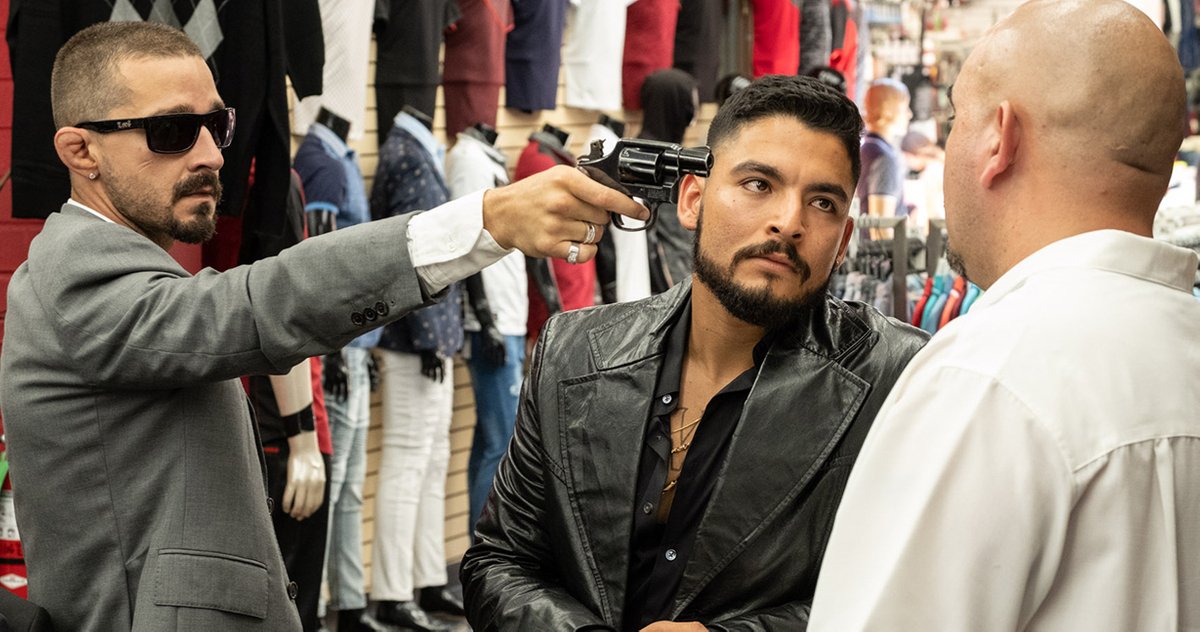
You may have heard Shia LaBeouf recently got his entire chest tattooed for his role as “Creeper” in The Tax Collector. Uncommon intensity from the gifted LaBeouf is nothing new, but why he would be motivated to do this is one of the many questions plaguing the latest from writer/director David Ayers.
Creeper is the supporting player here, the nattily clad and tightly wound muscle for organized crime boss David (Bobby Soto). Working for the mysterious Wizard (Jimmy Smits), David and Creeper collect “taxes” from each and every gang in L.A.
43 gangs at 30 percent each means David is living well. That is, until old rival Conejo (veteran rapper Jose Conejo Martin) returns with an aim to take over, and kill anyone who thinks that’s a problem. He does voodoo, too, so there’s a wrinkle.
Much of the film’s early going recalls Ayers’s scripts for both Training Day and End of Watch, as we follow David and Creeper on a loosely-connected series of stops, from violent tax collections to family business with David’s wife (Cinthya Carmona) and Uncle (George Lopez).
David’s expressed devotion to his home life sets up the chance of a Michael Corleone-type thread exploring the difficulty of balancing two worlds, but Ayers leaves it dangling for some stylish but empty brutality in a gang war.
Soto (from 2011’s wonderful A Better Life) and LaBeouf form an impressive duo, but they are continually let down by the script’s generic macho posturing (“We killing anybody today, homie?” “Shit’s getting real”) and over-the-top ambitions to “wash away our sins” by killing a boatload of people.
And as you might guess, LaBeouf playing a Latino gangster is troublesome. Though Ayers has pushed back by saying the character is one who has absorbed the world around him (a claim somewhat bolstered by Ayers’s own background), Creeper never gets the development needed to make LaBeouf’s committed performance land as much more than – at best – intense appropriation.
By the film’s final showdown, the biggest question here concerns the point of it all. It had to be more than that tattoo, or just standard revenge fare as deeply felt as a video game commercial.
But despite the slick camerawork from cinematographer Salvatore Totino, here we are. There are possibilities strewn about The Tax Collector that might have gelled into a robbers bookend for the compelling cops in Ayers’s End of Watch.
But like pesky overdue notices, ignore those possibilities too long and there’s a great big mess on your hands. Or on your screen.
I’m sure I’m not the only one who’s ever wandered past their old college apartment and thought about knocking, right? And then you realize how little the kids inside will care about your nostalgia (or worse, how adorable they’ll think your old ass is), and you just keep on wandering.
But what if you were invited in? And what if you stayed awhile? With I Used To Go Here, writer/director Kris Rey has a full semester of fun exploring that very idea.
30-something Kate (Community‘s Gillian Jacobs, fantastic) is bumming over a breakup and the cancellation of the promo tour for her very first book. A phone call from her old professor David (Jemaine Clement) perks Kate right up.
Would she come back to Illinois U. as a “Distinguished Alumni” and do a reading from her novel? She would.
Once on campus, Kate pauses to take a selfie outside her old place, and one of the students inside takes notice. Oh, you’re a writer? We’re writers, too. Hey, we’re having a party tonight, you should come.
Yes, some sit-com worthy situations ensue, but the point quickly becomes how well Rey wields them all to unleash a series of hilarious punctures into the illusion of aging while hip.
And while the big picture is endlessly charming, the little details aren’t forgotten. From the obligatory Che Guevara poster to Kate donning an orientation t-shirt, from the painful college prose to the serious battle brewing between Kate and her b-n-b host, Rey displays a keen sense for weaving humanity into hijinks.
She has a wonderful vessel in Jacobs, who channels many of Rey’s usual sensibilities with an endearing and warmly funny performance. Kate’s life may be an intermittent mess, but she’s always easy to root for, and Jacobs – with help from a stellar ensemble – confidently navigates the uneven ground between Kate’s ambition, her reality, and her attempt to find out if one of her new young college friend’s girlfriend is cheating on him!
Even at its nuttiest, I Used To Go Here is a deceptively smart look at the complexities of accepting adulthood. It’s Noah Baumbach’s While We’re Young with a lighter touch, a film that might make the “your future starts now” message on the back on Kate’s t-shirt ring true for both filmmaker and star.
It’s been 35 years since Ivan Drago tried to break Rocky Balboa. While the fictional Italian Stallion may have prevailed against his Russian foe, the Americans at the heart of Red Penguins weren’t so lucky in their experience with our former Cold War nemesis.
After the fall of the Soviet Union, the famous Red Army hockey team found itself struggling to find funding. Pittsburgh Penguins co-owner Howard Baldwin thought it would be interesting to invest in the team as a way to funnel great Russian players to his own NHL club. With marketing guru Steve Warsaw acting as the man on the ground in Russia, the new American investors sought to navigate their way through an unfamiliar culture that was tasting the free market for the first time.
Director Gabe Polsky dives right into the absurdity of these Americans thinking they could immediately saunter into the former USSR. Baldwin and Warsaw’s eccentricities certainly caught their Russian partners off-guard, but also led the two to be unequivocally naive about many things Russian. The film’s early playfulness is fun and entertaining but also feels like a warning to the audience: a warning that the American investors never fully saw.
At times, Red Penguins feels like a documentary version of a Coen Brothers film. It’s hard not to laugh at the darkly comic situations Warsaw finds himself dealing with. Whether it be a beer- guzzling bear biting off the finger of a drunk employee, or a spy for the Russian mob that took up residence in Warsaw’s office. Anton Chigurh would feel right at home.
More than anything, Red Penguins is a cautionary tale about American overreach. Howard Baldwin wasn’t the first American businessman to foolishly believe that he could march into Russia and woo the former communists with his business savvy. Even the backing of the Disney empire couldn’t solidify a positive outcome.
While not coming together as a definitive hockey documentary, Red Penguins offers a unique look at a transitional time in the former Soviet Union. The beer-guzzling bears are just icing on the cake.
Directors Marlon Johnson and Anne Flatté explore both
struggle and success in their documentary following the River City Drum Corps
of Louisville, KY. River City Drumbeat captures how art and culture are
both necessary for the survival of a community. The film itself has natural
rhythm, moving from raucous drum performances to reflections on the darker side
of life as a Black American.
In an opening shot, an instructor stands in front of a gymnasium full of young children. Asking them to place their hands on their hearts, he says, “If you get really quiet and get really still and listen very quietly you can feel something beating in your chest…we are born into the world with this sound.”
The belief that we are all born with music inside us is a driving principal of RCDC, which creates an artistic outlet and cultural touchstone for children who might not otherwise be exposed to their African roots. Executive Director and Founder of River City Drum Corps Edward “Nardie” White emphasizes how important the program is to his community, especially young black men. When White was young, he was discouraged from participating in the arts and instead pushed to play basketball and football. Now, he can trace the dozens of lives he has changed with art over the last three decades.
Johnson and Flatté juxtapose vibrant shots of family and laughter with gray rolling footage of the west end of Louisville’s boarded windows and abandoned homes. White gives a tour of his old neighborhood, reminiscing about how the Black community in Louisville has grown and changed. “Our culture is going to be our savior.” He says.
Their greatest challenges? Redlining, poverty, poor education, and violence.
A huge inspiration for both White and the RCDC was White’s late wife, Zambia. Many of the Drum Corps students, current and former, reflect on the immense impact she had on them. One young man shows her photo in his bedroom, next to stickers from prospective colleges, reflecting on how good it feels good to have her watching over him. It is in small moments like these that Johnson and Flatté are able to show just how widely and deeply RCDC has impacted the community.
Zambia is finally shown in some older footage as she accepts an award. Addressing the crowd, she says, “We must give to our young people something we all wake up with…time.”
That’s the
central theme of River City Drumbeat, that youth deserve the
time, attention, and love their community has to offer, and that it can make a
difference. As White says to the Drum Corps before a performance, “Black arts
matter.”
River City Drumbeat is a hopeful and loving portrait of a community that has found power in coming together and making music. It is joyful, and sometimes sad, but always looking forward. And it may be just what you needed to watch today.
I smell an intriguing trend in indie horror: embracing the
apocalypse.
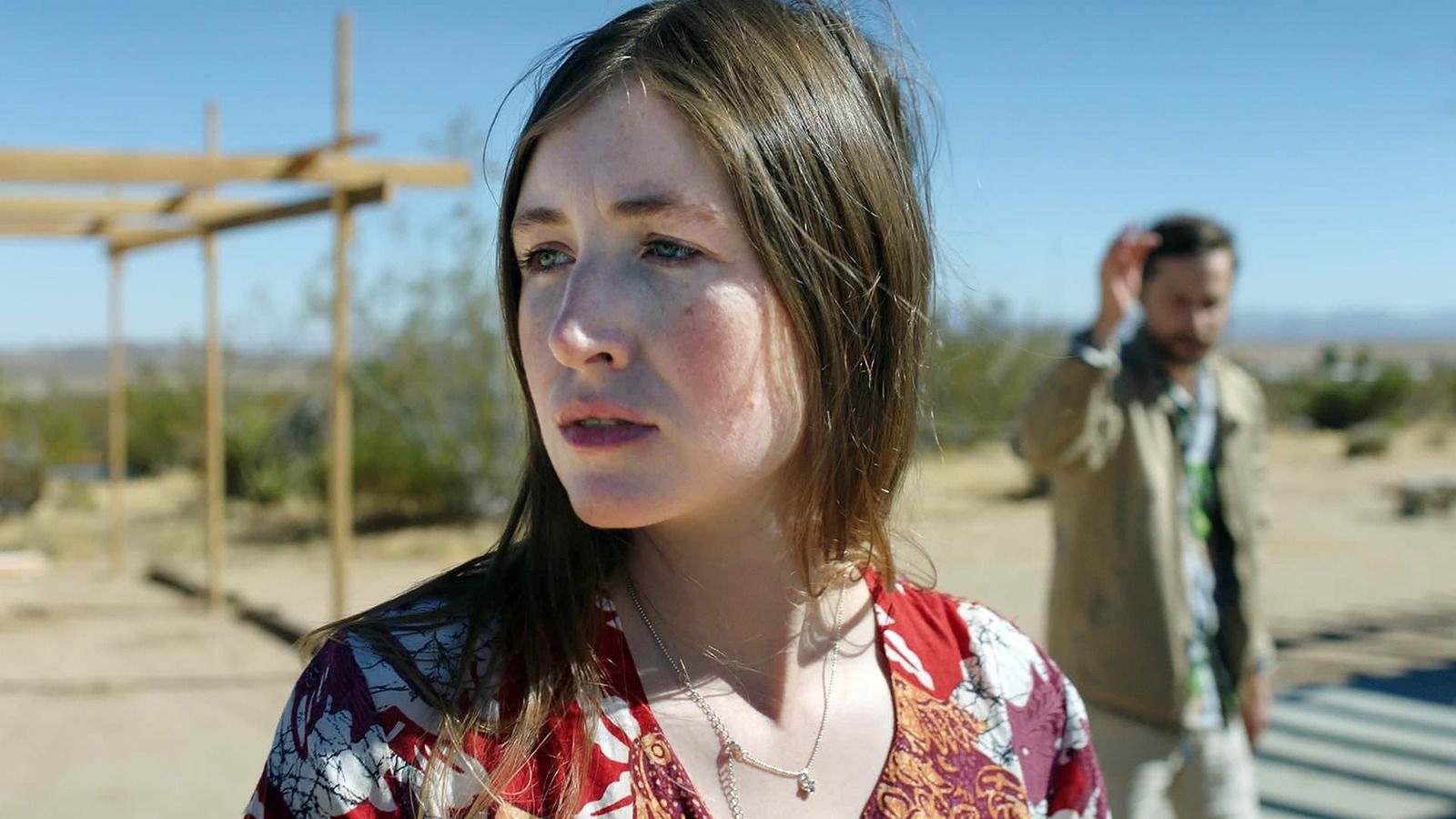
She Dies Tomorrow is a horror film that’s one part Coherence, one part The Beach House, one part The Signal (2007, not 2014) and yet somehow entirely its own. It helps that so few people have seen any of those other movies, but the truth is that writer/director Amy Seimetz (creator of The Girlfriend Experience) is simply braiding together themes that have quietly influenced SciFi horror hybrids of late. What she does with these themes is pretty remarkable.
Her film weaves in and out of the current moment, delivering
a dreamlike structure that suits its trippy premise. Amy (Kate Lyn Sheil)
believes she is going to die tomorrow. She knows it. She’s sure.
She calls her friend Jane (the always amazing Jane Adams), who senses that Amy is not OK but has this obligation to go to her sister-in-law’s party…whatever, she’ll stop over on her way.
By the time Jane gets to the party, she’s also quite certain
she will die tomorrow. It isn’t long before the partygoers sense their own
imminent deaths; meanwhile, Amy is spreading her perception contagion
elsewhere.
Seimetz’s horror is really only existential, although like The Signal (and The Crazies before it), She Dies Tomorrow is more than slightly interested in what individuals do with this disheartening information. What a superb way to cut directly to character development.
This gives the film an episodic quality, allowing even characters
in minor roles to express their individuality. Adams is characteristically
wonderful, both logical and a bit batty, lonely and strangely optimistic. Chris
Messina and Katie Aselton impress with a lived-in couplehood, and both Josh
Lucas and Adam Wingard are used deftly to bring an almost melancholy comic
relief to a couple scenes.
Sheil anchors the film. With the most time to get
comfortable with her lot, Amy drifts through the stages of grief and fear,
ending on a resigned kind of anticipation that feels comfortable with the tone
Seimetz creates.
From beginning to end, the film transmits a quiet, creeping dread. Seimetz can’t entirely capitalize on the intoxicating world she’s created, but hers is a unique voice and beguiling vision.
Another timely Shudder original plays upon the madness that can creep into a period of lockdown. The righteous anger of a population, the chanting and signs, corruption in the government—that all seems pretty of-the-moment, too, but this isn’t Portland. This is Guatemala, and if you think the context seems familiar, you should hear the title: La Llorona.
But co-writer/director Jayro Bustamante’s indigenous horror bears little resemblance to Michael Chaves’s middling 2019 effort (which was partly salvaged by a solid-as-always turn from Linda Cardellini). Instead, Bustamante retools the Latin American ghost story of the weeping woman to spin a yarn of righteous vengeance.
La Llorona takes us inside the home of a war criminal
(Julio Diaz). El General’s home is on lockdown since his conviction was
overturned. Angry Guatemalan citizens, and especially members of the Kaqchikel
people most terrorized by his bloodlust, protest outside the door all hours of
the day and night.
Inside, the General, his bitter wife (Margarita Kenéfic),
their doctor daughter (Sabrina De La Hoz), her daughter (Ayla-Elea Hurtado),
and two female servants (María Mercedes Coroy and María Telón) begin to crumble
under the tensions.
Bustamante’s film is a slow boil as interested in those who’ve tacitly accepted evil as it is in those who’ve committed it. What goes unsaid weighs as heavily as what happens in front of us. Impressively, this is also the first horror film in decades to make truly effective use of a dream sequence.
The fact that justice, however slowly, comes in the form of
generations of women is understated perfection.
Justice springs from compassion, which requires empathy—which sometimes depends upon courage and selflessness. No tears necessary.
We want to thank Cati Glidewell, also know as The Blonde in Front, for joining us to talk through some of the best blond(e)s in horror. There’s a lot of names here, but I think we may have proved that—with a few really bloody exceptions—blondes do seem to have more fun in these movies.
The Dudes
6. Francis Dollarhyde (Tom Noonan), Manhunter (1986)
Tom Noonan’s entire career is defined by a mixture of tenderness and menace. It begins with his unusual physical appearance, including his almost colorless locks, and ends with performances that realize everything broken and horrifying about a character—especially Francis Dollarhyde. The terrifying chemistry between Dollarhyde and a blind Joan Allen’s is heartbreaking perfection.
5. Mark Lewis (Carl Boehm), Peeping Tom (1960)
Like Norman Bates across the pond, England’s Mark Lewis (Carl Boehm) is an innocent. Boehm’s blank stare, his frightened mouse reflexes, his blond locks all contribute to a character so tender you can’t help but root for him—although it would be great if he’d stop murdering women.
4. Kakihara (Tadanobu Asano), Ichi the Killer (2001)
A bleach blond in a Japanese film will automatically draw the eye, but Kakihara’s not just here to catch your attention. Genius filmmaker Takashi Miike and Tadanobu Asano created this badass to upend your expectations. He’s the baddie, right? And man-child Ichi is the innocent? Or is Miike toying with you?
3. Gage (Miko Hughs), Pet Sematary (1989)
Get the Kleenex ready because the ridiculously cute Mike Hughs has a date with a semi. A toddler when he filmed this movie, Hughs really turns in a remarkable performance, whether he’s tugging your heart strings or slicing through Fred Gwynne’s Achilles tendon.
2. David (Keiffer Sutherland), The Lost Boys (1987)
Hubba hubba. The rock star duds. The homoerotic relationship with Jason Patrick. The mullett! Keiffer Sutherland’s bad boy David was so cool you couldn’t help wanting to hang out with him. Eating maggots seems like a small price to pay, really. Nobody said the cool kids’ table would be tasty.
1. John Ryder (Rutger Hauer), The Hitcher (1986)
There are those with a thing for bad boys, and then there are those with a thing for Rutger Hauer. He’s not a bad boy—he’s not even in the same zip code. His John Ryder will make you feel all kinds of weird things because he’s not your garden variety dangerous character. What he will do to you, to that nice family in the station wagon, to your new girlfriend, is more awful than anything you can think of.
The Women
6. Chris Hargeson (Nancy Allen), Carrie (1976)
When De Palma launched the ultimate in mean girl cinema, Nancy Allen delivered the ultimate mean girl. Chris Hargeson’s bloodthirsty princess energy has to convey something horrifying if she is to properly offset what poor Carrie White has to content with at home. Luckily for us (not so much for Carrie), she does.
5. Tomasin (Anya Taylor Joy), The Witch (2015)
Watching The Witch, you realize that writer/director Robert Eggers chose everything: every sound, every image, every color. And while Tomasin’s family looked like gaunt, hard working, colorless cogs in God’s wilderness wheel, Thomasin did not. Even as we open on Anya Taylor Joy, confessing her sins and begging forgiveness, she is lit from within. A beacon. It’s just that her light has caught the wrong kind of attention.
4. Casey (Drew Barrymore), Scream (1996)
The genius Wes Craven and his producer Drew Barrymore pulled an incredible and soon-to-be endlessly copied sleight of hand with Casey—the spunky female played by the biggest star in the cast. With this character, Craven introduces the meta-movie-commentary that defines this film while simultaneously upending our own unconscious investment in those tropes by killing Casey off in Act 1.
3. Carol (Catherine Deneuve), Repulsion (1965)
We went back and forth. Would it be Deneuve as gorgeous seductress Miriam in Tony Scott’s 1983 vampire film The Hunger, or innocent driven to madness Carol in Polanski’s Repulsion? (He does know how to torture innocent young women, doesn’t he?) Deneuve’s performance in Repulsion is so compelling and difficult—playing primarily alone for about half the film—that it won out, but either way, she’s a blonde to be reckoned with.
2. Pamela Voorhees (Betsy Palmer), Friday the 13th (1980)
The OG Karen (to steal a phrase from this episode’s co-host The Blonde in Front), Pamela Voorhees has a plan and she’s sticking to it. This funny business among the camp counselors needs to be addressed, corrected. Enough is enough. Betsy Palmer’s performance is spot-on, so comforting and in control before it goes completely batshit. Jason may get all the love, but Mrs. Voorhees took care of business first.
1. Carrie White (Sissy Spacek), Carrie (1976)
Like his idol Hitchcock, Brian De Palma had a thing about blondes—what that fair hair represented, what it could mean. For De Palma, it might be the bombshell of Angie Dickson’s character in Dressed to Kill, or the innocence of Carrie White. Of course, Sissy Spacek’s Oscar nominated performance in the film was what really sold this sheltered, shell-shocked little lamb, but you can’t deny she had that look.
Co-writer/director Kelly Blatz announces his presence with
authority, creating a minor cinematic miracle with his feature debut, Senior
Love Triangle.
Inspired by co-writer Isadora Kosofsky’s remarkable longterm photo essay
of the same name, the film delivers a candid look into the intimate relationship
among three elderly characters: William (Tom Bower), Adina (Anne Gee Byrd) and
Jeanie (Marlyn Mason).
The film is equal parts charming, frustrating and
heartbreaking. More importantly, it takes its characters seriously. In an era
where veteran actors entertain us via “those crazy old people!” vehicles (watching
Diane Keaton become a cheerleader in Poms
sapped my will to live), Senior Love Triangle feels gloriously anarchic.
The magic of Blatz’s film is that it offers a character study of the sort we
simply never see.
Thanks to thoughtful writing and breathtaking performances—neither
of which rely for a moment on shorthand—we get to know three unique
individuals. William is an irascible, arrogant, 84-year-old charmer. His
sophisticated lady love Adina indulges his ego, but when her son has him kicked
out of Adina’s posh retirement high rise, William finds himself in a
lower-quality establishment.
Not to worry! He’s just finishing a lucrative deal that will
set him up so he can buy a mansion and get Adele away from those Nazis in her
building. (That is to say, he’s being routinely scammed.) In the meantime, over
at his new digs he meets exuberant flirt Jeanie. (Mason’s performance is a
particular triumph.)
Blatz, with an incredible assist from Kosofsky’s work, sees
the characters’ humanity, their sexuality, their courage and weakness. He sees
their loneliness, their vulnerability to outside forces and to each other,
their need. These are complicated characters, vibrant and alive.
Senior Love Triangle offers an underseen perspective
on aging (the perspective of the aged themselves) without romanticizing. Dangerous
misconceptions about masculinity weigh as heavily on their safety and happiness
as their own physical deterioration.
The film is a heartbreaker that just does what it wants to do. Just like William.