Back again? So are some of the same old titles—it’s the week of sequels! We talk through the best and the worst: Mamma Mia! Here We Go Again, The Equalizer 2, Unfriended: Dark Web, plus a couple of original ideas—The Cakemaker and The Night Eats the World. We also run through the best and worst in the boatload of new movies available in home entertainment.
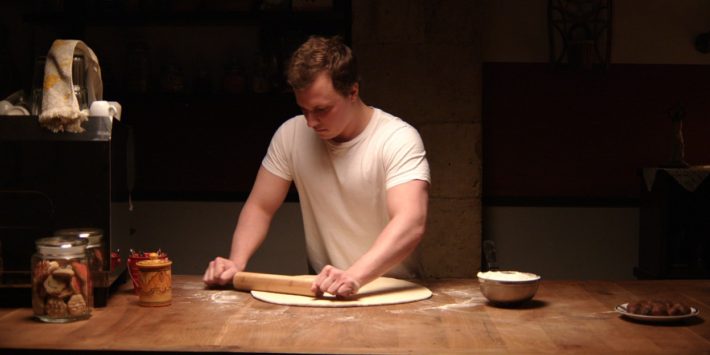
A delicately subtle and sometimes poetic film, The Cakemaker boasts sterling performances and finely drawn characters for a resonant meditation of love, loss, faith and…food.
Thomas (Tim Kalkhof in a wonderfully tender, understated turn) is a German baker at a Berlin cafe. He begins a long-term affair with Oren (Roy Miller), an Israeli businessman with a wife and son in Jerusalem. When Oren misses his monthly visit to Berlin and calls go unanswered, it takes some persistence on Thomas’s part to discover that Oren has been killed in a car accident.
Grief and confusion take Thomas to Berlin, where he discreetly seeks out Oren’s widow Arat (Foxtrot‘s Sarah Adler – excellent again), takes a job baking at her cafe, and assumes a growing place in her life. This brings differing (and telling) reactions from Arat’s family, and could threaten her cafe’s important kosher certification.
Writer/director Ofir Raul Graizer adopts a quiet, observational tone that is deceptively effective. Though this type of triangle may not be new (especially to foreign film fans), the way Graizer lingers on little moments (especially those in the kitchen) make even the most mundane encounters seem sensuous.
You may know where The Cakemaker is going, but getting there is a sweet and satisfying trip.
The good news: this Dark Web isn’t searching for your credit card info.
That would be playing nice compared to what the sequel to the surprisingly effective Unfriended has in store. More good news: it’s mean is pretty damn lean, clever and creepy.
Like its predecessor, Dark Web does a great job upholding the integrity of the “real time computer screen” gimmick. But from the opening setup, this one carries more eerie authenticity.
First-time director Stephen Susco, a veteran writer with plenty of horror titles in his resume, knows the genre has always reflected the anxieties of the day, and his screenplay here feels as in-the-moment as a brand new laptop with all the latest add-ons.
And that’s just what Matias (Colin Woodell) needs for his new programming project, but funds are tight. He finds a used one on Craigslist that might do, but when he hooks it up for a Skype game night with his friends, the previous owner “slides into his DMs.”
That’s what the kids, say, right?
There’s some bad, bad, stuff on that hard drive, and Matias has to strike bargains with the bad guy if he wants his friends to survive the night.
Sure there are some preposterous turns, but as the upper hand shifts (and shifts again), Susco and his winning cast (including Blumhouse favorite Betty Gabriel) make it a suspenseful ride. We’re making these discoveries right along with them, and while true scares might be in short supply, there’s is no shortage of nasty and unpleasant.
As online cautionary films go, Dark Web gets it better than most. The original Unfriended debuted four years ago, or in tech/social media terms, the Stone Age. Susco finds a wry, self-aware groove to drive home just where we’re at today: manufactured reality, “swatting,” and even, yes, internet currency.
Word is, there will be two theatrical prints, each with different endings. I can think of one that would pretty well spoil all that Dark Web executes so well.
A single act of teenage rebellion is the catalyst for a family’s destruction in director Sadaf Foroughi’s feature debut, Ava.
It’s a harmless action that tears apart the family’s fragile peace – Ava (Mahour Jabbari) tells her parents she’ll be studying at her friend, Melody’s, house only to sneak out to meet a boy and win a bet with a few of her classmates. Trying to prove she’s won, she’s late to meet her mother. Because of this, Ava’s mother, Bahar (Bahar Noohian), begins a campaign to weed out any element she deems unsavory from her daughter’s life.
It’s a hard world for a teenage girl. Gossip runs rampant, and it’s not just fellow teenagers spreading rumors, but teachers and parents, too. One mistake can ruin a young woman’s reputation and determine the course of her life. It’s not surprising that Bahar treats her daughter’s single offense with such vehemence. However, when Ava discovers a buried family secret, her rebellion takes on greater significance.
As Ava, Mahour Jabbari is sympathetic and compelling. Her desire for independence is understandable, but her actions are careless. Few of the women in her life show any compassion toward her choices. Only her father (Vahid Aghapoor) stands by her as someone who believes what she says and supports her decisions. However, his support puts him at odds with Bahar, who knows better than her husband how deeply a single mistake can affect a woman’s life.
Both Aghapoor and Noohian are stellar. Each character is confused by their daughter’s choices and her attitude, but how they handle the situation elevates the tension. They turn on each other; a once happy couple becomes another source of stress in Ava’s life.
Unfortunately, some of Foroughi’s stylistic choices are more distracting than beneficial. Blurry images dominate the frame, while the focal point is relegated to a small image in the corner. Arguing characters will be shown from the neck down, their heads cut off at the top of the screen. The commentary Foroughi hopes to achieve, unfortunately, doesn’t really come across.
Ultimately, though, the filmmaker has crafted a compelling, thoughtful portrait of a family in crisis.
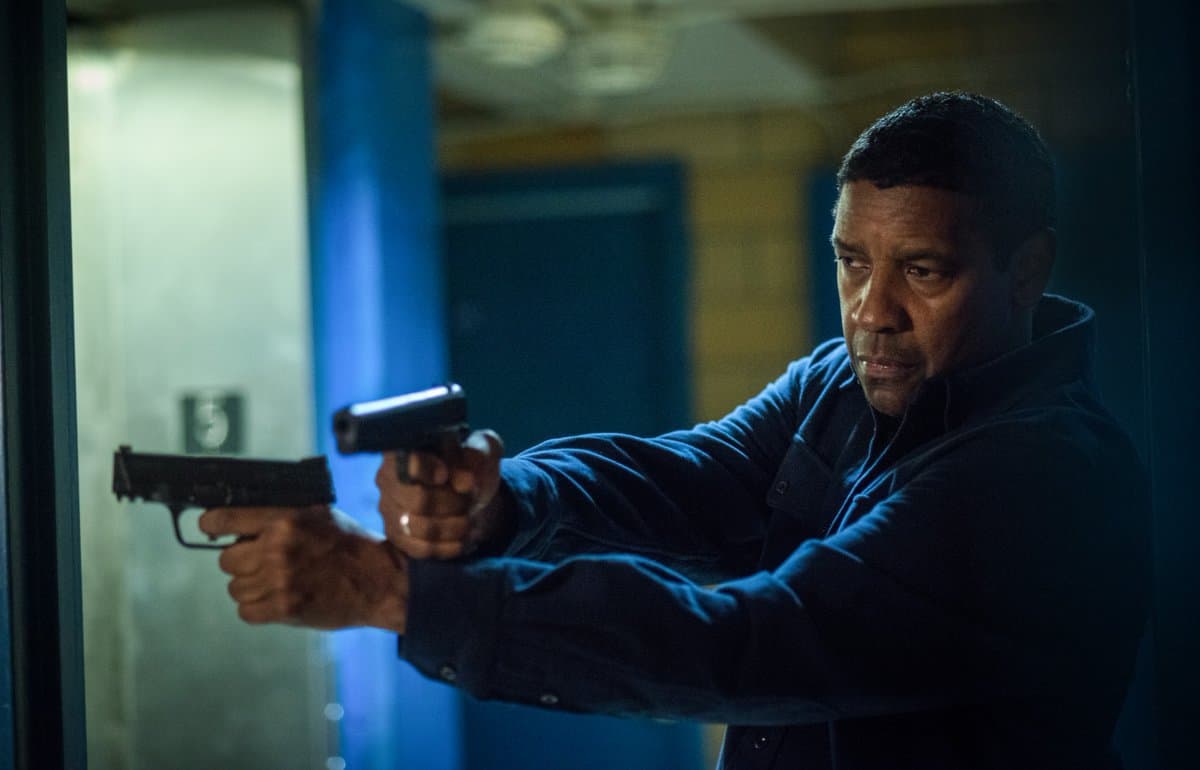
It still confounds me why John Wick gets more action cred than The Equalizer. Released less a month apart in 2014, Denzel and director Antoine Fuqua bettered Keanu and Chad Stahelski in nearly every respect. But, in fairness John Wick helped inspire Key and Peele’s very funny Keanu so I’ll move on.
JW already dropped its deuce (with part 3 currently in the works), and now The Equalizer 2 gets its director, star and screenwriter (Robert Wenk) back together for a slightly less satisfying dose of the same medicine.
Robert McCall (Denzel) has moved on from that big box hardware store he decimated in part one and settled in as a Lyft driver, making friends around his Boston neighborhood, and enemies when someone wrongs his friends.
E2 lets us see more of that random equalizing, which means more time before we get to the core conflict, but also more helpings of those bad guy beatdowns that bring such primal satisfaction.
Denzel is effortlessly good, which comes as a shock to no one. He digs deeper into the character this time out, maintaining the ticks that outwardly define McCall while sharpening the edges of a mysterious past that is never too far out of reach.
Secrets from that past begin to leave a bloody trail, and after a hit is ordered on his old boss Susan (Melissa Leo), McCall promises to make the guilty pay, his only regret being that he “can’t kill them twice.”
Denzel as a badass is so much cool fun, and he’s clearly the muse for Fuqua’s best work (Training Day, The Magnificent Seven). The stylized violence that so elevated the first film is here as well, but like most of the other elements, in lesser numbers.
The absence of a memorable villain is also felt. Marton Csokas was a great one, and E2 comes nowhere close to matching his simmering intensity. Substantive moral ambiguities are raised in fairly generic fashion, metaphors get a touch too weighty and the running time a bit too excessive.
The Equalizer 2 does offer plenty to like – Denzel, some scenes with unexpected turns, a surprisingly touching epilogue, Denzel – but little of it can match the style or the vibe of the original.
You may be asking yourself, is Mamma Mia! Here We Go Again just 90 minutes of second-rate, b-side Abba songs? All those weird songs that no sensible story about unplanned pregnancy could call for? Songs like Waterloo?
Nope. It is nearly two full hours of it.
Sophie (Amanda Seyfried) wants to open her mother’s crumbling Greek hotel as an upscale island resort. She’s so terribly angsty about it! Will anyone come to the grand opening? Will her mom be proud of her? Can she handle the pressure if her husband’s traveling and two of her three dads can’t make it?
Transition to a simpler time, a time when her mom Donna was young (played by Lily James), bohemian and striking out on her own. She has chutzpah. She has friends who love her. She has great hair.
The majority of the sequel to Phillida Lloyd’s 2008 smash looks back on the romantic voyage that created the three dad business of the first film.
James is a fresh and interesting a young version of the character Meryl Streep brought to life in the original. Likewise, Jessica Keenan Wynn and Alexa Davies make wonderful younger selves for Tanya (Christine Baranski) and Rosie (Julie Walters).
The three dads have young counterparts as well, though only Harry (Colin Firth/Hugh Skinner) lands a memorable characterization. Firth is reliably adorable while Skinner’s socially awkward young man is as embarrassing and earnest as we might have imagined.
Also, Cher.
Expect an awful lot of needless angst and long stretches without humor. Whether present-time or flashback, the film desperately misses the funny friends. Desperately. But when they are onscreen, Here We Go Again cannot help but charm and entertain.
The story is weaker, although there is a reason for that. While the original gift-wrapped an origin story to plumb, the plumbing is slow going when you still have to abide by the Abba songtacular gimmick.
The sequel’s musical numbers rely too heavily on slow tunes and stretch too far to make the odder Abba songs work, but in a way, that is, in fact, the movie’s magic.
Your best bet is to abandon yourself to the sheer ridiculousness of it. There is literally no other way to enjoy it.
Damn, there is a lot of good stuff coming home this week! A fair amount of middling stuff and a handful of full-on garbage, too, so your best bet is to let us walk you through your options.
Jack the Ripper carved up prostitutes in real life and in about a million cinematic representations. But Jack’s not the only marauder who recognizes a helpless population when he sees it. Sometimes, though, the prostitute gets the last laugh.
5. The Poughkeepsie Tapes (2007)
John Erick Dowdle’s film is a difficult one to watch. It contains enough elements of found footage to achieve realism, enough police procedural to provide structure, and enough grim imagination to give you nightmares.
Edward Carver (Ben Messmer) is a particularly theatrical serial killer, and the film, which takes you into the police academy classroom, asks you to watch his evolution from impetuous brute to unerring craftsman. This evolution we witness mainly through a library of videotapes he’s left behind for the police to find, along with poor Cheryl Dempsey, (Stacy Chbosky).
While Cheryl’s plight is the most morbidly fascinating, a tricky side plot involving the murders of prostitutes not only clarifies the murderer’s game, but offers some of the most troubling scenes in the film, toying not just with horror but with weird personal anxieties: like the popping of a balloon.
4. Frankenhooker (1990)
Wanna date?
Director/co-writer Frank Henenlotter took the Frankenstein concept in strange, unseemly new ways with this one. Out-of-work loser with a knack for science Jeffrey (James Lorinz) mourns the really messy loss of his beloved Elizabeth (Patty Mullen) in his own way. Grief is like that—personal. And when you’re really grieving, a project can help you get past that. It focuses the mind.
Jeffrey rebuilds Elizabeth with the help of a lot of body parts made available to him via NYC prostitutes. They’re not volunteered, and Jeffrey is really conflicted about that, but this isn’t what makes him a bad person. It’s the fact that he never really accepted Elizabeth for who she was, or he’d be a lot less picky about these parts.
Jeffrey learns his lesson—kind of—in a film that is unusually sweet given the topic. It’s funny, gross, wrong-headed and more than a little stupid as well.
3. We Are What We Are (2010)
Jorge Michel Grau’s horror about the disposable population of Mexico City centers on a family with a ritual to fulfill. Too bad the patriarch’s death leaves no one but novices to put dinner on the table.
The fact that this family is a cannibal clan is a brilliant avenue into the sociopolitical theme of a society feeding off the poor, but Grau’s perspective offers a little bit of optimism in its own, bloody way. The cops are useless, the system is ridiculous, but those very people who have been disregarded by society are not as helpless as you might thing.
The family underestimates a society it deems beneath them, a group of people so low they are not even fit to kill. What Grau does with this circle of prostitutes is like a Pat Benatar video done right.
https://www.youtube.com/watch?v=xFO_qYqvnZo
2. American Psycho (2000)
Mary Harron’s near-perfect horror comedy send-up of the Reagan era benefits from a number of things, including maybe the best casting in cinema history. This cast and Harron hit every note perfectly, offering a film that is as bloody and alarming as it can be, with every re-watch an opportunity to see more and more of its comic genius.
And of the many memorable moments in the film, the line most likely to be quoted is this: Don’t just stare at it. Eat it.
There is a lot of soullessness afoot in American Psycho, and in that line, but not in Cara Seymour’s performance. As Christie—Patrick Bateman’s favorite prostitute, God help her—she gives this film its first truly empathetic character. She is the one character you root for, the one whose death you don’t want to see happen. When Christie is lured back to Patrick’s apartment for a second round, for the first time in the film, you find yourself feeling sad for someone, finding the empathy Patrick so utterly lacks.
1. Peeping Tom (1960)
Director Michael Powell’s film broke a lot of ground and nearly ended his film career. People tend to react badly to horror movies that unnerve them, which is really odd given that this is the entire point of the genre. Peeping Tom pissed everybody off, maybe because—like Michael Haneke’s films Funny Games—Peeping Tom implicates you in the horror.
Mark (Karlheinz Bohm) had a difficult childhood, developing a bit of a voyeuristic hobby to help him cope. He starts off with prostitutes, filming them, capturing their terror as he kills them. He’s a voyeur, but who can throw stones? Didn’t every one of us who’s ever watched this film— or any other horror movie, for that matter—sign up to do exactly what Mark was doing?
Bohm’s great success is in making Mark unsettlingly sympathetic. Powell’s is in using the audience’s instincts against us. Bohm makes us feel bad for the villain, Powell makes us relate to the villain. No wonder people were pissed.
Welcome back to The Screening Room, where we discuss all that’s new and fit to watch in theaters and home entertainment. This week we run through Skyscraper, Sorry to Bother You, Hotel Transylvania 3: Summer Vacation, Leave No Trace and The Devil’s Doorway. We also cover what’s new in home video.
These days, whenever an animated movie is released, it’s a near guarantee it will become a franchise. A few of these sequels are as good or better than the originals that spawned them, but most of them aren’t.
There’s nothing inherently problematic with milking successful movies for more material, provided the new stories are able to stand alone. Hotel Transylvania 3 manages to do so, but there are areas of the film that suffer from the same problems as other sequels.
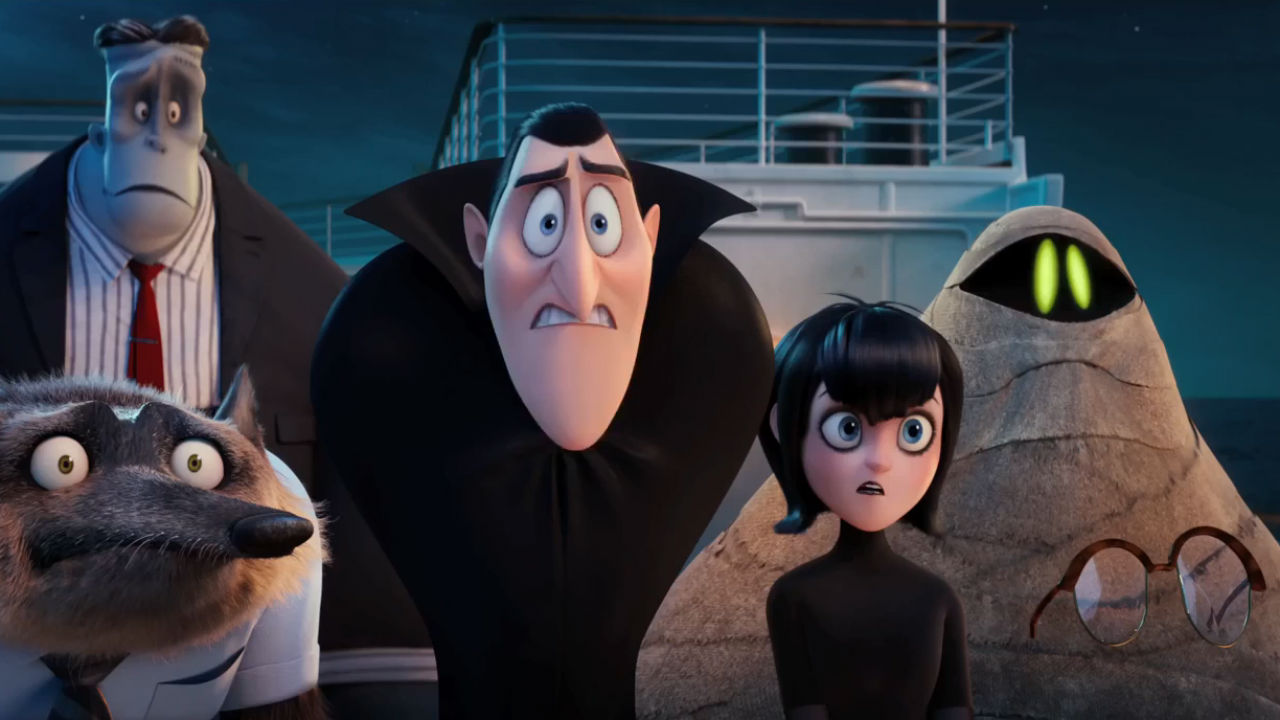
The latest installment in the Hotel Transylvania series introduces us to the centuries-long feud between Dracula and the Van Helsing family. A brief montage shows the audience Abraham Van Helsing’s many failed attempts to destroy Dracula. When it finally seems Van Helsing will no longer be a threat, we’re brought to the present day Hotel Transylvania to catch up with Dracula, his daughter Mavis and their clan of family and friends.
Deciding her dad needs his own vacation based on his more-spastic-than-usual behavior, Mavis books a family trip on a monster cruise. Along for the ride are a number of characters from the previous films, but the new film would have been better served if they’d been left behind in favor of fleshing out the new faces. Aside from Mavis and Dracula, none of the previous films’ characters seem to have been given much thought.
As Dracula, Adam Sandler brings a new aspect to a centuries-old character. Instead of menacing, Dracula is a spaz. While trying to woo the captain of the monster cruise, Ericka, he’s a nervous wreck. It’s an interpretation that serves the franchise well as it provides moments of humor for both children and adults.
Kathryn Hahn as Ericka is a good addition to the series, though her character’s animation is reminiscent of Tweety Bird. She’s a humorous character, and her scenes are among the movie’s best. Hahn plays well against Sandler, and together, they’re the glue that binds the film.
Director Genndy Tartakovsky has helmed all three films in the Hotel Transylvania series, and he’s done well with the material. The latest film will likely appeal to children of all ages, though their parents may surreptitiously check their phones once or twice.