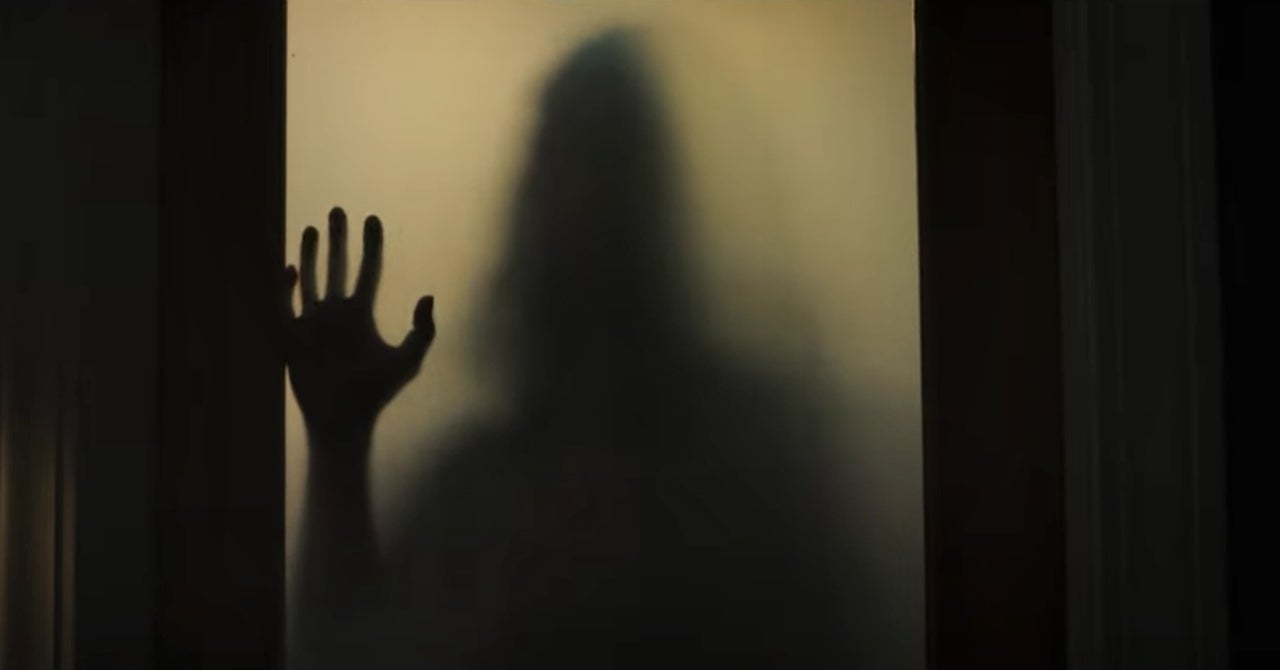
The Night House rests on a trusted horror foundation that’s adorned with several stylishly creepy fixtures. But it’s a terrific lead performance from Rebecca Hall that becomes the support beam preventing total collapse.
Hall plays Beth, a New York teacher still reeling from the recent death of her husband Owen (Evan Jonigkeit). As Beth drifts through her impressive lakefront house trying to adjust, new discoveries bring unexpected questions about her late husband’s outside interests.
Though Beth’s neighbor (Vondie Curtis-Hall, always a pleasure) and best friend (Sarah Goldberg) both warn her not to fill the void in her life with “something dark,” the dark keeps calling. The more Beth digs into things Owen left behind, the more signs point to an unsettling secret life, and to the possibility that Owen may not have entirely moved on.
Director David Bruckner (The Ritual, The Signal) and screenwriters Ben Collins and Luke Piotrowski (Super Dark Times) each have resumes showing impressive results within limited budgets. Stepping up a bit in class, their metaphor for the fog of grief and depression is familiar but well-crafted, with soft-pedaled jump scares and effectively spooky visuals.
Bruckner fuels the standard what’s real/what’s-in-her-head questions with some nifty camera tricks that make the house come eerily alive with forced perspectives and Dali-esque illusions.
As solid as the film’s construction may be, it falls on Hall to make sure the reveals waiting in the third act land with more emotion than silliness.
She’s more than up to the task. Early on, Beth’s sustained grief, and her indignation toward everyone who’s not Owen, carries an authenticity that gets us squarely behind Beth’s personal journey. And that pays dividends once the film relies on our belief in what Beth believes. Thanks to Hall, we end up buying in.
Looking ahead to 2022, Bruckner, Collins and Piotkowski will team up again for the Hellraiser reboot. That means that while there’s enough in The Night House to satisfy horror fans today, there’s also plenty here to get us hopeful about the future.
They’re powerful, beautiful, but not necessarily benevolent. Horror filmmakers have made great use of the heavenly hosts. Sometimes they arrive to protect us. Sometimes they don’t. Here are our five favorite horror films to bring heaven to earth.
5. The Exorcist III (1990)
Yes, this movie made the list based on a single scene. But that scene is so good! Fabio is an angel, wings and all. Patrick Ewing is the angel of death! There’s a quick glimpse of a young Samuel L. Jackson, and George C. Scott chooses a strangely upbeat delivery for the line, “I’m so sorry you were murdered, Thomas. I miss you.”
It’s a dream sequence, a foreboding scene in which Kinderman (Scott) meanders through a holding station between life and afterlife. The piece is weird, a bit gruesome and gorgeous. Its tone and look differ wildly from the rest of the film, but incredible nonetheless.
4. He Never Died (2015)
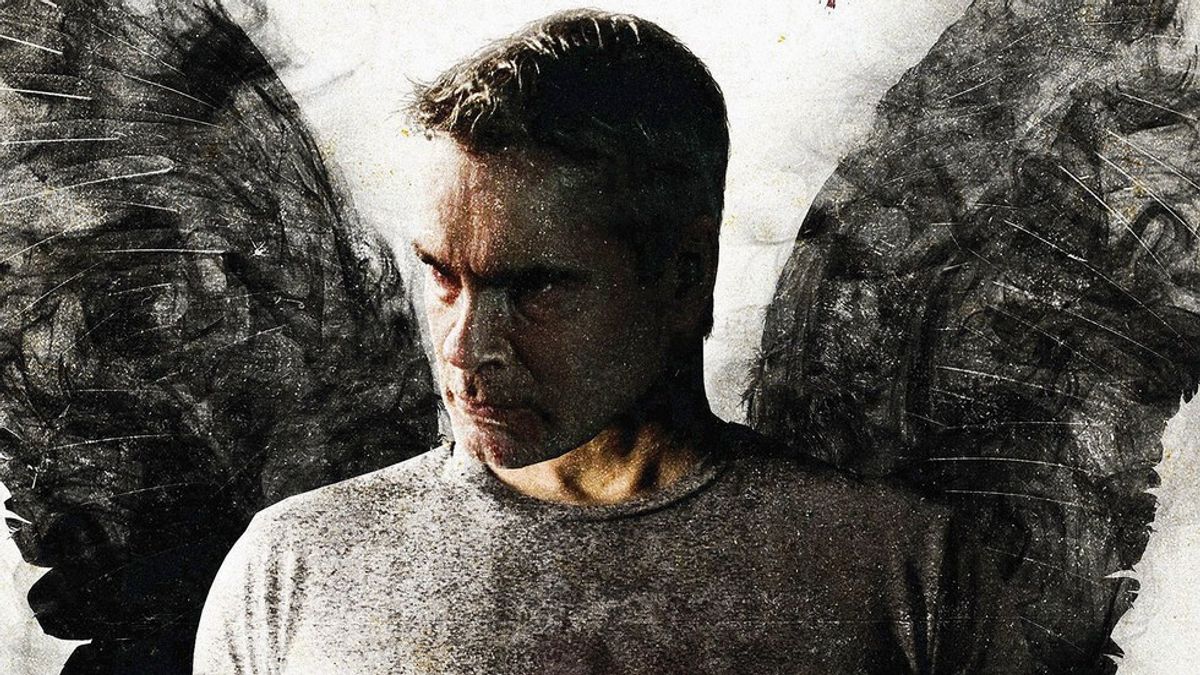
With a funny shuffle step and a blank stare, Henry Rollins announces Jack, anti-hero of the noir/horror mash-up He Never Died, as an odd sort.
Jack, you see, has kind of always been here. The “here” in question at the moment is a dodgy one-bedroom, walking distance from the diner where he eats and the church where he plays bingo. An exciting existence, no doubt, but this mindlessness is disturbed by a series of events: an unexpected visit, a needed ally with an unfortunate bookie run-in, and a possible love connection with a waitress.
From the word go, He Never Died teems with deadpan humor and unexpected irony. Casting Rollins in the lead, for instance, suggests something the film actively avoids: energy. The star never seethes, and even his rare hollers are muted, less full of anger than primal necessity.
3. The Prophecy (1995)
Writer/director Gregory Widen’s fascinating story about a war in heaven over God’s spoiled little meat puppets was a wild, innovative concept with a breathtaking cast: Christopher Walken, Virginia Madsen, Viggo Mortensen, Eric Stoltz, Elias Koteas, Adam Goldberg, Amanda Plummer.
So, is it on Widen that the movie is kind of terrible?
Terrible in an incredibly fun and watchable way, though. Somehow the unusually talent-stacked cast doesn’t feel wasted as much as it does weirdly placed.
There is no question this film belongs to Christopher Walken as the angel Gabriel. (Why are filmmakers so willing to believe Gabe will turn evil?) His natural weirdness and uncanny comic timing make the film more memorable than it deserves to be, but when it comes to sinister, Viggo Mortensen cuts quite a figure as Lucifer. Don’t forget, he was an angel, too.
2. Frailty (2001)
Back in 1980, Bill “We’re toast! Game over!” Paxton directed the short music video Fish Heads. Triumph enough, you say? Correct. But in 2001 he took a stab at directing the quietly disturbing supernatural thriller Frailty, with equally excellent results.
Paxton stars as a widowed, bucolic country dad awakened one night by an angel – or a bright light shining off the angel on top of a trophy on his ramshackle bedroom bookcase. Whichever – he understands now that he and his sons have been called by God to kill demons.
Dread mounts as Paxton drags out the ambiguity over whether this man is insane, and his therefore good-hearted but wrong-headed behavior profoundly damaging his boys. Or could he really be chosen, and his sons likewise marked by God?
Brent Hanley’s sly screenplay evokes such nostalgic familiarity – down to a Dukes of Hazzard reference – and Paxton’s direction makes you feel entirely comfortable in these common surroundings. Then the two of them upend everything – repeatedly – until it’s as if they’ve challenged your expectations, biases, and your own childhood to boot.
1. A Dark Song (2016)
Writer/director Liam Gavin also begins his story by dropping us breathless and drowning in a mother’s grief. Sophia (Catherine Walker) will do anything at all just to hear her 6-year-old son’s voice again. She will readily commit to whatever pain, discomfort or horror required of her by the occultist (Steve Oram) who will perform the ritual to make it happen.
Anything except the forgiveness ritual.
What Gavin and his small but committed cast create is a shattering but wonderful character study. Walker never stoops to sentimentality, which is likely what makes the climax of the film so heartbreaking and wonderful.
The jury may still be out on the level of acting chops passed from Denzel to John David Washington, but Beckett proves once again JDW can handle a physically taxing role as well as anybody in the business.
He’s taxed early and often as the titular man on the run in Netflix’s Beckett, a moderately satisfying throwback to political thrillers of the 1970s.
While on a “get far, far away from it all” vacation in the mountains of Greece with girlfriend April (Alicia Vikander), Beckett loses control of their car on a steep curve. Crashing through the door of a remote home below, Beckett catches a glimpse of something he’s not meant to, and the threats on his life soon begin.
The local police tell Beckett that April is dead, but they won’t let him see her body, which is the least lethal reason he quickly realizes these cops can’t be trusted. The U.S. embassy in Athens is hours away even by car, but Beckett sets out on foot to beg, borrow and fight his way to safety – and the answer to why he’s a marked man.
As capably as Washington handles the action, he’s never quite able to get Beckett’s frantic paranoia to a level that rings true. And once he gets help from a determined activist (Vicky Krieps), the bad guys become easier to spot and the lack of overall intensity brings a sluggish feel.
Director/co-writer Ferdinando Cito Filomarino delivers some picturesque and well-staged set pieces, but the political conspiracy that’s brewing underneath wears thin despite worthy intentions. The point about how easily anyone can become a marginalized pawn in the game becomes a bit frayed, lost in workmanlike global thriller threads.
CODA is the type of welcome reminder we get every so often that lets us know a formulaic story isn’t an inherently bad thing. Fill the formula with characters that feel real enough to care about, and even a predictable journey can be a touching ride.
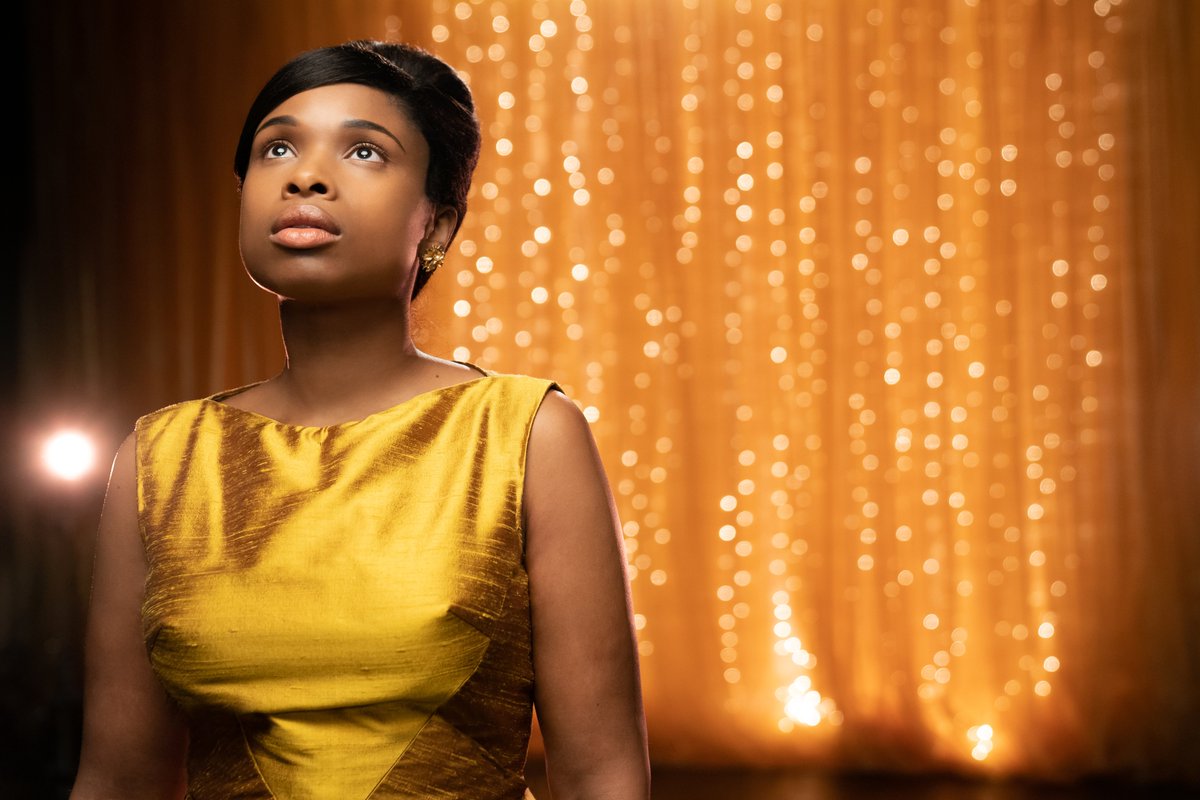
Writer/director Sian Heder delivers an engaging crowd-pleaser with CODA, titled after the acronym for Child Of Deaf Adults. That child is Gloucester, Mass. high school senior Ruby Rossi (Emilia Jones from Netflix’s Locke and Key – just terrific), who’s the only hearing person in her household of Mom Jackie (Marlee Matlin), Dad Frank (Troy Kotsur) and brother Leo (Daniel Durant).
The Rossi family business is fishing, but Ruby’s real passion is for singing – even though she’s too shy to let people know it. On a whim, she follows her crush Miles (Ferdia Walsh-Peelo) to choir class, where the demanding “Mr. V.” (Eugenio Derbez) sees a true talent buried under nerves. Find your voice, Mr. V. tells Ruby, and you could earn a music scholarship.
Find your voice. Heder comes right out and says it – about a character who literally has the only speaking voice in her family. And in an instant, CODA acknowledges all of the ingredients for another manipulative YA special fest, and then sets about swatting them away through thoughtful writing, smart pacing and wonderful performances all around.
Events are often a tad convenient, but the stakes and the people weighing them always feel authentic. Ruby and her friends talk about sex and drugs. Jackie is a (gasp) proudly sexy and sexual middle-aged woman who also has poignant concerns about raising a hearing child. Frank is a loving family man looking for ways to keep his boat in the water, while Leo fights to prove he’s not helpless, and to push Ruby toward her dream.
And, of course, the title also works as a reference to the end of Ruby’s childhood as she moves to take more control of her own life.
So yes, expect first love, a big moment at the choir concert and a happy ending, but the trip to where we know we’re going is funny and warm thanks to the winning cast and Heder’s earnest command of tone. The spots where she removes all sound to shift the perspective are well-placed and never cloying, adding to the film’s list of sweetly resonant moments.
There aren’t many verses in CODA‘s coming-of-age composition that we haven’t heard before. But these hits benefit from an endlessly heartfelt new arrangement, leaving a setlist that’s familiar, but well worth cueing up again.
Annette wraps the beautifully enigmatic visions of director Leos Carax around the idiosyncratic pop musings of Ron and Russell Mael (aka Sparks) for a what-did-I-just-watch spectacle with undeniable will.
Anyone who’s seen Holy Motors knows Carax is a puzzler. And while Edgar Wright’s recent doc The Sparks Brothers may have nudged the Mael boys toward the mainstream, the songs and the story they bring to this film are a mighty slippery mix.
Think A Star Is Born with Sondheim sensibilities, Shakespearean tragedies, and the kitsch of a Springfield Community Theatre production from The Simpsons.
Magic, right? Well, sometimes.
Adam Driver stars as Henry, a standup comic provocateur whose new show “The Ape of God” has him boasting that he only does comedy so he “can tell the truth without getting killed.”
Marion Cotillard is Ann, a famous opera star who “saves” her audience by dying onstage every night.
As detailed by headlines from the Showbizz Network, the two fall passionately in love, get married and have a daughter named Annette, who comes into the world with an unexpected gift.
In fact, you’ll find most everything about Annette to be a surprise. And that’s all I’m going to say about that.
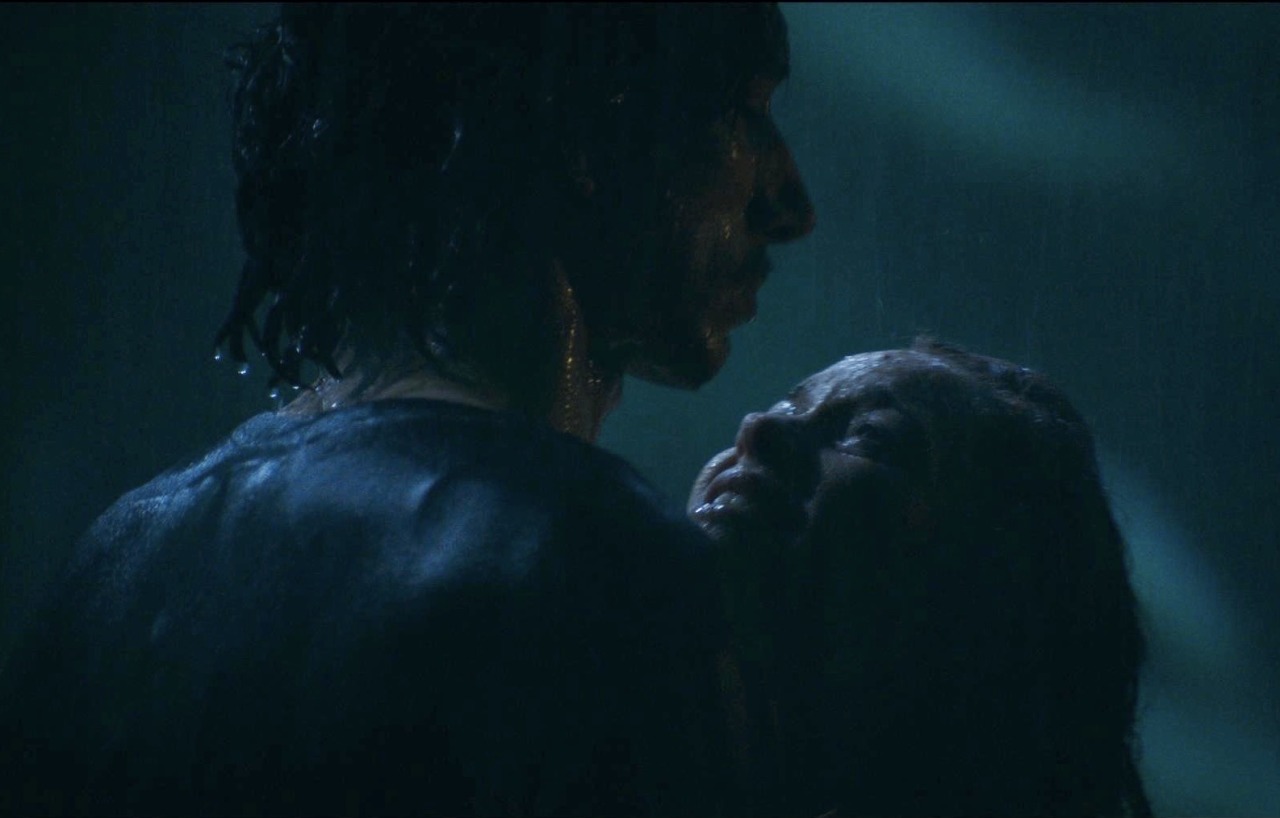
The actors sing live and frequently break that fourth wall, which brings new intimacy to some very intimate moments and quickly immerses us in the grandness of Carax’s vision. Armed with sumptuous cinematography from Caroline Champetier, Carax rolls out a succession of gorgeously hypnotic set pieces.
Be ready, though, for the dreamlike tone to often run headlong into campy silliness that leaves many metaphorical elements searching for a resonate metaphor.
Just when Annette is clear about its musings on the relationship between artist and audience, or about fame, or self-loathing, or fragile masculinity or creative boundaries, it goes all Cop Rock on us.
But man, it’s transfixing to look at, and the Driver/Cotillard pairing is just as powerful as you’d expect. Just don’t expect anything else from Annette, and what you find won’t soon be forgotten.
Will (Winston Duke) is a selector. Inside a modest home situated in the middle of nowhere and surrounded by nothing but flatland, he monitors the progress of his past selections while he carefully prepares to fill a new vacancy.
At the end of nine days, Will must choose wisely. His one selection among a new group of unborn souls will move on the “real world” and experience human life. The rest will not.
In his feature debut, writer/director Edson Oda presents an impressively assured vision of transfixing beauty and gentle poignancy. While the current run on “appreciate every day” films is hardly surprising in today’s climate, Oda brings an organic originality to the mantra of seeing the world through someone else’s eyes.
Will does exactly that, via the television monitors (and VHS tapes) that allow him to view the world as his past selections are living it. The monitors also play a role in the selection process, as Will gives his candidates (including Zazie Beetz, Tony Hale and Bill Skarsgård) daily assignments to write down their reactions to the world views they see.
Duke (Us, Black Panther) is phenomenal as a “cog in the wheel” who becomes caught between the clinical completion of his duties and the emotional weight of his responsibilities.
Unlike many in this otherworld – including his assistant Kyo (Benedict Wong) – Will actually spent time living in the real one. And while he won’t discuss details of his life experience, his charming reliance on VCRs and Polaroid cameras gives us a clue about the timeframe. Duke brings touching authenticity to the barrier Will has put up around his past, while also letting us glimpse how Will is haunted by the fate of a past selection, and by the chance he may have chosen poorly.
Oda’s writing and direction exhibit solid craftsmanship. His framing and use of light often work wonders together, conjuring an existential outpost full of strangely comfortable trappings.
The screenplay is finely tuned for each distinct applicant in the process, allowing a standout Beetz and the terrific ensemble to find intimate resonance in the alternately joyous and heartbreaking moments of a life.
Yes, Nine Days often has a lilting air of pretension, but with such a philosophical anchor, it would be more surprising if it did not. Give Oda credit for being unafraid of the moment. He’s taking some big swings at mighty heavy concepts here, with an originality of voice and attention to craft that is welcome any day.
An ode to cautionary tales, this episode points out all the great reasons to just skip the gym. Those muscles aren’t going to do you any good if you are dead—seriously, hideously broken, bloody and dead. We enlist the aid of Rewatch Podcast’s Cory Metcalfe to help us work through the best in workout horror.
5. Final Destination 3 (2006)
Director James Wong returned after missing Episode 2 and picked up right where he left off: fun and horrifying Rube Goldbergs of Death.
A young Mary Elizabeth Winstead stars ad Wendy Christensen, she of the premonition about shoddy workmanship on that roller coaster. Naturally, those she saves are on Death’s list now. These films are not rocket science. A group of people cheats death. One by one, Death comes a callin’.
The fun is seeing how each demise works itself out. And Lewis (played by Texas Battle – that is a name!) gets it good.
4. Happy Birthday to Me (1981)
Director J. Lee Thompson had seen better days (Cape Fear, Guns of Navarone), but this switcheroo slasher boasts a weird vibe that makes it compelling.
It also contains a very early workout death scene. We all knew Greg had to go, and how fitting that this vane elitist got his on a workout bench. If he’d thought for one second just to drop the weights on the ground over his head…but Greg wasn’t exactly known for smarts.
3. Tragedy Girls (2017)
DirectorTyler MacIntyre’s whole approach in this film is pitch-perfect. Stars Brianna Hildebrand and Alexandra Shipp bring these bestie characters to vibrant life and the story around them is whip-smart and funny.
Speaking of funny, Craig Robinson has little more than a cameo, but he brings that Craig Robinson vibe, making this particular workout scene an uncomfortable comedic gem.
2. The Toxic Avenger (1984)
Melvin Junko’s whole life was a workout horror. Put upon and picked on, this little janitor only wanted to get his work done.
The Troma classic—awaiting an unbelievably well cast reboot from director Macon Blair—clearly had to be part of this list. Seeing Toxie finally get revenge on those Tromaville health club bullies.
https://www.youtube.com/watch?v=EFffWBjjqQc
1. Final Destination 5
Director Steven Quale’s prequel may be the best of the Final Destination bunch. The 3D horror takes full advantage of the intricate death sequences—especially the opening bridge set piece. Nice!
It helps that writer Eric Heisserer (Arrival, Birdbox, Lights Out, The Thing remake) knows how to write. The 5th installment feels less like a return to the well and more like an interesting riff on destiny. It also has some great support work from Tony Todd, Courtney B. Vance and David Koechner.