Screening Room: Shang Chi, Cinderella, Wild Indian, Lost Leonardo & Much More!
by Hope Madden and George Wolf
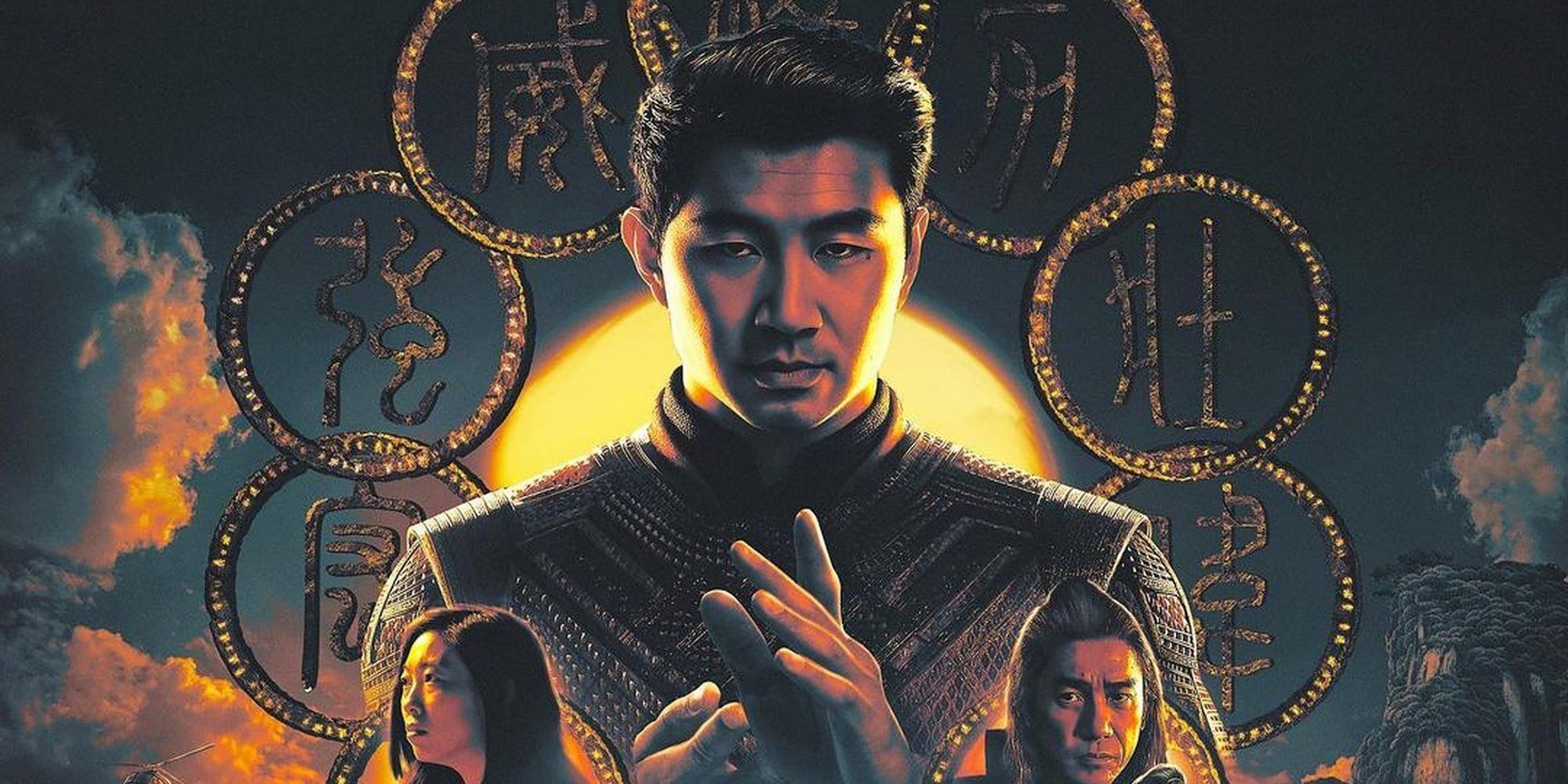
Imagine finding out your best friend and karaoke partner isn’t really a mild-mannered valet attendant, but a highly-trained ass-kicker with chiseled abs who’s the son of an immortal conqueror leading his own army.
That’s a lot for Katy (Awkwafina) to digest, but when thugs come for her bestie Shaun (Simu Liu), the bus ride beatdown he gives them goes viral – in the first of many spectacular fight sequences – and the truth comes out.
Shaun is really Shang-Chi, whose childhood was filled with intense training to one day fight alongside his father Wenwu (Tony Leung), a God-like figure powered by the five rings worn on each arm.
The tragic death of Shang-Chi’s mother Li (Fala Chen) brought grief that stripped the mercy from Wenwu, forcing Shang-Chi to leave his younger sister Xialing (Meng’er Zhang) and run from his destiny. But Daddy’s patience for his wayward children has run out.
So some familiar Disney building blocks are in place, with well-positioned signage (“post blip anxiety?”) and cameos (one very surprising, and welcome) to remind us what universe we’re in. But Shang-Chi and the Legend of the Ten Rings soars highest when it follows its groundbreaking hero’s lead and vows to build its own world.
A quick look at the indie drama sensibilities of director and co-writer Destin Daniel Cretton (Short Term 12) might prepare you for the savvy complexities his Big Movie brings to Marvel’s favorite topic: family dynamics and daddy issues. But his filmography would not suggest this level of badassedness when it comes to action sequences. (And let’s be honest, neither would that subpar trailer.)
The setpiece on the bus, though, tips you off. It’s followed by plenty of fun and funny, with often breathtaking feats of fisticuffs and flight (with dragons, no less!)
Performers balance humor and pathos in that patented Marvel manner. This, of course, is Awkwafina’s wheelhouse and she is a hoot.
Liu, who’s done mostly TV, shoulders lead responsibilities with poise and charm. Michelle Yeoh, always welcome, adds gravitas as Li’s sister Ying Nan, but Zhang struggles with Xialing’s underwritten angry sister storyline.
Cretton’s film layers in feminism that almost works, but not entirely, as three women support a boy who must stand up to his father to become a man. Points for trying, I guess?
But the wait for the MCU’s first Asian Avenger (sit tight for those 2 extra scenes) ultimately pays off with a visionary, big-screen-begging spectacle full of emotional pull and future promise. Pure, eye-popping entertainment is a welcome ring to reach for – especially now – and Shang-Chi never misses.

by George Wolf
In 2005, a “sleeper hunter” looking for undervalued art made a pretty good call when he bought a work at a New Orleans auction for $1,175. Twelve years later, that painting sold for a record-setting $450 million.
What happened in between is a real world mystery, one that The Last Leonardo unveils like a globe-trotting thriller to deliver a completely spellbinding ride. Full of amazing discoveries, dangerous despots, faith, doubt, economics and greed, it’s a behind-the-brush account of “the most improbable story in the art market.”
Only 15 Da Vinci works were known to exist before that Louisiana find, and none had been discovered for over a century. Could that Big Easy bargain actually be the 16th, an early 1500s work entitled Salvator Mundi (Savior of the World)? Plenty of important voices in the art world say yes. Others say there’s a better chance of finding aliens landing in your front yard. And some can’t make up their minds about the painting.
Oh, and nobody seems to know where it went.
Director and co-writer Andreas Koefoed weaves the layers of this tale together with a damn fine sense of artistry himself. He quickly shapes the backstory with a hook irresistible to even an art history novice, then keeps a steady pace of twists and revelations to rival the most delicious true crime sensations.
Koefoed mixes first-person interviews with jet-setting locales, and stylish art restoration technology with political intrigue. His sense of timing is sharp as well, knowing just when to spotlight the accusation that with a question this large and an answer so potentially valuable, “opinions matter more than facts.”
Because by the time the film enters its third act, Koefoed’s meticulous approach – paired with the refreshing honesty of many of the players involved – has seamlessly shown how the process moves past art, and even commerce, to settle comfortably on power.
And much like the treasures waiting beneath centuries of brushstrokes, the brisk 96 minutes of The Lost Leonardo also manage to transcend the galleries and auction houses to speak more universally on how this global brokerage network flourishes largely out of the spotlight.
But don’t be scared off by the whiff of stuffy art house pretension, this is also a damn fine piece of entertainment. I mean, all due respect to GD National Treasure Tom Hanks, but here’s a Da Vinci mystery that’s suitable for framing.

by George Wolf
Opening his film with a quote from Charles Dickens, and closing it with a statistic about foster care, director/co-writer Michele Civetta wants us to know he has serious issues on his mind.
There are children out there hurting. If no one cares enough to help them, there’s little hope of breaking a sad cycle of dysfunction.
True enough, and fair enough. The problem is the 90 minutes of heavy handed cliche that fall between quote and quotient.
Shea Whigham pulls the weight here as Parker, a social worker in St. Louis who’s – you guessed it – battling some personal demons. After fighting his way out of a troubled childhood via a promising boxing career, Parker now grapples with booze and blow, looking for redemption through his caseload of damaged souls.
Parker is particularly drawn to Ashley (Taegen Burns), a bright young teen whose mother Dahlia (Olivia Munn) requires frequent checkups to keep on the straight and narrow. Her path gets rockier when Ashley’s father Mike (Zach Avery) comes home from prison a bit earlier than expected.
If Mike can give his boss “The Duke” (Frank Grillo) one last big score, he’ll be set up with a cushy job running some strip joint instead of risking his life in the streets.
Just one more, then he’s out! That always goes exactly as planned, right?
It’s great to see the veteran support player Whigham get a lead role, but the script doesn’t give him – or anyone else – much chance to develop a character with any authentic layers. True, social worker as avenging ass-kicker is a wrinkle, but nearly every other role is either interchangeable with countless other crime dramas or a familiar face (Keith David, Taryn Manning) in a distracting cameo.
Whigham, Munn and even the legendary Bruce Dern (as Parker’s estranged father) can’t do much to elevate the material, or the film’s occasional slapped-together feel (at least two dialog dubs are badly mismatched).
And once even the core message about the social safety net picks up sidebars on the military industrial complex and government-sponsored drug trafficking, The Gateway becomes an overwrought and overwritten mess leading to little that is satisfying.
The Gateway hits VOD on Friday

It’s back to school time, which makes it the perfect time to check back in with the Reel Librarian, Jennifer Snoek-Brown. With her help and deep reserves of information, we count down the very best librarians horror has in store.
Not a great movie, which is especially disappointing considering its pedigree. Segments in the Lovecraft anthology are directed by Christoph Ganz (Brotherhood of the Wolf), Brian Yuzna (Society) and Shûsuke Kaneko (Death Note).
Still, the wraparound story The Library – directed by Yuzna and starring that filmmaker’s favorite and ours, Jeffrey Combs – is much fun. Combs plays Lovecraft himself, visiting a very private library run by peculiar monks. He’s doing research. Or is he stealing the librarian’s key with hopes of finding the Necronomicon?
That is totally what he’s doing, and it’s a blast. Combs is great, but Tony Azito as the bemused/annoyed librarian is the real star here.
Are you a Poe fan? Well, it won’t matter because Ernest Morris’s period thriller bears little resemblance to Edgar’s classic.
So why include it? Because the murderer is a librarian! Laurence Payne plays brittle Edgar, a reference librarian who’s taken with his new neighbor, Betty (Adrienne Corri). He doesn’t know how to talk to women, but his best friend Carl (Dermot Walsh) sure does! And my, how Carl’s heart does beat loudly.
Corri’s exceptional in this film, but Payne is unlikable, entitled, perverted gold. This is an incel movie before we even knew what incel was.
Michele Soavi’s dreamy gothic Giallo, co-penned by Dario Argento and co-starring a very young Asia Argento – is no masterpiece. It is endlessly watchable nonsense, though.
Evan (Tomas Arana) shows up late for his first day as cathedral librarian, stopping to flirt with fresco restorer Lisa (Barbara Cupisti) before heading into the library where he will be brazenly lazy and more than a little creepy.
The film takes on the dreamlike logic of a Fulci without losing the more pristine visuals that mark Argento’s earlier films. Its underlying themes are kind of appalling (wait, we’re good with the inquisitors who murdered that village?), but it looks great.
Is it a horror movie? Well, it is a monster movie, so close enough. Stephen Sommers’s 1999 swashbuckler boasted fun FX, an excellent villain, the newly beloved Brendan Fraser, and one kick-ass librarian.
Rachel Weisz, more attractive than ought to be allowable, plays Evie Carnahan. Her opening segment of destruction in the library itself is sheer visual poetry, but she’s more than brains and clumsiness. Evie stands up for herself, outsmarts bad guys, accidentally reanimates ancient evil, and really loves her job.
There’s a reason Evie Carnahan and Charles Halloway top our list of librarians in horror. Because they are heroes, as are all librarians.
Jack Clayton’s take on Ray Bradbury wields nostalgia with melancholy precision, recognizes time as the enemy, and boasts exceptional performances from its villain Jonathan Pryce as Mr. Dark, and its hero, Jason Robards as town librarian and all-around good guy, Charles Halloway. The fact that the final showdown takes place right in the library is the icing on the cake.
by Hope Madden and George Wolf
Sweets to the sweet, indeed.
This new Candyman is the most delicious brand of horror sequel. Thanks to the startling vision of director/co-writer Nia DaCosta and producer/co-writer Jordan Peele, it is a film that honors its roots but lives so vibrantly in the now that it makes you view the 1992 original from an urgent new angle.
We go back to Chicago’s now-gentrified Cabrini Green housing project with up-and-coming artist Anthony McCoy (Yahya Abdul-Mateen II), whose works have taken a very dark turn since he learned of the Candyman legend from laundromat manager William Burke (Colman Domingo).
Anthony’s obsession helps spark the interests of curious doubters, which means blood will soon be shed. Suspicions about Anthony’s possible role in the killings begin to grow, leading his girlfriend Brianna (Teyonah Parris) to worry about her own promising career in the art world – and eventually her own safety.
Research on the legend reacquaints us with events from the first film, gloriously reenacted through the paper and shadow puppet work first seen in the film’s trailer. Without dismantling the backstory, only shifting the point of view from white storyteller to Black, DaCosta takes ownership of the narrative—which is, itself, the point the film makes. Own the narrative.
DaCosta’s savvy storytelling is angry without being self-righteous. Great horror often holds a mirror to society, and DaCosta works mirrors into nearly every single scene in the film. Her grasp of the visual here is stunning—macabre, horrifying, and elegant. She takes cues from the art world her tale populates, unveiling truly artful bloodletting and framing sequences with grotesque but undeniable beauty. It’s hard to believe this is only her second feature.
Compelling performances throughout draw you into the saga. Abdul-Mateen II delivers terrifying layers while Parris gives the filmmaker a vehicle for outrage and satire. The always reliable Domingo (having a banner year) brings the film’s institutional knowledge — important in any sequel (somebody has to tell the protagonist what’s already happened), but invaluable in a film about the legacy of trauma.
And then there’s Vanessa Williams, whose return to the franchise is heartbreaking perfection.
Fans of the preceding films will find no reason to be disappointed, but that’s about the least of what this Candyman accomplishes. By the time a brilliant coda of sadly familiar shadow puppet stories runs alongside the closing credits, there’s more than enough reason for horror fans to rejoice and…#telleveryone.
by George Wolf
We’re living in unprecedented times – that’s no news flash. But the daily process of navigating the minefield of consequences from this pandemic can beat down our psyche until acceptance is required for survival.
While it may be decades until we can fully fathom the extremes we’re going through right now, filmmakers have been showing impressive instincts for adapting to on-set constraints, and reflecting on our currently shared experience.
Enjoying Together may depend upon how much you welcome the reminder.
Filmed in under two weeks with a cast of just three in a single location, the film finds humor and poignancy while mining both the intimate and more universal aspects of a nationwide lockdown.
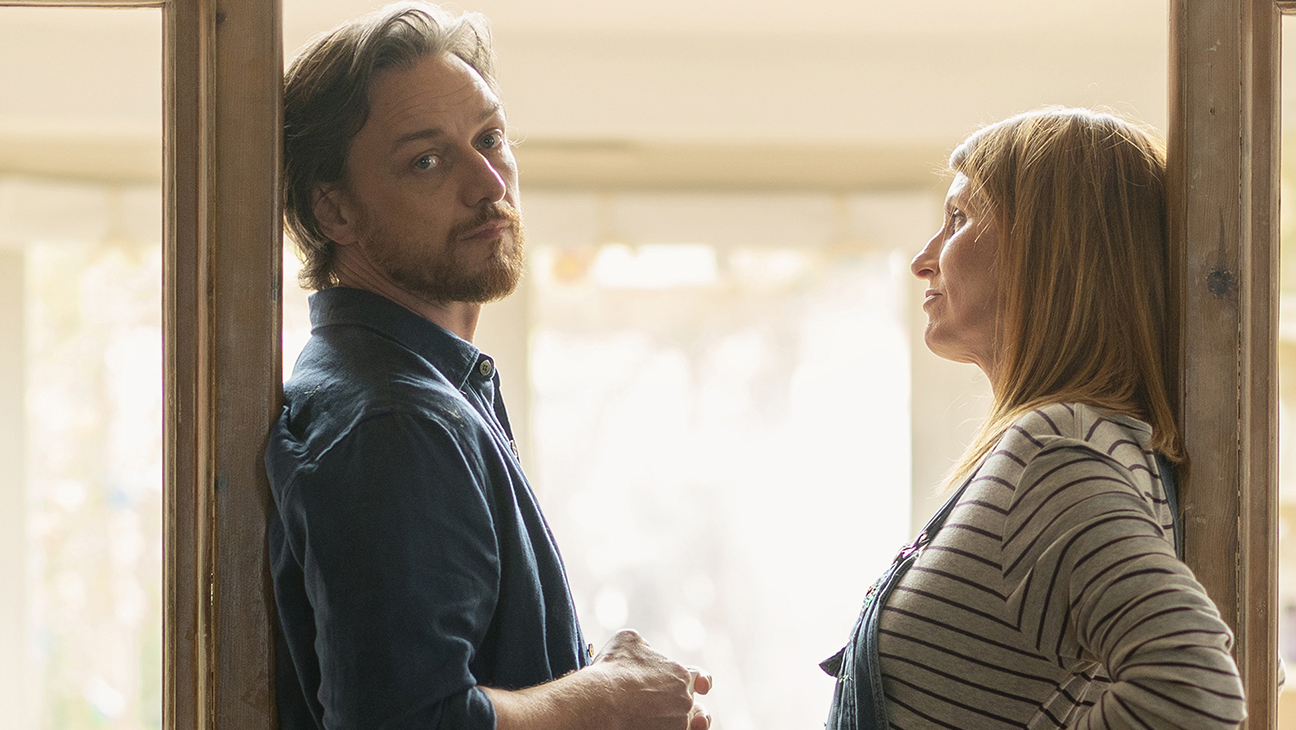
The nation is Great Britain, where we meet He (James McAvoy) and She (Sharon Horgan) at the beginning of the quarantine, when onscreen text begins keeping track of the days and the casualties.
He’s a bootstrap conservative just fine with buying privilege, while she’s a power to the people “communist.” They were splitting up even before lockdown, so now that they’re forced to stay together, he hates her face, she wants to feed him poison mushrooms, and they both speak directly to the camera while trying to keep the worst of their vitriol away from son Artie (Samuel Logan).
Directors Stephen Daldry (Billy Elliot, The Hours, The Reader) and Justin Martin (debut feature) use the broken fourth wall and the multiple extended takes to draw us in and make us part of the conversation.
Writer Dennis Kelly provides McAvoy and Horgan with funny, biting barbs and heartfelt monologues, and the two actors consistently find authentic levels of humor and emotion – even in the moments when it starts to feel we’re being talked to instead of with. He and She are demanding, intense roles, and both McAvoy and Horgan respond with fiery, nuanced turns that alone make the film worthwhile.
In between the mounting death toll and the promise of a vaccine, Together glimpses how our lives have been changed in small, inconvenient ways and larger, heartbreaking ones. And as an impressionable child waits in the next room while his parents get closer to their true feelings, American audiences may especially notice the missing chapter on pandemic death cults.
But in our darkest days, art has always been there to help us question, laugh, cry and heal. So while using a welcome night out to spend time back in lockdown may seem as entertaining as a poke in the eye with a sharp stick, this film just wants you to know there’s hope if we just stay…
You know.
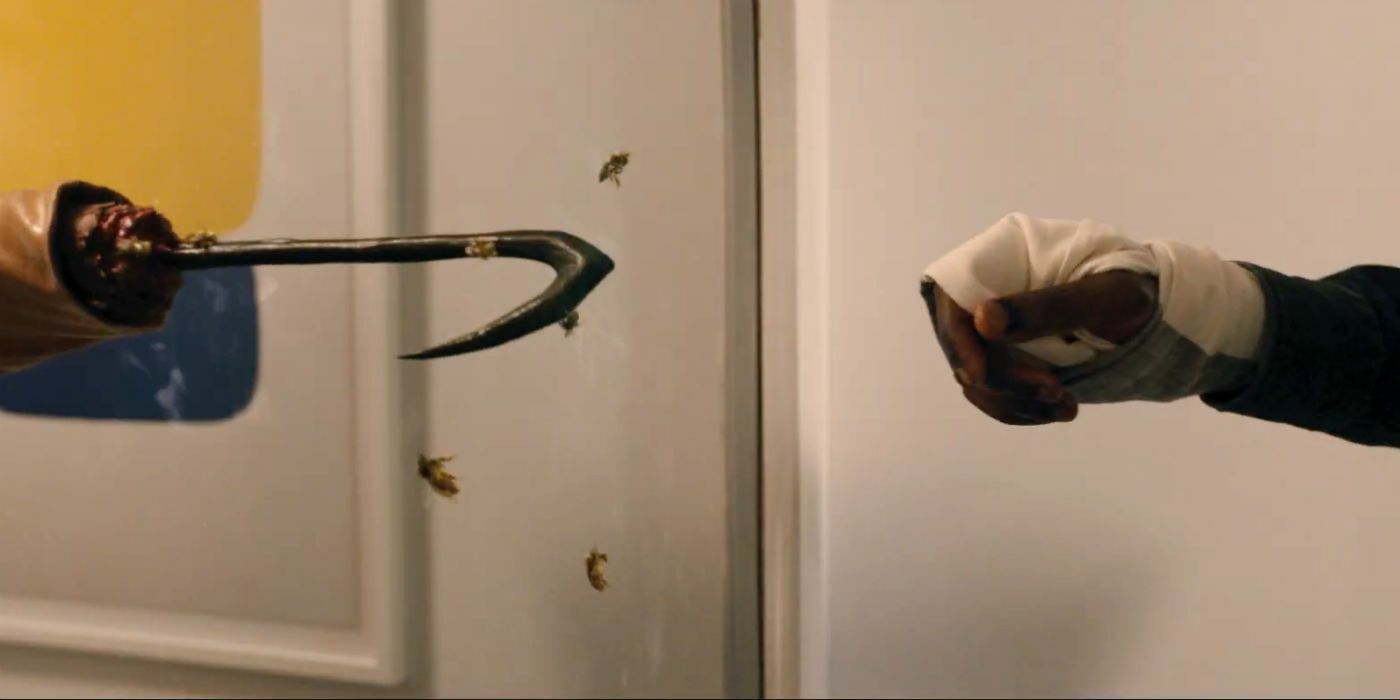
by George Wolf
You know that feeling when someone comes out of a security door at the precise moment you’re trying to come in without a key?
Or when a major cable news show puts your call right through to the air on the very same day you find a uniform in exactly your size hanging up and waiting for you to blend in somewhere you don’t really work?
Me neither. So while Netflix’s Sweet Girl calls attention to a very real problem in America, the narrative that drives it trades authenticity for gimmicky contrivanace.
Through a frequently changing timeline we meet Ray Cooper (Jason Momoa) and his daughter Rachel (Isabela Merced). Tragedy hits their Pittsburgh-based family when wife/mother Amanda Cooper’s life is cut short by cancer. Amanda fights hard, but finally succumbs when a promising new drug is withheld by obnoxious Pharma Bro Simon Keely (Justin Bartha).
While Keely and Congresswoman Diana Morgan (Amy Brenneman) are on live TV debating prescription drug prices, Ray calls in to blame the price-gouging Keely for his wife’s death, and to promise violent revenge.
Ray’s nationwide threat seems to only arouse the interest of an investigative reporter on the trail of a Big Pharma conspiracy, and when Ray’s meeting with the writer turns unexpectedly bloody, father and daughter become fugitives hunted by both the cops and the killers.
In his feature debut, director Brian Andrew Mendoza utilizes Momoa’s hulking charisma via some standard fight choreography, but the gifted Merced seems wasted. Writers Gregg Hurwitz (The Book of Henry) and Phillip Eisner (Event Horizon) serve up a journey of convenience on the way to a third act twist that will define how smoothly the film goes down.
If you can keep your eyes from rolling, this film may feel like the franchise kickstart it aims to be. Otherwise, Sweet Girl leaves a pretty sour aftertaste.