Tag Archives: Screen Wolf

Watching the Detectives

Confess, Fletch

by George Wolf

Casting Jon Hamm as the new Fletch seems like a bullseye. He has leading man charm, sharp comic timing and plenty of skill handling a one-liner.

Really, the only minus is that he might be too handsome. He doesn’t really seem like a hat guy, so that Lakers cap on his head in Confess, Fletch feels like a forced homage to the Chevy Chase original. But Hamm is wise enough to avoid imitating Chase outright, teaming with director/co-writer Greg Mottola for an Irwin M. Fletcher that’s closer to the star of Gregory McDonald’s source novels.

We catch up with Fletch as he’s left the newspaper game behind, disenchanted with the effects of the digital age. But his rep as an L.A. investigative reporter “of some repute” lands him freelance sleuthing gigs, like searching for a stolen Picasso that his Italian girlfriend Angela (Lorenza Izzo) needs as ransom for her kidnapped father.

But then a dead girl turns up in Fletch’s rented Boston townhouse and the local detectives (Roy Wood, Jr. and Ayden Mayeri) just want him to confess already. And they’d also like him to stop taking his shoes and socks off.

Of course, Fletch remains sarcastically cool throughout their surveillance, investigating on his own and uncovering a few other suspects: his stoner neighbor (Annie Mumolo), a germaphobe art dealer (Kyle MacLachlan), Angela’s mother aka “The Countess” (Oscar winner Marcia Gay Harden, hamming it up) and even Angela herself.

Mottola’s (Adventureland, Superbad) story building doesn’t stray far from the structure of Michael Richie’s 1985 original, which may not be ambitious but is at least understandable, considering the same novelist assembled both mysteries. The major difference is the lack of inspired silliness, which brings us back to the casting of Hamm.

The fake names Fletch gives out aren’t so outlandish, and you won’t find any SNL-ready skits about playing for the Lakers or going undercover at Dr. Jellyfinger’s office.

But all that was catered to what Chevy Chase did best, which was playing Chevy Chase. Hamm is actually acting. The irony here is that while the character of Fletch is now more fully formed, the movie itself just isn’t as consistently funny.

There are plenty of smiles, though. The cast of unusual suspects can be a hoot (especially Mumolo) and running gags about Fletch’s fluency in Italian, his bare feet and his attempts at charming the detectives bring some chuckles. A Mad Men reunion with John Slattery as Fletch’s salty old newspaper editor is a nice touch, as well.

Years from now, you won’t be quoting any lines from Confess, Fletch. But the hour and a half you spend with this breezy whodunit isn’t a waste, and might leave you feeling like you just met the real I.M. Fletcher.

Divided We Fall

God’s Country

by George Wolf

It’s only September, but I’m taking out my Oscar scorecard, and writing in Thandiwe Newton. With a pen.

Because if she doesn’t get noticed for her astounding performance in God’s Country, there’s somerthing wrong with all of us.

The film is also an incredibly assured sophomore effort from director and co-writer Julian Higgins, expanding on the themes and insight hinted at nearly twenty years ago in his feature debut Mending Wall.

Newton stars as Cassandra Guidry, a professor at a small college near the mountain wilderness. The grief from her mother’s recent death is deep, but she’s committed to teaching her students the importance of persistence in the strive for change.

“Sandra” hopes that leaving a note on the truck windshield will change the behavior of two hunters (Joris Jarsky, Jefferson White), who trespass on her property. It does not, and a battle of wills slowly escalates into a powder keg that Higgins uses to comment on the divides in this country that often seem impossible to navigate.

While Sandra struggles with the reaction from the local sheriff (Jeremy Bobb), we learn more about her past, and about things that make her keenly aware of where this situation could he headed. And as Higgins advances the narrative with onscreen text marking off the days, Sandra’s belief that “we all gotta play by the same rules if this is gonna work” can also apply to her push for diversity in the university’s search for a new Dean.

Higgins’s camerawork is barren and cold, buoyed by starkly beautiful cinematography from Andrew Wheeler. His script treads with care and precision. Nothing feels like a cliche, even though God’s Country lives in areas where cliches often roam freely. These characters and their flaws feel familiar, but Higgins finds intimate ways to offer hope for redemption, if only for the briefest of exchanges.

And why won’t Sandra let the parking thing go? Newton makes it achingly personal, carrying the weariness of swimming against the current in her every steely glare. Her final scene, though nearly dialog-free, is exquisitely devastating and sure to follow you home.

Just how many “no big deals” are allowed before there is indeed a big deal? And who decides?

God’s Country is full of the persistent ugliness that plagues ours. Yet none of its issues are raised with a heavy hand. Measured and often visual storytelling is at work here, carried on the shoulders of a sensational lead performance.

Fright Club: Satanists in Horror

It’s time to sift through that bountiful gift that is satanic horror. So many movies! So many black masses! So many purple robes, goat’s heads, high priests!! So many, indeed, that we had to leave off a ton of really great movies, so even though they didn’t make the final list, be sure to check out Ready or Not, Brotherhood of Satan, Race with the Devil, Blood on Satan’s Claw, Prince of Darkness, House of the Devil, The Sentinel, The Devil Rides Out, and the brilliant short film Born Again.

5. The Day of the Beast (1995)

Funny, startling and wildly irreverent, Alex de la Iglesia’s dip into Satanism is a giddy experience. It’s not just great Satanism horror, it’s an excellent Christmas movie!

A priest, a Satanist and a charlatan comb the city of Madrid on Christmas Eve in search of the birth ritual of the Antichrist. Their hijinx are feverish and frantic in a transgressively funny horror tale.

Gleefully gory mayhem suits the outlandish performances, together driving one of the gruesome auteur’s very best.

https://www.youtube.com/watch?v=C1K0CMF87ZY

4. Angel Heart (1987)

In Angel Heart, director Alan Parker develops a steamy atmosphere as we follow private dick Harold Angel (Mickey Rourke) through the bowels of New Orleans in search of information on missing crooner Johnny Favorite.

Rourke’s work is key to the film’s unseemly feel. Angel’s sympathetic and full of a disheveled charm. You’re sorry for him even as you know he’s outmatched and probably undeserving of your pity. He knows it, too, and that’s what makes the performance so strong.

Plus there’s the sheer diabolical presence of an understated Robert DeNiro. His well-manicured and articulate Louis Cyphre perfectly balances Rourke’s handsome slob, and both fit beautifully into this sultry version of 1955.

Deceptively bloody, unusually classy, effortlessly creepy, Angel Heart stays under your skin. Maybe it’s the casual evil, the lurid atmosphere. Maybe it’s De Niro’s understated menace, with those long nails and that hardboiled egg.

3. The Blackcoat’s Daughter (2015)

Winter break approaches at a Catholic New England boarding school. Snow piles up outside, the buildings empty, yet Kat (Kiernan Shipka) and Rose (Lucy Boynton) remain. One has tricked her parents for an extra day with her townie boyfriend. One remains under more mysterious circumstances.

Things in writer/director Oz Perkins’s The Blackcoat’s Daughter quietly unravel from there – although quiet is not precisely the word for it. There is a stillness to the chilly, empty halls. But thanks to the filmmaker’s brother Elvis, whose disquieting score fills these empty spaces with buzzing, whispering white noise, a sinister atmosphere is born.

Perkins repays your patience and attention. There are loads of sinister little clues to find.

2. Rosemary’s Baby (1968)

Rosemary’s Baby remains a disturbing, elegant, and fascinating tale, and Mia Farrow’s embodiment of defenselessness joins forces with William Fraker’s skillful camerawork to cast a spell. Along with Repulsion (1965) and The Tenant (1976), Rosemary’s Baby is part of Polanski’s “apartment trilogy” – disturbing films of tension and horror in which metropolitan life and nosey neighbors conspire to drive a person mad.

Working from Ira Levin’s novel, Polanski takes all the glamour out of Satanism – with a huge assist from Ruth Gordon, who won an Oscar for her turn as the highly rouged busybody Minnie Castevet. By now we all know what happens to poor Rosemary Woodhouse, but back in’69, thanks much to Mia Farrow’s vulnerable performance, the film boiled over with paranoid tension. Was poor, pregnant Rosemary losing it, or was she utterly helpless and in evil hands?

1. The Witch (2015)

The unerring authenticity of The Witch made it the most unnerving horror film in years.

Every opportunity writer/director Roger Eggers has to make an obvious choice he discards, though not a single move feels inauthentic. Rather, every detail – whether lurid or mundane – feels peculiarly at home here. Even the most supernatural elements in the film feel appallingly true because of the reality of this world, much of which is owed to journals and documents of the time, from which Eggers pulled complete sections of dialog.

As frenzy and paranoia feed on ignorance and helplessness, tensions balloon to bursting. You are trapped as this family is trapped in an inescapable mess, where man’s overanxious attempt to purge himself absolutely of his capacity for sin only opens him up to the true evil lurking, as it always is, in the woods.

Strings Attached

Pinocchio

by George Wolf

I saw a tweet not long ago that suggested Disney should stop with the live-action remakes and instead, re-do their classics with the Muppets.

That logic is sound. Disney now owns the necessary rights, of course, and Muppet treatments would at least ensure creative visions that run deeper than “because we can.”

Heck, Tom Hanks could still star in them, as he does in this new live-action version of Pinocchio. Really, it would be more of a surprise if Hanks didn’t play the kindly Geppetto, and he’s just as fitting as you would expect a GD National Treasure to be.

And since the film mixes Hanks and other live actors with impressive digital animation, seeing the name Robert Zemeckis (Who Framed Roger Rabbit?, The Polar Express, Welcome to Marwen) as director and co-writer gives you confidence the entire project will be well-crafted and satisfactory.

And it is. But if true magic is what your heart desires, keep wishing.

Young Benjamin Evan Ainsworth is in fine voice as the legendary puppet who longs to be a real boy, while Joseph Gordon-Levitt strains for that distinctive Jiminy Cricket phrasing and lands a little too close to South Park‘s Mr. Hankey.

But more importantly, Zemeckis and co-writer Chris Weitz seem too eager to justify their project via modern sensibilities. And in turn, they end up short-changing elements that made Disney’s original such an enduring favorite.

New songs add little beyond pop flavor, while one new character, Sofia the seagull (Lorraine Bracco) exists mainly to over-explain character motivations. Pinocchio’s friendship with Sabina (Jaquita Ta’le), a skilled puppeteer in Stromboli’s (Giuseppe Battiston) show, is well-intentioned but forced. Keegan-Michael Key’s foxy Honest John tempts Pinocchio with fame through references to “influencers” and Chris Pine.

Luke Evans does make a delightfully devilish Coachman, who leads Pinocchio to an effectively realized Pleasure Island that glimpses some darker themes. Exploring more of these layers would have strengthened the fairy tale roots, but it’s the tale of the Blue Fairy (Cynthia Erivo) that gets the shortest shrift.

“When You Wish Upon a Star” is not just a song for Disney. By now it’s the bedrock of their entire, world-conquering, fantasy-selling enterprise. And Erivo has a beautiful voice.

Let her let it gooooo! (pun intended). Yes, the song comes early in the film, but go ahead and hit us with an extended mix of full-blown goosebump orchestration while the fairy dust goes to work, then a reprise over the credits. Erivo deserves it.

It could have been a magical moment, and Pinocchio needs more of them. Much more than it needs Chris Pine.

Scare BnB

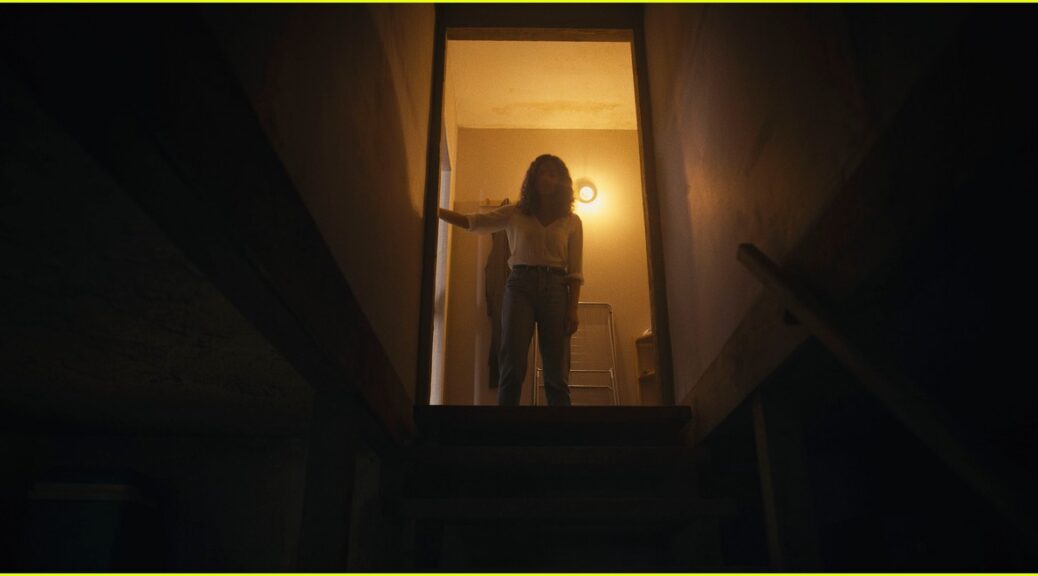
Barbarian

by Hope Madden and George Wolf

When you see as many movies as we do – especially horror flicks – taking us places we did not see coming is much appreciated.

Barbarian certainly does that, mashing horror, dark comedy and social commentary to wild and mostly satisfying ends.

Tess (TV vet Georgina Campbell) is in Detroit for a job interview. She books an Airbnb in an unsavory part of town, only to find out Kieth (Bill Skarsgård) booked the same place on HomeAway. What to do?

They talk, flirt a little, and Tess agrees to stay in the bedroom while Keith takes the couch. They’ll sort it out in the morning.

In his feature debut, writer/director Zach Cregger (The Whitest Kids You Know) lulls us with a competent but familiar hook. What’s really going on? Can Keith be trusted? Creeger throws in some creepy camera angles, terrific lighting maneuvers and jump scare fake-outs to build tension.

Then Tess makes her way down to the basement. Yikes.

But even after Tess’s startling discoveries, we’re still feeling like we have a grip on what’s ahead.

And then Cregger takes us to Hollywood, where producer AJ Gilbride (Justin Long) is sacked from his latest project due to allegations of sexual misconduct.

Um…what?

AJ’s story suddenly crosses paths with a tale set in the same house in 1982, this one starring Richard Brake. While that’s often great news for viewers, it is rarely good news for other characters.

What could start to feel disjointed and episodic instead congeals into a bizarre and brutal minefield of surprises. There are times when these surprises hang together with unrealistic decision-making, but Cregger’s sly script overcomes most of its conveniences and missteps.

Not every moment works. Certain choices feel ridiculous and breaks of levity keep the film from being as disturbing as maybe it should be, given the content. But most of that is forgivable, mainly because of the surprises Cregger has for us, and the nimble way he brings them out of hiding.

Tricking the Scales

The Good Boss

by George Wolf

For awhile, The Good Boss (El buen patrón) seems to reflect that elusive uncertainty principle the characters often discuss. The more we try to pin it down, the less we know of its nature.

And then writer/director Fernando León de Aranoa reveals his hand in a delightfully satirical manner, only to end up tipping the scale in the opposite, obvious direction.

And that would cause a furrowed brow from Julio Blanco (Javier Bardem), head of the Blanco Industrial Scales corporation. Blanco’s life – and work – is about perfectly equal measures.

“Hard work, balance, loyalty” is the company motto. Employees are family. Their problems are Blanco’s problems. And just when he’s a finalist for a prestigious business excellence award, Blanco’s got plenty of problems.

A longtime worker’s son is in trouble with the law. His production head’s wife might be banging another employee. And that new young intern (Almudena Amor) is returning Blanco’s frequent glances.

But worst of all, a guy he “had no choice” in firing (Óscar de la Fuente) is camped out across the street, protesting Blanco with signs and a bullhorn. And the guy will not leave.

As de Aranoa ticks off the days of the week, there are some glimpses of playful humor in the drama. But when Thursday rolls around, and Blanco’s security guard starts complementing the bullhorn guy’s rhyme schemes, The Good Boss starts having finger-wagging fun with the myth of benevolent “job creators.”

Bardem, no surprise, is a wonder. He slowly reveals cracks in Blanco’s facade of ethical bullshit, while never causing us one moment’s doubt about Blanco’s firm belief in this image he’s created. For Blanco, as long as the scales appear balanced, they are, regardless of the tricks it took to get there.

And anyway, he needs that award and the government subsidies that come with it. We don’t want “those artists” to hog the award money, do we?

Yes, the satirical fruit can hang pretty low, and de Aranoa’s subplot juggling skills start to waver as his narrative becomes more madcap. But right to the bitter end, Bardem can be trusted most when Blanco deserves it least, making sure The Good Boss is a satisfying day at the office.

The Work of Hope

Kaepernick & America

by George Wolf

I’ve been a fan of the San Francisco 49ers for about fifty years, so I had a Colin Kaepernick jersey long before he started taking a knee during the national anthem.

And when I continued to proudly wear that jersey, I quickly learned how effectively Kaepernick’s peaceful protest had been twisted into hateful knots of white grievance.

In Kaepernick & America, directors Ross Hockrow and Tommy Walker revisit the protest’s timeline with insight and proficiency. But the subtle power of their documentary comes from its patience in deconstructing how Kaepernick’s true motives were distorted to fuel a racist narrative and a divisive election year.

And for those who don’t know Kaepernick’s personal history, Hockrow and Walker wisely begin with his upbringing as a trans-racial adoptee, and then follow his journey to NFL stardom, to falling one play short of winning Super Bowl forty-seven, to essentially being kicked out of the league.

It’s then that the film gives Kaepernick’s worldview a more distinct social and political context through archival footage and interview commentary (including CNN’s Don Lemon, an executive producer on the film).

With the birth of the Black Lives Matter movement after the 2014 death of Michael Brown, Kaepernick sought to speak out against police brutality in America. His silent act of social disobedience eventually made news, and activist DeRay McKesson becomes instrumental to the film’s success at revealing the historical nature of the resulting uproar.

Opposing views are supplied by anti-Kaepernick protesters and political candidates of the time, effectively rebutted by former U.S. Green Beret and NFL player Nate Boyer. Though Kaepernick’s protest began as a sit-down, he switched to kneeling after Boyer’s advice on a more respectful action. As we revisit the accusations and troop-shaming that were aimed at Kaepernick, Boyer’s recollections are a vivid reminder about just who was interested in thoughtful dialog amid conflict.

More concerned with correcting the record than breaking new ground, Kaepernick & America seems graceful and unassuming when placed against the vitriol spurred by the taking of a knee. But the film reminds us that protest is “the work of hope,” and ultimately looks toward a future of redemption for Kaepernick, and healing for a nation.

Double Fault

McEnroe

by George Wolf

Start typing “John McEnroe” in the search bar, and “angry moments” still pops up as one of the top choices.

But why was he so angry? And why are we still drawn to his legendary outbursts?

Answer the questions, jerk!

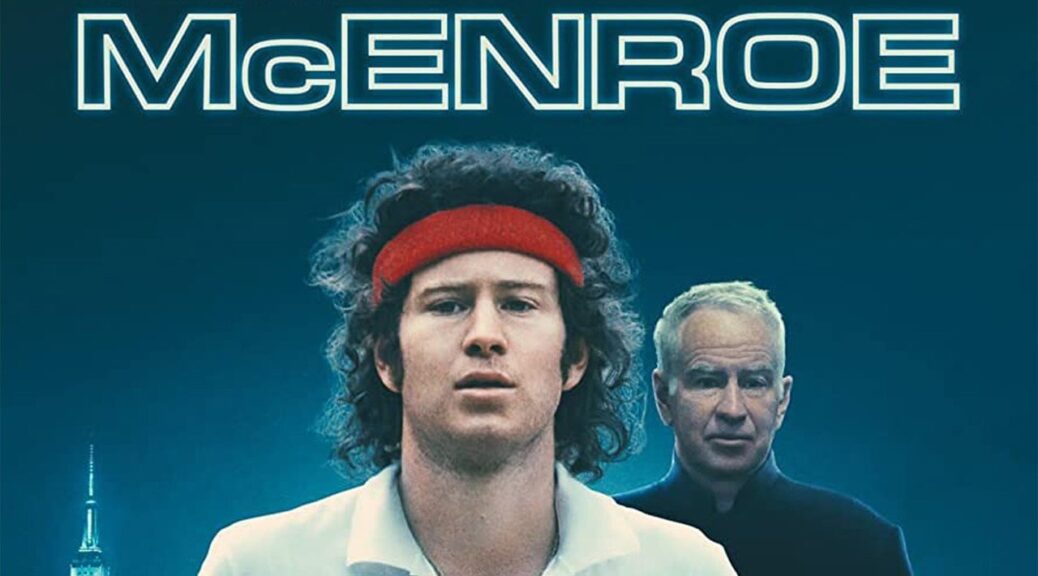
Showtime’s McEnroe doesn’t shed much insight on either one, but it does serve as a fine celebration of a great champion and a fascinating personality.

Director Barney Douglas interviews McEnroe over the course of one long night in his native New York. John tells his tales in a sit down Q&A, then wanders the streets in the wee hours while the occasional passerby shouts his name.

And what do we learn? That John’s father was a perfectionist who withheld affection, and John is also a perfectionist who rarely let himself enjoy success. Not much is said about John’s relationship with his mother, which leaves a noticeable blank space in the film.

Douglas weaves in the archival footage to great effect, with thrilling tennis sequences and charming callbacks to pop culture of the late 70s and early 80s. There’s also a steady stream of commentators that ranges from Billie Jean King to Keith Richards. It’s all completely entertaining.

And ultimately, John is capable of some honest self-reflection, revealing late in the film how he recognizes his failures as a father and a husband (to Tatum O’Neal, who does not participate, and current wife Patty Smyth, who does), and is committed to being a better man.

But he’s not asking for us to feel sorry for him. And that’s good, because it’s hard to. John admits he had it pretty good growing up, he just wanted a better relationship with the old man. He excelled in a “sport for killers” by exploiting his opponents’ weaknesses and compartmentalizing his frequent anger. Fair enough.

So don’t come to McEnroe looking for a breakthrough psychoanalysis, you cannot be serious! Come to McEnroe to remember why we care about him in the first place.

Jerk!