Dayumm there are a lot of movies available for home viewing this week! Oscar winners, foreign gems, underseen treasures, underappreciated family films, and also Aquaman. So much! Let us help you sort through it all.
Captain Marvel is still a week out, which makes for a pretty quiet weekend at the box office. Join us as we run down the highs and lows: Greta, A Madea Family Funeral plus all that’s fit to watch in new home entertainment.
Greta is a mess, and I don’t just mean the character.
In fact, I’m not sure the character is a mess at all, no matter how she hopes to fool you. Played by the inimitable Isabelle Huppert, the titular friend in need is, in fact, a crackpot. She’s a force to be reckoned with, and poor, wholesome Frances (Chloe Grace Moretz) doesn’t seem up to the reckoning.
A Midwestern transplant still grieving the loss of her mother, Frances lives in an irredeemably perfect New York apartment with her debutante bestie (Maika Monroe), but she feels a little untethered in the big city without her mom to call.
Enter Greta, the lonely older woman whose handbag Frances finds on the subway train and returns.
Director Neil Jordan hasn’t shot a feature since his underappreciated 2012 vampire fantasy, Byzantium. Here he shares writing duties with Ray Wright, who’s made a career of outright reboots and overt reworkings.
Like maybe Fatal Attraction with mommy issues.
There are elements to appreciate about Greta. Huppert is superb, her performance becoming more unhinged and eventually comical in that Nic Cage sort of way. Her time onscreen is creepy fun.
Moretz’s fresh-faced grief convinces for a while, and Monroe excels in an absolutely thankless role.
So what’s the problem? Well, number one, are we really afraid of this tiny, frail old lady?
No. We are not. Jesus, push her down already. I get it, you’re polite, but come on. I’m Midwestern and I’d have knocked her under a NYC taxi by now.
The terror is so unreasonable and yet so earnestly conveyed that scenes meant to be tense are comedic, and once you start laughing it’s hard to stop.
In fact, the sound of your own guffaws might distract you from the film’s truly breathtaking leaps of logic. It often feels as if whole reels were chunked out of this film and replaced with unconnected scenes from a private detective TV drama—one in which Stephen Rea’s dialog is inexplicably and unconvincingly dubbed.
What on earth?!
Well, par for the course with this film. It opens strong, develops well and relies on Huppert’s supernatural presence to create palpable tension before going entirely off the rails.
No genre has more invested in the twist ending – in being able to pull the rug out from under you at the last possible second – than horror. The best are the films that truly sneak up on you, making you re-examine everything that preceded the surprise.
Andy Ussery of Black Cat’s Shadow podcast joins us and he has an entirely different list of movies – that’s how many there are! Kind of makes you want to listen to the podcast HERE, doesn’t it?
Sleepaway Camp (1983)
Is it a brilliant movie? Will George be happy it made the list? That’s a lot of no right there, but honestly, how do we not acknowledge this stroke of genius?
Poor Angela (Felissa Rose)! She witnesses the death of her beloved father and, while still apparently quite traumatized, is asked to just go along with weird Aunt Martha’s (Desiree Gould—amazing!) whim.
Well, it doesn’t work out well for Angela or any of the staff or youngsters at Camp Arawak. But the damage you can do with a curling iron is hardly our concern today. No, it’s that final shot. The money shot. That face! That hairy chest! That wang!!
Angel Heart (1987)
Alan Parker directed Pink Floyd: The Wall. That has literally nothing to do with this list, but still.
In Angel Heart, Parker develops a steamy, lurid atmosphere as we follow private dick Harold Angel (Mickey Rourke) through the bowels of New Orleans in search of information on crooner Johnny Favorite.
Rourke’s performance is key to the film’s unseemly feel. A sinner – never a traditional hero – still, Angel’s sympathetic and full of a disheveled charm. You’re sorry for him even as you know he’s outmatched and probably undeserving of your pity. He knows it, too, and that’s what makes the performance so strong.
That, and the sheer diabolical presence of an unsettlingly understated Robert DeNiro. That hard boiled egg thing! Love!!
Bloodshed on the bayou – languid and unseemly.
Frailty (2001)
In 2001, actor Bill “We’re toast! Game over!” Paxton took a stab at directing the quietly disturbing supernatural thriller Frailty.
Paxton stars as a widowed dad awakened one night by an angel – or a bright light shining off the angel on top of a trophy on his ramshackle bedroom bookcase. Whichever – he understands now that he and his sons have been called by God to kill demons.
Whatever its flaws – too languid a pace, too trite an image of idyllic country life, Powers Boothe – Frailty manages to subvert every horror film expectation by playing right into them. We’re led through the saga of the serial killer God’s Hand by a troubled young man (Matthew McConaughey), who, with eerie quiet and reflection, recounts his childhood with Paxton’s character as a father.
Dread mounts as Paxton drags out the ambiguity over whether this man is insane, and his therefore good-hearted but wrong-headed behavior profoundly damaging his boys. Or could he really be chosen, and his sons likewise marked by God?
Brent Hanley’s sly screenplay evokes nostalgic familiarity, and Paxton’s direction makes you feel entirely comfortable in these common surroundings. Then the two of them upend everything – repeatedly – until it’s as if they’ve challenged your expectations, biases, and your own childhood to boot.
The Others (2001)
Co-writer/director Alejandro Amenabar casts a spell that recalls The Innocents in his 2001 ghost story The Others. It’s 1945 on a small isle off Britain, and the brittle mistress of the house (Nicole Kidman) wakes screaming. She has reason to be weary. Her husband has still not returned from the war, her servants have up and vanished, and her two children, Anna and Nicholas, have a deathly photosensitivity: sunlight or bright light could kill them.
What unspools is a beautifully constructed film using slow reveal techniques to upend traditional ghost story tropes, unveiling the mystery in a unique and moving way.
Kidman’s performance is spot-on, and she’s aided by both the youngsters (Alakina Mann and James Bentley). Bentley’s tenderness and Mann’s willfulness, combined with their pasty luster (no sun, you know), heighten the creepiness.
With the help of cinematographer Javier Aguirresarobe and supporting actress Fionnula Flanagan, Amenabar introduces seemingly sinister elements bit by bit. It all amounts to a satisfying twist on the old ghost story tale that leaves you feeling as much a cowdy custard as little Nicholas.
https://www.youtube.com/watch?v=ISch6Fi-q0A
The Sixth Sense (1999)
h, you totally didn’t figure it out. Don’t even start.
A troubled child psychologist (Bruce Willis) treats a young boy (Haley Joel Osment) carrying a terrible burden. The execution—basically, seeing ghosts in every corner of Philadelphia—could have become a bit of a joke, but writer/director M. Night Shyamalan delivers a tense, eerie product.
With his 1999 breakout, Shyamalan painted himself into a corner he found it tough to get out of: the spooky surprise ending. And though this would nearly be his undoing as a filmmaker, it started off brilliantly.
Part of the success of the film depends on the heart-wrenching performances: Toni Collette’s buoyant but terrified mother, Willis’s concerned therapist, and Osment’s tortured little boy. Between Shyamalan’s cleverly spooky script, a slate of strong performances and more than a few genuinely terrifying moments, this is one scary-ass PG-13.
The best animated film of 2018 swings into your living room this week, along with (if you’re smart) an instant cult classic. Other biggies of 2018 make their way home this week, so let us help you sort this out.
On this week’s screening room—after we kick around our Oscar predictions—we get down to business with How to Train Your Dragon: The Hidden World, Fighting with My Family, Arctic, Lords of Chaos and all the new stuff in home entertainment.
“I want to sue my parents!” a defiant pre-teen child exclaims inside of a crowded courtroom. Everyone – his parents, the judge, the attorneys – appears stunned. As his initial outburst lingers in the air, the boy explains further:
“Because I was born.”
Our world can be a horrific place. Unfortunately, children aren’t spared from these horrors. Capernaum follows one child as he tries to make sense of his place in a world that’s constantly placing greater and greater hurdles in front of him.
The streets of Beirut are the playground for headstrong Zain (Zain Al Rafeea). When not selling cheap cups of juice in the gutter, Zain spends his days working in a small shop to appease his parent’s landlord. Even at such a young age, Zain has been tasked with providing for his large family. The abrasiveness of Zain’s demeanor is quickly overshadowed by his need to take care of his siblings and keep them all together.
Capernaum isn’t subtle about where it lays blame. The neglect from adults is directly responsible for the misery these children endure. Zain and his siblings are only valuable to their parents because of what they can provide for them; not because they’re human beings. Even the lone caring adult in Zain’s life puts him in a situation that no child should be in.
The movie isn’t a miserable experience by any means, but it doesn’t shy away from the hardships these characters suffer. In fact, that honesty is what makes Capernaum so compelling. Knowing there are real children like Zain who live this kind of bleak existence helps give the story weight.
Al Rafeea is a revelation in his acting debut. A real life Syrian refugee, Al Rafeea conveys a weariness that cannot be faked. He plays Zain as a hardened, street-smart kid, but allows the cracks in that facade to show. Zain wants the chance to be a regular kid, and those few moments when he is truly happy are simultaneously joyous and heartbreaking.
The honesty of the story and the lead performance make Capernaum a riveting experience.
In 1943, the infamous Joseph Goebbels declared Berlin was “free of Jews.” However, 7000 Jewish residents remained in hiding in Germany’s capital. Director Claus Räfle brings this dark history to life with his docudrama, The Invisibles.
Focusing on the lives of four young Jewish men and women, Räfle showcases their struggles through a combination of dramatic reenactment and interviews.
The dramatic elements of the film play like any well-written, well-acted drama. The actors enliven the words of the survivors, whose interviews are interspersed throughout the film. Newsreel footage from the days of the war also help paint the picture for modern viewers.
It’s an interesting choice to retell the more dramatic elements of history through reenactments, but because of Räfle’s attention to detail and the actors’ commitment to the story, it works fairly well. Räfle understands how to balance the dramatic with the interviews, frequently reminding us we’re watching a story about real people.
The strongest performance comes from Max Mauff, who portrays Cioma Schönhaus. By forging documents, Cioma manages to stay behind in Berlin when his parents are sent to a concentration camp. Because of his skills, soon friends ask for help with their own documents. His work gains the attentions of Dr. Franz Kaufmann, a member of the Third Reich, who assists Jewish men and women in escaping Germany., and he enlists Cioma’s help in creating fake passports and papers. Cioma’s work saves the lives of scores of other Jewish men and women.
Räfle tries to balance Cioma’s story with the stories from his other interviewees, Ruth Ardnt, Hanni Lévy and Eugen Friede, but he never quite manages to bring the same level of detail to their histories. Though Eugen participates in a resistance movement distributing leaflets to citizens, that fact almost feels like an afterthought. Ruth works in the house of a Nazi officer, who knows who she is, but the tension of such a situation is never fully explored.
In addition to the four survivors profiled, there are a number of men and women who assist in hiding Ruth, Hanni, Cioma, and Eugen. It’s hard to keep track of the names of those who risked their lives to do the right thing, which is unfortunate since their actions were critical in keeping people alive.
The Invisibles might have been better served by simply letting the survivors tell their stories in their own words, but even with the choice to dramatize the history, it’s a sensitive, emotional portrayal of one of the darkest times in human history.
Go into Donnybrook expecting an action movie about bare knuckle fighting and you’re going to be sorely disappointed: there’s more road movie than Rocky. But director Tim Sutton’s dissection of American desperation is out to expose the underbelly of more than just backyard brawling.
Sutton adapts Frank Bill’s novel with unrelenting sparseness. The movie centers on the intertwined lives of Jarhead Earl (Jamie Bell) and Chainsaw and Delia Angus (Frank Grillo and Margaret Qualley) as they pursue the limited versions of the American dream available to them in rural, addiction-ravaged Ohio.
Earl wants to win the Donnybrook, a legendary underground fight whose winnings will allow him to give his family a better life. Delia just wants to sell a bunch of meth so she can escape dead-end life with her abusive brother. And Chainsaw Angus just wants all that meth back that his sister stole. (You know a situation is dire anytime someone steals drugs from a person named Chainsaw.)
Donnybrook is violent but not gratuitous. As the characters’ lives converge on the road to the fight, the flashes of violence that build toward the climax serve mostly as a reminder of the pervasive despair everyone is running away from.
Grillo plays Chainsaw Angus as a relentless force that blows right through anyone and everyone he comes in contact with—men, women and children alike. There’s more than a touch of Coens-meet-McCarthy to Sutton’s adaptation, and not just in Angus’s almost elemental pursuit.
Earl’s milieu echoes the Appalachian noir of Winter’s Bone, but with a contemporary urgency all its own. Unfortunately, the film’s singular devotion to its economically downtrodden message leads to some shortcuts for the characters.
Delia doesn’t get the space to expand beyond her tragic archetype, but the movie is at least an equal opportunity offender when it comes to dispensing with supporting stereotypes: James Badge Dale’s alcoholic cop could be removed entirely and the story wouldn’t miss a beat.
The degree to which Sutton’s languid, dream-like depictions of this world succeed in amounting to a whole greater than their parts will probably come down to how much you think we need another Fight Club-style examination of a narrow (and uniformly white) male anger.
Giving that perspective such lyric treatment is certainly a choice. Even when the blows don’t connect, there’s something to be said for action with ambition.
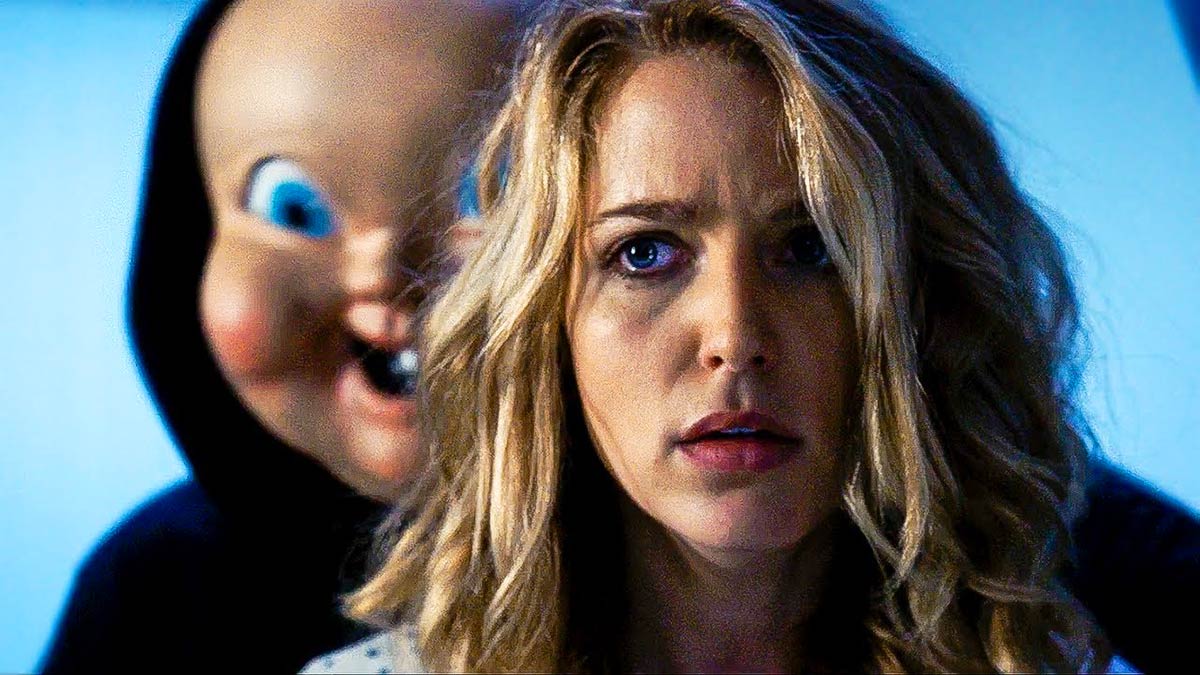
Two years ago, writer/director Christopher Landon’s Happy Death Day managed the unexpected. It took an immediately tiresome premise—Groundhog Day meets Scream—and generated enough audience good will to entertain.
This was mainly thanks to Jessica Rothe, whose performance was funny enough to be simultaneously likable and detestable, and whose character arc mostly felt earned. (Bill Murray’s are big shoes to fill.)
Well, Rothe is back for a second helping of death day cake, as is Landon, who again writes and directs. Can the pair keep the story fresh for a sequel?
Why, no. Thanks for asking.
Where the original was a funny slasher with a SciFi bent, the sequel is a standard Eighties romcom with an occasionally morbid sense of humor. Think Real Genius, only dumber and more tedious.
Or Zapped. Remember Zapped?
Tree (Rothe) believes she’s broken free of her murderous time loop by killing the person who was out to kill her—and learning some hard-won life lessons in the meantime.
She was wrong, though, because the truth is that her boyfriend Carter’s (Israel Broussard) weird roommate Ryan (Phi Vu) has gotten all Timecrimes in the college lab and that’s what caused the loop. In fact, it’s causing another loop into a parallel dimension.
Everyone from the original is back and almost the same as last time (because this is a parallel universe). Any new character who is not white joins Ryan in the lab. Nerds – another sad Eighties theme that won’t stay dead.
Slapstick humor (Oh, this blind French thing is enough to make your brain bleed) and dumbfounding gaps in logic follow. A list of what does not follow: tension, horror, laughter.
Seriously, though, if you haven’t seen Nacho Vigalondo’s 2007 mindbender Timecrimes, you should definitely do that instead of going to HDD2U.
Oh! You know what else is great in that SciFi/time loop/horror neighborhood? The Endless.
The point is, if you are in the mood for some genre bending SciFi fun, you won’t find it here.